Latest
issue
GET SPA BUSINESS
magazine
Yes! Send me the FREE digital editions of Spa Business and Spa Business insider magazines and the FREE weekly Spa Business and Spa Business insider ezines and breaking news alerts!
Not right now, thanksclose this window I've already subscribed.
Uniting the world of spa & wellness
Get Spa Business and Spa Business insider digital magazines FREE
Sign up here ▸
News   Features   Products   Company profilesProfiles   Press releasesProfiles   Magazine   Handbook   Advertise    Subscribe  
NEWS
Teenage girls are getting more active – the highlight of the new Active Lives survey from Sport England
POSTED 07 Dec 2023 . BY Kath Hudson
The number of teenage girls playing football has increased Credit: Sport England
Sport England’s Active Lives Children and Young People Report 22-23 is out today
The 'Lioness effect' has boosted participation in physical activity among teenage girls
There's also been an uptick in participation among those living with disabilities and long-term health conditions
Income and ethnicity is still driving health inequalities
Physical activity levels among children and young people have improved compared to five years ago, according to Sport England’s Active Lives Children and Young People Report 22-23, which was published today (7 December 2023).

Overall activity levels are unchanged from last year, but are up 3.8 per cent on the five year figure of 2017, meaning 424,000 more children and young people are active.

The most significant gains have been made among girls aged 13-to-16, which is heartening considering this is an age when drop-off is higher and this has been partly attributed to the success of the Lionesses who are providing such relatable role models and also, access to better football programmes.

Speaking to HCM, Sport England’s chief strategy officer, Nick Pontefract, said women’s football coverage is getting more coverage, which has helped it enter the public consciousness. “The increase in girl’s playing football has been partly stimulated from the bottom up, but it has also been helped by the top-down inspirational effect of the Lionesses.”

During the last three years, activity levels have also increased among those with a disability or long-term health condition: up 4.5 per cent for those with a disability or long term health conditions, compared to 2.3 per cent for those without.

“This is one of the things we continue to be pleased about, especially as it is the opposite to what we see in the adult survey,” says Pontefract. “It shows the payoff for 10 or 15 years of really hard work around inclusion of those with disabilities within sport, particularly in and around schools and clubs.”

While 2.2 million children and young people (30.2 per cent) still do less than 30 minutes of physical activity a day, the number of relativcely inactive young people is falling and this is a 2.7 per cent reduction of 2017, representing an increase of 85,000 children and young people becoming more active.

Active travel, walking, going to the gym and fitness (such as yoga) are all up over the longer term, with a million more children and young people travelling by active means, as well as 592,000 more going for a walk regularly and 908,000 more going to the gym than five years ago, while also using free online resources.

While team sports generally have seen a flat trend, participation in both football and basketball have seen an uptick, with 325,000 more children and young people playing football and an extra 297,000 playing basketball. Pontefract says these are the sports that have worked hard to be seen as relevant and it’s a healthy challenge for other activities to “work as hard as they can to be as relevant as possible.”

Almost half (47 per cent) of children and young people – 3.5 million – are now meeting the Chief Medical Officer's guidelines of an average of more than 60 minutes a day of sport or physical activity. A further 1.7 million (22.8 per cent) of children and young people are fairly active, for an average of 30-59 minutes a day.

However, the report shows affluence and activity levels are closely linked. Those from lower income families are less likely to be physically active (44 per cent). Also Black (40 per cent) and Asian (40 per cent) children continue to be less likely to be active than the average across all ethnicities and social groups.

Sport England has a multi-year plan to tackle the inequalities with its place-based investment programme
which is targeting the 10 per cent most deprived parts of the country. “Every programme we run will be deliberately designed to over-index people from a background that makes them less likely to participate. We think the only way to close the gaps is by disproportionately investing," said Sport England CEO Tim Hollingsworth.

“We'll be building on the learnings from our local delivery pilots we've run over the last few years. We’re also redesigning our open application funds and putting lots more money behind those to make it easier for people who do come to us and say they can make a contribution.”

The Youth Sports Trust lamented the findings of Active Lives Children and Young People Report 22-23, saying inactivity levels are still too high. Chief executive, Ali Oliver, says inactivity has also been shown to impact education and there needs to be more awareness, as 43 per cent of parents are unaware how active their children should be.

“A campaign to highlight why 60 active minutes a day is so important is vital to drive the societal shift we need to see,” she says. “But alongside this, I believe raising the importance of physical development in the early years, supporting all schools to be active learning environments and re-imagining physical education so its sole purpose is healthy learners and active citizens would represent an informed and powerful response to this latest set of Active Lives Data.”


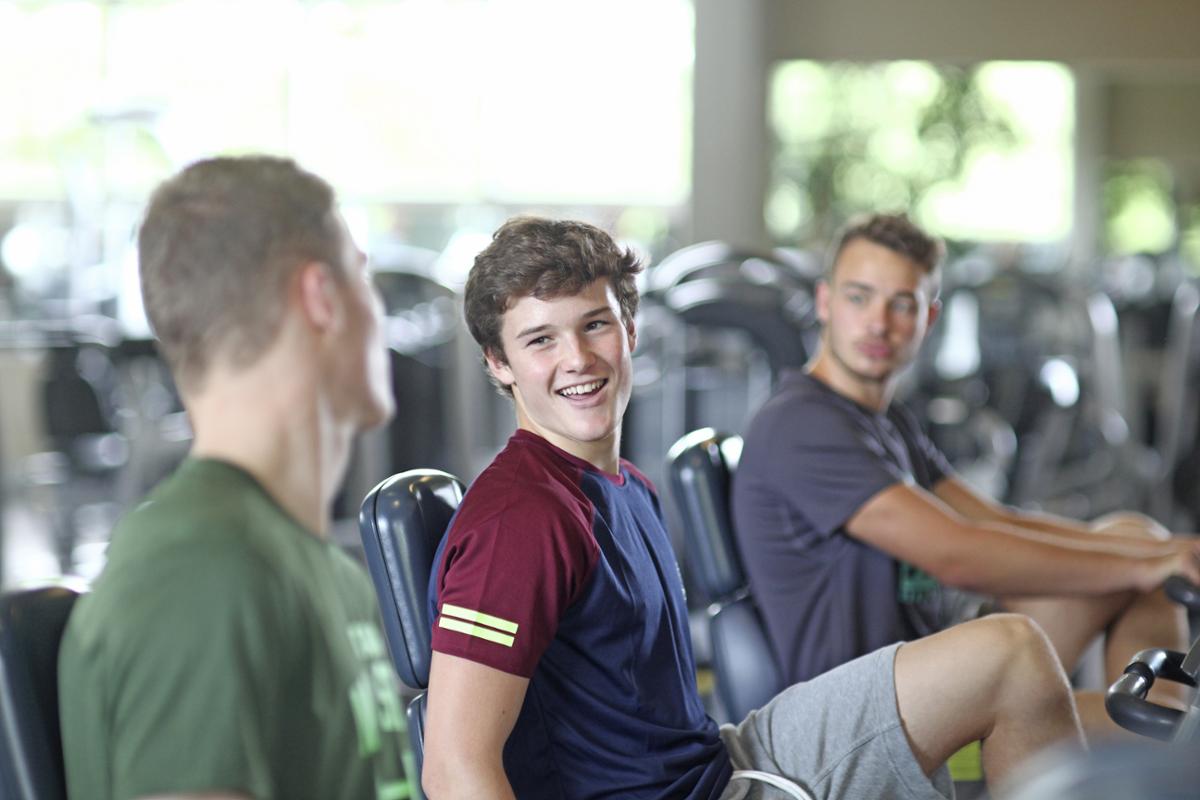
More young people are staying active by going to the gym Credit: Shutterstock/Altrendo Images
RELATED STORIES
  Shocking health inequalities in England prompt £250m investment in physical activity


New insight from UK quango, Sport England has found that healthy life expectancy in England – ie, the number of years people live without debilitating disease – can vary by up to 17 years, depending on where they live.
  FEATURE: Policy: Get active


With the sector’s widespread view that the UK government’s new physical activity and sport strategy lacks vision, Martyn Allison dissects the finer details, while industry thought leaders also comment
  Physical literacy initiative will ‘build a nation that loves to move’


More than 100 people from across the academic and sport and physical activity sectors gathered at the Royal Society of Arts in London on 28 September to launch the Physical Literacy Consensus Statement for England.
  Active Lives survey reports latest health club and physical activity numbers


Overall physical activity levels among adults in England have returned to pre-pandemic levels, being in line with 2018-19 and above 2016 numbers.
MORE NEWS
Synergy The Retreat Show launches resource for retreat business leaders to showcase specialisms
Global retreat trade show, Synergy The Retreat Show, has launched a resource called The Source, which hosts an open-access online Transformation Series programme.
The SATCC announces first five-day Living with Cancer and Beyond retreat
The Standards Authority for Touch in Cancer Care (SATCC) charity has announced its first five- day Living with Cancer and Beyond retreat, which will be held at Carden Park Hotel and Spa in Cheshire, UK, between 1 and 5 September.
Palazzo di Varignana launches family wellbeing and longevity retreat in Emilia Romagna
Palazzo di Varignana, in the Emilia Romagna region of Italy, has created a new tailored health programme designed specifically for families.
Ansana Wellness and Spa debuts at Patmos Aktis as it joins Marriott
Patmos Aktis, a Luxury Collection Resort and Spa, has opened in Greece, with a renovated and rebranded wellness offering called Ansana Wellness and Spa.
+ More news   

FEATURED SUPPLIERS

Introducing Glass Act by Templespa
Introducing Glass Act, your new go-to eye serum for brighter, smoother, beautifully awakened eyes. [more...]

Meet Desert Therapy: Aromatherapy Associates' first new blend in seven years
There is a particular quality of stillness found only in the desert. [more...]
+ More featured suppliers  
COMPANY PROFILES
Charme D'Orient

Charme d’Orient is a cosmetics and wellness brand deeply inspired by the ancestral beauty and wellne [more...]
Knesko Skin

Known for their unique approach to wellness and beauty, Knesko’s products combine ancient healing tr [more...]
+ More profiles  
CATALOGUE GALLERY
 

+ More catalogues  

DIRECTORY
+ More directory  
DIARY


26-27 Jun 2026

The Longevity Show

Tobacco Docks, London, United Kingdom
03-05 Jul 2026

World Championship in Massage

Copenhagen, Copenhagen, Denmark
+ More diary  
 
ABOUT LEISURE MEDIA
LEISURE MEDIA MAGAZINES
LEISURE MEDIA HANDBOOKS
LEISURE MEDIA WEBSITES
LEISURE MEDIA PRODUCT SEARCH
 
SPA BUSINESS
SPA OPPORTUNITIES
SPA BUSINESS HANDBOOK
PRINT SUBSCRIPTIONS
FREE DIGITAL SUBSCRIPTIONS
ADVERTISE . CONTACT US

Leisure Media
Tel: +44 (0)1462 431385

©Cybertrek 2026
Uniting the world of spa & wellness
Get Spa Business and Spa Business insider digital magazines FREE
Sign up here ▸
News   Products   Magazine   Subscribe
NEWS
Teenage girls are getting more active – the highlight of the new Active Lives survey from Sport England
POSTED 07 Dec 2023 . BY Kath Hudson
The number of teenage girls playing football has increased Credit: Sport England
Sport England’s Active Lives Children and Young People Report 22-23 is out today
The 'Lioness effect' has boosted participation in physical activity among teenage girls
There's also been an uptick in participation among those living with disabilities and long-term health conditions
Income and ethnicity is still driving health inequalities
Physical activity levels among children and young people have improved compared to five years ago, according to Sport England’s Active Lives Children and Young People Report 22-23, which was published today (7 December 2023).

Overall activity levels are unchanged from last year, but are up 3.8 per cent on the five year figure of 2017, meaning 424,000 more children and young people are active.

The most significant gains have been made among girls aged 13-to-16, which is heartening considering this is an age when drop-off is higher and this has been partly attributed to the success of the Lionesses who are providing such relatable role models and also, access to better football programmes.

Speaking to HCM, Sport England’s chief strategy officer, Nick Pontefract, said women’s football coverage is getting more coverage, which has helped it enter the public consciousness. “The increase in girl’s playing football has been partly stimulated from the bottom up, but it has also been helped by the top-down inspirational effect of the Lionesses.”

During the last three years, activity levels have also increased among those with a disability or long-term health condition: up 4.5 per cent for those with a disability or long term health conditions, compared to 2.3 per cent for those without.

“This is one of the things we continue to be pleased about, especially as it is the opposite to what we see in the adult survey,” says Pontefract. “It shows the payoff for 10 or 15 years of really hard work around inclusion of those with disabilities within sport, particularly in and around schools and clubs.”

While 2.2 million children and young people (30.2 per cent) still do less than 30 minutes of physical activity a day, the number of relativcely inactive young people is falling and this is a 2.7 per cent reduction of 2017, representing an increase of 85,000 children and young people becoming more active.

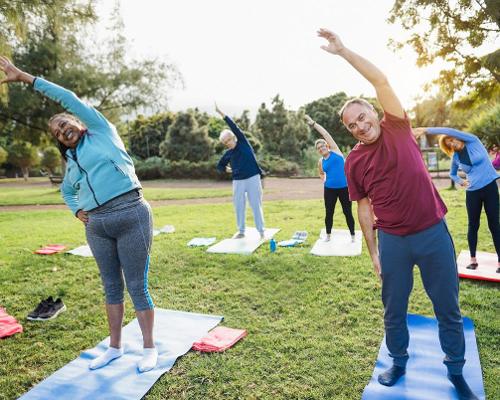
Active travel, walking, going to the gym and fitness (such as yoga) are all up over the longer term, with a million more children and young people travelling by active means, as well as 592,000 more going for a walk regularly and 908,000 more going to the gym than five years ago, while also using free online resources.

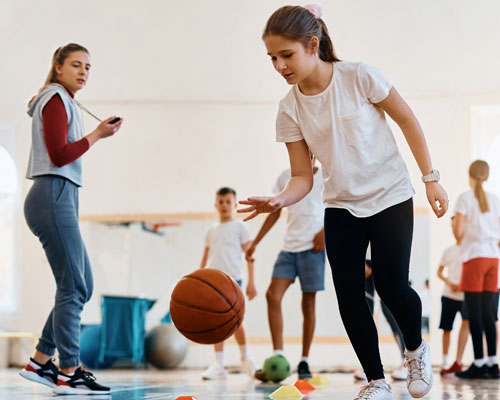
While team sports generally have seen a flat trend, participation in both football and basketball have seen an uptick, with 325,000 more children and young people playing football and an extra 297,000 playing basketball. Pontefract says these are the sports that have worked hard to be seen as relevant and it’s a healthy challenge for other activities to “work as hard as they can to be as relevant as possible.”

Almost half (47 per cent) of children and young people – 3.5 million – are now meeting the Chief Medical Officer's guidelines of an average of more than 60 minutes a day of sport or physical activity. A further 1.7 million (22.8 per cent) of children and young people are fairly active, for an average of 30-59 minutes a day.

However, the report shows affluence and activity levels are closely linked. Those from lower income families are less likely to be physically active (44 per cent). Also Black (40 per cent) and Asian (40 per cent) children continue to be less likely to be active than the average across all ethnicities and social groups.

Sport England has a multi-year plan to tackle the inequalities with its place-based investment programme
which is targeting the 10 per cent most deprived parts of the country. “Every programme we run will be deliberately designed to over-index people from a background that makes them less likely to participate. We think the only way to close the gaps is by disproportionately investing," said Sport England CEO Tim Hollingsworth.

“We'll be building on the learnings from our local delivery pilots we've run over the last few years. We’re also redesigning our open application funds and putting lots more money behind those to make it easier for people who do come to us and say they can make a contribution.”

The Youth Sports Trust lamented the findings of Active Lives Children and Young People Report 22-23, saying inactivity levels are still too high. Chief executive, Ali Oliver, says inactivity has also been shown to impact education and there needs to be more awareness, as 43 per cent of parents are unaware how active their children should be.

“A campaign to highlight why 60 active minutes a day is so important is vital to drive the societal shift we need to see,” she says. “But alongside this, I believe raising the importance of physical development in the early years, supporting all schools to be active learning environments and re-imagining physical education so its sole purpose is healthy learners and active citizens would represent an informed and powerful response to this latest set of Active Lives Data.”

More young people are staying active by going to the gym Credit: Shutterstock/Altrendo Images
RELATED STORIES
Shocking health inequalities in England prompt £250m investment in physical activity


New insight from UK quango, Sport England has found that healthy life expectancy in England – ie, the number of years people live without debilitating disease – can vary by up to 17 years, depending on where they live.
FEATURE: Policy: Get active


With the sector’s widespread view that the UK government’s new physical activity and sport strategy lacks vision, Martyn Allison dissects the finer details, while industry thought leaders also comment
Physical literacy initiative will ‘build a nation that loves to move’


More than 100 people from across the academic and sport and physical activity sectors gathered at the Royal Society of Arts in London on 28 September to launch the Physical Literacy Consensus Statement for England.
Active Lives survey reports latest health club and physical activity numbers


Overall physical activity levels among adults in England have returned to pre-pandemic levels, being in line with 2018-19 and above 2016 numbers.
MORE NEWS
Synergy The Retreat Show launches resource for retreat business leaders to showcase specialisms
Global retreat trade show, Synergy The Retreat Show, has launched a resource called The Source, which hosts an open-access online Transformation Series programme.
The SATCC announces first five-day Living with Cancer and Beyond retreat
The Standards Authority for Touch in Cancer Care (SATCC) charity has announced its first five- day Living with Cancer and Beyond retreat, which will be held at Carden Park Hotel and Spa in Cheshire, UK, between 1 and 5 September.
Palazzo di Varignana launches family wellbeing and longevity retreat in Emilia Romagna
Palazzo di Varignana, in the Emilia Romagna region of Italy, has created a new tailored health programme designed specifically for families.
Ansana Wellness and Spa debuts at Patmos Aktis as it joins Marriott
Patmos Aktis, a Luxury Collection Resort and Spa, has opened in Greece, with a renovated and rebranded wellness offering called Ansana Wellness and Spa.
Mauna Kea Beach Hotel launches destination spa with sacred Hawaiian cultural concept
The Mauna Kea Beach Hotel, an Autograph Collection property in Hawaii, US, has opened its 22,000 sq ft indoor-outdoor Spa at Mauna Kea as the final step in the property’s overall renovation, which has cost more than US$180 million (€166 million, £140 mill
The Good Spa Guide sets up event for modified Good Spa Guide Awards
The UK spa review and discovery platform for consumers, the Good Spa Guide, has announced it will host the Good Spa Guide Awards 2026 during an event on 16 November at Sopwell House Hotel in St Albans, UK.
+ More news   
 
FEATURED SUPPLIERS

Introducing Glass Act by Templespa
Introducing Glass Act, your new go-to eye serum for brighter, smoother, beautifully awakened eyes. [more...]

Meet Desert Therapy: Aromatherapy Associates' first new blend in seven years
There is a particular quality of stillness found only in the desert. [more...]
+ More featured suppliers  
COMPANY PROFILES
Charme D'Orient

Charme d’Orient is a cosmetics and wellness brand deeply inspired by the ancestral beauty and wellne [more...]
+ More profiles  
CATALOGUE GALLERY
+ More catalogues  

DIRECTORY
+ More directory  
DIARY


26-27 Jun 2026

The Longevity Show

Tobacco Docks, London, United Kingdom
03-05 Jul 2026

World Championship in Massage

Copenhagen, Copenhagen, Denmark
+ More diary  


ADVERTISE . CONTACT US

Leisure Media
Tel: +44 (0)1462 431385

©Cybertrek 2026

ABOUT LEISURE MEDIA
LEISURE MEDIA MAGAZINES
LEISURE MEDIA HANDBOOKS
LEISURE MEDIA WEBSITES
LEISURE MEDIA PRODUCT SEARCH
PRINT SUBSCRIPTIONS
FREE DIGITAL SUBSCRIPTIONS