Following a couple of enriching days at the Active Leadership Forum in Berlin recently, I took time to reflect on the strong community of industry leaders we have across Europe and how crucial their input will be to the success of the sector at a time of great challenges and greater opportunities.
The pandemic years have been difficult for our industry, testing our resilience and resolve. Financial resources have been strained, as have the mental wellbeing of everyone working in the industry and it’s inspiring to see how business leaders are giving special priority to rebuilding the spirit and welfare of their teams.
Reason for optimism Consumer data from across Europe gives us reason for optimism when it comes to the post-lockdown recovery – albeit with national variations. Data from sources such as Deloitte and McKinsey are indicating strong, growing demand for personalised health services – particularly fitness and exercise – but as the European industry association, we’re aware this positive news needs to be considered in the context of a sector still in recovery mode and facing some clouds on the economic horizon.
There’s little we can do as a sector to change macro-economics, but it’s within our power to determine how we react to what life sends our way.
Strategising around factors such as consumer behaviour, inflationary pricing, staffing and digitisation is essential. We must address immediate challenges, such as energy prices, while connecting with long-term goals – integrating energy conservation measures into our green transition plans, for example.
Since the start of the pandemic we’ve seen businesses and trade associations gain renewed momentum by reinvigorating their purpose and conceiving bold strategies which take disruptive new realities into account. We’ve also experienced how conservatism and a focus on the past can be dangerous when the world is changing so fast.
In EuropeActive’s strategising, we drew inspiration from the existentialist principle that life should be understood looking backwards, but must be lived looking forwards.
Unite to thrive In every crisis there’s potential for growth through transformational renewal and it will be imperative we utilise the same collaborative spirit and creativity that took us through the troubling first years of COVID-19. It’s also important we speak with one voice as we reposition our services as essential to public health.
Gaining essential status will be critical as consumers’ disposable incomes come under pressure. Our offering – health-enhancing physical activity – is a cost-effective, flexible personal health intervention, which suit the busy lives of contemporary Europeans, but too often people regard our service as nice-to-have leisure, rather than need-to-have health. This is a vulnerability when many are forced to cut down on non-essential services.
Making a plan Becoming a recognised solution to today’s public health challenges is our greatest opportunity and challenge and this outcome can only be reached through collective effort by sector trade associations and commercial stakeholders.
Europe Active’s President’s Council has defined four key components needed to support our industry’s positive development:
1) Informing and evidencing Reliable data-collection and research in collaboration with academic partners, evidencing our sector’s health and economic impact.
2) Representation Political representation through effective public affairs work, ensuring evidenced research is recognised in health-policy-making, for example.
3) Reputation management Strategic comms and PR on behalf of the sector, redefining our public image as a health solution.
4) Events to unify The creation of unifying industry events, that ensure collaboration, coordination and the sharing of best-practice across the sector.
We’re fortunate to have some of our sector’s brightest minds supporting Europe Active’s long-term strategising, and I believe we’ll achieve our goals if we place these four objectives at the heart of our work.
It’s essential we take a data-based, consumer-centric approach to the development of our ecosystem, embracing everyone who’s committed to getting more people, more active, more often, knowing that greater physical activity levels in society will also mean more members of health clubs.
As we pledge to European citizens and policy-makers that our sector is ready to play a central role in preventive health, we need to assess ourselves in a constructively self-critical light. Let’s replace protectionism with proactive transformation when needed.
Uniting science and technology European antiquity taught us the wisdom of ‘mens sana in corpore sano’ – ‘a healthy mind in a healthy body’, something modern science has shown to be indisputable.
It’s also essential we demonstrate that health is not just physical, but also mental, spiritual and social.
Furthermore, technology enabled us to connect with anyone everywhere during lockdowns, with this functionality becoming critical to the continuation of our work.
Both science and technology are essential to success, with fitness and health clubs becoming valued third spaces – after home and work – in the busy lives of contemporary Europeans who know they have to invest time and money in their personal health.
Our long-term prospects as an industry are undoubtedly brighter than in the past, and our position as an important partner in building sustainable public health in Europe is more convincing than ever.
All parts of our ecosystem have important roles to play in the endeavour to make our continent’s future healthier and happier. In close collaboration with Europe Active’s national trade association partners, from Dublin to Kyiv and Helsinki to Madrid, we see it as the association’s raison d’être to connect the best of past, present and future to make sure all parts of our sector move forward, united under common guiding stars.
A brighter future
In working to deliver on the sector’s short-term success, the three most essential behaviours will be collaboration, creativity and persistence.
We’ll ride out the current storm provided we collaborate and are sensitive to the transformational winds that are pointing us towards our future horizon – a destination consumer data indicates will be brighter than before.
For this reason, we’ve set the theme of the European Health and Fitness Forum (EHFF) in April 2023 as Transformational Leadership, with speakers from academia and business. We’ll draw on data and present leadership tools to support market expansion beyond 25 per cent penetration, while taking economic turbulence into account.
We’ll also inspire participants by sharing examples of how innovative business models are mobilising new consumer segments, positioning our sector as a provider of exercise in schools, a facilitator of active ageing and a provider of fitness and exercise for medical purposes.
We’ve set the theme of the European Health and Fitness Forum 2023 as Transformational Leadership
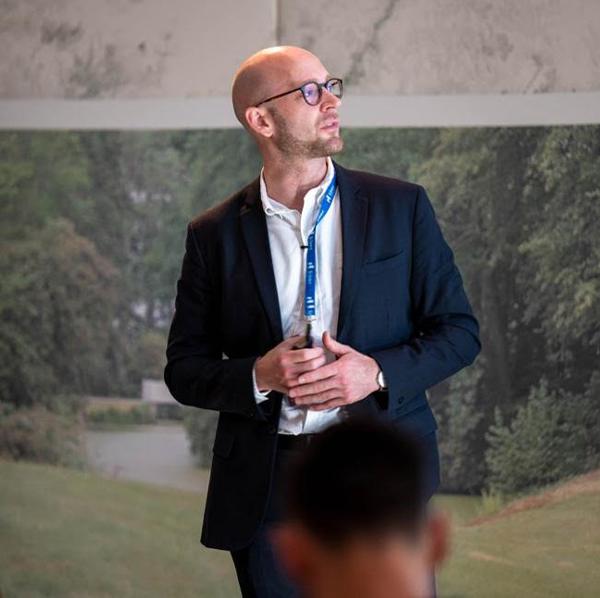
Andreas Paulsen speaking at SIBEC 2022 / Photo: SIBEC
Europe Active strategy
More on Europe Active’s political
priorities and lobbying goals
EuropeActive and its national association partners have been initiating actions aimed at securing the sector’s recovery. These include informing the sector on inflationary pricing strategies, related consumer behaviour and energy conservation, as well as ensuring policy-makers Europe-wide are aware of the detrimental effect on public health that would occur if our industry encounters additional financial hardship.
The organisation is also lobbying for reduced VAT on fitness memberships and to make exercise part of the political solution with image-building PR initiatives, such as #BeActive day.
We published the association’s strategy for 2022 to 2025 earlier this year. The plan, titled Moving Forward Together, outlines the strategic directions we intends to lead on behalf of the sector.
By publishing our strategy we aim to demonstrate a level of accountability and transparency that will engage our ecosystem to help us build and align European and national trade associations to achieve common goals.
Our aims for this decade are to become a recognised solution to public health challenges, to use digital and tech to activate European citizens to build an inclusive, environmentally-sustainable sector and to quality-assure and upskill the workforce to ensure there are sufficient qualified professionals to drive the success of operators.
These guiding stars – health, digital, community and standards – must light our path towards 2030.
Andreas Paulsen, CEO of Europe Active
We’re lobbying to reduce VAT on
fitness memberships and to make exercise part of the political solution
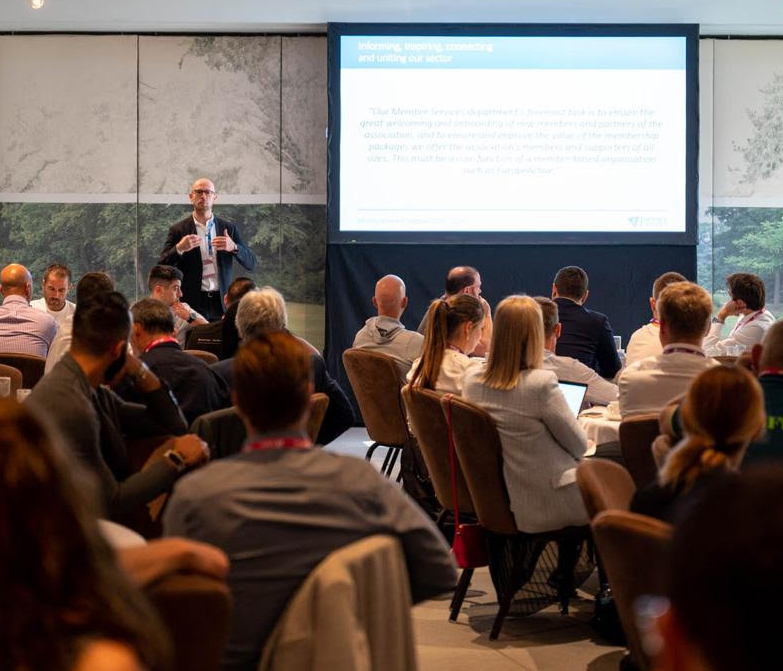
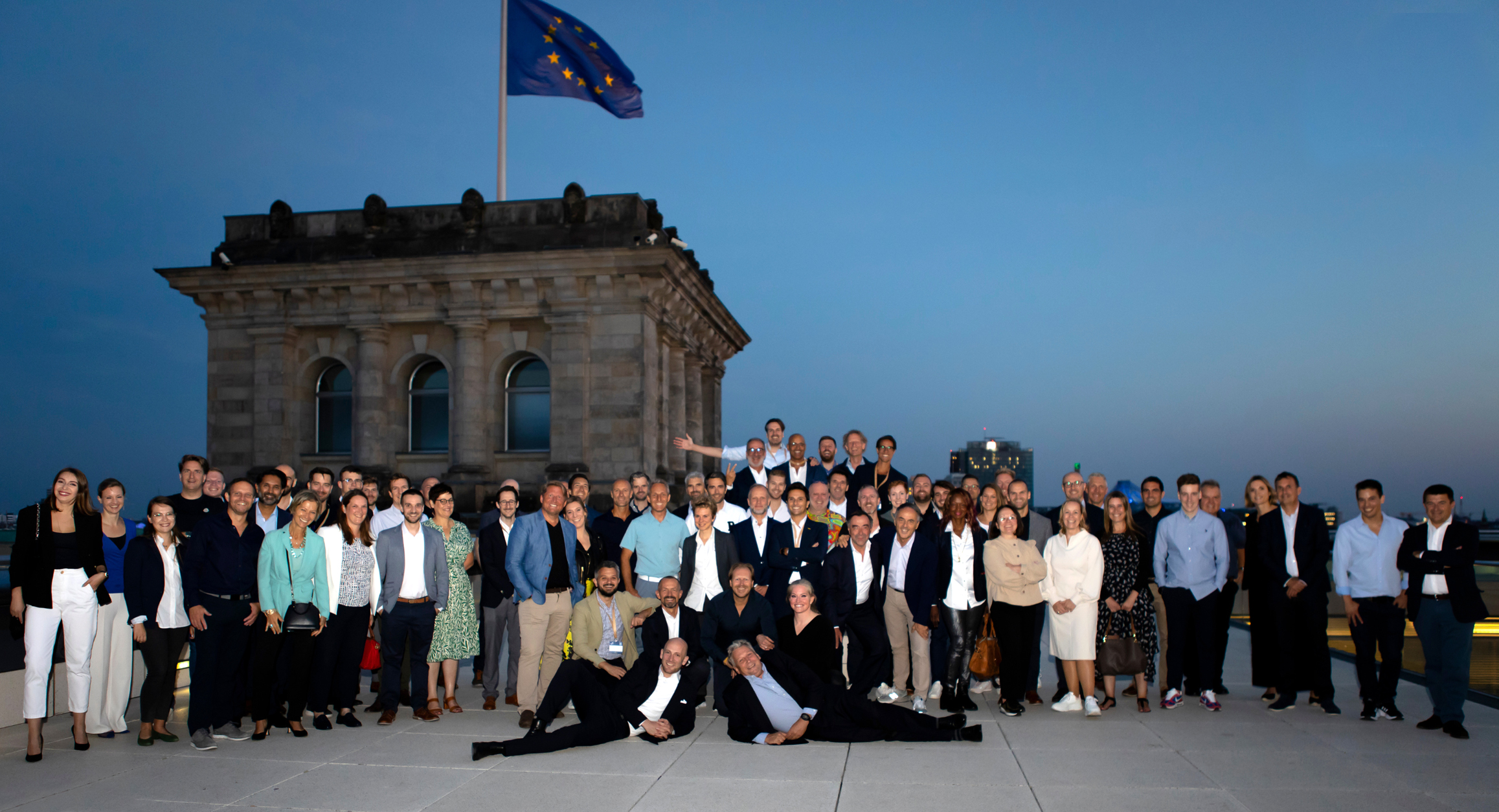
The Europe Active Leadership Forum 2022 in Berlin / Photo: AndreasL.DE
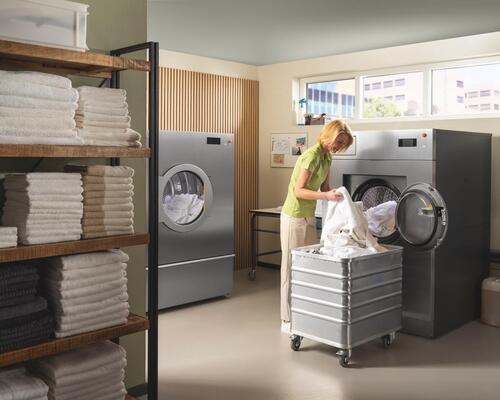
In today’s premium spa environment, every detail shapes the guest experience – right down to
the softness of towels and the freshness of linens. [more...]
Following a couple of enriching days at the Active Leadership Forum in Berlin recently, I took time to reflect on the strong community of industry leaders we have across Europe and how crucial their input will be to the success of the sector at a time of great challenges and greater opportunities.
The pandemic years have been difficult for our industry, testing our resilience and resolve. Financial resources have been strained, as have the mental wellbeing of everyone working in the industry and it’s inspiring to see how business leaders are giving special priority to rebuilding the spirit and welfare of their teams.
Reason for optimism Consumer data from across Europe gives us reason for optimism when it comes to the post-lockdown recovery – albeit with national variations. Data from sources such as Deloitte and McKinsey are indicating strong, growing demand for personalised health services – particularly fitness and exercise – but as the European industry association, we’re aware this positive news needs to be considered in the context of a sector still in recovery mode and facing some clouds on the economic horizon.
There’s little we can do as a sector to change macro-economics, but it’s within our power to determine how we react to what life sends our way.
Strategising around factors such as consumer behaviour, inflationary pricing, staffing and digitisation is essential. We must address immediate challenges, such as energy prices, while connecting with long-term goals – integrating energy conservation measures into our green transition plans, for example.
Since the start of the pandemic we’ve seen businesses and trade associations gain renewed momentum by reinvigorating their purpose and conceiving bold strategies which take disruptive new realities into account. We’ve also experienced how conservatism and a focus on the past can be dangerous when the world is changing so fast.
In EuropeActive’s strategising, we drew inspiration from the existentialist principle that life should be understood looking backwards, but must be lived looking forwards.
Unite to thrive In every crisis there’s potential for growth through transformational renewal and it will be imperative we utilise the same collaborative spirit and creativity that took us through the troubling first years of COVID-19. It’s also important we speak with one voice as we reposition our services as essential to public health.
Gaining essential status will be critical as consumers’ disposable incomes come under pressure. Our offering – health-enhancing physical activity – is a cost-effective, flexible personal health intervention, which suit the busy lives of contemporary Europeans, but too often people regard our service as nice-to-have leisure, rather than need-to-have health. This is a vulnerability when many are forced to cut down on non-essential services.
Making a plan Becoming a recognised solution to today’s public health challenges is our greatest opportunity and challenge and this outcome can only be reached through collective effort by sector trade associations and commercial stakeholders.
Europe Active’s President’s Council has defined four key components needed to support our industry’s positive development:
1) Informing and evidencing Reliable data-collection and research in collaboration with academic partners, evidencing our sector’s health and economic impact.
2) Representation Political representation through effective public affairs work, ensuring evidenced research is recognised in health-policy-making, for example.
3) Reputation management Strategic comms and PR on behalf of the sector, redefining our public image as a health solution.
4) Events to unify The creation of unifying industry events, that ensure collaboration, coordination and the sharing of best-practice across the sector.
We’re fortunate to have some of our sector’s brightest minds supporting Europe Active’s long-term strategising, and I believe we’ll achieve our goals if we place these four objectives at the heart of our work.
It’s essential we take a data-based, consumer-centric approach to the development of our ecosystem, embracing everyone who’s committed to getting more people, more active, more often, knowing that greater physical activity levels in society will also mean more members of health clubs.
As we pledge to European citizens and policy-makers that our sector is ready to play a central role in preventive health, we need to assess ourselves in a constructively self-critical light. Let’s replace protectionism with proactive transformation when needed.
Uniting science and technology European antiquity taught us the wisdom of ‘mens sana in corpore sano’ – ‘a healthy mind in a healthy body’, something modern science has shown to be indisputable.
It’s also essential we demonstrate that health is not just physical, but also mental, spiritual and social.
Furthermore, technology enabled us to connect with anyone everywhere during lockdowns, with this functionality becoming critical to the continuation of our work.
Both science and technology are essential to success, with fitness and health clubs becoming valued third spaces – after home and work – in the busy lives of contemporary Europeans who know they have to invest time and money in their personal health.
Our long-term prospects as an industry are undoubtedly brighter than in the past, and our position as an important partner in building sustainable public health in Europe is more convincing than ever.
All parts of our ecosystem have important roles to play in the endeavour to make our continent’s future healthier and happier. In close collaboration with Europe Active’s national trade association partners, from Dublin to Kyiv and Helsinki to Madrid, we see it as the association’s raison d’être to connect the best of past, present and future to make sure all parts of our sector move forward, united under common guiding stars.
A brighter future
In working to deliver on the sector’s short-term success, the three most essential behaviours will be collaboration, creativity and persistence.
We’ll ride out the current storm provided we collaborate and are sensitive to the transformational winds that are pointing us towards our future horizon – a destination consumer data indicates will be brighter than before.
For this reason, we’ve set the theme of the European Health and Fitness Forum (EHFF) in April 2023 as Transformational Leadership, with speakers from academia and business. We’ll draw on data and present leadership tools to support market expansion beyond 25 per cent penetration, while taking economic turbulence into account.
We’ll also inspire participants by sharing examples of how innovative business models are mobilising new consumer segments, positioning our sector as a provider of exercise in schools, a facilitator of active ageing and a provider of fitness and exercise for medical purposes.
We’ve set the theme of the European Health and Fitness Forum 2023 as Transformational Leadership
Andreas Paulsen speaking at SIBEC 2022 / Photo: SIBEC
Europe Active strategy
More on Europe Active’s political
priorities and lobbying goals
EuropeActive and its national association partners have been initiating actions aimed at securing the sector’s recovery. These include informing the sector on inflationary pricing strategies, related consumer behaviour and energy conservation, as well as ensuring policy-makers Europe-wide are aware of the detrimental effect on public health that would occur if our industry encounters additional financial hardship.
The organisation is also lobbying for reduced VAT on fitness memberships and to make exercise part of the political solution with image-building PR initiatives, such as #BeActive day.
We published the association’s strategy for 2022 to 2025 earlier this year. The plan, titled Moving Forward Together, outlines the strategic directions we intends to lead on behalf of the sector.
By publishing our strategy we aim to demonstrate a level of accountability and transparency that will engage our ecosystem to help us build and align European and national trade associations to achieve common goals.
Our aims for this decade are to become a recognised solution to public health challenges, to use digital and tech to activate European citizens to build an inclusive, environmentally-sustainable sector and to quality-assure and upskill the workforce to ensure there are sufficient qualified professionals to drive the success of operators.
These guiding stars – health, digital, community and standards – must light our path towards 2030.
Andreas Paulsen, CEO of Europe Active
We’re lobbying to reduce VAT on
fitness memberships and to make exercise part of the political solution
The Europe Active Leadership Forum 2022 in Berlin / Photo: AndreasL.DE
Global Wellness Day (GWD) will mark its 15th anniversary on Saturday 13 June 2026, with the
theme: #JoyMagenta – a celebration of the healing qualities of simple gestures and activities
that spark joy.
Global luxury hospitality brand, Six Senses, has partnered with longevity healthcare provider,
HUM2N, to launch a clinic at Six Senses London, at The Whiteley.
As part of its first hotel partnership, Mayrlife – the medical health resort company known for its
site in Altaussee, Austria – has launched a day clinic at the Rosewood Vienna.
Premium London health club, KX Chelsea, will imminently unveil its most significant
redevelopment since its launch in 2002 to create an integrated wellness model combining
training, recovery and relaxation.
Rosewood Le Guanahani St Barth, on the northeast coast of Saint Barthélemy in the French
West Indies, is offering a programme of ocean-inspired yoga classes between 8-14 June to
celebrate Global Wellness Day (GWD).
Hotel de France, located on the British Isle of Jersey, has created a wellness retreat package
that includes a hot yoga session that will take place in Jersey Zoo’s butterfly sanctuary.
The Ritz-Carlton, Langkawi, in Malaysia, has revealed a schedule for Global Wellness Day
(GWD) that includes guided rainforest walks, mindful movement and guided coastal meditation
experiences.
Longevitix, a clinical platform for preventive and longevity medicine, has launched its AI-
powered intelligence system to help physicians deliver continuous, personalised longevity-
focused care at scale.
Atmantan Wellness Centre, an integrative wellness destination in Mulshi, near Pune in India, is
expanding its portfolio by adding a new centre in Hyderabad that will launch between 2028 and
2029.
A recent survey by the UK Spa Association (UKSA) into the industry’s approach to cancer care
has revealed that almost half of participating respondents (46 per cent) are unaware that
cancer is a disability and guests with a cancer diagnosis must be given
In today’s premium spa environment, every detail shapes the guest experience – right down to
the softness of towels and the freshness of linens. [more...]