Do you have a strong opinion, or disagree with somebody else’s point of view on topics related to the spa industry? If so, Spa Business would love to hear from you. Email your letters, thoughts and suggestions to [email protected]
Read more from this issue of Spa Business magazine
View contents of Spa Business 2016 issue 2
Editor’s letter: Who will own the well-life consumer?
It’s the wild west out there and there’s a land grab going on as interested parties make their play to own the well-life consumer. It’s not clear yet how this will pan out as the industry matures, or where spa stands in the pecking order, but the threats are clear
Spa people: Tyler Gage
Runa’s Tyler Gage working with Channing Tatum on an Amazon healing centre
Spa people: Todd Hewitt
For the first time in four years, Shangri-La appoints a global head of spas. Spa Business talks to Todd Hewitt, the man to fill the role
Spa people: James White
Thermal spa researcher and consultant to head up major overhaul of Maruia Hot Springs in New Zealand
Interview: Irene Forte
Daughter of hotelier Sir Rocco Forte and niece of designer Olga Polizzi tells Jane Kitchen why the Rocco Forte Hotel’s new spa concept is a family affair
Design: Natural wonderland
Neena Dhillon visits the striking new Keemala resort and spa in Phuket and finds out about its unique design
Science: Skin deep
Modern research is redefining the way we think about skin. Neuroscientist Dr Claudia Aguirre explains what the findings mean for spas
Promotional feature: Clarins
Clarins’ head of Spas, My Blend and Retail, Prisca Courtin-Clarins, talks about the strides the company is making in highly prescriptive skincare, and the development of hotel spa concepts with the My Blend brand
Promotional feature: Massage Heights
There’s a clear gap in the UK spa market for an affordable local offering that places an emphasis on top-quality treatments and services. Is Massage Heights, the successful US franchise chain, the solution?
Promotional feature: Neaumorinc
From a director of spa at Four Seasons to an entrepreneur who introduces exciting new beauty brands to five-star facilities, Shawna Morneau’s experience on both sides of the industry is enabling her consultancy to have an impact worldwide
Promotional feature: Dr Burgener Switzerland
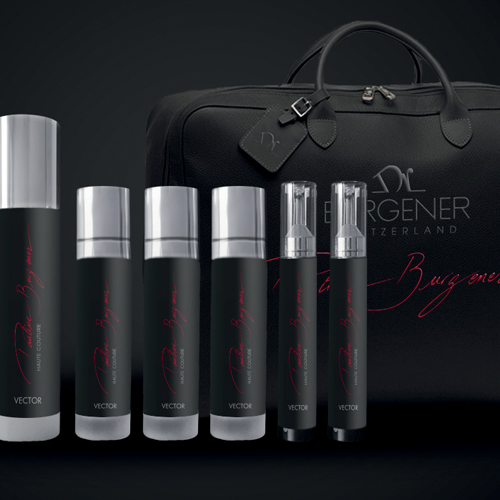
Dr Burgener Switzerland to launch Haute Couture, a revolutionary skin treatment that personalises product and treatments to each person’s skin, using cutting-edge technology
Sensory zone: Set adrift
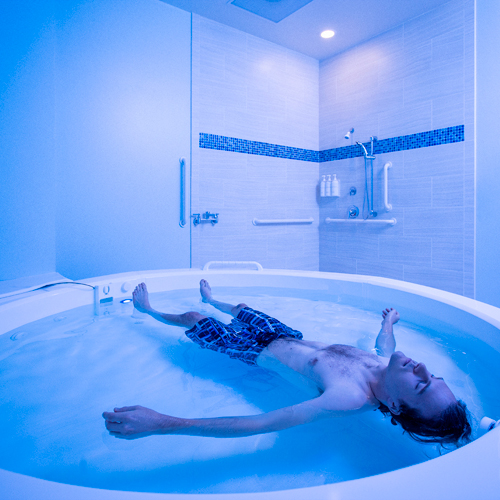
Niamh Madigan talks to researcher Justin Feinstein who thinks floatation could be a shortcut to meditation
Fitness: Defying gravity
The founder of AntiGravity® Aerial Yoga tells Niamh Madigan about the technique and a new suspension massage he’s developing for spas
Promotional feature: Gharieni
As Gharieni prepares to celebrate 25 years in the industry, founder and CEO Sammy Gharieni talks about the company’s culture of innovation, and how there will so many more exciting products to come
Two Bunch Palms had success with solar energy says Kelly
Kevin KellyCEOCivano Living
The term triple bottom line (TBL) refers to the economic, social and environmental benefit or loss of an investment, but balancing the three can be tough for businesses.
Most consumers emotionally support the TBL benefits and are cost-conscious, while investors usually demand short-term capital repayment timelines. Many firms believe they need to ensure that the economic bottom-line is achieved before having the luxury of focusing on the broader TBL objectives.
However, in my recent role as CEO at Two Bunch Palms Spa Resort – which was being transformed into a carbon-neutral property – we were able to achieve economic, social and environmental objectives simultaneously and had the best revenue and occupancy ever.
Partnering with Pear Energy we built a 550 kW solar facility that generated the equivalent of the resort’s annual electrical needs. The capital investment generated a 10.5-12 per cent ROI through tax credits and cash payments based on a 21-year amortisation schedule. The 2015-2016 energy bill was 6 per cent less and the resort was less susceptible to public utility rate hikes. These savings flowed straight to the bottom-line and can proportionately reduce operating expenses if energy costs rise in the future.
Equally important, since 80 per cent of Two Bunch Palm’s spa-oriented target market resonated with being environmentally responsible, the brand was better aligned with its customers’ core values, which enhanced consumer loyalty.
Lastly, when the resort introduced a solar field it was able to save the equivalent of 455 trees in just eight months. In the same time, it was able to generate over 500,000 hours of electricity, conserve 14 million gallons of water and offset the equivalent of 200,000lbs of carbon from entering the atmosphere, with more environmental benefit accruing each day.
In my experience, TBL is definitely achievable and by doing good, businesses can do well by reducing operating costs, having a deeper connection with customers and helping the planet along the way.
Tel: +1 520 661 1064
"We were able to achieve economic, social and environmental objectives and had the best revenue and occupancy ever"
Being eco-friendly resonated with spa guests and enhanced consumer loyalty
DOES VARIABLE PRICING WORK IN SPAS?
Lindsay Madden-Nadeau
Lindsay Madden-NadeauDirector spa integration and operationsFRHI
At the Professional Spa & Wellness event in Dubai in February, a thought-provoking panel discussion examined pricing. Each panellist came from a company with a different business structure which left me wondering, does variable pricing work?
Airlines and hotels utilise demand pricing, where the price changes from one minute to the next, but these transactions are based on schedule and convenience, whereas when booking a spa treatment, time can be managed more and is more flexible.
I agree that resort spas should look at increasing prices in peak season to maximise revenues; and adjust prices in the off-season, when the demand drops, along with the hotel rates.
This is because seasonal pricing is less likely to upset guests, compared to having one treatment price on a Monday while getting charged a higher rate a couple of days later.
I asked one of our spas in California – which practices weekday versus weekend prices – if guests were ever upset at the difference in prices. The answer was no. The spa’s normal asking price was the weekend rate, so the lower selling rate in the week was perceived as a discount.
It made me consider different spa models and what works in different environments. If spas are utilising discounts properly in off-peak periods and practicing yield management in peak times, this could also be interpreted as variable pricing. Food for thought.
Phone: +971 4 437 7434
"Can we compare the luxury of a spa treatment to the art of booking a hotel room or seat with an airline?"
Spas need to be careful not to upset clients, especially regular ones, with price disparities
IS THE PRINT SPA MENU OUTDATED?
Anja Eva KellerIndependent spa & Wellness Consultant
When was the last time you were given a hardcopy food/drinks menu in a restaurant? Maybe not so long ago, as the majority still distribute hard copies as well as having online versions. Same for most spas.
But as more spas gradually introduce real-time online booking options, it leads me to question whether printed spa menus are outdated?
The way some spas request customers to phone or email to make a booking definitely seems outmoded.
A phone call may not always be a preferred way of contact for a travelling guest or busy spa reception, for example.
An email bears the risk of time delays: message has to be sent, replied to and confirmed by both sides, etc.
Spa online booking is one answer, with operators who choose this route seeing an increase in revenue from more appointments released. One spa software company reports that spas which offer online, real-time booking are seeing up to 10 per cent of appointments made that way.
Meanwhile, Mandarin Oriental is taking its online booking a step further with the paperless spa, checking guests in from tablets.
It will be interesting to observe the technological development in our industry. I don’t believe that print spa menus are going to – nor should – disappear entirely, but I am a total fan of the paperless office and online booking.
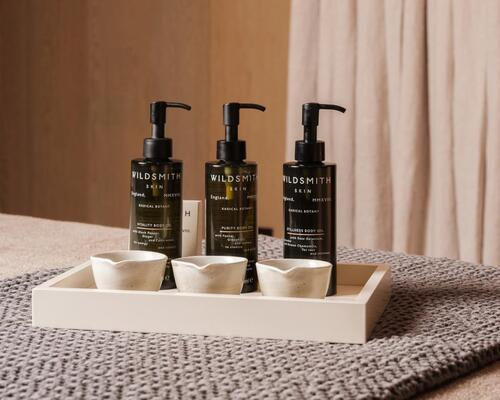
In a world where imbalance often accumulates quietly, Wildsmith unveils its newest
wellbeing innovation: Silent Loads, an approach designed to meet the needs of modern spa
guests with precision and depth. [more...]
Do you have a strong opinion, or disagree with somebody else’s point of view on topics related to the spa industry? If so, Spa Business would love to hear from you. Email your letters, thoughts and suggestions to [email protected]
Read more from this issue of Spa Business magazine
View contents of Spa Business 2016 issue 2
Editor’s letter: Who will own the well-life consumer?
It’s the wild west out there and there’s a land grab going on as interested parties make their play to own the well-life consumer. It’s not clear yet how this will pan out as the industry matures, or where spa stands in the pecking order, but the threats are clear
Spa people: Tyler Gage
Runa’s Tyler Gage working with Channing Tatum on an Amazon healing centre
Spa people: Todd Hewitt
For the first time in four years, Shangri-La appoints a global head of spas. Spa Business talks to Todd Hewitt, the man to fill the role
Spa people: James White
Thermal spa researcher and consultant to head up major overhaul of Maruia Hot Springs in New Zealand
Interview: Irene Forte
Daughter of hotelier Sir Rocco Forte and niece of designer Olga Polizzi tells Jane Kitchen why the Rocco Forte Hotel’s new spa concept is a family affair
Design: Natural wonderland
Neena Dhillon visits the striking new Keemala resort and spa in Phuket and finds out about its unique design
Science: Skin deep
Modern research is redefining the way we think about skin. Neuroscientist Dr Claudia Aguirre explains what the findings mean for spas
Promotional feature: Clarins
Clarins’ head of Spas, My Blend and Retail, Prisca Courtin-Clarins, talks about the strides the company is making in highly prescriptive skincare, and the development of hotel spa concepts with the My Blend brand
Promotional feature: Massage Heights
There’s a clear gap in the UK spa market for an affordable local offering that places an emphasis on top-quality treatments and services. Is Massage Heights, the successful US franchise chain, the solution?
Promotional feature: Neaumorinc
From a director of spa at Four Seasons to an entrepreneur who introduces exciting new beauty brands to five-star facilities, Shawna Morneau’s experience on both sides of the industry is enabling her consultancy to have an impact worldwide
Promotional feature: Dr Burgener Switzerland
Dr Burgener Switzerland to launch Haute Couture, a revolutionary skin treatment that personalises product and treatments to each person’s skin, using cutting-edge technology
Sensory zone: Set adrift
Niamh Madigan talks to researcher Justin Feinstein who thinks floatation could be a shortcut to meditation
Fitness: Defying gravity
The founder of AntiGravity® Aerial Yoga tells Niamh Madigan about the technique and a new suspension massage he’s developing for spas
Promotional feature: Gharieni
As Gharieni prepares to celebrate 25 years in the industry, founder and CEO Sammy Gharieni talks about the company’s culture of innovation, and how there will so many more exciting products to come
Two Bunch Palms had success with solar energy says Kelly
Kevin KellyCEOCivano Living
The term triple bottom line (TBL) refers to the economic, social and environmental benefit or loss of an investment, but balancing the three can be tough for businesses.
Most consumers emotionally support the TBL benefits and are cost-conscious, while investors usually demand short-term capital repayment timelines. Many firms believe they need to ensure that the economic bottom-line is achieved before having the luxury of focusing on the broader TBL objectives.
However, in my recent role as CEO at Two Bunch Palms Spa Resort – which was being transformed into a carbon-neutral property – we were able to achieve economic, social and environmental objectives simultaneously and had the best revenue and occupancy ever.
Partnering with Pear Energy we built a 550 kW solar facility that generated the equivalent of the resort’s annual electrical needs. The capital investment generated a 10.5-12 per cent ROI through tax credits and cash payments based on a 21-year amortisation schedule. The 2015-2016 energy bill was 6 per cent less and the resort was less susceptible to public utility rate hikes. These savings flowed straight to the bottom-line and can proportionately reduce operating expenses if energy costs rise in the future.
Equally important, since 80 per cent of Two Bunch Palm’s spa-oriented target market resonated with being environmentally responsible, the brand was better aligned with its customers’ core values, which enhanced consumer loyalty.
Lastly, when the resort introduced a solar field it was able to save the equivalent of 455 trees in just eight months. In the same time, it was able to generate over 500,000 hours of electricity, conserve 14 million gallons of water and offset the equivalent of 200,000lbs of carbon from entering the atmosphere, with more environmental benefit accruing each day.
In my experience, TBL is definitely achievable and by doing good, businesses can do well by reducing operating costs, having a deeper connection with customers and helping the planet along the way.
Tel: +1 520 661 1064
"We were able to achieve economic, social and environmental objectives and had the best revenue and occupancy ever"
Being eco-friendly resonated with spa guests and enhanced consumer loyalty
DOES VARIABLE PRICING WORK IN SPAS?
Lindsay Madden-Nadeau
Lindsay Madden-NadeauDirector spa integration and operationsFRHI
At the Professional Spa & Wellness event in Dubai in February, a thought-provoking panel discussion examined pricing. Each panellist came from a company with a different business structure which left me wondering, does variable pricing work?
Airlines and hotels utilise demand pricing, where the price changes from one minute to the next, but these transactions are based on schedule and convenience, whereas when booking a spa treatment, time can be managed more and is more flexible.
I agree that resort spas should look at increasing prices in peak season to maximise revenues; and adjust prices in the off-season, when the demand drops, along with the hotel rates.
This is because seasonal pricing is less likely to upset guests, compared to having one treatment price on a Monday while getting charged a higher rate a couple of days later.
I asked one of our spas in California – which practices weekday versus weekend prices – if guests were ever upset at the difference in prices. The answer was no. The spa’s normal asking price was the weekend rate, so the lower selling rate in the week was perceived as a discount.
It made me consider different spa models and what works in different environments. If spas are utilising discounts properly in off-peak periods and practicing yield management in peak times, this could also be interpreted as variable pricing. Food for thought.
Phone: +971 4 437 7434
"Can we compare the luxury of a spa treatment to the art of booking a hotel room or seat with an airline?"
Spas need to be careful not to upset clients, especially regular ones, with price disparities
IS THE PRINT SPA MENU OUTDATED?
Anja Eva KellerIndependent spa & Wellness Consultant
When was the last time you were given a hardcopy food/drinks menu in a restaurant? Maybe not so long ago, as the majority still distribute hard copies as well as having online versions. Same for most spas.
But as more spas gradually introduce real-time online booking options, it leads me to question whether printed spa menus are outdated?
The way some spas request customers to phone or email to make a booking definitely seems outmoded.
A phone call may not always be a preferred way of contact for a travelling guest or busy spa reception, for example.
An email bears the risk of time delays: message has to be sent, replied to and confirmed by both sides, etc.
Spa online booking is one answer, with operators who choose this route seeing an increase in revenue from more appointments released. One spa software company reports that spas which offer online, real-time booking are seeing up to 10 per cent of appointments made that way.
Meanwhile, Mandarin Oriental is taking its online booking a step further with the paperless spa, checking guests in from tablets.
It will be interesting to observe the technological development in our industry. I don’t believe that print spa menus are going to – nor should – disappear entirely, but I am a total fan of the paperless office and online booking.
Global Wellness Day (GWD) will mark its 15th anniversary on Saturday 13 June 2026, with the
theme: #JoyMagenta – a celebration of the healing qualities of simple gestures and activities
that spark joy.
Global luxury hospitality brand, Six Senses, has partnered with longevity healthcare provider,
HUM2N, to launch a clinic at Six Senses London, at The Whiteley.
As part of its first hotel partnership, Mayrlife – the medical health resort company known for its
site in Altaussee, Austria – has launched a day clinic at the Rosewood Vienna.
Premium London health club, KX Chelsea, will imminently unveil its most significant
redevelopment since its launch in 2002 to create an integrated wellness model combining
training, recovery and relaxation.
Rosewood Le Guanahani St Barth, on the northeast coast of Saint Barthélemy in the French
West Indies, is offering a programme of ocean-inspired yoga classes between 8-14 June to
celebrate Global Wellness Day (GWD).
Hotel de France, located on the British Isle of Jersey, has created a wellness retreat package
that includes a hot yoga session that will take place in Jersey Zoo’s butterfly sanctuary.
The Ritz-Carlton, Langkawi, in Malaysia, has revealed a schedule for Global Wellness Day
(GWD) that includes guided rainforest walks, mindful movement and guided coastal meditation
experiences.
Longevitix, a clinical platform for preventive and longevity medicine, has launched its AI-
powered intelligence system to help physicians deliver continuous, personalised longevity-
focused care at scale.
Atmantan Wellness Centre, an integrative wellness destination in Mulshi, near Pune in India, is
expanding its portfolio by adding a new centre in Hyderabad that will launch between 2028 and
2029.
A recent survey by the UK Spa Association (UKSA) into the industry’s approach to cancer care
has revealed that almost half of participating respondents (46 per cent) are unaware that
cancer is a disability and guests with a cancer diagnosis must be given
In a world where imbalance often accumulates quietly, Wildsmith unveils its newest
wellbeing innovation: Silent Loads, an approach designed to meet the needs of modern spa
guests with precision and depth. [more...]