It doesn’t seem long ago that spas became the must-have addition to any self-respecting luxury hotel or resort.
Now, a growing number of operators are incorporating not just spas but dedicated wellness services – and in some cases standalone wellness centres – into their offering.
This trend is being driven by consumer and media interest in keeping healthy, an overall industry movement away from pampering and struggling national medical systems.
The definition of ‘wellness’ is as open to interpretation today as ‘spa’ was 15 years ago. But, in general, it’s taken to mean health-orientated treatments rather than those that focus only on beauty and relaxation.
While wellness has traditionally been the domain of destination spas, an increasing number of hotel and resort oper ators, and the spa management companies that serve them, are now looking to stake their claim as providers.
But while an on-site wellness centre might bring a certain cachet, the extra resources needed to run it – not least the speciality staff required – make it no small investment. So is it worth it? We ask the operators behind two of the most significant wellness centres to open last year to share their insights.
Read more from this issue of Spa Business magazine
View contents of Spa Business 2016 issue 2
Editor’s letter: Who will own the well-life consumer?
It’s the wild west out there and there’s a land grab going on as interested parties make their play to own the well-life consumer. It’s not clear yet how this will pan out as the industry matures, or where spa stands in the pecking order, but the threats are clear
Spa people: Tyler Gage
Runa’s Tyler Gage working with Channing Tatum on an Amazon healing centre
Spa people: Todd Hewitt
For the first time in four years, Shangri-La appoints a global head of spas. Spa Business talks to Todd Hewitt, the man to fill the role
Spa people: James White
Thermal spa researcher and consultant to head up major overhaul of Maruia Hot Springs in New Zealand
Interview: Irene Forte
Daughter of hotelier Sir Rocco Forte and niece of designer Olga Polizzi tells Jane Kitchen why the Rocco Forte Hotel’s new spa concept is a family affair
Design: Natural wonderland
Neena Dhillon visits the striking new Keemala resort and spa in Phuket and finds out about its unique design
Science: Skin deep
Modern research is redefining the way we think about skin. Neuroscientist Dr Claudia Aguirre explains what the findings mean for spas
Promotional feature: Clarins
Clarins’ head of Spas, My Blend and Retail, Prisca Courtin-Clarins, talks about the strides the company is making in highly prescriptive skincare, and the development of hotel spa concepts with the My Blend brand
Promotional feature: Massage Heights
There’s a clear gap in the UK spa market for an affordable local offering that places an emphasis on top-quality treatments and services. Is Massage Heights, the successful US franchise chain, the solution?
Promotional feature: Neaumorinc
From a director of spa at Four Seasons to an entrepreneur who introduces exciting new beauty brands to five-star facilities, Shawna Morneau’s experience on both sides of the industry is enabling her consultancy to have an impact worldwide
Promotional feature: Dr Burgener Switzerland
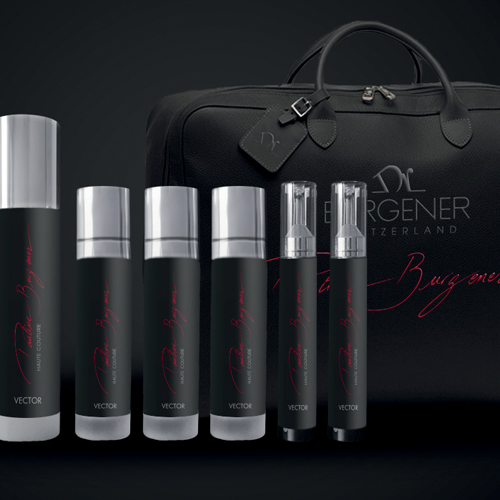
Dr Burgener Switzerland to launch Haute Couture, a revolutionary skin treatment that personalises product and treatments to each person’s skin, using cutting-edge technology
Sensory zone: Set adrift
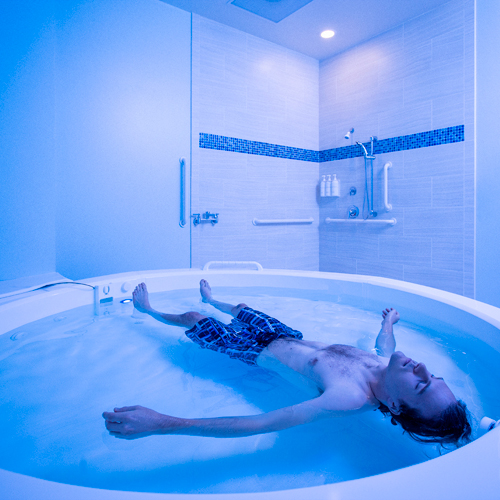
Niamh Madigan talks to researcher Justin Feinstein who thinks floatation could be a shortcut to meditation
Fitness: Defying gravity
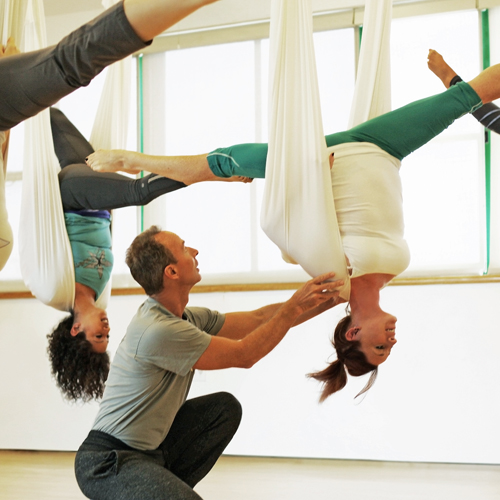
The founder of AntiGravity® Aerial Yoga tells Niamh Madigan about the technique and a new suspension massage he’s developing for spas
Promotional feature: Gharieni
As Gharieni prepares to celebrate 25 years in the industry, founder and CEO Sammy Gharieni talks about the company’s culture of innovation, and how there will so many more exciting products to come
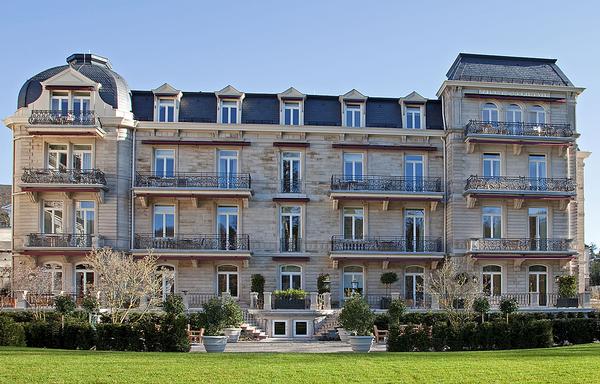
Villa Stéphanie and Haus Julius Brenners Park Hotel & Spa Brenners Park-Hotel & Spa in Baden-Baden is the flagship property of the Oetker Collection which is investing heavily in wellness worldwide. A well-known hotel in Germany’s famous spa town, it’s no stranger to the wellness game and has offered medical services for over 30 years. But with a newly opened destination spa and medical centre now on-site, it’s taking the concept to another level.
Located in a renovated historic building adjacent to the hotel, Villa Stéphanie is five-floor dedicated destination spa/wellness centre which opened in January 2015. It aims to offer something for everyone, with a wide range of beauty, detox, nutritional and emotional wellbeing services. Facilities comprise 15 treatment rooms, a gym, hammam, plunge pool, mixed sauna and ladies sauna (very important for key Middle Eastern guests). In addition, there are 15 guest rooms, aimed at those booking seven- to 10-day wellness packages.
Housed in another separate mansion, the 1,700sq m (18,3000sq ft) Haus Julius is home to six teams of specialists – focused on medical check-ups, gynaecology and obstetrics, ophthalmology, dentistry, aesthetic medicine and physiotherapy – and more than 20 doctors.
In addition to these facilities, the main hotel building houses a pre-existing fitness centre, pool and butler-serviced spa suite.
The guest rooms at Villa Stéphanie, enable Brenners Park to now attract serious spa or medical travellers who might not want to mix with ‘normal’ hotel guests, says spa manager, Hans Peter Veit: “Everything is under one roof, they can come down to breakfast in their bath robe and if they’re doing a detox or weight loss programme, they don’t have to walk past a cheese presentation first.”
A particular draw is that all package guests have a menu drawn up based on individual preferences and needs. As a bonus, the hotel’s double Michelin-starred chef Paul Stradner will even cook them a weight loss or detox meal during their stay.
To date, room occupancy at Villa Stéphanie has been in the high 70 per cents, somewhat higher than in the 100-room hotel, where it’s 62 per cent. And this in spite of Villa Stéphanie rooms being sold at €100 more than the average room rate of the main hotel. But although Villa Stéphanie clearly works as a destination spa, the inclusion of beauty and relaxation services means it’s also attractive to those who simply want a one-off treatment during their stay at the main hotel. The average capture rate is around 20 per cent, though sometimes as high as 50 per cent.
One of the reasons the company agreed to invest in an extensive wellness offering, says Veit, is that it helps to drive occupancy in low season. Another is that it has international appeal. He says: “Our clients are very international; only 35 per cent are Germans. Our clients are from the US, Russia and the Middle East and we have to offer them something that will persuade them to choose us over our competition – and that’s not going to be a beauty salon, restaurant or rooms.”
In terms of keeping costs down, staffing is key. While all 30 of the Villa Stéphanie spa team (including receptionists, therapists and nutritionists) and are employed by Brenners Park, Haus Julius works differently. All doctors and other medical specialists pay a low monthly rent and continue to run their own private practices, seeing local clients as well as hotel guests. But as part of the deal, they guarantee Brenners Park guests a priority service, including the ability to book appointments at short notice. “They cannot fully book themselves,” says Veit.
As a family-owned hotel, Brenners Park is in it for the long haul and is not looking for a quick return on investment, says Veit. That said, by 2018 it’s hoped that Villa Stéphanie will be running at 100 per cent occupancy and the business overall – across all departments – will be beginning to see a return. “Offering medical services is very challenging,” says Veit. “But if you do it like this, at a high level, it’s very hard to copy and it can be a really unique selling proposition.”
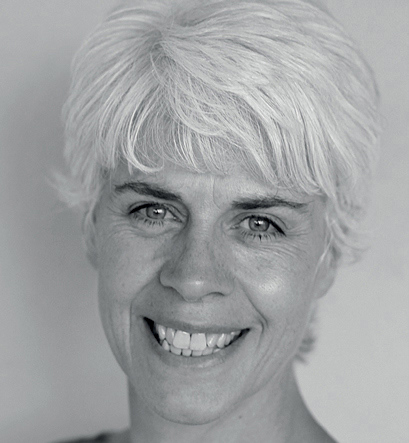
Hans Peter Veit
Villa Stéphanie at Brenners Park has an average capture rate of 20 per cent and gives the resort a real USP says Veit
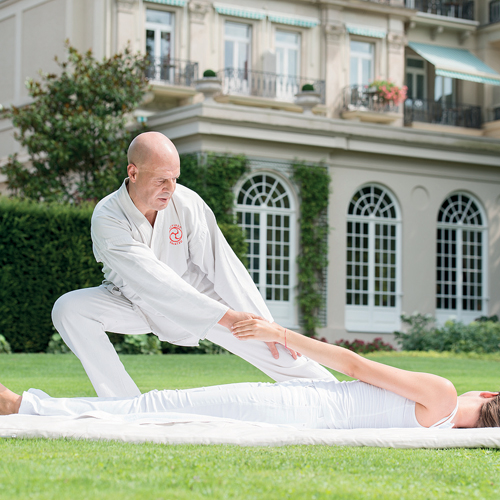
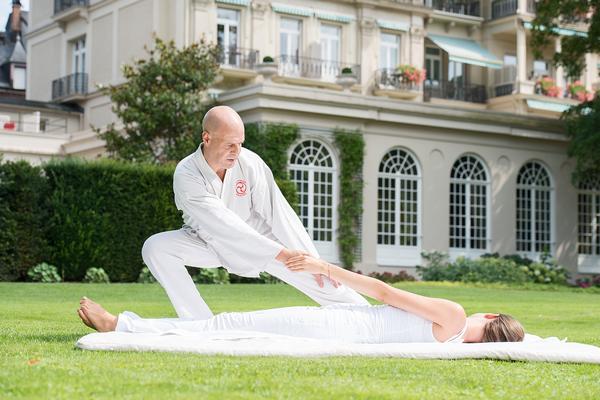
Shiatsu aids mental and emotional wellbeing and Pierre Clavreux’s Kiyindo technique helps ease pain
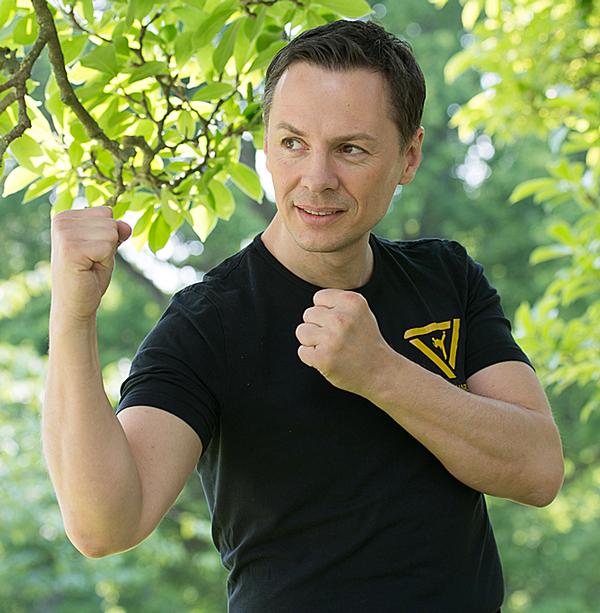
European kickboxing champion Henri Charlet helps guests to burn calories and increase flexibility
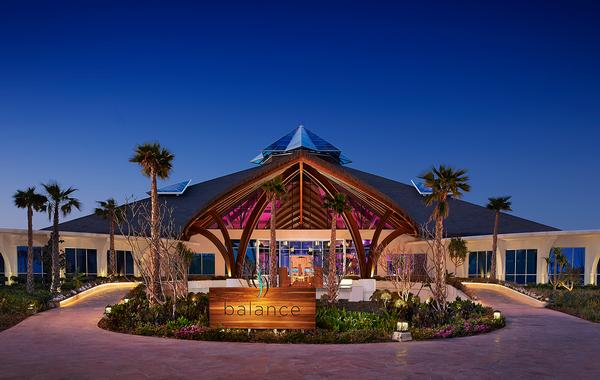
Balance Wellness Centre Banana Island Resort Doha by Anantara Balance Wellness Centre at Banana Island Resort Doha by Anantara is not only the first resort-based wellness centre in the Middle East, it’s the first dedicated wellness concept from MSpa International. A subsidiary of Asia’s Minor Hotel Group – which owns the Anantara, Per Aquum, Avani and Tivoli brands plus the Mandara licence in Thailand – MSpa manages close to 50 spas. At Banana Island, for the first time, it’s chosen to open a standalone wellness centre as well as – not instead of – an Anantara Spa. If successful, it could be the blueprint for wellness centres at other MSpa properties.
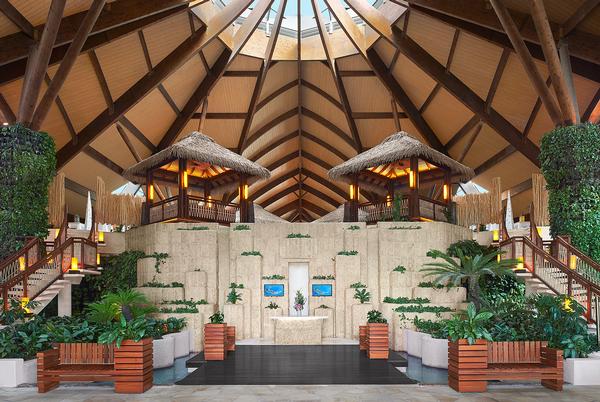
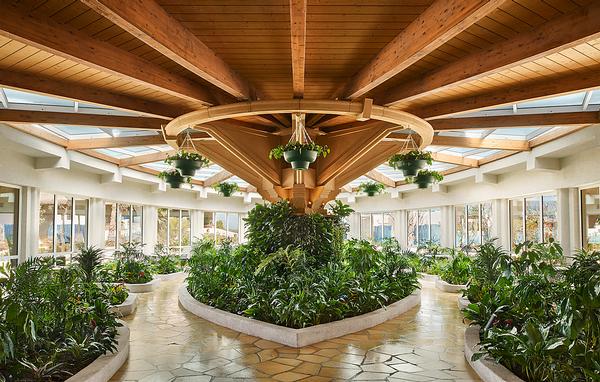
The 141-room resort, owned by Al Rayyan Hospitality, launched in the Balance Wellness Centre January 2015. It features eight treatment rooms and two consultation rooms, relaxation areas, a fitness centre, a reflexology pool and indoor botanical garden. It offers a range of health-focused programmes over two or more days – from Relaxation, Detox, Fitness and Weight Management to Yoga and Ayurvedic Therapy – and an on-site organic café. In contrast, the spa, with nine treatment rooms and an extensive wet area, focuses on beauty and relaxation services only.
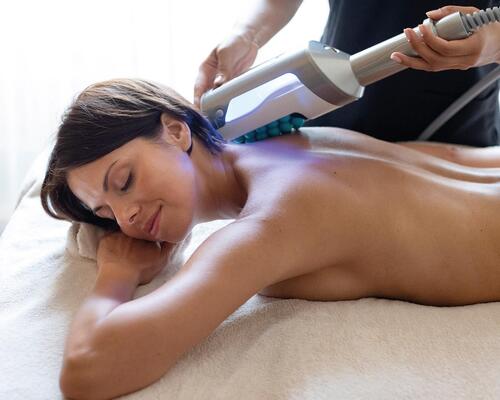
Services at the wellness centre are drawn from a variety of disciplines, with treatments such as lymphatic drainage massage, colon therapy, facial acupressure and reflexology offered alongside yoga, mindfulness and fitness sessions. Ayurvedic therapies, overseen by an in-house ayurvedic doctor, are a speciality. But technology is also being embraced – the centre is currently in the process of installing several items of wellness equipment including a body composition analysis machine, a flotation pod, a treatment cabin combining chromatherapy, hydrotherapy and Vichy showers, and an infrared sauna.
According to Aye Mon Yee, the resort’s director of spa and wellness, MSpa did a lot of research into what was already available in the target market GCC states – as well as what was needed – when devising the treatment menu. The team focused especially on problems associated with the region, including joint pain linked to extremes of temperature and weight management. The conclusion, says Yee, was “that combining equipment with hands-on therapies would get the best results”.
In a paradise island setting, yet very accessible for people from Doha, Banana Island is already proving popular with short-stay guests and occupancy at the resort is 40-60 per cent mid-week and 70-80 per cent at weekends. It’s hoped the Balance Wellness Centre will eventually help it to attract longer-stay regional guests – those who would usually go to Asian resorts such as Chiva-Som or medical specialists in the UK to meet their wellness needs. EU nationals in transit to other parts of the world, who might be persuaded to combine a stop-over with a wellness retreat, are another target market.
Since the launch, the capture rate for the wellness centre has been a very modest 2.5-3 per cent, compared to an impressive 79 per cent for spa and wellness combined. However, the new equipment is only now being installed. Once this is in place, Yee plans to start working with travel agents to actively market the Balance Wellness residential retreats (combining rooms with programmes) with a view to attracting more primary wellness travellers.
The local market is also crucial to the centre says Yee. Day guests from Doha already account for more than 40 per cent of business, and she expects this to rise.
Since opening, a few adjustments have been made at Balance Wellness Centre. Originally, it only offered programmes lasting two days or more, although full-day or half-day programmes and even single treatments, were provided on request. Since this March, à la carte treatments have been included on the menu. Under the heading Healing Treatments Around the World, these include Indian healing massage, Thai massage and shiatsu.
In total, the centre employs 11 full-time staff, including the ayurvedic doctor and five specialist therapists with backgrounds ranging from nursing to physiotherapy. Yee admits that this, as well as the investment in equipment, has been costly, but says it’s a must to have a top offer.
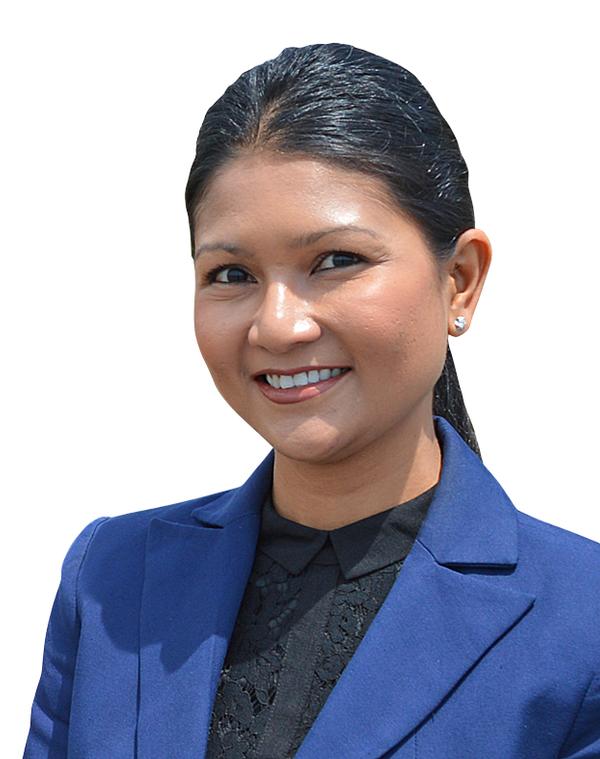
Aye Mon Yee
If successful, Balance Wellness Centre could be the blueprint for other wellness facilities by MSpa
The centre will attract longer-stay guests
An indoor botanical garden is part of the offering
Rhianon Howells is a business journalist specialising in spa, fitness, architecture and HR
Le Atelier by C.O.D.E. doesn't offer a standard bespoke service, it provides a highly
customised approach to designing massage beds and loungers in high-end wellness
environments. [more...]
It doesn’t seem long ago that spas became the must-have addition to any self-respecting luxury hotel or resort.
Now, a growing number of operators are incorporating not just spas but dedicated wellness services – and in some cases standalone wellness centres – into their offering.
This trend is being driven by consumer and media interest in keeping healthy, an overall industry movement away from pampering and struggling national medical systems.
The definition of ‘wellness’ is as open to interpretation today as ‘spa’ was 15 years ago. But, in general, it’s taken to mean health-orientated treatments rather than those that focus only on beauty and relaxation.
While wellness has traditionally been the domain of destination spas, an increasing number of hotel and resort oper ators, and the spa management companies that serve them, are now looking to stake their claim as providers.
But while an on-site wellness centre might bring a certain cachet, the extra resources needed to run it – not least the speciality staff required – make it no small investment. So is it worth it? We ask the operators behind two of the most significant wellness centres to open last year to share their insights.
Read more from this issue of Spa Business magazine
View contents of Spa Business 2016 issue 2
Editor’s letter: Who will own the well-life consumer?
It’s the wild west out there and there’s a land grab going on as interested parties make their play to own the well-life consumer. It’s not clear yet how this will pan out as the industry matures, or where spa stands in the pecking order, but the threats are clear
Spa people: Tyler Gage
Runa’s Tyler Gage working with Channing Tatum on an Amazon healing centre
Spa people: Todd Hewitt
For the first time in four years, Shangri-La appoints a global head of spas. Spa Business talks to Todd Hewitt, the man to fill the role
Spa people: James White
Thermal spa researcher and consultant to head up major overhaul of Maruia Hot Springs in New Zealand
Interview: Irene Forte
Daughter of hotelier Sir Rocco Forte and niece of designer Olga Polizzi tells Jane Kitchen why the Rocco Forte Hotel’s new spa concept is a family affair
Design: Natural wonderland
Neena Dhillon visits the striking new Keemala resort and spa in Phuket and finds out about its unique design
Science: Skin deep
Modern research is redefining the way we think about skin. Neuroscientist Dr Claudia Aguirre explains what the findings mean for spas
Promotional feature: Clarins
Clarins’ head of Spas, My Blend and Retail, Prisca Courtin-Clarins, talks about the strides the company is making in highly prescriptive skincare, and the development of hotel spa concepts with the My Blend brand
Promotional feature: Massage Heights
There’s a clear gap in the UK spa market for an affordable local offering that places an emphasis on top-quality treatments and services. Is Massage Heights, the successful US franchise chain, the solution?
Promotional feature: Neaumorinc
From a director of spa at Four Seasons to an entrepreneur who introduces exciting new beauty brands to five-star facilities, Shawna Morneau’s experience on both sides of the industry is enabling her consultancy to have an impact worldwide
Promotional feature: Dr Burgener Switzerland
Dr Burgener Switzerland to launch Haute Couture, a revolutionary skin treatment that personalises product and treatments to each person’s skin, using cutting-edge technology
Sensory zone: Set adrift
Niamh Madigan talks to researcher Justin Feinstein who thinks floatation could be a shortcut to meditation
Fitness: Defying gravity
The founder of AntiGravity® Aerial Yoga tells Niamh Madigan about the technique and a new suspension massage he’s developing for spas
Promotional feature: Gharieni
As Gharieni prepares to celebrate 25 years in the industry, founder and CEO Sammy Gharieni talks about the company’s culture of innovation, and how there will so many more exciting products to come
Villa Stéphanie and Haus Julius Brenners Park Hotel & Spa Brenners Park-Hotel & Spa in Baden-Baden is the flagship property of the Oetker Collection which is investing heavily in wellness worldwide. A well-known hotel in Germany’s famous spa town, it’s no stranger to the wellness game and has offered medical services for over 30 years. But with a newly opened destination spa and medical centre now on-site, it’s taking the concept to another level.
Located in a renovated historic building adjacent to the hotel, Villa Stéphanie is five-floor dedicated destination spa/wellness centre which opened in January 2015. It aims to offer something for everyone, with a wide range of beauty, detox, nutritional and emotional wellbeing services. Facilities comprise 15 treatment rooms, a gym, hammam, plunge pool, mixed sauna and ladies sauna (very important for key Middle Eastern guests). In addition, there are 15 guest rooms, aimed at those booking seven- to 10-day wellness packages.
Housed in another separate mansion, the 1,700sq m (18,3000sq ft) Haus Julius is home to six teams of specialists – focused on medical check-ups, gynaecology and obstetrics, ophthalmology, dentistry, aesthetic medicine and physiotherapy – and more than 20 doctors.
In addition to these facilities, the main hotel building houses a pre-existing fitness centre, pool and butler-serviced spa suite.
The guest rooms at Villa Stéphanie, enable Brenners Park to now attract serious spa or medical travellers who might not want to mix with ‘normal’ hotel guests, says spa manager, Hans Peter Veit: “Everything is under one roof, they can come down to breakfast in their bath robe and if they’re doing a detox or weight loss programme, they don’t have to walk past a cheese presentation first.”
A particular draw is that all package guests have a menu drawn up based on individual preferences and needs. As a bonus, the hotel’s double Michelin-starred chef Paul Stradner will even cook them a weight loss or detox meal during their stay.
To date, room occupancy at Villa Stéphanie has been in the high 70 per cents, somewhat higher than in the 100-room hotel, where it’s 62 per cent. And this in spite of Villa Stéphanie rooms being sold at €100 more than the average room rate of the main hotel. But although Villa Stéphanie clearly works as a destination spa, the inclusion of beauty and relaxation services means it’s also attractive to those who simply want a one-off treatment during their stay at the main hotel. The average capture rate is around 20 per cent, though sometimes as high as 50 per cent.
One of the reasons the company agreed to invest in an extensive wellness offering, says Veit, is that it helps to drive occupancy in low season. Another is that it has international appeal. He says: “Our clients are very international; only 35 per cent are Germans. Our clients are from the US, Russia and the Middle East and we have to offer them something that will persuade them to choose us over our competition – and that’s not going to be a beauty salon, restaurant or rooms.”
In terms of keeping costs down, staffing is key. While all 30 of the Villa Stéphanie spa team (including receptionists, therapists and nutritionists) and are employed by Brenners Park, Haus Julius works differently. All doctors and other medical specialists pay a low monthly rent and continue to run their own private practices, seeing local clients as well as hotel guests. But as part of the deal, they guarantee Brenners Park guests a priority service, including the ability to book appointments at short notice. “They cannot fully book themselves,” says Veit.
As a family-owned hotel, Brenners Park is in it for the long haul and is not looking for a quick return on investment, says Veit. That said, by 2018 it’s hoped that Villa Stéphanie will be running at 100 per cent occupancy and the business overall – across all departments – will be beginning to see a return. “Offering medical services is very challenging,” says Veit. “But if you do it like this, at a high level, it’s very hard to copy and it can be a really unique selling proposition.”
Hans Peter Veit
Villa Stéphanie at Brenners Park has an average capture rate of 20 per cent and gives the resort a real USP says Veit
Shiatsu aids mental and emotional wellbeing and Pierre Clavreux’s Kiyindo technique helps ease pain
European kickboxing champion Henri Charlet helps guests to burn calories and increase flexibility
Balance Wellness Centre Banana Island Resort Doha by Anantara Balance Wellness Centre at Banana Island Resort Doha by Anantara is not only the first resort-based wellness centre in the Middle East, it’s the first dedicated wellness concept from MSpa International. A subsidiary of Asia’s Minor Hotel Group – which owns the Anantara, Per Aquum, Avani and Tivoli brands plus the Mandara licence in Thailand – MSpa manages close to 50 spas. At Banana Island, for the first time, it’s chosen to open a standalone wellness centre as well as – not instead of – an Anantara Spa. If successful, it could be the blueprint for wellness centres at other MSpa properties.
The 141-room resort, owned by Al Rayyan Hospitality, launched in the Balance Wellness Centre January 2015. It features eight treatment rooms and two consultation rooms, relaxation areas, a fitness centre, a reflexology pool and indoor botanical garden. It offers a range of health-focused programmes over two or more days – from Relaxation, Detox, Fitness and Weight Management to Yoga and Ayurvedic Therapy – and an on-site organic café. In contrast, the spa, with nine treatment rooms and an extensive wet area, focuses on beauty and relaxation services only.
Services at the wellness centre are drawn from a variety of disciplines, with treatments such as lymphatic drainage massage, colon therapy, facial acupressure and reflexology offered alongside yoga, mindfulness and fitness sessions. Ayurvedic therapies, overseen by an in-house ayurvedic doctor, are a speciality. But technology is also being embraced – the centre is currently in the process of installing several items of wellness equipment including a body composition analysis machine, a flotation pod, a treatment cabin combining chromatherapy, hydrotherapy and Vichy showers, and an infrared sauna.
According to Aye Mon Yee, the resort’s director of spa and wellness, MSpa did a lot of research into what was already available in the target market GCC states – as well as what was needed – when devising the treatment menu. The team focused especially on problems associated with the region, including joint pain linked to extremes of temperature and weight management. The conclusion, says Yee, was “that combining equipment with hands-on therapies would get the best results”.
In a paradise island setting, yet very accessible for people from Doha, Banana Island is already proving popular with short-stay guests and occupancy at the resort is 40-60 per cent mid-week and 70-80 per cent at weekends. It’s hoped the Balance Wellness Centre will eventually help it to attract longer-stay regional guests – those who would usually go to Asian resorts such as Chiva-Som or medical specialists in the UK to meet their wellness needs. EU nationals in transit to other parts of the world, who might be persuaded to combine a stop-over with a wellness retreat, are another target market.
Since the launch, the capture rate for the wellness centre has been a very modest 2.5-3 per cent, compared to an impressive 79 per cent for spa and wellness combined. However, the new equipment is only now being installed. Once this is in place, Yee plans to start working with travel agents to actively market the Balance Wellness residential retreats (combining rooms with programmes) with a view to attracting more primary wellness travellers.
The local market is also crucial to the centre says Yee. Day guests from Doha already account for more than 40 per cent of business, and she expects this to rise.
Since opening, a few adjustments have been made at Balance Wellness Centre. Originally, it only offered programmes lasting two days or more, although full-day or half-day programmes and even single treatments, were provided on request. Since this March, à la carte treatments have been included on the menu. Under the heading Healing Treatments Around the World, these include Indian healing massage, Thai massage and shiatsu.
In total, the centre employs 11 full-time staff, including the ayurvedic doctor and five specialist therapists with backgrounds ranging from nursing to physiotherapy. Yee admits that this, as well as the investment in equipment, has been costly, but says it’s a must to have a top offer.
Aye Mon Yee
If successful, Balance Wellness Centre could be the blueprint for other wellness facilities by MSpa
The centre will attract longer-stay guests
An indoor botanical garden is part of the offering
Rhianon Howells is a business journalist specialising in spa, fitness, architecture and HR
Four Seasons Resort The Nam Hai in Hoi An, Vietnam, has put together a Global Wellness Day
(GWD) agenda with activations rooted in nature and shaped by four pillars of Joy – in
alignment with the day’s theme #JoyMagenta.
The Global Wellness Summit (GWS) will celebrate its 20th anniversary at the 2026 event in
Phuket, Thailand, later this year with the theme: The Science, Art and Soul of Wellness.
Auko, an all-inclusive development, is opening in Phong Nha in Vietnam in Q3 2026, with a
series of 30 tented eco-lodges and wellness hospitality operations by Lumina Wellbeing.
Therme Manchester’s 28-acre development, which will include interconnected glass pavilions
that measure 65,000sq m, will be the largest bathing and wellbeing attraction in the world once
complete, according to prof David Russell, CEO of Therme UK.
Naples Beach Club, a Four Seasons Resort, has opened a 2,800sq m spa called The Sanctuary,
with the design and concept inspired by the Native American people that populated Florida’s
Southwest coast – the Calusa.
Swire Hotels’ luxury hospitality brand Upper House has revealed it will roll out its two-day
House of Healing retreats at its three hotels in Hong Kong, Chengdu and Shanghai.
LVMH-owned beauty house Guerlain will launch up to five spas with partners a year as part of
its plan to expand globally, according to the brand’s international spa and wellness director,
Diane Davody.
A new global study by Kevin Kelly and Peter Yesawich, called WELLSurvey 2.0, has revealed
more than half of consumers in the UK, US and Germany would not choose numerous high-
profile wellness resort brands for a future trip.
Le Atelier by C.O.D.E. doesn't offer a standard bespoke service, it provides a highly
customised approach to designing massage beds and loungers in high-end wellness
environments. [more...]