Yes! Send me the FREE digital editions of Spa Business and Spa Business insider magazines and the FREE weekly Spa Business and Spa Business insider ezines and breaking news alerts!
Well-designed, maintained and clean changing rooms can mean fewer accidents and greater customer satisfaction. But how well are operators really doing in this area? Rhianon Howells reports
By Rhianon Howells | Published in Health Club Management 2016 issue 5
Make each staff member responsible for a bank of lockers, and reward whoever best maintains their lockers / shutterstock
For the assessors and mystery visitors who work for Quest – the UK’s quality scheme for sport and leisure, managed by Right Directions on behalf of Sport England – changing room inspection can be the moment when their hearts sink. The reception area is clean, warm and welcoming. The gym is modern, bright and fitted out with the latest kit. But enter the changing rooms in some facilities and clogged drains, mould-covered tiles, dirty showers and broken lockers are the norm.
The good news is that the majority of sport and leisure operators are actually doing far better than this, and there are plenty of examples of best practice.
According to Quest assessment data from January to December 2015, 60 per cent of centres achieved a rating of ‘good’ for standards of cleanliness in changing rooms, with 11 per cent achieving an ‘excellent’ rating. For maintenance of fixtures and fittings in changing rooms – ranging from floors, ceilings and windows to toilets, cubicles, benches, showers and lockers – 56 per cent achieved ‘good’ and 33 per cent ‘excellent’. For the appropriate provision of well-maintained toilet and changing facilities, 66 per cent of operators were good and 18 per cent were excellent.
But although there were no actual unsatisfactory ratings in this area, the data has identified room for improvement. Almost a third (29 per cent) of operators only achieved a satisfactory rating for cleanliness, while 11 per cent achieved ‘satisfactory’ for maintenance of fixtures and fittings, and 16 per were rated satisfactory for toilet and changing facilities.
Devil in the detail The detail provided in the mystery visit reports is also revealing, particularly with regard to keeping toilet areas clean and tidy. One in five mystery visit reports noted that toilets that were unflushed or dirty, while 14 per cent observed toilet roll on the floor and 10 per cent found empty toilet roll holders.
Other problems identified by mystery visitors included incomplete inspection check sheets (14 per cent), surface staining on lockers and tiles (14 per cent), litter (9 per cent), overflowing bins (9 per cent), poor maintenance and upkeep (5 per cent) and lack of privacy (5 per cent).
Investing in changing rooms – not only at the design stage, but also in terms of maintenance and staffing – can have a huge impact on customer satisfaction. Yet in the current climate of cuts, changing rooms sometimes get short shrift compared to other facilities.
“There seems to be a culture of only investing in areas that provide the highest return,” says Nick Neale, general manager of Bridport Leisure Centre and a Quest assessor. “Pool changing rooms become the poor relation compared with the fitness suite, and we wonder why swimming participation is in a downward spiral.”
Customer satisfaction aside, there’s another reason why operators should be maintaining and managing their changing rooms to a high standard: health and safety. According to data from STITCH, Right Direction’s leisure management accident analysis platform, changing facilities saw the highest percentage of preventable accidents in 2015 (5.44 per cent) across the five accident hotspots: changing facilities, sports hall, swimming pool, soft play and outside areas.
Design solutions So how can operators do better? According to Quest assessors, the design and build stage – or refurbishment stage for existing facilities – is a good place to start, and a particular bugbear in this area is sub-standard drainage. “Poor floor levelling can culminate in water puddling,” says Neale. “I’ve also seen drains that stink, clogged with masses of hair.”
Gullies under cubicles that are tricky to clean while in use are another issue, says one Quest mystery visitor – an assistant manager with a leading leisure management company, who remains anonymous for obvious reasons – adding: “But any long gully is a trip hazard and seems difficult to keep clean.”
The use of unsuitable surface materials is another common problem that can hinder cleanliness and safety. “Architects need to talk to operators at the initial stages,” says assessor John Watson. “Discuss the best surfaces, as better quality often results in long-term savings.”
Neale believes all operators should invest in under-floor heating “to dry out wet areas more quickly, leaving the floors dry and therefore less susceptible to the transfer of dirt”. He’d also like to see suppliers develop slip-resistant floor tiles in a greater choice of size, colour and design, and also makes an appeal for flooring systems “with a high-quality finish that remove dirt from outdoor shoes before people enter changing rooms”.
Privacy and safeguarding also need to be addressed early on. “There’s a lack of modesty doors and walls in some new designs,” says assessor Dave Monkhouse, a director at Leisure-net Solutions. “An entrance opens and someone outside can see all the way into the changing area.”
Assessor Peter Sharkey, a contract manager for Places for People Leisure, further notes a lack of measures to prevent camera phones being using for inappropriate purposes: “The risk this presents needs to be considered in both changing room design and management systems.”
One controversial area of changing room design is the unisex changing village, which has clear benefits for families with children but is not popular with everyone. Monkhouse says it’s a question of education. “We frequently hear about customers getting upset when their sites switch from single sex to village change, saying it encourages voyeurs,” he says. “But village change means more team members are in the area more of the time, and more customers are around to spot anything untoward.”
Keeping up appearances Even with the best design in the world, changing facilities will deteriorate if they aren’t maintained and cleaned properly. Quest reports show that maintenance problems frequently involve lockers – doors that won’t shut or lock, for example. But there’s a simple solution, says a second mystery visitor, who’s a leisure centre general manager: set up a maintenance service contract with the suppliers and/or order in enough spares to ensure downtime is reduced.
Other common maintenance concerns include issues with ventilation systems, cubicles, showers and auxiliary equipment such as hand and hairdryers; besides the inconvenience to customers of these breaking down, the accumulation of fluff in hairdryers also poses a fire risk, says Right Directions’ health and safety manager Andy Waters.
In all cases, the solution is the same, according to Sharkey: make sure that you have an effective, planned maintenance programme in place, as well as reactive maintenance systems.
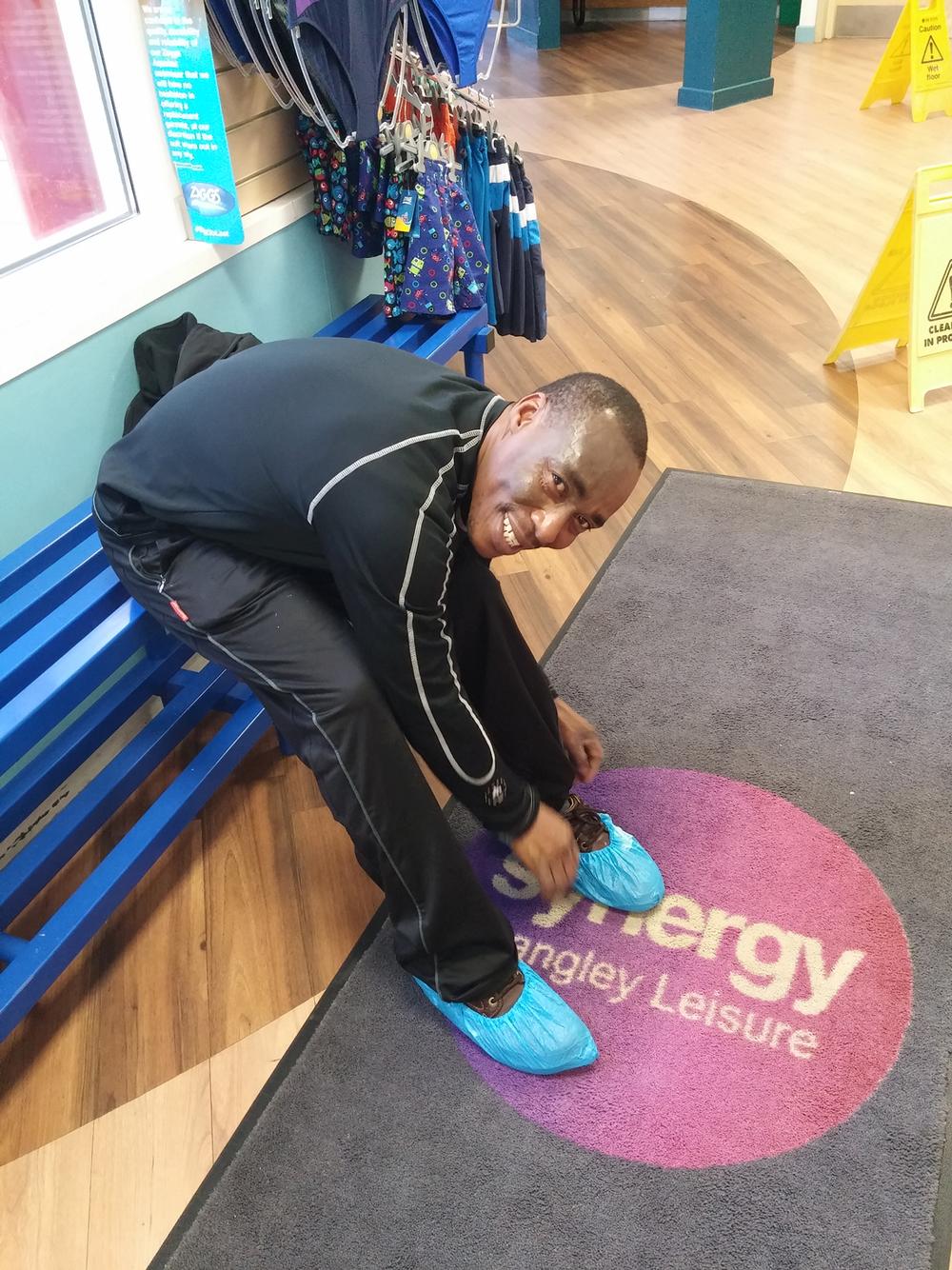
When it comes to cleanliness, there’s a clear consensus: one thing every operator can do to keep changing rooms dirt-free is to enforce either a no-shoe or overshoe-protector policy. “You need to create a culture where people feel like they are the odd one out if they walk into the area with outdoor shoes on,” says a third mystery visitor, who heads up sport and wellbeing for a city council. “Shoe racks placed at the entrance to the changing area can help.”
If you offer overshoe protectors, dispensers need to be replenished regularly and the policy should be policed. There must also be adequate provision for people to sit down, says assessor Ian Warren, Right Directions’ head of health and safety. “Putting a sign and dispenser on the wall and hoping it works is like hoping turkeys will vote for Christmas.”
Also crucial to cleanliness is making sure you have a clearly defined cleaning regime in place that covers everything from dust on high ledges to grime on cubicle legs, and reviewing it regularly. Watson further recommends a deep-clean programme, as well as frequent staff patrols during the course of the day.
“In wet areas, you’re only one pair of dirty boots away from a messy floor,” adds the first mystery visitor. “Make sure you have cleaning resources on duty to respond to demands, especially during anticipated busy periods.”
Indeed Duncan Anderson, chief executive of South Downs Leisure and another Quest assessor, believes larger operators should consider posting a member of staff permanently in the changing area.
QUEST OF A NATION CHANGING ROOMS STANDARD OF CLEANLINESS 11% Excellent 60% Good 29% Satisfactory
FACILITIES 18% Excellent 66% Good 16% Satisfactory
MAINTENANCE OF FIXTURES 33% Excellent 56% Good 11% Satisfactory
OBSERVATIONS 20% Toilets unflushed & dirty 14% Incomplete checksheets 14% Toilet roll on floor 14% Surface staining 10% Empty toilet roll holders 9% Litter observed on floor 9% Overflowing bins 5% Poor maintenance and upkeep 5% Little privacy
Produced from Quest Assessment Scores for January - December 2015
TOP TIPS Mystery visitor #1: “Engage the expertise of your cleaning material suppliers on how to make best use of their products.”
Mystery visitor #2: “A locker theft problem can be eliminated by setting up locker alarms to ward off opportunists. The idea is you affix a panic alarm to the inside of the locker door and use a small, cheap padlock to entice a thief. This normally stops the thefts for a period as the criminals tend to target sites that are easy.”
Duncan Anderson: “Set up a staff competition where each team member is responsible for a chosen bank of lockers. The person who maintains their lockers to the highest standard wins a prize.”
Peter Sharkey: “See the issues through the eyes of each type of customer, including the elderly, people with partial eyesight, parents with small children or babies, groups or clubs, wheelchair users and people with ambulant difficulty.”
Nick Neale: “Be aware that high-quality facilities are less likely to be vandalised. People tend to respect quality and want to look after it.”
Overshoe protectors help keep changing rooms clean
In the fast-paced world of fitness and wellness, where high-intensity workouts push us to
our limits and the sweat pours, the importance of efficient recovery cannot be overstated. [more...]
Le Atelier by C.O.D.E. doesn't offer a standard bespoke service, it provides a highly
customised approach to designing massage beds and loungers in high-end wellness
environments. [more...]
Well-designed, maintained and clean changing rooms can mean fewer accidents and greater customer satisfaction. But how well are operators really doing in this area? Rhianon Howells reports
By Rhianon Howells | Published in Health Club Management 2016 issue 5
Make each staff member responsible for a bank of lockers, and reward whoever best maintains their lockers / shutterstock
For the assessors and mystery visitors who work for Quest – the UK’s quality scheme for sport and leisure, managed by Right Directions on behalf of Sport England – changing room inspection can be the moment when their hearts sink. The reception area is clean, warm and welcoming. The gym is modern, bright and fitted out with the latest kit. But enter the changing rooms in some facilities and clogged drains, mould-covered tiles, dirty showers and broken lockers are the norm.
The good news is that the majority of sport and leisure operators are actually doing far better than this, and there are plenty of examples of best practice.
According to Quest assessment data from January to December 2015, 60 per cent of centres achieved a rating of ‘good’ for standards of cleanliness in changing rooms, with 11 per cent achieving an ‘excellent’ rating. For maintenance of fixtures and fittings in changing rooms – ranging from floors, ceilings and windows to toilets, cubicles, benches, showers and lockers – 56 per cent achieved ‘good’ and 33 per cent ‘excellent’. For the appropriate provision of well-maintained toilet and changing facilities, 66 per cent of operators were good and 18 per cent were excellent.
But although there were no actual unsatisfactory ratings in this area, the data has identified room for improvement. Almost a third (29 per cent) of operators only achieved a satisfactory rating for cleanliness, while 11 per cent achieved ‘satisfactory’ for maintenance of fixtures and fittings, and 16 per were rated satisfactory for toilet and changing facilities.
Devil in the detail The detail provided in the mystery visit reports is also revealing, particularly with regard to keeping toilet areas clean and tidy. One in five mystery visit reports noted that toilets that were unflushed or dirty, while 14 per cent observed toilet roll on the floor and 10 per cent found empty toilet roll holders.
Other problems identified by mystery visitors included incomplete inspection check sheets (14 per cent), surface staining on lockers and tiles (14 per cent), litter (9 per cent), overflowing bins (9 per cent), poor maintenance and upkeep (5 per cent) and lack of privacy (5 per cent).
Investing in changing rooms – not only at the design stage, but also in terms of maintenance and staffing – can have a huge impact on customer satisfaction. Yet in the current climate of cuts, changing rooms sometimes get short shrift compared to other facilities.
“There seems to be a culture of only investing in areas that provide the highest return,” says Nick Neale, general manager of Bridport Leisure Centre and a Quest assessor. “Pool changing rooms become the poor relation compared with the fitness suite, and we wonder why swimming participation is in a downward spiral.”
Customer satisfaction aside, there’s another reason why operators should be maintaining and managing their changing rooms to a high standard: health and safety. According to data from STITCH, Right Direction’s leisure management accident analysis platform, changing facilities saw the highest percentage of preventable accidents in 2015 (5.44 per cent) across the five accident hotspots: changing facilities, sports hall, swimming pool, soft play and outside areas.
Design solutions So how can operators do better? According to Quest assessors, the design and build stage – or refurbishment stage for existing facilities – is a good place to start, and a particular bugbear in this area is sub-standard drainage. “Poor floor levelling can culminate in water puddling,” says Neale. “I’ve also seen drains that stink, clogged with masses of hair.”
Gullies under cubicles that are tricky to clean while in use are another issue, says one Quest mystery visitor – an assistant manager with a leading leisure management company, who remains anonymous for obvious reasons – adding: “But any long gully is a trip hazard and seems difficult to keep clean.”
The use of unsuitable surface materials is another common problem that can hinder cleanliness and safety. “Architects need to talk to operators at the initial stages,” says assessor John Watson. “Discuss the best surfaces, as better quality often results in long-term savings.”
Neale believes all operators should invest in under-floor heating “to dry out wet areas more quickly, leaving the floors dry and therefore less susceptible to the transfer of dirt”. He’d also like to see suppliers develop slip-resistant floor tiles in a greater choice of size, colour and design, and also makes an appeal for flooring systems “with a high-quality finish that remove dirt from outdoor shoes before people enter changing rooms”.
Privacy and safeguarding also need to be addressed early on. “There’s a lack of modesty doors and walls in some new designs,” says assessor Dave Monkhouse, a director at Leisure-net Solutions. “An entrance opens and someone outside can see all the way into the changing area.”
Assessor Peter Sharkey, a contract manager for Places for People Leisure, further notes a lack of measures to prevent camera phones being using for inappropriate purposes: “The risk this presents needs to be considered in both changing room design and management systems.”
One controversial area of changing room design is the unisex changing village, which has clear benefits for families with children but is not popular with everyone. Monkhouse says it’s a question of education. “We frequently hear about customers getting upset when their sites switch from single sex to village change, saying it encourages voyeurs,” he says. “But village change means more team members are in the area more of the time, and more customers are around to spot anything untoward.”
Keeping up appearances Even with the best design in the world, changing facilities will deteriorate if they aren’t maintained and cleaned properly. Quest reports show that maintenance problems frequently involve lockers – doors that won’t shut or lock, for example. But there’s a simple solution, says a second mystery visitor, who’s a leisure centre general manager: set up a maintenance service contract with the suppliers and/or order in enough spares to ensure downtime is reduced.
Other common maintenance concerns include issues with ventilation systems, cubicles, showers and auxiliary equipment such as hand and hairdryers; besides the inconvenience to customers of these breaking down, the accumulation of fluff in hairdryers also poses a fire risk, says Right Directions’ health and safety manager Andy Waters.
In all cases, the solution is the same, according to Sharkey: make sure that you have an effective, planned maintenance programme in place, as well as reactive maintenance systems.
When it comes to cleanliness, there’s a clear consensus: one thing every operator can do to keep changing rooms dirt-free is to enforce either a no-shoe or overshoe-protector policy. “You need to create a culture where people feel like they are the odd one out if they walk into the area with outdoor shoes on,” says a third mystery visitor, who heads up sport and wellbeing for a city council. “Shoe racks placed at the entrance to the changing area can help.”
If you offer overshoe protectors, dispensers need to be replenished regularly and the policy should be policed. There must also be adequate provision for people to sit down, says assessor Ian Warren, Right Directions’ head of health and safety. “Putting a sign and dispenser on the wall and hoping it works is like hoping turkeys will vote for Christmas.”
Also crucial to cleanliness is making sure you have a clearly defined cleaning regime in place that covers everything from dust on high ledges to grime on cubicle legs, and reviewing it regularly. Watson further recommends a deep-clean programme, as well as frequent staff patrols during the course of the day.
“In wet areas, you’re only one pair of dirty boots away from a messy floor,” adds the first mystery visitor. “Make sure you have cleaning resources on duty to respond to demands, especially during anticipated busy periods.”
Indeed Duncan Anderson, chief executive of South Downs Leisure and another Quest assessor, believes larger operators should consider posting a member of staff permanently in the changing area.
QUEST OF A NATION CHANGING ROOMS STANDARD OF CLEANLINESS 11% Excellent 60% Good 29% Satisfactory
FACILITIES 18% Excellent 66% Good 16% Satisfactory
MAINTENANCE OF FIXTURES 33% Excellent 56% Good 11% Satisfactory
OBSERVATIONS 20% Toilets unflushed & dirty 14% Incomplete checksheets 14% Toilet roll on floor 14% Surface staining 10% Empty toilet roll holders 9% Litter observed on floor 9% Overflowing bins 5% Poor maintenance and upkeep 5% Little privacy
Produced from Quest Assessment Scores for January - December 2015
TOP TIPS Mystery visitor #1: “Engage the expertise of your cleaning material suppliers on how to make best use of their products.”
Mystery visitor #2: “A locker theft problem can be eliminated by setting up locker alarms to ward off opportunists. The idea is you affix a panic alarm to the inside of the locker door and use a small, cheap padlock to entice a thief. This normally stops the thefts for a period as the criminals tend to target sites that are easy.”
Duncan Anderson: “Set up a staff competition where each team member is responsible for a chosen bank of lockers. The person who maintains their lockers to the highest standard wins a prize.”
Peter Sharkey: “See the issues through the eyes of each type of customer, including the elderly, people with partial eyesight, parents with small children or babies, groups or clubs, wheelchair users and people with ambulant difficulty.”
Nick Neale: “Be aware that high-quality facilities are less likely to be vandalised. People tend to respect quality and want to look after it.”
Overshoe protectors help keep changing rooms clean
The UK spa review and discovery platform for consumers, the Good Spa Guide, has announced
it will host the Good Spa Guide Awards 2026 during an event on 16 November at Sopwell House
Hotel in St Albans, UK.
Eighty-four per cent of consumers now say wellness is a top priority in their lives, with this
percentage increasing year on year, according to a preview presentation of McKinsey’s Future of
Wellness 2026 research report.
Mass protests have been taking place since Monday 1 June in Albania over the development of
a luxury resort by Donald Trump’s daughter Ivanka Trump and her husband Jared Kushner.
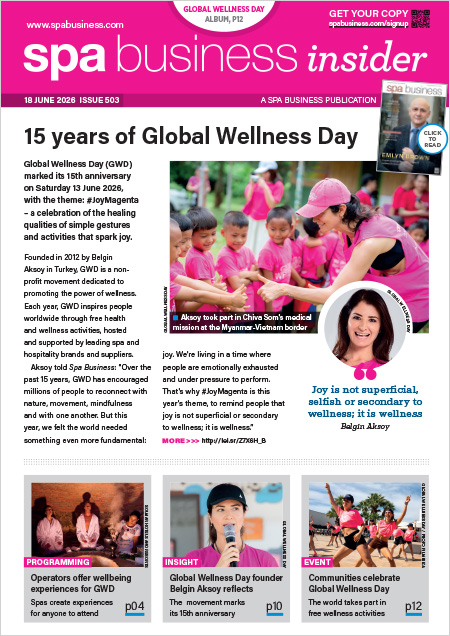
Global Wellness Day (GWD) marked its 15th anniversary on Saturday 13 June 2026, with the
theme: #JoyMagenta – a celebration of the healing qualities of simple gestures and activities
that spark joy.
Global luxury hospitality brand, Six Senses, has partnered with longevity healthcare provider,
HUM2N, to launch a clinic at Six Senses London, at The Whiteley.
As part of its first hotel partnership, Mayrlife – the medical health resort company known for its
site in Altaussee, Austria – has launched a day clinic at the Rosewood Vienna.
Premium London health club, KX Chelsea, will imminently unveil its most significant
redevelopment since its launch in 2002 to create an integrated wellness model combining
training, recovery and relaxation.
Rosewood Le Guanahani St Barth, on the northeast coast of Saint Barthélemy in the French
West Indies, is offering a programme of ocean-inspired yoga classes between 8-14 June to
celebrate Global Wellness Day (GWD).
Hotel de France, located on the British Isle of Jersey, has created a wellness retreat package
that includes a hot yoga session that will take place in Jersey Zoo’s butterfly sanctuary.
The Ritz-Carlton, Langkawi, in Malaysia, has revealed a schedule for Global Wellness Day
(GWD) that includes guided rainforest walks, mindful movement and guided coastal meditation
experiences.
In the fast-paced world of fitness and wellness, where high-intensity workouts push us to
our limits and the sweat pours, the importance of efficient recovery cannot be overstated. [more...]
Le Atelier by C.O.D.E. doesn't offer a standard bespoke service, it provides a highly
customised approach to designing massage beds and loungers in high-end wellness
environments. [more...]