Attracting teenagers and keeping up with digital developments were among the topics at the recent conference, as Erik Jacquemyn, CEO of Technopolis, reports
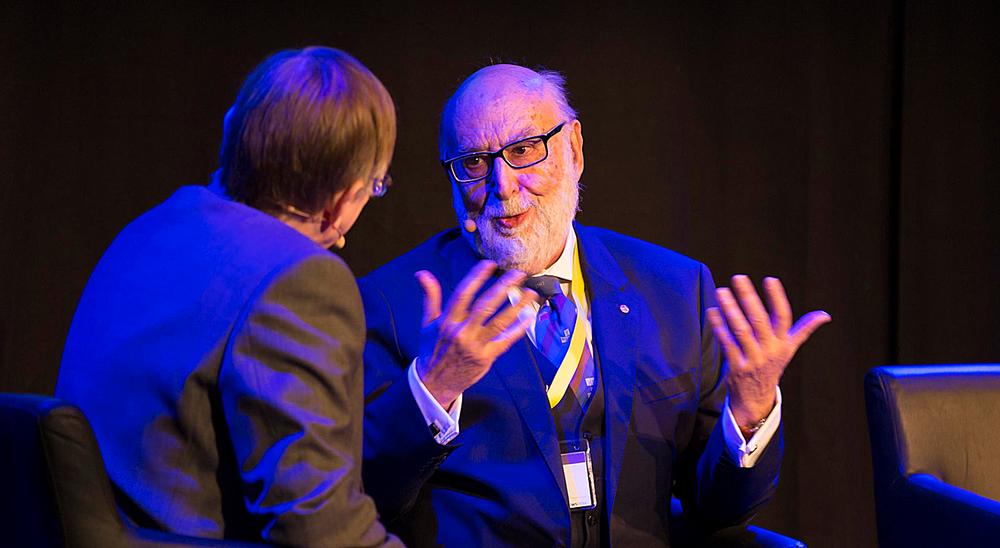
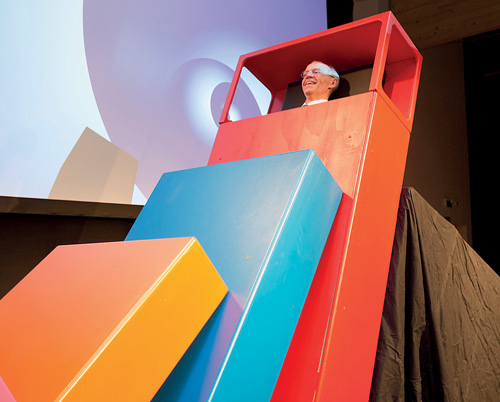
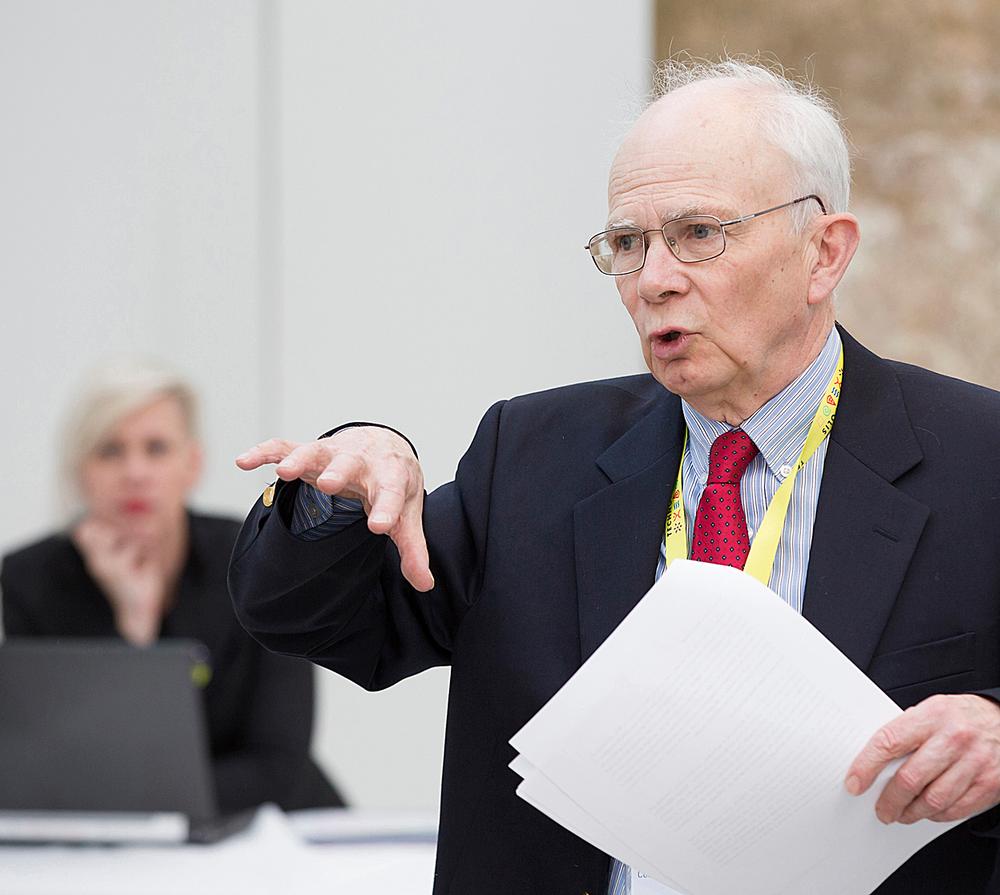
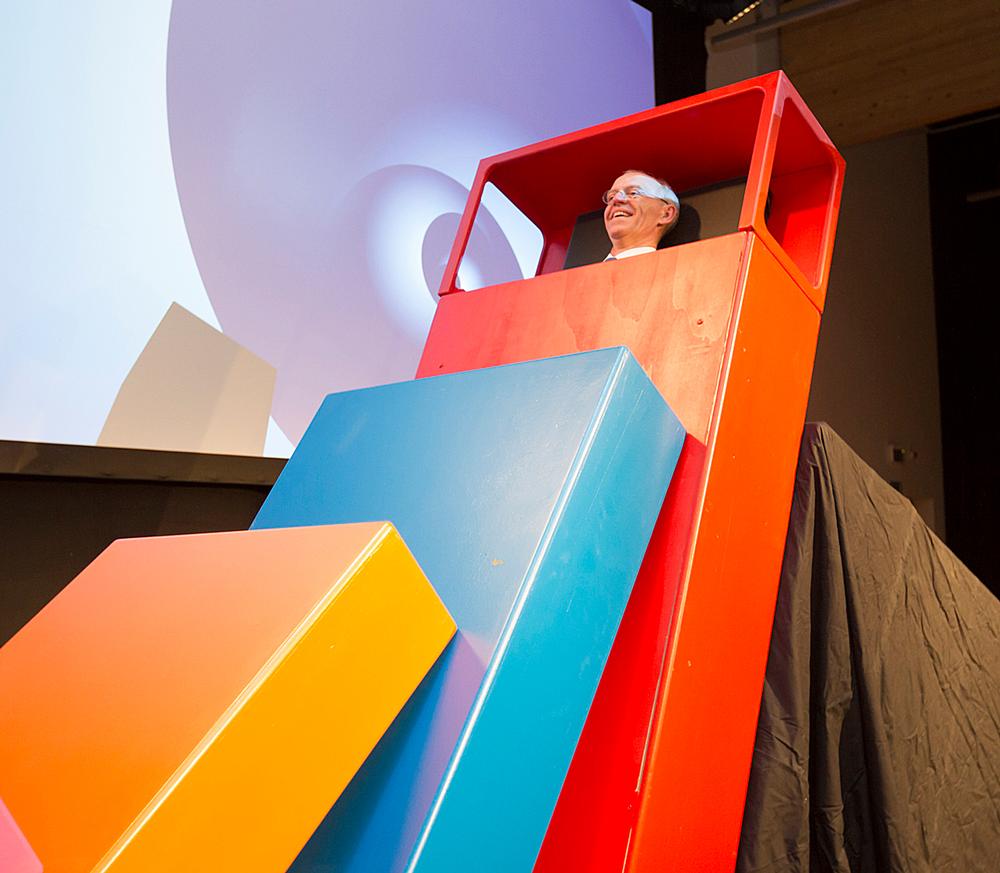
François Englert (right), who shares a Nobel prize for his Higgs boson work
Three astronauts, two Nobel prize laureates and one member of the royal family – His Majesty King Philippe, King of Belgium – were among the 464 delegates from 58 countries at Science Centre World Summit 2014. The summit was hosted by Technopolis in Belgium in March, with Belgian Nobel laureate Professor François Englert opening the conference. In his address, Englert discussed the importance of science and technology, and how to engage the next generation with these crucial subjects.
Screenagers The World Summit was built up around three main themes: research and communication of research; engaging learners in all settings; and new technologies for learning and engagement. Attracting teenagers, or screenagers as they’re often referred to, was one of the most important topics raised at the conference.
Delegates were told science centres can play an important role when it comes to teenagers and their screen addictions. Through education, perhaps they can be tempted away from their computers, tablets or smartphones and converted into more active members in society. It was suggested that science centre operators nurture teenagers’ making and tinkering at popular Maker Faires [a family-friendly festival of invention, creativity and resourcefulness and a celebration of the Maker movement]. These become opportunities for science centres to help make the makers of the future, and turn consumers into producers.
The role of science centres in society was also discussed, and it was suggested they act as bridges between science and society, encouraging everyone to become a citizen scientist. To encourage people’s curiosity , science centres should help visitors to ask questions, rather than simply providing the answers.
Digital dilemma Adapting to the digital age and the speed of innovation poses a great challenge to science centres. One of the sessions questioned whether new technologies enhance learning or create barriers. The use of apps was also debated, with a focus on how they can serve as powerful bridges between science centres and museums, universities and the public. A session about serious gaming discussed sharing scientific content in a smooth and playful way, as gaming gets the player emotionally and personally involved.
Personalising the science centre visit was also discussed. As visitor expectations are increasing, science centres are experimenting with new ways to generate more personalised content and provide deeper access. Many delegates predicted that interactive artworks would feature far more in science centres of the future. Ensuring a strong interaction and behavioural enrichment is paramount, as real experiences will last long after the latest gadget becomes defunct.
Other key speakers during the opening session were Professor Tissa Vitarana (senior minister scientific affairs, Sri Lanka), Marie Levens (director human development, E education and culture at the Organisation of American States) and Professor Anne Glover (chief scientific adviser to the president of the European Commission, José Manuel Barroso). Glover emphasised the importance of communicating research: “Research not communicated is research not done.”
For the first time, speakers from both inside and outside the science centre field were involved. Ideas and debates provided by people outside the industry provided fresh insight and will be used in the theory and practice of planning, operating and developing science centres.
Read more from this issue of Spa Business magazine
View contents of Spa Business 2014 issue 3
Editor’s letter: Here comes China
As China opens up to the West, the nation’s attractions are
booming, with existing attractions reporting record attendances and
new museums, theme parks and science centres planned
Teamworking: The Art of Collaboration
Merlin’s Mark Fisher talks about working
with Hollywood studio DreamWorks on
the upcoming Shrek-themed midways,
how to spot a winning IP and the
importance of creative collaboration
Talking Point: Whose Museum Is It Anyway?
Five experts debate how museums
can tackle the controversial issue
of balancing the needs of the visitor
with their curatorial responsibilities
Analysis: TEA/AECOM Enduring Appeal
Theme park attendance for 2013
reached an all-time high, and museums
worldwide performed well. AECOM’s
economics experts crunch the numbers
Theme Parks: Oceans of Fun
Chimelong International Ocean Resort
is a big development on a small island.
Will its proximity to the gambling haven
of Macau be a help or a hindrance?
Museums: Virtual Visits
Europe’s biggest museum conference
looks at how technology and the digital
revolution can enhance the attraction. We
report from the event in Newcastle, UK
Technology: Face Reality
As Facebook’s Mark Zuckerberg buys
Oculus VR and its Rift device, we look at
how far VR has come, and ask whether
it has a place in the attractions industry
Profile: Sarah Maltby
As Jorvik turns 30, director Sarah
Maltby talks about keeping archaeology
at the heart of what the Viking centre
does, and moving with the times
Storytelling: Inside Story
Abu Dhabi’s Yas Waterworld draws on
the local culture to create a narrative
journey for its visitors. Atkins Global
tells us about an innovative approach
Interview: Rick Schwartz
San Diego Zoo Global ambassador on the
Tiger Trail and conservation initiatives
Another result of the World Summit are the new partnerships that are initiated and formalised. The agreement between the Chinese Association of Natural Sciences Museums (CANSM) and the Association of Science-Technology Centres (ASTC) for the translation of its award winning magazine Dimensions in Chinese was officially signed. The International Council of Museums (ICOM) expressed its interest in partnering with the science centre field.
Also, the Human Brain Project (HBP), the new Flagship EU initiative, announced a global collaboration with science centres. This co-creation approach will bring the public along a scientific journey through thousands of science centres around the world.
The Mechelen Declaration One of the outcomes of the World Summit is known as the Mechelen Declaration. In this document, the science centre field and its strategic partners commit to concrete actions. The document was signed by delegates from within the science centre field and their networks: ASPAC (Asia Pacific Network of Science and Technology Centres), ASTC (Association of Science-Technology Centres), ECSITE (European network of science centres and museums), NAMES (North Africa and Middle East Science centres network), NCSM (National Council of Science Museums), REDPOP (Network for the Popularisation of Science and Technology in Latin America and the Caribbean) and SAASTEC (Southern African Association of Science and Technology Centres).
Many delegates outside the science centre field also signed the Mechelen Declaration: Kris Peeters (minister-president of the government of Flanders), Dr Hans-Martin Hinz (president of the International Council of Museums – see interview in AM Q2 14), Tissa Vitarana (senior minister scientific affairs, Sri Lanka), Anne Glover (chief scientific adviser to the president of the European Commission) and Marie Levens (director human development, education and culture at the Organisation of American States). By signing the document, they agreed to promote the declaration to their organisation and respond to future invitations to discuss potential partnerships.
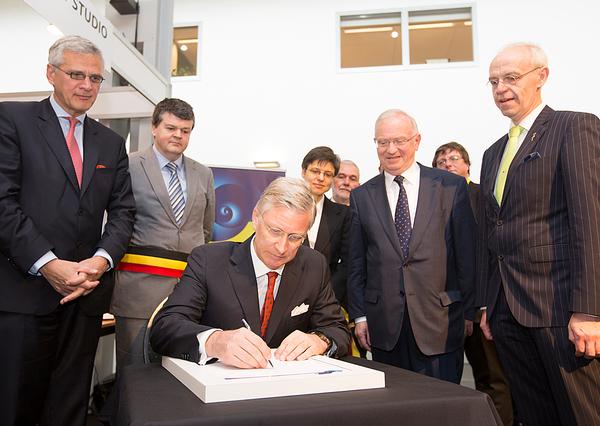
King Philippe of Belgium signs the Mechelen Declaration
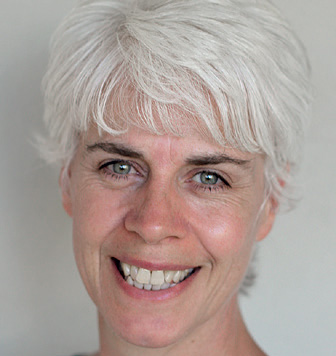
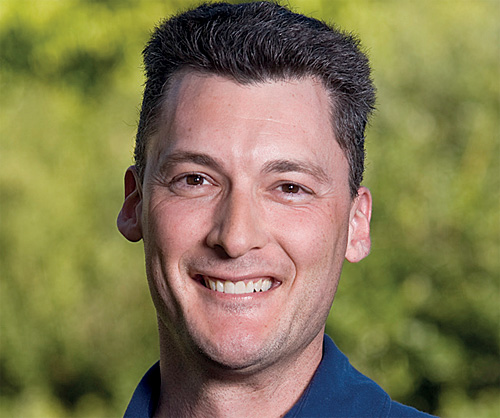
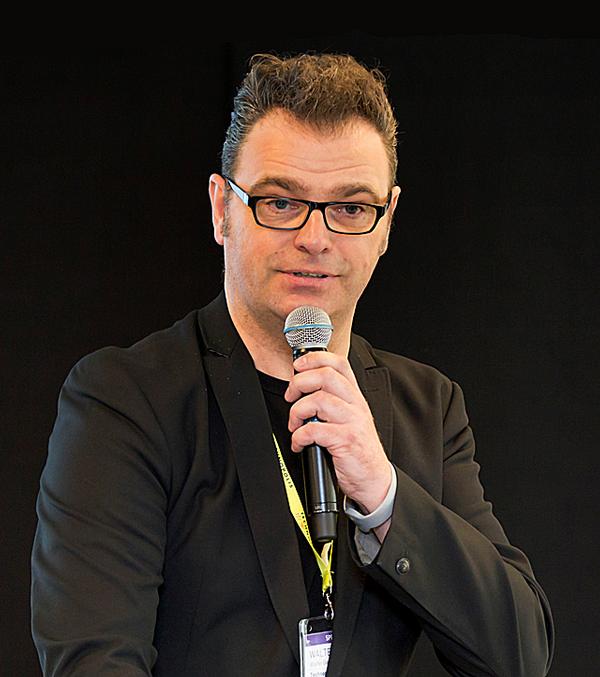
Erik Jacquemyn, CEO of the hosting science centre Technopolis and chair of the summit’s international programme committee
The Spa Life UK Convention returns from 21–23 June 2026 at Whittlebury Park Hotel, Spa &
Golf Resort, bringing together spa managers, directors and owners for two days of focused
education, meaningful connection and commercial insight. [more...]
Attracting teenagers and keeping up with digital developments were among the topics at the recent conference, as Erik Jacquemyn, CEO of Technopolis, reports
François Englert (right), who shares a Nobel prize for his Higgs boson work
Three astronauts, two Nobel prize laureates and one member of the royal family – His Majesty King Philippe, King of Belgium – were among the 464 delegates from 58 countries at Science Centre World Summit 2014. The summit was hosted by Technopolis in Belgium in March, with Belgian Nobel laureate Professor François Englert opening the conference. In his address, Englert discussed the importance of science and technology, and how to engage the next generation with these crucial subjects.
Screenagers The World Summit was built up around three main themes: research and communication of research; engaging learners in all settings; and new technologies for learning and engagement. Attracting teenagers, or screenagers as they’re often referred to, was one of the most important topics raised at the conference.
Delegates were told science centres can play an important role when it comes to teenagers and their screen addictions. Through education, perhaps they can be tempted away from their computers, tablets or smartphones and converted into more active members in society. It was suggested that science centre operators nurture teenagers’ making and tinkering at popular Maker Faires [a family-friendly festival of invention, creativity and resourcefulness and a celebration of the Maker movement]. These become opportunities for science centres to help make the makers of the future, and turn consumers into producers.
The role of science centres in society was also discussed, and it was suggested they act as bridges between science and society, encouraging everyone to become a citizen scientist. To encourage people’s curiosity , science centres should help visitors to ask questions, rather than simply providing the answers.
Digital dilemma Adapting to the digital age and the speed of innovation poses a great challenge to science centres. One of the sessions questioned whether new technologies enhance learning or create barriers. The use of apps was also debated, with a focus on how they can serve as powerful bridges between science centres and museums, universities and the public. A session about serious gaming discussed sharing scientific content in a smooth and playful way, as gaming gets the player emotionally and personally involved.
Personalising the science centre visit was also discussed. As visitor expectations are increasing, science centres are experimenting with new ways to generate more personalised content and provide deeper access. Many delegates predicted that interactive artworks would feature far more in science centres of the future. Ensuring a strong interaction and behavioural enrichment is paramount, as real experiences will last long after the latest gadget becomes defunct.
Other key speakers during the opening session were Professor Tissa Vitarana (senior minister scientific affairs, Sri Lanka), Marie Levens (director human development, E education and culture at the Organisation of American States) and Professor Anne Glover (chief scientific adviser to the president of the European Commission, José Manuel Barroso). Glover emphasised the importance of communicating research: “Research not communicated is research not done.”
For the first time, speakers from both inside and outside the science centre field were involved. Ideas and debates provided by people outside the industry provided fresh insight and will be used in the theory and practice of planning, operating and developing science centres.
Read more from this issue of Spa Business magazine
View contents of Spa Business 2014 issue 3
Editor’s letter: Here comes China
As China opens up to the West, the nation’s attractions are
booming, with existing attractions reporting record attendances and
new museums, theme parks and science centres planned
Teamworking: The Art of Collaboration
Merlin’s Mark Fisher talks about working
with Hollywood studio DreamWorks on
the upcoming Shrek-themed midways,
how to spot a winning IP and the
importance of creative collaboration
Talking Point: Whose Museum Is It Anyway?
Five experts debate how museums
can tackle the controversial issue
of balancing the needs of the visitor
with their curatorial responsibilities
Analysis: TEA/AECOM Enduring Appeal
Theme park attendance for 2013
reached an all-time high, and museums
worldwide performed well. AECOM’s
economics experts crunch the numbers
Theme Parks: Oceans of Fun
Chimelong International Ocean Resort
is a big development on a small island.
Will its proximity to the gambling haven
of Macau be a help or a hindrance?
Museums: Virtual Visits
Europe’s biggest museum conference
looks at how technology and the digital
revolution can enhance the attraction. We
report from the event in Newcastle, UK
Technology: Face Reality
As Facebook’s Mark Zuckerberg buys
Oculus VR and its Rift device, we look at
how far VR has come, and ask whether
it has a place in the attractions industry
Profile: Sarah Maltby
As Jorvik turns 30, director Sarah
Maltby talks about keeping archaeology
at the heart of what the Viking centre
does, and moving with the times
Storytelling: Inside Story
Abu Dhabi’s Yas Waterworld draws on
the local culture to create a narrative
journey for its visitors. Atkins Global
tells us about an innovative approach
Interview: Rick Schwartz
San Diego Zoo Global ambassador on the
Tiger Trail and conservation initiatives
Another result of the World Summit are the new partnerships that are initiated and formalised. The agreement between the Chinese Association of Natural Sciences Museums (CANSM) and the Association of Science-Technology Centres (ASTC) for the translation of its award winning magazine Dimensions in Chinese was officially signed. The International Council of Museums (ICOM) expressed its interest in partnering with the science centre field.
Also, the Human Brain Project (HBP), the new Flagship EU initiative, announced a global collaboration with science centres. This co-creation approach will bring the public along a scientific journey through thousands of science centres around the world.
The Mechelen Declaration One of the outcomes of the World Summit is known as the Mechelen Declaration. In this document, the science centre field and its strategic partners commit to concrete actions. The document was signed by delegates from within the science centre field and their networks: ASPAC (Asia Pacific Network of Science and Technology Centres), ASTC (Association of Science-Technology Centres), ECSITE (European network of science centres and museums), NAMES (North Africa and Middle East Science centres network), NCSM (National Council of Science Museums), REDPOP (Network for the Popularisation of Science and Technology in Latin America and the Caribbean) and SAASTEC (Southern African Association of Science and Technology Centres).
Many delegates outside the science centre field also signed the Mechelen Declaration: Kris Peeters (minister-president of the government of Flanders), Dr Hans-Martin Hinz (president of the International Council of Museums – see interview in AM Q2 14), Tissa Vitarana (senior minister scientific affairs, Sri Lanka), Anne Glover (chief scientific adviser to the president of the European Commission) and Marie Levens (director human development, education and culture at the Organisation of American States). By signing the document, they agreed to promote the declaration to their organisation and respond to future invitations to discuss potential partnerships.
King Philippe of Belgium signs the Mechelen Declaration
Erik Jacquemyn, CEO of the hosting science centre Technopolis and chair of the summit’s international programme committee
Premium London health club, KX Chelsea, will imminently unveil its most significant
redevelopment since its launch in 2002 to create an integrated wellness model combining
training, recovery and relaxation.
Rosewood Le Guanahani St Barth, on the northeast coast of Saint Barthélemy in the French
West Indies, is offering a programme of ocean-inspired yoga classes between 8-14 June to
celebrate Global Wellness Day (GWD).
Hotel de France, located on the British Isle of Jersey, has created a wellness retreat package
that includes a hot yoga session that will take place in Jersey Zoo’s butterfly sanctuary.
The Ritz-Carlton, Langkawi, in Malaysia, has revealed a schedule for Global Wellness Day
(GWD) that includes guided rainforest walks, mindful movement and guided coastal meditation
experiences.
Longevitix, a clinical platform for preventive and longevity medicine, has launched its AI-
powered intelligence system to help physicians deliver continuous, personalised longevity-
focused care at scale.
Atmantan Wellness Centre, an integrative wellness destination in Mulshi, near Pune in India, is
expanding its portfolio by adding a new centre in Hyderabad that will launch between 2028 and
2029.
A recent survey by the UK Spa Association (UKSA) into the industry’s approach to cancer care
has revealed that almost half of participating respondents (46 per cent) are unaware that
cancer is a disability and guests with a cancer diagnosis must be given
Mexican operator, Solmar Hotels and Resorts, is hosting a series of events in celebration of
Global Wellness Day, including a Temazcal ceremony at its Playa Grande Resort and Spa in Los
Cabos.
Mandarin Oriental has announced a standalone residence brand, Mansions, which will debut at
Emirates Palace, Mandarin Oriental Mansions, Abu Dhabi, in 2029.
The Spa Life UK Convention returns from 21–23 June 2026 at Whittlebury Park Hotel, Spa &
Golf Resort, bringing together spa managers, directors and owners for two days of focused
education, meaningful connection and commercial insight. [more...]