Yes! Send me the FREE digital editions of Spa Business and Spa Business insider magazines and the FREE weekly Spa Business and Spa Business insider ezines and breaking news alerts!
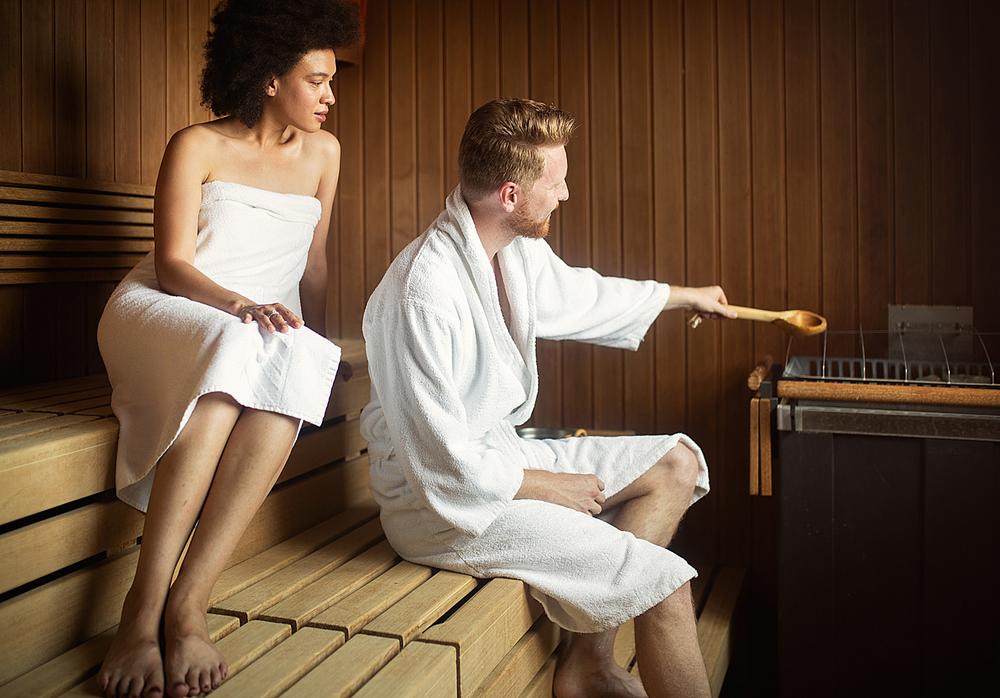
A growing body of scientific evidence shows that sauna sessions can lower the risk of cardiovascular disease, strokes, high blood pressure, respiratory diseases and dementia. But is this what actually motivates people to sweat it out in extreme temperatures? Or are they going for other reasons? No one has ever asked.
To find out, a team of researchers, including industry figure Marc Cohen and lead author Joy Hussain, from Australia’s RMIT University conducted the first known global study on sauna-related habits via an online survey.
Data was gathered from 482 men and women with a mean age of 45 years, from 29 countries. A vast number came from either Finland (28.4 per cent), Australia (25.3 per cent) or the US (20.5 per cent) and this bias was noted as a study limitation, along with the fact that it was not randomised sample.
On average, respondents experienced sauna sessions once or twice a week.
The study, published in Elsevier’s Complementary Therapies in Medicine in April, found that relaxation/stress reduction was the top motivation for sauna bathing for all respondents. Other key reasons for using a sauna were to relieve aches and pains (88 per cent), to meet and talk with friends (85 per cent), to help circulation (85 per cent) and for detox (83 per cent).
Increased mental wellbeing was linked to those using a sauna more frequently (five to 15 times a month), compared to those who went less often. An interesting find given that spas are starting to focus on mental wellness, although further research is needed to confirm a definite association.
Eighty-four per cent of respondents said they slept better for one to two nights after having a sauna. Another intriguing correlation as spas continue to embrace sleep health but, once again, a link that requires more scientific investigation.
Inside the sauna, the top three activities reported were relaxation (100 per cent), talking with others (79 per cent) and meditation (68 per cent) – with the last two highlighting the need for operators to handle the balance between those who want quiet and those who don’t.
Two wider contrasting points were brought to light from the results. Firstly, people are going to saunas to help with mental health and sleep, or, in other cases, to ease back pain and musculoskeletal problems. However, there’s no research to prove that heat experiences can actually help any of these ailments.
On the other hand, respondents did not cite high blood pressure or heart conditions as motivators for using a sauna – despite scientific evidence showing it can help. Spas could have a role, no matter how small, in helping to educate people about these proven benefits.
Read more from this issue of Spa Business magazine
View contents of Spa Business 2019 issue 4
Editor's letter: Democratic wellness
To truly flourish, the spa industry needs to step outside its comfort zone and reach out to different markets with new and exciting business models, says Katie Barnes
Spa Programmes: On the menu
Boundary-pushing wellness in Iceland, self-care focus at Devarana and Civana’s equine retreat all feature in our spa menu round-up
Interview: Alexandre Cantin
Canada’s Groupe Nordik wants to open 10 nature spas, focusing on bathing and thermotherapy, by 2027. Katie Barnes talks to its VP of growth and strategy
Promotional feature: Starpool - Star quality
Wellness expert, Starpool, is known for offering complete wellness solutions with Italian design flair, enabling operators to create world class treatments and experiences
Training: Covering all bases
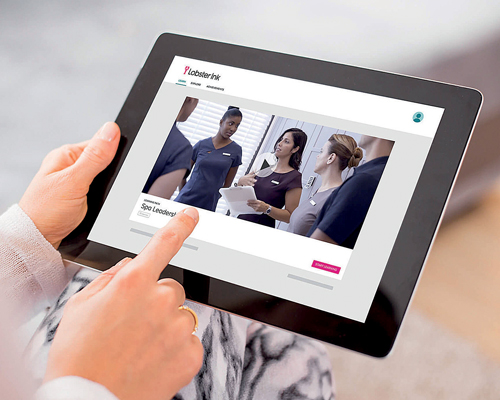
Resense joins forces with Lobster Ink to create an online training program for multiple spa roles
Promotional feature: Gharieni
Spa equipment innovator, Gharieni, is partnering with leading spas around the world to showcase its products to clients in real world settings, as CEO, Sammy Gharieni, explains
Research: Positive picture
ISPA’s latest US spa study shows continued growth across key metrics and pinpoints CBD and gen Z as trends. Russell Donaldson reports
Promotional feature: Zimmer MedizinSystems - Cool customer
Rainer Bolsinger, who heads up hotel and spa sales of icelab at Zimmer MedizinSystems, and icelab customer Chenot Group, explain how cryotherapy can be incorporated into your business
Promotional feature: Biologique Recherche - Skin deep
Biologique Recherche has spent the past 40 years developing technology and products to understand the skin on an individual level. Pierre-Louis Delapalme and Rupert Schmid tell Spa Business about the Parisian brand’s latest innovations
Research: On the move
The global physical activity market is now worth US$828bn according to a new GWI study. But what emerging trends do spas need to know about?
Promotional feature: SpaSoft - Onwards & upwards
The enhanced integration between SpaSoft and multiple PMS systems will help your team save time, remove the possibility of human error and create an elevated guest experience
Software: Monetising
How is software helping spas to navigate e-commerce and further monetise their relationship with clients
The MSpa Oslo series is a perennial bestseller in global markets. With innovative
engineering and premium performance, this completely portable spa line-up is expertly
designed to meet the needs of customers worldwide. [more...]
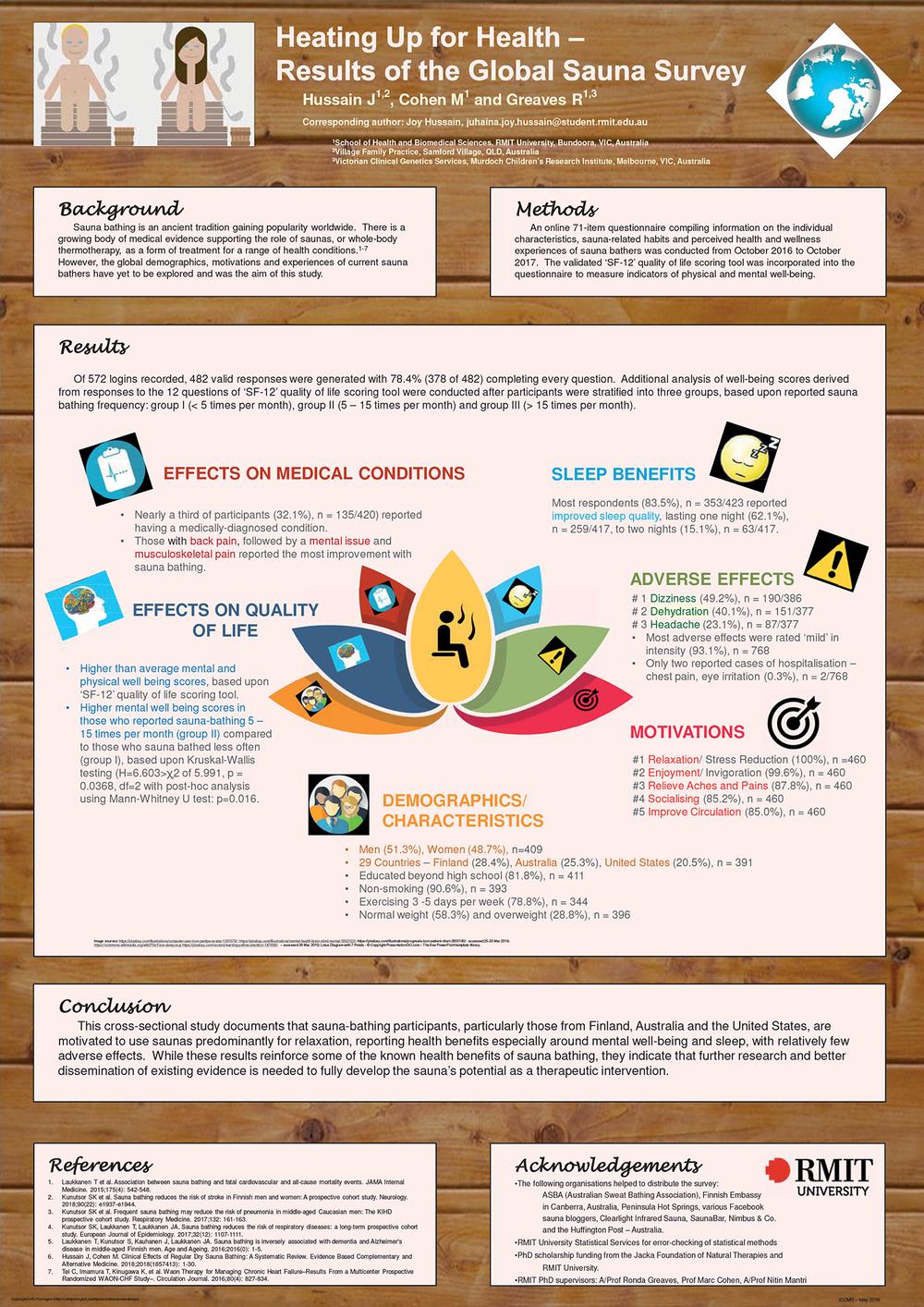
A growing body of scientific evidence shows that sauna sessions can lower the risk of cardiovascular disease, strokes, high blood pressure, respiratory diseases and dementia. But is this what actually motivates people to sweat it out in extreme temperatures? Or are they going for other reasons? No one has ever asked.
To find out, a team of researchers, including industry figure Marc Cohen and lead author Joy Hussain, from Australia’s RMIT University conducted the first known global study on sauna-related habits via an online survey.
Data was gathered from 482 men and women with a mean age of 45 years, from 29 countries. A vast number came from either Finland (28.4 per cent), Australia (25.3 per cent) or the US (20.5 per cent) and this bias was noted as a study limitation, along with the fact that it was not randomised sample.
On average, respondents experienced sauna sessions once or twice a week.
The study, published in Elsevier’s Complementary Therapies in Medicine in April, found that relaxation/stress reduction was the top motivation for sauna bathing for all respondents. Other key reasons for using a sauna were to relieve aches and pains (88 per cent), to meet and talk with friends (85 per cent), to help circulation (85 per cent) and for detox (83 per cent).
Increased mental wellbeing was linked to those using a sauna more frequently (five to 15 times a month), compared to those who went less often. An interesting find given that spas are starting to focus on mental wellness, although further research is needed to confirm a definite association.
Eighty-four per cent of respondents said they slept better for one to two nights after having a sauna. Another intriguing correlation as spas continue to embrace sleep health but, once again, a link that requires more scientific investigation.
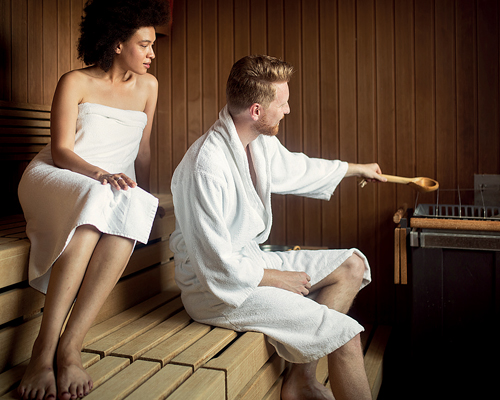
Inside the sauna, the top three activities reported were relaxation (100 per cent), talking with others (79 per cent) and meditation (68 per cent) – with the last two highlighting the need for operators to handle the balance between those who want quiet and those who don’t.
Two wider contrasting points were brought to light from the results. Firstly, people are going to saunas to help with mental health and sleep, or, in other cases, to ease back pain and musculoskeletal problems. However, there’s no research to prove that heat experiences can actually help any of these ailments.
On the other hand, respondents did not cite high blood pressure or heart conditions as motivators for using a sauna – despite scientific evidence showing it can help. Spas could have a role, no matter how small, in helping to educate people about these proven benefits.
Read more from this issue of Spa Business magazine
View contents of Spa Business 2019 issue 4
Editor's letter: Democratic wellness
To truly flourish, the spa industry needs to step outside its comfort zone and reach out to different markets with new and exciting business models, says Katie Barnes
Spa Programmes: On the menu
Boundary-pushing wellness in Iceland, self-care focus at Devarana and Civana’s equine retreat all feature in our spa menu round-up
Interview: Alexandre Cantin
Canada’s Groupe Nordik wants to open 10 nature spas, focusing on bathing and thermotherapy, by 2027. Katie Barnes talks to its VP of growth and strategy
Promotional feature: Starpool - Star quality
Wellness expert, Starpool, is known for offering complete wellness solutions with Italian design flair, enabling operators to create world class treatments and experiences
Training: Covering all bases
Resense joins forces with Lobster Ink to create an online training program for multiple spa roles
Promotional feature: Gharieni
Spa equipment innovator, Gharieni, is partnering with leading spas around the world to showcase its products to clients in real world settings, as CEO, Sammy Gharieni, explains
Research: Positive picture
ISPA’s latest US spa study shows continued growth across key metrics and pinpoints CBD and gen Z as trends. Russell Donaldson reports
Promotional feature: Zimmer MedizinSystems - Cool customer
Rainer Bolsinger, who heads up hotel and spa sales of icelab at Zimmer MedizinSystems, and icelab customer Chenot Group, explain how cryotherapy can be incorporated into your business
Promotional feature: Biologique Recherche - Skin deep
Biologique Recherche has spent the past 40 years developing technology and products to understand the skin on an individual level. Pierre-Louis Delapalme and Rupert Schmid tell Spa Business about the Parisian brand’s latest innovations
Research: On the move
The global physical activity market is now worth US$828bn according to a new GWI study. But what emerging trends do spas need to know about?
Promotional feature: SpaSoft - Onwards & upwards
The enhanced integration between SpaSoft and multiple PMS systems will help your team save time, remove the possibility of human error and create an elevated guest experience
Software: Monetising
How is software helping spas to navigate e-commerce and further monetise their relationship with clients
Aditya Saluja, an industry leader in luxury wellness hospitality, has been
appointed as
commercial director of spa and wellness for the spa management division of
Minor Hotels,
MSpa International.
Preidlhof Luxury DolceVita Resort, a destination resort and spa in Naturno, South Tyrol in Italy,
will reveal a new spa in February 2027, which has been designed by wellness expert and
consultant Patrizia Bortolin.
Virgin Active has officially opened its redesigned Mayfair club, unveiling its latest Social Wellness Club and
signalling a significant evolution of its proposition.
Private hotel owner and developer HVL Hotels will open a new luxury resort and tourism
destination called Laval Hunter Valley in the second half of 2027 in Pokolbin, Australia.
The annual wellness festival dedicated to wellbeing, culture, longevity and human connection,
called Alma, will be hosted by Rocco Forte hotel, Verdura Resort in Sicily, Italy.
Capella Hotel Group has appointed Feisal Jaffer as chief development officer as the company
ramps up its global expansion of both its Capella and Patina brands.
The MSpa Oslo series is a perennial bestseller in global markets. With innovative
engineering and premium performance, this completely portable spa line-up is expertly
designed to meet the needs of customers worldwide. [more...]