Yes! Send me the FREE digital editions of Spa Business and Spa Business insider magazines and the FREE weekly Spa Business and Spa Business insider ezines and breaking news alerts!
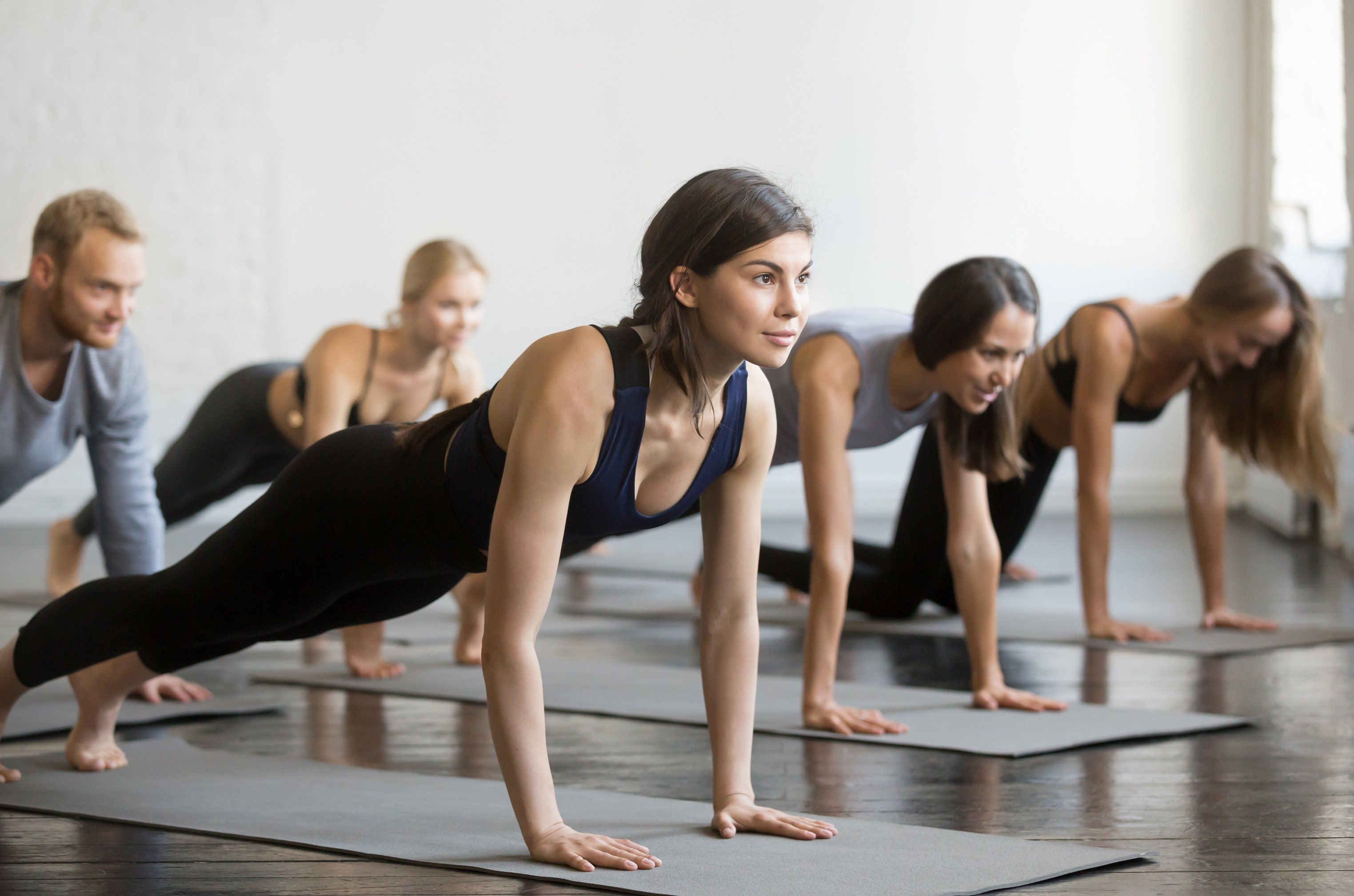
Staff can be offered wellness classes in off-peak times as a benefit / shutterstock/fizkes
Lynn Curry, ISHC, principal, Curry Spa Consulting
Jason Guy Photography
In this industry, we strive to design wellness facilities and journeys that are holistic and innovative from start to finish. We’re used to prioritising guests and catering to their experiences and needs, sometimes at a stressful cost to employees. But before we can think about the guest experience, we must first think about the employee experience. Today, wellness is paramount, and employees are difficult to attract and retain, so we need to make their wellness a priority.
Spa employees may work in the wellness sphere, but are often not invited to experience the benefits for themselves. According to the American Hotel and Lodging Association, 82 per cent of surveyed hotels are experiencing staff shortages, so retaining staff is imperative and contingent upon providing them with resources to feel fulfilled, supported and trusted. A survey conducted by the Institute for the Study of Business in Global Society found that feeling trusted in the workplace resulted in 106 per cent more energy at work, 76 per cent more engagement, and 29 per cent more satisfaction within employees’ lives. We need to give more, as financial motivation is not always the employee goal nor the employer ability.
Improvements can be made without increasing the footprint of a new build or renovation. Staff can be offered participation in wellness programming during off-peak hours (i.e. fitness use and classes). Additionally, giving employees access to visiting lecturers as a component of staff meetings, providing healthier meals, allowing for flexible schedules and even shared management positions are huge benefits. Our industry can help our teams feel closer to the spa experience, which will help them support guests, feel rewarded, and reap the wellness benefits of their workplace – ultimately leading to tremendous loyalty and retention.
Employees are difficult to attract and retain, so we need to make their wellness a priority
Leesa Jones, spa director, The Tryall Club, Jamaica
The Tryall Club
According to multiple trend reports, the number one reason guests will travel in 2024 will be to rest and recharge. Sleep health is increasingly important for travellers during getaways, and perhaps one of the most important aspects of true recovery.
When creating The Spa at Tryall, the new wellness retreat at The Tryall Club in Montego Bay, Jamaica, I made sure to incorporate very holistic treatments and practices to meet travellers’ demands.
Often on vacation, especially at The Tryall Club, we find that travellers make the most of every moment, whether it’s picking up a game of tennis, swimming in the ocean or pool, or strolling through the property. After much activity, it’s important to have a dedicated space to retreat to where guests can focus on slowing down and entering a space of relaxation where they can truly rest – even more so, to have a space where their wellness needs can be targeted.
We offer a “B Silent” Bamford spa journey, a sustainable and restorative treatment using both modern and ancient techniques, to specifically address sleep health. It’s important for spa therapists to discuss guests’ target areas and prescribe the treatment bespoke to their needs, something we specifically provide to our guests.
It’s important to have a dedicated space where guests can focus on slowing down and where they can truly rest
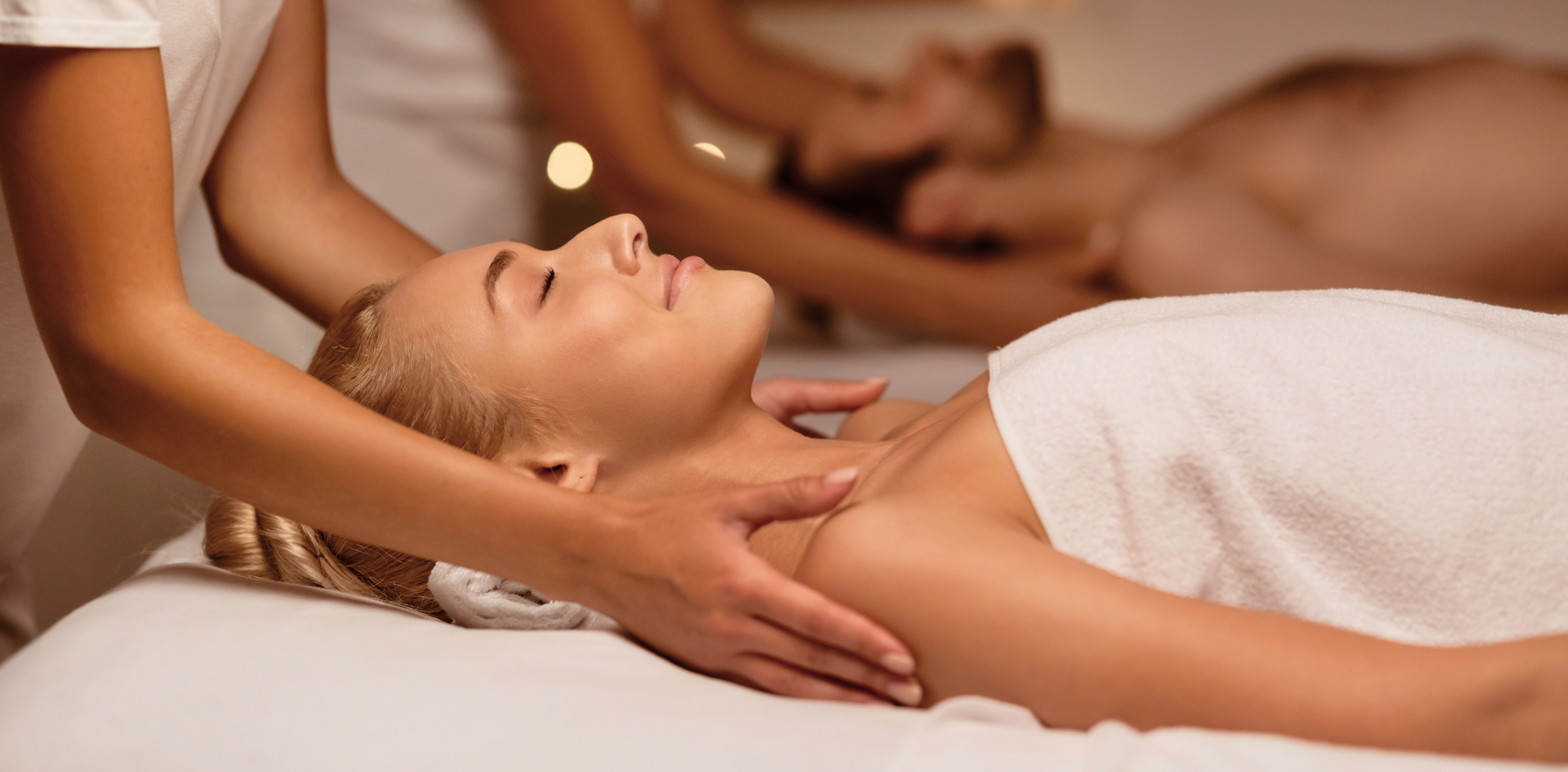
Holistic treatments are important to meet travellers’ demands / shutterstock/Prostock-studio
Leo Tonkin, founder & CEO, SALT Chamber
Andrea Blakesberg
As chair of the Global Wellness Institute’s Respiratory Wellness Initiative, our focus is bringing attention to the quality of the air we breathe. Increasingly dangerous indoor air quality and of course, COVID-19, have brought respiratory wellness to the forefront of the spa industry. There is a concerted effort on the part of many in spa design and operations to improve inside air quality.
People don’t realise the dangers of indoor air quality — there are two to five times more pollutants indoors versus outdoors. You probably wouldn’t drink a dirty glass of water, but the air we breathe is invisible. We breathe 2,000 gallons of air a day and consume at most a couple of gallons of water. An unhealthy indoor environment contributes to infections, lung cancer, and chronic lung diseases such as asthma.
The hospitality industry’s focus on pure air to improve their guests’ sleep quality is promising, and we are seeing more spas implementing systems for monitoring and improving air quality. The holy grail of inside air purification is a good ventilation system combined with localised filtration. Spas are also adding salt therapy to cleanse the respiratory system and support respiratory conditions such as COPD, asthma and long-term COVID.
We are seeing more spas implementing systems
for monitoring and improving air quality
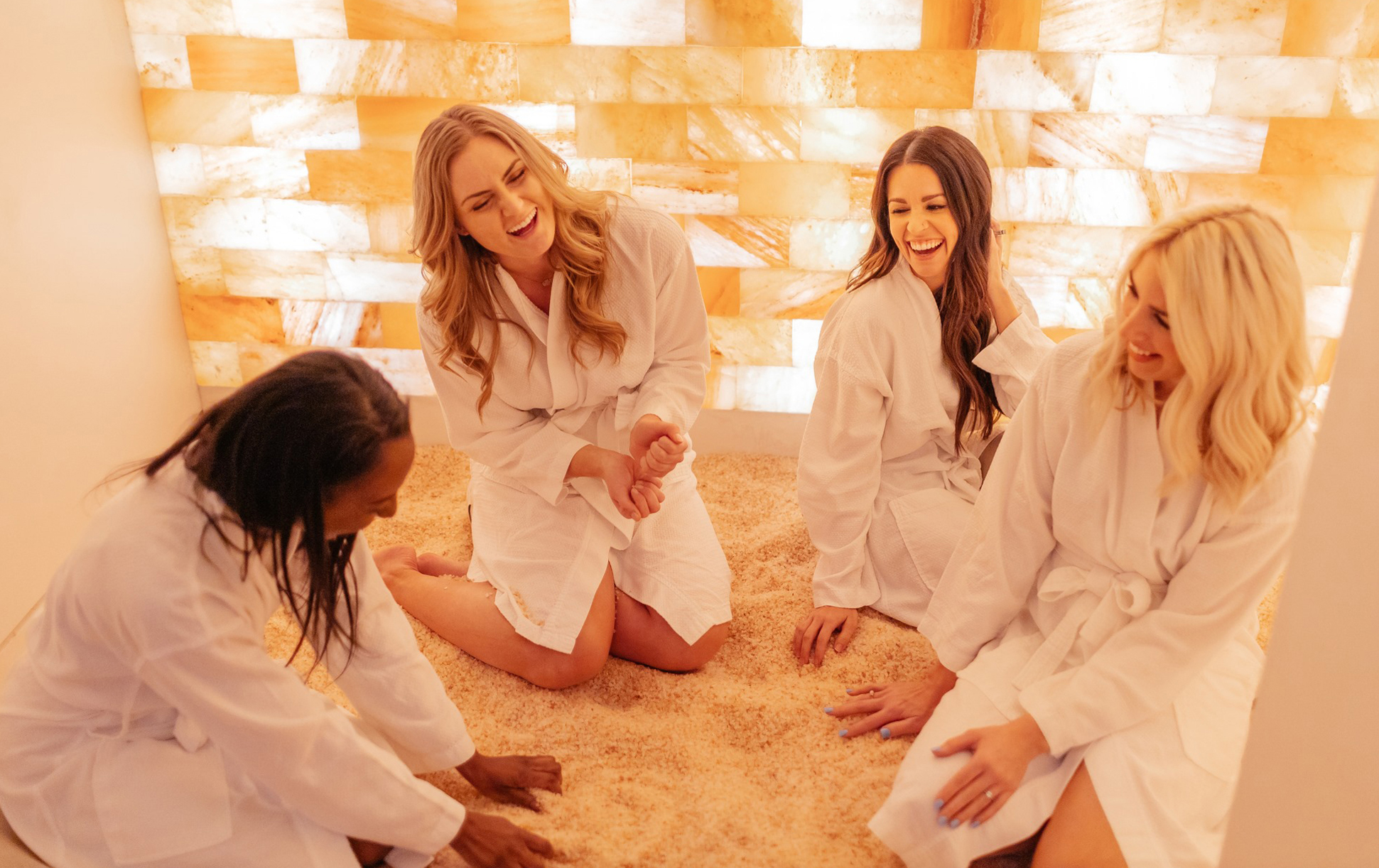
Spas are adding salt therapy to cleanse the respiratory system / Poppi’s Spa and Lounge
Karen Golden, founder & CEO, DWell Concepts
emma_duzhnikova
In Australia, the 55+ lifestyle communities are now understanding the value of investing in wellness within retirement living. Attracting new residents with longevity at the forefront of the offering is something new for Australia and still in its early stages, but we are seeing some stunning new wellness club offerings that include thermal spaces, spa, and mind-body experiences. At the same time, traditional health & leisure clubs and community leisure centres are also actively looking to broaden their offerings with integrated spaces to provide wellness experiences to their community at affordable rates, while also seeking to attract new markets into community venues.
At the other end of the scale are high-end private wellness clubs such as Saint Haven in Melbourne, which has had such an incredible level of interest that its memberships have sold out and it’s operating with a waitlist. These urban membership-based clubs have food & beverage offerings, thermal & wellness spaces and a private club experience – and this is something new to the market.
Urban bathhouses are also growing at a rapid rate within Australia, with spaces opening regularly and many more in development. Linking urban bathhouse experiences with destinations further afield helps create a continuity of wellness experiences from weekdays to weekend escapes, and partnerships and cross-referrals are a win-win situation for all parties involved. Bathing trails and hot springs as destination tourism experiences are being marketed collaboratively, with operators hoping to grow the market and develop new reasons for guests to travel into regional and outback regions of Australia.
We’re also seeing an increase in demand for breathwork experiences, with the inclusion of ice bathing and indoor and outdoor spaces designed specifically for this. While most of the locations are pop-up style at the moment, more permanent locations are in development. These will include ice baths and dedicated breathwork spaces for group use, along with some special features such as fire pits or beautiful tea ceremonies that help create a sense of nurturing and wellbeing around the breathwork experience.
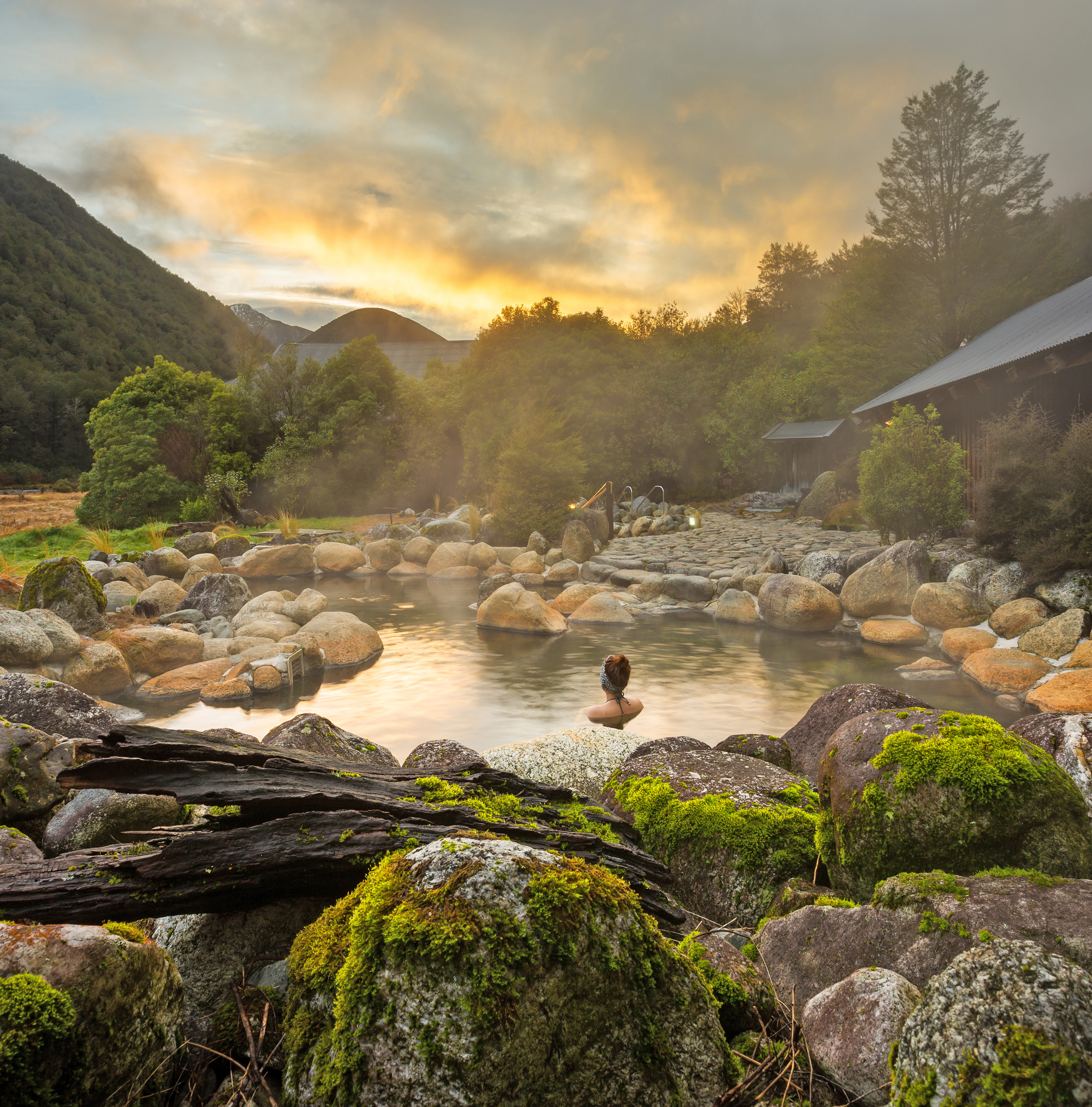
Finally, integration of first peoples’ ancient healing, storytelling and education – done with authenticity – is a strongly desirable experience, and can create an opportunity for guests to leave with more knowledge and connection to the history of people and place than when they arrived. Wai Ariki Hot Springs & Spa is an incredible example of a cultural wellness experience that shifts both the mind and the body.
Urban bathhouses are growing at a rapid rate
Australia has a slate of urban bathhouses in development / shutterstock/wavebreakmedia
Hot springs can inspire guests to travel more remotely / Shutterstock/Naruedom Yaempongsa
Derek Barton, managing director, MEA, Barr + Wray
barr + wray
There is now a push from consumers for performance results, and programmes designed to enhance both our mental and physical conditions – such as meditation, sports recovery or nutrition – are gaining in popularity. Biohacking will become even more mainstream as technology becomes more commonplace and running costs are reduced.
Thermal suites no longer incorporate only saunas and steam; we are now being commissioned to design and install higher technology spa facilities. Infra-red cabins with red light therapy, salt cabins for inhalation halotherapy, cryotherapy for muscle healing and assisting pain relief, and hyperbaric chambers – once reserved for the science-fiction movies – are now used by spa guests to strengthen the body’s immune system. This is something that is happening globally, and is no longer reserved for elite clinics or high-end member clubs; we are seeing hotel chains incorporating these facilities.
These non-invasive treatments or therapies provide results. A massage coupled with a session in the sauna is nice, and while good for the mind and soul, if the time can be spent using a facility which can then provide recovery, then this must be a win-win. The additional equipment may be located in spaces that were previously reserved for treatment rooms, so this doesn’t necessarily mean that the facilities we’re designing are larger. And whereas wet areas are generally provided as part of the experience, these additional treatments are revenue-generating, and are sold as packages or sessions. Touchless wellness since COVID-19 is proving to be popular and I think we’re in for more of the same in the short-term. Tech installations can also ease pressure on staff as they require less hands-on work and allow for lower resources with a higher revenue.
Biohacking will become even more mainstream as technology becomes more commonplace and running costs are reduced
Spa operators are asking for high-tech facilities such as red-light therapy / art of cryo
Dr Rick Richey, owner, Independent Training Spot
Chris Comfort
The many components of wellness tend to be siloed into sections; however, they’re more connected than most people think. Fitness, for example, is a significant section of the wellness wheel, and the professionals in that sector historically focused on calories burned, weights lifted, and body fat composition. However, in recent years these professionals have been introduced to the benefits of physical activity beyond their historic aesthetic roots.
Studies repeatedly show increased mental, emotional and physical benefits of regular movement, activity and exercise. Clients also have a better understanding of the benefits of physical activity beyond looks and appearances. As physical activity expands the lens of benefits, many fitness leaders believe that wellness is the future of fitness. Soon we will see the rise of a mainstream professional that can connect the wellness components for the consumer – a wellness coach. Studies show wellness coaching participants tend to be more successful at improving self-efficacy toward behaviour change, changing behaviours, and accomplishing their goals. When it comes to professional growth, fitness and spa professionals may want to consider wellness coaching to expand their skill set, allowing gyms and spas to expand their client offerings.
Wellness is the future of fitness
Wellness coaches can help guests with behaviour change / shutterstock/Jacob Lund
Maggie Derblay, area director of spa,
wellness & recreation, Bürgenstock Resorts
Burgenstock resort
Now more than ever it is essential to further develop wellness teams to cater for increasingly knowledgeable guests, to innovate and, most importantly, to attract and retain talented individuals.
This could lead to the emergence of new wellness specialities such as a wellness digital specialist, able to guide and support guests on how to efficiently use wearables/mobile wellness apps, and much more.
Existing competencies within teams should not be ignored. An example of this was initiated by us when we identified and empowered our newly created in-house hydrothermal specialist. We realised our guests were spending two to four hours in the pool and hydrothermal areas often with no clear objectives or guidance, so we set out to leverage this time and with our new specialist, launched a series of self-guided hydrothermal journeys. These allow guests to own their wellness experience and discover various restorative wellness modalities.
While pursuing wellness trends and the quest for innovation matters, we should not overlook the fundamentals – the established wellness experiences with proven track records. Let’s refresh, reinforce, and simplify those offers and protocols with new research and flawless execution.
We should not overlook the
fundamentals – the established wellness
experiences with proven track records
At Bürgenstock, a hydrothermal specialist helps guests navigate the thermal areas / Burgenstock resort
Emma Darby, chief operating officer, Resense
emma darby/resense
In the ever-evolving business landscape driven by new trends and technology, it’s imperative not to overlook the fundamental principles that underpin our operations. Embracing the essence of going ‘back to basics’, we must remember the core elements propelling our business forward: our primary revenue streams and the excellence of our offerings. Despite the allure of innovative technologies and emerging market trends, our primary focus should remain steadfast on delivering outstanding quality and nurturing our key sources of income.
A guiding principle in our developments is ‘if we can’t do it well, then don’t do it.’ Quality, the cornerstone of customer satisfaction and loyalty, must never be compromised in pursuit of novelty. The calibre of our people, products and services builds our reputation, encourages repeat business, and fosters positive word-of-mouth.
Similarly, understanding and optimising our main revenue streams is crucial for sustained growth and stability. These fundamental aspects of our business model ensure efficient resource allocation, purposeful innovation and alignment with our customers’ evolving needs. While prioritising fundamentals, we shouldn’t overlook opportunities presented by new trends.
Thoughtfully integrating emerging trends can enhance our offerings, attract new customers and diversify revenue streams. However, we must consider the long-term implications and the ROI of our investments – both time and capital. Notably, our services and offerings should target our desired guest demographic, recognising that adapting to evolving markets is a gradual process.
By striking a balance between our commitment to quality, core revenue sources and a strategic approach to innovation, we lay a solid foundation to explore new opportunities confidently and achieve long-term success.
Quality must never be compromised in pursuit of novelty
We should remember our primary revenue streams / shutterstock/Ground Picture
Cary Collier, principal, Blu Spas
cary collier
Whether called active living, wellness, or intentional communities, for families, couples, or individuals abandoning solo living, awareness is rising to improve “connections and community” to avoid or remedy loneliness and isolation. The ideal model is a clean eco-development that checks the boxes for the land, the water, the built environment, the food, the people, and the offerings for a “wonderful life” to be achievable. Equally important, where we call home is changing, as the cost of living and real estate continues to increase beyond the reach of the young and old. The question is – will the definition of “community” adapt? I believe it will, and that our thought leaders and influencers in wellness will lead the way.
Nature and wellness go together well, but the increase in extreme weather patterns – especially extreme heat – means that we must now collaborate on solutions for rethinking outdoor spaces to protect against direct sunlight and heat. This means reimagining indoor and outdoor spaces for wellness, spa, hospitality and mixed-use residential/community spaces. Design fixes to enclose select outdoor spaces, shade and cooling alternatives for pool design and accessories, and creating interiorscaping concepts to bring nature inside are all up for consideration. For many, if not all, motivation is high to nurture nature for any reason.
The merging of med-spa, longevity clinics, diagnostics, bio harmonising, slow beauty and fitness with wellness spas is not a new topic, but a new frontier is coming. The wealthy will be served, but serving the rest of us is the quest. Results-focused and driven activities, therapies, programmes, guidelines, tracking, and gathering will garnish an abundance of solutions for what ails you and for living a life well-lived. Add ’sensory living’ by design, with crafted programmes or happenings that add emotional value, such as joy and happiness. This is what we must plan for: the power of emotion. A collective observation of our world today is, “People just want to feel something.”
A new frontier is coming
Community is important to remedy loneliness / shutterstock/Sabrina Bracher
Lindsay Madden-Nadeau, senior director – wellness strategy and development portfolio strategy, Red Sea Global
rsg
How can wellness evolve? When we think of the most compelling and interesting spa or wellness concepts, new treatments and products or independent health and fitness offers, what is it that makes them so great? What role does innovation play to drive experiences and products from average to exceptional?
Over the years we have seen spa and fitness as individual players, eventually merging to offer a more comprehensive programme. In 2015 we witnessed the spa industry grow at a rate of 12 per cent annually, a time when the ‘wellness’ narrative began to show serious momentum. In big cities we saw the birth of exciting new independent fitness concepts coming on the scene; group fitness began to dominate the market and technology, design, innovation, and user experience became the key drivers to the success of the industry. Sustainability became an overriding principle and consumers demanded that businesses were accountable for their global footprint on the planet, layering in the importance of fairtrade, sustainable and local sourcing and packaging.
The skincare product market boomed before 2019 and more accessible brands came on board focusing on holistic treatments, ancient wisdom philosophies and organic, non-chemical ingredients. Spa treatments went through a constant evolution of curated therapies, while medical and diagnostics began to turn towards one another rather than competing, and treatments like infrared, red light therapy and beauty aesthetics were a consumer demand that continued to grow as an expectation. Technology inevitably plays a role in innovation, but how else can we elevate spa and wellness experiences to really stand out? A few ideas:
● Business intelligence – understand your market intelligence, data and insights, consumer values, age demographic and competitive set. What do people want?
● Use of partnerships or unique brand collaborations – combine different sets of expertise to build unique programmes and leverage visibility and credibility with partners to showcase expertise
● Design touchpoints or design development
● Smart synergies – get creative and think outside the box – don’t be ordinary
● Practitioners and experts – with a demographic of youth who live and breathe wellness, find a set of expertise that offers differentiation – bring together a collective of people that complement one another
● Technology – evaluate whether technology has a place in your business and if so, think about how you can use technology as a facilitator to innovate.
How can we elevate spa and wellness experiences to really stand out?
Find practitioners and experts who complement youth wellness culture / shutterstock/fizkes
Neil Orvay, managing director and
founder, Evolution-U
Denise Pontak
The global soft-skills training market size reached US$26.5 billion (€24.5 billion, £20.8 billion) in 2022 and is predicted to reach US$53.1 billion (€49.1, £41.7 billion) by 2028. Soft skills cover areas including communication, sales, negotiation and customer relationship management – all critical skills in running a spa.
Whether you are the spa owner, manager, receptionist or therapist, it’s critical to have soft-skills training. I estimate that 20 per cent of a spa’s potential revenue is walking out of the door without being realised because receptionists and therapists are not connecting with their clients.
It’s Sales 101 that to be able to ask the questions that will allow you to understand a client’s needs, the client first needs to trust you. All that training on human anatomy, treatment protocols and product ingredients isn’t being fully converted into dollars and cents if our teams aren’t connecting with their clients at a relationship-building level. It’s time for the spa industry to become a small slice of that US$26.5 billion and growing soft-skills training market!
Potential revenue is
walking out of the door because
receptionists and therapists
are not connecting with their
clients at a personal level
Clients must be comfortable with staff and trust them / shutterstock/Dragon Images
In the fast-paced world of fitness and wellness, where high-intensity workouts push us to
our limits and the sweat pours, the importance of efficient recovery cannot be overstated. [more...]
Staff can be offered wellness classes in off-peak times as a benefit / shutterstock/fizkes
Lynn Curry, ISHC, principal, Curry Spa Consulting
Jason Guy Photography
In this industry, we strive to design wellness facilities and journeys that are holistic and innovative from start to finish. We’re used to prioritising guests and catering to their experiences and needs, sometimes at a stressful cost to employees. But before we can think about the guest experience, we must first think about the employee experience. Today, wellness is paramount, and employees are difficult to attract and retain, so we need to make their wellness a priority.
Spa employees may work in the wellness sphere, but are often not invited to experience the benefits for themselves. According to the American Hotel and Lodging Association, 82 per cent of surveyed hotels are experiencing staff shortages, so retaining staff is imperative and contingent upon providing them with resources to feel fulfilled, supported and trusted. A survey conducted by the Institute for the Study of Business in Global Society found that feeling trusted in the workplace resulted in 106 per cent more energy at work, 76 per cent more engagement, and 29 per cent more satisfaction within employees’ lives. We need to give more, as financial motivation is not always the employee goal nor the employer ability.
Improvements can be made without increasing the footprint of a new build or renovation. Staff can be offered participation in wellness programming during off-peak hours (i.e. fitness use and classes). Additionally, giving employees access to visiting lecturers as a component of staff meetings, providing healthier meals, allowing for flexible schedules and even shared management positions are huge benefits. Our industry can help our teams feel closer to the spa experience, which will help them support guests, feel rewarded, and reap the wellness benefits of their workplace – ultimately leading to tremendous loyalty and retention.
Employees are difficult to attract and retain, so we need to make their wellness a priority
Leesa Jones, spa director, The Tryall Club, Jamaica
The Tryall Club
According to multiple trend reports, the number one reason guests will travel in 2024 will be to rest and recharge. Sleep health is increasingly important for travellers during getaways, and perhaps one of the most important aspects of true recovery.
When creating The Spa at Tryall, the new wellness retreat at The Tryall Club in Montego Bay, Jamaica, I made sure to incorporate very holistic treatments and practices to meet travellers’ demands.
Often on vacation, especially at The Tryall Club, we find that travellers make the most of every moment, whether it’s picking up a game of tennis, swimming in the ocean or pool, or strolling through the property. After much activity, it’s important to have a dedicated space to retreat to where guests can focus on slowing down and entering a space of relaxation where they can truly rest – even more so, to have a space where their wellness needs can be targeted.
We offer a “B Silent” Bamford spa journey, a sustainable and restorative treatment using both modern and ancient techniques, to specifically address sleep health. It’s important for spa therapists to discuss guests’ target areas and prescribe the treatment bespoke to their needs, something we specifically provide to our guests.
It’s important to have a dedicated space where guests can focus on slowing down and where they can truly rest
Holistic treatments are important to meet travellers’ demands / shutterstock/Prostock-studio
Leo Tonkin, founder & CEO, SALT Chamber
Andrea Blakesberg
As chair of the Global Wellness Institute’s Respiratory Wellness Initiative, our focus is bringing attention to the quality of the air we breathe. Increasingly dangerous indoor air quality and of course, COVID-19, have brought respiratory wellness to the forefront of the spa industry. There is a concerted effort on the part of many in spa design and operations to improve inside air quality.
People don’t realise the dangers of indoor air quality — there are two to five times more pollutants indoors versus outdoors. You probably wouldn’t drink a dirty glass of water, but the air we breathe is invisible. We breathe 2,000 gallons of air a day and consume at most a couple of gallons of water. An unhealthy indoor environment contributes to infections, lung cancer, and chronic lung diseases such as asthma.
The hospitality industry’s focus on pure air to improve their guests’ sleep quality is promising, and we are seeing more spas implementing systems for monitoring and improving air quality. The holy grail of inside air purification is a good ventilation system combined with localised filtration. Spas are also adding salt therapy to cleanse the respiratory system and support respiratory conditions such as COPD, asthma and long-term COVID.
We are seeing more spas implementing systems
for monitoring and improving air quality
Spas are adding salt therapy to cleanse the respiratory system / Poppi’s Spa and Lounge
Karen Golden, founder & CEO, DWell Concepts
emma_duzhnikova
In Australia, the 55+ lifestyle communities are now understanding the value of investing in wellness within retirement living. Attracting new residents with longevity at the forefront of the offering is something new for Australia and still in its early stages, but we are seeing some stunning new wellness club offerings that include thermal spaces, spa, and mind-body experiences. At the same time, traditional health & leisure clubs and community leisure centres are also actively looking to broaden their offerings with integrated spaces to provide wellness experiences to their community at affordable rates, while also seeking to attract new markets into community venues.
At the other end of the scale are high-end private wellness clubs such as Saint Haven in Melbourne, which has had such an incredible level of interest that its memberships have sold out and it’s operating with a waitlist. These urban membership-based clubs have food & beverage offerings, thermal & wellness spaces and a private club experience – and this is something new to the market.
Urban bathhouses are also growing at a rapid rate within Australia, with spaces opening regularly and many more in development. Linking urban bathhouse experiences with destinations further afield helps create a continuity of wellness experiences from weekdays to weekend escapes, and partnerships and cross-referrals are a win-win situation for all parties involved. Bathing trails and hot springs as destination tourism experiences are being marketed collaboratively, with operators hoping to grow the market and develop new reasons for guests to travel into regional and outback regions of Australia.
We’re also seeing an increase in demand for breathwork experiences, with the inclusion of ice bathing and indoor and outdoor spaces designed specifically for this. While most of the locations are pop-up style at the moment, more permanent locations are in development. These will include ice baths and dedicated breathwork spaces for group use, along with some special features such as fire pits or beautiful tea ceremonies that help create a sense of nurturing and wellbeing around the breathwork experience.
Finally, integration of first peoples’ ancient healing, storytelling and education – done with authenticity – is a strongly desirable experience, and can create an opportunity for guests to leave with more knowledge and connection to the history of people and place than when they arrived. Wai Ariki Hot Springs & Spa is an incredible example of a cultural wellness experience that shifts both the mind and the body.
Urban bathhouses are growing at a rapid rate
Australia has a slate of urban bathhouses in development / shutterstock/wavebreakmedia
Hot springs can inspire guests to travel more remotely / Shutterstock/Naruedom Yaempongsa
Derek Barton, managing director, MEA, Barr + Wray
barr + wray
There is now a push from consumers for performance results, and programmes designed to enhance both our mental and physical conditions – such as meditation, sports recovery or nutrition – are gaining in popularity. Biohacking will become even more mainstream as technology becomes more commonplace and running costs are reduced.
Thermal suites no longer incorporate only saunas and steam; we are now being commissioned to design and install higher technology spa facilities. Infra-red cabins with red light therapy, salt cabins for inhalation halotherapy, cryotherapy for muscle healing and assisting pain relief, and hyperbaric chambers – once reserved for the science-fiction movies – are now used by spa guests to strengthen the body’s immune system. This is something that is happening globally, and is no longer reserved for elite clinics or high-end member clubs; we are seeing hotel chains incorporating these facilities.
These non-invasive treatments or therapies provide results. A massage coupled with a session in the sauna is nice, and while good for the mind and soul, if the time can be spent using a facility which can then provide recovery, then this must be a win-win. The additional equipment may be located in spaces that were previously reserved for treatment rooms, so this doesn’t necessarily mean that the facilities we’re designing are larger. And whereas wet areas are generally provided as part of the experience, these additional treatments are revenue-generating, and are sold as packages or sessions. Touchless wellness since COVID-19 is proving to be popular and I think we’re in for more of the same in the short-term. Tech installations can also ease pressure on staff as they require less hands-on work and allow for lower resources with a higher revenue.
Biohacking will become even more mainstream as technology becomes more commonplace and running costs are reduced
Spa operators are asking for high-tech facilities such as red-light therapy / art of cryo
Dr Rick Richey, owner, Independent Training Spot
Chris Comfort
The many components of wellness tend to be siloed into sections; however, they’re more connected than most people think. Fitness, for example, is a significant section of the wellness wheel, and the professionals in that sector historically focused on calories burned, weights lifted, and body fat composition. However, in recent years these professionals have been introduced to the benefits of physical activity beyond their historic aesthetic roots.
Studies repeatedly show increased mental, emotional and physical benefits of regular movement, activity and exercise. Clients also have a better understanding of the benefits of physical activity beyond looks and appearances. As physical activity expands the lens of benefits, many fitness leaders believe that wellness is the future of fitness. Soon we will see the rise of a mainstream professional that can connect the wellness components for the consumer – a wellness coach. Studies show wellness coaching participants tend to be more successful at improving self-efficacy toward behaviour change, changing behaviours, and accomplishing their goals. When it comes to professional growth, fitness and spa professionals may want to consider wellness coaching to expand their skill set, allowing gyms and spas to expand their client offerings.
Wellness is the future of fitness
Wellness coaches can help guests with behaviour change / shutterstock/Jacob Lund
Maggie Derblay, area director of spa,
wellness & recreation, Bürgenstock Resorts
Burgenstock resort
Now more than ever it is essential to further develop wellness teams to cater for increasingly knowledgeable guests, to innovate and, most importantly, to attract and retain talented individuals.
This could lead to the emergence of new wellness specialities such as a wellness digital specialist, able to guide and support guests on how to efficiently use wearables/mobile wellness apps, and much more.
Existing competencies within teams should not be ignored. An example of this was initiated by us when we identified and empowered our newly created in-house hydrothermal specialist. We realised our guests were spending two to four hours in the pool and hydrothermal areas often with no clear objectives or guidance, so we set out to leverage this time and with our new specialist, launched a series of self-guided hydrothermal journeys. These allow guests to own their wellness experience and discover various restorative wellness modalities.
While pursuing wellness trends and the quest for innovation matters, we should not overlook the fundamentals – the established wellness experiences with proven track records. Let’s refresh, reinforce, and simplify those offers and protocols with new research and flawless execution.
We should not overlook the
fundamentals – the established wellness
experiences with proven track records
At Bürgenstock, a hydrothermal specialist helps guests navigate the thermal areas / Burgenstock resort
Emma Darby, chief operating officer, Resense
emma darby/resense
In the ever-evolving business landscape driven by new trends and technology, it’s imperative not to overlook the fundamental principles that underpin our operations. Embracing the essence of going ‘back to basics’, we must remember the core elements propelling our business forward: our primary revenue streams and the excellence of our offerings. Despite the allure of innovative technologies and emerging market trends, our primary focus should remain steadfast on delivering outstanding quality and nurturing our key sources of income.
A guiding principle in our developments is ‘if we can’t do it well, then don’t do it.’ Quality, the cornerstone of customer satisfaction and loyalty, must never be compromised in pursuit of novelty. The calibre of our people, products and services builds our reputation, encourages repeat business, and fosters positive word-of-mouth.
Similarly, understanding and optimising our main revenue streams is crucial for sustained growth and stability. These fundamental aspects of our business model ensure efficient resource allocation, purposeful innovation and alignment with our customers’ evolving needs. While prioritising fundamentals, we shouldn’t overlook opportunities presented by new trends.
Thoughtfully integrating emerging trends can enhance our offerings, attract new customers and diversify revenue streams. However, we must consider the long-term implications and the ROI of our investments – both time and capital. Notably, our services and offerings should target our desired guest demographic, recognising that adapting to evolving markets is a gradual process.
By striking a balance between our commitment to quality, core revenue sources and a strategic approach to innovation, we lay a solid foundation to explore new opportunities confidently and achieve long-term success.
Quality must never be compromised in pursuit of novelty
We should remember our primary revenue streams / shutterstock/Ground Picture
Cary Collier, principal, Blu Spas
cary collier
Whether called active living, wellness, or intentional communities, for families, couples, or individuals abandoning solo living, awareness is rising to improve “connections and community” to avoid or remedy loneliness and isolation. The ideal model is a clean eco-development that checks the boxes for the land, the water, the built environment, the food, the people, and the offerings for a “wonderful life” to be achievable. Equally important, where we call home is changing, as the cost of living and real estate continues to increase beyond the reach of the young and old. The question is – will the definition of “community” adapt? I believe it will, and that our thought leaders and influencers in wellness will lead the way.
Nature and wellness go together well, but the increase in extreme weather patterns – especially extreme heat – means that we must now collaborate on solutions for rethinking outdoor spaces to protect against direct sunlight and heat. This means reimagining indoor and outdoor spaces for wellness, spa, hospitality and mixed-use residential/community spaces. Design fixes to enclose select outdoor spaces, shade and cooling alternatives for pool design and accessories, and creating interiorscaping concepts to bring nature inside are all up for consideration. For many, if not all, motivation is high to nurture nature for any reason.
The merging of med-spa, longevity clinics, diagnostics, bio harmonising, slow beauty and fitness with wellness spas is not a new topic, but a new frontier is coming. The wealthy will be served, but serving the rest of us is the quest. Results-focused and driven activities, therapies, programmes, guidelines, tracking, and gathering will garnish an abundance of solutions for what ails you and for living a life well-lived. Add ’sensory living’ by design, with crafted programmes or happenings that add emotional value, such as joy and happiness. This is what we must plan for: the power of emotion. A collective observation of our world today is, “People just want to feel something.”
A new frontier is coming
Community is important to remedy loneliness / shutterstock/Sabrina Bracher
Lindsay Madden-Nadeau, senior director – wellness strategy and development portfolio strategy, Red Sea Global
rsg
How can wellness evolve? When we think of the most compelling and interesting spa or wellness concepts, new treatments and products or independent health and fitness offers, what is it that makes them so great? What role does innovation play to drive experiences and products from average to exceptional?
Over the years we have seen spa and fitness as individual players, eventually merging to offer a more comprehensive programme. In 2015 we witnessed the spa industry grow at a rate of 12 per cent annually, a time when the ‘wellness’ narrative began to show serious momentum. In big cities we saw the birth of exciting new independent fitness concepts coming on the scene; group fitness began to dominate the market and technology, design, innovation, and user experience became the key drivers to the success of the industry. Sustainability became an overriding principle and consumers demanded that businesses were accountable for their global footprint on the planet, layering in the importance of fairtrade, sustainable and local sourcing and packaging.
The skincare product market boomed before 2019 and more accessible brands came on board focusing on holistic treatments, ancient wisdom philosophies and organic, non-chemical ingredients. Spa treatments went through a constant evolution of curated therapies, while medical and diagnostics began to turn towards one another rather than competing, and treatments like infrared, red light therapy and beauty aesthetics were a consumer demand that continued to grow as an expectation. Technology inevitably plays a role in innovation, but how else can we elevate spa and wellness experiences to really stand out? A few ideas:
● Business intelligence – understand your market intelligence, data and insights, consumer values, age demographic and competitive set. What do people want?
● Use of partnerships or unique brand collaborations – combine different sets of expertise to build unique programmes and leverage visibility and credibility with partners to showcase expertise
● Design touchpoints or design development
● Smart synergies – get creative and think outside the box – don’t be ordinary
● Practitioners and experts – with a demographic of youth who live and breathe wellness, find a set of expertise that offers differentiation – bring together a collective of people that complement one another
● Technology – evaluate whether technology has a place in your business and if so, think about how you can use technology as a facilitator to innovate.
How can we elevate spa and wellness experiences to really stand out?
Find practitioners and experts who complement youth wellness culture / shutterstock/fizkes
Neil Orvay, managing director and
founder, Evolution-U
Denise Pontak
The global soft-skills training market size reached US$26.5 billion (€24.5 billion, £20.8 billion) in 2022 and is predicted to reach US$53.1 billion (€49.1, £41.7 billion) by 2028. Soft skills cover areas including communication, sales, negotiation and customer relationship management – all critical skills in running a spa.
Whether you are the spa owner, manager, receptionist or therapist, it’s critical to have soft-skills training. I estimate that 20 per cent of a spa’s potential revenue is walking out of the door without being realised because receptionists and therapists are not connecting with their clients.
It’s Sales 101 that to be able to ask the questions that will allow you to understand a client’s needs, the client first needs to trust you. All that training on human anatomy, treatment protocols and product ingredients isn’t being fully converted into dollars and cents if our teams aren’t connecting with their clients at a relationship-building level. It’s time for the spa industry to become a small slice of that US$26.5 billion and growing soft-skills training market!
Potential revenue is
walking out of the door because
receptionists and therapists
are not connecting with their
clients at a personal level
Clients must be comfortable with staff and trust them / shutterstock/Dragon Images
The UK spa review and discovery platform for consumers, the Good Spa Guide, has announced
it will host the Good Spa Guide Awards 2026 during an event on 16 November at Sopwell House
Hotel in St Albans, UK.
Eighty-four per cent of consumers now say wellness is a top priority in their lives, with this
percentage increasing year on year, according to a preview presentation of McKinsey’s Future of
Wellness 2026 research report.
Mass protests have been taking place since Monday 1 June in Albania over the development of
a luxury resort by Donald Trump’s daughter Ivanka Trump and her husband Jared Kushner.
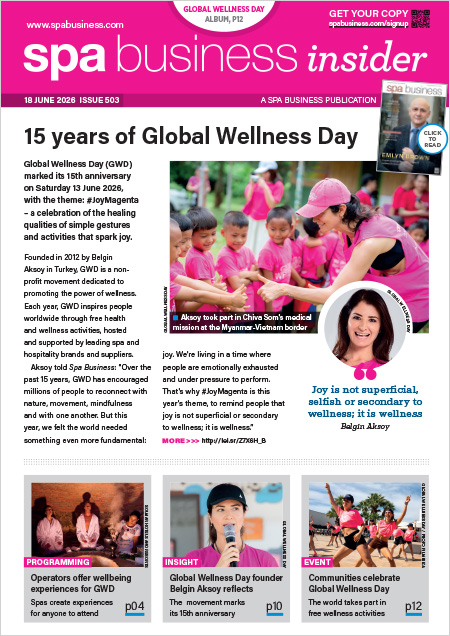
Global Wellness Day (GWD) marked its 15th anniversary on Saturday 13 June 2026, with the
theme: #JoyMagenta – a celebration of the healing qualities of simple gestures and activities
that spark joy.
Global luxury hospitality brand, Six Senses, has partnered with longevity healthcare provider,
HUM2N, to launch a clinic at Six Senses London, at The Whiteley.
As part of its first hotel partnership, Mayrlife – the medical health resort company known for its
site in Altaussee, Austria – has launched a day clinic at the Rosewood Vienna.
Premium London health club, KX Chelsea, will imminently unveil its most significant
redevelopment since its launch in 2002 to create an integrated wellness model combining
training, recovery and relaxation.
Rosewood Le Guanahani St Barth, on the northeast coast of Saint Barthélemy in the French
West Indies, is offering a programme of ocean-inspired yoga classes between 8-14 June to
celebrate Global Wellness Day (GWD).
Hotel de France, located on the British Isle of Jersey, has created a wellness retreat package
that includes a hot yoga session that will take place in Jersey Zoo’s butterfly sanctuary.
The Ritz-Carlton, Langkawi, in Malaysia, has revealed a schedule for Global Wellness Day
(GWD) that includes guided rainforest walks, mindful movement and guided coastal meditation
experiences.
In the fast-paced world of fitness and wellness, where high-intensity workouts push us to
our limits and the sweat pours, the importance of efficient recovery cannot be overstated. [more...]