The hotel spa model is ripe for disruption, suggests spa consultant
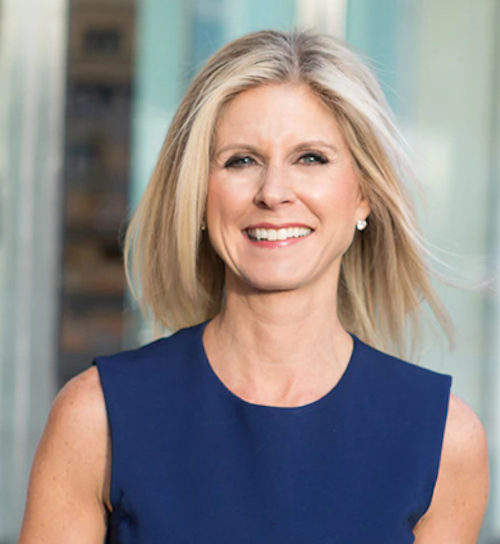
Adria Lake. The spas of the future will have a smaller footprint, but
more impact, as wellness expands beyond the spa walls
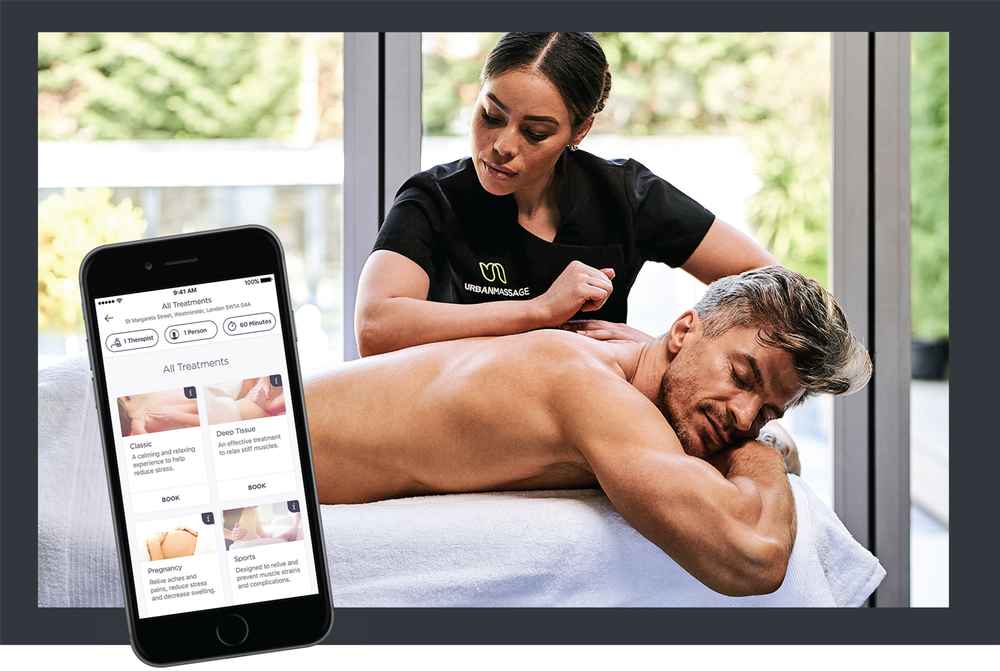
Companies like
Urban Massage are already following a ‘wellness without walls’ philospophy
The market for wellness is huge – everyone wants to be well. The biggest opportunities, however, lie await outside the spa walls. Consider these figures:
The average capture rate for a hotel spa is 3 per cent of the total hotel occupancy. Even if your spa is full, up to 97 per cent of your guests are not utilising or benefiting from your services. Not surprisingly, the average hotel spa revenue accounts for between just 3 to 4 per cent of the total hotel revenue.
In the United States, 13.71 million out of 325 million people – or 4.2 per cent of the total population – use day spa services annually, according to Allied Market Research. That’s all day spas, not only hotel spas. The percentage of the total US population that uses hotel spas is closer to 1 to 2 per cent. This figure is even lower in other parts of the world, where only the wealthy can afford to ‘spa’. The global wellness economy may be worth US$3.7tr, but spa revenue makes up just US$99bn of that figure – or a rather meagre 3.7 per cent of the total.
Disruptive spa design The urban hotel spa design is ripe for a disruption. The existing model is outdated and no longer serves the hotel nor its guests. Spas in urban hotels are suffering from a “familiarity” disease. The guest capture rate has continued to decline as the novelty has worn off, and these days, most urban hotel spas find it challenging to compete with independent day spas, which often offer better access and lower prices for similar products and services just outside their doors.
Urban hotel spas now share the fate of gyms and pools of having become amenities rather than profit centres. In the past five years, I have seen many hotel brands scrambling to evolve their spa design standards to improve performance and stay relevant. But the problem is that these design standards still adhere to the same stale template.
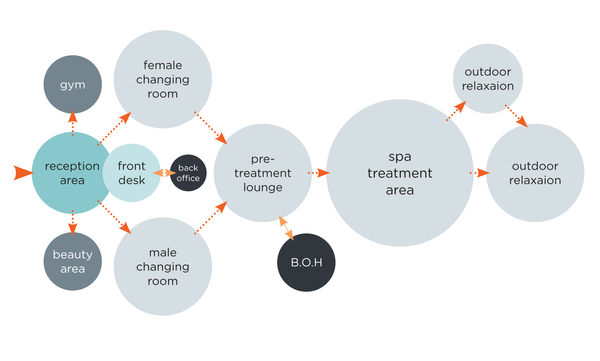
All spa designs are currently guided by a familiar guest flow – a sequence of services and facilities expertly formulated by spa consultants and wellness experts to enhance the guest experience. A typical spa guest flow (see diagram, p.92) generates the same floorplans and templates that have been around for decades, repeated so many times you’d be able to navigate most spas blindfolded.
The template also treats guests as passive participants of a process (so-called journeys or rituals), not individuals with different needs and preferences capable of creating their own dynamic wellness experience.
Almost all other hotel facilities – the guest rooms, restaurants and lobby – have gone through game-changing transformations, but the spa, gym and pool face a status quo bias – the preference of using the status quo as a reference point, as any change from that baseline is perceived as too big of a risk. In reality, keeping the status quo is the biggest risk of all.
Wellness Without Walls How to design an urban hotel spa that appeals to the other 97 per cent of your guests? Shrink your spa footprint and imagine “well” spaces designed to be intuitively useful and relevant to most guests, not just the spa-goers. Rather than offering ‘treatments’ from an extensive menu, the ‘Wellness without Walls’ model invites guests to actively participate in creating their own wellness experiences.
It intrigues rather than instructs, and allows for random, unexpected, unlikely encounters and magical moments of discovery, rather than highly choreographed and standardised ‘spa journeys’. The disruptive Wellness without Walls design features unexpected spaces dispersed throughout the hotel, where guests are encouraged to share experiences with friends, strike up conversations with complete strangers, learn a new meditation technique from a fellow traveller, arrange a morning run with a local marathoner, or catch up on work while getting a quick pedicure and a shot of turmeric ginger vodka.
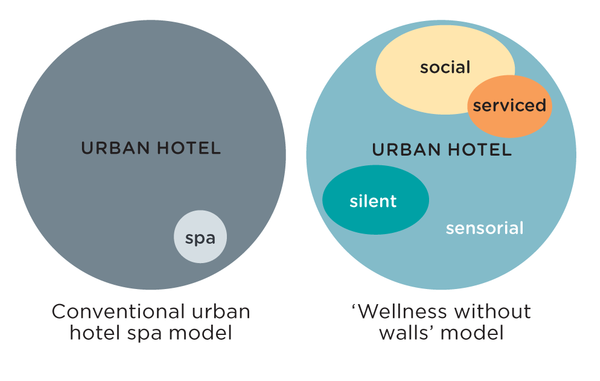
Let’s consider four types of spaces (see diagram, below) that make up the disruptive “Wellness without Walls” design:
1. Social spaces Fun, engaging, brightly lit, open spaces that allow guests to meet, mingle or just be a part of the scene. Social spaces are currently the domain of the food and drink sector, like restaurants, cafés and bars. Although many urban hotels have also transformed their lobbies into trendy social gathering places by blurring the lines between function (checking in and out) and fun (meeting, entertaining, dining, drinking), urban hotel spas haven’t quite figured out how to have fun and join the social scene. Most hotel spas are sombre, isolated and dimly lit. We forget we are social creatures who crave interaction and companionship, especially in new, unfamiliar places. Social interactions, making friends, learning by doing, or being part of something are as therapeutic, sustaining and gratifying as the best therapies – often more so as they are fun, surprising and spontaneous, rather than staged.
2. Silent spaces Yes, silence still has a place in our ‘Wellness without Walls’ design – but not necessarily in places that you’d expect. In fact, many people appreciate silence even more when they find it in the most unexpected places.
3. Sensorial spaces Read any spa menu, and you’d think that spas have a monopoly on sensorial experiences. In reality, your spa sensorial experience usually entails choosing your massage oil, walking through candle-scented corridors and experiencing the soothing touch of your therapist’s hands while listening to softly piped-in music. Our sensory nervous system is capable of so much more. Sensorial spaces not only awaken our senses, but spark creativity, calm the nervous system, heighten neurological functions, support and strengthen other biological systems and provide therapeutic effects.
4. Serviced spaces Compact, multi-functional spaces designed to maximise guest offerings and experience can optimise the hotel’s space utilisation and revenue, while minimising operational costs and maintenance. While the previous three types of spaces provide guests with dynamic, spontaneous, DIY experiences, serviced spaces offer personalised experiences delivered by highly qualified, consumer-vetted local experts and providers. Serviced spaces are designed to reduce or do away with the high operational costs of servicing and maintaining treatment rooms, gyms, and other spa facilities that currently require full-time staff to operate.
Virtual communities It’s time to activate your under-used spa facilities by joining the virtual community and digital economy. But what should you do with a functional and operational but unprofitable urban hotel spa? Many hotel operators justify non-performing spas by playing the “service trumps profitability” card. Nonsense. If a facility is not profitable, then there must not be adequate demand to justify its existence.
Guests are also drawn to successful establishments – that’s why a great restaurant has a long line of customers, while the not-so-great restaurant is empty. An under-used spa is a disservice to both hotel and guests, so rather than shifting its operating costs to a third-party, get rid of it or join the digital economy.
How? Add a roster of highly qualified, certified local therapists, beauticians, stylists, personal trainers, life coaches, nutritionists and well-reputed masters to your hotel app and allow them to use your spa facilities to conduct their services and pay per use by sharing their revenue with you. Now, instead of a spa menu that reads like a thousand others, your guests will have access to the services of local experts, the chance to meet extraordinary individuals you can’t afford to have on your payroll and “one-off” experiences that cannot be staged or choreographed.
Hotels are extremely protective of their brand standards, access to their facilities, and their guests – a mindset that is outdated if not obsolete. We forget customers have access to just about anything they want via their phones, and your guests’ personal data is available and traded in the open market.
I imagine that in the near future the urban hotel spa could be replaced by an app that gives guests access to unlimited, pay-as-you-go services. Unthinkable? Exactly.
Exposure to new experiences In her book, How Emotions are Made – The Secret Life of the Brain, Lisa Feldman Barrett, a neuroscientist and psychologist, argues that the more exposure we have to new and unfamiliar experiences, the richer, more subtle and layered our emotions will be, and the more granular and high-fidelity they will become. How is this relevant to the wellness of your hotel guests? Barret further explains that the way we experience our emotions shapes how we see the world. And how we see the world greatly affects how we feel, function, think, relate to others – and our overall wellbeing. It’s a continuous feedback loop.
Enriching your guests’ emotional vocabulary is just one of the many ways that ‘Wellness without Walls’ boosts the wellbeing of 100 per cent of your hotel guests – instead of just 3 per cent.
To convert the unconverted and appeal to a much larger market by creating products and services that become indispensable and addictive – that is the goal of the disruptive ‘Wellness without Walls’ concept.
Adria Lake is the founder of wellness and spa design company AW Lake Design. She has a background in hospitality having spent eight years overseeing the family portfolio of Asian hotel and real estate. Lake founded her spa concept and design firm in 1999 and it now has offices in Indonesia, Singapore, Hong Kong, China, the UK, the US and Dubai.
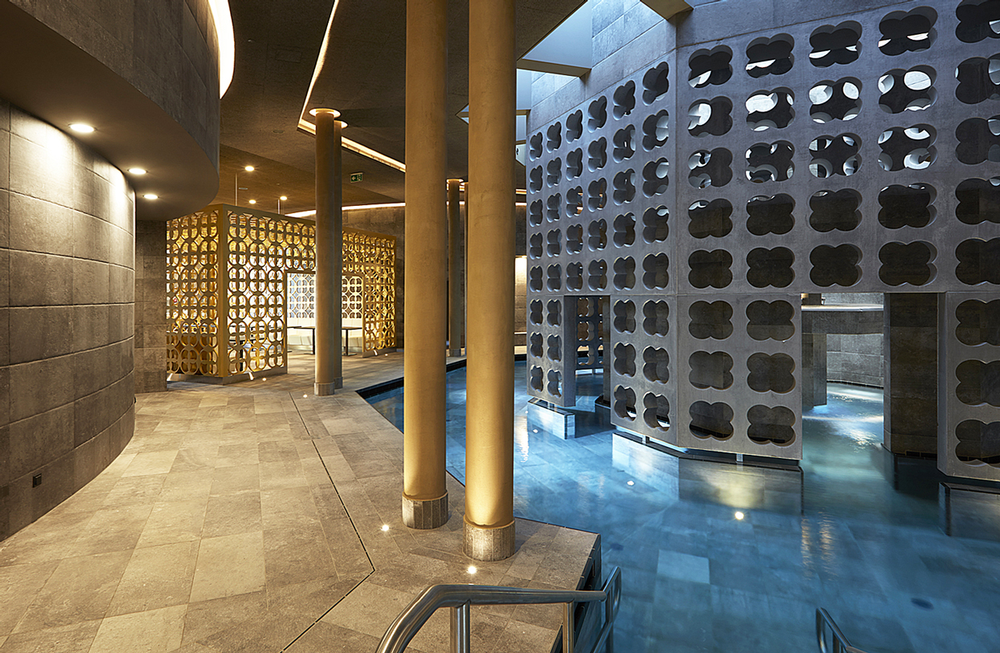
Austria’s Therme Laa Hotel & Silent Spa has embraced the power of silence
Rooms, lobbies and restaurants have gone through transformations. Spas should too
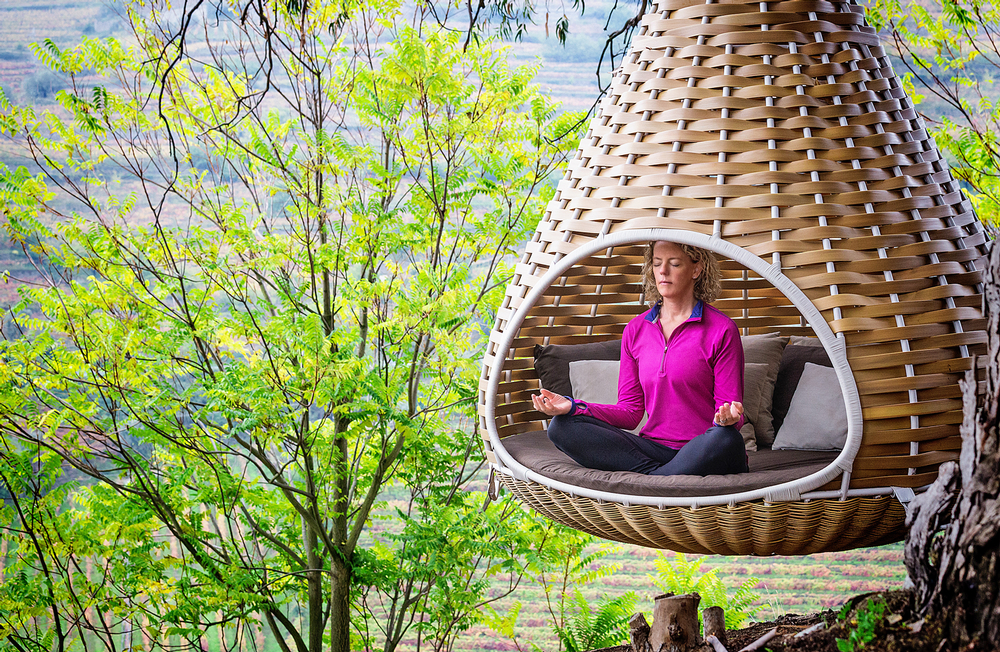
Resorts like Six Senses have unexpected ‘well spaces’ that can inspire urban hotel spas / shutterstock
Resorts like Six Senses have unexpected ‘well spaces’ that can inspire urban hotel spas
The hotel spa model is ripe for disruption, suggests spa consultant
Adria Lake. The spas of the future will have a smaller footprint, but
more impact, as wellness expands beyond the spa walls
Companies like
Urban Massage are already following a ‘wellness without walls’ philospophy
The market for wellness is huge – everyone wants to be well. The biggest opportunities, however, lie await outside the spa walls. Consider these figures:
The average capture rate for a hotel spa is 3 per cent of the total hotel occupancy. Even if your spa is full, up to 97 per cent of your guests are not utilising or benefiting from your services. Not surprisingly, the average hotel spa revenue accounts for between just 3 to 4 per cent of the total hotel revenue.
In the United States, 13.71 million out of 325 million people – or 4.2 per cent of the total population – use day spa services annually, according to Allied Market Research. That’s all day spas, not only hotel spas. The percentage of the total US population that uses hotel spas is closer to 1 to 2 per cent. This figure is even lower in other parts of the world, where only the wealthy can afford to ‘spa’. The global wellness economy may be worth US$3.7tr, but spa revenue makes up just US$99bn of that figure – or a rather meagre 3.7 per cent of the total.
Disruptive spa design The urban hotel spa design is ripe for a disruption. The existing model is outdated and no longer serves the hotel nor its guests. Spas in urban hotels are suffering from a “familiarity” disease. The guest capture rate has continued to decline as the novelty has worn off, and these days, most urban hotel spas find it challenging to compete with independent day spas, which often offer better access and lower prices for similar products and services just outside their doors.
Urban hotel spas now share the fate of gyms and pools of having become amenities rather than profit centres. In the past five years, I have seen many hotel brands scrambling to evolve their spa design standards to improve performance and stay relevant. But the problem is that these design standards still adhere to the same stale template.
All spa designs are currently guided by a familiar guest flow – a sequence of services and facilities expertly formulated by spa consultants and wellness experts to enhance the guest experience. A typical spa guest flow (see diagram, p.92) generates the same floorplans and templates that have been around for decades, repeated so many times you’d be able to navigate most spas blindfolded.
The template also treats guests as passive participants of a process (so-called journeys or rituals), not individuals with different needs and preferences capable of creating their own dynamic wellness experience.
Almost all other hotel facilities – the guest rooms, restaurants and lobby – have gone through game-changing transformations, but the spa, gym and pool face a status quo bias – the preference of using the status quo as a reference point, as any change from that baseline is perceived as too big of a risk. In reality, keeping the status quo is the biggest risk of all.
Wellness Without Walls How to design an urban hotel spa that appeals to the other 97 per cent of your guests? Shrink your spa footprint and imagine “well” spaces designed to be intuitively useful and relevant to most guests, not just the spa-goers. Rather than offering ‘treatments’ from an extensive menu, the ‘Wellness without Walls’ model invites guests to actively participate in creating their own wellness experiences.
It intrigues rather than instructs, and allows for random, unexpected, unlikely encounters and magical moments of discovery, rather than highly choreographed and standardised ‘spa journeys’. The disruptive Wellness without Walls design features unexpected spaces dispersed throughout the hotel, where guests are encouraged to share experiences with friends, strike up conversations with complete strangers, learn a new meditation technique from a fellow traveller, arrange a morning run with a local marathoner, or catch up on work while getting a quick pedicure and a shot of turmeric ginger vodka.
Let’s consider four types of spaces (see diagram, below) that make up the disruptive “Wellness without Walls” design:
1. Social spaces Fun, engaging, brightly lit, open spaces that allow guests to meet, mingle or just be a part of the scene. Social spaces are currently the domain of the food and drink sector, like restaurants, cafés and bars. Although many urban hotels have also transformed their lobbies into trendy social gathering places by blurring the lines between function (checking in and out) and fun (meeting, entertaining, dining, drinking), urban hotel spas haven’t quite figured out how to have fun and join the social scene. Most hotel spas are sombre, isolated and dimly lit. We forget we are social creatures who crave interaction and companionship, especially in new, unfamiliar places. Social interactions, making friends, learning by doing, or being part of something are as therapeutic, sustaining and gratifying as the best therapies – often more so as they are fun, surprising and spontaneous, rather than staged.
2. Silent spaces Yes, silence still has a place in our ‘Wellness without Walls’ design – but not necessarily in places that you’d expect. In fact, many people appreciate silence even more when they find it in the most unexpected places.
3. Sensorial spaces Read any spa menu, and you’d think that spas have a monopoly on sensorial experiences. In reality, your spa sensorial experience usually entails choosing your massage oil, walking through candle-scented corridors and experiencing the soothing touch of your therapist’s hands while listening to softly piped-in music. Our sensory nervous system is capable of so much more. Sensorial spaces not only awaken our senses, but spark creativity, calm the nervous system, heighten neurological functions, support and strengthen other biological systems and provide therapeutic effects.
4. Serviced spaces Compact, multi-functional spaces designed to maximise guest offerings and experience can optimise the hotel’s space utilisation and revenue, while minimising operational costs and maintenance. While the previous three types of spaces provide guests with dynamic, spontaneous, DIY experiences, serviced spaces offer personalised experiences delivered by highly qualified, consumer-vetted local experts and providers. Serviced spaces are designed to reduce or do away with the high operational costs of servicing and maintaining treatment rooms, gyms, and other spa facilities that currently require full-time staff to operate.
Virtual communities It’s time to activate your under-used spa facilities by joining the virtual community and digital economy. But what should you do with a functional and operational but unprofitable urban hotel spa? Many hotel operators justify non-performing spas by playing the “service trumps profitability” card. Nonsense. If a facility is not profitable, then there must not be adequate demand to justify its existence.
Guests are also drawn to successful establishments – that’s why a great restaurant has a long line of customers, while the not-so-great restaurant is empty. An under-used spa is a disservice to both hotel and guests, so rather than shifting its operating costs to a third-party, get rid of it or join the digital economy.
How? Add a roster of highly qualified, certified local therapists, beauticians, stylists, personal trainers, life coaches, nutritionists and well-reputed masters to your hotel app and allow them to use your spa facilities to conduct their services and pay per use by sharing their revenue with you. Now, instead of a spa menu that reads like a thousand others, your guests will have access to the services of local experts, the chance to meet extraordinary individuals you can’t afford to have on your payroll and “one-off” experiences that cannot be staged or choreographed.
Hotels are extremely protective of their brand standards, access to their facilities, and their guests – a mindset that is outdated if not obsolete. We forget customers have access to just about anything they want via their phones, and your guests’ personal data is available and traded in the open market.
I imagine that in the near future the urban hotel spa could be replaced by an app that gives guests access to unlimited, pay-as-you-go services. Unthinkable? Exactly.
Exposure to new experiences In her book, How Emotions are Made – The Secret Life of the Brain, Lisa Feldman Barrett, a neuroscientist and psychologist, argues that the more exposure we have to new and unfamiliar experiences, the richer, more subtle and layered our emotions will be, and the more granular and high-fidelity they will become. How is this relevant to the wellness of your hotel guests? Barret further explains that the way we experience our emotions shapes how we see the world. And how we see the world greatly affects how we feel, function, think, relate to others – and our overall wellbeing. It’s a continuous feedback loop.
Enriching your guests’ emotional vocabulary is just one of the many ways that ‘Wellness without Walls’ boosts the wellbeing of 100 per cent of your hotel guests – instead of just 3 per cent.
To convert the unconverted and appeal to a much larger market by creating products and services that become indispensable and addictive – that is the goal of the disruptive ‘Wellness without Walls’ concept.
Adria Lake is the founder of wellness and spa design company AW Lake Design. She has a background in hospitality having spent eight years overseeing the family portfolio of Asian hotel and real estate. Lake founded her spa concept and design firm in 1999 and it now has offices in Indonesia, Singapore, Hong Kong, China, the UK, the US and Dubai.
Austria’s Therme Laa Hotel & Silent Spa has embraced the power of silence
Rooms, lobbies and restaurants have gone through transformations. Spas should too
Resorts like Six Senses have unexpected ‘well spaces’ that can inspire urban hotel spas / shutterstock
Resorts like Six Senses have unexpected ‘well spaces’ that can inspire urban hotel spas
The Standards Authority for Touch in Cancer Care (SATCC) charity has announced its first five-
day Living with Cancer and Beyond retreat, which will be held at Carden Park Hotel and Spa in
Cheshire, UK, between 1 and 5 September.
Patmos Aktis, a Luxury Collection Resort and Spa, has opened in Greece, with a renovated and
rebranded wellness offering called Ansana Wellness and Spa.
The Mauna Kea Beach Hotel, an Autograph Collection property in Hawaii, US, has opened its
22,000 sq ft indoor-outdoor Spa at Mauna Kea as the final step in the property’s overall
renovation, which has cost more than US$180 million (€166 million, £140 mill
The UK spa review and discovery platform for consumers, the Good Spa Guide, has announced
it will host the Good Spa Guide Awards 2026 during an event on 16 November at Sopwell House
Hotel in St Albans, UK.
Eighty-four per cent of consumers now say wellness is a top priority in their lives, with this
percentage increasing year on year, according to a preview presentation of McKinsey’s Future of
Wellness 2026 research report.
Mass protests have been taking place since Monday 1 June in Albania over the development of
a luxury resort by Donald Trump’s daughter Ivanka Trump and her husband Jared Kushner.
Global Wellness Day (GWD) marked its 15th anniversary on Saturday 13 June 2026, with the
theme: #JoyMagenta – a celebration of the healing qualities of simple gestures and activities
that spark joy.
Global luxury hospitality brand, Six Senses, has partnered with longevity healthcare provider,
HUM2N, to launch a clinic at Six Senses London, at The Whiteley.
As part of its first hotel partnership, Mayrlife – the medical health resort company known for its
site in Altaussee, Austria – has launched a day clinic at the Rosewood Vienna.
Premium London health club, KX Chelsea, will imminently unveil its most significant
redevelopment since its launch in 2002 to create an integrated wellness model combining
training, recovery and relaxation.