Architecture has always been very opportunity-driven, but maybe it's time to start taking the initiative, OMA partner David Gianotten tells Magali Robathan
By Magali Robathan | Published in CLADmag 2016 issue 2
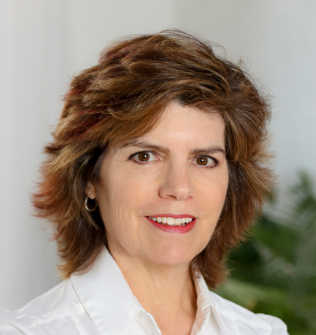
David Gianotten is one of nine partners who lead OMA. He was made a partner in 2010 / Photo: Vincent van den Hoogen
I interviewed David Gianotten at OMA’s offices in central Rotterdam. As you’d expect from one of the world’s best known architectural practices, there’s a real buzz inside, with architects working on projects ranging from huge buildings such as the Taipei Performing Arts Centre in Taiwan, to a simple but exquisitely designed jewellery display case for a high-end Parisien jeweller. Blue foam models illustrate the wide variety of projects being worked on by the practice – incidentally, my favourite room is the bottom floor model shop, where materials sit ready to be turned into OMA projects of the future.
Launched by Rem Koolhaas in the 1970s, the Office for Metropolitan Architecture’s roster of leisure and cultural buildings includes the Casa da Musica concert hall in Porto, Portugal; Seattle Central Library in Seattle, US; the Fondazione Prada art centre in Milan, Italy; and the Garage Museum of Contemporary Art in Moscow, Russia. It’s also well known for acting as a launch pad for an unusually high number of successful architects, include Bjarke Ingels, Ole Scheeren, Fernando Romero of FR-EE and Joshua Prince-Ramus of REX.
Netherlands-born David Gianotten returned to his home country from Asia last year, where he set up OMA Asia, growing the Asian design office from 12 people at the start to 60 in six years. He was made a partner of OMA in 2010, and returned to Rotterdam to lead the practice in the role of managing partner-architect in 2015.
Today the practice is led by a collective of nine partners. It employs about 350 people across six offices, in Rotterdam, New York, Beijing, Hong Kong, Doha and Dubai.
Here David Gianotten talks about the projects being worked on at the moment, as well as how the practice is evolving.
How has 2016 been for you so far? Hectic, but very good. Last year was about getting settled in my new role and developing new strategies for the company. It feels like now we’re really making progress.
2016 started amazingly for us, because we won The Factory in Manchester, UK, and then we were chosen to design the WA Museum in Perth, Australia, which I was leading. Shortly afterwards we got the assignment for the new Feyenoord stadium in Rotterdam, the Netherlands, and the regeneration of the area around it. And that all happened in about three months.
What’s your main focus over the next 12 to 18 months? We’re in transition, as a practice, from an office that was seen by the world as being led by a star architect to one that is led by a collective. It’s very important for me to manage the company to make sure that works and that the expertise of the nine partners can flourish. It’s a task I take very seriously.
Our profession is also in transition. For a long time, architecture has been very opportunistic. I don’t believe so much anymore in doing one competition after another; instead we’re moving towards a new business model strategy that goes beyond just architecture. We’re thinking about working with clients from a much earlier stage, before there is a brief, and we are also interested in initiating our own projects.
We’re experimenting with this model with two smaller projects at the moment, where we are our own client. I can’t talk much yet, except to say one is a masterplan and the other a building. We’ve initiated these projects ourselves and are going out to find a company or developer to help fund them.
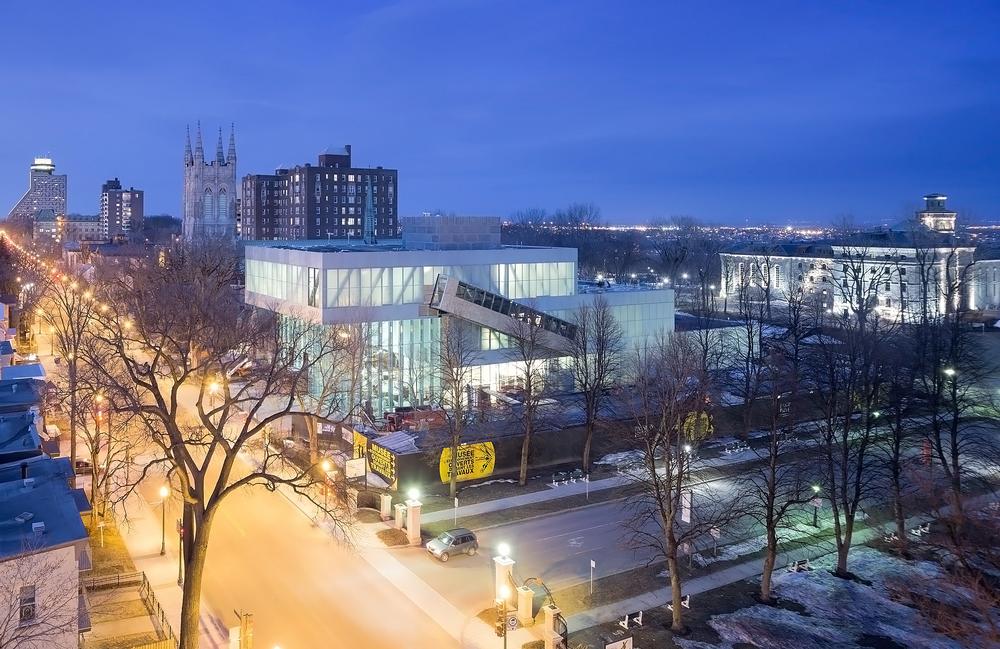
The Pierre Lassonde Pavilion at the National Musee des Beaux-Arts has just opened in Quebec. What are your thoughts on this? This project is interesting because the roof of the building becomes an extension of the park around it, and also because it connects parts of the existing museum together.
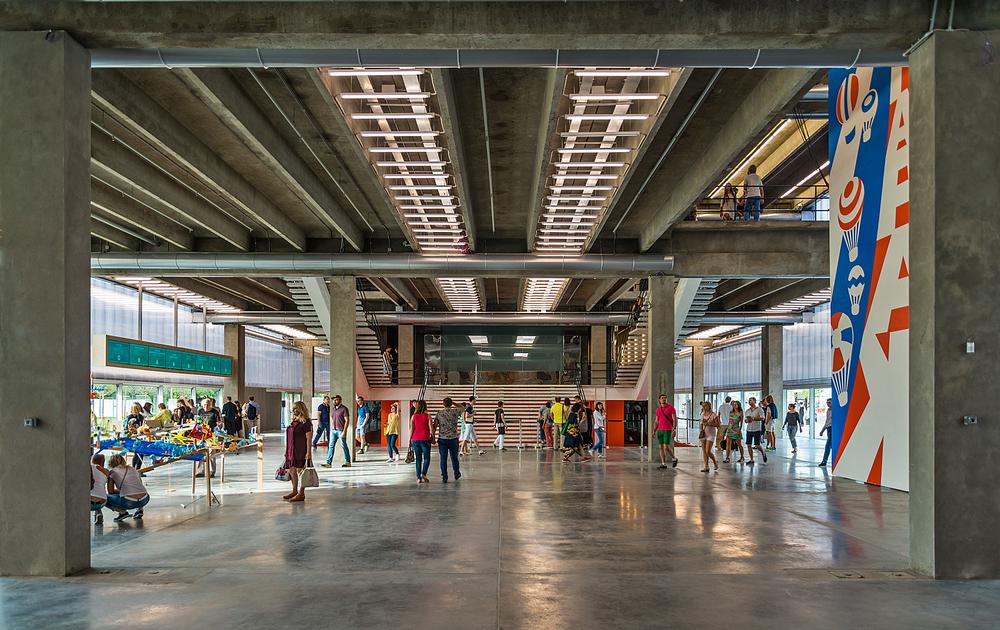
The lobby space is also really interesting, because it’s unprogrammed space. Because we stepped the museum, there was a huge space left underneath that was not prescribed in the brief. I think that was a great thing for the museum – they could have their formal galleries, yet they suddenly had a grand hall where they could do all kinds of new things they hadn’t previously imagined.
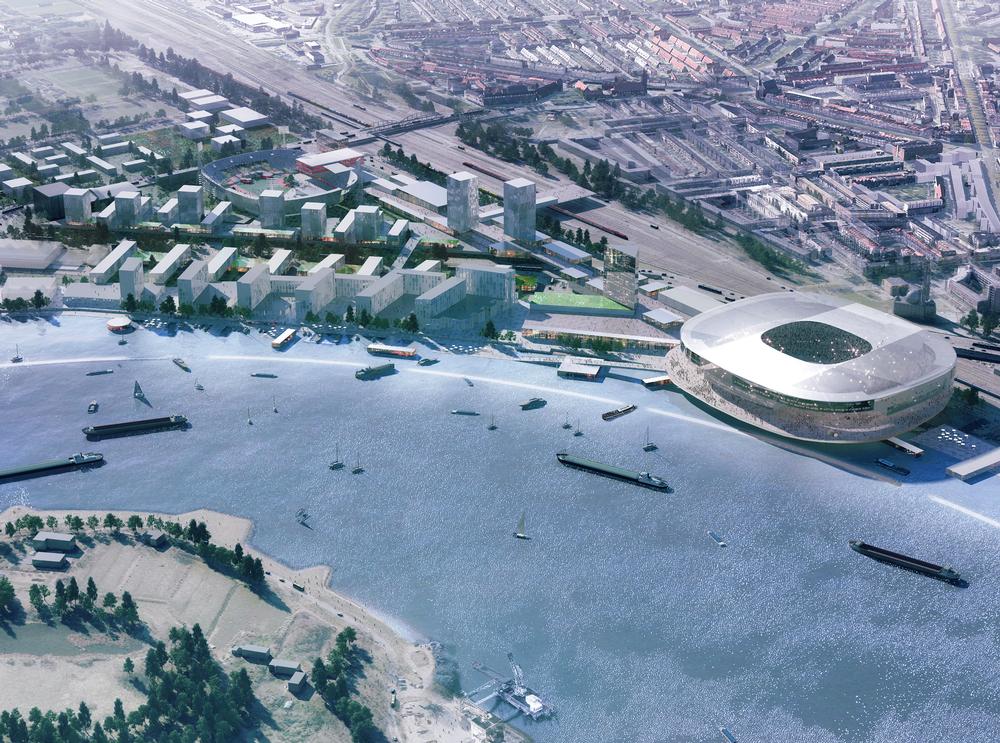
You’re designing a new stadium for Feyenoord football club. Can you tell us about that? There were two previous attempts to build a new stadium for Feyenoord and they both failed. Our analysis was that they failed because it was an object driven assignment – it was purely about building a new stadium or rebuilding the old one. We strongly believe that sport is not an object related thing; it’s part of society. So we talked to Feyenoord, and said, you shouldn’t just see this stadium as an object, you should see it as a part of the city. We want to use this opportunity to revitalise a part of Rotterdam that really needs it.
It took some time to convince the client to see the project in these terms, because regeneration isn’t the first thing football boards and directors are concerned about, but eventually they agreed that it would be much better to look at this project as part of a wider drive to improve the area. The government isn’t a client, but it gave its full support and brought people in to work with us in a very collaborative and detailed manner.
We agreed to do three masterplans with three different stadium locations. Luckily everyone chose the same one – the Strip (Veranda West). Now we are moving on to the next step, which is finding the investors and detailing the design of it.
Can you sum up the vision for the project? Rotterdam has ignored the River Maas for a very long time; it has developed with its back to it. We proposed building the new stadium – a very important landmark for the city – on the waterfront as a starting point of a development of that area.
The old stadium, De Kuip, which is a municipality listed building, will be completely redeveloped and turned into a multifunctional complex for fans and visitors. It will house a range of leisure and F&B facilities, as well as housing and social and healthcare functions. There will also be an athletics programme inside the stadium, so that the stadium will still be used.
In between the new and old two stadiums, we’ve created a ‘strip’ featuring shops, houses, offices, hotels, attractions, cultural spaces, social and recreational facilities, parking and retail. We’ll give it life, 24/7, so there are things happening even when there are no events at the stadiums, and it will act as a nice fan strip when there are games and events taking place.
What can you say about the design of the stadium? The stadium is located on a bend in the river – it’s a very visible spot that can be seen from the heart of the city but also from the ring road. There’s a train track at the back of the stadium, which means that trains pass by carrying gas and chemical liquids from the harbour.
On the one hand, it’s very visible and open, and on the other hand it needs to be well protected. So the design of the stadium has two sides; one that is completely open to the water, and another that’s more closed and initimate; that embeds the club and gives it safety.
What are you most excited about with this project? The fact that there can be an initiative to revitalise an important part of the city that was neglected for a long time and that it’s being done in collaboration with the city.
OMA are designing the Factory arts and cultural centre in Manchester. What is your vision for this project? We’re well known for our work experimenting with theatre design. Classical theatre needs to be performed under the right conditions, with the best possible acoustics and so on. While this is important, it’s meant that classical theatres have traditionally been designed in such a way that they are often not suitable for more experimental performances. So we’re always trying to figure out new ways of using theatre buildings to make different types of artistic expression possible.
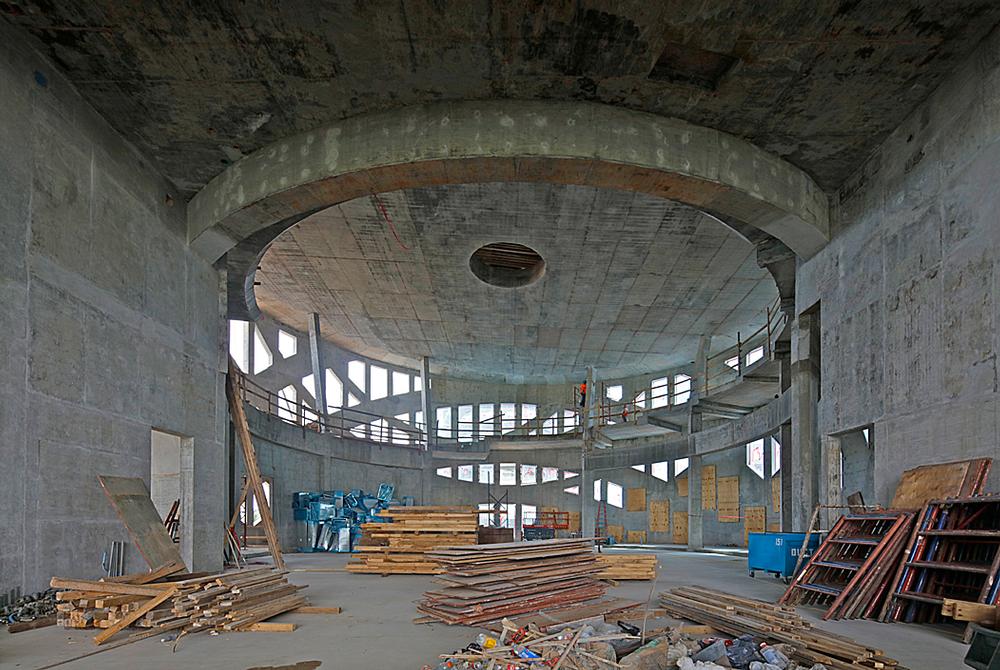
We’ve started looking into this with the design of the Casa da Musica concert hall in Porto, which opens up the theatre to the city [via corrugated glass walls] and in the Wyly Theatre in Dallas, where we experimented with designing a theatre that can be transformed into a wide range of configurations, according to the performance. We are currently building the Taipei Performing Arts Centre in Taiwan, where we’re experimenting with bringing theatres together and creating larger spaces that can be used by theatre makers in a more experimental way.
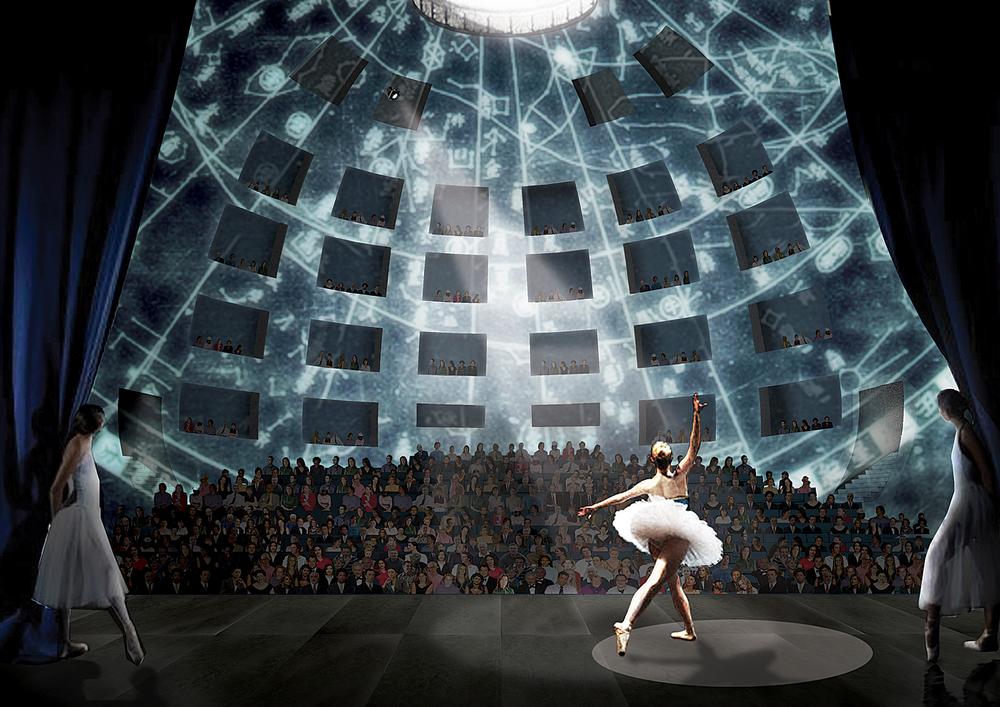
The Factory is the next step. It’s housed in a huge building, which will be able to accommodate several works at the same time. We have designed the seating and stage in an extremely flexible way, meaning that experimental theatre, exhibitions and fairs could take place there, as well as classical theatre.
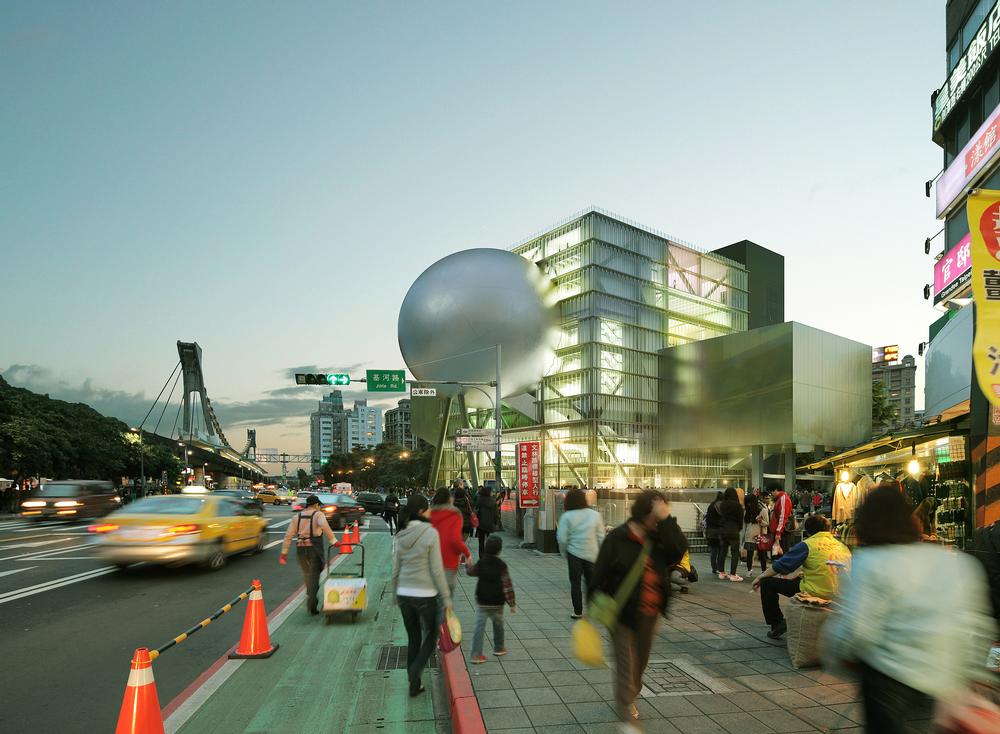
How did the design for the Taipei Performing Arts Centre develop? On the site, there’s a very vibrant night market, the Shilin night market. The original brief proposed taking away this market in order to house the Taipei Performing Arts Centre. Our view was that it would have been completely immoral to do so. The original brief described three theatres next to each other, each with their own lobbies and back of houses. We said, can we not make the brief much more efficient, so that we need way less footprint. We proposed lifting the theatre up so that we could keep the night market underneath.
So then we asked ourselves, what’s the most efficient footprint you can get? It’s a square or a circle. A circle is difficult, because you get areas that you can’t use, so we went with a square, or a cube. We started putting halls in the cube and stacking them, but that became too big and didn’t work. So then we thought, if we put everything apart from the performance halls – the dressing rooms, lobbies, cafés, offices and so on – inside the cube and then hang the halls from the cube, that might work. That was the first sketch we made, scribbled on the page of an airline magazine. We tore the page out and then we entered the competition. And that is exactly the scheme today.
The three theatres – the Grand Theatre, the Proscenium Playhouse and Multiform Theatre – all hang from the central cube. By coupling the Grand Theatre and the Multiform Theatre, we can form a huge, experimental mega theatre with a 100m-long stage, which can house new kinds of performances as well as conventional theatre reimagined on a grand scale.
I am super excited by the fact that that idea was so strong, and that the government went with it. It’s not a nice looking building – it’s not made to be beautiful, it’s made to function well. The client recognised the efficiency of it and saw the opportunity of combining the night market with the building.
The project is under construction and should be finished next March after which the first performances will take place there in the summer next year.
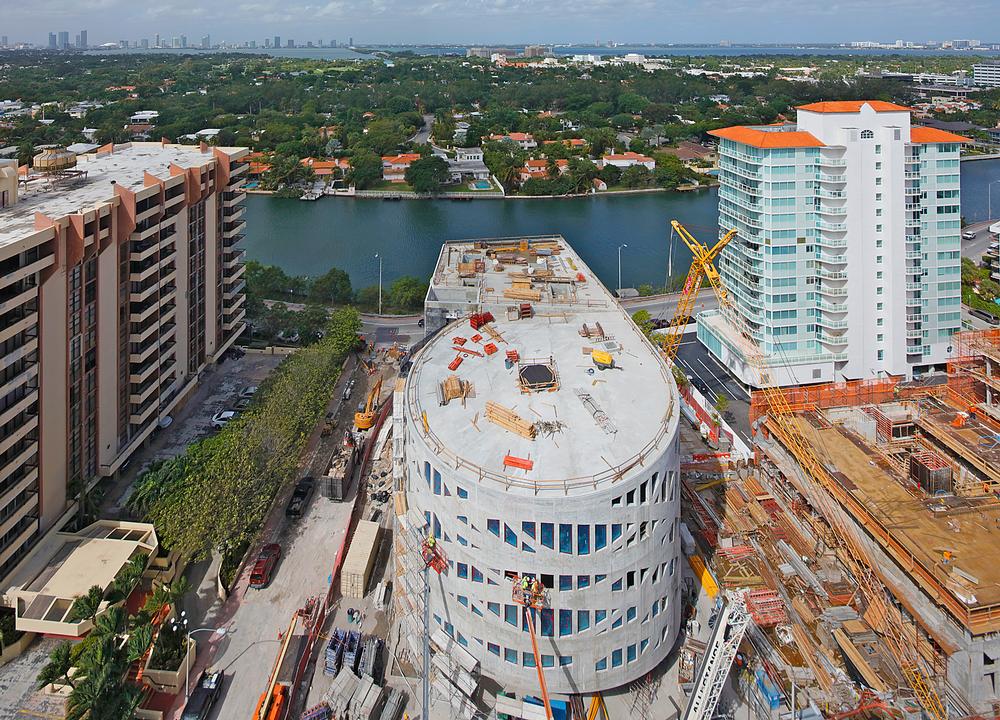
How important is the Faena Arts District project for OMA? Miami is a very commercially-driven city, so to be able to create a cultural facility there was a nice opportunity for our New York office. The fact that it’s also not too large makes it even more intimate. It looks as though the effect we were hoping for – to create a little diamond-like project in that strip of commerce – is really paying off. People notice the building, especially the façade, which is by our standards quite relaxed, almost frivolous. People are noticing it and wondering what it is and how it will be used.
Can you tell us about your career background? I studied archtitecture and construction technology at the University of Technology, Eindhoven, in the Netherlands. When I finished my studies, I decided I didn’t want to follow the normal trajectory of an architect; I wanted to be in a position where I would be on the table with clients from day one. To do that, I realised I needed to understand clients, so I started working for the Municipality of Utrecht as a project manager. In 2000, I joined Gideon Consultancy as project manager. The same year, following the Enschede fireworks disaster in the east of the Netherlands when a big fireworks factory blew up, the city was looking for a masterplan to rebuild the damaged part of the city. Me and my partner at Gideon, Peter Kuenzli, bid for the redevelopment of that part of the city, and we got it. I did all of the central buildings, including a museum, shopping mall, wellness centre, school and a remembrance building for the disaster.
As part of that project, I worked with Bjarne Mastenbroek at SeARCH, who then asked me to join the practice. So I flipped from being a client to becoming the director in that architecture office, which was exactly what I wanted. I worked at SeARCH for five years, until 2008, when I joined OMA.
What have you learned from working with Rem Koolhaas? I learned that it’s important to have a constant dialogue around projects, to criticise everything, even things that you take for granted, and to make sure that you always take decisions because there is a good reason for them. A lot of architects take certain decisions because of a shape, or because of a subjective matter such as beauty. Here at OMA we always analyse and discuss our reasons very thoroughly. That criticality has been very useful.
How do you spend your leisure time? I spend as much time as I can with my children, I play soccer, I like reading, motorsports and travel.
The Spa Life UK Convention returns from 21–23 June 2026 at Whittlebury Park Hotel, Spa &
Golf Resort, bringing together spa managers, directors and owners for two days of focused
education, meaningful connection and commercial insight. [more...]
Architecture has always been very opportunity-driven, but maybe it's time to start taking the initiative, OMA partner David Gianotten tells Magali Robathan
By Magali Robathan | Published in CLADmag 2016 issue 2
David Gianotten is one of nine partners who lead OMA. He was made a partner in 2010 / Photo: Vincent van den Hoogen
I interviewed David Gianotten at OMA’s offices in central Rotterdam. As you’d expect from one of the world’s best known architectural practices, there’s a real buzz inside, with architects working on projects ranging from huge buildings such as the Taipei Performing Arts Centre in Taiwan, to a simple but exquisitely designed jewellery display case for a high-end Parisien jeweller. Blue foam models illustrate the wide variety of projects being worked on by the practice – incidentally, my favourite room is the bottom floor model shop, where materials sit ready to be turned into OMA projects of the future.
Launched by Rem Koolhaas in the 1970s, the Office for Metropolitan Architecture’s roster of leisure and cultural buildings includes the Casa da Musica concert hall in Porto, Portugal; Seattle Central Library in Seattle, US; the Fondazione Prada art centre in Milan, Italy; and the Garage Museum of Contemporary Art in Moscow, Russia. It’s also well known for acting as a launch pad for an unusually high number of successful architects, include Bjarke Ingels, Ole Scheeren, Fernando Romero of FR-EE and Joshua Prince-Ramus of REX.
Netherlands-born David Gianotten returned to his home country from Asia last year, where he set up OMA Asia, growing the Asian design office from 12 people at the start to 60 in six years. He was made a partner of OMA in 2010, and returned to Rotterdam to lead the practice in the role of managing partner-architect in 2015.
Today the practice is led by a collective of nine partners. It employs about 350 people across six offices, in Rotterdam, New York, Beijing, Hong Kong, Doha and Dubai.
Here David Gianotten talks about the projects being worked on at the moment, as well as how the practice is evolving.
How has 2016 been for you so far? Hectic, but very good. Last year was about getting settled in my new role and developing new strategies for the company. It feels like now we’re really making progress.
2016 started amazingly for us, because we won The Factory in Manchester, UK, and then we were chosen to design the WA Museum in Perth, Australia, which I was leading. Shortly afterwards we got the assignment for the new Feyenoord stadium in Rotterdam, the Netherlands, and the regeneration of the area around it. And that all happened in about three months.
What’s your main focus over the next 12 to 18 months? We’re in transition, as a practice, from an office that was seen by the world as being led by a star architect to one that is led by a collective. It’s very important for me to manage the company to make sure that works and that the expertise of the nine partners can flourish. It’s a task I take very seriously.
Our profession is also in transition. For a long time, architecture has been very opportunistic. I don’t believe so much anymore in doing one competition after another; instead we’re moving towards a new business model strategy that goes beyond just architecture. We’re thinking about working with clients from a much earlier stage, before there is a brief, and we are also interested in initiating our own projects.
We’re experimenting with this model with two smaller projects at the moment, where we are our own client. I can’t talk much yet, except to say one is a masterplan and the other a building. We’ve initiated these projects ourselves and are going out to find a company or developer to help fund them.
The Pierre Lassonde Pavilion at the National Musee des Beaux-Arts has just opened in Quebec. What are your thoughts on this? This project is interesting because the roof of the building becomes an extension of the park around it, and also because it connects parts of the existing museum together.
The lobby space is also really interesting, because it’s unprogrammed space. Because we stepped the museum, there was a huge space left underneath that was not prescribed in the brief. I think that was a great thing for the museum – they could have their formal galleries, yet they suddenly had a grand hall where they could do all kinds of new things they hadn’t previously imagined.
You’re designing a new stadium for Feyenoord football club. Can you tell us about that? There were two previous attempts to build a new stadium for Feyenoord and they both failed. Our analysis was that they failed because it was an object driven assignment – it was purely about building a new stadium or rebuilding the old one. We strongly believe that sport is not an object related thing; it’s part of society. So we talked to Feyenoord, and said, you shouldn’t just see this stadium as an object, you should see it as a part of the city. We want to use this opportunity to revitalise a part of Rotterdam that really needs it.
It took some time to convince the client to see the project in these terms, because regeneration isn’t the first thing football boards and directors are concerned about, but eventually they agreed that it would be much better to look at this project as part of a wider drive to improve the area. The government isn’t a client, but it gave its full support and brought people in to work with us in a very collaborative and detailed manner.
We agreed to do three masterplans with three different stadium locations. Luckily everyone chose the same one – the Strip (Veranda West). Now we are moving on to the next step, which is finding the investors and detailing the design of it.
Can you sum up the vision for the project? Rotterdam has ignored the River Maas for a very long time; it has developed with its back to it. We proposed building the new stadium – a very important landmark for the city – on the waterfront as a starting point of a development of that area.
The old stadium, De Kuip, which is a municipality listed building, will be completely redeveloped and turned into a multifunctional complex for fans and visitors. It will house a range of leisure and F&B facilities, as well as housing and social and healthcare functions. There will also be an athletics programme inside the stadium, so that the stadium will still be used.
In between the new and old two stadiums, we’ve created a ‘strip’ featuring shops, houses, offices, hotels, attractions, cultural spaces, social and recreational facilities, parking and retail. We’ll give it life, 24/7, so there are things happening even when there are no events at the stadiums, and it will act as a nice fan strip when there are games and events taking place.
What can you say about the design of the stadium? The stadium is located on a bend in the river – it’s a very visible spot that can be seen from the heart of the city but also from the ring road. There’s a train track at the back of the stadium, which means that trains pass by carrying gas and chemical liquids from the harbour.
On the one hand, it’s very visible and open, and on the other hand it needs to be well protected. So the design of the stadium has two sides; one that is completely open to the water, and another that’s more closed and initimate; that embeds the club and gives it safety.
What are you most excited about with this project? The fact that there can be an initiative to revitalise an important part of the city that was neglected for a long time and that it’s being done in collaboration with the city.
OMA are designing the Factory arts and cultural centre in Manchester. What is your vision for this project? We’re well known for our work experimenting with theatre design. Classical theatre needs to be performed under the right conditions, with the best possible acoustics and so on. While this is important, it’s meant that classical theatres have traditionally been designed in such a way that they are often not suitable for more experimental performances. So we’re always trying to figure out new ways of using theatre buildings to make different types of artistic expression possible.
We’ve started looking into this with the design of the Casa da Musica concert hall in Porto, which opens up the theatre to the city [via corrugated glass walls] and in the Wyly Theatre in Dallas, where we experimented with designing a theatre that can be transformed into a wide range of configurations, according to the performance. We are currently building the Taipei Performing Arts Centre in Taiwan, where we’re experimenting with bringing theatres together and creating larger spaces that can be used by theatre makers in a more experimental way.
The Factory is the next step. It’s housed in a huge building, which will be able to accommodate several works at the same time. We have designed the seating and stage in an extremely flexible way, meaning that experimental theatre, exhibitions and fairs could take place there, as well as classical theatre.
How did the design for the Taipei Performing Arts Centre develop? On the site, there’s a very vibrant night market, the Shilin night market. The original brief proposed taking away this market in order to house the Taipei Performing Arts Centre. Our view was that it would have been completely immoral to do so. The original brief described three theatres next to each other, each with their own lobbies and back of houses. We said, can we not make the brief much more efficient, so that we need way less footprint. We proposed lifting the theatre up so that we could keep the night market underneath.
So then we asked ourselves, what’s the most efficient footprint you can get? It’s a square or a circle. A circle is difficult, because you get areas that you can’t use, so we went with a square, or a cube. We started putting halls in the cube and stacking them, but that became too big and didn’t work. So then we thought, if we put everything apart from the performance halls – the dressing rooms, lobbies, cafés, offices and so on – inside the cube and then hang the halls from the cube, that might work. That was the first sketch we made, scribbled on the page of an airline magazine. We tore the page out and then we entered the competition. And that is exactly the scheme today.
The three theatres – the Grand Theatre, the Proscenium Playhouse and Multiform Theatre – all hang from the central cube. By coupling the Grand Theatre and the Multiform Theatre, we can form a huge, experimental mega theatre with a 100m-long stage, which can house new kinds of performances as well as conventional theatre reimagined on a grand scale.
I am super excited by the fact that that idea was so strong, and that the government went with it. It’s not a nice looking building – it’s not made to be beautiful, it’s made to function well. The client recognised the efficiency of it and saw the opportunity of combining the night market with the building.
The project is under construction and should be finished next March after which the first performances will take place there in the summer next year.
How important is the Faena Arts District project for OMA? Miami is a very commercially-driven city, so to be able to create a cultural facility there was a nice opportunity for our New York office. The fact that it’s also not too large makes it even more intimate. It looks as though the effect we were hoping for – to create a little diamond-like project in that strip of commerce – is really paying off. People notice the building, especially the façade, which is by our standards quite relaxed, almost frivolous. People are noticing it and wondering what it is and how it will be used.
Can you tell us about your career background? I studied archtitecture and construction technology at the University of Technology, Eindhoven, in the Netherlands. When I finished my studies, I decided I didn’t want to follow the normal trajectory of an architect; I wanted to be in a position where I would be on the table with clients from day one. To do that, I realised I needed to understand clients, so I started working for the Municipality of Utrecht as a project manager. In 2000, I joined Gideon Consultancy as project manager. The same year, following the Enschede fireworks disaster in the east of the Netherlands when a big fireworks factory blew up, the city was looking for a masterplan to rebuild the damaged part of the city. Me and my partner at Gideon, Peter Kuenzli, bid for the redevelopment of that part of the city, and we got it. I did all of the central buildings, including a museum, shopping mall, wellness centre, school and a remembrance building for the disaster.
As part of that project, I worked with Bjarne Mastenbroek at SeARCH, who then asked me to join the practice. So I flipped from being a client to becoming the director in that architecture office, which was exactly what I wanted. I worked at SeARCH for five years, until 2008, when I joined OMA.
What have you learned from working with Rem Koolhaas? I learned that it’s important to have a constant dialogue around projects, to criticise everything, even things that you take for granted, and to make sure that you always take decisions because there is a good reason for them. A lot of architects take certain decisions because of a shape, or because of a subjective matter such as beauty. Here at OMA we always analyse and discuss our reasons very thoroughly. That criticality has been very useful.
How do you spend your leisure time? I spend as much time as I can with my children, I play soccer, I like reading, motorsports and travel.
Global Wellness Day (GWD) marked its 15th anniversary on Saturday 13 June 2026, with the
theme: #JoyMagenta – a celebration of the healing qualities of simple gestures and activities
that spark joy.
Global luxury hospitality brand, Six Senses, has partnered with longevity healthcare provider,
HUM2N, to launch a clinic at Six Senses London, at The Whiteley.
As part of its first hotel partnership, Mayrlife – the medical health resort company known for its
site in Altaussee, Austria – has launched a day clinic at the Rosewood Vienna.
Premium London health club, KX Chelsea, will imminently unveil its most significant
redevelopment since its launch in 2002 to create an integrated wellness model combining
training, recovery and relaxation.
Rosewood Le Guanahani St Barth, on the northeast coast of Saint Barthélemy in the French
West Indies, is offering a programme of ocean-inspired yoga classes between 8-14 June to
celebrate Global Wellness Day (GWD).
Hotel de France, located on the British Isle of Jersey, has created a wellness retreat package
that includes a hot yoga session that will take place in Jersey Zoo’s butterfly sanctuary.
The Ritz-Carlton, Langkawi, in Malaysia, has revealed a schedule for Global Wellness Day
(GWD) that includes guided rainforest walks, mindful movement and guided coastal meditation
experiences.
Longevitix, a clinical platform for preventive and longevity medicine, has launched its AI-
powered intelligence system to help physicians deliver continuous, personalised longevity-
focused care at scale.
Atmantan Wellness Centre, an integrative wellness destination in Mulshi, near Pune in India, is
expanding its portfolio by adding a new centre in Hyderabad that will launch between 2028 and
2029.
The Spa Life UK Convention returns from 21–23 June 2026 at Whittlebury Park Hotel, Spa &
Golf Resort, bringing together spa managers, directors and owners for two days of focused
education, meaningful connection and commercial insight. [more...]