Do you have a strong opinion, or disagree with somebody else’s point of view on topics related to the spa industry? If so, Spa Business would love to hear from you. Email your letters, thoughts and suggestions to [email protected]
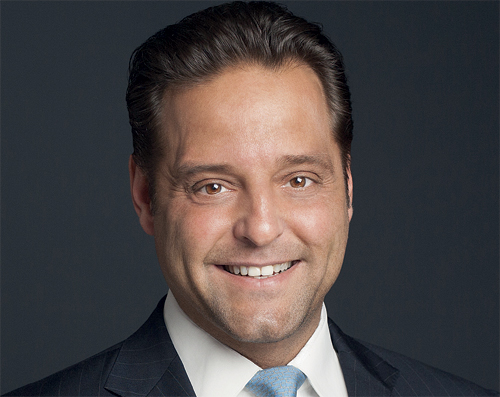
Interview: Paul Scialla
Delos founder talks to Katie Barnes about creating the first set of wellbeing building standards and securing investment from Leonardo DiCaprio
Ask an expert: Detox
Done well, detox presents numerous business opportunities – but what's the best approach to take and what treatments should be avoided?
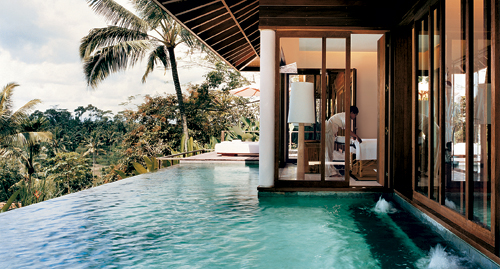
Business analysis: Spa inclusive
Some resorts are enticing clients with free, daily spa treatments. Neena Dhillon takes a look at the business model
Wellness tourism: Time to shine
Sophie Benge reports on wellness tourism in central and eastern Europe – a market that's ripe for development
Wellness research: Culture king
The Futures Company provides an insightful overview on how different cultures view health and wellbeing
Hotel spa research: Top division
In the hotel sector, spa revenue is growing faster than other revenue streams, according to a new PKF report. Andrea Foster analyses the findings
I recently read some articles about how to drive spa business and that spa managers of today may have the ‘soft skills’ but lack the ‘hard skills’. There’s an implication that the hard skills are the most important in business and that the next generation of spa managers will all have an MBA and speak the language of finance, marketing and HR. It’s believed that the rest of us will be left behind if we don’t quickly get on the bandwagon.
Well, I would suggest that this thought is missing the point of what spas do and what is truly needed to drive business. We need more connection to our hearts and less to our minds. No amount of business acumen will ever replace the power of intention and touch when it comes to winning and retaining the business of our clients.
I often look at the audit reports which would have you believe that success is defined by responding to a phone call within three rings or upselling treatments. However, they are a mechanical checklist that completely miss the quality of interactions and would be better suited to the review of a McDonald’s franchise than providing any meaningful insight into a spa operation.
I’d advise you all to tear up the rule book, because there never were any rules. Instead, if you want to know if you’re on the right track, get out of your office, find a quiet place and ask yourself three questions:
* What are you doing to support the growth of your team?
* What are you doing to develop yourself?
* Where do you currently see the opportunities to make your spa unique?
If you’re focusing on these things, your business will be successful and you’ll continue to be relevant in an ever-changing world, as you’re connected to what really matters.
Ask what you’re doing to develop your team, rather than relying on superficial audit reports
Could spa associations become hubs for mentorship programmes?
Elaine FenardManaging Partner and member of the Global Spa Management Education Task ForceSpa Strategy
Mentoring is currently a hot topic in many mainstream magazines. Even Michelle Obama has been interviewed by US magazine More about “her deep commitment to mentoring and why it’s so important to her”.
Mentoring provides a unique forum for industries, including the spa sector, to grow and educate people. The Spa Management Career Trends Survey, a recent report of 548 spa managers, has highlighted how mentoring is viewed as an important element in running a successful spa facility.
The survey, revealed at the Global Spa & Wellness Summit (GSWS) in October, found that:
* 94 per cent of spa managers feel that having a mentor is important
* 89 per cent have had mentors who’ve helped them along the way
* 26 per cent wish they had more mentoring from an experienced spa professional
* 65 per cent have had an industry mentor
The survey was put together by a GSWS sub-committee – the Global Spa Management Education Task Force – which feels that spa associations around the globe are well-placed to provide a hub for local mentor/mentee connections.
It also uncovered some websites which provide excellent information on best practices and how to start a mentor programme: www.mentorscout.com and www.mentoring-association.org.
The committee members are now looking into what a spa industry mentorship programme might include and how they can take matters further. They welcome input, so if you would like to be involved, please contact [email protected]. See more survey results on p26.
Skincare analysis is good for both clients and business
Oriele FrankDirector of MarketingElemis
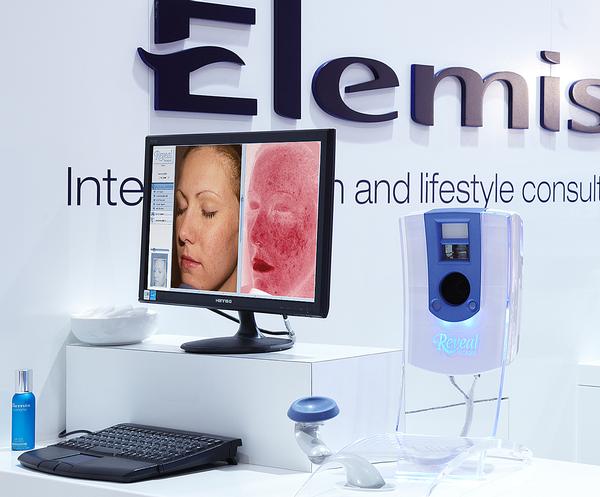
We strongly agree with Spa Business’ article which highlighted the benefits of skincare prescription (see SB13/2 p94). It’s vital to educate customers about their skin’s needs and it makes good business sense too – our figures show that just a 15-minute complimentary Elemis SkinLab analysis can increase product sales by up to 20 per cent year on year.
Elemis has been using the SkinLab system, which uses the Canfield Imaging machine, and our own skin, body and lifestyle computerised questionnaire and prescription, since 2006. It allows the therapist to see the condition of a client’s skin both on, and below, the surface. A series of six images will assess UV exposure (characteristic of photo damage), open pores, areas of dehydration, evenness and porphyrins (evidence of bacteria lodged in pores which can lead to acne, fine lines and wrinkles and blemishes/spots).
This allows the therapist to pinpoint areas of concern and suitable products. The client also takes away a printout of their skin analysis and a prescribed product list, highlighting their bespoke ‘at home’ programme. This is an integral part of helping the therapist to build rapport and to provide expert advice without the need to push for a sale. It’s a tool that helps to establish a better level of care, confidence and trust which also results in repeat bookings, as well as increased retail sales.
Based on the success we’ve seen, the refurbishment and relaunch of the Elemis flagship day spa in London, UK, in 2014 will include a SkinLab in each of its eight treatment rooms (rather than just one in the main reception). Our aim is for 35 per cent of total revenues to come from retail sales.
Elemis product sales have increased by 20 per cent since using a skin analysis machine
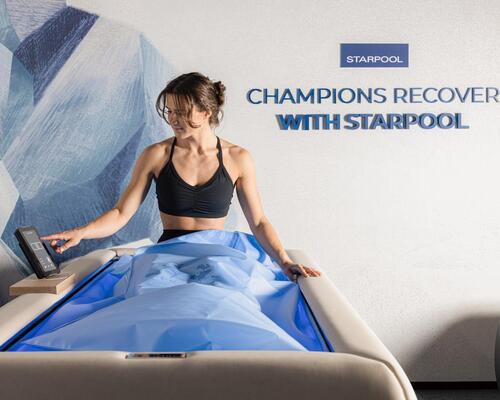
In the fast-paced world of fitness and wellness, where high-intensity workouts push us to
our limits and the sweat pours, the importance of efficient recovery cannot be overstated. [more...]
Do you have a strong opinion, or disagree with somebody else’s point of view on topics related to the spa industry? If so, Spa Business would love to hear from you. Email your letters, thoughts and suggestions to [email protected]
Interview: Paul Scialla
Delos founder talks to Katie Barnes about creating the first set of wellbeing building standards and securing investment from Leonardo DiCaprio
Ask an expert: Detox
Done well, detox presents numerous business opportunities – but what's the best approach to take and what treatments should be avoided?
Business analysis: Spa inclusive
Some resorts are enticing clients with free, daily spa treatments. Neena Dhillon takes a look at the business model
Wellness tourism: Time to shine
Sophie Benge reports on wellness tourism in central and eastern Europe – a market that's ripe for development
Wellness research: Culture king
The Futures Company provides an insightful overview on how different cultures view health and wellbeing
Hotel spa research: Top division
In the hotel sector, spa revenue is growing faster than other revenue streams, according to a new PKF report. Andrea Foster analyses the findings
I recently read some articles about how to drive spa business and that spa managers of today may have the ‘soft skills’ but lack the ‘hard skills’. There’s an implication that the hard skills are the most important in business and that the next generation of spa managers will all have an MBA and speak the language of finance, marketing and HR. It’s believed that the rest of us will be left behind if we don’t quickly get on the bandwagon.
Well, I would suggest that this thought is missing the point of what spas do and what is truly needed to drive business. We need more connection to our hearts and less to our minds. No amount of business acumen will ever replace the power of intention and touch when it comes to winning and retaining the business of our clients.
I often look at the audit reports which would have you believe that success is defined by responding to a phone call within three rings or upselling treatments. However, they are a mechanical checklist that completely miss the quality of interactions and would be better suited to the review of a McDonald’s franchise than providing any meaningful insight into a spa operation.
I’d advise you all to tear up the rule book, because there never were any rules. Instead, if you want to know if you’re on the right track, get out of your office, find a quiet place and ask yourself three questions:
* What are you doing to support the growth of your team?
* What are you doing to develop yourself?
* Where do you currently see the opportunities to make your spa unique?
If you’re focusing on these things, your business will be successful and you’ll continue to be relevant in an ever-changing world, as you’re connected to what really matters.
Ask what you’re doing to develop your team, rather than relying on superficial audit reports
Could spa associations become hubs for mentorship programmes?
Elaine FenardManaging Partner and member of the Global Spa Management Education Task ForceSpa Strategy
Mentoring is currently a hot topic in many mainstream magazines. Even Michelle Obama has been interviewed by US magazine More about “her deep commitment to mentoring and why it’s so important to her”.
Mentoring provides a unique forum for industries, including the spa sector, to grow and educate people. The Spa Management Career Trends Survey, a recent report of 548 spa managers, has highlighted how mentoring is viewed as an important element in running a successful spa facility.
The survey, revealed at the Global Spa & Wellness Summit (GSWS) in October, found that:
* 94 per cent of spa managers feel that having a mentor is important
* 89 per cent have had mentors who’ve helped them along the way
* 26 per cent wish they had more mentoring from an experienced spa professional
* 65 per cent have had an industry mentor
The survey was put together by a GSWS sub-committee – the Global Spa Management Education Task Force – which feels that spa associations around the globe are well-placed to provide a hub for local mentor/mentee connections.
It also uncovered some websites which provide excellent information on best practices and how to start a mentor programme: www.mentorscout.com and www.mentoring-association.org.
The committee members are now looking into what a spa industry mentorship programme might include and how they can take matters further. They welcome input, so if you would like to be involved, please contact [email protected]. See more survey results on p26.

Skincare analysis is good for both clients and business
Oriele FrankDirector of MarketingElemis
We strongly agree with Spa Business’ article which highlighted the benefits of skincare prescription (see SB13/2 p94). It’s vital to educate customers about their skin’s needs and it makes good business sense too – our figures show that just a 15-minute complimentary Elemis SkinLab analysis can increase product sales by up to 20 per cent year on year.
Elemis has been using the SkinLab system, which uses the Canfield Imaging machine, and our own skin, body and lifestyle computerised questionnaire and prescription, since 2006. It allows the therapist to see the condition of a client’s skin both on, and below, the surface. A series of six images will assess UV exposure (characteristic of photo damage), open pores, areas of dehydration, evenness and porphyrins (evidence of bacteria lodged in pores which can lead to acne, fine lines and wrinkles and blemishes/spots).

This allows the therapist to pinpoint areas of concern and suitable products. The client also takes away a printout of their skin analysis and a prescribed product list, highlighting their bespoke ‘at home’ programme. This is an integral part of helping the therapist to build rapport and to provide expert advice without the need to push for a sale. It’s a tool that helps to establish a better level of care, confidence and trust which also results in repeat bookings, as well as increased retail sales.
Based on the success we’ve seen, the refurbishment and relaunch of the Elemis flagship day spa in London, UK, in 2014 will include a SkinLab in each of its eight treatment rooms (rather than just one in the main reception). Our aim is for 35 per cent of total revenues to come from retail sales.
Elemis product sales have increased by 20 per cent since using a skin analysis machine
A recent survey by the UK Spa Association (UKSA) into the industry’s approach to cancer care
has revealed that almost half of participating respondents (46 per cent) are unaware that
cancer is a disability and guests with a cancer diagnosis must be given
Mexican operator, Solmar Hotels and Resorts, is hosting a series of events in celebration of
Global Wellness Day, including a Temazcal ceremony at its Playa Grande Resort and Spa in Los
Cabos.
Mandarin Oriental has announced a standalone residence brand, Mansions, which will debut at
Emirates Palace, Mandarin Oriental Mansions, Abu Dhabi, in 2029.
Four Seasons Resort The Nam Hai in Hoi An, Vietnam, has put together a Global Wellness Day
(GWD) agenda with activations rooted in nature and shaped by four pillars of Joy – in
alignment with the day’s theme #JoyMagenta.
The Global Wellness Summit (GWS) will celebrate its 20th anniversary at the 2026 event in
Phuket, Thailand, later this year with the theme: The Science, Art and Soul of Wellness.
Auko, an all-inclusive development, is opening in Phong Nha in Vietnam in Q3 2026, with a
series of 30 tented eco-lodges and wellness hospitality operations by Lumina Wellbeing.
Therme Manchester’s 28-acre development, which will include interconnected glass pavilions
that measure 65,000sq m, will be the largest bathing and wellbeing attraction in the world once
complete, according to prof David Russell, CEO of Therme UK.
Naples Beach Club, a Four Seasons Resort, has opened a 2,800sq m spa called The Sanctuary,
with the design and concept inspired by the Native American people that populated Florida’s
Southwest coast – the Calusa.
Swire Hotels’ luxury hospitality brand Upper House has revealed it will roll out its two-day
House of Healing retreats at its three hotels in Hong Kong, Chengdu and Shanghai.
In the fast-paced world of fitness and wellness, where high-intensity workouts push us to
our limits and the sweat pours, the importance of efficient recovery cannot be overstated. [more...]