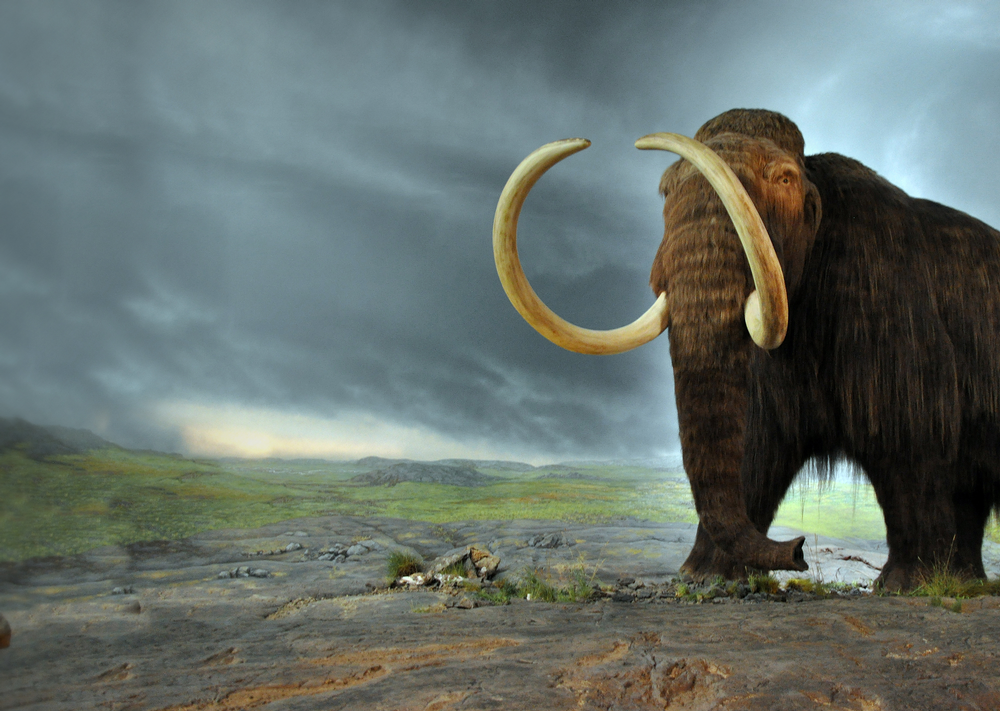
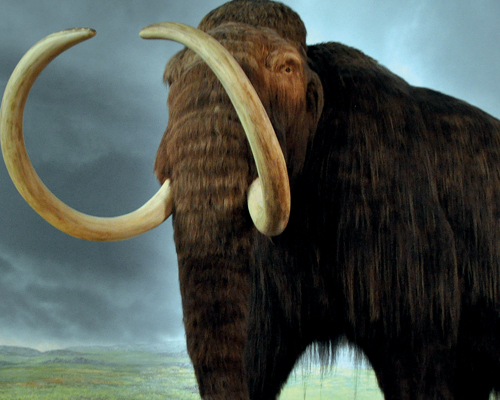
The majority of woolly mammoths were wiped out 10,000 years ago during the early part of our current geological age
Bringing animals extinct for more than 10,000 years back to life sounds like something straight from the script of a Hollywood movie.
Box office hits like Jurassic Park show the excitement this idea – straight out of science fiction – can have among the general public. Now a combined effort from Russian, Japanese and Korean scientists could turn this idea into a reality.
A myriaannum in the making The woolly mammoth, whose closest living relative is the Asian elephant, became extinct around 4,000 years ago due to a number of suspected causes, including increased temperatures, overhunting, habitat shrinkage and a reduction in the supply of fresh water.
We have evidence that mammoths existed in Siberia up to 9,650 years ago, during the Holocene epoch.
Now plans have been tabled to create a one-of-a-kind nature reserve, which will open in Siberia within the next decade. What makes it unique is that if scientists can crack their genetic code, resurrected mammoths will become the centrepiece of the mother nature-defying attraction.
“In 2014 I proposed a project to create an ice age park with mammoths,” said Aisen Nikolaev, the acting head of Russia’s Sakha Republic, while speaking at the recent Eastern Economic Forum (EEF). “Everyone laughed then, but they’re not laughing now. The prospect is no longer fantastical.”
Nikolaev revealed that a joint research project is currently underway, with the long-term goal of bringing back the woolly mammoth within the next decade.
To successfully clone a mammoth, scientists will have to work their way around a roadblock formed by existing mammoth DNA.
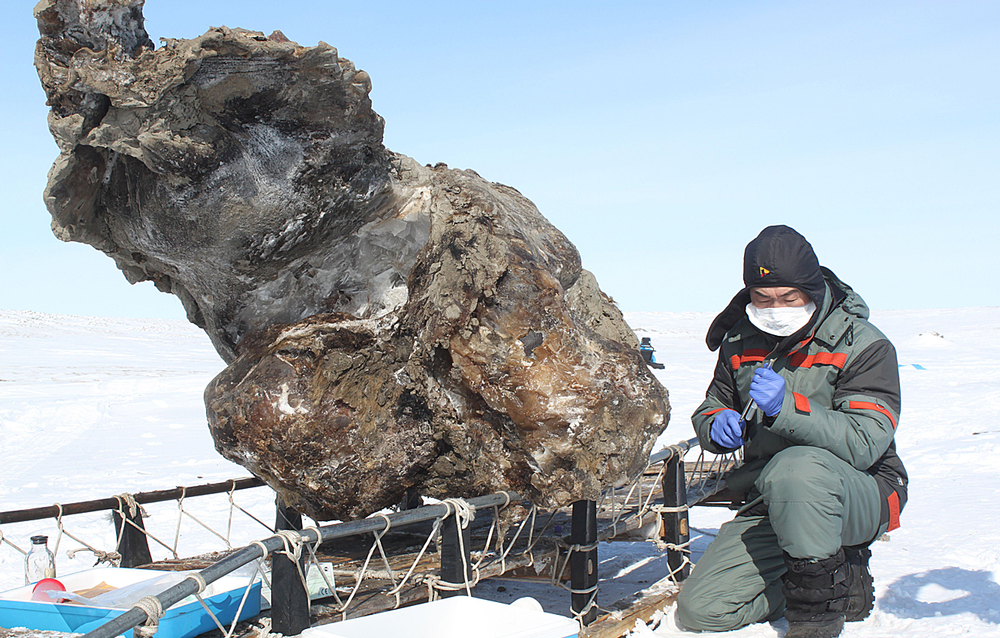
Because samples, taken from frozen mammoths, are at least 10,000 years old, the DNA has deteriorated significantly, meaning the cloning process is extremely difficult.
Cloning experiments with extinct horse breeds and cave lions are underway, with the aim of producing mammoth embryos that would be fertilised using elephant tissue.
Ice age attractions If successful, the creatures would be introduced to Pleistocene Park, a reserve where Russian scientists Sergey Zimov and Nikita Zimov are currently working to recreate the northern sub-arctic steppe grassland ecosystem that flourished in the area during the last glacial period.
The primary aim of the park would be to recreate the arctic tundra – known as the mammoth steppe.
Scientists working on the park believe that animals, rather than climate, maintained that ecosystem and that it could be restored.
Reintroducing large herbivores to Siberia would adjust the balance of the food chain by introducing a new species, say the scientists, who are promoting the reestablishment of the ancient grassland ecosystems.
“This is the project of the future,” said Nikolaev. “I believe that in our lifetime, we’ll be able to clone mammoths. All the prerequisites are here for this.
“Today, technology is developing at an explosive pace, and what seemed to be scientific nonsense yesterday, is now an absolutely clear prospect for scientists in the near future.
“I believe that miracles are possible,” he added.
Read more from this issue of Spa Business magazine
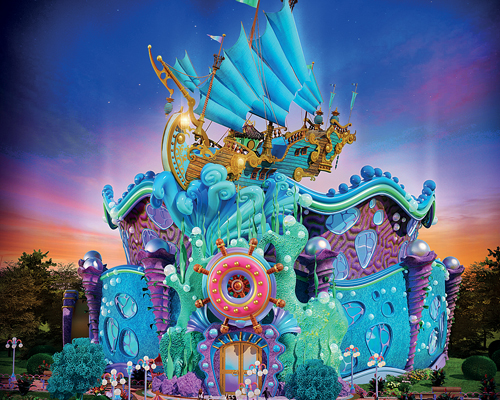
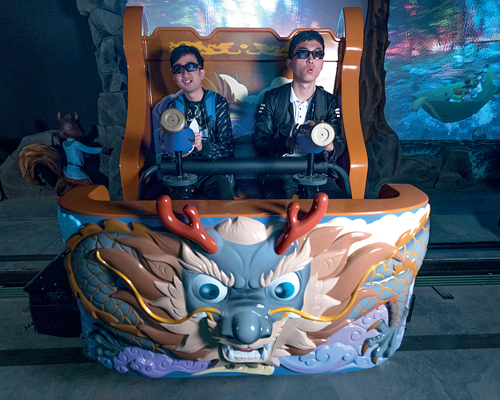
Rides: Themed dreams
We take a look at some of the major
openings at visitor attractions worldwide
Theme Parks: Fan power
Jordan Middleton explains how operators
can best work with their audiences
Tourism: The Tourist Trap
What role could attractions play to keep
tourism beneficial for residents and
visitors alike? Kath Hudson reports
Conference: Creativity Cocktail
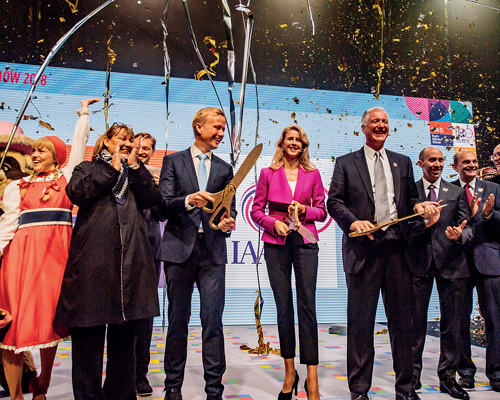
This year’s SATE conference came to the global epicentre for themed entertainment – Orlando – as the Themed Entertainment Association (TEA) searched for the secrets to “The Experience Recipe”.
Promotional feature: Whitewater
WhiteWater is branching out of the waterpark business as it
introduces two new attractions products and its brand new
Vantage guest engagement and management software
Show report: Enabling fun
Tom Anstey was on-hand to see what was
on offer at this year’s Euro Attractions Show
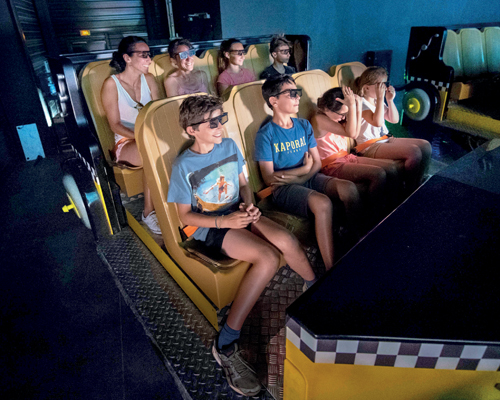
Promotional feature: Simtec - forward thinking
Simtec is a flying theatre and simulator ride supplier
for the attractions industry, as well as a manufacturer
of driving and flight simulation applications
Woolly mammoths in culture During the 21st century, global warming made access to Siberian mammoths easier, The permafrost has thawed faster, exposing its hidden secrets.
Long since its extinction, the wooly mammoth has remained significant in popular culture, starring in films such as Ice Age and also proving to be big business for museums.
A 42,000-year-old baby woolly mammoth, discovered in 2007 and named Lyuba, is one of the most intact specimens of the species.
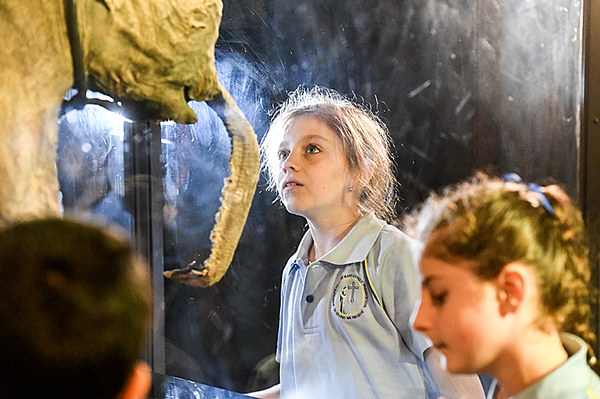
Last year, the Australia Museum debuted Mammoths – Giants of the Ice Age, which was Lyuba’s first visit.
Backed by the Government of New South Wales, the exhibition gave people across Australia a rare opportunity to explore the age of mammoths. During its run, the exhibition generated more than AUS$3.7m (US$2.6m) and over 9,000 overnight stays, with hundreds of thousands of people attending the landmark exhibition.
Lyuba the mammoth generated more than AUS$3.7m for New South Wales
Using DNA found in frozen woolly mammoths, scientists think they can clone the now extinct mammals
In the fast-paced world of fitness and wellness, where high-intensity workouts push us to
our limits and the sweat pours, the importance of efficient recovery cannot be overstated. [more...]
The MSpa Oslo series is a perennial bestseller in global markets. With innovative
engineering and premium performance, this completely portable spa line-up is expertly
designed to meet the needs of customers worldwide. [more...]
+ More featured suppliers
COMPANY PROFILES
Barr + Wray Ltd
Barr + Wray has more than 60 years’ experience in the design and delivery of world-class spa and wel [more...]
TLEE Spas + Wellness
Founded in 2010 by industry visionary Tracy Lee, TLEE Spas + Wellness is a globally acclaimed spa an [more...]
The majority of woolly mammoths were wiped out 10,000 years ago during the early part of our current geological age
Bringing animals extinct for more than 10,000 years back to life sounds like something straight from the script of a Hollywood movie.
Box office hits like Jurassic Park show the excitement this idea – straight out of science fiction – can have among the general public. Now a combined effort from Russian, Japanese and Korean scientists could turn this idea into a reality.
A myriaannum in the making The woolly mammoth, whose closest living relative is the Asian elephant, became extinct around 4,000 years ago due to a number of suspected causes, including increased temperatures, overhunting, habitat shrinkage and a reduction in the supply of fresh water.
We have evidence that mammoths existed in Siberia up to 9,650 years ago, during the Holocene epoch.
Now plans have been tabled to create a one-of-a-kind nature reserve, which will open in Siberia within the next decade. What makes it unique is that if scientists can crack their genetic code, resurrected mammoths will become the centrepiece of the mother nature-defying attraction.
“In 2014 I proposed a project to create an ice age park with mammoths,” said Aisen Nikolaev, the acting head of Russia’s Sakha Republic, while speaking at the recent Eastern Economic Forum (EEF). “Everyone laughed then, but they’re not laughing now. The prospect is no longer fantastical.”
Nikolaev revealed that a joint research project is currently underway, with the long-term goal of bringing back the woolly mammoth within the next decade.
To successfully clone a mammoth, scientists will have to work their way around a roadblock formed by existing mammoth DNA.
Because samples, taken from frozen mammoths, are at least 10,000 years old, the DNA has deteriorated significantly, meaning the cloning process is extremely difficult.
Cloning experiments with extinct horse breeds and cave lions are underway, with the aim of producing mammoth embryos that would be fertilised using elephant tissue.
Ice age attractions If successful, the creatures would be introduced to Pleistocene Park, a reserve where Russian scientists Sergey Zimov and Nikita Zimov are currently working to recreate the northern sub-arctic steppe grassland ecosystem that flourished in the area during the last glacial period.
The primary aim of the park would be to recreate the arctic tundra – known as the mammoth steppe.
Scientists working on the park believe that animals, rather than climate, maintained that ecosystem and that it could be restored.
Reintroducing large herbivores to Siberia would adjust the balance of the food chain by introducing a new species, say the scientists, who are promoting the reestablishment of the ancient grassland ecosystems.
“This is the project of the future,” said Nikolaev. “I believe that in our lifetime, we’ll be able to clone mammoths. All the prerequisites are here for this.
“Today, technology is developing at an explosive pace, and what seemed to be scientific nonsense yesterday, is now an absolutely clear prospect for scientists in the near future.
“I believe that miracles are possible,” he added.
Read more from this issue of Spa Business magazine
Rides: Themed dreams
We take a look at some of the major
openings at visitor attractions worldwide
Theme Parks: Fan power
Jordan Middleton explains how operators
can best work with their audiences
Tourism: The Tourist Trap
What role could attractions play to keep
tourism beneficial for residents and
visitors alike? Kath Hudson reports
Conference: Creativity Cocktail
This year’s SATE conference came to the global epicentre for themed entertainment – Orlando – as the Themed Entertainment Association (TEA) searched for the secrets to “The Experience Recipe”.
Promotional feature: Whitewater
WhiteWater is branching out of the waterpark business as it
introduces two new attractions products and its brand new
Vantage guest engagement and management software
Show report: Enabling fun
Tom Anstey was on-hand to see what was
on offer at this year’s Euro Attractions Show
Promotional feature: Simtec - forward thinking
Simtec is a flying theatre and simulator ride supplier
for the attractions industry, as well as a manufacturer
of driving and flight simulation applications
Woolly mammoths in culture During the 21st century, global warming made access to Siberian mammoths easier, The permafrost has thawed faster, exposing its hidden secrets.
Long since its extinction, the wooly mammoth has remained significant in popular culture, starring in films such as Ice Age and also proving to be big business for museums.
A 42,000-year-old baby woolly mammoth, discovered in 2007 and named Lyuba, is one of the most intact specimens of the species.
Last year, the Australia Museum debuted Mammoths – Giants of the Ice Age, which was Lyuba’s first visit.
Backed by the Government of New South Wales, the exhibition gave people across Australia a rare opportunity to explore the age of mammoths. During its run, the exhibition generated more than AUS$3.7m (US$2.6m) and over 9,000 overnight stays, with hundreds of thousands of people attending the landmark exhibition.
Lyuba the mammoth generated more than AUS$3.7m for New South Wales
Using DNA found in frozen woolly mammoths, scientists think they can clone the now extinct mammals
TLee Spas and Wellness has revealed the design concept for a high-tech spa with body
mapping scanners to improve public health, for AI company Midjourney.
Ameyalli, the 78-acre wellbeing resort and residential community in Midway in Utah, US, has
broken ground on phase two of the hot spring development – the Ameyalli Resort and Spa –
which is due to open in 2028.
Gran Hotel Taoro in northern Tenerife, Spain, has completed the final phase of its three-year
renovation with the debut of its Sandára Wellness Centre.
Hand and Stone Massage and Facial Spa, the spa business with more than 650 locations across
the US and Canada, has appointed franchise expert Carrie Walsh as CEO as the company plans
to expand.
Synergy – The Retreat Show, the global trade show for retreats, has launched a global research
initiative that will provide insights into the retreat sector from both consumer and industry
perspectives.
The Wellness Tourism Association (WTA) has published a non-regulatory global industry
framework designed to ensure the retreat market offers responsible experiences.
A new survey of UK and international spa practitioners shows that stress, burnout and
wellbeing concerns have caused one in three respondents to consider leaving the industry.
The UK's four Chief Medical Officers have published a refreshed edition of Physical activity
guidelines: UK Chief Medical Officers' report, updating the evidence that underpins the nation's
physical activity recommendations and placing greater emphasis on strength, balance, reducing
sedentary behaviour and, for the first time, supporting people taking weight loss medications.
In the fast-paced world of fitness and wellness, where high-intensity workouts push us to
our limits and the sweat pours, the importance of efficient recovery cannot be overstated. [more...]
The MSpa Oslo series is a perennial bestseller in global markets. With innovative
engineering and premium performance, this completely portable spa line-up is expertly
designed to meet the needs of customers worldwide. [more...]
+ More featured suppliers
COMPANY PROFILES
Barr + Wray Ltd Barr + Wray has more than 60 years’ experience in the design and delivery of world-class spa and wel [more...]