Yes! Send me the FREE digital editions of Spa Business and Spa Business insider magazines and the FREE weekly Spa Business and Spa Business insider ezines and breaking news alerts!
With the importance of public health thrown into the spotlight by the
pandemic, HCM talks to Joanna Frank, the head of the Center for Active Design,
which operates the Fitwel healthy building certification system, about how
investors and operators are waking up to the ‘business of health’
Research proves views of nature positively impact mental health / photo: shutterstock/brizmaker
After a decade of working to convince commercial property investors and owners of the benefits of creating buildings and community spaces that actively promote health and wellbeing, president and CEO of the Center for Active Design, Joanna Frank, says it took a 21st-century global pandemic to turn the tide of opinion.
Frank says: “Our mission has always been to bring about market transformation around health, so every building is optimised for use, drawing on design and operational strategies based in public health research.”
With its headquarters in New York City, the Center for Active Design (CfAD) was launched in 2012, towards the end of Michael Bloomberg’s tenure as mayor. Since then, it’s launched a certification process called Fitwel, that benchmarks the health and wellness impact of any building. Fitwel was originally developed by the Centers for Disease Control and Prevention.
“When CfAD was first launched, we had to take a top-down approach to persuade companies and organisations to get on board,” says Frank. “We were frequently met with resistance, as they were dubious about the benefits – and the financial implications.” But since the pandemic hit, she says businesses and organisations have been knocking on the door of CfAD, hungry for information on how they can keep their buildings and businesses running, and protect their staff and customers.
Frank says: “It’s interesting how COVID-19 has drawn a line in the sand. After what the world has experienced in the last couple of years, we now have investors coming directly to us for advice and direction.
“Whereas in the past investment in a ‘healthy building’ was seen as a cost, there’s no longer doubt in anyone’s mind that it’s not only a wise investment but also a non-negotiable one.”
While much of CfAD’s focus is on improving public health through design and build strategies, the sudden and unexpected arrival of COVID-19 demanded implementable strategies to cope with a highly infectious disease, on a scale that hadn’t been seen since the great flu pandemic of 1918.
Frank is keen to stress that it has all been experienced – and largely conquered – before. “Many lessons were learned from the great flu pandemic of the last century,” she says.
Everything that informs Fitwel strategies is based on public health research and Frank and her team are able to draw on an archive of 100 years of health studies and data. “It’s our job to take them and translate them into actionable policies that can be adopted for buildings,” she explains.
But while these practices and processes don’t, according to Frank, require significant ‘reinvention’, today’s time-pressed businesses need a ready-made blueprint to follow. The sheer commercial unpreparedness for the pandemic and subsequent lockdowns threw many customer-facing businesses – such as gyms, spas, retail spaces, restaurants and hotels – into a tailspin.
Responding to the virus “There was so much information floating around that people literally didn’t know what to do, so we produced a new Viral Response Module certification (VRM). We actually had to release it chapter by chapter in response to the pandemic, because the demand was so urgent,” says Frank.
“Right from the start, we also knew we needed to address not just the physical but the mental health impact of COVID-19,” says Frank. “We understood from SARS that people’s mental health was going to suffer, so we also consulted behavioural experts, focusing on what to do about social isolation and rising anxiety levels in the face of such an existential threat.”
By going through the VRM, businesses can show they’ve used evidence-based strategies and reached certain standards for creating a safe public environment. That ‘proof’ can take the form of a simple decal sticker that certified businesses and buildings can put on display, with contact details the public can look up for further information.
Next steps With Fitwel certified buildings now prepared for any future pandemic, it’s time to turn attention back to the organisation’s core mission – mitigating the growth of chronic diseases, such as heart disease (currently the number one killer in the US), Type 2 diabetes and obesity – through the design of the built environment. This also includes sharing ways to reduce stress, anxiety and depression, which are fast becoming new challenges for public health.
“While there are certainly technologies at the build stage that can help in terms of – say – air or light quality,” says Frank, “some of the easiest changes can happen at an inexpensive, operational level.
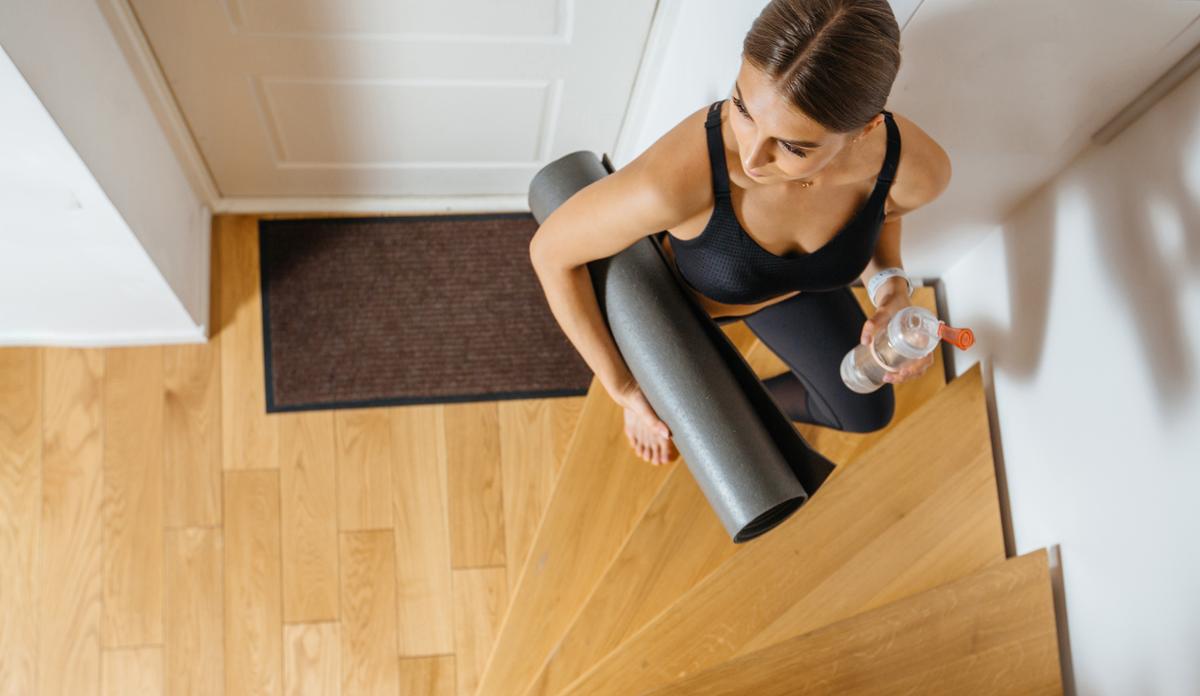
“Stairs are a prime example. They’re a resource and opportunity that exists in almost every building – and they’re super-efficient in terms of delivering exercise. Taking just six flights of stairs a day, for example, offsets the average annual weight gain of an American.
“All public and commercial buildings of more than one storey have stairs, but they’re often hidden away behind doors and rarely get used. Even just being able to see stairs as you enter a lobby increases the likelihood of you taking the stairs by 50 per cent. Then if you actually have signs saying, ‘take the stairs’ you further increase the likelihood by another 8 to 9 per cent.”
Clearly, the implications of this for businesses could be significant – by using low-cost, subtle signage and deploying messages that speak directly to customers, behaviour can be improved. Once you contemplate Frank’s advice, the possibilities for businesses seem endless. For a gym, that could mean a sign saying, ‘Take five minutes to stretch here’, ‘Hydrate here’.
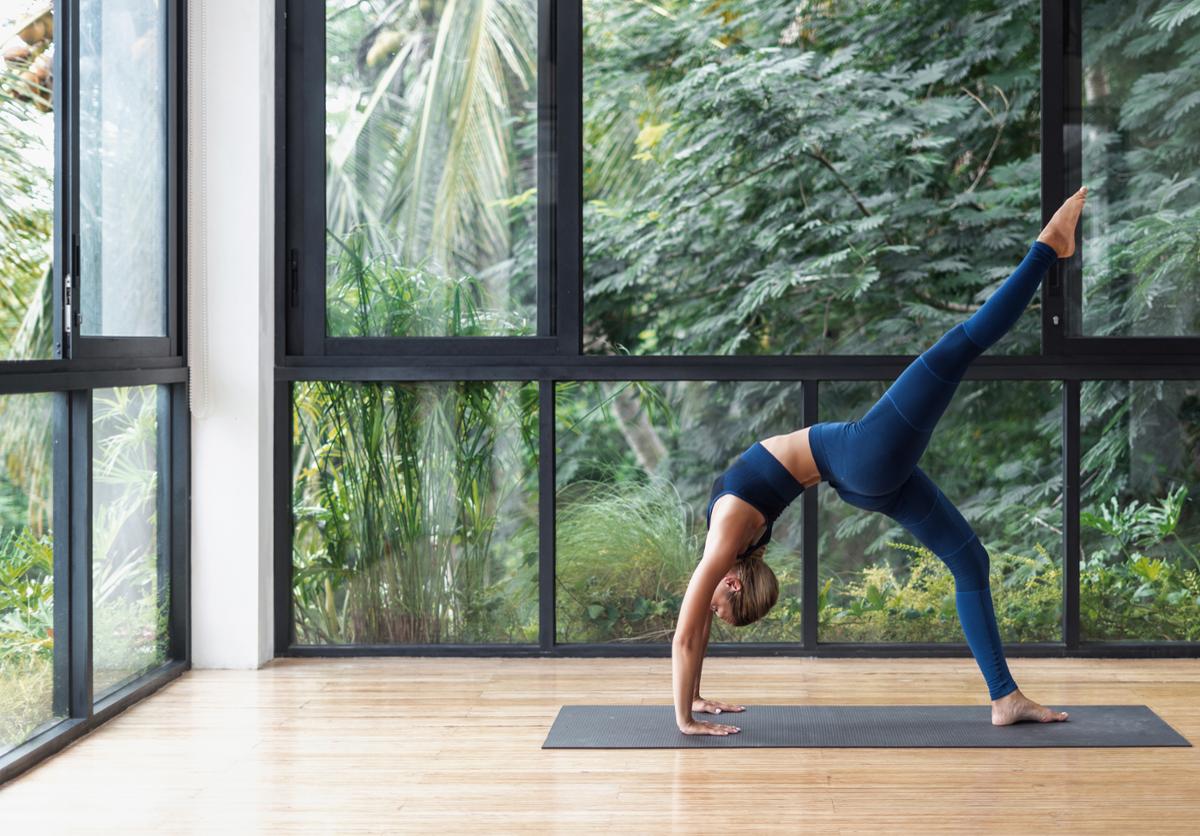
Power of nature Not surprisingly, giving access to the benefits of nature plays a big part in Fitwel’s strategies. “Access to nature in any context is so important – since views of nature greatly impact mental health and create a willingness to venture outdoors and move our bodies,” says Frank.
For businesses such as spa resorts, which are often set in beautiful natural surroundings, this may be an easy tick-box to check off – but what about urban buildings – such as big-box gyms, for example – that may have a more limited outlook?
Frank says: ”In the absence of access to outdoor nature, bringing plants into a building and using the calming powers of biophilic design can have a positive impact. And even displaying images of nature within a building can have a measurable effect on health. Humans are quite simple creatures really!”
She continues: ”However, there is a caveat – in the case of access to nature, the environment must be well maintained. If all a person can see is dead trees, then the result will be a negative impact, especially on mental health and a person’s sense of safety in that environment.”
Research, she says, has also shown people quickly take visual cues about whether they feel invited and welcomed into a space or not.
Frank points to a study by the University of California, Berkeley, which found that simply adding a sign that said ‘Welcome’ in multiple languages greatly increases the feelings of participants being comfortable in those spaces – and these results were the same regardless of whether participants spoke that language or not.
In another study, participants were divided into two groups. One was shown a picture of the outside of a library, while the other group was shown an altered version of the picture, with planters, a bench and lighting. In the altered photo group, the number of those who saw the library as welcoming was at least 10 per cent higher.
Certification process Frank says: “Our message to businesses feeling unsure about the path forward post-COVID is that wellness promotion is a circle or a cycle. For example, if you improve the food environment of a community and do nothing else, those benefits will show. Good food can promote better mood, and better mood can result in people moving more, and moving more will reduce the incidence of disease.
“You don’t have to follow a particular order to see success – you can start at any place in the circle,” she says.
Up to 2019, CfAD was mainly dealing with US-based businesses, but in that year it added international standards to its certification process, and in May 2021, it established Adai (Active Design Advisors, Inc), which promotes and administers the Fitwel certification as it expands into new markets.
“Going forward, all those involved in the construction and running of buildings must be able to answer not only how their operation is promoting health, but how it’s preventing health risks,” says Frank. “Decision-makers are finally seeing investment in health as an absolute must and public health as a big risk factor if they don’t get it right.”
Data from other areas of the market supports this view. Figures published in September 2021 by the Global Wellness Institute (GWI) in its report, Wellness Real Estate: Looking Beyond COVID-19, revealed the wellness real estate market grew from US$148bn (€126bn,£109bn) to US$275bn (€235bn, £203bn) between 2017 and 2020.
GWI defines wellness real estate as “residential and commercial/institutional properties that incorporate intentional wellness elements into their design, materials and building, as well as their amenities, services and/or programming”.
If Frank and her team have their way, all buildings will eventually be ‘healthy buildings’ – from small business and single operator sites, right up to multinational global property portfolios – regardless of what market they operate in.
“Ten years ago there was no demand for what we’re doing,” says Frank. “The real estate market mainly saw wellness as a ‘nice-to-have’, a marketing gimmick that might be good for brand differentiation – once they’d done everything else. But now consumers and employees are demanding it.
“Businesses globally have experienced first-hand that the health of the people in their building is important – and has a financial impact. Now this connection has been made, things are really starting to happen.”
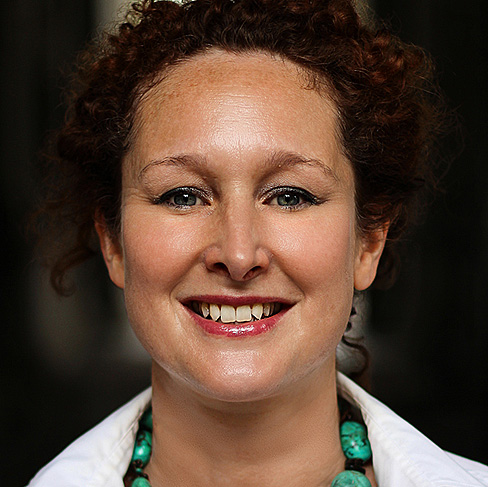
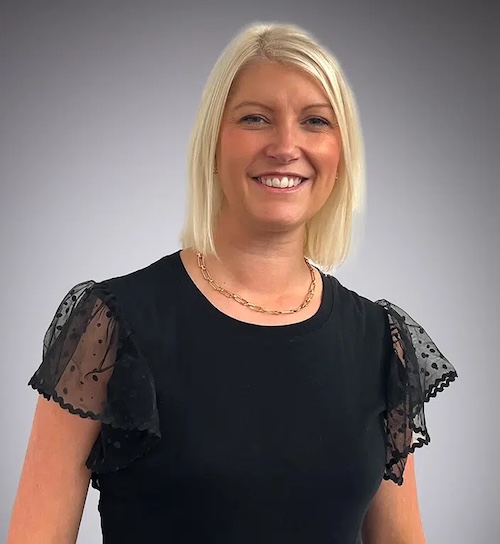
Joanna Frank, Head of the Center for Active Design
Frank graduated from the Glasgow School of Art, Scotland in 1998 with a BA in Architecture. Her career in the US started in real estate development as a partner at Bright City Development, where she was responsible for mixed-use residential projects that prioritised sustainable design.
Prior to launching CfAD in 2013, Frank worked for the City of New York, where her positions included director of Active Design and director of the NYC Fresh programme, a city-wide initiative designed to increase access to fresh food in underserved communities.
She’s a member of the Urban Land Institute’s Affordable & Workforce Housing Council and the National Council of State Housing Agencies’ Advisory Group on Financing Healthier Affordable Housing, as well as an active partner in ULI’s Building Healthy Places initiative. Frank was named in the 2021 Commercial Observer Power 100 which recognises the 100 most influential real estate professionals in the US.
Contrast therapy, based on the alternation of hot and cold rituals, has become one of the
most valued practices in the fields of wellness and recovery. [more...]
+ More featured suppliers
COMPANY PROFILES
Barr + Wray Ltd
Barr + Wray has more than 60 years’ experience in the design and delivery of world-class spa and wel [more...]
Clinique La Prairie
Clinique La Prairie is a name that has been synonymous with health and longevity for over 90 years, [more...]
With the importance of public health thrown into the spotlight by the
pandemic, HCM talks to Joanna Frank, the head of the Center for Active Design,
which operates the Fitwel healthy building certification system, about how
investors and operators are waking up to the ‘business of health’
Research proves views of nature positively impact mental health / photo: shutterstock/brizmaker
After a decade of working to convince commercial property investors and owners of the benefits of creating buildings and community spaces that actively promote health and wellbeing, president and CEO of the Center for Active Design, Joanna Frank, says it took a 21st-century global pandemic to turn the tide of opinion.
Frank says: “Our mission has always been to bring about market transformation around health, so every building is optimised for use, drawing on design and operational strategies based in public health research.”
With its headquarters in New York City, the Center for Active Design (CfAD) was launched in 2012, towards the end of Michael Bloomberg’s tenure as mayor. Since then, it’s launched a certification process called Fitwel, that benchmarks the health and wellness impact of any building. Fitwel was originally developed by the Centers for Disease Control and Prevention.
“When CfAD was first launched, we had to take a top-down approach to persuade companies and organisations to get on board,” says Frank. “We were frequently met with resistance, as they were dubious about the benefits – and the financial implications.” But since the pandemic hit, she says businesses and organisations have been knocking on the door of CfAD, hungry for information on how they can keep their buildings and businesses running, and protect their staff and customers.
Frank says: “It’s interesting how COVID-19 has drawn a line in the sand. After what the world has experienced in the last couple of years, we now have investors coming directly to us for advice and direction.
“Whereas in the past investment in a ‘healthy building’ was seen as a cost, there’s no longer doubt in anyone’s mind that it’s not only a wise investment but also a non-negotiable one.”
While much of CfAD’s focus is on improving public health through design and build strategies, the sudden and unexpected arrival of COVID-19 demanded implementable strategies to cope with a highly infectious disease, on a scale that hadn’t been seen since the great flu pandemic of 1918.
Frank is keen to stress that it has all been experienced – and largely conquered – before. “Many lessons were learned from the great flu pandemic of the last century,” she says.
Everything that informs Fitwel strategies is based on public health research and Frank and her team are able to draw on an archive of 100 years of health studies and data. “It’s our job to take them and translate them into actionable policies that can be adopted for buildings,” she explains.
But while these practices and processes don’t, according to Frank, require significant ‘reinvention’, today’s time-pressed businesses need a ready-made blueprint to follow. The sheer commercial unpreparedness for the pandemic and subsequent lockdowns threw many customer-facing businesses – such as gyms, spas, retail spaces, restaurants and hotels – into a tailspin.
Responding to the virus “There was so much information floating around that people literally didn’t know what to do, so we produced a new Viral Response Module certification (VRM). We actually had to release it chapter by chapter in response to the pandemic, because the demand was so urgent,” says Frank.
“Right from the start, we also knew we needed to address not just the physical but the mental health impact of COVID-19,” says Frank. “We understood from SARS that people’s mental health was going to suffer, so we also consulted behavioural experts, focusing on what to do about social isolation and rising anxiety levels in the face of such an existential threat.”
By going through the VRM, businesses can show they’ve used evidence-based strategies and reached certain standards for creating a safe public environment. That ‘proof’ can take the form of a simple decal sticker that certified businesses and buildings can put on display, with contact details the public can look up for further information.
Next steps With Fitwel certified buildings now prepared for any future pandemic, it’s time to turn attention back to the organisation’s core mission – mitigating the growth of chronic diseases, such as heart disease (currently the number one killer in the US), Type 2 diabetes and obesity – through the design of the built environment. This also includes sharing ways to reduce stress, anxiety and depression, which are fast becoming new challenges for public health.
“While there are certainly technologies at the build stage that can help in terms of – say – air or light quality,” says Frank, “some of the easiest changes can happen at an inexpensive, operational level.
“Stairs are a prime example. They’re a resource and opportunity that exists in almost every building – and they’re super-efficient in terms of delivering exercise. Taking just six flights of stairs a day, for example, offsets the average annual weight gain of an American.
“All public and commercial buildings of more than one storey have stairs, but they’re often hidden away behind doors and rarely get used. Even just being able to see stairs as you enter a lobby increases the likelihood of you taking the stairs by 50 per cent. Then if you actually have signs saying, ‘take the stairs’ you further increase the likelihood by another 8 to 9 per cent.”
Clearly, the implications of this for businesses could be significant – by using low-cost, subtle signage and deploying messages that speak directly to customers, behaviour can be improved. Once you contemplate Frank’s advice, the possibilities for businesses seem endless. For a gym, that could mean a sign saying, ‘Take five minutes to stretch here’, ‘Hydrate here’.
Power of nature Not surprisingly, giving access to the benefits of nature plays a big part in Fitwel’s strategies. “Access to nature in any context is so important – since views of nature greatly impact mental health and create a willingness to venture outdoors and move our bodies,” says Frank.
For businesses such as spa resorts, which are often set in beautiful natural surroundings, this may be an easy tick-box to check off – but what about urban buildings – such as big-box gyms, for example – that may have a more limited outlook?
Frank says: ”In the absence of access to outdoor nature, bringing plants into a building and using the calming powers of biophilic design can have a positive impact. And even displaying images of nature within a building can have a measurable effect on health. Humans are quite simple creatures really!”
She continues: ”However, there is a caveat – in the case of access to nature, the environment must be well maintained. If all a person can see is dead trees, then the result will be a negative impact, especially on mental health and a person’s sense of safety in that environment.”
Research, she says, has also shown people quickly take visual cues about whether they feel invited and welcomed into a space or not.
Frank points to a study by the University of California, Berkeley, which found that simply adding a sign that said ‘Welcome’ in multiple languages greatly increases the feelings of participants being comfortable in those spaces – and these results were the same regardless of whether participants spoke that language or not.
In another study, participants were divided into two groups. One was shown a picture of the outside of a library, while the other group was shown an altered version of the picture, with planters, a bench and lighting. In the altered photo group, the number of those who saw the library as welcoming was at least 10 per cent higher.
Certification process Frank says: “Our message to businesses feeling unsure about the path forward post-COVID is that wellness promotion is a circle or a cycle. For example, if you improve the food environment of a community and do nothing else, those benefits will show. Good food can promote better mood, and better mood can result in people moving more, and moving more will reduce the incidence of disease.
“You don’t have to follow a particular order to see success – you can start at any place in the circle,” she says.
Up to 2019, CfAD was mainly dealing with US-based businesses, but in that year it added international standards to its certification process, and in May 2021, it established Adai (Active Design Advisors, Inc), which promotes and administers the Fitwel certification as it expands into new markets.
“Going forward, all those involved in the construction and running of buildings must be able to answer not only how their operation is promoting health, but how it’s preventing health risks,” says Frank. “Decision-makers are finally seeing investment in health as an absolute must and public health as a big risk factor if they don’t get it right.”
Data from other areas of the market supports this view. Figures published in September 2021 by the Global Wellness Institute (GWI) in its report, Wellness Real Estate: Looking Beyond COVID-19, revealed the wellness real estate market grew from US$148bn (€126bn,£109bn) to US$275bn (€235bn, £203bn) between 2017 and 2020.
GWI defines wellness real estate as “residential and commercial/institutional properties that incorporate intentional wellness elements into their design, materials and building, as well as their amenities, services and/or programming”.
If Frank and her team have their way, all buildings will eventually be ‘healthy buildings’ – from small business and single operator sites, right up to multinational global property portfolios – regardless of what market they operate in.
“Ten years ago there was no demand for what we’re doing,” says Frank. “The real estate market mainly saw wellness as a ‘nice-to-have’, a marketing gimmick that might be good for brand differentiation – once they’d done everything else. But now consumers and employees are demanding it.
“Businesses globally have experienced first-hand that the health of the people in their building is important – and has a financial impact. Now this connection has been made, things are really starting to happen.”
Joanna Frank, Head of the Center for Active Design
Frank graduated from the Glasgow School of Art, Scotland in 1998 with a BA in Architecture. Her career in the US started in real estate development as a partner at Bright City Development, where she was responsible for mixed-use residential projects that prioritised sustainable design.
Prior to launching CfAD in 2013, Frank worked for the City of New York, where her positions included director of Active Design and director of the NYC Fresh programme, a city-wide initiative designed to increase access to fresh food in underserved communities.
She’s a member of the Urban Land Institute’s Affordable & Workforce Housing Council and the National Council of State Housing Agencies’ Advisory Group on Financing Healthier Affordable Housing, as well as an active partner in ULI’s Building Healthy Places initiative. Frank was named in the 2021 Commercial Observer Power 100 which recognises the 100 most influential real estate professionals in the US.
Anna Bjurstam has left her role as Wellness Pioneer at Six Senses Hotels and Resorts and
launched a new wellness, longevity and “consciousness consultancy” called Wahayla.
Fairmont Cheshire, The Mere, has opened today (10 July) in the Northwest of England with a
1,715sq m Fairmont Spa that has been designed using a ‘Wellness without Walls’ concept.
Wellness hotels generating less than US$1 million (€932,700, £785,200) – or 10 per cent of
total revenue from wellness and leisure – recorded the strongest RevPAR and TRevPAR growth
in 2025 across categories when compared with 2024, according to the latest Wellness Real
Estate Report by RLA Global, produced in partnership with P and L benchmarking firm HotStats.
Lefay Resorts, the portfolio of two luxury wellness properties in Italy, has added emotional
dance classes and group cold plunge sessions in response to market demand for social
connection.
Aditya Saluja, an industry leader in luxury wellness hospitality, has been
appointed as
commercial director of spa and wellness for the spa management division of
Minor Hotels,
MSpa International.
Preidlhof Luxury DolceVita Resort, a destination resort and spa in Naturno, South Tyrol in Italy,
will reveal a new spa in February 2027, which has been designed by wellness expert and
consultant Patrizia Bortolin.
Virgin Active has officially opened its redesigned Mayfair club, unveiling its latest Social Wellness Club and
signalling a significant evolution of its proposition.
Contrast therapy, based on the alternation of hot and cold rituals, has become one of the
most valued practices in the fields of wellness and recovery. [more...]
+ More featured suppliers
COMPANY PROFILES
Barr + Wray Ltd Barr + Wray has more than 60 years’ experience in the design and delivery of world-class spa and wel [more...]