Yes! Send me the FREE digital editions of Spa Business and Spa Business insider magazines and the FREE weekly Spa Business and Spa Business insider ezines and breaking news alerts!
Attitudes towards wellness and sustainability were the most surprising / photo: Ragdale Hall
The Good Spa Guide (GSG), a publication and website which reviews and rates spas and treatments in the UK, has revealed the findings from its latest consumer survey called the State of Spa Report 2023.
Based on feedback from 8,827 respondents across the country (almost 90 per cent of whom were female), the survey highlights the behaviour and opinions of spa-goers.
What matters most? So what attracts people in the UK to spas in the first place? When booking a spa, thermal rooms are deemed the most important factor (58 per cent), followed by the right treatment selection (13 per cent), relaxation rooms (10 per cent), outdoor spa space (10 per cent) and a pool (6 per cent).
Forty-five per cent of people state they prefer to arrive at a time that suits them rather than have the spa dictate one, while 53 per cent say they’re happy for the spa to allocate it.
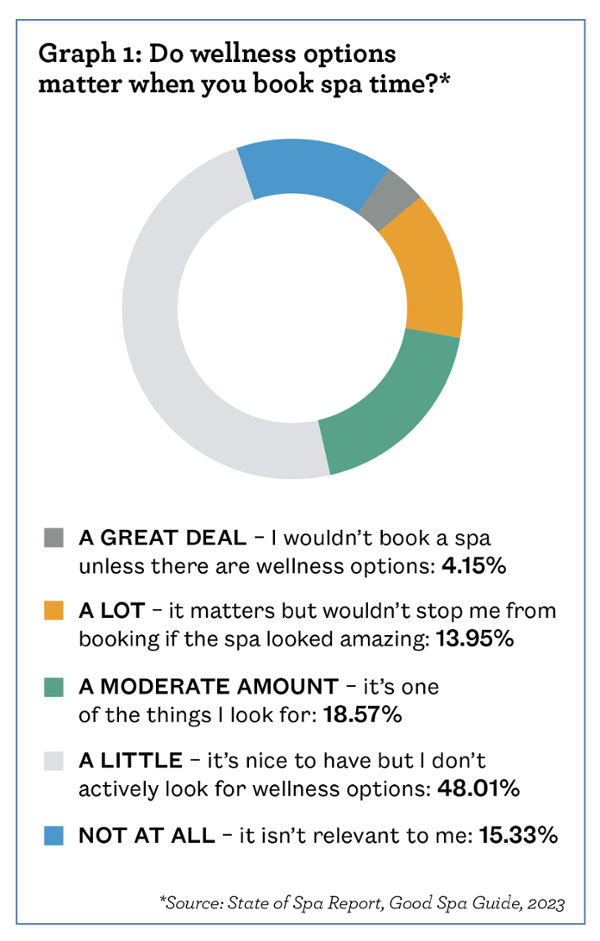
Wellness and sustainability Across all age groups, the majority of consumers (47 per cent) indicated that wellness options – such as holistic treatments and mindfulness classes – aren’t a main priority when booking spa trips (see Graph 1). Only 4 per cent of respondents say they “wouldn’t book a spa unless there are wellness options”.
GSG asked people how much sustainability matters to them when booking time at a spa. Surprisingly, only 42 per cent say that it matters “a little - it’s nice to have but I don’t actively look at sustainability”. And a mere 5 per cent say it matters so much they “wouldn’t consider booking a spa unless it had great eco-credentials”.
Consumer confidence Thirty per cent of respondents say they still consider COVID-19 safety measures when visiting a spa.
Encouragingly, more than two-thirds of people (70 per cent) are confident a spa will treat them well in any situation.
However, 18 per cent are worried about going to a spa because they don’t feel body confident. A further 9 per cent are concerned because of other reasons such as pregnancy, disabilities, cancer and major illness, as well as gender and sexuality.
At what cost? Respondents were asked whether they would spend less, more or about the same when booking a spa day in the current economic climate (see Graph 2).
Sixty-eight per cent say they’d spend the same and 26 per cent say they’d spend less. Meanwhile, only 4 per cent say they’re not going to spas at the moment and the remaining 2 per cent say they would spend more.
GSG asked respondents the same question about a spa break and found a similar response. Nearly two-thirds (63 per cent) would spend the same on a spa break, 29 per cent say they’d spend less, 4 per cent say they’d spend more and 5 per cent say they’re not going to spas right now.
“The most surprising findings from this report come from the wellness and sustainability sections,” GSG director Caitlin Dalton tells Spa Business. “Both are key to the spa industry but aren’t so keenly felt by spa-goers with most consumers saying they’re nice to have, but not part of their booking decisions.”
She concludes: “However, it’s very heartening to hear in a time of financial instability that two-thirds of people still expect to pay the same or more for their spa time.”
Best of British
This year’s GSG Award winners, as voted for by more than 400,000 UK consumers, were revealed in July. Accolades went to the following facilities:
Best Destination Spa: Ragdale Hall Spa
Best Spa for Wellness: Champneys Tring
Best Spa for the Eco-conscious: Rudding Park Spa
Best Spa for a Countryside Getaway: Hoar Cross Hall
Best Spa Garden: Lodore Falls Hotel & Spa
Best Spa for Guest Experience: Serenity Spa at Seaham Hall
Best Hotel Spa: The Woodland Spa
Best Day Spa: Ribby Hall Village
Best City Spa: Hope Street Hotel Spa
Best Boutique Spa: Stanley House Hotel & Spa
photo: GSG
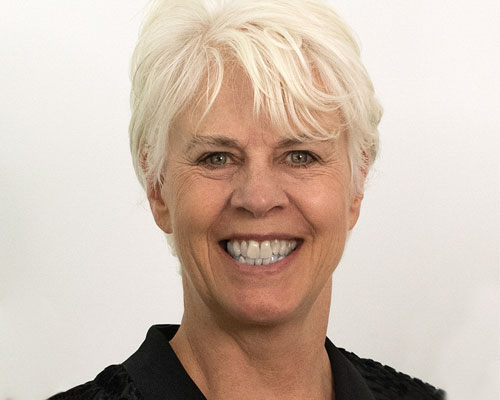
Caitlin Dalton, director, Good Spa Guide
Read more from this issue of Spa Business magazine
View contents of Spa Business 2023 issue 3
Editor's letter: Reflection point
As Spa Business celebrates its 20th birthday, Katie Barnes pauses for thought and rejoices in the industry’s evolution
Spa People: 20th anniversary issue: Anna Bjurstam
The strategic senior advisor at Six Senses and Raison d'Etre on being initiated as a shaman, why psychedelics are here to stay and her bigger fear for the global spa industry
Promotion: Klafs: Relax into wellbeing
Klafs and Studio F. A. Porsche have combined their design and wellness expertise to create an oasis for total-body relaxation
News report: Eastern promise
Japan’s spa industry is valued at US$4.2 billion and is part of the world's third highest-performing wellness economy
Jeremy McCarthy: Theory of evolution
From spa to wellness and now leisure – Spa Business’ contributing editor looks at where hospitality experiences are heading
Promotion: Lemi: Built to last
Lemi is committed to leading with innovation to create
cutting-edge treatment room solutions that excel
in terms of performance and eco-credentials
Promotion: G.M. COLLIN: Collagen pioneers
GM Collin’s expertise in collagen research and product formulation has resulted in the creation of a new serum that combats age-related skin degeneration
Promotion: Comfort Zone: A brighter future
Consumers are increasingly interested in reducing dark spots and hyperpigmentation and a new line from Comfort Zone has been launched to address this emerging need
Promotion: Art of Cryo: Life changing experience
Vikki and Robbie are often exhausted after work. A visit to the spa to experience
the Art of Cryo Tech-Spa Module is a chance to re-set and rejuvenate together
The MSpa Oslo series is a perennial bestseller in global markets. With innovative
engineering and premium performance, this completely portable spa line-up is expertly
designed to meet the needs of customers worldwide. [more...]
+ More featured suppliers
COMPANY PROFILES
Power Plate
Power Plate is owned, manufactured and distributed by Northbrook, Ill.-based Performance Health Syst [more...]
Attitudes towards wellness and sustainability were the most surprising / photo: Ragdale Hall
The Good Spa Guide (GSG), a publication and website which reviews and rates spas and treatments in the UK, has revealed the findings from its latest consumer survey called the State of Spa Report 2023.
Based on feedback from 8,827 respondents across the country (almost 90 per cent of whom were female), the survey highlights the behaviour and opinions of spa-goers.
What matters most? So what attracts people in the UK to spas in the first place? When booking a spa, thermal rooms are deemed the most important factor (58 per cent), followed by the right treatment selection (13 per cent), relaxation rooms (10 per cent), outdoor spa space (10 per cent) and a pool (6 per cent).
Forty-five per cent of people state they prefer to arrive at a time that suits them rather than have the spa dictate one, while 53 per cent say they’re happy for the spa to allocate it.
Wellness and sustainability Across all age groups, the majority of consumers (47 per cent) indicated that wellness options – such as holistic treatments and mindfulness classes – aren’t a main priority when booking spa trips (see Graph 1). Only 4 per cent of respondents say they “wouldn’t book a spa unless there are wellness options”.
GSG asked people how much sustainability matters to them when booking time at a spa. Surprisingly, only 42 per cent say that it matters “a little - it’s nice to have but I don’t actively look at sustainability”. And a mere 5 per cent say it matters so much they “wouldn’t consider booking a spa unless it had great eco-credentials”.
Consumer confidence Thirty per cent of respondents say they still consider COVID-19 safety measures when visiting a spa.
Encouragingly, more than two-thirds of people (70 per cent) are confident a spa will treat them well in any situation.
However, 18 per cent are worried about going to a spa because they don’t feel body confident. A further 9 per cent are concerned because of other reasons such as pregnancy, disabilities, cancer and major illness, as well as gender and sexuality.
At what cost? Respondents were asked whether they would spend less, more or about the same when booking a spa day in the current economic climate (see Graph 2).
Sixty-eight per cent say they’d spend the same and 26 per cent say they’d spend less. Meanwhile, only 4 per cent say they’re not going to spas at the moment and the remaining 2 per cent say they would spend more.
GSG asked respondents the same question about a spa break and found a similar response. Nearly two-thirds (63 per cent) would spend the same on a spa break, 29 per cent say they’d spend less, 4 per cent say they’d spend more and 5 per cent say they’re not going to spas right now.
“The most surprising findings from this report come from the wellness and sustainability sections,” GSG director Caitlin Dalton tells Spa Business. “Both are key to the spa industry but aren’t so keenly felt by spa-goers with most consumers saying they’re nice to have, but not part of their booking decisions.”
She concludes: “However, it’s very heartening to hear in a time of financial instability that two-thirds of people still expect to pay the same or more for their spa time.”
Best of British
This year’s GSG Award winners, as voted for by more than 400,000 UK consumers, were revealed in July. Accolades went to the following facilities:
Best Destination Spa: Ragdale Hall Spa
Best Spa for Wellness: Champneys Tring
Best Spa for the Eco-conscious: Rudding Park Spa
Best Spa for a Countryside Getaway: Hoar Cross Hall
Best Spa Garden: Lodore Falls Hotel & Spa
Best Spa for Guest Experience: Serenity Spa at Seaham Hall
Best Hotel Spa: The Woodland Spa
Best Day Spa: Ribby Hall Village
Best City Spa: Hope Street Hotel Spa
Best Boutique Spa: Stanley House Hotel & Spa
photo: GSG
Caitlin Dalton, director, Good Spa Guide
Read more from this issue of Spa Business magazine
View contents of Spa Business 2023 issue 3
Editor's letter: Reflection point
As Spa Business celebrates its 20th birthday, Katie Barnes pauses for thought and rejoices in the industry’s evolution
Spa People: 20th anniversary issue: Anna Bjurstam
The strategic senior advisor at Six Senses and Raison d'Etre on being initiated as a shaman, why psychedelics are here to stay and her bigger fear for the global spa industry
Promotion: Klafs: Relax into wellbeing
Klafs and Studio F. A. Porsche have combined their design and wellness expertise to create an oasis for total-body relaxation
News report: Eastern promise
Japan’s spa industry is valued at US$4.2 billion and is part of the world's third highest-performing wellness economy
Jeremy McCarthy: Theory of evolution
From spa to wellness and now leisure – Spa Business’ contributing editor looks at where hospitality experiences are heading
Promotion: Lemi: Built to last
Lemi is committed to leading with innovation to create
cutting-edge treatment room solutions that excel
in terms of performance and eco-credentials
Promotion: G.M. COLLIN: Collagen pioneers
GM Collin’s expertise in collagen research and product formulation has resulted in the creation of a new serum that combats age-related skin degeneration
Promotion: Comfort Zone: A brighter future
Consumers are increasingly interested in reducing dark spots and hyperpigmentation and a new line from Comfort Zone has been launched to address this emerging need
Promotion: Art of Cryo: Life changing experience
Vikki and Robbie are often exhausted after work. A visit to the spa to experience
the Art of Cryo Tech-Spa Module is a chance to re-set and rejuvenate together
TLee Spas and Wellness has revealed the design concept for a high-tech spa with body
mapping scanners to improve public health, for AI company Midjourney.
Ameyalli, the 78-acre wellbeing resort and residential community in Midway in Utah, US, has
broken ground on phase two of the hot spring development – the Ameyalli Resort and Spa –
which is due to open in 2028.
Gran Hotel Taoro in northern Tenerife, Spain, has completed the final phase of its three-year
renovation with the debut of its Sandára Wellness Centre.
Hand and Stone Massage and Facial Spa, the spa business with more than 650 locations across
the US and Canada, has appointed franchise expert Carrie Walsh as CEO as the company plans
to expand.
Synergy – The Retreat Show, the global trade show for retreats, has launched a global research
initiative that will provide insights into the retreat sector from both consumer and industry
perspectives.
The Wellness Tourism Association (WTA) has published a non-regulatory global industry
framework designed to ensure the retreat market offers responsible experiences.
A new survey of UK and international spa practitioners shows that stress, burnout and
wellbeing concerns have caused one in three respondents to consider leaving the industry.
The UK's four Chief Medical Officers have published a refreshed edition of Physical activity
guidelines: UK Chief Medical Officers' report, updating the evidence that underpins the nation's
physical activity recommendations and placing greater emphasis on strength, balance, reducing
sedentary behaviour and, for the first time, supporting people taking weight loss medications.
The MSpa Oslo series is a perennial bestseller in global markets. With innovative
engineering and premium performance, this completely portable spa line-up is expertly
designed to meet the needs of customers worldwide. [more...]
+ More featured suppliers
COMPANY PROFILES
Power Plate Power Plate is owned, manufactured and distributed by Northbrook, Ill.-based Performance Health Syst [more...]