The public is vital to the health,
wealth and motivations of a
museum. But the collection and
exhibits form its beating heart.
Do museums exist to serve
the public or the collection?
By Alice Davis | Published in Attractions Management 2014 issue 3
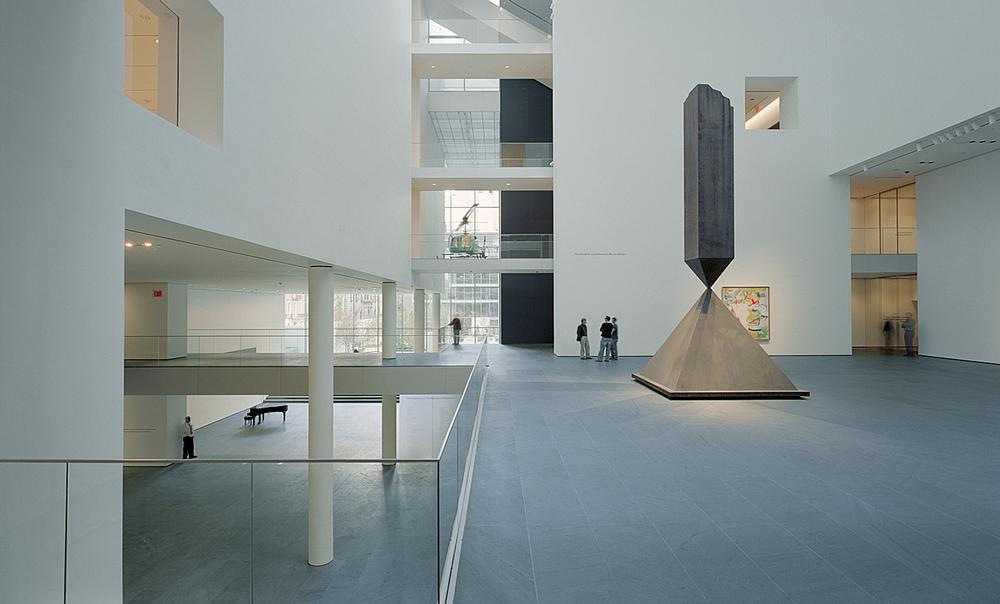
An interior view of the Museum of Modern Art (MoMA) in New York / PHOTO: (C) MUSEUM OF MODERN ART
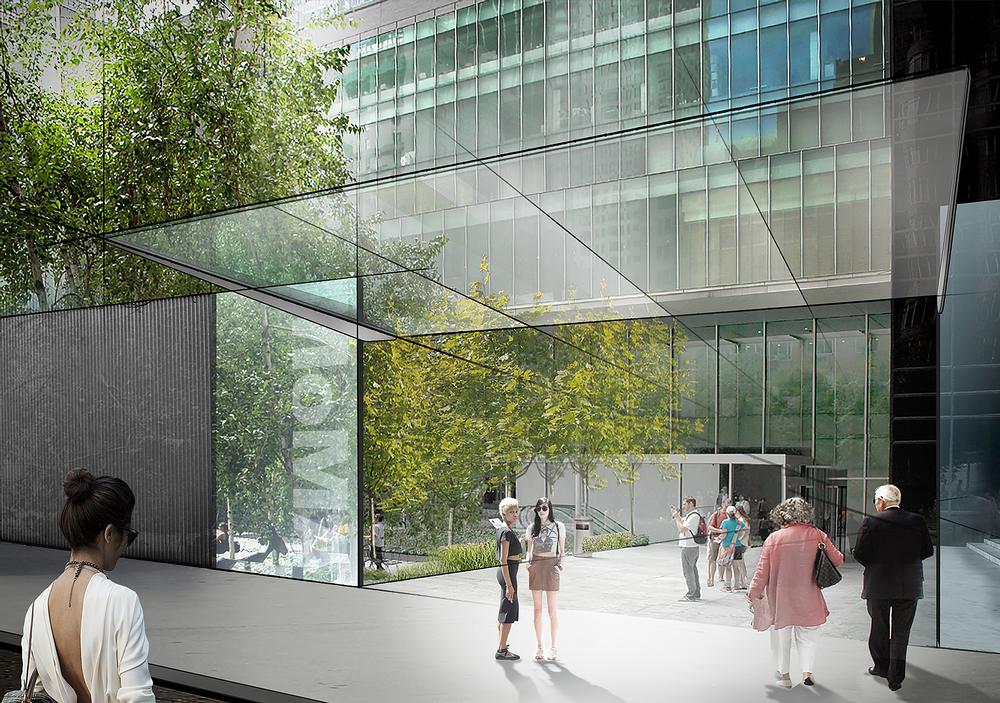
Angry exchanges over building proposals at the Museum of Modern Art in New York have reignited the debate over priorities. For some, the decision to tear down the adjacent building – the former home of the American Folk Art Museum – to create a public space was misguided. Others are passionate that the quality of the visiting and non-visiting public's experience will be enhanced.
The focus of museums on the public is not new. Over decades, the audience has been increasingly courted by museums. Museum activist and author Kenneth Hudson went so far as to say “the most fundamental change that has affected museums is the now almost universal conviction that they exist in order to serve the public. The old-style museum felt itself to be under no such obligation … The museum’s prime responsibility was to its collections, not to its visitors.”
These days, museums have to compete. Audiences are demanding. Museums seem to fight to stay relevant, so many market themselves as commercial enterprises. Attracting an audience, therefore, means giving a modern audience what it wants: technology, exciting architecture, public spaces, coffee shops, hi-tech audiovisual guides, popular exhibits, social media interaction – the list goes on. But amid these crowd-pleasing initiatives, are we losing sight of what’s important? Should the visitor experience be the priority?
Read more from this issue of Spa Business magazine
View contents of Spa Business 2014 issue 3
Editor’s letter: Here comes China
As China opens up to the West, the nation’s attractions are
booming, with existing attractions reporting record attendances and
new museums, theme parks and science centres planned
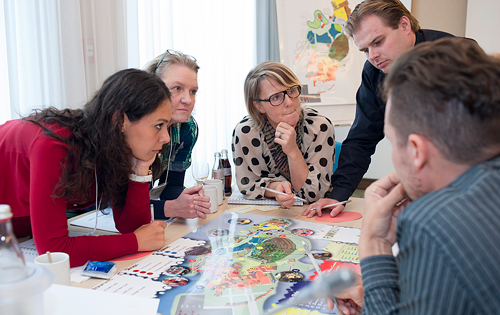
Teamworking: The Art of Collaboration
Merlin’s Mark Fisher talks about working
with Hollywood studio DreamWorks on
the upcoming Shrek-themed midways,
how to spot a winning IP and the
importance of creative collaboration
Talking Point: Whose Museum Is It Anyway?
Five experts debate how museums
can tackle the controversial issue
of balancing the needs of the visitor
with their curatorial responsibilities
Analysis: TEA/AECOM Enduring Appeal
Theme park attendance for 2013
reached an all-time high, and museums
worldwide performed well. AECOM’s
economics experts crunch the numbers
Theme Parks: Oceans of Fun
Chimelong International Ocean Resort
is a big development on a small island.
Will its proximity to the gambling haven
of Macau be a help or a hindrance?
Museums: Virtual Visits
Europe’s biggest museum conference
looks at how technology and the digital
revolution can enhance the attraction. We
report from the event in Newcastle, UK
Technology: Face Reality
As Facebook’s Mark Zuckerberg buys
Oculus VR and its Rift device, we look at
how far VR has come, and ask whether
it has a place in the attractions industry
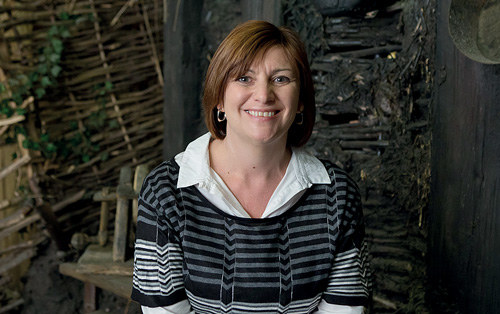
Profile: Sarah Maltby
As Jorvik turns 30, director Sarah
Maltby talks about keeping archaeology
at the heart of what the Viking centre
does, and moving with the times
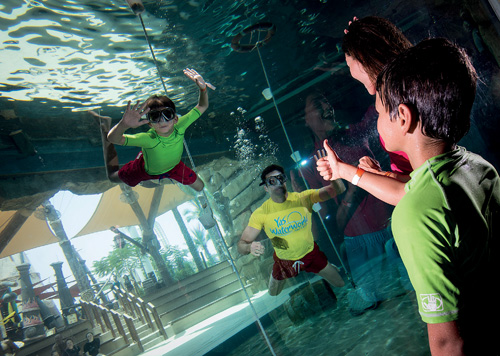
Storytelling: Inside Story
Abu Dhabi’s Yas Waterworld draws on
the local culture to create a narrative
journey for its visitors. Atkins Global
tells us about an innovative approach
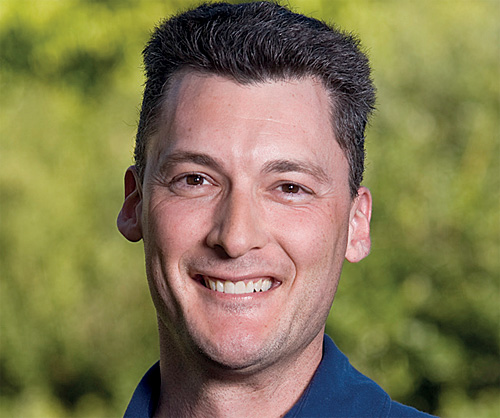
Interview: Rick Schwartz
San Diego Zoo Global ambassador on the
Tiger Trail and conservation initiatives
Dr Wendy EarleKnowledge Exchange ManagerBirkbeck University of London and Convenor, Institute of Ideas’ Arts and Society Forum
Dr Wendy Earle
Museums are great places for losing yourself. In London’s Hunterian Museum in the Royal College of Surgeons you’ll be blown away by beautifully displayed surgical specimens and 17th-century instruments. Across Lincoln’s Inn Fields is the completely different John Soane Museum, housing his amazing collection of architectural objects and art, which he left for students and the public to freely “consult, inspect and benefit” from. He left instructions for the museum to be kept as he left it – where the exhibits speak for themselves with few labels or curatorial interpretation. It’s in stark contrast to the current trend to invest substantially in public engagement, interactive technologies and heavily curated exhibitions aimed at attracting wider audiences.
Making collections accessible has always been one of the major functions of museums. Exhibitions are designed for the public to look at and learn from, while students and researchers are given additional access to exhibits or collections not on display. In the past, “the public” was seen by museums as anyone interested in their collections, which were to provide open-ended opportunities for learning and contemplation.
Now many museums practise audience segmentation and treat collections as if they can do people good. They cater for a wide range of interests and needs, offering visitor attractions such as cafés and gift shops, interactive apps, tablets and audio guides, and events such as family workshops and party nights to attract young people.
Many museums see their collections as a means towards community cohesion or providing a resource for educating children. They make fun-filled apps to engage children’s attention or provide labels making the exhibits relevant to contemporary political and social issues.
These measures show a lack of faith in both collections and audiences. Museums are not (and need not be) everyone’s idea of a good time, but they offer access to unique resources which help us expand our knowledge of the world. Museums like the Hunterian and the Soane are respected because their collections talk directly to visitors. Looking at the displays, like reading books, involves interaction with other minds, which in itself is refreshing and enlightening. There’s no necessary dichotomy between audiences and collections and museum professionals should underestimate neither.
bbk.ac.uk @wearliegig
Kathy FredricksonDirector of Exhibition Research and PublishingPeabody Essex Museum, Salem, Massachusetts
Kathy Fredrickson
Museums today don’t have the luxury to think of curating at one end of a spectrum and engaging visitors at the other. This implies an internal-versus-external focus that is not in anyone’s best interests. To remain viable for generations to come, we have to consider how these objectives can be integrated to create unique opportunities for museums to share content and ideas. We have to stop thinking in terms of museum staff and museumvisitors and think of museums as communities. Architecture and technology are no good without communities to populate them with content and ideas.
So what’s the main objective of the museum? Peabody Essex Museum is a collection of global art and culture, and our main objective – ie mission – is to transform people’s lives through art. Collecting and curating are imperative to that effort, but we can’t fulfil our ultimate goal without engaging our audiences. We have to make them care about us if we aim to transform their lives.
Trendswatch 2014 cites the “economy of collaborative consumption” as a key driver for millennials. In this “peer-to-peer” economy, people are more interested in sharing experiences than buying things. Museums are well positioned to share experiences, so our challenge is to do this in fresh, appealing ways.
On one hand, curation implies a premium attached to the knowledge we deliver. The term “museum quality” has street cred. On the other hand, we have audiences who regularly curate their own experiences and expect to participate. We have to find a balance. Technology offers many platforms for content sharing and social engagement. Content sharing can be a two-way street where everyone can contribute ideas.
Inspiring architecture can attract people, like the Turbine Hall at the Tate Modern. Commercial enterprises like Disney and Broadway productions, which have invested tremendous capital into considering the visitor experience, can be sources of inspiration for museums.
There’s a lot of opportunity for museums to successfully curate, collect and build community. Our only limitations are the boundaries we place on ourselves. Not everybody finds art approachable so we must keep trying new ways to engage new audiences. One of those ways is to display wonderful objects.
As Bill Moggridge said, “The only way to experience an experience is to experience it.”
pem.org @peabodyessex
Tom HennesFounderThinc Design, New York City
Tom Hennes
Asking whether museums exist to serve the public or the collection presents a false dichotomy. Most if not all museums today would claim the preservation of their collections is for the public good. In an interconnected world, the real question museums need to answer is this: “what publics do they and their collections serve and how do they serve them?”
It is erroneous to believe the only relevant public is the visiting public – the users of the museum. For museums with historical or cultural collections (and even many art and science museums) the public also includes those communities from whom the collections are drawn and whose stories the museum tells – the represented public.
Both the represented and the using public have a stake in what the museum shows and the stories it tells. It’s fair to say that both publics are composed of innumerable, overlapping communities with a diversity of sometimes competing interests. It is at the intersection of these interests that museums operate today, and thus they cannot act as unquestioned authorities.
Instead, modern museums are what the anthropologist James Clifford calls “contact zones” in a dense social web, within which they can connect disparate communities around areas of common interest. They serve the public whose stories they tell by providing a platform for authentic representation. They simultaneously serve the visiting public by offering the chance to witness culture, history, art and nature in an immediate way that expands their knowledge.
By bringing “us” into contact with multiple “others”, whether they are indigenous people, scientists, parts of our own society, or a diverse group of museum-goers, museums offer us all the chance to see each other through each others’ eyes, transgress cultural and social barriers and grow as human beings.
It is here that the relevance of new technologies and modes of interaction – from vibrant audiovisual storytelling to the visualisation of complex phenomena to the crowdsourcing of social history – comes into play. New modes of curation that guide and organise multiple modes of listening and representation open museums to broader discourse and interaction among multiple publics. This vibrant mode of interchange, based fundamentally in authentic objects, evidence and human contact, builds on museums’ core strengths and strengthens them as sites of culture, knowledge and understanding that are unlike any other in modern society.
thincdesign.com @ThincDesign
"Museums offer us all the chance to see each other through each others’ eyes, transgress cultural and social barriers, share in each others' knowledge and grow as human beings"
Dr Timothy EwinSenior CuratorNatural History Museum, London
Dr Timothy Ewin
I ’m passionate about the crucial and unique role museums play in understanding and preserving important objects for society, whilst making them accessible. Curatorial knowledge and collections form the foundation of all museum work and are thus vital to an effective service, including attracting visitors.
In the last 15 years many museums have prioritised attracting wider audiences. This has had many benefits, but it’s not without problems. This is because stored collections and curatorial expertise, which don't always directly contribute to attracting audiences, have become regarded as dead weight, leading to the idea that museums better serve society if they don't resource them.
This view however is erroneous, as collections are public assets, a record of our past and an investment in our future understanding of society and the world around us. Furthermore, the preservation and acquisition of significant objects is a key societal demand on museums, regardless of contemporary use.
Whilst attracting visitors should not be a sole focus, the museums that are most attractive are those which blend an understanding of visitor needs, technology and design with collections and curatorial expertise. Thus, museums need to serve both the public and the collections to remain attractive and fulfil their societal obligations, irrespective of resources available.
So, the question “do -museums exist to serve the public or serve the collection?” is an unnecessary and damaging polarisation, distracting from the more important debate of “what does society need from museums?” Serving one is not exclusive of the other and decoupling collections and curatorial knowledge from visitors is damaging to both.
In the future I hope to see a broader appreciation that museums exist for a plethora of different but interconnected and equally important reasons. Each area requires resources for the service to function effectively and sustainably. I hope national organisations begin to champion raising resources for all aspects of museum work, including curatorial expertise and stored collections, instead of focusing on potentially divisive, damaging and limited arguments.
nhm.ac.uk @NHM_London
Alex McCuaigChairman and CEOMET Studio, London
Alex McCuaig
The remit for all museums used to be relatively straightforward; they were both national institutions for learning and showcases for international – often colonial – acquisitions, which encouraged public access in order to educate, amaze and inspire patriotic pride. But museums today no longer form that single homogenous group.
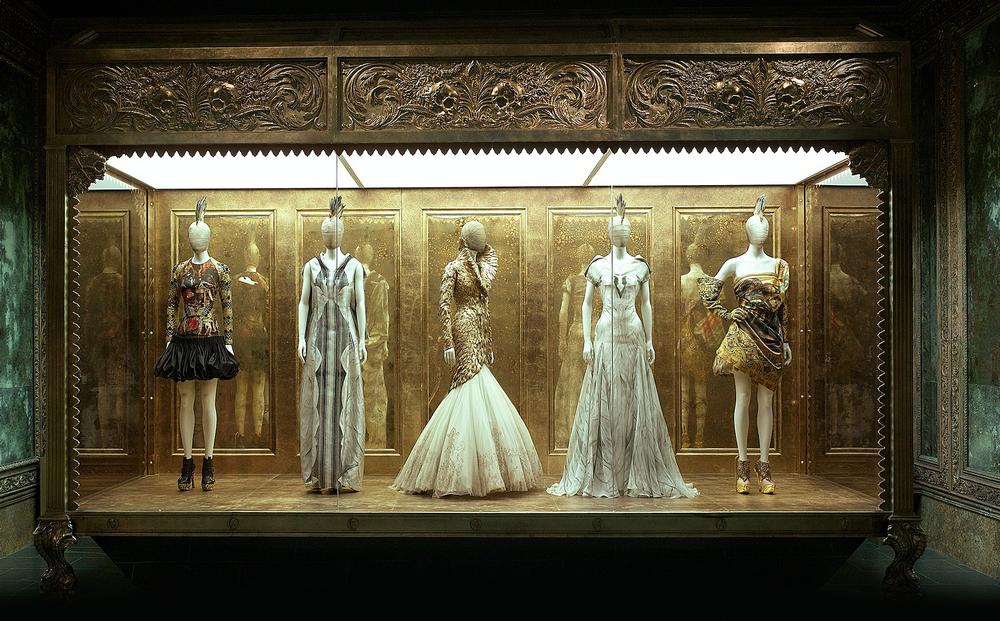
Some primarily exist still – especially in art and culture – to protect, preserve and present their collections. Museums like the V&A in London or the Metropolitan Museum of Art in New York add hard commercialism to their mix by curating blockbuster temporary exhibitions linked to music or fashion. David Bowie Is at the V&A was one of the most successful exhibitions in its history. At the Met’s Alexander McQueen: Savage Beauty I saw the kind of queues most museums can only dream of, snaking right around the block.
It’s the world of science museums where bigger questions are being asked in relation to all the razzmatazz kids and young adults in the developed world possess, enabling them to interact globally in real time via online video gaming or streaming myriad information and entertainment onto their laptops, tablets and phones. Do museums have to compete with this? Yes, because they need each generation’s leisure time – yet their budgets can’t possibly accommodate the pace of change or the technological investment this would require.
Competition isn’t just coming from home technology. Just as Frank Oppenheimer changed the science museum paradigm, Epcot changed the theme park paradigm by adding educational value. Epcot’s 360° train journey across the Chinese steppes is an incredible high-adrenaline experience and a learning experience. How can museums hope to counter that by just showing a steam engine or the model of a bridge Brunel built to highlight engineering feats of the past?
The split between science museums and science centres has been one answer, with the latter trying to compete more directly with experiential technology. Science museums need to concentrate on something no one else can give – access married to the best knowledge and technology, such as live-time film of a scientist on the edge of a volcano, for example. We are already questioning the one-size-fits-all inclusive voice; families, school groups, tourists, enthusiasts, students and peers can no longer be catered for as one audience. Tailoring exhibitions to create genuinely individual experiences is the future, while offering what people can’t get anywhere else – be it an object, knowledge, experience or spectacle.
metstudio.com @metstudio
"Tailoring exhibitions to create genuinely individual experiences is the future, while offering what people can’t get anywhere else – be it an object, knowledge, experience or spectacle."
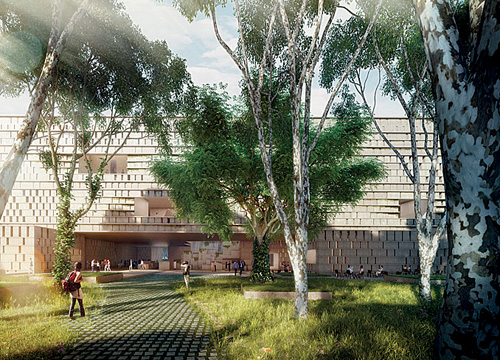
Concept illustration for a sculpture garden, part of the MoMA expansion, by Diller Scofidio + Renfro / Photo: (c) 2014 Diller Scofidio + Renfro;
The Met's Alexander McQueen retrospective Savage Beauty attracted 660,000 visitors in 2011 / photo: walter silver
In a world where imbalance often accumulates quietly, Wildsmith unveils its newest
wellbeing innovation: Silent Loads, an approach designed to meet the needs of modern spa
guests with precision and depth. [more...]
The public is vital to the health,
wealth and motivations of a
museum. But the collection and
exhibits form its beating heart.
Do museums exist to serve
the public or the collection?
By Alice Davis | Published in Attractions Management 2014 issue 3
An interior view of the Museum of Modern Art (MoMA) in New York / PHOTO: (C) MUSEUM OF MODERN ART
Angry exchanges over building proposals at the Museum of Modern Art in New York have reignited the debate over priorities. For some, the decision to tear down the adjacent building – the former home of the American Folk Art Museum – to create a public space was misguided. Others are passionate that the quality of the visiting and non-visiting public's experience will be enhanced.
The focus of museums on the public is not new. Over decades, the audience has been increasingly courted by museums. Museum activist and author Kenneth Hudson went so far as to say “the most fundamental change that has affected museums is the now almost universal conviction that they exist in order to serve the public. The old-style museum felt itself to be under no such obligation … The museum’s prime responsibility was to its collections, not to its visitors.”
These days, museums have to compete. Audiences are demanding. Museums seem to fight to stay relevant, so many market themselves as commercial enterprises. Attracting an audience, therefore, means giving a modern audience what it wants: technology, exciting architecture, public spaces, coffee shops, hi-tech audiovisual guides, popular exhibits, social media interaction – the list goes on. But amid these crowd-pleasing initiatives, are we losing sight of what’s important? Should the visitor experience be the priority?
Read more from this issue of Spa Business magazine
View contents of Spa Business 2014 issue 3
Editor’s letter: Here comes China
As China opens up to the West, the nation’s attractions are
booming, with existing attractions reporting record attendances and
new museums, theme parks and science centres planned
Teamworking: The Art of Collaboration
Merlin’s Mark Fisher talks about working
with Hollywood studio DreamWorks on
the upcoming Shrek-themed midways,
how to spot a winning IP and the
importance of creative collaboration
Talking Point: Whose Museum Is It Anyway?
Five experts debate how museums
can tackle the controversial issue
of balancing the needs of the visitor
with their curatorial responsibilities
Analysis: TEA/AECOM Enduring Appeal
Theme park attendance for 2013
reached an all-time high, and museums
worldwide performed well. AECOM’s
economics experts crunch the numbers
Theme Parks: Oceans of Fun
Chimelong International Ocean Resort
is a big development on a small island.
Will its proximity to the gambling haven
of Macau be a help or a hindrance?
Museums: Virtual Visits
Europe’s biggest museum conference
looks at how technology and the digital
revolution can enhance the attraction. We
report from the event in Newcastle, UK
Technology: Face Reality
As Facebook’s Mark Zuckerberg buys
Oculus VR and its Rift device, we look at
how far VR has come, and ask whether
it has a place in the attractions industry
Profile: Sarah Maltby
As Jorvik turns 30, director Sarah
Maltby talks about keeping archaeology
at the heart of what the Viking centre
does, and moving with the times
Storytelling: Inside Story
Abu Dhabi’s Yas Waterworld draws on
the local culture to create a narrative
journey for its visitors. Atkins Global
tells us about an innovative approach
Interview: Rick Schwartz
San Diego Zoo Global ambassador on the
Tiger Trail and conservation initiatives
Dr Wendy EarleKnowledge Exchange ManagerBirkbeck University of London and Convenor, Institute of Ideas’ Arts and Society Forum
Dr Wendy Earle
Museums are great places for losing yourself. In London’s Hunterian Museum in the Royal College of Surgeons you’ll be blown away by beautifully displayed surgical specimens and 17th-century instruments. Across Lincoln’s Inn Fields is the completely different John Soane Museum, housing his amazing collection of architectural objects and art, which he left for students and the public to freely “consult, inspect and benefit” from. He left instructions for the museum to be kept as he left it – where the exhibits speak for themselves with few labels or curatorial interpretation. It’s in stark contrast to the current trend to invest substantially in public engagement, interactive technologies and heavily curated exhibitions aimed at attracting wider audiences.
Making collections accessible has always been one of the major functions of museums. Exhibitions are designed for the public to look at and learn from, while students and researchers are given additional access to exhibits or collections not on display. In the past, “the public” was seen by museums as anyone interested in their collections, which were to provide open-ended opportunities for learning and contemplation.
Now many museums practise audience segmentation and treat collections as if they can do people good. They cater for a wide range of interests and needs, offering visitor attractions such as cafés and gift shops, interactive apps, tablets and audio guides, and events such as family workshops and party nights to attract young people.
Many museums see their collections as a means towards community cohesion or providing a resource for educating children. They make fun-filled apps to engage children’s attention or provide labels making the exhibits relevant to contemporary political and social issues.
These measures show a lack of faith in both collections and audiences. Museums are not (and need not be) everyone’s idea of a good time, but they offer access to unique resources which help us expand our knowledge of the world. Museums like the Hunterian and the Soane are respected because their collections talk directly to visitors. Looking at the displays, like reading books, involves interaction with other minds, which in itself is refreshing and enlightening. There’s no necessary dichotomy between audiences and collections and museum professionals should underestimate neither.
bbk.ac.uk @wearliegig
Kathy FredricksonDirector of Exhibition Research and PublishingPeabody Essex Museum, Salem, Massachusetts
Kathy Fredrickson
Museums today don’t have the luxury to think of curating at one end of a spectrum and engaging visitors at the other. This implies an internal-versus-external focus that is not in anyone’s best interests. To remain viable for generations to come, we have to consider how these objectives can be integrated to create unique opportunities for museums to share content and ideas. We have to stop thinking in terms of museum staff and museumvisitors and think of museums as communities. Architecture and technology are no good without communities to populate them with content and ideas.
So what’s the main objective of the museum? Peabody Essex Museum is a collection of global art and culture, and our main objective – ie mission – is to transform people’s lives through art. Collecting and curating are imperative to that effort, but we can’t fulfil our ultimate goal without engaging our audiences. We have to make them care about us if we aim to transform their lives.
Trendswatch 2014 cites the “economy of collaborative consumption” as a key driver for millennials. In this “peer-to-peer” economy, people are more interested in sharing experiences than buying things. Museums are well positioned to share experiences, so our challenge is to do this in fresh, appealing ways.
On one hand, curation implies a premium attached to the knowledge we deliver. The term “museum quality” has street cred. On the other hand, we have audiences who regularly curate their own experiences and expect to participate. We have to find a balance. Technology offers many platforms for content sharing and social engagement. Content sharing can be a two-way street where everyone can contribute ideas.
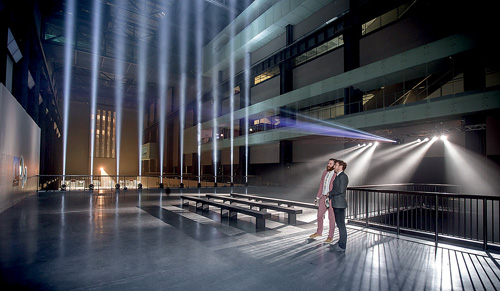
Inspiring architecture can attract people, like the Turbine Hall at the Tate Modern. Commercial enterprises like Disney and Broadway productions, which have invested tremendous capital into considering the visitor experience, can be sources of inspiration for museums.
There’s a lot of opportunity for museums to successfully curate, collect and build community. Our only limitations are the boundaries we place on ourselves. Not everybody finds art approachable so we must keep trying new ways to engage new audiences. One of those ways is to display wonderful objects.
As Bill Moggridge said, “The only way to experience an experience is to experience it.”
pem.org @peabodyessex
Tom HennesFounderThinc Design, New York City
Tom Hennes
Asking whether museums exist to serve the public or the collection presents a false dichotomy. Most if not all museums today would claim the preservation of their collections is for the public good. In an interconnected world, the real question museums need to answer is this: “what publics do they and their collections serve and how do they serve them?”
It is erroneous to believe the only relevant public is the visiting public – the users of the museum. For museums with historical or cultural collections (and even many art and science museums) the public also includes those communities from whom the collections are drawn and whose stories the museum tells – the represented public.
Both the represented and the using public have a stake in what the museum shows and the stories it tells. It’s fair to say that both publics are composed of innumerable, overlapping communities with a diversity of sometimes competing interests. It is at the intersection of these interests that museums operate today, and thus they cannot act as unquestioned authorities.
Instead, modern museums are what the anthropologist James Clifford calls “contact zones” in a dense social web, within which they can connect disparate communities around areas of common interest. They serve the public whose stories they tell by providing a platform for authentic representation. They simultaneously serve the visiting public by offering the chance to witness culture, history, art and nature in an immediate way that expands their knowledge.
By bringing “us” into contact with multiple “others”, whether they are indigenous people, scientists, parts of our own society, or a diverse group of museum-goers, museums offer us all the chance to see each other through each others’ eyes, transgress cultural and social barriers and grow as human beings.
It is here that the relevance of new technologies and modes of interaction – from vibrant audiovisual storytelling to the visualisation of complex phenomena to the crowdsourcing of social history – comes into play. New modes of curation that guide and organise multiple modes of listening and representation open museums to broader discourse and interaction among multiple publics. This vibrant mode of interchange, based fundamentally in authentic objects, evidence and human contact, builds on museums’ core strengths and strengthens them as sites of culture, knowledge and understanding that are unlike any other in modern society.
thincdesign.com @ThincDesign
"Museums offer us all the chance to see each other through each others’ eyes, transgress cultural and social barriers, share in each others' knowledge and grow as human beings"
Dr Timothy EwinSenior CuratorNatural History Museum, London
Dr Timothy Ewin
I ’m passionate about the crucial and unique role museums play in understanding and preserving important objects for society, whilst making them accessible. Curatorial knowledge and collections form the foundation of all museum work and are thus vital to an effective service, including attracting visitors.
In the last 15 years many museums have prioritised attracting wider audiences. This has had many benefits, but it’s not without problems. This is because stored collections and curatorial expertise, which don't always directly contribute to attracting audiences, have become regarded as dead weight, leading to the idea that museums better serve society if they don't resource them.
This view however is erroneous, as collections are public assets, a record of our past and an investment in our future understanding of society and the world around us. Furthermore, the preservation and acquisition of significant objects is a key societal demand on museums, regardless of contemporary use.
Whilst attracting visitors should not be a sole focus, the museums that are most attractive are those which blend an understanding of visitor needs, technology and design with collections and curatorial expertise. Thus, museums need to serve both the public and the collections to remain attractive and fulfil their societal obligations, irrespective of resources available.
So, the question “do -museums exist to serve the public or serve the collection?” is an unnecessary and damaging polarisation, distracting from the more important debate of “what does society need from museums?” Serving one is not exclusive of the other and decoupling collections and curatorial knowledge from visitors is damaging to both.
In the future I hope to see a broader appreciation that museums exist for a plethora of different but interconnected and equally important reasons. Each area requires resources for the service to function effectively and sustainably. I hope national organisations begin to champion raising resources for all aspects of museum work, including curatorial expertise and stored collections, instead of focusing on potentially divisive, damaging and limited arguments.
nhm.ac.uk @NHM_London
Alex McCuaigChairman and CEOMET Studio, London
Alex McCuaig
The remit for all museums used to be relatively straightforward; they were both national institutions for learning and showcases for international – often colonial – acquisitions, which encouraged public access in order to educate, amaze and inspire patriotic pride. But museums today no longer form that single homogenous group.
Some primarily exist still – especially in art and culture – to protect, preserve and present their collections. Museums like the V&A in London or the Metropolitan Museum of Art in New York add hard commercialism to their mix by curating blockbuster temporary exhibitions linked to music or fashion. David Bowie Is at the V&A was one of the most successful exhibitions in its history. At the Met’s Alexander McQueen: Savage Beauty I saw the kind of queues most museums can only dream of, snaking right around the block.
It’s the world of science museums where bigger questions are being asked in relation to all the razzmatazz kids and young adults in the developed world possess, enabling them to interact globally in real time via online video gaming or streaming myriad information and entertainment onto their laptops, tablets and phones. Do museums have to compete with this? Yes, because they need each generation’s leisure time – yet their budgets can’t possibly accommodate the pace of change or the technological investment this would require.
Competition isn’t just coming from home technology. Just as Frank Oppenheimer changed the science museum paradigm, Epcot changed the theme park paradigm by adding educational value. Epcot’s 360° train journey across the Chinese steppes is an incredible high-adrenaline experience and a learning experience. How can museums hope to counter that by just showing a steam engine or the model of a bridge Brunel built to highlight engineering feats of the past?
The split between science museums and science centres has been one answer, with the latter trying to compete more directly with experiential technology. Science museums need to concentrate on something no one else can give – access married to the best knowledge and technology, such as live-time film of a scientist on the edge of a volcano, for example. We are already questioning the one-size-fits-all inclusive voice; families, school groups, tourists, enthusiasts, students and peers can no longer be catered for as one audience. Tailoring exhibitions to create genuinely individual experiences is the future, while offering what people can’t get anywhere else – be it an object, knowledge, experience or spectacle.
metstudio.com @metstudio
"Tailoring exhibitions to create genuinely individual experiences is the future, while offering what people can’t get anywhere else – be it an object, knowledge, experience or spectacle."
Concept illustration for a sculpture garden, part of the MoMA expansion, by Diller Scofidio + Renfro / Photo: (c) 2014 Diller Scofidio + Renfro;
The Met's Alexander McQueen retrospective Savage Beauty attracted 660,000 visitors in 2011 / photo: walter silver
Premium London health club, KX Chelsea, will imminently unveil its most significant
redevelopment since its launch in 2002 to create an integrated wellness model combining
training, recovery and relaxation.
Rosewood Le Guanahani St Barth, on the northeast coast of Saint Barthélemy in the French
West Indies, is offering a programme of ocean-inspired yoga classes between 8-14 June to
celebrate Global Wellness Day (GWD).
Hotel de France, located on the British Isle of Jersey, has created a wellness retreat package
that includes a hot yoga session that will take place in Jersey Zoo’s butterfly sanctuary.
The Ritz-Carlton, Langkawi, in Malaysia, has revealed a schedule for Global Wellness Day
(GWD) that includes guided rainforest walks, mindful movement and guided coastal meditation
experiences.
Longevitix, a clinical platform for preventive and longevity medicine, has launched its AI-
powered intelligence system to help physicians deliver continuous, personalised longevity-
focused care at scale.
Atmantan Wellness Centre, an integrative wellness destination in Mulshi, near Pune in India, is
expanding its portfolio by adding a new centre in Hyderabad that will launch between 2028 and
2029.
A recent survey by the UK Spa Association (UKSA) into the industry’s approach to cancer care
has revealed that almost half of participating respondents (46 per cent) are unaware that
cancer is a disability and guests with a cancer diagnosis must be given
Mexican operator, Solmar Hotels and Resorts, is hosting a series of events in celebration of
Global Wellness Day, including a Temazcal ceremony at its Playa Grande Resort and Spa in Los
Cabos.
Mandarin Oriental has announced a standalone residence brand, Mansions, which will debut at
Emirates Palace, Mandarin Oriental Mansions, Abu Dhabi, in 2029.
In a world where imbalance often accumulates quietly, Wildsmith unveils its newest
wellbeing innovation: Silent Loads, an approach designed to meet the needs of modern spa
guests with precision and depth. [more...]