It’s time to start the conversation
about pelvic health. It’s not
just menopausal women who
have challenges: young women
and men can also experience
issues they’re too embarrassed
to discuss or seek help for,
as Kath Hudson reports
Exercise can help to strength the pelvic floor / photo: Nuffield Health
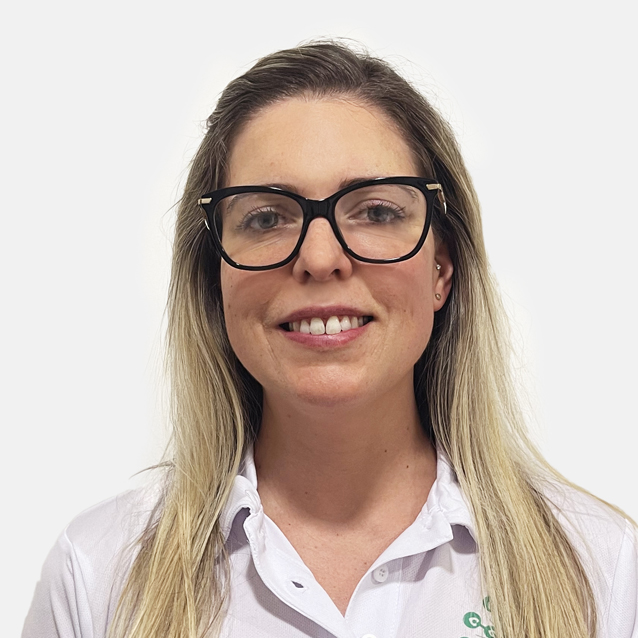
Jo Dafforn
National clinical lead for pelvic health physiotherapy, Nuffield Health
photo: Nuffield Health
In the context of a strained NHS faced with record numbers of people on waiting lists, there is a growing awareness of the potential for the fitness industry to play a role in supporting people living with health conditions and pelvic health is a key area in which the fitness sector can make a big difference.
Pelvic health is particularly relevant to the fitness industry for two main reasons. Firstly, pelvic health issues stop people taking part in exercise and physical activity, particularly women, who we already know experience huge barriers to fitness.
New data from our Healthier Nation Index has found that the gender gap is continuing, with men reporting that their fitness levels have improved over the past year (38 per cent better versus 26 per cent worse), whereas women state their physical fitness has worsened (31 per cent better versus 33 per cent worse.) When speaking to my clients, fear of leaking is the most common worry.
Secondly, the fitness industry can make a huge difference in supporting people with pelvic health issues, as the right exercises targeting the pelvic floor can help both prevent and alleviate pelvic health symptoms.
Conversations about taboo subjects, like continence and pelvic pain, can be hard to start, but fitness professionals are naturally good at building trust and rapport, and with the right knowledge and skills, opening conversations around pelvic health will help to shape exercise programmes that can manage symptoms and allow them signpost to appropriate care when needed. It’s key to raise awareness about what the fitness industry can offer, ensuring that this support is of a high standard and working with partners to direct people to the right services.
Research shows that more than 50 per cent of women may have trouble contracting pelvic muscles correctly. If a client is struggling to feel these muscles working, they may need support from a specialist pelvic health physiotherapist alongside their fitness professional. Supporting someone’s pelvic health is never a one size fits all approach. As in all other areas, exercises should be tailored to the individual.
Conversations about taboo subjects, such as continence and
pelvic pain, can be hard to start, but fitness professionals
are naturally good at building trust and rapport
Leanne O’Brien
Lead pelvic health physiotherapist, Ten Health & Fitness
photo: Ten Health & Fitness
The prevalence of pelvic health dysfunction is much more common than most people would think. The pelvic floor can affect squat depth, weight-lifting capability, agility and power production in the legs and torso, meaning clients are likely to experience reduced performance and further complications if issues aren’t addressed.
The current waiting times for pelvic health treatment on the NHS can range from six- to 18-months and often clients are limited to just four sessions. Although some people will need a more medical intervention, the vast majority of pelvic health issues can be identified by a pelvic health physiotherapist who could develop a plan for a PT to deliver, so this is an ideal opportunity for the health and fitness industry to support the NHS.
Both men and women suffer from pelvic health issues, but generally in different ways. Men are more likely to experience pelvic floor dysfunction due to tension and tightness in the pelvic floor, which can lead to pain, poor bladder control, constipation and erectile dysfunction.
Erectile dysfunction can be an early indication of heart disease, while increased bladder frequency can also indicate prostate cancer. Women typically suffer from weakness caused by lifestyle changes, such as pregnancy and menopause.
Normalising the problem is the key to success. The first step is to start with leaflets and posters in the gym, designed to highlight the common issues. Providers could then introduce pelvic health screening questions to their pre-exercise questionnaires for new members. Emailing the screening questions to existing clients will ensure no one is missed.
Screening new clients for pelvic health dysfunction is really important when it comes to managing their goal progression and long-term health and knowing when to refer them on to a pelvic health specialist is essential.
Current statistics suggest that 82 per cent of women will have children and 50 per cent will experience a prolapse at some point.
Both men and women
suffer from pelvic
health issues, but
in different ways
Education is an important part of the solution / Education is an important part of the solution
Baz Moffat
Co-founder, The Well HQ
photo: The Well HQ
This is not a trend, it’s a serious gig which we need to tackle properly. The official figures are that 50 per cent of women over the age of 50 will have some stress incontinence. Pelvic floor dysfunction can result from a multitude of reasons, some are quite straightforward, but many are very complex and could involve medical trauma, or sexual abuse.
This is a specialist subject and the pelvic floor is a very private, intimate and vulnerable part of woman’s body, yet there is an important role for fitness professionals to play here. They need to be able to hold the space for a woman to say I’m struggling with this exercise and then to adapt the workout accordingly. They also need to be able to refer on to a specialist when it goes outside of their scope.
Women face three factors making them vulnerable to pelvic floor dysfunction. The vagina provides a gap for pressure to come in and out of; giving birth causes further issues, followed by the hormonal rollercoaster of the menopause. Many midlife women are mortified to find they wet themselves while exercising. This is because oestrogen levels drop and can be rectified by either taking HRT, or using a specific vagina oestrogen that can be obtained on prescription.
Many women feel they have to hide their problems, but we need them to exercise. My hope and belief is that by talking about pelvic floors, and adapting exercises, we can stop women feeling ashamed and isolated, help them with their issues and encourage them to be active. So many women I’ve trained can’t feel their pelvic floor. They’ve locked it, it’s dead to them, because they’re ashamed of it.
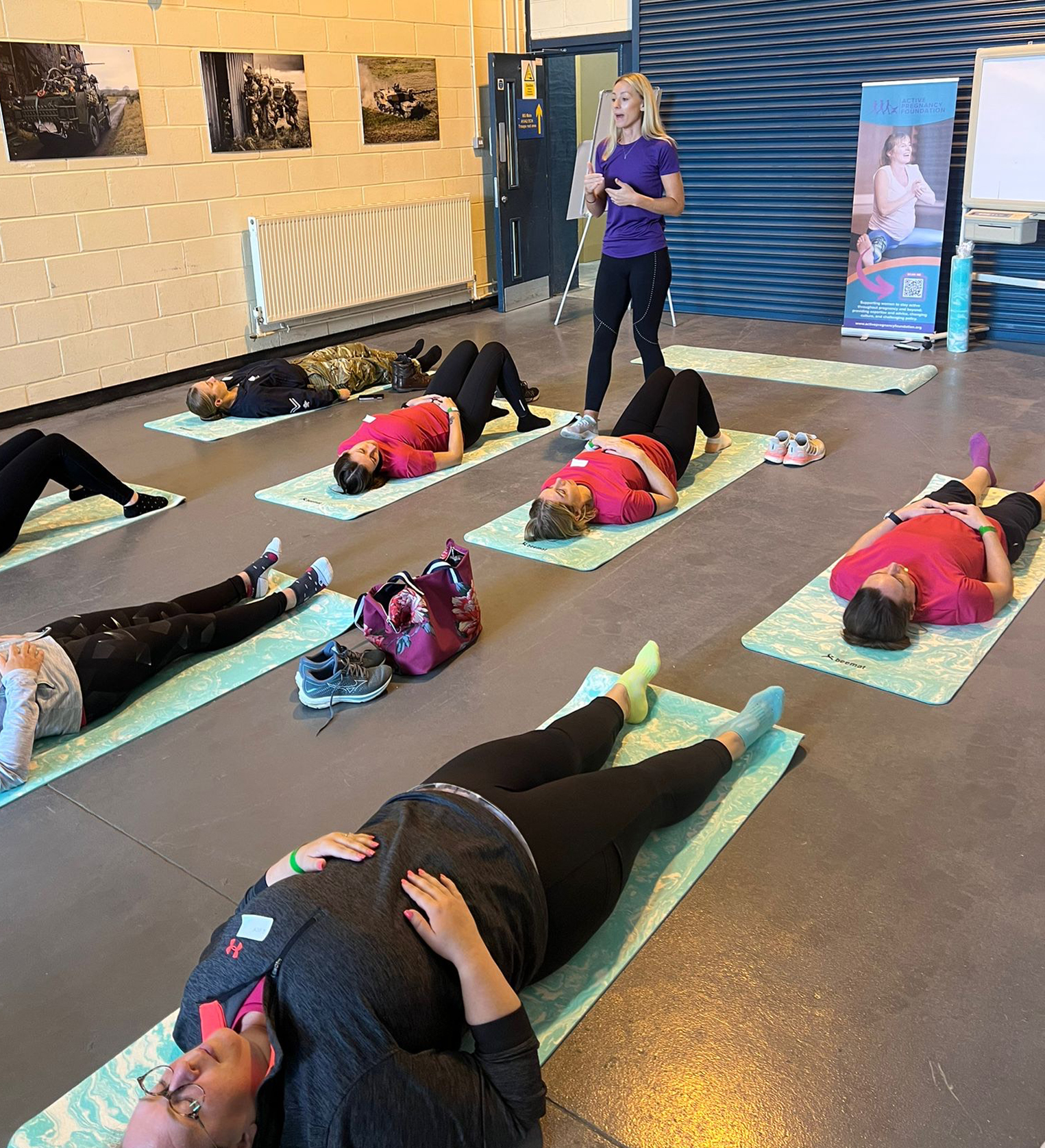
I’m currently running a project with The Gym Group, training their PTs in pelvic health, so they can deliver workshops.This is already having great results.
For example, one trainer shared that she noticed a woman leave her class because she was feeling faint. She found her after the session and the member said she hadn’t drunk much that day. The trainer dug a bit deeper, gently asking: “can you tell me a bit more about that? Why have you not had a drink today? Did you find the exercises a bit tricky?” Diplomatic language empowered the client to open up about her issues and gave the trainer the opportunity to help.
So many women I’ve
trained can’t feel
their pelvic floor.
They’ve locked it,
it’s dead to them,
because they’re
ashamed of it
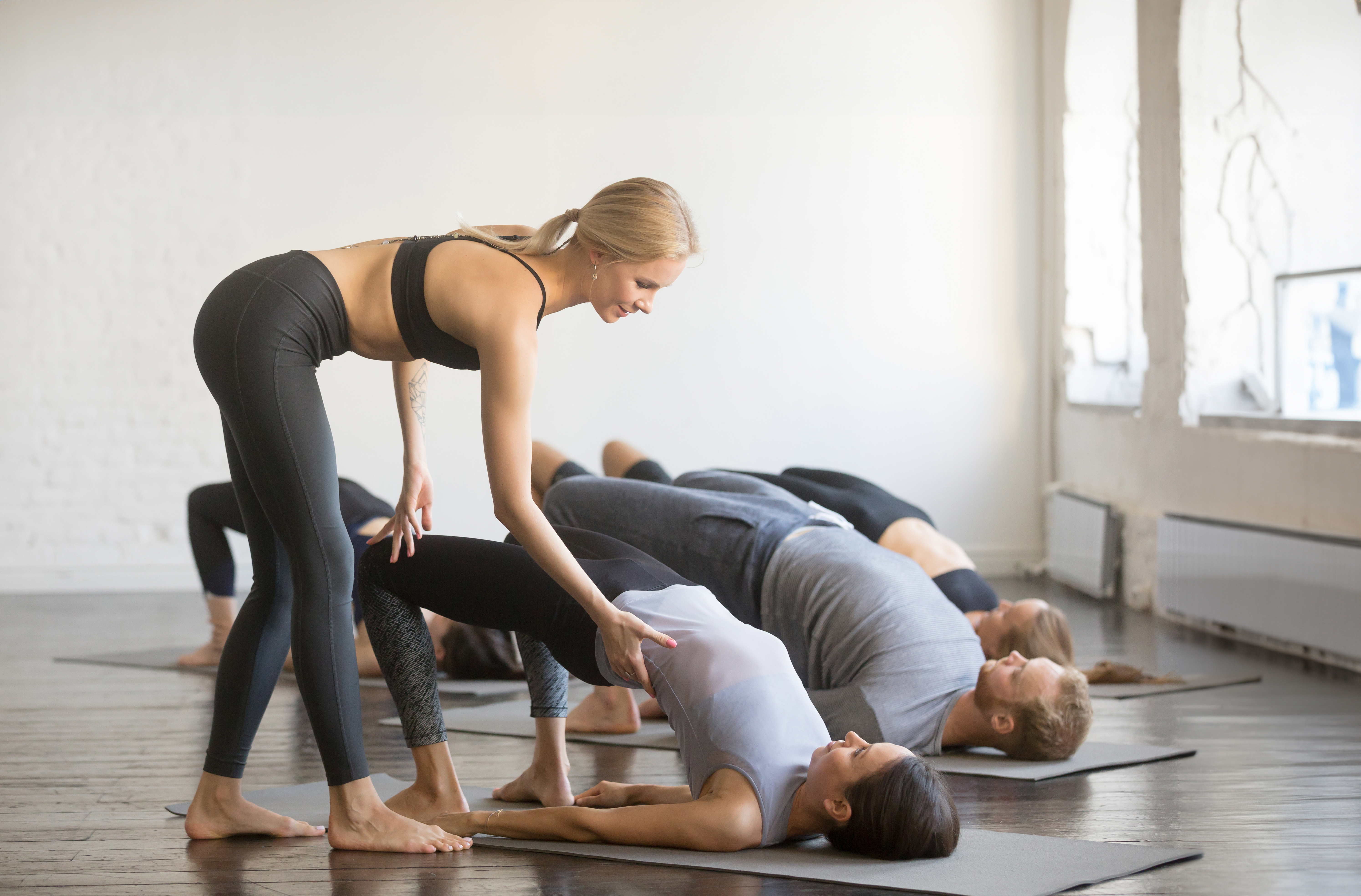
Yoga can strengthen the pelvic floor in men and women / photo: Shutterstock / fizkes
Joy Puleo
Director of education, Balanced Body
photo: Balanced Body
Pelvic floor support is part of the NHS Long Term Plan’s commitment to improve the prevention, identification and treatment of pelvic floor dysfunction, so fewer women experience ongoing issues after giving birth and later in life. There is a huge opportunity for the physical activity sector to embrace this opportunity and become an integrated part of the delivery infrastructure.
Offering an alternative to a clinical environment, where people can access these services in community venues where they already feel comfortable, such as a leisure centre, a gym or a studio, is likely to reduce barriers and encourage more engagement, as well as relieving the pressure on more traditional NHS pathways and services.
Clubs and trainers already have the tools they need to support their clients’ pelvic health. First, it is important to know that all exercise helps. Second, exercises known to support pelvic health are ones that are commonly taught: many core exercises, squats and lunges are helpful, with some additional consideration and refinement paid to breathing patterns, imagery, sensations and cueing.
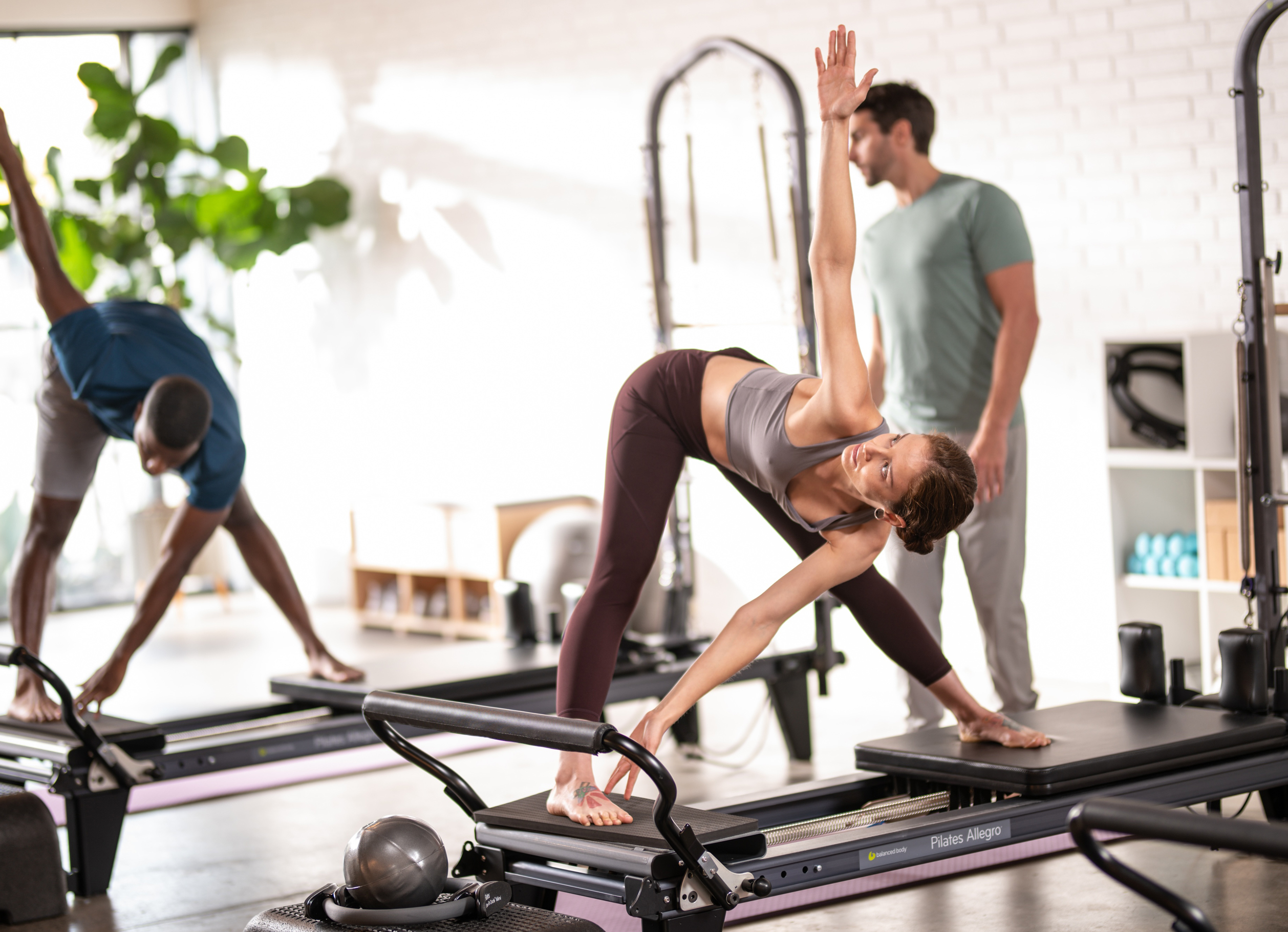
Fitness practices that are mat based and whole-body movement focused, such as Pilates, are excellent, as clients are provided with movements in all positions relative to gravity that train internal support of the spine, pelvis and legs. Pilates Reformer and studio training is particularly helpful, as the equipment is designed to assist the client when needed, as well as challenging and adding resistance in exercises that simulate real life movements.
Investing in educating and upskilling PTs and instructors would go a long way towards providing training that supports pelvic health, especially around breathing patterns, overload and isometric holds. The Pilates method includes these refinements, and can be learned and easily.
Investing in educating and upskilling personal
trainers would go a long way towards providing
training that supports pelvic health
Many Pilates movements can aid pelvic health / photo: Balanced Body
Sarah Thorne
Founder, PelviFit
photo: PelviFit
A lot of women are embarrassed about this issue until someone like me – as a women’s health physio – comes along and shouts vagina in the middle of the room. We should treat pelvic health the same as other health issues or injuries, so the conversation needs to start with screening questionnaires for new members.
When we know women have symptoms, we can help them by adapting training, including some pelvic floor training, or signposting them to a physio. Partnering with a women’s health physio to run quarterly workshops, or beginner classes, would take pelvic health to a new level.
It’s important to maintain pelvic health with exercises from a young age. Some younger women who participate in high-impact sports, such as gymnastics or trampolining, can experience issues such as leakage and an overactive pelvic floor, where the muscles are working too hard because of the intra-abdominal pressures required during their sport. Pelvic health physiotherapy can help.
There are many misconceptions, for example that if a woman has a prolapse, they can’t lift weights, but there’s research to show that’s incorrect. Exercise and strength training are vital components of rehabilitation and long-term management of prolapse and prolapse symptoms.
We have to enforce the point that women can exercise, while also supporting the prolapse, by adapting the exercise and ensuring they breathe out during the exertion to reduce intra-abdominal pressure.
Sixty per cent of women have a pelvic floor issue and more than 53 per cent have never sought help, not knowing that leakage when sneezing could be stopped. There’s so much PTs could do within their scope of practice and there are women’s health physios, like me, who want to work with the fitness sector to raise the awareness of pelvic health and stop women from suffering in silence.
Sarah Thorne is a women’s pelvic health physiotherapist and PT
Sixty per cent of
women have a pelvic
floor issue and more
than 53 per cent have
never sought help
Gyms could partner with a women’s health physio / photo: PelviFit
Pelvic health: when to get help
• Do you leak when you cough, sneeze, laugh or run?
• Do you always make it to the toilet in time, or is there an urgency when emptying your bladder or bowel?
• Do you wake up at night to empty your bladder?
• Do you have persistent constipation or struggle to empty your bowel?
• Do you have persistent pain around your pelvis (abdomen, groin, buttocks or genitals?)
• Do you have pain with sex or erectile issues?
Top tips
• Don’t include star jumps, high knees or tuck jumps in the warm-up
• Use the inclusive language of yoga, for example “If star jumps are not available to you today…"
• When giving modifications still make your clients work, for example side lunges with weights
• It’s important not to hold the breath when lifting because that puts more pressure on the pelvic floor, so educate your clients to exhale during the effort, as though they’re deflating a balloon
• Go gently with conversations: if they feel comfortable they will share and if they don’t, back off
• Find a pelvic floor physiotherapist to refer to, or direct clients to the POGP register
• Physios want to work with the fitness industry, so invite them in to run a workshop. Both The Well HQ and Sarah Thorne run courses and workshops on pelvic health
• Everyone should be doing at least one set of pelvic floor exercises a day. If they don’t work they need to see a specialist. Apps are available to support, including PelviFit and the NHS Squeezy app
• Being constipated puts additional strain on the pelvic floor, so educate your clients to look after their nutrition to make sure this isn’t an issue
In today’s premium spa environment, every detail shapes the guest experience – right down to
the softness of towels and the freshness of linens. [more...]
+ More featured suppliers
COMPANY PROFILES
Seed To Skin
Founded by Jeanette Thottrup in 2018, in Tuscany, Seed to Skin is an award winning skincare line. [more...]
BC Softwear Ltd
Established in 2002 by Barbara Cooke, BC SoftWear provides unmatched expertise in the crafting of th [more...]
It’s time to start the conversation
about pelvic health. It’s not
just menopausal women who
have challenges: young women
and men can also experience
issues they’re too embarrassed
to discuss or seek help for,
as Kath Hudson reports
Exercise can help to strength the pelvic floor / photo: Nuffield Health
Jo Dafforn
National clinical lead for pelvic health physiotherapy, Nuffield Health
photo: Nuffield Health
In the context of a strained NHS faced with record numbers of people on waiting lists, there is a growing awareness of the potential for the fitness industry to play a role in supporting people living with health conditions and pelvic health is a key area in which the fitness sector can make a big difference.
Pelvic health is particularly relevant to the fitness industry for two main reasons. Firstly, pelvic health issues stop people taking part in exercise and physical activity, particularly women, who we already know experience huge barriers to fitness.
New data from our Healthier Nation Index has found that the gender gap is continuing, with men reporting that their fitness levels have improved over the past year (38 per cent better versus 26 per cent worse), whereas women state their physical fitness has worsened (31 per cent better versus 33 per cent worse.) When speaking to my clients, fear of leaking is the most common worry.
Secondly, the fitness industry can make a huge difference in supporting people with pelvic health issues, as the right exercises targeting the pelvic floor can help both prevent and alleviate pelvic health symptoms.
Conversations about taboo subjects, like continence and pelvic pain, can be hard to start, but fitness professionals are naturally good at building trust and rapport, and with the right knowledge and skills, opening conversations around pelvic health will help to shape exercise programmes that can manage symptoms and allow them signpost to appropriate care when needed. It’s key to raise awareness about what the fitness industry can offer, ensuring that this support is of a high standard and working with partners to direct people to the right services.
Research shows that more than 50 per cent of women may have trouble contracting pelvic muscles correctly. If a client is struggling to feel these muscles working, they may need support from a specialist pelvic health physiotherapist alongside their fitness professional. Supporting someone’s pelvic health is never a one size fits all approach. As in all other areas, exercises should be tailored to the individual.
Conversations about taboo subjects, such as continence and
pelvic pain, can be hard to start, but fitness professionals
are naturally good at building trust and rapport
Leanne O’Brien
Lead pelvic health physiotherapist, Ten Health & Fitness
photo: Ten Health & Fitness
The prevalence of pelvic health dysfunction is much more common than most people would think. The pelvic floor can affect squat depth, weight-lifting capability, agility and power production in the legs and torso, meaning clients are likely to experience reduced performance and further complications if issues aren’t addressed.
The current waiting times for pelvic health treatment on the NHS can range from six- to 18-months and often clients are limited to just four sessions. Although some people will need a more medical intervention, the vast majority of pelvic health issues can be identified by a pelvic health physiotherapist who could develop a plan for a PT to deliver, so this is an ideal opportunity for the health and fitness industry to support the NHS.
Both men and women suffer from pelvic health issues, but generally in different ways. Men are more likely to experience pelvic floor dysfunction due to tension and tightness in the pelvic floor, which can lead to pain, poor bladder control, constipation and erectile dysfunction.
Erectile dysfunction can be an early indication of heart disease, while increased bladder frequency can also indicate prostate cancer. Women typically suffer from weakness caused by lifestyle changes, such as pregnancy and menopause.
Normalising the problem is the key to success. The first step is to start with leaflets and posters in the gym, designed to highlight the common issues. Providers could then introduce pelvic health screening questions to their pre-exercise questionnaires for new members. Emailing the screening questions to existing clients will ensure no one is missed.
Screening new clients for pelvic health dysfunction is really important when it comes to managing their goal progression and long-term health and knowing when to refer them on to a pelvic health specialist is essential.
Current statistics suggest that 82 per cent of women will have children and 50 per cent will experience a prolapse at some point.
Both men and women
suffer from pelvic
health issues, but
in different ways
Education is an important part of the solution / Education is an important part of the solution
Baz Moffat
Co-founder, The Well HQ
photo: The Well HQ
This is not a trend, it’s a serious gig which we need to tackle properly. The official figures are that 50 per cent of women over the age of 50 will have some stress incontinence. Pelvic floor dysfunction can result from a multitude of reasons, some are quite straightforward, but many are very complex and could involve medical trauma, or sexual abuse.
This is a specialist subject and the pelvic floor is a very private, intimate and vulnerable part of woman’s body, yet there is an important role for fitness professionals to play here. They need to be able to hold the space for a woman to say I’m struggling with this exercise and then to adapt the workout accordingly. They also need to be able to refer on to a specialist when it goes outside of their scope.
Women face three factors making them vulnerable to pelvic floor dysfunction. The vagina provides a gap for pressure to come in and out of; giving birth causes further issues, followed by the hormonal rollercoaster of the menopause. Many midlife women are mortified to find they wet themselves while exercising. This is because oestrogen levels drop and can be rectified by either taking HRT, or using a specific vagina oestrogen that can be obtained on prescription.
Many women feel they have to hide their problems, but we need them to exercise. My hope and belief is that by talking about pelvic floors, and adapting exercises, we can stop women feeling ashamed and isolated, help them with their issues and encourage them to be active. So many women I’ve trained can’t feel their pelvic floor. They’ve locked it, it’s dead to them, because they’re ashamed of it.
I’m currently running a project with The Gym Group, training their PTs in pelvic health, so they can deliver workshops.This is already having great results.
For example, one trainer shared that she noticed a woman leave her class because she was feeling faint. She found her after the session and the member said she hadn’t drunk much that day. The trainer dug a bit deeper, gently asking: “can you tell me a bit more about that? Why have you not had a drink today? Did you find the exercises a bit tricky?” Diplomatic language empowered the client to open up about her issues and gave the trainer the opportunity to help.
So many women I’ve
trained can’t feel
their pelvic floor.
They’ve locked it,
it’s dead to them,
because they’re
ashamed of it
Yoga can strengthen the pelvic floor in men and women / photo: Shutterstock / fizkes
Joy Puleo
Director of education, Balanced Body
photo: Balanced Body
Pelvic floor support is part of the NHS Long Term Plan’s commitment to improve the prevention, identification and treatment of pelvic floor dysfunction, so fewer women experience ongoing issues after giving birth and later in life. There is a huge opportunity for the physical activity sector to embrace this opportunity and become an integrated part of the delivery infrastructure.
Offering an alternative to a clinical environment, where people can access these services in community venues where they already feel comfortable, such as a leisure centre, a gym or a studio, is likely to reduce barriers and encourage more engagement, as well as relieving the pressure on more traditional NHS pathways and services.
Clubs and trainers already have the tools they need to support their clients’ pelvic health. First, it is important to know that all exercise helps. Second, exercises known to support pelvic health are ones that are commonly taught: many core exercises, squats and lunges are helpful, with some additional consideration and refinement paid to breathing patterns, imagery, sensations and cueing.
Fitness practices that are mat based and whole-body movement focused, such as Pilates, are excellent, as clients are provided with movements in all positions relative to gravity that train internal support of the spine, pelvis and legs. Pilates Reformer and studio training is particularly helpful, as the equipment is designed to assist the client when needed, as well as challenging and adding resistance in exercises that simulate real life movements.
Investing in educating and upskilling PTs and instructors would go a long way towards providing training that supports pelvic health, especially around breathing patterns, overload and isometric holds. The Pilates method includes these refinements, and can be learned and easily.
Investing in educating and upskilling personal
trainers would go a long way towards providing
training that supports pelvic health
Many Pilates movements can aid pelvic health / photo: Balanced Body
Sarah Thorne
Founder, PelviFit
photo: PelviFit
A lot of women are embarrassed about this issue until someone like me – as a women’s health physio – comes along and shouts vagina in the middle of the room. We should treat pelvic health the same as other health issues or injuries, so the conversation needs to start with screening questionnaires for new members.
When we know women have symptoms, we can help them by adapting training, including some pelvic floor training, or signposting them to a physio. Partnering with a women’s health physio to run quarterly workshops, or beginner classes, would take pelvic health to a new level.
It’s important to maintain pelvic health with exercises from a young age. Some younger women who participate in high-impact sports, such as gymnastics or trampolining, can experience issues such as leakage and an overactive pelvic floor, where the muscles are working too hard because of the intra-abdominal pressures required during their sport. Pelvic health physiotherapy can help.
There are many misconceptions, for example that if a woman has a prolapse, they can’t lift weights, but there’s research to show that’s incorrect. Exercise and strength training are vital components of rehabilitation and long-term management of prolapse and prolapse symptoms.
We have to enforce the point that women can exercise, while also supporting the prolapse, by adapting the exercise and ensuring they breathe out during the exertion to reduce intra-abdominal pressure.
Sixty per cent of women have a pelvic floor issue and more than 53 per cent have never sought help, not knowing that leakage when sneezing could be stopped. There’s so much PTs could do within their scope of practice and there are women’s health physios, like me, who want to work with the fitness sector to raise the awareness of pelvic health and stop women from suffering in silence.
Sarah Thorne is a women’s pelvic health physiotherapist and PT
Sixty per cent of
women have a pelvic
floor issue and more
than 53 per cent have
never sought help
Gyms could partner with a women’s health physio / photo: PelviFit
Pelvic health: when to get help
• Do you leak when you cough, sneeze, laugh or run?
• Do you always make it to the toilet in time, or is there an urgency when emptying your bladder or bowel?
• Do you wake up at night to empty your bladder?
• Do you have persistent constipation or struggle to empty your bowel?
• Do you have persistent pain around your pelvis (abdomen, groin, buttocks or genitals?)
• Do you have pain with sex or erectile issues?
Top tips
• Don’t include star jumps, high knees or tuck jumps in the warm-up
• Use the inclusive language of yoga, for example “If star jumps are not available to you today…"
• When giving modifications still make your clients work, for example side lunges with weights
• It’s important not to hold the breath when lifting because that puts more pressure on the pelvic floor, so educate your clients to exhale during the effort, as though they’re deflating a balloon
• Go gently with conversations: if they feel comfortable they will share and if they don’t, back off
• Find a pelvic floor physiotherapist to refer to, or direct clients to the POGP register
• Physios want to work with the fitness industry, so invite them in to run a workshop. Both The Well HQ and Sarah Thorne run courses and workshops on pelvic health
• Everyone should be doing at least one set of pelvic floor exercises a day. If they don’t work they need to see a specialist. Apps are available to support, including PelviFit and the NHS Squeezy app
• Being constipated puts additional strain on the pelvic floor, so educate your clients to look after their nutrition to make sure this isn’t an issue
People taking GLP-1 weight loss medications such as Ozempic, Wegovy, Mounjaro and Zepbound
may be losing weight, but they’re also becoming less physically active, according to new
research presented at the ENDO 2026 annual meeting of the Endocrine Society
Abu Dhabi-based investment firm Mubadala Capital has made a binding, fully financed
€1 billion
offer to acquire Pierre and Vacances SA, the European holiday resort operator behind the
continental European Center Parcs business.
Global retreat trade show, Synergy The Retreat Show, has launched a resource called The
Source, which hosts an open-access online Transformation Series programme.
The Standards Authority for Touch in Cancer Care (SATCC) charity has announced its first five-
day Living with Cancer and Beyond retreat, which will be held at Carden Park Hotel and Spa in
Cheshire, UK, between 1 and 5 September.
Patmos Aktis, a Luxury Collection Resort and Spa, has opened in Greece, with a renovated and
rebranded wellness offering called Ansana Wellness and Spa.
The Mauna Kea Beach Hotel, an Autograph Collection property in Hawaii, US, has opened its
22,000 sq ft indoor-outdoor Spa at Mauna Kea as the final step in the property’s overall
renovation, which has cost more than US$180 million (€166 million, £140 mill
The UK spa review and discovery platform for consumers, the Good Spa Guide, has announced
it will host the Good Spa Guide Awards 2026 during an event on 16 November at Sopwell House
Hotel in St Albans, UK.
Eighty-four per cent of consumers now say wellness is a top priority in their lives, with this
percentage increasing year on year, according to a preview presentation of McKinsey’s Future of
Wellness 2026 research report.
Mass protests have been taking place since Monday 1 June in Albania over the development of
a luxury resort by Donald Trump’s daughter Ivanka Trump and her husband Jared Kushner.
Global Wellness Day (GWD) marked its 15th anniversary on Saturday 13 June 2026, with the
theme: #JoyMagenta – a celebration of the healing qualities of simple gestures and activities
that spark joy.
In today’s premium spa environment, every detail shapes the guest experience – right down to
the softness of towels and the freshness of linens. [more...]
+ More featured suppliers
COMPANY PROFILES
Seed To Skin Founded by Jeanette Thottrup in 2018, in Tuscany, Seed to Skin is an award winning skincare line. [more...]