Yes! Send me the FREE digital editions of Spa Business and Spa Business insider magazines and the FREE weekly Spa Business and Spa Business insider ezines and breaking news alerts!
Museum visitors can now touch ancient artefacts virtually.
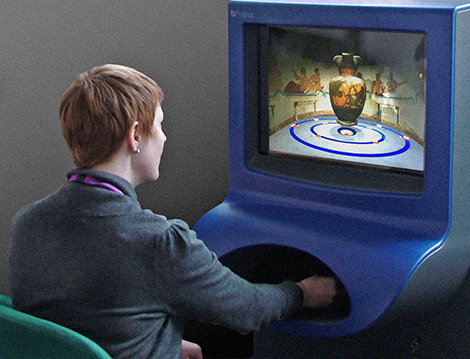
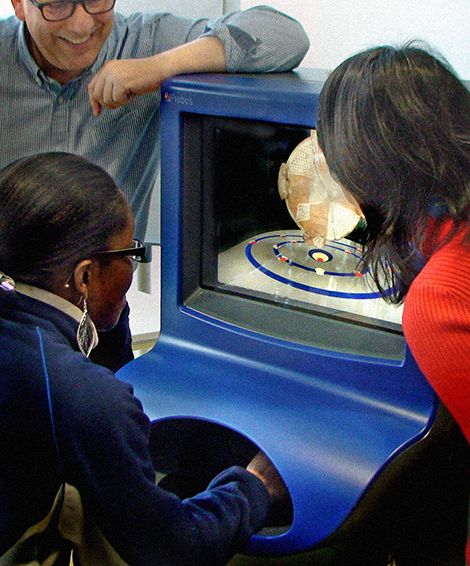
In 2012, the Manchester Museum, UK, became the first museum in the world to harness the new technology of haptics, giving an entirely new way of accessing the museum’s collection of ancient artefacts in its revamped Egyptian Gallery, the Ancient Worlds. This was achieved using a console called Probos, which brings digital images, sound and haptics – or virtual touch – together.
Created by Touch and Discover Systems, with funding from the Stavros Niarchos Foundation, Probos is a portal into virtually touching objects that are too precious to receive regular handling. It offers a selection of objects from a digitised catalogue that can be explored to reveal their physical qualities, attributes and history. Originally designed with blind and visually impaired users in mind, it has appealed to early users, especially children.
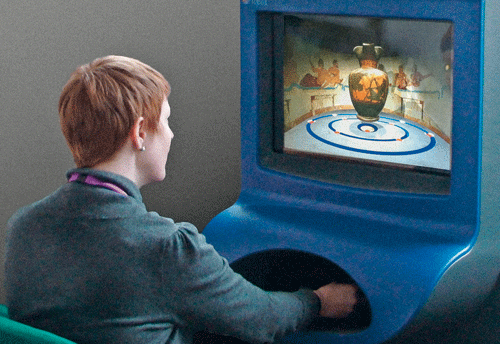
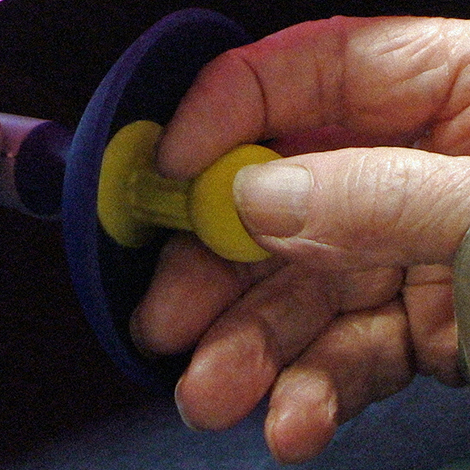
How it Works Using a control device held in the fingertips, the user can explore the surfaces, shapes and sounds of ancient objects that are usually inaccessible behind glass cases. Haptics draws on force feedback to create resistance to touch, tricking the mind into the sensation of touch. In fact, nothing is there at all – it’s all virtual.
The haptics device at the heart of the system is a SensAble Phantom Omni, but the user is deliberately given the simplest of interfaces, so they’re able to use the technology after a brief tutorial with everyday objects and are unaware of the underpinning technology – we wanted the users’ focus to be on the object they’re exploring, rather than the technology they’re simultaneously experiencing. As well as haptics, Probos adds extra dimensions for the sighted because it uses the three main senses of vision, hearing and touch.
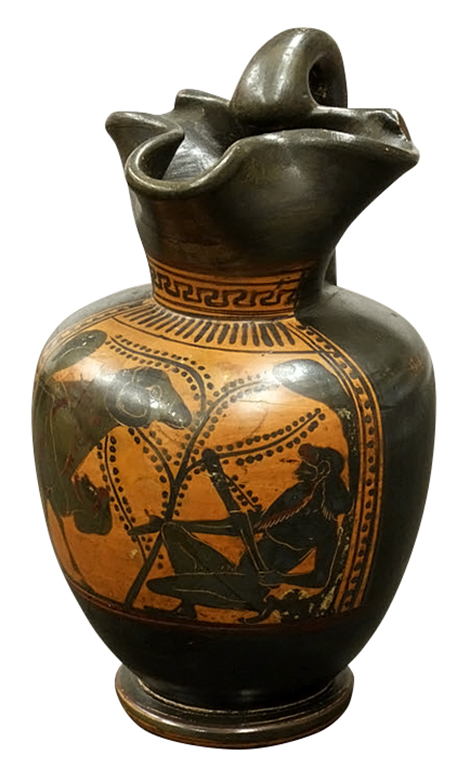
So far, Manchester Museum has digitised three of its artefacts: a Greek jug, dating from circa 500 BC; a terracotta bowl surmounted with hippopotamus figures, dating from circa 5,000 BC; and an Egyptian figurine, or Shabti, dating from circa 380 BC. The visualisation environment was done using custom software by virtual reality company Virtalis. The objects were then sited in re-creations of their likely original locations and each object was covered with hot spots, which tell the user about the item’s construction and history.
Haptics are used to tell the story of each object. Explorers of the hippopotamus bowl don’t just feel the hippos, they also feel the crack that runs along its centre. The bowl even sounds cracked when you tap it virtually – something you wouldn’t dare do in real life. Ultimately, we hope to digitise objects from collections all over the world, bringing them within literal reach of vast audiences. We’ve also developed a portable version of Probos, so museum masterpieces will be able to travel to schools, colleges, universities and remote communities.
The Probos team worked in close collaboration with Virtalis’ lead modeller, Tim Goodwin. As the technology was entirely new, there was a great deal of experimentation with the user interface to find the best way for people to learn how to operate the system without time consuming instructions. “Trying to design something completely intuitive is bizarrely difficult,” admits Goodwin.
The inspiration The idea behind harnessing touch to enrich visitor experience began in 2002. Having trained in sculpture at the Royal Academy, I realised the importance of the tactile connection. During my training, it became apparent that even touching plaster casts of famous sculptures brings you closer to the artist who created it. Touching creates sensory connections and emotional memory to aid learning. Digitisation is the way forward and the benefits for conservation practice, and the heritage sector generally, will be immense.
In 2010, I worked with Virtalis to form Touch and Discover Systems to develop the haptic Probos system. The design brief was to create an inclusive 3D platform that enables the public to benefit from sophisticated haptic technology, engaging three senses – audio, visual and tactile – simultaneously.
The Future Now that Probos has been established, with a travelling variant for outreach work to schools, colleges and libraries, the inclusion of additional museum artefacts from Manchester Museum and other museums is the vital next step.
New objects will offer a greater depth of content, incorporating filmed interviews in which curators introduce and discuss the object, animation and film sequences. The ultimate vision is that entire collections from around the world will be digitised for Probos, giving fascinating insights for both visitors and academics pursuing research.
The successor to Probos will give an even more life-like experience, offering more tactile depth, such as fast/slow friction or vibration, plus new sound clues to actions, location and proximity to objects and surface, as well as further finessing the user interface to make it more accessible to all users. At the start of each user session, a new settings function will enable people to establish their personal settings preferences in a way that best suits them.
Although I first came across haptics a decade ago, it was experimental then. I believe we’re going to come across the technology more in our daily lives, with many computers being haptically enabled. If I’m correct in this prediction, then Probos will be a significant technological milestone.
Read more from this issue of Spa Business magazine
View contents of Spa Business 2013 issue 2
Editor's letter : Dealing with protests
The industry attracts protesters for the
same reason it attracts sponsors – it's
high profile and extremely engaged with
its audience
Profile: Tim Fisher
The CEO of Village Roadshow Theme
Parks reveals how the company's
defied the double-dip global recession
with record attendances to its existing
parks and three more due to open
Museum: The big idea
San Francisco's Exploratorium reopened
in April in a venue three times its original
size. The museum's Linda Dackman
shows how the new space is being used
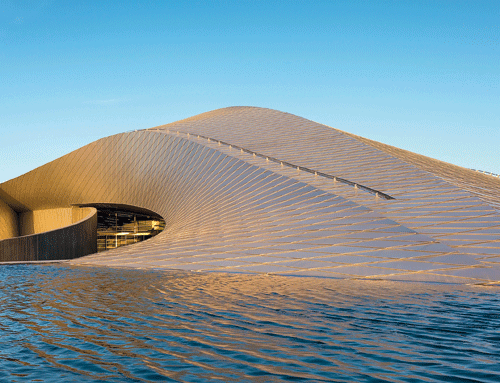
Aquarium: Den Blå Planet
The CEO and designer describe
Denmark's new aquarium, which is
shaped like a whirlpool and has 20,000
animals and up to 8,000 visitors a day
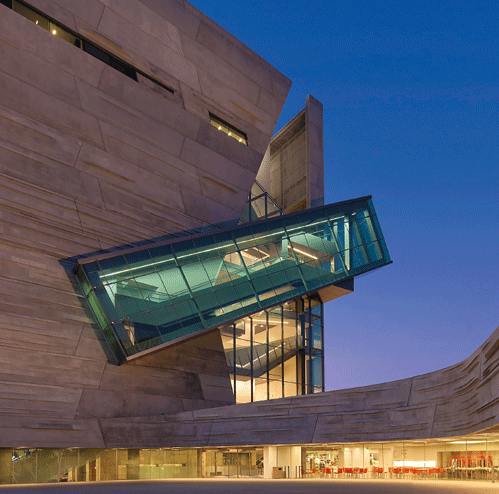
New opening: Thinking inside the box
The Perot Museum is shaped like a cube
and described as the next generation
of nature and science museums. CEO
Nicole Small explains how and why
Restoration: Home improvement
The Historic Dyess Colony: Boyhood
Home of Johnny Cash project is
restoring the famous singer's house,
educating visitors about the New
Deal era and revitalising the area
Planetarium: The sky at night
Two dome theatres are among the
highlights of Canada's new Rio Tinto
Alcan Planetarium, which shows what's
going on in the universe as it happens
Social media: Smart moves
Find out how to use digital opportunities
beyond your website in a new series
by social media expert Kelly Wheeler
Christopher Dean, director Touch & Discover Systems [email protected]
A simple omni handle is easy to use and disguises the complex technology needed
The user’s mind is tricked into the sensation of touch
Explorers can feel the cracks in the artefacts and tap them virtually. A Greek jug, dating from circa 500 BC, is among the items that have been digitalised at Manchester Museum
In the fast-paced world of fitness and wellness, where high-intensity workouts push us to
our limits and the sweat pours, the importance of efficient recovery cannot be overstated. [more...]
Museum visitors can now touch ancient artefacts virtually.
In 2012, the Manchester Museum, UK, became the first museum in the world to harness the new technology of haptics, giving an entirely new way of accessing the museum’s collection of ancient artefacts in its revamped Egyptian Gallery, the Ancient Worlds. This was achieved using a console called Probos, which brings digital images, sound and haptics – or virtual touch – together.
Created by Touch and Discover Systems, with funding from the Stavros Niarchos Foundation, Probos is a portal into virtually touching objects that are too precious to receive regular handling. It offers a selection of objects from a digitised catalogue that can be explored to reveal their physical qualities, attributes and history. Originally designed with blind and visually impaired users in mind, it has appealed to early users, especially children.
How it Works Using a control device held in the fingertips, the user can explore the surfaces, shapes and sounds of ancient objects that are usually inaccessible behind glass cases. Haptics draws on force feedback to create resistance to touch, tricking the mind into the sensation of touch. In fact, nothing is there at all – it’s all virtual.
The haptics device at the heart of the system is a SensAble Phantom Omni, but the user is deliberately given the simplest of interfaces, so they’re able to use the technology after a brief tutorial with everyday objects and are unaware of the underpinning technology – we wanted the users’ focus to be on the object they’re exploring, rather than the technology they’re simultaneously experiencing. As well as haptics, Probos adds extra dimensions for the sighted because it uses the three main senses of vision, hearing and touch.
So far, Manchester Museum has digitised three of its artefacts: a Greek jug, dating from circa 500 BC; a terracotta bowl surmounted with hippopotamus figures, dating from circa 5,000 BC; and an Egyptian figurine, or Shabti, dating from circa 380 BC. The visualisation environment was done using custom software by virtual reality company Virtalis. The objects were then sited in re-creations of their likely original locations and each object was covered with hot spots, which tell the user about the item’s construction and history.
Haptics are used to tell the story of each object. Explorers of the hippopotamus bowl don’t just feel the hippos, they also feel the crack that runs along its centre. The bowl even sounds cracked when you tap it virtually – something you wouldn’t dare do in real life. Ultimately, we hope to digitise objects from collections all over the world, bringing them within literal reach of vast audiences. We’ve also developed a portable version of Probos, so museum masterpieces will be able to travel to schools, colleges, universities and remote communities.
The Probos team worked in close collaboration with Virtalis’ lead modeller, Tim Goodwin. As the technology was entirely new, there was a great deal of experimentation with the user interface to find the best way for people to learn how to operate the system without time consuming instructions. “Trying to design something completely intuitive is bizarrely difficult,” admits Goodwin.
The inspiration The idea behind harnessing touch to enrich visitor experience began in 2002. Having trained in sculpture at the Royal Academy, I realised the importance of the tactile connection. During my training, it became apparent that even touching plaster casts of famous sculptures brings you closer to the artist who created it. Touching creates sensory connections and emotional memory to aid learning. Digitisation is the way forward and the benefits for conservation practice, and the heritage sector generally, will be immense.
In 2010, I worked with Virtalis to form Touch and Discover Systems to develop the haptic Probos system. The design brief was to create an inclusive 3D platform that enables the public to benefit from sophisticated haptic technology, engaging three senses – audio, visual and tactile – simultaneously.
The Future Now that Probos has been established, with a travelling variant for outreach work to schools, colleges and libraries, the inclusion of additional museum artefacts from Manchester Museum and other museums is the vital next step.
New objects will offer a greater depth of content, incorporating filmed interviews in which curators introduce and discuss the object, animation and film sequences. The ultimate vision is that entire collections from around the world will be digitised for Probos, giving fascinating insights for both visitors and academics pursuing research.
The successor to Probos will give an even more life-like experience, offering more tactile depth, such as fast/slow friction or vibration, plus new sound clues to actions, location and proximity to objects and surface, as well as further finessing the user interface to make it more accessible to all users. At the start of each user session, a new settings function will enable people to establish their personal settings preferences in a way that best suits them.
Although I first came across haptics a decade ago, it was experimental then. I believe we’re going to come across the technology more in our daily lives, with many computers being haptically enabled. If I’m correct in this prediction, then Probos will be a significant technological milestone.
Read more from this issue of Spa Business magazine
View contents of Spa Business 2013 issue 2
Editor's letter : Dealing with protests
The industry attracts protesters for the
same reason it attracts sponsors – it's
high profile and extremely engaged with
its audience
Profile: Tim Fisher
The CEO of Village Roadshow Theme
Parks reveals how the company's
defied the double-dip global recession
with record attendances to its existing
parks and three more due to open
Museum: The big idea
San Francisco's Exploratorium reopened
in April in a venue three times its original
size. The museum's Linda Dackman
shows how the new space is being used
Aquarium: Den Blå Planet
The CEO and designer describe
Denmark's new aquarium, which is
shaped like a whirlpool and has 20,000
animals and up to 8,000 visitors a day
New opening: Thinking inside the box
The Perot Museum is shaped like a cube
and described as the next generation
of nature and science museums. CEO
Nicole Small explains how and why
Restoration: Home improvement
The Historic Dyess Colony: Boyhood
Home of Johnny Cash project is
restoring the famous singer's house,
educating visitors about the New
Deal era and revitalising the area
Planetarium: The sky at night
Two dome theatres are among the
highlights of Canada's new Rio Tinto
Alcan Planetarium, which shows what's
going on in the universe as it happens
Social media: Smart moves
Find out how to use digital opportunities
beyond your website in a new series
by social media expert Kelly Wheeler
Christopher Dean, director Touch & Discover Systems [email protected]
A simple omni handle is easy to use and disguises the complex technology needed
The user’s mind is tricked into the sensation of touch
Explorers can feel the cracks in the artefacts and tap them virtually. A Greek jug, dating from circa 500 BC, is among the items that have been digitalised at Manchester Museum
Premium London health club, KX Chelsea, will imminently unveil its most significant
redevelopment since its launch in 2002 to create an integrated wellness model combining
training, recovery and relaxation.
Rosewood Le Guanahani St Barth, on the northeast coast of Saint Barthélemy in the French
West Indies, is offering a programme of ocean-inspired yoga classes between 8-14 June to
celebrate Global Wellness Day (GWD).
Hotel de France, located on the British Isle of Jersey, has created a wellness retreat package
that includes a hot yoga session that will take place in Jersey Zoo’s butterfly sanctuary.
The Ritz-Carlton, Langkawi, in Malaysia, has revealed a schedule for Global Wellness Day
(GWD) that includes guided rainforest walks, mindful movement and guided coastal meditation
experiences.
Longevitix, a clinical platform for preventive and longevity medicine, has launched its AI-
powered intelligence system to help physicians deliver continuous, personalised longevity-
focused care at scale.
Atmantan Wellness Centre, an integrative wellness destination in Mulshi, near Pune in India, is
expanding its portfolio by adding a new centre in Hyderabad that will launch between 2028 and
2029.
A recent survey by the UK Spa Association (UKSA) into the industry’s approach to cancer care
has revealed that almost half of participating respondents (46 per cent) are unaware that
cancer is a disability and guests with a cancer diagnosis must be given
Mexican operator, Solmar Hotels and Resorts, is hosting a series of events in celebration of
Global Wellness Day, including a Temazcal ceremony at its Playa Grande Resort and Spa in Los
Cabos.
Mandarin Oriental has announced a standalone residence brand, Mansions, which will debut at
Emirates Palace, Mandarin Oriental Mansions, Abu Dhabi, in 2029.
In the fast-paced world of fitness and wellness, where high-intensity workouts push us to
our limits and the sweat pours, the importance of efficient recovery cannot be overstated. [more...]