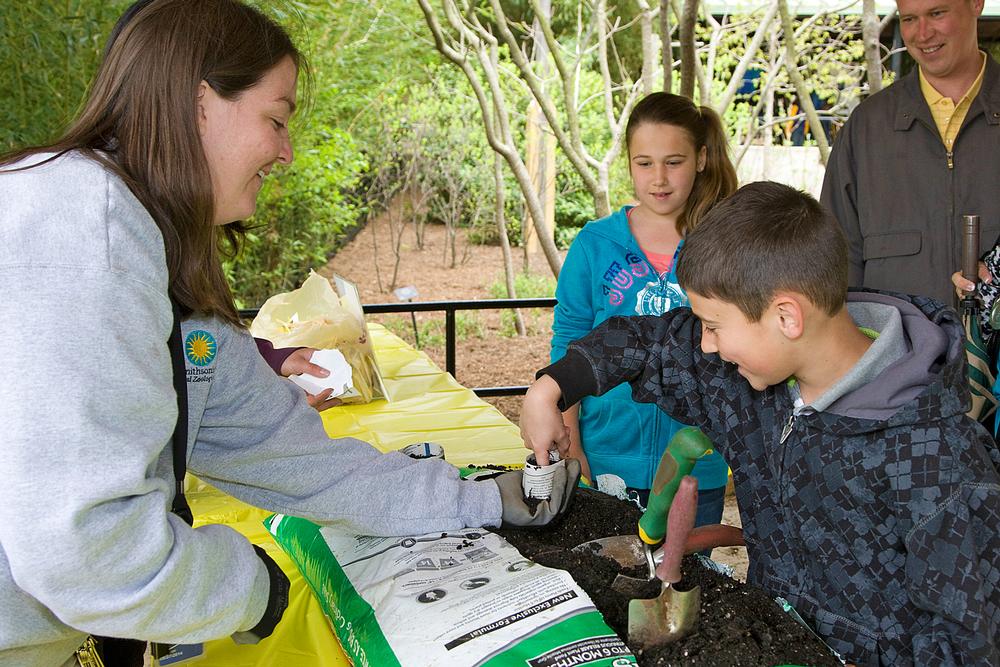
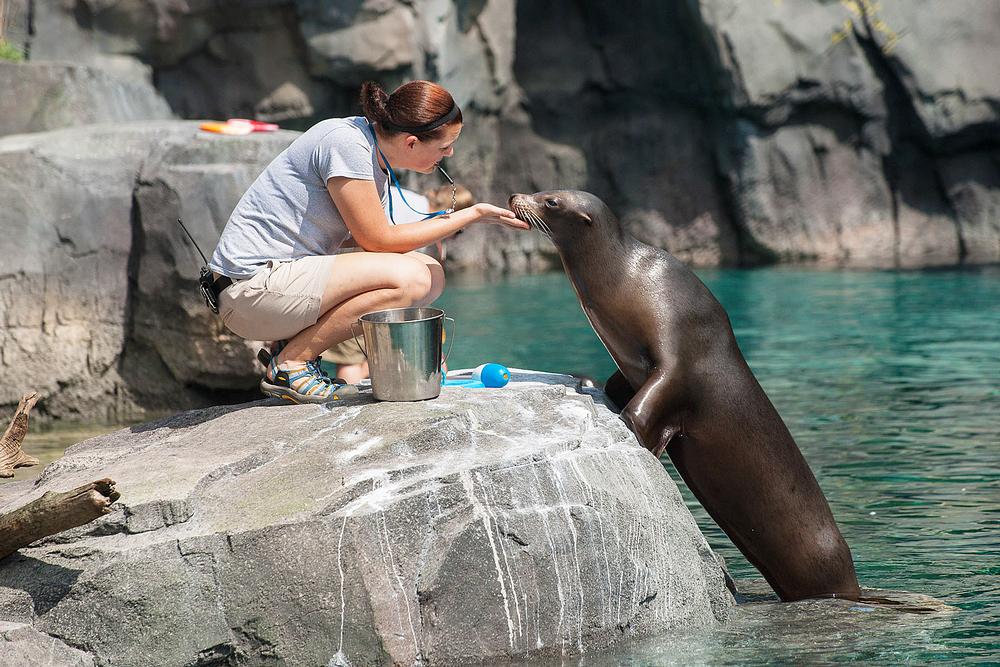
Smithsonian’s National Zoo hosts fun and educational events and celebrations / PHOTO: Mehgan Murphy, Smithsonian's National Zoo
The annual operating and capital outlays of zoos and aquariums accredited by the Association of Zoos and Aquariums (AZA) provides important economic benefits within local and state economies. It also generates important economic benefits nationally and internationally. These economic benefits include growing gross domestic product (GDP), creating wages for workers at the institutions and supporting jobs throughout the economy, as the initial spending by zoos and aquariums is re-spent and re-cycled.
Speculate to accumulate AZA-accredited zoos and aquariums in the US spent $4.6bn (E3.4bn, £2.8bn) in 2012 alone. This spending was divided between annual operations expenditures totalling $3.5bn (E2.6bn, £2.2bn), plus an additional $1.1bn (E809.2m, £683m) in capital improvements – an amount likely to vary by year. Not included in the analysis were the significant spending outlays of concessionaires that provide retail and food services on grounds at these facilities. Including the operating expenses of these businesses would certainly grow the total economic impact of the zoos and aquariums even more.
Another source of important revenue in the community surrounding AZA-accredited zoos and aquariums is the off-site spending of zoo and aquarium guests that occurs in combination with their visits. While not all zoo and aquarium guests combine their visit with other commercial activities, research has shown that some do and that this spending can be significant, particularly when it stems from out-of-town tourists.
The number of people that visited AZA-accredited zoos and aquariums in 2012 was 181.9 million globally – 169.4 million of those people visited an accredited zoo or aquarium in the US. The visit-related, off-site spending of those zoo and aquarium visitors in the US has been estimated at $2.4bn (E1.8bn, £1.5bn).
Economic benefits Therefore, the economic benefit of AZA-accredited zoos and aquariums and their visitors in 2012 can be highlighted as:
Direct expenditures by US AZA-accredited zoos and aquariums of $4.6bn (E3.4bn, £2.8bn) contributed a total of $13.2bn (E9.7bn, £8.2bn) to the United States’ GDP. This is based on the use of a widely accepted aggregate output multiplier of 2.88;
Direct spending generated $4.4bn (E3.2bn, £2.7bn) in wages and salaries for US workers and supported 132,015 jobs in the United States;
Before-and-after visitor spending, estimated to total $2.4bn (E1.8bn, £1.5bn), added an additional $6.6bn (E4.85bn, £4bn) to GDP, generated $2bn (E1.5bn, £1.2bn) in wages and supported 61,971 jobs nationwide.
Total contribution of AZA-accredited zoos and aquariums to the US economy in 2012 was $19.8bn (E14.6bn, £12.3bn), generating personal earnings totaling $6.4bn (E4.7bn, £3.9bn) and supporting 193,986 jobs. Eight of AZA’s 10 international member organisations reported direct annual operating and capital expenditures totaling $490.7m (E360.8m, £304.6m) in 2012. This spending added an estimated $1.1bn (E809.2m, £683m) in aggregate benefits to the economies of these international members’ countries, generated $352m (E259m, £218.5m) in new wages to workers residing locally (in addition to direct payroll outlays) and supported 10,772 jobs across their respective national economies.
These analyses have confirmed that the economic impacts of annual spending by AZA-accredited zoos and aquariums and the visit-related, off-site spending by their guests have benefits that far exceed the value of the initial investments.
These benefits constitute an important source of new income and jobs that contribute broadly across the economy locally and at the state, national and international levels.
Read more from this issue of Spa Business magazine
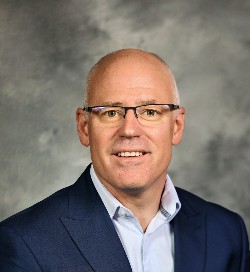
Profile: Joe Schott
The COO of Disneyland Paris talks about
the park's new immersive Ratatouille
dark ride, which is slated to open in 2014,
and how the park has evolved from an
American theme park to a European one
The benefits of zoos and aquariums include new income and jobs that contribute broadly to the economy / PHOTO: Mark Van Bergh, Smithsonian’s National Zoo
Smithsonian’s National Zoo hosts fun and educational events and celebrations / PHOTO: Mehgan Murphy, Smithsonian's National Zoo
The annual operating and capital outlays of zoos and aquariums accredited by the Association of Zoos and Aquariums (AZA) provides important economic benefits within local and state economies. It also generates important economic benefits nationally and internationally. These economic benefits include growing gross domestic product (GDP), creating wages for workers at the institutions and supporting jobs throughout the economy, as the initial spending by zoos and aquariums is re-spent and re-cycled.
Speculate to accumulate AZA-accredited zoos and aquariums in the US spent $4.6bn (E3.4bn, £2.8bn) in 2012 alone. This spending was divided between annual operations expenditures totalling $3.5bn (E2.6bn, £2.2bn), plus an additional $1.1bn (E809.2m, £683m) in capital improvements – an amount likely to vary by year. Not included in the analysis were the significant spending outlays of concessionaires that provide retail and food services on grounds at these facilities. Including the operating expenses of these businesses would certainly grow the total economic impact of the zoos and aquariums even more.
Another source of important revenue in the community surrounding AZA-accredited zoos and aquariums is the off-site spending of zoo and aquarium guests that occurs in combination with their visits. While not all zoo and aquarium guests combine their visit with other commercial activities, research has shown that some do and that this spending can be significant, particularly when it stems from out-of-town tourists.
The number of people that visited AZA-accredited zoos and aquariums in 2012 was 181.9 million globally – 169.4 million of those people visited an accredited zoo or aquarium in the US. The visit-related, off-site spending of those zoo and aquarium visitors in the US has been estimated at $2.4bn (E1.8bn, £1.5bn).
Economic benefits Therefore, the economic benefit of AZA-accredited zoos and aquariums and their visitors in 2012 can be highlighted as:
Direct expenditures by US AZA-accredited zoos and aquariums of $4.6bn (E3.4bn, £2.8bn) contributed a total of $13.2bn (E9.7bn, £8.2bn) to the United States’ GDP. This is based on the use of a widely accepted aggregate output multiplier of 2.88;
Direct spending generated $4.4bn (E3.2bn, £2.7bn) in wages and salaries for US workers and supported 132,015 jobs in the United States;
Before-and-after visitor spending, estimated to total $2.4bn (E1.8bn, £1.5bn), added an additional $6.6bn (E4.85bn, £4bn) to GDP, generated $2bn (E1.5bn, £1.2bn) in wages and supported 61,971 jobs nationwide.
Total contribution of AZA-accredited zoos and aquariums to the US economy in 2012 was $19.8bn (E14.6bn, £12.3bn), generating personal earnings totaling $6.4bn (E4.7bn, £3.9bn) and supporting 193,986 jobs. Eight of AZA’s 10 international member organisations reported direct annual operating and capital expenditures totaling $490.7m (E360.8m, £304.6m) in 2012. This spending added an estimated $1.1bn (E809.2m, £683m) in aggregate benefits to the economies of these international members’ countries, generated $352m (E259m, £218.5m) in new wages to workers residing locally (in addition to direct payroll outlays) and supported 10,772 jobs across their respective national economies.
These analyses have confirmed that the economic impacts of annual spending by AZA-accredited zoos and aquariums and the visit-related, off-site spending by their guests have benefits that far exceed the value of the initial investments.
These benefits constitute an important source of new income and jobs that contribute broadly across the economy locally and at the state, national and international levels.
Read more from this issue of Spa Business magazine
Profile: Joe Schott
The COO of Disneyland Paris talks about
the park's new immersive Ratatouille
dark ride, which is slated to open in 2014,
and how the park has evolved from an
American theme park to a European one
The benefits of zoos and aquariums include new income and jobs that contribute broadly to the economy / PHOTO: Mark Van Bergh, Smithsonian’s National Zoo
Global Wellness Day (GWD) will mark its 15th anniversary on Saturday 13 June 2026, with the
theme: #JoyMagenta – a celebration of the healing qualities of simple gestures and activities
that spark joy.
Global luxury hospitality brand, Six Senses, has partnered with longevity healthcare provider,
HUM2N, to launch a clinic at Six Senses London, at The Whiteley.
As part of its first hotel partnership, Mayrlife – the medical health resort company known for its
site in Altaussee, Austria – has launched a day clinic at the Rosewood Vienna.
Premium London health club, KX Chelsea, will imminently unveil its most significant
redevelopment since its launch in 2002 to create an integrated wellness model combining
training, recovery and relaxation.
Rosewood Le Guanahani St Barth, on the northeast coast of Saint Barthélemy in the French
West Indies, is offering a programme of ocean-inspired yoga classes between 8-14 June to
celebrate Global Wellness Day (GWD).
Hotel de France, located on the British Isle of Jersey, has created a wellness retreat package
that includes a hot yoga session that will take place in Jersey Zoo’s butterfly sanctuary.
The Ritz-Carlton, Langkawi, in Malaysia, has revealed a schedule for Global Wellness Day
(GWD) that includes guided rainforest walks, mindful movement and guided coastal meditation
experiences.
Longevitix, a clinical platform for preventive and longevity medicine, has launched its AI-
powered intelligence system to help physicians deliver continuous, personalised longevity-
focused care at scale.
Atmantan Wellness Centre, an integrative wellness destination in Mulshi, near Pune in India, is
expanding its portfolio by adding a new centre in Hyderabad that will launch between 2028 and
2029.
A recent survey by the UK Spa Association (UKSA) into the industry’s approach to cancer care
has revealed that almost half of participating respondents (46 per cent) are unaware that
cancer is a disability and guests with a cancer diagnosis must be given