WELLSurvey 1.0*, conducted with 1,004 US adults in January 2024, revealed the unique attitudes, beliefs, behaviours and intentions of a market segment christened 'WELLZoomers'* by the authors. Aged between 25 and 44, this cohort of well-seekers is about to redefine the products, services, and experiences sought from industry providers in the years ahead. A deeper understanding of its values, expectations and aspirations is therefore not just warranted, it's essential.
WELLSurvey 2.0 expanded the investigation of this cohort to include similar adults in two other international markets: the UK and Germany. A total of 857 respondents, 51 per cent male and 49 per cent female, participated in the survey from all three countries. Their median annual household income was US$131,000 in the US, £98,000 in the UK and €91,000 in Germany. The survey was fielded online in November 2025.
Convergence of values
WELLSurvey 2.0 revealed a widely accepted commitment to health and wellbeing across this demographic in all three countries. Cultural nuances were apparent – but when the data were examined by age, a more insightful and provocative story emerged, one defined by generational differences.
Across all three markets, WELLZoomers demonstrated a remarkably consistent way of defining, prioritising and engaging with their health. Variance observed within this cohort across the three countries was narrower than the variance observed across the other (older) age groups in any single market. But this was more than demographic segmentation. It reflected a generational convergence of values and behaviours – and signalled a structural shift in how this cohort understands and pursues wellbeing. It also revealed the emergence of a global target market with a well-defined demographic profile and shared value system.
Stress as a catalyst
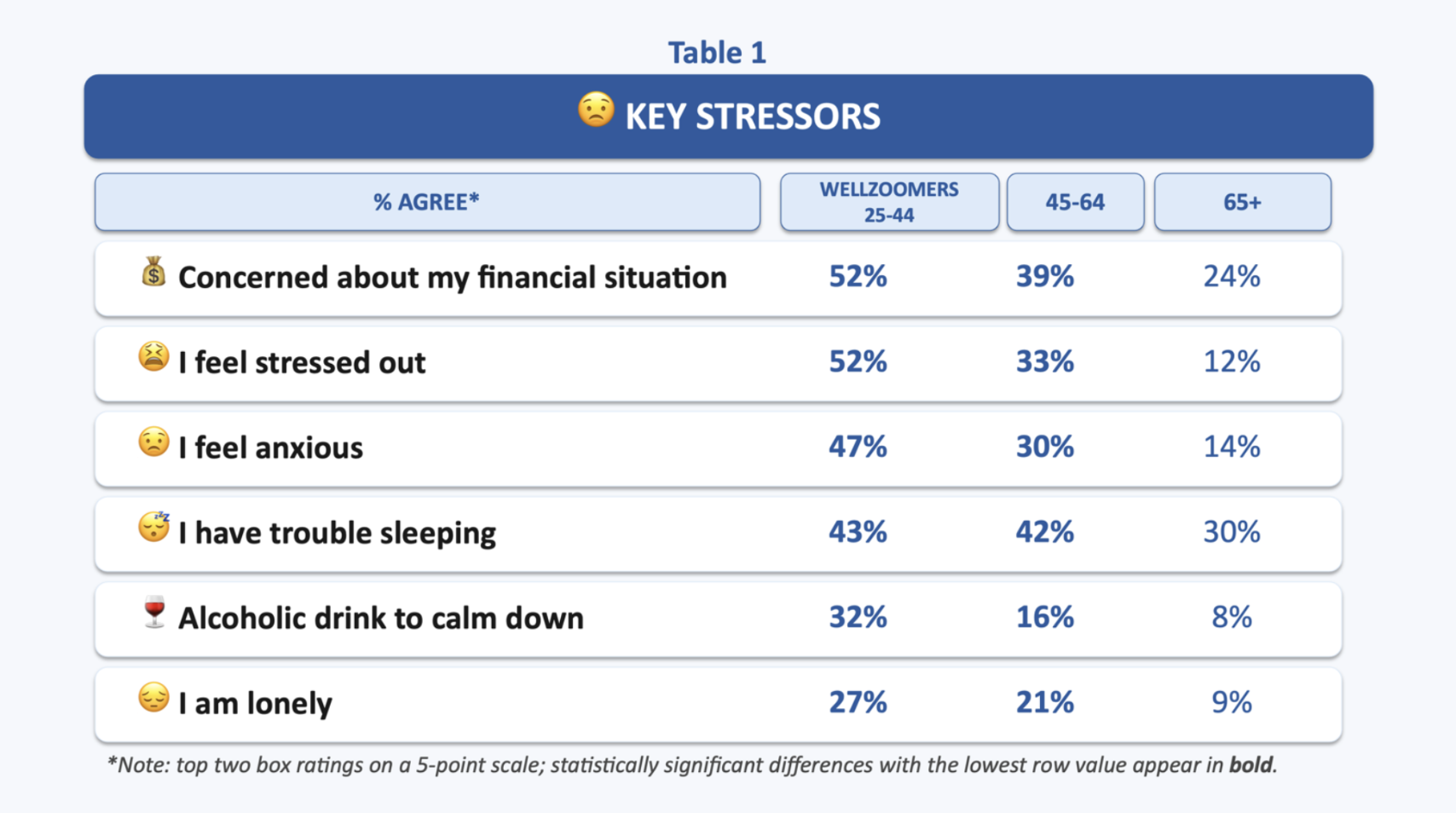
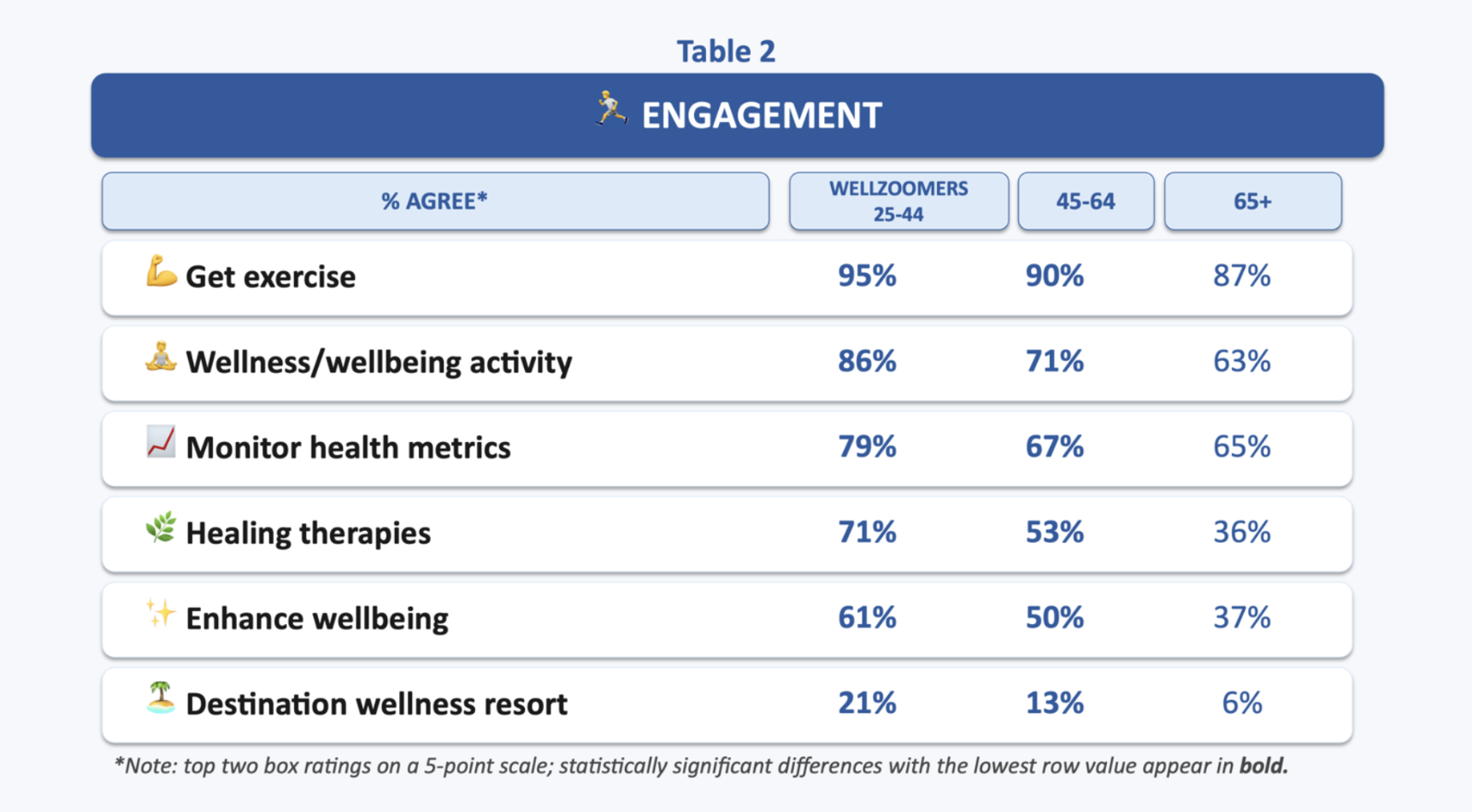
WELLZoomers reported the highest levels of emotional strain of the three age cohorts examined in the survey, as evidenced by the statistically significant differences in their responses to the statements appearing in Table 1 Key Stressors. Yet elevated stress didn't result in behavioural withdrawal. Rather, it corresponded with intensified engagement, as reflected in Table 2 Engagement.
Of note, WELLZoomers reported the highest incidence of interest in 14 of 15 wellness modalities – including massage, water therapies, breathwork, blood panels, Chinese medicine, red light therapy, sound therapy and osteopathic healing.
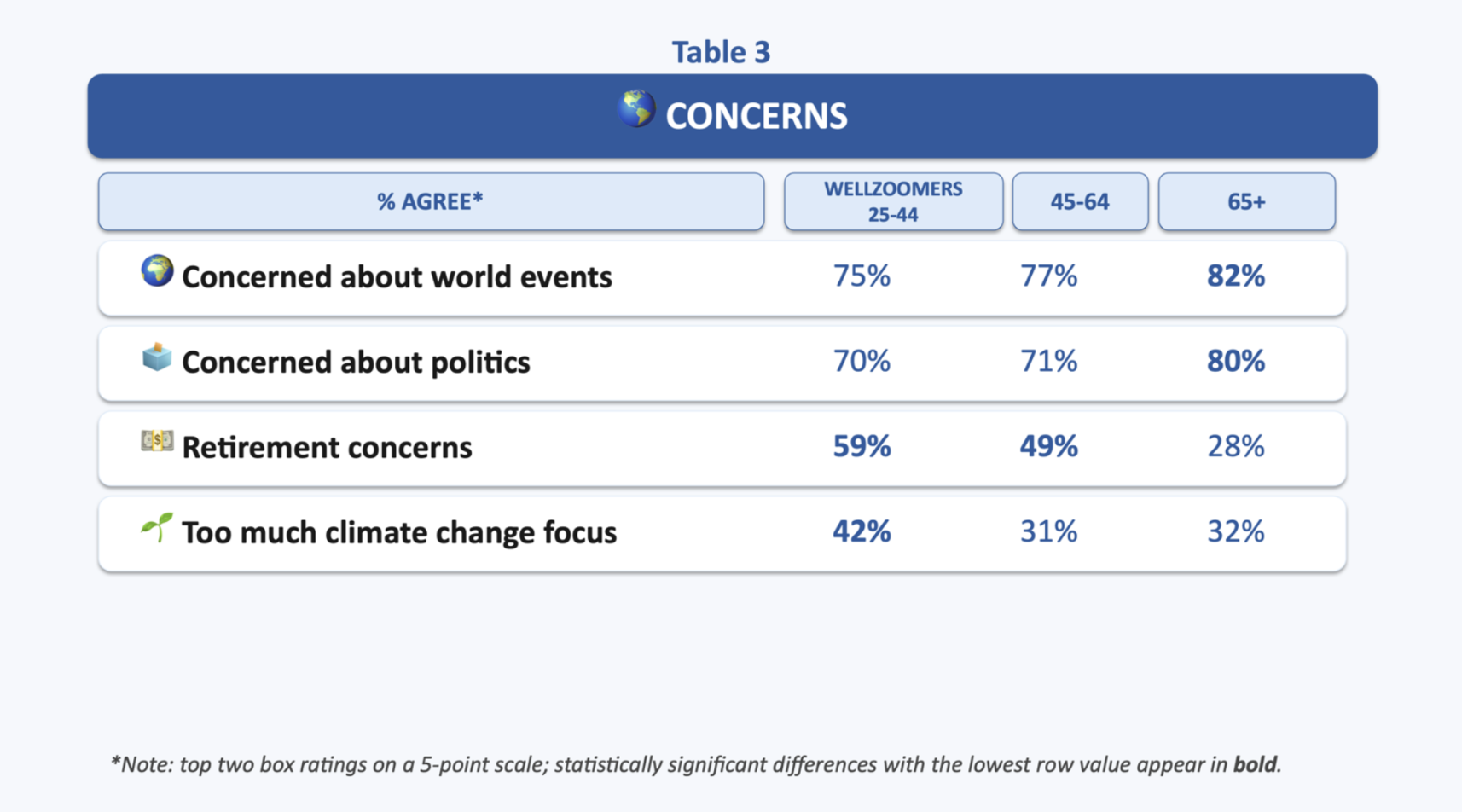
WELLZoomers also expressed concern about the geopolitical and environmental uncertainty that prevails in today’s world, as reflected in Table 3 Concerns, although some of those concerns were shared equally, if not more so, with older cohorts.
Agreement with the statement, “Nothing is perfect, but you make the best of it,” was high across all age groups: 83 per cent among WELLZoomers, although slightly lower than among older respondents. The data, therefore, do not suggest withdrawal as a response to stress. They reveal that elevated strain coexists with intensified participation.
WELLZoomers do not view wellbeing as the outcome of consuming select products, services and experiences. Rather, the results of WELLSurvey 2.0 suggest an emerging effort on the part of WELLZoomers to build an integrated ecosystem supporting their physical, mental and emotional health – their wellbeing – to achieve vibrant health and longevity.
Stress, in this context, is less a force of paralysis and more one of motivation – driving structured interaction with tools and practices that enhance wellbeing.
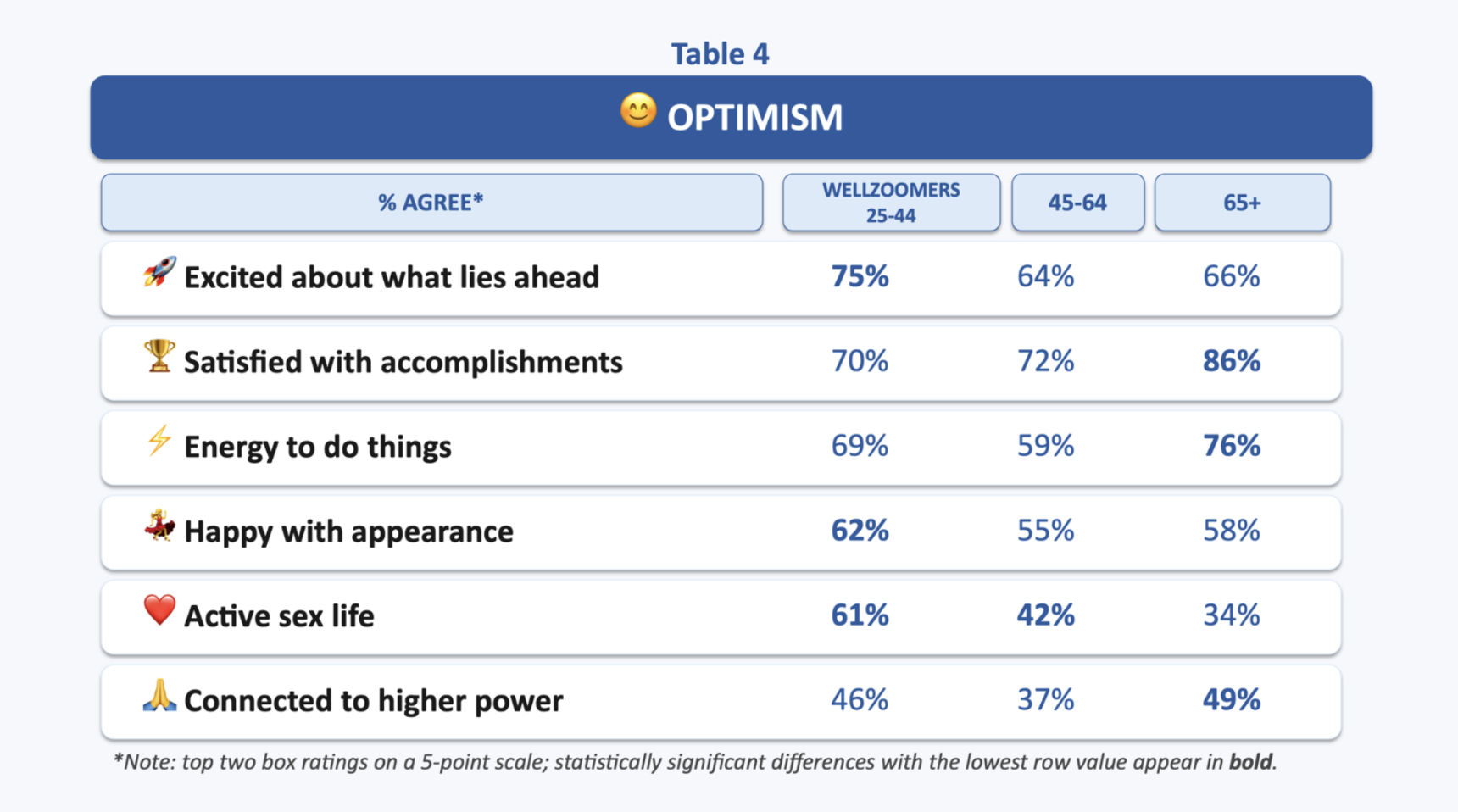
Their anxiety notwithstanding, WELLZoomers also displayed considerable optimism about their future, more so than older cohorts. They also expressed high levels of satisfaction with their accomplishments, physical appearance, energy, and sex life as revealed in Table 4 Optimism.
Emotional anchoring
For WELLZoomers, wellbeing is evaluated through lived experience. Asked how they assess their wellbeing, 79 per cent cited how hopeful, joyful and energised they feel (versus 71 per cent among older cohorts) – an emotional outcome. This anchoring coincides with a shift in how the underlying drivers are understood, visible at two levels of the data.
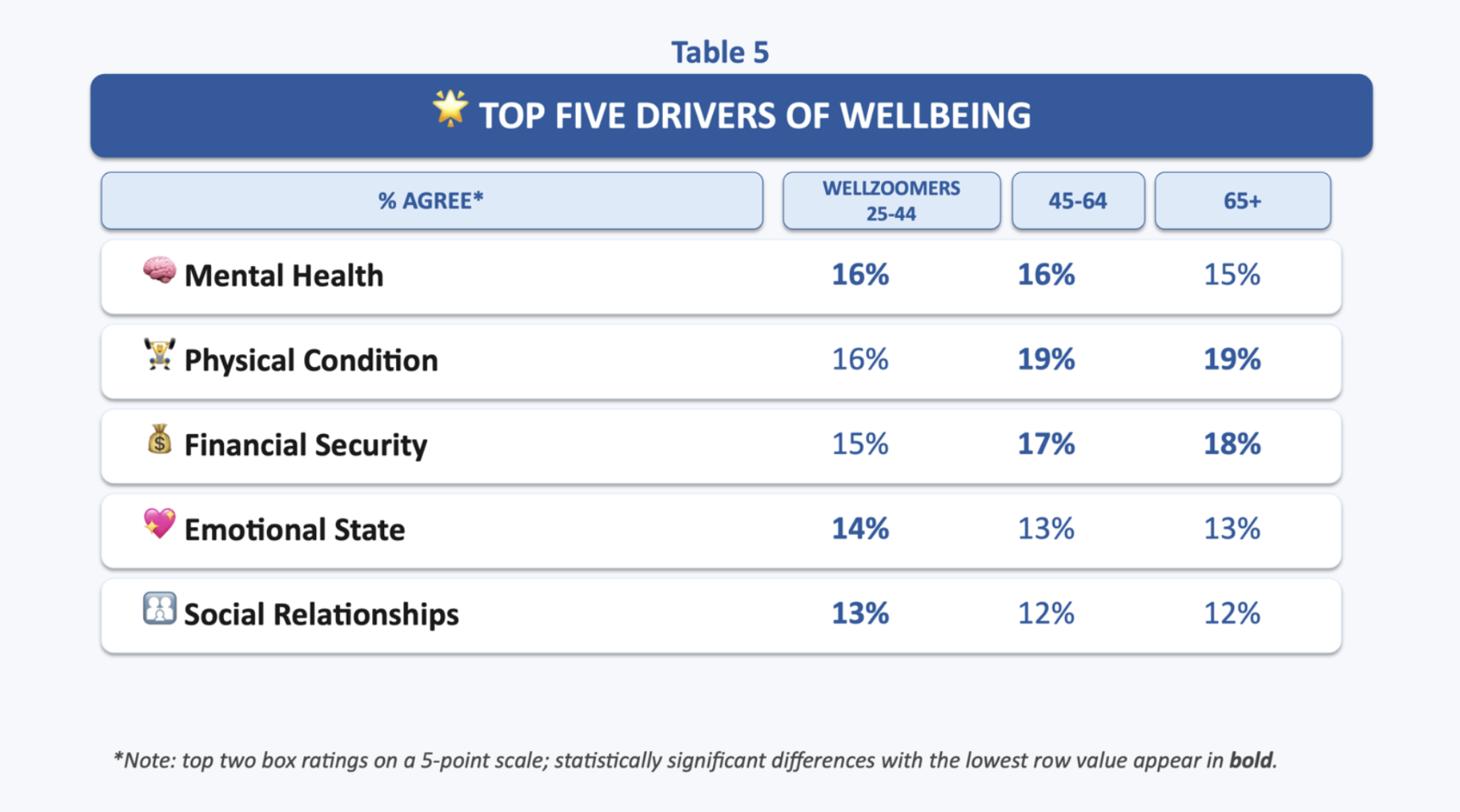
When all age cohorts were asked to allocate 100 points across eight drivers of wellbeing to assess their relative weight, the top five collectively represented three-quarters of the total weight: physical condition (18 per cent), financial security (16 per cent), mental health (16 per cent), emotional state (13 per cent) and social relationships (12 per cent). Rankings by WELLZoomers reflected less differentiation, however, with mental health and physical condition tied at 16 per cent and financial security, emotional state and social relationships in close succession. See Table 5 Top Drivers of Wellbeing.
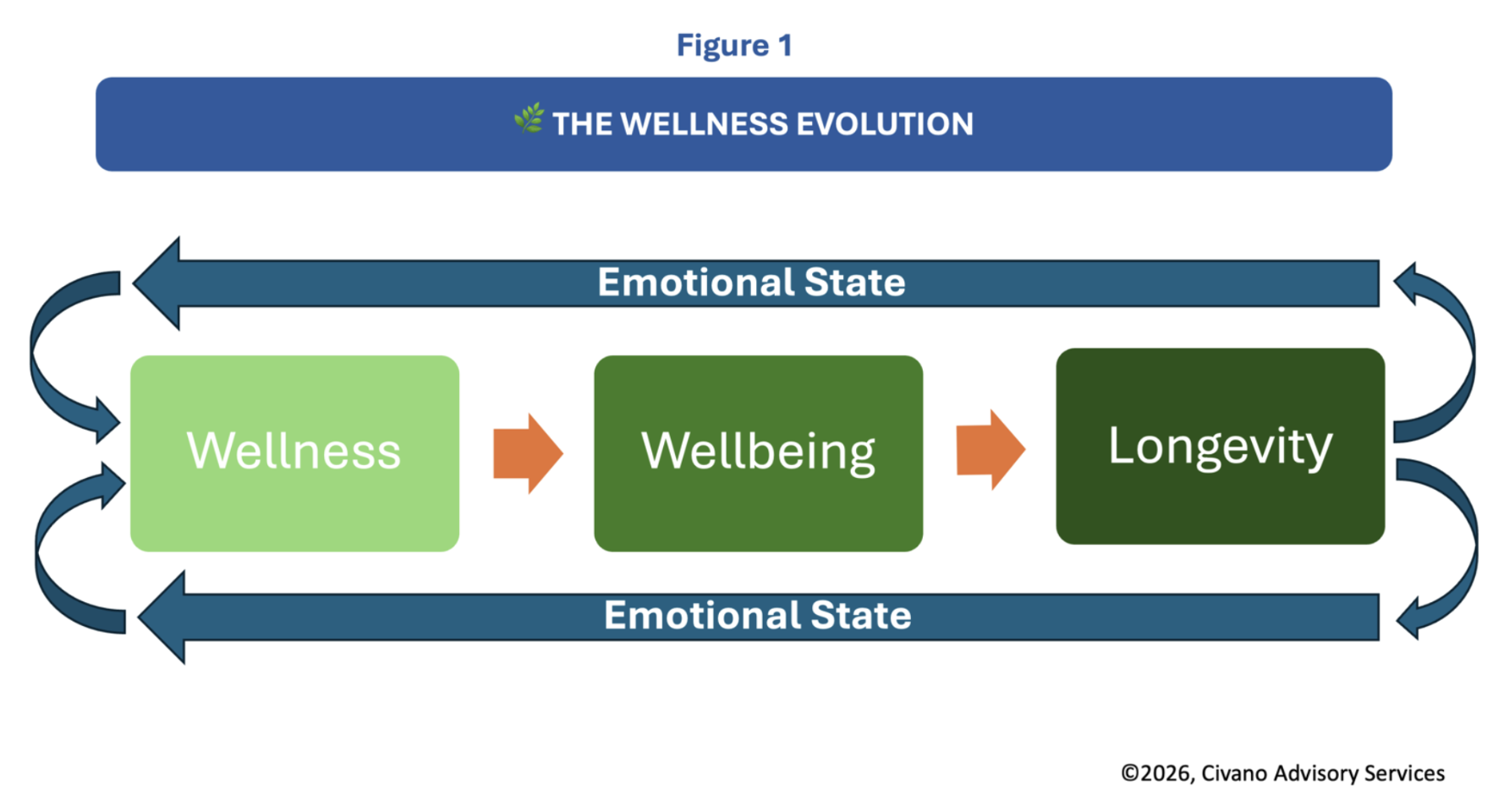
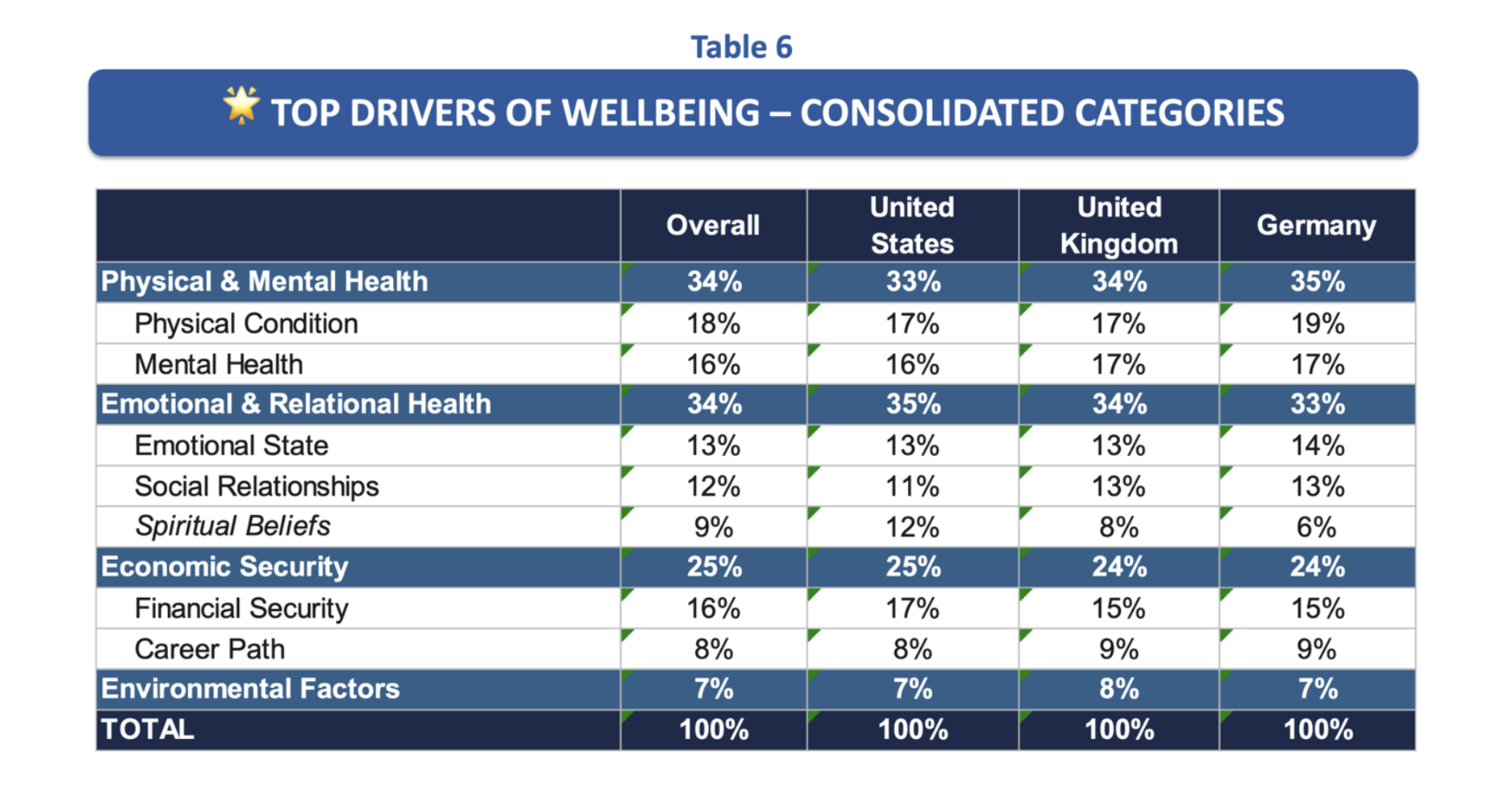
A particularly revealing insight emerged when the eight drivers were consolidated into four related categories - physical and mental health, emotional and relational health, economic security and environmental factors. For all respondents, physical and mental health and emotional and relational health were weighted identically at 34 per cent, with economic security at 25 per cent and environmental factors at 7 per cent. But the results for WELLZoomers were different: emotional and relational health (35 per cent) exceeded physical and mental health (32 per cent). These results, as shown in Table 6 Top Drivers of Wellbeing – Consolidated, suggest WELLZoomers do not separate the physical-and-mental from the emotional-and-relational to the same degree older adults do; they treat both as contributors to a single integrated outcome – durable wellbeing – evaluated by their emotional state. Wellness inputs from multiple channels – wearables, therapies, programmes, products and experiential modalities – function less as independent activities and more as interdependent components in an ecosystem of wellbeing.
The data reveal the following insight: wellness activities are inputs, wellbeing is the integrated outcome, and longevity is a measure of whether that outcome is sustained over time. For product, service and experience providers seeking to serve this cohort, the strategic centre of gravity is their relational dimension – where products, services and experiences must demonstrate they belong. These relationships are shown in Figure 1 Emotional State.
Digital engagement and credibility
This integrative orientation is reinforced by how WELLZoomers accessed and evaluated health-related information. Ninety-five per cent did so through digital or social platforms. Digital engagement was widespread – but trust in the information published or available on those platforms was elusive. For example, when WELLZoomers evaluated the reliability of information appearing on 17 popular social media and digital platforms, only two – YouTube and Podcasts – were cited as publishing reliable information and by only 58 per cent and 55 per cent of respondents, respectively. Usage spanned nearly all platforms tested, yet credibility was concentrated in very few.
Product, service and experience validation claims reflected a similar pattern. Terms such as “clinically proven”, “recommended by a scientist/medical professional” and “evidenced-based” ranked significantly higher in perceived credibility than claims tied to friends, influencers or celebrities. Hence, scientific endorsement is not passively accepted – it functions as a filter.
Having matured through an increasingly digitised lifestyle – where contemporary applications synchronise, dashboards provide feedback, and user experiences are frictionless – WELLZoomers embrace coordination as the norm rather than the exception. Their interaction with health information mirrors the same form of engagement: multiple inputs are accessed, compared, evaluated, filtered and integrated over time. The result is structured synthesis – information filtered and incorporated into a broader personal framework of wellbeing.

WELLZoomers displayed more clarity in their pursuit of wellbeing / AiImaginography
The bridge cohort
WELLZoomers also displayed more clarity in their pursuit of wellbeing. Older cohorts tended to engage more selectively and maintain a conceptual separation between wellness practices and wellbeing outcomes – assembling a toolkit of discrete components. WELLZoomers, by contrast, engaged more broadly and appeared to organise the components into a more integrated approach. This integrative orientation created greater commonality among WELLZoomers across the three geographies tested. Their evaluative logic served to define them as a global, unified and scalable target market segment characterised by emotional urgency, financial agency, digital fluency and preventive orientation. They are the first cohort to internalise wellbeing as an interconnected life architecture rather than a collection of products, services and experiences. They don't simply seek more products and programmes, accumulating them as inputs. Rather, they actively try to coalesce and coordinate them. In this sense, they bridge fragmented wellness markets to create coordinated wellbeing ecosystems.
Scalable market opportunity
WELLZoomers represent a discrete, global market segment of great opportunity because their alignment on values and interests exceeds their cultural divergence. Communications centred on integration, emotional resilience, preventive strategies and long-term vitality will resonate with these individuals across the geographic markets tested with limited structural adaptation – thereby enabling scalable expansion. Equally important, their engagement pattern signals durability. This refers not only to their orientation to longevity, but to their sustained engagement in health-related activities. Their elevated stress exposure, combined with high therapy utilisation, digital health metrics tracking and interest in structured programming, collectively suggest ongoing engagement rather than episodic consumption.
The significant demand for products, services and experiences attributable to WELLZoomers is far greater than calculated in just the three markets tested in this survey because of the similarity of this cohort’s profile in other countries and is estimated to be a breathtaking US$540 billion (€459.3 billion £396.7 billion) worldwide. Further, it's a market segment that's easy to identify, reach and engage. What remains underdeveloped is the coordinated delivery of products, services, experiences, data integration, ecosystem design and messaging to capture it.

For WELLZoomers, wellbeing is not merely the sought outcome of consumption / Shutterstock
Vanguard of future wellbeing consumers
For WELLZoomers, wellbeing is not merely the sought outcome of consumption. It functions as an operating model – a coordinated framework through which emotional regulation, physical health and preventive action are evaluated and pursued together. And this cohort is not just a demographic cluster. Rather, it represents the vanguard of future consumers who will rock the wellness world we know today through their pursuit of integrated wellbeing ecosystems that facilitate their journey toward longevity…while feeling more hopeful, joyful and energised along the way.
*WELLSurvey and WELLZoomers are trademarks of Civano Advisory Services, LLC

WELLSurvey 2.0 revealed a widely accepted commitment to health and wellbeing / Deposit photos