Latest
issue
GET SPA BUSINESS
magazine
Yes! Send me the FREE digital editions of Spa Business and Spa Business insider magazines and the FREE weekly Spa Business and Spa Business insider ezines and breaking news alerts!
Not right now, thanksclose this window I've already subscribed.
Uniting the world of spa & wellness
Get Spa Business and Spa Business insider digital magazines FREE
Sign up here ▸
News   Features   Products   Company profilesProfiles   Press releasesProfiles   Magazine   Handbook   Advertise    Subscribe  
NEWS
Global Wellness Institute outlines how wellness real estate is delivering business and wellbeing benefits
POSTED 07 Oct 2025 . BY Helen Andrews
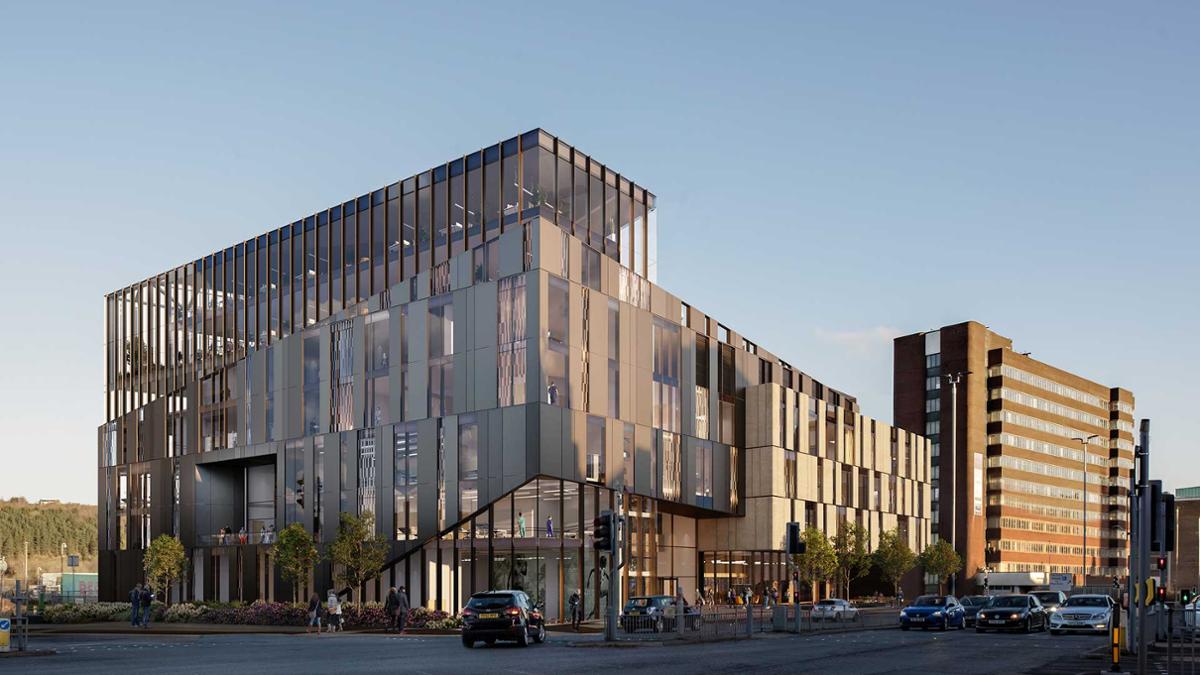
The Daphne Steele Building is a six-floor research building at the UK’s University of Huddersfield’s National Health Innovation Campus with WELL and BREEAM certification Credit: University of Huddersfield
Healthy building design features are a given now, with more attention being paid to mental, social and environmental design and programming
Potential residents are factoring in wellness features when making living arrangements
All case studies profiled by GWI achieved positive returns, with very high occupancy and lease renewal rates
Public transport and access to shops and community spaces while reducing financial burdens for end users is a key element of wellness real estate projects
The Global Wellness Institute (GWI) says wellness is becoming a mainstream priority for real estate developers and prospective residents are factoring wellbeing features into their decision-making.

The GWI’s new report, Build Well to Live Well: Case Studies, Volume 1, outlines thirteen case studies across the US and the UK that demonstrate the wide range of real estate projects with wellness at their core.

The authors hope the different models will inspire more diverse, creative and inclusive projects in the future.

It is a companion report to the second edition of the GWI’s Build Well To Live Well: The Future report, which was published earlier this year.

The first edition of the report, led by Mia Kyricos, was published in 2018.

Key takeaways

Wellness real estate is no longer a niche proposition. Healthy building concepts have been identified by the GWI’s researchers in structures that range from residential, mixed-use, commercial, educational, healthcare and hospitality developments.

Design features that focus on physical wellness are the norm now, with more attention being paid to mental, social and environmental dimensions of a project’s design and programming. This means healthy indoor air, thermal comfort, opportunities for exercise and biophilic design are a given.

Green and healthy building certifications are increasingly overlapping, with many projects seeking multiple accreditations for human and planetary health. These projects include:

• The Daphne Steele Building – a six-floor research building at the UK’s University of Huddersfield’s National Health Innovation Campus (WELL and BREEAM certification),
• The Pearl – an urban multi-family mixed-use community with links to public transport (Fitwel and LEED accreditation)
• Urbanest Battersea Student Accommodation – purpose-built student housing with mixed-use commercial and retail space (WELL, Passivhaus and BREEAM certification)

Adoption of healthy building features is being applied to projects that vary in scale. Some are very small, such as the three-floor detached townhouse, The Picket Fence Concept Home in Pittsburgh, US. Some have thousands of residents, including the Rancho Mission Viejo, a suburban master-planned mixed-use community in Los Angeles, US, with up to 14,000 residences and 5 million sq ft for retail and commercial space.

Wellness can be applied to all kinds of real estate projects by using situational design and operations for specific occupant needs. The American Cancer Society Hope Lodge in Houston, US, tries to maximise views of nature, but does not allow plants inside due to patient sensitivities. Pro-social design can also mean making ground-level units available for shops or community activities, or having a communal kitchen as a social hub.

Wellness benefits for residents are being assessed by operators. The Picket Fence Concept Home was built as a “living lab” and has been able to measure the improvement of indoor air quality for residents by using its two units as control and experimental cases. Additionally, residents at The Pearl say health and wellness features are a factor in their decision to choose the building or extend their lease.

As wellness has become more mainstream, developers are adopting more proactive communications and marketing strategies – advertising the different healthy features on offer at their projects. These messages, some of which can be found on-site on the walls or in newsletters for residents, are nudging people in these communities to engage in healthier behaviours.

All the case studies profiled in the report have achieved positive returns for developers/ owners, including strong buyer demand, rapid sale rates, very high occupancy rates, high lease renewal rates and high levels of occupant/ tenant satisfaction. For some projects, units have been pre-sold with long waiting lists.

Mental wellness is being addressed by a reduction in daily frictions, such as a coherent set of colour schemes at the Daphne Steele Building for enhanced signage and wayfinding throughout the property. The Pearl offers residents the opportunity to rent appliances such as vacuum cleaners from a vending machine, to reduce the need to own these items.

Rather than creating an exclusive set of wellness facilities, these projects have embraced the need for community and social connections by building outdoor public spaces that connect to local shops and public transport.

The financial concerns of the end users of wellness real estate projects are being taken into consideration. In New York City, US, two affordable housing units include Rockaway Village, with 1,700 residential units, and Spring Creek Towers, which has 5,881 units. They each have on-site social services. Public transit-friendly and connected communities also reduce the financial burden of car ownership.

Read the full report here.

For more on wellness and leisure architecture, head over to CLADmag and the CLAD ezine. You can read the magazine and newsfeed here and sign up here.

MORE NEWS
Almost half of spa survey respondents are unaware cancer is a disability and not adapting treatments is discrimination
A recent survey by the UK Spa Association (UKSA) into the industry’s approach to cancer care has revealed that almost half of participating respondents (46 per cent) are unaware that cancer is a disability and guests with a cancer diagnosis must be given
Solmar Hotels and Resorts offers Temazcal ceremony for Global Wellness Day
Mexican operator, Solmar Hotels and Resorts, is hosting a series of events in celebration of Global Wellness Day, including a Temazcal ceremony at its Playa Grande Resort and Spa in Los Cabos.
Mandarin Oriental announces standalone Mansions-branded residences for Abu Dhabi
Mandarin Oriental has announced a standalone residence brand, Mansions, which will debut at Emirates Palace, Mandarin Oriental Mansions, Abu Dhabi, in 2029.
Healing sanctuary Tulah Clinical Wellness opens in Kerala
Tulah Clinical Wellness, a holistic wellness destination, has officially opened in the hills of northern Kerala, India.
+ More news   

FEATURED SUPPLIERS

Endospheres' new protocols are designed to meet real client needs
Spa professionals see it every day: clients are arriving with more complex expectations. [more...]

Spa Life – where spa leaders grow together
The Spa Life UK Convention returns from 21–23 June 2026 at Whittlebury Park Hotel, Spa & Golf Resort, bringing together spa managers, directors and owners for two days of focused education, meaningful connection and commercial insight. [more...]
+ More featured suppliers  
COMPANY PROFILES
bbspa_Group

The technical advice offered by bbspa is delivered via four specialist departments which offer turn [more...]
Hydrafacial

Founded in 1997, Hydrafacial has grown to become one of the world’s leading skin health brands. [more...]
+ More profiles  
CATALOGUE GALLERY
 

+ More catalogues  

DIRECTORY
+ More directory  
DIARY


09-11 Jun 2026

World Sauna Forum 2026

Savutuvan Apaja, Haapaniemi, Finland
09-12 Jun 2026

W3Spa EMEA

Hotel Cascais Miragem Health & Spa, Portugal
+ More diary  
 
ABOUT LEISURE MEDIA
LEISURE MEDIA MAGAZINES
LEISURE MEDIA HANDBOOKS
LEISURE MEDIA WEBSITES
LEISURE MEDIA PRODUCT SEARCH
 
SPA BUSINESS
SPA OPPORTUNITIES
SPA BUSINESS HANDBOOK
PRINT SUBSCRIPTIONS
FREE DIGITAL SUBSCRIPTIONS
ADVERTISE . CONTACT US

Leisure Media
Tel: +44 (0)1462 431385

©Cybertrek 2026
Uniting the world of spa & wellness
Get Spa Business and Spa Business insider digital magazines FREE
Sign up here ▸
News   Products   Magazine   Subscribe
NEWS
Global Wellness Institute outlines how wellness real estate is delivering business and wellbeing benefits
POSTED 07 Oct 2025 . BY Helen Andrews
The Daphne Steele Building is a six-floor research building at the UK’s University of Huddersfield’s National Health Innovation Campus with WELL and BREEAM certification Credit: University of Huddersfield
Healthy building design features are a given now, with more attention being paid to mental, social and environmental design and programming
Potential residents are factoring in wellness features when making living arrangements
All case studies profiled by GWI achieved positive returns, with very high occupancy and lease renewal rates
Public transport and access to shops and community spaces while reducing financial burdens for end users is a key element of wellness real estate projects
The Global Wellness Institute (GWI) says wellness is becoming a mainstream priority for real estate developers and prospective residents are factoring wellbeing features into their decision-making.

The GWI’s new report, Build Well to Live Well: Case Studies, Volume 1, outlines thirteen case studies across the US and the UK that demonstrate the wide range of real estate projects with wellness at their core.

The authors hope the different models will inspire more diverse, creative and inclusive projects in the future.

It is a companion report to the second edition of the GWI’s Build Well To Live Well: The Future report, which was published earlier this year.

The first edition of the report, led by Mia Kyricos, was published in 2018.

Key takeaways

Wellness real estate is no longer a niche proposition. Healthy building concepts have been identified by the GWI’s researchers in structures that range from residential, mixed-use, commercial, educational, healthcare and hospitality developments.

Design features that focus on physical wellness are the norm now, with more attention being paid to mental, social and environmental dimensions of a project’s design and programming. This means healthy indoor air, thermal comfort, opportunities for exercise and biophilic design are a given.

Green and healthy building certifications are increasingly overlapping, with many projects seeking multiple accreditations for human and planetary health. These projects include:

• The Daphne Steele Building – a six-floor research building at the UK’s University of Huddersfield’s National Health Innovation Campus (WELL and BREEAM certification),
• The Pearl – an urban multi-family mixed-use community with links to public transport (Fitwel and LEED accreditation)
• Urbanest Battersea Student Accommodation – purpose-built student housing with mixed-use commercial and retail space (WELL, Passivhaus and BREEAM certification)

Adoption of healthy building features is being applied to projects that vary in scale. Some are very small, such as the three-floor detached townhouse, The Picket Fence Concept Home in Pittsburgh, US. Some have thousands of residents, including the Rancho Mission Viejo, a suburban master-planned mixed-use community in Los Angeles, US, with up to 14,000 residences and 5 million sq ft for retail and commercial space.

Wellness can be applied to all kinds of real estate projects by using situational design and operations for specific occupant needs. The American Cancer Society Hope Lodge in Houston, US, tries to maximise views of nature, but does not allow plants inside due to patient sensitivities. Pro-social design can also mean making ground-level units available for shops or community activities, or having a communal kitchen as a social hub.

Wellness benefits for residents are being assessed by operators. The Picket Fence Concept Home was built as a “living lab” and has been able to measure the improvement of indoor air quality for residents by using its two units as control and experimental cases. Additionally, residents at The Pearl say health and wellness features are a factor in their decision to choose the building or extend their lease.

As wellness has become more mainstream, developers are adopting more proactive communications and marketing strategies – advertising the different healthy features on offer at their projects. These messages, some of which can be found on-site on the walls or in newsletters for residents, are nudging people in these communities to engage in healthier behaviours.

All the case studies profiled in the report have achieved positive returns for developers/ owners, including strong buyer demand, rapid sale rates, very high occupancy rates, high lease renewal rates and high levels of occupant/ tenant satisfaction. For some projects, units have been pre-sold with long waiting lists.

Mental wellness is being addressed by a reduction in daily frictions, such as a coherent set of colour schemes at the Daphne Steele Building for enhanced signage and wayfinding throughout the property. The Pearl offers residents the opportunity to rent appliances such as vacuum cleaners from a vending machine, to reduce the need to own these items.

Rather than creating an exclusive set of wellness facilities, these projects have embraced the need for community and social connections by building outdoor public spaces that connect to local shops and public transport.

The financial concerns of the end users of wellness real estate projects are being taken into consideration. In New York City, US, two affordable housing units include Rockaway Village, with 1,700 residential units, and Spring Creek Towers, which has 5,881 units. They each have on-site social services. Public transit-friendly and connected communities also reduce the financial burden of car ownership.

Read the full report here.

For more on wellness and leisure architecture, head over to CLADmag and the CLAD ezine. You can read the magazine and newsfeed here and sign up here.

MORE NEWS
Almost half of spa survey respondents are unaware cancer is a disability and not adapting treatments is discrimination
A recent survey by the UK Spa Association (UKSA) into the industry’s approach to cancer care has revealed that almost half of participating respondents (46 per cent) are unaware that cancer is a disability and guests with a cancer diagnosis must be given
Solmar Hotels and Resorts offers Temazcal ceremony for Global Wellness Day
Mexican operator, Solmar Hotels and Resorts, is hosting a series of events in celebration of Global Wellness Day, including a Temazcal ceremony at its Playa Grande Resort and Spa in Los Cabos.
Mandarin Oriental announces standalone Mansions-branded residences for Abu Dhabi
Mandarin Oriental has announced a standalone residence brand, Mansions, which will debut at Emirates Palace, Mandarin Oriental Mansions, Abu Dhabi, in 2029.
Healing sanctuary Tulah Clinical Wellness opens in Kerala
Tulah Clinical Wellness, a holistic wellness destination, has officially opened in the hills of northern Kerala, India.
Four Seasons Resort The Nam Hai creates Global Wellness Day programme rooted in nature
Four Seasons Resort The Nam Hai in Hoi An, Vietnam, has put together a Global Wellness Day (GWD) agenda with activations rooted in nature and shaped by four pillars of Joy – in alignment with the day’s theme #JoyMagenta.
Wellness care hospital opens in Vilnius with innovative spa and hospitality concept
Lithuanian care operator Addere Care has launched a new “wellness care hospital” in Vilnius.
+ More news   
 
FEATURED SUPPLIERS

Endospheres' new protocols are designed to meet real client needs
Spa professionals see it every day: clients are arriving with more complex expectations. [more...]

Spa Life – where spa leaders grow together
The Spa Life UK Convention returns from 21–23 June 2026 at Whittlebury Park Hotel, Spa & Golf Resort, bringing together spa managers, directors and owners for two days of focused education, meaningful connection and commercial insight. [more...]
+ More featured suppliers  
COMPANY PROFILES
bbspa_Group

The technical advice offered by bbspa is delivered via four specialist departments which offer turn [more...]
+ More profiles  
CATALOGUE GALLERY
+ More catalogues  

DIRECTORY
+ More directory  
DIARY


09-11 Jun 2026

World Sauna Forum 2026

Savutuvan Apaja, Haapaniemi, Finland
09-12 Jun 2026

W3Spa EMEA

Hotel Cascais Miragem Health & Spa, Portugal
+ More diary  


ADVERTISE . CONTACT US

Leisure Media
Tel: +44 (0)1462 431385

©Cybertrek 2026

ABOUT LEISURE MEDIA
LEISURE MEDIA MAGAZINES
LEISURE MEDIA HANDBOOKS
LEISURE MEDIA WEBSITES
LEISURE MEDIA PRODUCT SEARCH
PRINT SUBSCRIPTIONS
FREE DIGITAL SUBSCRIPTIONS