Latest
issue
Uniting the world of spa & wellness
Get Spa Business and Spa Business insider digital magazines FREE
Sign up here ▸
News   Features   Products   Company profilesProfiles   Press releasesProfiles   Magazine   Handbook   Advertise    Subscribe  
NEWS
Children and young people are significantly more active when they have a positive attitude to exercise
POSTED 05 Dec 2024 . BY Kath Hudson
Horizon Leisure is running special programmes for children Credit: Horizon Leisure
Active Lives Children and Young People Survey for the academic year 2023-2024 found children are more likely to be active if they have a positive attitude to exercise
Activity levels have remained unchanged for two consecutive years across the board
Just 70 per cent of children can swim 25 metres when they leave primary school
Socio-economic status, gender and ethnicity continue to impact participation
Sport England’s Active Lives Children and Young People Survey for the academic year 2023-2024 has found that one of the biggest determinants of physical activity levels is children having positive attitudes towards exercise.

The annual report summarises sport and physical activity behaviours of 5- to 16-year-olds in the UK. The definition of physical activity covers fitness activities, gym, dance, cycling, sport, walking, scooting, active travel, team sports, swimming, active play and informal activity.

Researchers found that where children had three or more positive attitudes towards physical activity (counted as happiness, resilience and trust), 62 per cent were active, 17 per cent were fairly active and 21 per cent were less active.

However, where they had zero positive attitudes, only 34 per cent were active, 23 per cent fairly active and 44 per cent less active, demonstrating how important mental attitude is when it comes to developing healthy lifestyle habits.

When it comes to participation levels, the insight shows the situation is stable, with 70.5 per cent of children defined as either Active (60 minutes a day +) or Fairly Active (30 - 60 minutes a day).

Breaking down the 70.5 per cent, the report found that slightly less than half of children and young people – 47.8 per cent – are doing an average of 60 minutes of activity or more each day – the level recommended by the Chief Medical Officer. A further 22.7 per cent are fairly active (30-59 minutes a day) and 29.6 per cent do less than 30 minutes of activity a day.

Activity levels have remained largely unchanged for the last four years – something Sport England says it's tackling with its strategy, Uniting the Movement – although they're 4.5 per cent higher than in 2017-18 when the research began.

Sport England's chief strategy officer, Nick Pontefract, says: “While this is an improvement on the position seen when our survey first began, in recent years we have not seen the gains that so many in our sector have been striving for.”

As a result of earlier growth, 12 per cent more children and young people are taking part in gym and fitness activities, which equates to 832,000 more individuals, than six years ago. However, this figure hasn’t increased in the last 12 months.

Active play, team sports and swimming all have underlying flat trends over the longer term and are similar to 2017-2018 levels.

It’s a cause for concern that only 70 per cent of 11-year-olds can confidently swim for 25 metres when they leave primary school. This is 4.7 per cent less than six years ago.

In the last 12 months, running and gymnastics have experienced a slight drop and following two years of decline, cycling has stabilised in the last year, but is still 5 per cent below 2017-18 levels.

There are a some heartening gains

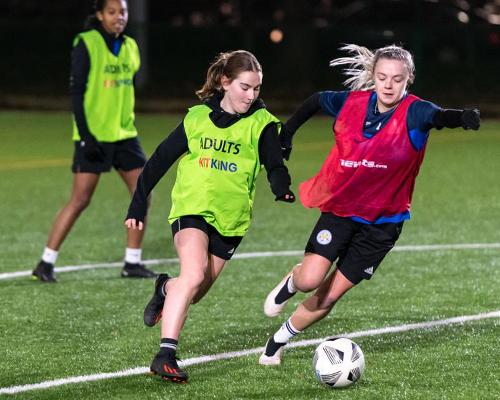
Teenage girls have seen greater long-term growth activity than teenage boys, which has seen the gender gap narrow in the last six years (to 6.8 per cent from 9.5 per cent).

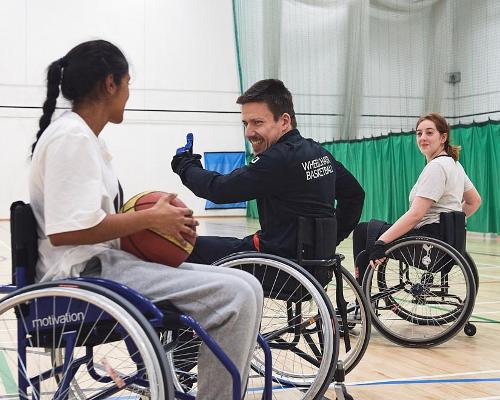
Children and young people with a disability or long-term health condition are equally likely to be as active as those without one. Activity levels have increased by more for children and young people with a disability or long-term health condition than for those without (4.1 per cent vs 3.2 per cent.)

There has been a small – 2.8 per cent – increase in activity levels among Asian children and young people compared to 12 months ago, which has been driven by Asian girls.

Physical activity levels in schools have seen some positive gains, with activity during school hours seeing steady increases between 2017-18 and 2021-22.

As a result, the proportion of children who are active during school hours has increased by 5.1 per cent, or 329,000 more active
children and young people compared to six years ago (academic year 2017-18).

Inequalities also persist

Girls are less likely to be active than boys.

Those from the most affluent households are most likely to be active (57 per cent) and those from the least affluent are least likely to be active.

Young people from a white or mixed background are more likely to be active than Black or Asian children.

Those with two or more "characteristics of inequality" are significantly less likely to be active than their peers with no characteristics of inequality. Activity levels have remained unchanged for all three groups since 2021-22.

Government action needed

Sport England chief executive, Tim Hollingsworth, says: “For the pandemic generation, COVID-19 has had a fundamental impact. The data shows that, for the children whose impressionable early years were defined by lockdowns and lack of activities, attitudes towards sport and physical activity are distinctly negative.

“The challenge is huge - with issues such as rising obesity levels and rising cost-of-living damaging children’s health prospects too – but so is the opportunity. An active generation is critical to the government’s missions because active children turn into active adults, helping our NHS and improving the long-term health and wealth of our country.

“Sport England will continue to play its part in solving these challenges, but we cannot do it alone. We look forward to working with the government and everyone who cares about future generations to drive the changes we need.”

UK Active CEO, Huw Edwards, says that without government intervention, the next generation will grow up with low activity levels, posing a serious threat to their future health and prospects: “As a minimum, the government must commit to continue support for existing programmes, such as the Opening School Facilities programme, the Holiday Activities and Food Programme and the PE and School Sports Premium, but to really have an impact, the vision and support must go much further.

“This will require a collective effort from the government and its agencies, working in collaboration with the sector across society to meaningfully shift the dial on children’s activity levels. We are ready to play our fullest role in delivering change."

You can read the report here

RELATED STORIES
  Sport England research shows active people are saving the NHS and social care £10.5 billion a year


Sport and physical activity creates annual savings of £10.5 billion for the NHS and social care, according to Sport England research published today (22 October).
  Sport England’s Active Lives insight finds record activity levels, but enduring health inequalities


While British adults are the most active they’ve been in a decade, health inequalities remain with the same groups missing out, according to Sport England’s latest Active Lives Adults Report.
  Teenage girls are getting more active – the highlight of the new Active Lives survey from Sport England


Physical activity levels among children and young people have improved compared to five years ago, according to Sport England’s Active Lives Children and Young People Report 22-23, which was published today (7 December 2023).
MORE NEWS
The Good Spa Guide sets up event for modified Good Spa Guide Awards
The UK spa review and discovery platform for consumers, the Good Spa Guide, has announced it will host the Good Spa Guide Awards 2026 during an event on 16 November at Sopwell House Hotel in St Albans, UK.
McKinsey: 84 per cent of consumers say wellness is a top priority
Eighty-four per cent of consumers now say wellness is a top priority in their lives, with this percentage increasing year on year, according to a preview presentation of McKinsey’s Future of Wellness 2026 research report.
Protests continue in Albania against US$1.6 billion luxury resort backed by Jared Kushner and Ivanka Trump
Mass protests have been taking place since Monday 1 June in Albania over the development of a luxury resort by Donald Trump’s daughter Ivanka Trump and her husband Jared Kushner.
Barons Eden rebrands to Hiddenwell ahead of spa hotel portfolio expansion
Barons Eden, the UK parent company that operates luxury destination properties in England, has rebranded to become Hiddenwell.
+ More news   

FEATURED SUPPLIERS

Endospheres' new protocols are designed to meet real client needs
Spa professionals see it every day: clients are arriving with more complex expectations. [more...]

Meet Desert Therapy: Aromatherapy Associates' first new blend in seven years
There is a particular quality of stillness found only in the desert. [more...]
+ More featured suppliers  
COMPANY PROFILES
AKT Group

AKT Group is the Franco–Italian parent company of SKYY, C.O.D.E. and AKTMe, operating as an integrat [more...]
Life Fitness/Hammer Strength

Life Fitness / Hammer Strength works with some of the world’s most recognised hospitality brands, su [more...]
+ More profiles  
CATALOGUE GALLERY
 

+ More catalogues  

DIRECTORY
+ More directory  
DIARY


21-23 Jun 2026

Spa Life International (UK)

Midlands (Venue TBA), Liphook, United Kingdom
22-22 Jun 2026

World Bathing Day

Worldwide,
+ More diary  
 
ABOUT LEISURE MEDIA
LEISURE MEDIA MAGAZINES
LEISURE MEDIA HANDBOOKS
LEISURE MEDIA WEBSITES
LEISURE MEDIA PRODUCT SEARCH
 
SPA BUSINESS
SPA OPPORTUNITIES
SPA BUSINESS HANDBOOK
PRINT SUBSCRIPTIONS
FREE DIGITAL SUBSCRIPTIONS
ADVERTISE . CONTACT US

Leisure Media
Tel: +44 (0)1462 431385

©Cybertrek 2026
Uniting the world of spa & wellness
Get Spa Business and Spa Business insider digital magazines FREE
Sign up here ▸
News   Products   Magazine   Subscribe
NEWS
Children and young people are significantly more active when they have a positive attitude to exercise
POSTED 05 Dec 2024 . BY Kath Hudson
Horizon Leisure is running special programmes for children Credit: Horizon Leisure
Active Lives Children and Young People Survey for the academic year 2023-2024 found children are more likely to be active if they have a positive attitude to exercise
Activity levels have remained unchanged for two consecutive years across the board
Just 70 per cent of children can swim 25 metres when they leave primary school
Socio-economic status, gender and ethnicity continue to impact participation
Sport England’s Active Lives Children and Young People Survey for the academic year 2023-2024 has found that one of the biggest determinants of physical activity levels is children having positive attitudes towards exercise.

The annual report summarises sport and physical activity behaviours of 5- to 16-year-olds in the UK. The definition of physical activity covers fitness activities, gym, dance, cycling, sport, walking, scooting, active travel, team sports, swimming, active play and informal activity.

Researchers found that where children had three or more positive attitudes towards physical activity (counted as happiness, resilience and trust), 62 per cent were active, 17 per cent were fairly active and 21 per cent were less active.

However, where they had zero positive attitudes, only 34 per cent were active, 23 per cent fairly active and 44 per cent less active, demonstrating how important mental attitude is when it comes to developing healthy lifestyle habits.

When it comes to participation levels, the insight shows the situation is stable, with 70.5 per cent of children defined as either Active (60 minutes a day +) or Fairly Active (30 - 60 minutes a day).

Breaking down the 70.5 per cent, the report found that slightly less than half of children and young people – 47.8 per cent – are doing an average of 60 minutes of activity or more each day – the level recommended by the Chief Medical Officer. A further 22.7 per cent are fairly active (30-59 minutes a day) and 29.6 per cent do less than 30 minutes of activity a day.

Activity levels have remained largely unchanged for the last four years – something Sport England says it's tackling with its strategy, Uniting the Movement – although they're 4.5 per cent higher than in 2017-18 when the research began.

Sport England's chief strategy officer, Nick Pontefract, says: “While this is an improvement on the position seen when our survey first began, in recent years we have not seen the gains that so many in our sector have been striving for.”

As a result of earlier growth, 12 per cent more children and young people are taking part in gym and fitness activities, which equates to 832,000 more individuals, than six years ago. However, this figure hasn’t increased in the last 12 months.

Active play, team sports and swimming all have underlying flat trends over the longer term and are similar to 2017-2018 levels.

It’s a cause for concern that only 70 per cent of 11-year-olds can confidently swim for 25 metres when they leave primary school. This is 4.7 per cent less than six years ago.

In the last 12 months, running and gymnastics have experienced a slight drop and following two years of decline, cycling has stabilised in the last year, but is still 5 per cent below 2017-18 levels.

There are a some heartening gains

Teenage girls have seen greater long-term growth activity than teenage boys, which has seen the gender gap narrow in the last six years (to 6.8 per cent from 9.5 per cent).

Children and young people with a disability or long-term health condition are equally likely to be as active as those without one. Activity levels have increased by more for children and young people with a disability or long-term health condition than for those without (4.1 per cent vs 3.2 per cent.)

There has been a small – 2.8 per cent – increase in activity levels among Asian children and young people compared to 12 months ago, which has been driven by Asian girls.

Physical activity levels in schools have seen some positive gains, with activity during school hours seeing steady increases between 2017-18 and 2021-22.

As a result, the proportion of children who are active during school hours has increased by 5.1 per cent, or 329,000 more active
children and young people compared to six years ago (academic year 2017-18).

Inequalities also persist

Girls are less likely to be active than boys.

Those from the most affluent households are most likely to be active (57 per cent) and those from the least affluent are least likely to be active.

Young people from a white or mixed background are more likely to be active than Black or Asian children.

Those with two or more "characteristics of inequality" are significantly less likely to be active than their peers with no characteristics of inequality. Activity levels have remained unchanged for all three groups since 2021-22.

Government action needed

Sport England chief executive, Tim Hollingsworth, says: “For the pandemic generation, COVID-19 has had a fundamental impact. The data shows that, for the children whose impressionable early years were defined by lockdowns and lack of activities, attitudes towards sport and physical activity are distinctly negative.

“The challenge is huge - with issues such as rising obesity levels and rising cost-of-living damaging children’s health prospects too – but so is the opportunity. An active generation is critical to the government’s missions because active children turn into active adults, helping our NHS and improving the long-term health and wealth of our country.

“Sport England will continue to play its part in solving these challenges, but we cannot do it alone. We look forward to working with the government and everyone who cares about future generations to drive the changes we need.”

UK Active CEO, Huw Edwards, says that without government intervention, the next generation will grow up with low activity levels, posing a serious threat to their future health and prospects: “As a minimum, the government must commit to continue support for existing programmes, such as the Opening School Facilities programme, the Holiday Activities and Food Programme and the PE and School Sports Premium, but to really have an impact, the vision and support must go much further.

“This will require a collective effort from the government and its agencies, working in collaboration with the sector across society to meaningfully shift the dial on children’s activity levels. We are ready to play our fullest role in delivering change."

You can read the report here

RELATED STORIES
Sport England research shows active people are saving the NHS and social care £10.5 billion a year


Sport and physical activity creates annual savings of £10.5 billion for the NHS and social care, according to Sport England research published today (22 October).
Sport England’s Active Lives insight finds record activity levels, but enduring health inequalities


While British adults are the most active they’ve been in a decade, health inequalities remain with the same groups missing out, according to Sport England’s latest Active Lives Adults Report.
Teenage girls are getting more active – the highlight of the new Active Lives survey from Sport England


Physical activity levels among children and young people have improved compared to five years ago, according to Sport England’s Active Lives Children and Young People Report 22-23, which was published today (7 December 2023).
MORE NEWS
The Good Spa Guide sets up event for modified Good Spa Guide Awards
The UK spa review and discovery platform for consumers, the Good Spa Guide, has announced it will host the Good Spa Guide Awards 2026 during an event on 16 November at Sopwell House Hotel in St Albans, UK.
McKinsey: 84 per cent of consumers say wellness is a top priority
Eighty-four per cent of consumers now say wellness is a top priority in their lives, with this percentage increasing year on year, according to a preview presentation of McKinsey’s Future of Wellness 2026 research report.
Protests continue in Albania against US$1.6 billion luxury resort backed by Jared Kushner and Ivanka Trump
Mass protests have been taking place since Monday 1 June in Albania over the development of a luxury resort by Donald Trump’s daughter Ivanka Trump and her husband Jared Kushner.
Barons Eden rebrands to Hiddenwell ahead of spa hotel portfolio expansion
Barons Eden, the UK parent company that operates luxury destination properties in England, has rebranded to become Hiddenwell.
Belgin Aksoy marks 15 years of Global Wellness Day
Global Wellness Day (GWD) marked its 15th anniversary on Saturday 13 June 2026, with the theme: #JoyMagenta – a celebration of the healing qualities of simple gestures and activities that spark joy.
HUM2N launches longevity clinic at Six Senses London
Global luxury hospitality brand, Six Senses, has partnered with longevity healthcare provider, HUM2N, to launch a clinic at Six Senses London, at The Whiteley.
+ More news   
 
FEATURED SUPPLIERS

Endospheres' new protocols are designed to meet real client needs
Spa professionals see it every day: clients are arriving with more complex expectations. [more...]

Meet Desert Therapy: Aromatherapy Associates' first new blend in seven years
There is a particular quality of stillness found only in the desert. [more...]

+ More featured suppliers  

COMPANY PROFILES
AKT Group

AKT Group is the Franco–Italian parent company of SKYY, C.O.D.E. and AKTMe, operating as an integrat [more...]

+ More profiles  
CATALOGUE GALLERY
+ More catalogues  

DIRECTORY
+ More directory  
DIARY


21-23 Jun 2026

Spa Life International (UK)

Midlands (Venue TBA), Liphook, United Kingdom
22-22 Jun 2026

World Bathing Day

Worldwide,
+ More diary  


ADVERTISE . CONTACT US

Leisure Media
Tel: +44 (0)1462 431385

©Cybertrek 2026

ABOUT LEISURE MEDIA
LEISURE MEDIA MAGAZINES
LEISURE MEDIA HANDBOOKS
LEISURE MEDIA WEBSITES
LEISURE MEDIA PRODUCT SEARCH
PRINT SUBSCRIPTIONS
FREE DIGITAL SUBSCRIPTIONS