Latest
issue
GET SPA BUSINESS
magazine
Yes! Send me the FREE digital editions of Spa Business and Spa Business insider magazines and the FREE weekly Spa Business and Spa Business insider ezines and breaking news alerts!
Not right now, thanksclose this window I've already subscribed.
Uniting the world of spa & wellness
Get Spa Business and Spa Business insider digital magazines FREE
Sign up here ▸
News   Features   Products   Company profilesProfiles   Press releasesProfiles   Magazine   Handbook   Advertise    Subscribe  
NEWS
Timing of exercise 'more important' than type or length, in order to ensure health benefits
POSTED 17 May 2023 . BY Tom Walker
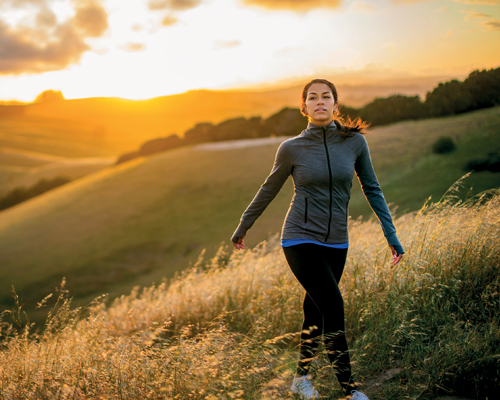
A high relative physical activity during morning hours (8am – 11am) was associated with lower risks of cardiovascular disease Credit: Shutterstock/Dusan Petkovic
The optimal time of day to exercise, in order to gain health benefits, is between 8am and 11am
The finding come from a study published in the European Journal of Preventative Cardiology
The study shows that timing exercise sessions to match the body’s circadian rhythms is more important than the type of exercise
The findings were same for both "night owls" or "morning larks"
To fully benefit from exercise, timing sessions to optimally match the body’s circadian rhythms is more important than the type or duration of the exercise, according to a report.

A study published in the European Journal of Preventative Cardiology found that for getting the best benefit from exercise – in terms of preventing heart disease and stroke – the optimal time of day to move is between 8am and 11am.

For the study, researchers – led by Gali Albalak at the Leiden University Medical Center – monitored 86,657 participants aged 42-76 over a period of six years, using wearable trackers to chart heart-rate data.

During follow-up, 2,911 participants developed coronary artery disease (CAD), and 796 participants developed a stroke.

Risk patterns for CAD, stroke and ischaemic stroke were identified by investigating their associations with when they had been exercising.

For the risk of CAD, stroke, and ischaemic stroke, the researchers found a clear pattern in which high relative physical activity during the nightly hours (12pm – 6pm) was associated with higher risks.

A high relative physical activity during morning hours (8am – 11am) was associated with lower risks.

Crucially, the data showed the same results, irrespective of personal chronobiology – in layman's terms, whether the participants were "night owls" or "morning larks".

"The study adds to the previous evidence that timing of physical activity is an additional independent contributing factor to CVD risk, and therefore adds a novel dimension to CVD risk prevention," the researchers write in their final report.

"Most notably, we observed that participants with the highest daily physical activity performed during the late morning, had a 16 per cent decreased risk of CAD and a 17 per cent decreased risk of stroke compared with participants who best represented the average (midday) pattern of acceleration of the UK-Biobank population."

To read the full report, click here.

RELATED STORIES
  Could time of day affect body's response to exercise?


Two new studies have suggested that the circadian clock could play a more important role in how the body responds to physical exertion than previously thought.
  FEATURE: Talking point: Recovery


So much emphasis is given to hard workouts, we sometimes forget that gains are made during recovery. Do your members understand the importance of resting well? Kath Hudson reports
  Stay on the bright side: the link between light and wellbeing


New research suggests that both artificial and natural lighting directly affect wellbeing at home and in the workplace.
MORE NEWS
Belgin Aksoy prepares to mark 15 years of Global Wellness Day on Saturday 13 June
Global Wellness Day (GWD) will mark its 15th anniversary on Saturday 13 June 2026, with the theme: #JoyMagenta – a celebration of the healing qualities of simple gestures and activities that spark joy.
HUM2N opens longevity clinic at Six Senses London
Global luxury hospitality brand, Six Senses, has partnered with longevity healthcare provider, HUM2N, to launch a clinic at Six Senses London, at The Whiteley.
Mayrlife opens first hotel day clinic in partnership with Rosewood Vienna
As part of its first hotel partnership, Mayrlife – the medical health resort company known for its site in Altaussee, Austria – has launched a day clinic at the Rosewood Vienna.
KX Chelsea invests £15 million to upgrade its wellness offering
Premium London health club, KX Chelsea, will imminently unveil its most significant redevelopment since its launch in 2002 to create an integrated wellness model combining training, recovery and relaxation.
+ More news   

FEATURED SUPPLIERS

Meet Desert Therapy: Aromatherapy Associates' first new blend in seven years
There is a particular quality of stillness found only in the desert. [more...]

Introducing Glass Act by Templespa
Introducing Glass Act, your new go-to eye serum for brighter, smoother, beautifully awakened eyes. [more...]
+ More featured suppliers  
COMPANY PROFILES
Pearl Tree

Pearl Tree was established in 2014 by Soraya and Sarry Jouzy with a mission to champion personal w [more...]
Hydrafacial

Founded in 1997, Hydrafacial has grown to become one of the world’s leading skin health brands. [more...]
+ More profiles  
CATALOGUE GALLERY
 

+ More catalogues  

DIRECTORY
+ More directory  
DIARY


21-23 Jun 2026

Spa Life International (UK)

Midlands (Venue TBA), Liphook, United Kingdom
22-22 Jun 2026

World Bathing Day

Worldwide,
+ More diary  
 
ABOUT LEISURE MEDIA
LEISURE MEDIA MAGAZINES
LEISURE MEDIA HANDBOOKS
LEISURE MEDIA WEBSITES
LEISURE MEDIA PRODUCT SEARCH
 
SPA BUSINESS
SPA OPPORTUNITIES
SPA BUSINESS HANDBOOK
PRINT SUBSCRIPTIONS
FREE DIGITAL SUBSCRIPTIONS
ADVERTISE . CONTACT US

Leisure Media
Tel: +44 (0)1462 431385

©Cybertrek 2026
Uniting the world of spa & wellness
Get Spa Business and Spa Business insider digital magazines FREE
Sign up here ▸
News   Products   Magazine   Subscribe
NEWS
Timing of exercise 'more important' than type or length, in order to ensure health benefits
POSTED 17 May 2023 . BY Tom Walker
A high relative physical activity during morning hours (8am – 11am) was associated with lower risks of cardiovascular disease Credit: Shutterstock/Dusan Petkovic
The optimal time of day to exercise, in order to gain health benefits, is between 8am and 11am
The finding come from a study published in the European Journal of Preventative Cardiology
The study shows that timing exercise sessions to match the body’s circadian rhythms is more important than the type of exercise
The findings were same for both "night owls" or "morning larks"
To fully benefit from exercise, timing sessions to optimally match the body’s circadian rhythms is more important than the type or duration of the exercise, according to a report.

A study published in the European Journal of Preventative Cardiology found that for getting the best benefit from exercise – in terms of preventing heart disease and stroke – the optimal time of day to move is between 8am and 11am.

For the study, researchers – led by Gali Albalak at the Leiden University Medical Center – monitored 86,657 participants aged 42-76 over a period of six years, using wearable trackers to chart heart-rate data.

During follow-up, 2,911 participants developed coronary artery disease (CAD), and 796 participants developed a stroke.

Risk patterns for CAD, stroke and ischaemic stroke were identified by investigating their associations with when they had been exercising.

For the risk of CAD, stroke, and ischaemic stroke, the researchers found a clear pattern in which high relative physical activity during the nightly hours (12pm – 6pm) was associated with higher risks.

A high relative physical activity during morning hours (8am – 11am) was associated with lower risks.

Crucially, the data showed the same results, irrespective of personal chronobiology – in layman's terms, whether the participants were "night owls" or "morning larks".

"The study adds to the previous evidence that timing of physical activity is an additional independent contributing factor to CVD risk, and therefore adds a novel dimension to CVD risk prevention," the researchers write in their final report.

"Most notably, we observed that participants with the highest daily physical activity performed during the late morning, had a 16 per cent decreased risk of CAD and a 17 per cent decreased risk of stroke compared with participants who best represented the average (midday) pattern of acceleration of the UK-Biobank population."

To read the full report, click here.

RELATED STORIES
Could time of day affect body's response to exercise?


Two new studies have suggested that the circadian clock could play a more important role in how the body responds to physical exertion than previously thought.
FEATURE: Talking point: Recovery


So much emphasis is given to hard workouts, we sometimes forget that gains are made during recovery. Do your members understand the importance of resting well? Kath Hudson reports
Stay on the bright side: the link between light and wellbeing


New research suggests that both artificial and natural lighting directly affect wellbeing at home and in the workplace.

MORE NEWS
Belgin Aksoy prepares to mark 15 years of Global Wellness Day on Saturday 13 June
Global Wellness Day (GWD) will mark its 15th anniversary on Saturday 13 June 2026, with the theme: #JoyMagenta – a celebration of the healing qualities of simple gestures and activities that spark joy.

HUM2N opens longevity clinic at Six Senses London
Global luxury hospitality brand, Six Senses, has partnered with longevity healthcare provider, HUM2N, to launch a clinic at Six Senses London, at The Whiteley.
Mayrlife opens first hotel day clinic in partnership with Rosewood Vienna
As part of its first hotel partnership, Mayrlife – the medical health resort company known for its site in Altaussee, Austria – has launched a day clinic at the Rosewood Vienna.
KX Chelsea invests £15 million to upgrade its wellness offering
Premium London health club, KX Chelsea, will imminently unveil its most significant redevelopment since its launch in 2002 to create an integrated wellness model combining training, recovery and relaxation.
Rosewood Le Guanahani St Barth offers ocean-themed yoga for Global Wellness Day
Rosewood Le Guanahani St Barth, on the northeast coast of Saint Barthélemy in the French West Indies, is offering a programme of ocean-inspired yoga classes between 8-14 June to celebrate Global Wellness Day (GWD).
Butterfly sanctuary to host hot yoga during retreat at Jersey Zoo for Hotel de France
Hotel de France, located on the British Isle of Jersey, has created a wellness retreat package that includes a hot yoga session that will take place in Jersey Zoo’s butterfly sanctuary.
+ More news   
 
FEATURED SUPPLIERS

Meet Desert Therapy: Aromatherapy Associates' first new blend in seven years
There is a particular quality of stillness found only in the desert. [more...]

Introducing Glass Act by Templespa
Introducing Glass Act, your new go-to eye serum for brighter, smoother, beautifully awakened eyes. [more...]
+ More featured suppliers  
COMPANY PROFILES
Pearl Tree

Pearl Tree was established in 2014 by Soraya and Sarry Jouzy with a mission to champion personal w [more...]
+ More profiles  
CATALOGUE GALLERY
+ More catalogues  

DIRECTORY
+ More directory  
DIARY


21-23 Jun 2026

Spa Life International (UK)

Midlands (Venue TBA), Liphook, United Kingdom
22-22 Jun 2026

World Bathing Day

Worldwide,
+ More diary  


ADVERTISE . CONTACT US

Leisure Media
Tel: +44 (0)1462 431385

©Cybertrek 2026

ABOUT LEISURE MEDIA
LEISURE MEDIA MAGAZINES
LEISURE MEDIA HANDBOOKS
LEISURE MEDIA WEBSITES
LEISURE MEDIA PRODUCT SEARCH
PRINT SUBSCRIPTIONS
FREE DIGITAL SUBSCRIPTIONS