Latest
issue
GET SPA BUSINESS
magazine
Yes! Send me the FREE digital editions of Spa Business and Spa Business insider magazines and the FREE weekly Spa Business and Spa Business insider ezines and breaking news alerts!
Not right now, thanksclose this window I've already subscribed.
Uniting the world of spa & wellness
Get Spa Business and Spa Business insider digital magazines FREE
Sign up here ▸
News   Features   Products   Company profilesProfiles   Press releasesProfiles   Magazine   Handbook   Advertise    Subscribe  
NEWS
Vibrating tendons before exercise reduces perceived fatigue and allows people to push harder
POSTED 16 Feb 2026 . BY Liz Terry
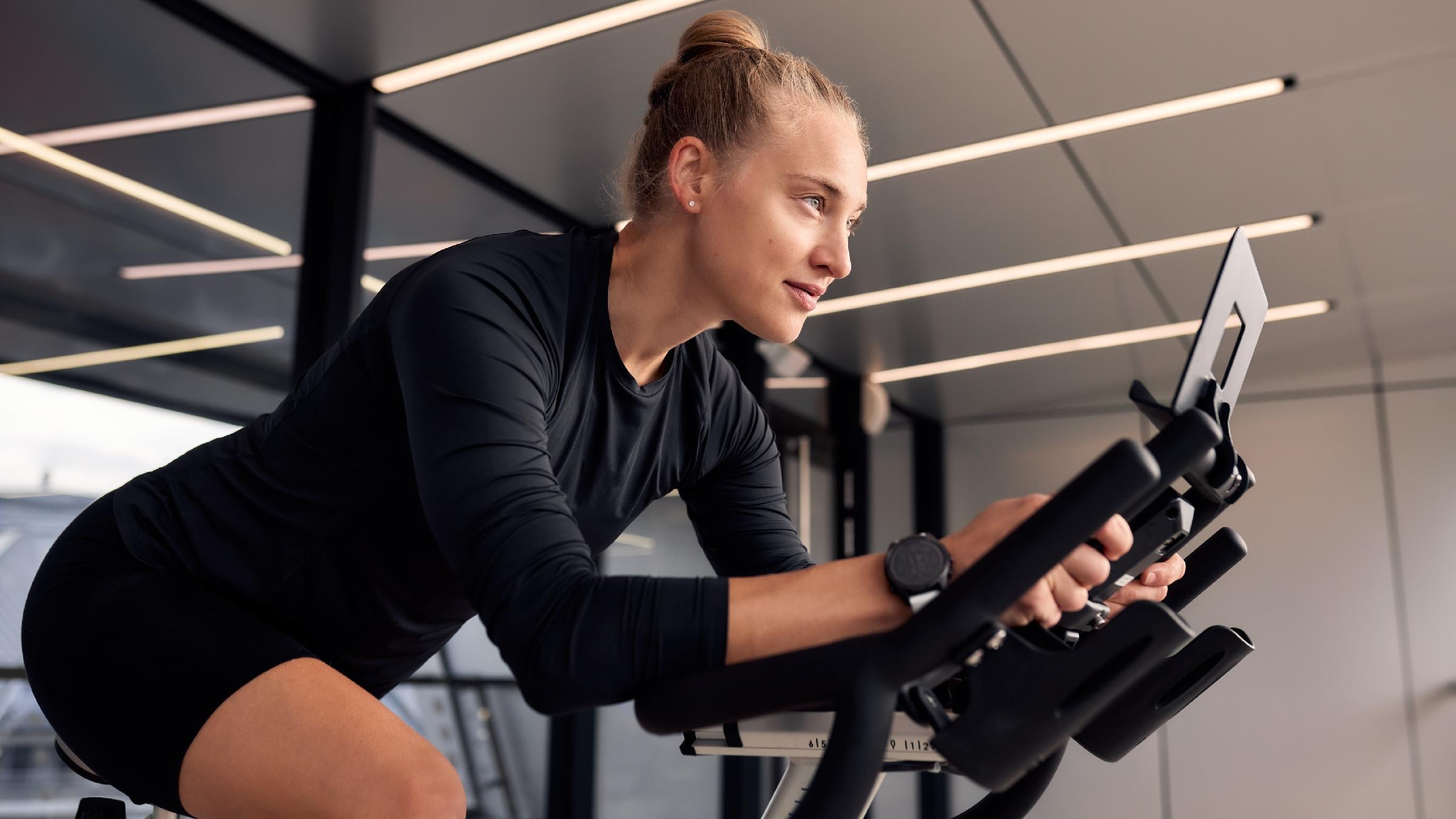
Subjects undertook tendon vibration before their workout Credit: Shuttterstock/Gerain0812
Researchers found that that vibrating the Achilles and knee tendons for ten minutes before cycling changed perceptions of effort and increased performance
The effect is achieved by altering 'effort signals' sent to the brain
The team behind the research hope could lead to the development of methods that will make exercise more enjoyable to those who struggle with perceived effort
The reverse process is also being studied to find out why some people find pain and fatigue overwhelming when exercising

Vibrating tendons before cycling allows people to push harder without feeling mental strain, according to a study.

The research was undertaken by Benjamin Pageaux, a professor in the School of Kinesiology and Physical Activity Sciences at Université de Montréal, working with researchers from Université Savoie Mont Blanc in France.

Volunteers took part in lab tests on stationary bikes. Each completed two sessions –  one after tendon vibration and another without.

The device was strapped to Achilles and knee tendons and activated for 10 minutes before cycling. After that, participants cycled for three minutes at a pace they perceived as either moderate or intense, adjusting their effort to match their target.

After tendon vibration, participants produced more power and showed higher heart rates compared to sessions without the pre-exercise vibration. However, even though their bodies were working harder, their sense of effort did not increase.

Changing 'effort signals'

While the precise biological mechanisms are still being studied, Pageaux has suggested possible explanations.

"Depending on the amplitude and frequency of the vibration, we can either excite or inhibit neurons in the spinal cord," he said. "Prolonged vibration changes the reactivity of the neuromuscular spindles and alters the signal sent to the brain."

By changing these 'effort signals' travelling from the muscles to the brain, vibration appears to reshape how movement and exertion are perceived. 

This brain-body disconnect could help make exercise feel less intimidating for people who struggle to stay active.

The perception of how hard exercise is plays a role in whether people stick with it. When it feels overwhelming, they’re more likely to stop or avoid it, whereas if it feels manageable, it becomes more enjoyable and easier to continue over time.

This raises the question of whether the feeling of effort could be reduced, helping people push past the sense that exercise is too hard.

Encouraging people to stay active

The research is still in its early stages, with the testing limited to these cycling sessions under controlled conditions.

"It hasn't been tested in a marathon, only during a short, three-minute cycling exercise," Pageaux says. "However, this is the first time the effect has been shown to work with this type of exercise."

The team will now examine brain activity more closely during exercise, using electroencephalography and MRI to see how tendon vibration influences neural activity during exertion.

The researchers are also studying the reverse process to understand how pain and fatigue amplify the feeling of effort and make physical activity feel more difficult.

Ultimately, the goal is to develop strategies that lower perceived effort and help more people become physically active, especially those who are currently sedentary.

"By gaining a better understanding of how the brain evaluates the link between effort and perceived reward during exercise, we hope to promote more regular physical activity," Pageaux said.

Prolonged passive vibration of Achilles and patellar tendons decreases effort perception during subsequent cycling tasks was published in the Journal of Sport and Health Science

MORE NEWS
ISPA releases full 2026 US Spa Industry Study as annual industry revenue rises by US$1bn
The International Spa Association (ISPA) has published its full 2026 US Spa Industry Study, providing further insights into the region’s total US$1 billion (€855 million, £780 million) industry revenue increase from 2024 to 2025.
Hot spring wellness community Ameyalli sells residences and breaks ground on resort and spa
Ameyalli, the 78-acre wellbeing resort and residential community in Midway in Utah, US, has broken ground on phase two of the hot spring development – the Ameyalli Resort and Spa – which is due to open in 2028.
AI firm Midjourney enters wellness with spa, fitness and body scanning concept
TLee Spas and Wellness has revealed the design concept for a high-tech spa with body mapping scanners to improve public health, for AI company Midjourney.
Swissline opens renovated urban wellness destination Labo Spa in Zurich
Swissline has opened a flagship day spa in Zurich, Switzerland, called Labo Spa.
+ More news   

FEATURED SUPPLIERS

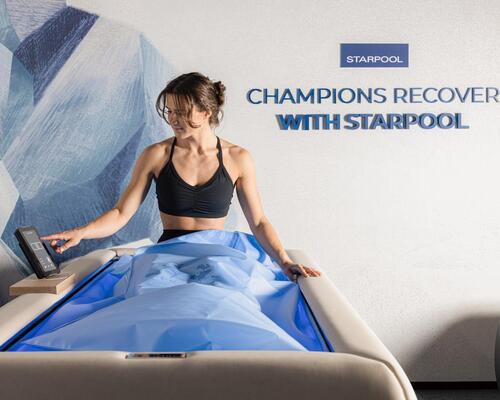
Zerobody Cryo: Starpool's contrast therapy solution
Contrast therapy, based on the alternation of hot and cold rituals, has become one of the most valued practices in the fields of wellness and recovery. [more...]

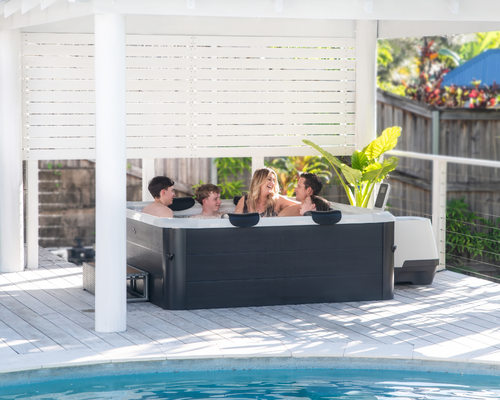
MSpa Oslo series: a timeless bestseller
The MSpa Oslo series is a perennial bestseller in global markets. With innovative engineering and premium performance, this completely portable spa line-up is expertly designed to meet the needs of customers worldwide. [more...]
+ More featured suppliers  
COMPANY PROFILES
The Wildsmith Collection Limited

Launched in 2018, Wildsmith takes its name from 19th-century botanist William Wildsmith, whose exp [more...]
Gharieni Group

For 35 years, the Gharieni Group has redefined wellness, spa and medical equipment, setting global [more...]
+ More profiles  
CATALOGUE GALLERY
 

+ More catalogues  

DIRECTORY
+ More directory  
DIARY


23-26 Aug 2026

Elevate Spa Riviera Maya Edition

The Riviera Maya Edition Kanai, Playa del Carmen, Mexico
31 Aug - 02 Sep 2026

SpaTec North America

Pier Sixty Six, Fort Lauderdale, United States
+ More diary  
 
ABOUT LEISURE MEDIA
LEISURE MEDIA MAGAZINES
LEISURE MEDIA HANDBOOKS
LEISURE MEDIA WEBSITES
LEISURE MEDIA PRODUCT SEARCH
 
SPA BUSINESS
SPA OPPORTUNITIES
SPA BUSINESS HANDBOOK
PRINT SUBSCRIPTIONS
FREE DIGITAL SUBSCRIPTIONS
ADVERTISE . CONTACT US

Leisure Media
Tel: +44 (0)1462 431385

©Cybertrek 2026
Uniting the world of spa & wellness
Get Spa Business and Spa Business insider digital magazines FREE
Sign up here ▸
News   Products   Magazine   Subscribe
NEWS
Vibrating tendons before exercise reduces perceived fatigue and allows people to push harder
POSTED 16 Feb 2026 . BY Liz Terry
Subjects undertook tendon vibration before their workout Credit: Shuttterstock/Gerain0812
Researchers found that that vibrating the Achilles and knee tendons for ten minutes before cycling changed perceptions of effort and increased performance
The effect is achieved by altering 'effort signals' sent to the brain
The team behind the research hope could lead to the development of methods that will make exercise more enjoyable to those who struggle with perceived effort
The reverse process is also being studied to find out why some people find pain and fatigue overwhelming when exercising

Vibrating tendons before cycling allows people to push harder without feeling mental strain, according to a study.

The research was undertaken by Benjamin Pageaux, a professor in the School of Kinesiology and Physical Activity Sciences at Université de Montréal, working with researchers from Université Savoie Mont Blanc in France.

Volunteers took part in lab tests on stationary bikes. Each completed two sessions –  one after tendon vibration and another without.

The device was strapped to Achilles and knee tendons and activated for 10 minutes before cycling. After that, participants cycled for three minutes at a pace they perceived as either moderate or intense, adjusting their effort to match their target.

After tendon vibration, participants produced more power and showed higher heart rates compared to sessions without the pre-exercise vibration. However, even though their bodies were working harder, their sense of effort did not increase.

Changing 'effort signals'

While the precise biological mechanisms are still being studied, Pageaux has suggested possible explanations.

"Depending on the amplitude and frequency of the vibration, we can either excite or inhibit neurons in the spinal cord," he said. "Prolonged vibration changes the reactivity of the neuromuscular spindles and alters the signal sent to the brain."

By changing these 'effort signals' travelling from the muscles to the brain, vibration appears to reshape how movement and exertion are perceived. 

This brain-body disconnect could help make exercise feel less intimidating for people who struggle to stay active.

The perception of how hard exercise is plays a role in whether people stick with it. When it feels overwhelming, they’re more likely to stop or avoid it, whereas if it feels manageable, it becomes more enjoyable and easier to continue over time.

This raises the question of whether the feeling of effort could be reduced, helping people push past the sense that exercise is too hard.

Encouraging people to stay active

The research is still in its early stages, with the testing limited to these cycling sessions under controlled conditions.

"It hasn't been tested in a marathon, only during a short, three-minute cycling exercise," Pageaux says. "However, this is the first time the effect has been shown to work with this type of exercise."

The team will now examine brain activity more closely during exercise, using electroencephalography and MRI to see how tendon vibration influences neural activity during exertion.

The researchers are also studying the reverse process to understand how pain and fatigue amplify the feeling of effort and make physical activity feel more difficult.

Ultimately, the goal is to develop strategies that lower perceived effort and help more people become physically active, especially those who are currently sedentary.

"By gaining a better understanding of how the brain evaluates the link between effort and perceived reward during exercise, we hope to promote more regular physical activity," Pageaux said.

Prolonged passive vibration of Achilles and patellar tendons decreases effort perception during subsequent cycling tasks was published in the Journal of Sport and Health Science

MORE NEWS
ISPA releases full 2026 US Spa Industry Study as annual industry revenue rises by US$1bn
The International Spa Association (ISPA) has published its full 2026 US Spa Industry Study, providing further insights into the region’s total US$1 billion (€855 million, £780 million) industry revenue increase from 2024 to 2025.
Hot spring wellness community Ameyalli sells residences and breaks ground on resort and spa
Ameyalli, the 78-acre wellbeing resort and residential community in Midway in Utah, US, has broken ground on phase two of the hot spring development – the Ameyalli Resort and Spa – which is due to open in 2028.
AI firm Midjourney enters wellness with spa, fitness and body scanning concept
TLee Spas and Wellness has revealed the design concept for a high-tech spa with body mapping scanners to improve public health, for AI company Midjourney.
Swissline opens renovated urban wellness destination Labo Spa in Zurich
Swissline has opened a flagship day spa in Zurich, Switzerland, called Labo Spa.
Gran Hotel Taoro opens Sandára Wellness Centre
Gran Hotel Taoro in northern Tenerife, Spain, has completed the final phase of its three-year renovation with the debut of its Sandára Wellness Centre.
Franchise expert Carrie Walsh joins Hand and Stone Massage and Facial Spa as CEO
Hand and Stone Massage and Facial Spa, the spa business with more than 650 locations across the US and Canada, has appointed franchise expert Carrie Walsh as CEO as the company plans to expand.
+ More news   
 
FEATURED SUPPLIERS

Zerobody Cryo: Starpool's contrast therapy solution
Contrast therapy, based on the alternation of hot and cold rituals, has become one of the most valued practices in the fields of wellness and recovery. [more...]

MSpa Oslo series: a timeless bestseller
The MSpa Oslo series is a perennial bestseller in global markets. With innovative engineering and premium performance, this completely portable spa line-up is expertly designed to meet the needs of customers worldwide. [more...]
+ More featured suppliers  
COMPANY PROFILES
The Wildsmith Collection Limited

Launched in 2018, Wildsmith takes its name from 19th-century botanist William Wildsmith, whose exp [more...]
+ More profiles  
CATALOGUE GALLERY
+ More catalogues  

DIRECTORY
+ More directory  
DIARY


23-26 Aug 2026

Elevate Spa Riviera Maya Edition

The Riviera Maya Edition Kanai, Playa del Carmen, Mexico
31 Aug - 02 Sep 2026

SpaTec North America

Pier Sixty Six, Fort Lauderdale, United States
+ More diary  


ADVERTISE . CONTACT US

Leisure Media
Tel: +44 (0)1462 431385

©Cybertrek 2026

ABOUT LEISURE MEDIA
LEISURE MEDIA MAGAZINES
LEISURE MEDIA HANDBOOKS
LEISURE MEDIA WEBSITES
LEISURE MEDIA PRODUCT SEARCH
PRINT SUBSCRIPTIONS
FREE DIGITAL SUBSCRIPTIONS