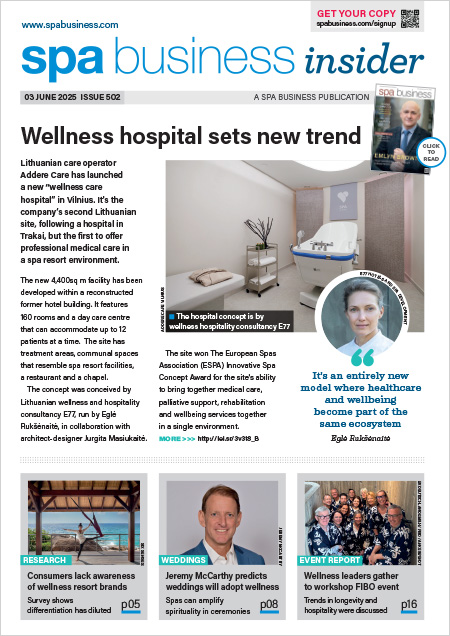
Latest
issue
Uniting the world of spa & wellness
Get Spa Business and Spa Business insider digital magazines FREE
Sign up here ▸
News   Features   Products   Company profilesProfiles   Press releasesProfiles   Magazine   Handbook   Advertise    Subscribe  
NEWS
Yale study shows HIIT can reverse nerve damage caused by Parkinson’s
POSTED 28 Feb 2024 . BY Kath Hudson
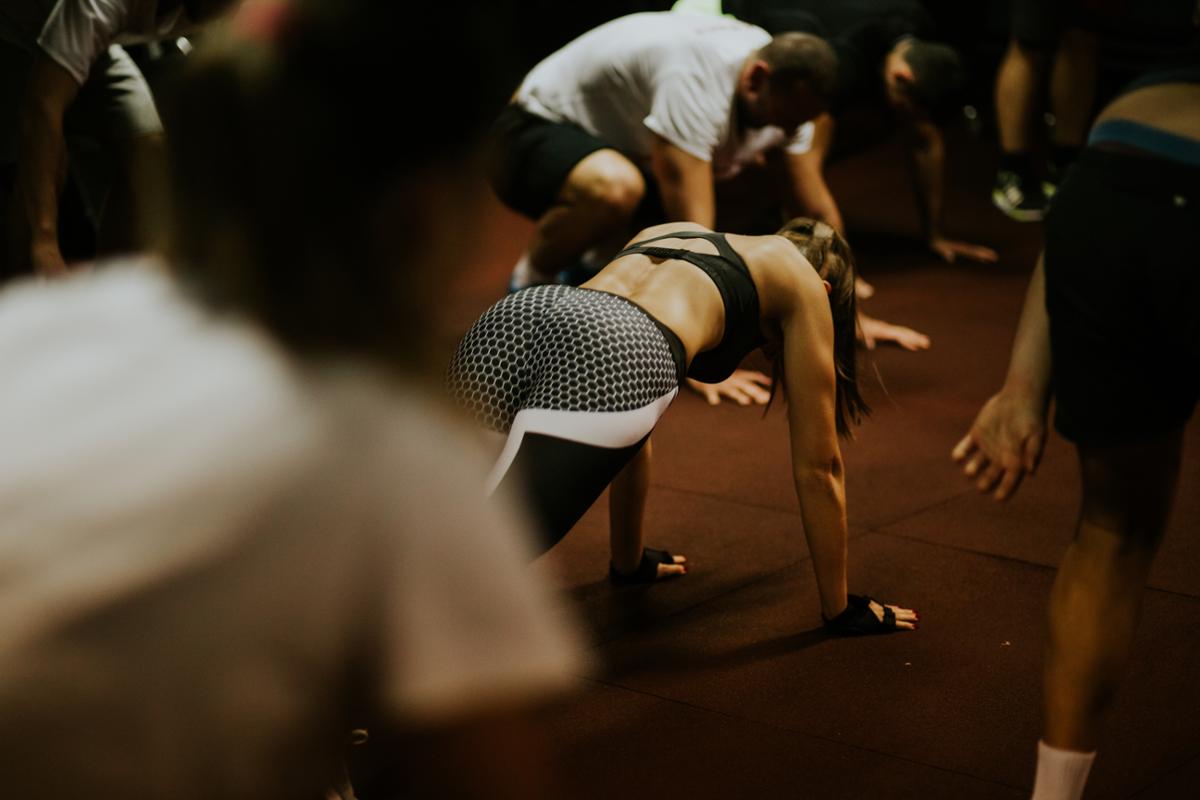
Research shows HIIT can roll back the damage of Parkinson's disease Credit: Shutterstock/Shevtsovy
Study by Yale School of Medicine reveals HIIT can reverse neurodegeneration associated with Parkinson’s disease
For the first time, brain scans were used in Parkinson’s research
HIIT three times weekly shown to rebuild dopamine-producing neurons
Researchers say exercise should be prescribed as part of the treatment
According to a pilot study by Yale School of Medicine, exercise can not only slow down the neurodegeneration associated with Parkinson’s Disease, there is evidence it can also reverse the damage.

Parkinson’s is currently the most increasingly prevalent neurological disease and estimated to impact more than 12 million people worldwide by 2040. It currently has no cure – only medication to treat the symptoms – so this new study by Yale holds promise that exercise could help to mitigate the enormous personal and economic costs the disease presents.

Two previous clinical trials have shown that engaging in high-intensity exercise three times a week for six months is correlated with less severe motor symptoms. This study, published in npj Parkinson’s Disease earlier this year, went one step further and for the first time, used brain scans to find evidence of further health benefits.

Parkinson’s disease is caused by the misfolding of alpha synuclein protein, which accumulates within neurons and damages them. As the cells die off, the lack of dopamine creates the physical symptoms, particularly motor tremors and slowed movements. As it’s such a gradual progression, by the time patients are diagnosed they have usually lost more than half of their dopamine-producing neurons.

“By the time patients clinically manifest the typical motor symptoms of Parkinson’s, you can assume that the neurodegenerative process actually started much earlier, maybe a decade or two,” says Sue Tinaz, associate professor of neurology and co-principal investigator.

The most common available medication replaces the dopamine, which alleviates the symptoms but doesn’t prevent the ongoing neurodegeneration. Long-term use can also cause undesirable side effects, such as uncontrolled excessive movements.

However, high-intensity aerobic exercise has been shown to preserve the dopamine-producing neurons, which are the brain cells most vulnerable to destruction in patients with the disease and also the chemical in the brain which helps cells communicate with each other.

Yale’s proof-of-concept study involved 10 patients who had been diagnosed for less than four years and had not lost all of their dopamine-producing neurons. They went through a two-week trial to check they could handle the training, after which they received MRI and PET scans to measure the amount of neuromelanine found in dopamine-producing neurons and the protein dopamine transporter (DAT) which helps the neurons maintain proper dopamine levels.

After six months of HIIT three times a week, the scans were repeated and the brain imaging showed a significant increase in both the neuromelanin and DAT signals in the part of the brain called the substantia nigra. Researchers say this suggests high-intensity exercise not only slowed down the neurodegenerative process but help the dopaminergic system grow healthier.

“Where we would have ordinarily expected to see a decline in the DAT and neuromelanin signals, we saw an increase,” says Bart de Laat, associate professor adjunct in psychiatry and the study’s first author. “We had hoped to see that the neurodegeneration would not progress as quickly or stop temporarily, but instead we saw an increase in nine out of 10 people. That was remarkable.”

Tinaz says the study highlights the importance of including an exercise regimen as part of a Parkinson’s treatment plan: “The medications we have available are only for symptomatic treatment. They do not change the disease course. But exercise seems to go one step beyond and protect the brain at the neuronal level.”

The team hopes its work will inspire other scientists to prioritise research into exercise and its disease-modifying potential.

HCM editor, Liz Terry said: "Although we've known for many years that exercise benefits overall health, new and exciting research such this study from the team at Yale is proving that physical activity, when delivered with expertise, can also create extraordinary results for people living with the most challenging health conditions, such as Parkinson's and stroke.

"Historically, people with conditions such as these would not have ventured into the realm of exercise, but we know now that it can be transformational and also that they can take part safely and this will increasingly open up opportunities for the physical activity sector to work with the medical profession to transform lives."

Life Fitness founder, Augie Nieto was an example of how exercise can ameliorate the effects of a neurological disorder.

Nieto was convinced his strict exercise regime and adapted equipment helped him to live better and longer with ALS.

Following his diagnosis in 2005, Nieto lived with the condition for an exceptional 18 years and with his wife Lynne by his side, overcame successive setbacks and physical decline, using an exercise and wellness regime to improve his prognosis, with regular visits to work with physical therapist at Claremont Club’s Project Walk and home workouts on specially adapted Hammer Strength and Life Fitness machines. He also followed a special nutrition programme that was delivered via his feeding tube.

Read more about Augie Nieto's extraordinary life here.



MORE NEWS
Barons Eden rebrands to Hiddenwell ahead of spa hotel portfolio expansion
Barons Eden, the UK parent company that operates luxury destination properties in England, has rebranded to become Hiddenwell.
Belgin Aksoy marks 15 years of Global Wellness Day
Global Wellness Day (GWD) marked its 15th anniversary on Saturday 13 June 2026, with the theme: #JoyMagenta – a celebration of the healing qualities of simple gestures and activities that spark joy.
HUM2N launches longevity clinic at Six Senses London
Global luxury hospitality brand, Six Senses, has partnered with longevity healthcare provider, HUM2N, to launch a clinic at Six Senses London, at The Whiteley.
Mayrlife opens first hotel day clinic in partnership with Rosewood Vienna
As part of its first hotel partnership, Mayrlife – the medical health resort company known for its site in Altaussee, Austria – has launched a day clinic at the Rosewood Vienna.
+ More news   

FEATURED SUPPLIERS

Endospheres' new protocols are designed to meet real client needs
Spa professionals see it every day: clients are arriving with more complex expectations. [more...]

Why future-ready in-house laundry is the new luxury spa essential
In today’s premium spa environment, every detail shapes the guest experience – right down to the softness of towels and the freshness of linens. [more...]
+ More featured suppliers  
COMPANY PROFILES
International SPA Association

Since 1991, the International SPA Association has been recognised worldwide as the professional orga [more...]
Kemitron GmbH

Our portfolio is divided into four product areas; Technology, Fragrances, Disinfectant and Cleaners [more...]
+ More profiles  
CATALOGUE GALLERY
 

+ More catalogues  

DIRECTORY
+ More directory  
DIARY


21-23 Jun 2026

Spa Life International (UK)

Midlands (Venue TBA), Liphook, United Kingdom
22-22 Jun 2026

World Bathing Day

Worldwide,
+ More diary  
 
ABOUT LEISURE MEDIA
LEISURE MEDIA MAGAZINES
LEISURE MEDIA HANDBOOKS
LEISURE MEDIA WEBSITES
LEISURE MEDIA PRODUCT SEARCH
 
SPA BUSINESS
SPA OPPORTUNITIES
SPA BUSINESS HANDBOOK
PRINT SUBSCRIPTIONS
FREE DIGITAL SUBSCRIPTIONS
ADVERTISE . CONTACT US

Leisure Media
Tel: +44 (0)1462 431385

©Cybertrek 2026
Uniting the world of spa & wellness
Get Spa Business and Spa Business insider digital magazines FREE
Sign up here ▸
News   Products   Magazine   Subscribe
NEWS
Yale study shows HIIT can reverse nerve damage caused by Parkinson’s
POSTED 28 Feb 2024 . BY Kath Hudson
Research shows HIIT can roll back the damage of Parkinson's disease Credit: Shutterstock/Shevtsovy
Study by Yale School of Medicine reveals HIIT can reverse neurodegeneration associated with Parkinson’s disease
For the first time, brain scans were used in Parkinson’s research
HIIT three times weekly shown to rebuild dopamine-producing neurons
Researchers say exercise should be prescribed as part of the treatment
According to a pilot study by Yale School of Medicine, exercise can not only slow down the neurodegeneration associated with Parkinson’s Disease, there is evidence it can also reverse the damage.

Parkinson’s is currently the most increasingly prevalent neurological disease and estimated to impact more than 12 million people worldwide by 2040. It currently has no cure – only medication to treat the symptoms – so this new study by Yale holds promise that exercise could help to mitigate the enormous personal and economic costs the disease presents.

Two previous clinical trials have shown that engaging in high-intensity exercise three times a week for six months is correlated with less severe motor symptoms. This study, published in npj Parkinson’s Disease earlier this year, went one step further and for the first time, used brain scans to find evidence of further health benefits.

Parkinson’s disease is caused by the misfolding of alpha synuclein protein, which accumulates within neurons and damages them. As the cells die off, the lack of dopamine creates the physical symptoms, particularly motor tremors and slowed movements. As it’s such a gradual progression, by the time patients are diagnosed they have usually lost more than half of their dopamine-producing neurons.

“By the time patients clinically manifest the typical motor symptoms of Parkinson’s, you can assume that the neurodegenerative process actually started much earlier, maybe a decade or two,” says Sue Tinaz, associate professor of neurology and co-principal investigator.

The most common available medication replaces the dopamine, which alleviates the symptoms but doesn’t prevent the ongoing neurodegeneration. Long-term use can also cause undesirable side effects, such as uncontrolled excessive movements.

However, high-intensity aerobic exercise has been shown to preserve the dopamine-producing neurons, which are the brain cells most vulnerable to destruction in patients with the disease and also the chemical in the brain which helps cells communicate with each other.

Yale’s proof-of-concept study involved 10 patients who had been diagnosed for less than four years and had not lost all of their dopamine-producing neurons. They went through a two-week trial to check they could handle the training, after which they received MRI and PET scans to measure the amount of neuromelanine found in dopamine-producing neurons and the protein dopamine transporter (DAT) which helps the neurons maintain proper dopamine levels.

After six months of HIIT three times a week, the scans were repeated and the brain imaging showed a significant increase in both the neuromelanin and DAT signals in the part of the brain called the substantia nigra. Researchers say this suggests high-intensity exercise not only slowed down the neurodegenerative process but help the dopaminergic system grow healthier.

“Where we would have ordinarily expected to see a decline in the DAT and neuromelanin signals, we saw an increase,” says Bart de Laat, associate professor adjunct in psychiatry and the study’s first author. “We had hoped to see that the neurodegeneration would not progress as quickly or stop temporarily, but instead we saw an increase in nine out of 10 people. That was remarkable.”

Tinaz says the study highlights the importance of including an exercise regimen as part of a Parkinson’s treatment plan: “The medications we have available are only for symptomatic treatment. They do not change the disease course. But exercise seems to go one step beyond and protect the brain at the neuronal level.”

The team hopes its work will inspire other scientists to prioritise research into exercise and its disease-modifying potential.

HCM editor, Liz Terry said: "Although we've known for many years that exercise benefits overall health, new and exciting research such this study from the team at Yale is proving that physical activity, when delivered with expertise, can also create extraordinary results for people living with the most challenging health conditions, such as Parkinson's and stroke.

"Historically, people with conditions such as these would not have ventured into the realm of exercise, but we know now that it can be transformational and also that they can take part safely and this will increasingly open up opportunities for the physical activity sector to work with the medical profession to transform lives."

Life Fitness founder, Augie Nieto was an example of how exercise can ameliorate the effects of a neurological disorder.

Nieto was convinced his strict exercise regime and adapted equipment helped him to live better and longer with ALS.

Following his diagnosis in 2005, Nieto lived with the condition for an exceptional 18 years and with his wife Lynne by his side, overcame successive setbacks and physical decline, using an exercise and wellness regime to improve his prognosis, with regular visits to work with physical therapist at Claremont Club’s Project Walk and home workouts on specially adapted Hammer Strength and Life Fitness machines. He also followed a special nutrition programme that was delivered via his feeding tube.

Read more about Augie Nieto's extraordinary life here.



RELATED STORIES
Those living with Parkinson’s can benefit from physical activity, research shows


Physical activity can improve the health and quality of life of people living Parkinson's disease (PD), researchers have concluded.
Cutting sedentary behaviour helps combat Parkinson's symptoms: study


Keeping up daily doses of regular activity, rather than sporadic exercise sessions, is the best way to combat the debilitating symptoms of Parkinson's disease.

MORE NEWS
Barons Eden rebrands to Hiddenwell ahead of spa hotel portfolio expansion
Barons Eden, the UK parent company that operates luxury destination properties in England, has rebranded to become Hiddenwell.
Belgin Aksoy marks 15 years of Global Wellness Day
Global Wellness Day (GWD) marked its 15th anniversary on Saturday 13 June 2026, with the theme: #JoyMagenta – a celebration of the healing qualities of simple gestures and activities that spark joy.
HUM2N launches longevity clinic at Six Senses London
Global luxury hospitality brand, Six Senses, has partnered with longevity healthcare provider, HUM2N, to launch a clinic at Six Senses London, at The Whiteley.
Mayrlife opens first hotel day clinic in partnership with Rosewood Vienna
As part of its first hotel partnership, Mayrlife – the medical health resort company known for its site in Altaussee, Austria – has launched a day clinic at the Rosewood Vienna.
KX Chelsea invests £15 million to upgrade its wellness offering
Premium London health club, KX Chelsea, will imminently unveil its most significant redevelopment since its launch in 2002 to create an integrated wellness model combining training, recovery and relaxation.
Rosewood Le Guanahani St Barth offers ocean-themed yoga for Global Wellness Day
Rosewood Le Guanahani St Barth, on the northeast coast of Saint Barthélemy in the French West Indies, is offering a programme of ocean-inspired yoga classes between 8-14 June to celebrate Global Wellness Day (GWD).
+ More news   
 
FEATURED SUPPLIERS

Endospheres' new protocols are designed to meet real client needs
Spa professionals see it every day: clients are arriving with more complex expectations. [more...]

Why future-ready in-house laundry is the new luxury spa essential
In today’s premium spa environment, every detail shapes the guest experience – right down to the softness of towels and the freshness of linens. [more...]
+ More featured suppliers  
COMPANY PROFILES
International SPA Association

Since 1991, the International SPA Association has been recognised worldwide as the professional orga [more...]
+ More profiles  
CATALOGUE GALLERY
+ More catalogues  

DIRECTORY
+ More directory  
DIARY


21-23 Jun 2026

Spa Life International (UK)

Midlands (Venue TBA), Liphook, United Kingdom
22-22 Jun 2026

World Bathing Day

Worldwide,
+ More diary  


ADVERTISE . CONTACT US

Leisure Media
Tel: +44 (0)1462 431385

©Cybertrek 2026

ABOUT LEISURE MEDIA
LEISURE MEDIA MAGAZINES
LEISURE MEDIA HANDBOOKS
LEISURE MEDIA WEBSITES
LEISURE MEDIA PRODUCT SEARCH
PRINT SUBSCRIPTIONS
FREE DIGITAL SUBSCRIPTIONS