Latest
issue
Uniting the world of spa & wellness
Get Spa Business and Spa Business insider digital magazines FREE
Sign up here ▸
News   Features   Products   Company profilesProfiles   Press releasesProfiles   Magazine   Handbook   Advertise    Subscribe  
NEWS
Not enough sleep can cause brain to “attack itself”
POSTED 30 May 2017 . BY Tom Walker
The study suggest that chronic sleep loss, through microglia priming, may predispose the brain to damage
Chronic sleep deprivation could cause the brain to begin “eating itself” – resulting in significant amount of healthy neurons and synaptic connections to being destroyed.

The findings come from a study, led by neuroscientist Michele Bellesi from the Marche Polytechnic University in Italy, which examined mammalian brains and their response to poor sleeping habits.

During normal sleep, a mammal’s brain clears away some of the toxic byproducts of neural activity left behind during the day.

The process, called phagocytosis, involves older neurons in the brain being regularly refreshed and cleared out by microglial cells – the first and main form of immune defense in the central nervous system.

The study – conducted on mice – found that this process of “cleaning up” is accelerated during periods of sleep deprivation, resulting in the brain becoming overactive and clearing out neurons indiscriminately, including new, healthy ones.

For the study, the researchers imaged the brains of four groups of mice. One was well rested (sleep for six to eight hours); another was periodically woken up from sleep; a third group was kept awake for an extra 8 hours (sleep-deprived); and a fourth group was kept awake for five days straight (chronically sleep-deprived).

In the well-rested mice, the cleaning activity was detected in 5.7 percent of brain neurons and in 7.3 of the spontaneously awake mouse brains. In the sleep-deprived mouse brains, activity was a little higher – 8.4 per cent.

In the chronically sleep-deprived mice, however, the activity was significantly higher – 13.5 per cent.

“The results suggest that chronic sleep loss, through microglia priming, may predispose the brain to damage,” the report states.

“Chronic sleep restriction activates microglia, promotes their phagocytic activity, and does so in the absence of overt signs of neuroinflammation.

“This suggests that like many other stressors, extended sleep disruption may lead to a state of sustained microglia activation, perhaps increasing the brain's susceptibility to other forms of damage.”

To download and read the full study, called Sleep Loss Promotes Astrocytic Phagocytosis and Microglial Activation in Mouse Cerebral Cortex click here for the Journal of Neuroscience.

RELATED STORIES
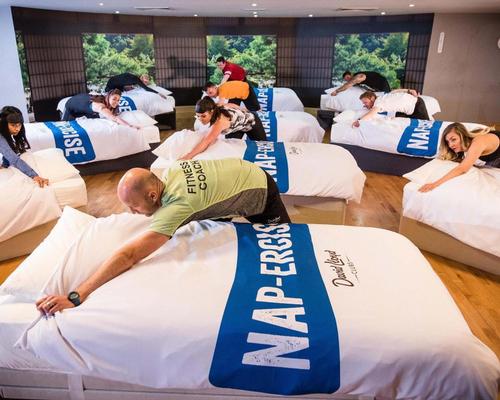
  DLL considering rolling out ‘group napping classes’


Health club operator David Lloyd Leisure (DLL) is considering rolling out a new fitness class – which consists of nothing but sleeping.
  Obesity and depression cause excessive daytime sleepiness: study


Obesity and depression are underlying causes for regular excessive daytime sleepiness (EDS) – not just a lack of sleep, according to a study by Penn State College of Medicine. This means sleep medicine needs to be personalised as the standard approach of sleeping pill prescriptions and more sleep will fail in the long-term.
  Weekend lie-ins driving obesity: study


Social jet lag, which occurs when the body clock becomes confused by changing sleep patterns - such as weekend lie-ins - may be driving obesity and illness, according to a study.
MORE NEWS
Four Seasons Resort The Nam Hai creates Global Wellness Day programme rooted in nature
Four Seasons Resort The Nam Hai in Hoi An, Vietnam, has put together a Global Wellness Day (GWD) agenda with activations rooted in nature and shaped by four pillars of Joy – in alignment with the day’s theme #JoyMagenta.
Wellness care hospital opens in Vilnius with innovative spa and hospitality concept
Lithuanian care operator Addere Care has launched a new “wellness care hospital” in Vilnius.
Rainer Maelzer joins Therme Group as chief entertainment officer
Rainer Maelzer, an experiential entertainment innovator, has been appointed chief entertainment officer by Therme Group.
Global Wellness Summit announces 2026 theme: the science, art and soul of wellness
The Global Wellness Summit (GWS) will celebrate its 20th anniversary at the 2026 event in Phuket, Thailand, later this year with the theme: The Science, Art and Soul of Wellness.
+ More news   

FEATURED SUPPLIERS

Le Atelier by C.O.D.E. - bespoke means moving beyond the catalogue to delivering contextual design responses
Le Atelier by C.O.D.E. doesn't offer a standard bespoke service, it provides a highly customised approach to designing massage beds and loungers in high-end wellness environments. [more...]

Why future-ready in-house laundry is the new luxury spa essential
In today’s premium spa environment, every detail shapes the guest experience – right down to the softness of towels and the freshness of linens. [more...]
+ More featured suppliers  
COMPANY PROFILES
Agilysys UK Ltd

Agilysys, Inc. (Nasdaq: AGYS), is a leading global provider of hospitality software solutions that [more...]
Voya Organic Beauty

Voya Organic Beauty, founded in 2006 in Ireland by Mark Walton and Kira Guckian Walton, is a private [more...]
+ More profiles  
CATALOGUE GALLERY
 

+ More catalogues  

DIRECTORY
+ More directory  
DIARY


09-11 Jun 2026

World Sauna Forum 2026

Savutuvan Apaja, Haapaniemi, Finland
09-12 Jun 2026

W3Spa EMEA

Hotel Cascais Miragem Health & Spa, Portugal
+ More diary  
 
ABOUT LEISURE MEDIA
LEISURE MEDIA MAGAZINES
LEISURE MEDIA HANDBOOKS
LEISURE MEDIA WEBSITES
LEISURE MEDIA PRODUCT SEARCH
 
SPA BUSINESS
SPA OPPORTUNITIES
SPA BUSINESS HANDBOOK
PRINT SUBSCRIPTIONS
FREE DIGITAL SUBSCRIPTIONS
ADVERTISE . CONTACT US

Leisure Media
Tel: +44 (0)1462 431385

©Cybertrek 2026
Uniting the world of spa & wellness
Get Spa Business and Spa Business insider digital magazines FREE
Sign up here ▸
News   Products   Magazine   Subscribe
NEWS
Not enough sleep can cause brain to “attack itself”
POSTED 30 May 2017 . BY Tom Walker
The study suggest that chronic sleep loss, through microglia priming, may predispose the brain to damage
Chronic sleep deprivation could cause the brain to begin “eating itself” – resulting in significant amount of healthy neurons and synaptic connections to being destroyed.

The findings come from a study, led by neuroscientist Michele Bellesi from the Marche Polytechnic University in Italy, which examined mammalian brains and their response to poor sleeping habits.

During normal sleep, a mammal’s brain clears away some of the toxic byproducts of neural activity left behind during the day.

The process, called phagocytosis, involves older neurons in the brain being regularly refreshed and cleared out by microglial cells – the first and main form of immune defense in the central nervous system.

The study – conducted on mice – found that this process of “cleaning up” is accelerated during periods of sleep deprivation, resulting in the brain becoming overactive and clearing out neurons indiscriminately, including new, healthy ones.

For the study, the researchers imaged the brains of four groups of mice. One was well rested (sleep for six to eight hours); another was periodically woken up from sleep; a third group was kept awake for an extra 8 hours (sleep-deprived); and a fourth group was kept awake for five days straight (chronically sleep-deprived).

In the well-rested mice, the cleaning activity was detected in 5.7 percent of brain neurons and in 7.3 of the spontaneously awake mouse brains. In the sleep-deprived mouse brains, activity was a little higher – 8.4 per cent.

In the chronically sleep-deprived mice, however, the activity was significantly higher – 13.5 per cent.

“The results suggest that chronic sleep loss, through microglia priming, may predispose the brain to damage,” the report states.

“Chronic sleep restriction activates microglia, promotes their phagocytic activity, and does so in the absence of overt signs of neuroinflammation.

“This suggests that like many other stressors, extended sleep disruption may lead to a state of sustained microglia activation, perhaps increasing the brain's susceptibility to other forms of damage.”

To download and read the full study, called Sleep Loss Promotes Astrocytic Phagocytosis and Microglial Activation in Mouse Cerebral Cortex click here for the Journal of Neuroscience.

RELATED STORIES
DLL considering rolling out ‘group napping classes’


Health club operator David Lloyd Leisure (DLL) is considering rolling out a new fitness class – which consists of nothing but sleeping.
Obesity and depression cause excessive daytime sleepiness: study


Obesity and depression are underlying causes for regular excessive daytime sleepiness (EDS) – not just a lack of sleep, according to a study by Penn State College of Medicine. This means sleep medicine needs to be personalised as the standard approach of sleeping pill prescriptions and more sleep will fail in the long-term.


Weekend lie-ins driving obesity: study


Social jet lag, which occurs when the body clock becomes confused by changing sleep patterns - such as weekend lie-ins - may be driving obesity and illness, according to a study.
MORE NEWS
Four Seasons Resort The Nam Hai creates Global Wellness Day programme rooted in nature
Four Seasons Resort The Nam Hai in Hoi An, Vietnam, has put together a Global Wellness Day (GWD) agenda with activations rooted in nature and shaped by four pillars of Joy – in alignment with the day’s theme #JoyMagenta.
Wellness care hospital opens in Vilnius with innovative spa and hospitality concept
Lithuanian care operator Addere Care has launched a new “wellness care hospital” in Vilnius.
Rainer Maelzer joins Therme Group as chief entertainment officer
Rainer Maelzer, an experiential entertainment innovator, has been appointed chief entertainment officer by Therme Group.
Global Wellness Summit announces 2026 theme: the science, art and soul of wellness
The Global Wellness Summit (GWS) will celebrate its 20th anniversary at the 2026 event in Phuket, Thailand, later this year with the theme: The Science, Art and Soul of Wellness.
All-inclusive eco-wellness development Auko to open near Vietnam’s Son Doong caves
Auko, an all-inclusive development, is opening in Phong Nha in Vietnam in Q3 2026, with a series of 30 tented eco-lodges and wellness hospitality operations by Lumina Wellbeing.
Therme Manchester reveals 90:90 strategy – 90 per cent of the UK population within a 90-minute drive of a Therme
Therme Manchester’s 28-acre development, which will include interconnected glass pavilions that measure 65,000sq m, will be the largest bathing and wellbeing attraction in the world once complete, according to prof David Russell, CEO of Therme UK. 
+ More news   
 
FEATURED SUPPLIERS

Le Atelier by C.O.D.E. - bespoke means moving beyond the catalogue to delivering contextual design responses
Le Atelier by C.O.D.E. doesn't offer a standard bespoke service, it provides a highly customised approach to designing massage beds and loungers in high-end wellness environments. [more...]

Why future-ready in-house laundry is the new luxury spa essential
In today’s premium spa environment, every detail shapes the guest experience – right down to the softness of towels and the freshness of linens. [more...]
+ More featured suppliers  
COMPANY PROFILES
Agilysys UK Ltd

Agilysys, Inc. (Nasdaq: AGYS), is a leading global provider of hospitality software solutions that [more...]
+ More profiles  
CATALOGUE GALLERY
+ More catalogues  

DIRECTORY
+ More directory  
DIARY


09-11 Jun 2026

World Sauna Forum 2026

Savutuvan Apaja, Haapaniemi, Finland
09-12 Jun 2026

W3Spa EMEA

Hotel Cascais Miragem Health & Spa, Portugal
+ More diary  


ADVERTISE . CONTACT US

Leisure Media
Tel: +44 (0)1462 431385

©Cybertrek 2026

ABOUT LEISURE MEDIA
LEISURE MEDIA MAGAZINES
LEISURE MEDIA HANDBOOKS
LEISURE MEDIA WEBSITES
LEISURE MEDIA PRODUCT SEARCH
PRINT SUBSCRIPTIONS
FREE DIGITAL SUBSCRIPTIONS