Latest
issue
Uniting the world of spa & wellness
Get Spa Business and Spa Business insider digital magazines FREE
Sign up here ▸
News   Features   Products   Company profilesProfiles   Press releasesProfiles   Magazine   Handbook   Advertise    Subscribe  
NEWS
Wellness communities offer ‘huge opportunity’ for spas, says panel
POSTED 02 Mar 2017 . BY Jane Kitchen
Ben Gill, Professor Terry Stevens and Steve Nygren discuss wellness communities at the World Spa & Wellness Conference in London earlier this week

With these projects, you have a great opportunity to not just exist at the side of things, but to live at the heart of the community
– Mia Kyricos, Kyricos & Associates founder
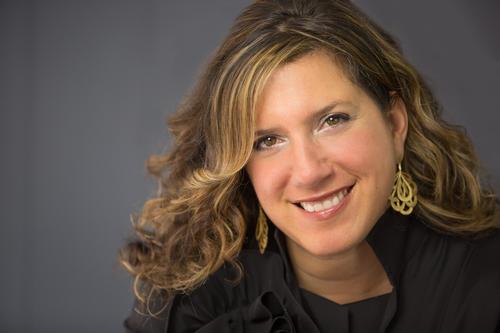
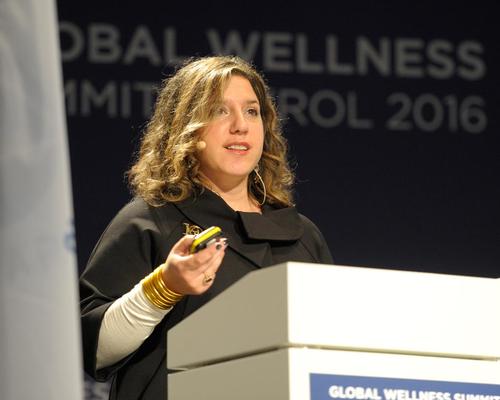
Mia Kyricos, founder of strategic advisory firm Kyricos & Associates, told an audience at the World Spa & Wellness Convention in London that wellness communities grew by 19 per cent from 2013 to 2015, and are worth an estimated US$29bn (€27.5bn, £23.6bn) in Europe and US$48bn (€45.6bn, £39.1bn) in North America.

Kyricos moderated a panel on wellness communities that also included Steve Nygren, president of Serenbe wellness community near Atlanta, US; Ben H Gill, international technical manager for One Planet Communities Programme; and Professor Terry Stevens, founder and managing director of Stevens & Associates.

Stevens said that many of the things we’re looking for in today’s wellness communities are things we took for granted a few generations ago, when we often lived in smaller communities that offered social connections.

“Somewhere in this model of a traditional community, we find what it is we’re looking for on this new horizon,” he said.

Nygren agreed, and said that new regulations have often moved us away from this model.

“The way we lived in our villages 80 or 100 years ago, we had all that we desired,” he said.

Things like local agriculture, social connections, and the ability to spend time in nature are all an important part of life at Serenbe and many other wellness communities, which have been defined by the Global Wellness Institute’s initiative on the subject as “communities and buildings proactively developed with the holistic health of its residents, guests, environment – both natural and built – and local community in mind.”

At Bedzed, a community in south London developed by One Planet, residents know on average more than 20 neighbours by name, said Gill, compared to a national average of eight. This points to a more socially connected community – something that’s proven good for mental wellness.

Stevens said that in order to succeed, wellness communities need to be geographically compact, coherent, and competently managed. “You’re not going to achieve the goals unless there’s competent management,” he said.

Stevens further detailed that several paradigm shifts are helping to fuel the growth of and interest in wellness communities: first, a move toward values not value, where experiences and what something stands for is more important to today’s consumer than what it costs; second, “the rich are buying less but spending more,” said Stevens; and third, “the public sector are recognising that they have to be facilitators but not doers.”

Gill echoed Stevens’ point about buying less but spending more. “Quality can mean different things,” he said. At the One Brighton community in south England, for instance, the quality of the buildings and fixtures is higher, but there is no car park – something those buying into a the community are happy to do without in their quest for well living.

“Millennials and Baby Boomers are both starting to gravitate towards urban environments with a walking grid,” said Nygren. “They want to connect to nature and to each other.”

Looking back at the village model from 100 years ago shows another change, said Stevens: every village had a doctor, who was interested in preventing sickness as much as treating it.

“We have turned our doctors into institutions,” he said. “And there’s a huge opportunity for spas to move into this.”

The panel agreed that wellness communities should include spas, and that they should become part of the culture of vitality and living.

“You have a great opportunity to not just exist at the side of things, but to live at the heart of the community,” said Kyricos.

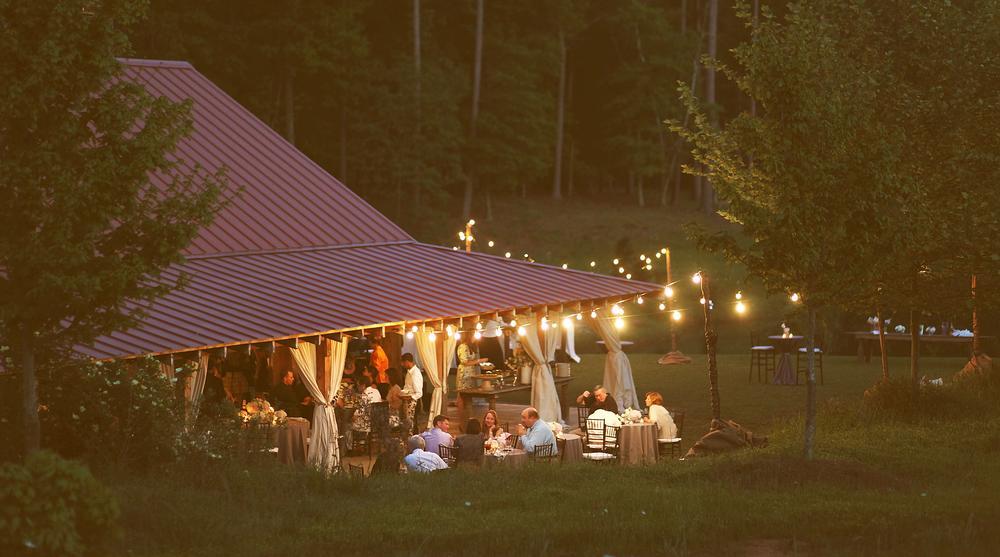
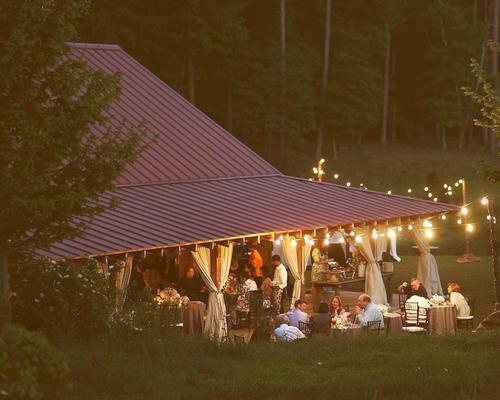
Things like local agriculture, social connections, and the ability to spend time in nature are all an important part of life at Serenbe and many other wellness communities Credit: Serenbe
RELATED STORIES
  Wellness Communities Initiative continues growth


This year, a key emphasis at the Global Wellness Summit was on the Wellness Communities Initiative, spearheaded by Mia Kyricos, who is also founder of strategic advisory firm Kyricos & Associates.
  What three things are necessary to be considered a 'wellness community'? New paper from GWI Initiative aims to define growing real estate segment


The Global Wellness Institute’s Wellness Communities Initiative has written a white paper to address critical issues surrounding the fast-growing wellness real estate market – estimated by the GWI to be a US$100bn (€90bn, £81bn) global marketplace.
  Can placemaking help architects create wellness communities?


The chair of the Global Wellness Institute’s Wellness Communities Initiative has urged architects and developers to embrace placemaking to ensure people live healthy and happy lives.
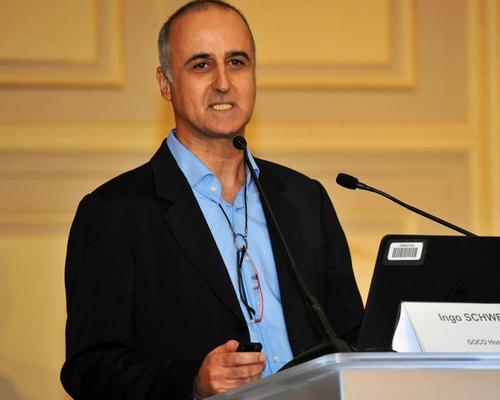
  Schweder: We are moving from retirement living to wellness communities


Society is moving from retirement living to wellness communities, according to Ingo Schweder, CEO of GOCO Hospitality, who spoke earlier this month at the Forum Hotel & Spa conference in Paris.
MORE NEWS
Four Seasons Resort The Nam Hai creates Global Wellness Day programme rooted in nature
Four Seasons Resort The Nam Hai in Hoi An, Vietnam, has put together a Global Wellness Day (GWD) agenda with activations rooted in nature and shaped by four pillars of Joy – in alignment with the day’s theme #JoyMagenta.
Wellness care hospital opens in Vilnius with innovative spa and hospitality concept
Lithuanian care operator Addere Care has launched a new “wellness care hospital” in Vilnius.
Rainer Maelzer joins Therme Group as chief entertainment officer
Rainer Maelzer, an experiential entertainment innovator, has been appointed chief entertainment officer by Therme Group.
Global Wellness Summit announces 2026 theme: the science, art and soul of wellness
The Global Wellness Summit (GWS) will celebrate its 20th anniversary at the 2026 event in Phuket, Thailand, later this year with the theme: The Science, Art and Soul of Wellness.
+ More news   

FEATURED SUPPLIERS

Embrace the chill: TechnoAlpin's Snowsky revolutionises post-fitness recovery with falling snow
In the fast-paced world of fitness and wellness, where high-intensity workouts push us to our limits and the sweat pours, the importance of efficient recovery cannot be overstated. [more...]

Longevity in spas: a strategic choice, not a default setting
Longevity has become one of the most debated concepts in contemporary wellness. [more...]
+ More featured suppliers  
COMPANY PROFILES
Agilysys UK Ltd

Agilysys, Inc. (Nasdaq: AGYS), is a leading global provider of hospitality software solutions that [more...]
AKT Group

AKT Group is the Franco–Italian parent company of SKYY, C.O.D.E. and AKTMe, operating as an integrat [more...]
+ More profiles  
CATALOGUE GALLERY
 

+ More catalogues  

DIRECTORY
+ More directory  
DIARY


09-11 Jun 2026

World Sauna Forum 2026

Savutuvan Apaja, Haapaniemi, Finland
09-12 Jun 2026

W3Spa EMEA

Hotel Cascais Miragem Health & Spa, Portugal
+ More diary  
 
ABOUT LEISURE MEDIA
LEISURE MEDIA MAGAZINES
LEISURE MEDIA HANDBOOKS
LEISURE MEDIA WEBSITES
LEISURE MEDIA PRODUCT SEARCH
 
SPA BUSINESS
SPA OPPORTUNITIES
SPA BUSINESS HANDBOOK
PRINT SUBSCRIPTIONS
FREE DIGITAL SUBSCRIPTIONS
ADVERTISE . CONTACT US

Leisure Media
Tel: +44 (0)1462 431385

©Cybertrek 2026
Uniting the world of spa & wellness
Get Spa Business and Spa Business insider digital magazines FREE
Sign up here ▸
News   Products   Magazine   Subscribe
NEWS
Wellness communities offer ‘huge opportunity’ for spas, says panel
POSTED 02 Mar 2017 . BY Jane Kitchen
Ben Gill, Professor Terry Stevens and Steve Nygren discuss wellness communities at the World Spa & Wellness Conference in London earlier this week
With these projects, you have a great opportunity to not just exist at the side of things, but to live at the heart of the community
– Mia Kyricos, Kyricos & Associates founder
Mia Kyricos, founder of strategic advisory firm Kyricos & Associates, told an audience at the World Spa & Wellness Convention in London that wellness communities grew by 19 per cent from 2013 to 2015, and are worth an estimated US$29bn (€27.5bn, £23.6bn) in Europe and US$48bn (€45.6bn, £39.1bn) in North America.

Kyricos moderated a panel on wellness communities that also included Steve Nygren, president of Serenbe wellness community near Atlanta, US; Ben H Gill, international technical manager for One Planet Communities Programme; and Professor Terry Stevens, founder and managing director of Stevens & Associates.

Stevens said that many of the things we’re looking for in today’s wellness communities are things we took for granted a few generations ago, when we often lived in smaller communities that offered social connections.

“Somewhere in this model of a traditional community, we find what it is we’re looking for on this new horizon,” he said.

Nygren agreed, and said that new regulations have often moved us away from this model.

“The way we lived in our villages 80 or 100 years ago, we had all that we desired,” he said.

Things like local agriculture, social connections, and the ability to spend time in nature are all an important part of life at Serenbe and many other wellness communities, which have been defined by the Global Wellness Institute’s initiative on the subject as “communities and buildings proactively developed with the holistic health of its residents, guests, environment – both natural and built – and local community in mind.”

At Bedzed, a community in south London developed by One Planet, residents know on average more than 20 neighbours by name, said Gill, compared to a national average of eight. This points to a more socially connected community – something that’s proven good for mental wellness.

Stevens said that in order to succeed, wellness communities need to be geographically compact, coherent, and competently managed. “You’re not going to achieve the goals unless there’s competent management,” he said.

Stevens further detailed that several paradigm shifts are helping to fuel the growth of and interest in wellness communities: first, a move toward values not value, where experiences and what something stands for is more important to today’s consumer than what it costs; second, “the rich are buying less but spending more,” said Stevens; and third, “the public sector are recognising that they have to be facilitators but not doers.”

Gill echoed Stevens’ point about buying less but spending more. “Quality can mean different things,” he said. At the One Brighton community in south England, for instance, the quality of the buildings and fixtures is higher, but there is no car park – something those buying into a the community are happy to do without in their quest for well living.

“Millennials and Baby Boomers are both starting to gravitate towards urban environments with a walking grid,” said Nygren. “They want to connect to nature and to each other.”

Looking back at the village model from 100 years ago shows another change, said Stevens: every village had a doctor, who was interested in preventing sickness as much as treating it.

“We have turned our doctors into institutions,” he said. “And there’s a huge opportunity for spas to move into this.”

The panel agreed that wellness communities should include spas, and that they should become part of the culture of vitality and living.

“You have a great opportunity to not just exist at the side of things, but to live at the heart of the community,” said Kyricos.

Things like local agriculture, social connections, and the ability to spend time in nature are all an important part of life at Serenbe and many other wellness communities Credit: Serenbe
RELATED STORIES
Wellness Communities Initiative continues growth


This year, a key emphasis at the Global Wellness Summit was on the Wellness Communities Initiative, spearheaded by Mia Kyricos, who is also founder of strategic advisory firm Kyricos & Associates.
What three things are necessary to be considered a 'wellness community'? New paper from GWI Initiative aims to define growing real estate segment


The Global Wellness Institute’s Wellness Communities Initiative has written a white paper to address critical issues surrounding the fast-growing wellness real estate market – estimated by the GWI to be a US$100bn (€90bn, £81bn) global marketplace.

Can placemaking help architects create wellness communities?


The chair of the Global Wellness Institute’s Wellness Communities Initiative has urged architects and developers to embrace placemaking to ensure people live healthy and happy lives.
Schweder: We are moving from retirement living to wellness communities


Society is moving from retirement living to wellness communities, according to Ingo Schweder, CEO of GOCO Hospitality, who spoke earlier this month at the Forum Hotel & Spa conference in Paris.
MORE NEWS
Four Seasons Resort The Nam Hai creates Global Wellness Day programme rooted in nature
Four Seasons Resort The Nam Hai in Hoi An, Vietnam, has put together a Global Wellness Day (GWD) agenda with activations rooted in nature and shaped by four pillars of Joy – in alignment with the day’s theme #JoyMagenta.
Wellness care hospital opens in Vilnius with innovative spa and hospitality concept
Lithuanian care operator Addere Care has launched a new “wellness care hospital” in Vilnius.
Rainer Maelzer joins Therme Group as chief entertainment officer
Rainer Maelzer, an experiential entertainment innovator, has been appointed chief entertainment officer by Therme Group.
Global Wellness Summit announces 2026 theme: the science, art and soul of wellness
The Global Wellness Summit (GWS) will celebrate its 20th anniversary at the 2026 event in Phuket, Thailand, later this year with the theme: The Science, Art and Soul of Wellness.
All-inclusive eco-wellness development Auko to open near Vietnam’s Son Doong caves
Auko, an all-inclusive development, is opening in Phong Nha in Vietnam in Q3 2026, with a series of 30 tented eco-lodges and wellness hospitality operations by Lumina Wellbeing.
Therme Manchester reveals 90:90 strategy – 90 per cent of the UK population within a 90-minute drive of a Therme
Therme Manchester’s 28-acre development, which will include interconnected glass pavilions that measure 65,000sq m, will be the largest bathing and wellbeing attraction in the world once complete, according to prof David Russell, CEO of Therme UK. 
+ More news   
 
FEATURED SUPPLIERS

Embrace the chill: TechnoAlpin's Snowsky revolutionises post-fitness recovery with falling snow
In the fast-paced world of fitness and wellness, where high-intensity workouts push us to our limits and the sweat pours, the importance of efficient recovery cannot be overstated. [more...]

Longevity in spas: a strategic choice, not a default setting
Longevity has become one of the most debated concepts in contemporary wellness. [more...]
+ More featured suppliers  
COMPANY PROFILES
Agilysys UK Ltd

Agilysys, Inc. (Nasdaq: AGYS), is a leading global provider of hospitality software solutions that [more...]
+ More profiles  
CATALOGUE GALLERY
+ More catalogues  

DIRECTORY
+ More directory  
DIARY


09-11 Jun 2026

World Sauna Forum 2026

Savutuvan Apaja, Haapaniemi, Finland
09-12 Jun 2026

W3Spa EMEA

Hotel Cascais Miragem Health & Spa, Portugal
+ More diary  


ADVERTISE . CONTACT US

Leisure Media
Tel: +44 (0)1462 431385

©Cybertrek 2026

ABOUT LEISURE MEDIA
LEISURE MEDIA MAGAZINES
LEISURE MEDIA HANDBOOKS
LEISURE MEDIA WEBSITES
LEISURE MEDIA PRODUCT SEARCH
PRINT SUBSCRIPTIONS
FREE DIGITAL SUBSCRIPTIONS