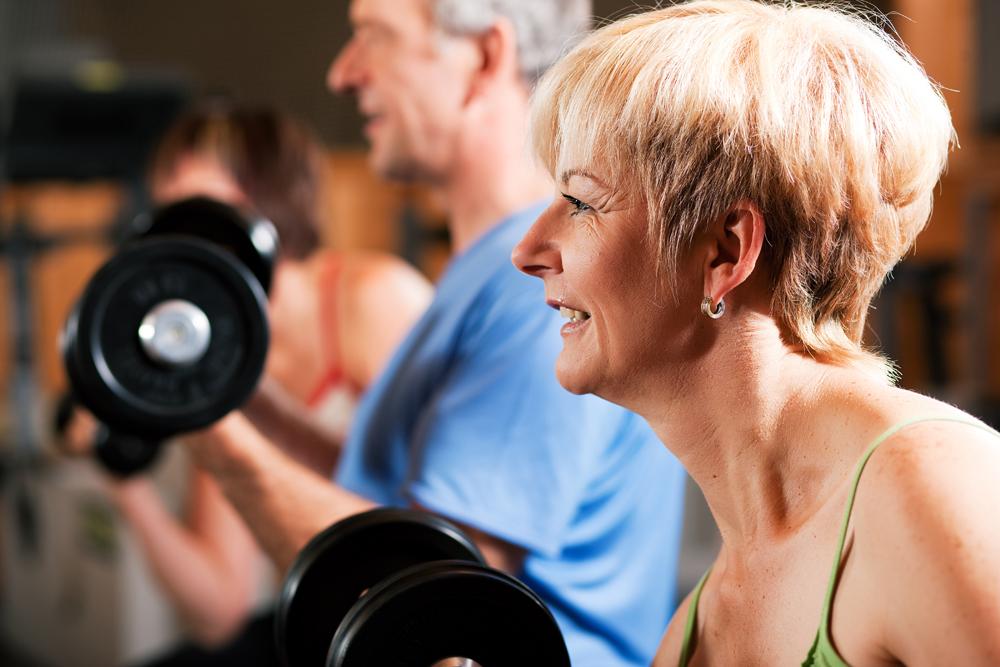
In recent years, a number of research studies have heralded the benefits of long-term exercise on cognitive function. Few, however, have looked at how much exercise is needed to make a difference – and now a new study* by scientists at UC Irvine (UCI) suggests that just a short burst of moderate physical activity can immediately improve memory in older adults.
It’s an interesting finding considering the resurgence of high-intensity interval training that’s taking place in the health and fitness industry at the moment (see our recent HIT series, HCM July, August and October 2012).
Surprise test The relatively small study, led by post-doctoral neurobiologist Sabrina Segal and her team at UCI, was based on 31 healthy adults and 23 patients who were recruited from the university’s Alzheimer’s Disease Center. Their ages ranged from 50–85 years.
For the study, the participants were split into two groups, with both groups starting out by looking at 20 emotionally positive images – such as pictures of nature and animals.
Participants then either exercised for six minutes on a stationary cycle at 70 per cent VO2 max, or rested quietly (the sedentary control group). An hour after the exercise or rest, participants were then surprised with a test where they were asked to describe the images they had seen in as much detail as possible.
Saliva samples were also taken before participants looked at the images and immediately after, as well as before the bike test/rest and at 10-, 30- and 50-minute intervals after that.
Double-sided The results revealed that the people who had exercised recalled significantly more images and details than those who had rested. This was the case among both healthy ageing adults and those with Alzheimer’s.
In fact, in a surprise outcome, exercise appeared to aid memory even more effectively in the participants with Alzheimer’s – this group saw almost a twofold improvement, compared to 1.3-fold among healthy adults. Segal says: “We found that a single, short instance of moderately intense exercise particularly improved memory in individuals with memory deficits [Alzheimer’s].”
She adds: “Because of its implications and the need to better understand the mechanism by which exercise may enhance memory, we’re following up this study with an investigation of potential underlying biological factors.”
One of the biological factors Segal believes is it at play is the exercise-induced release of norepinephrine – a chemical that is strongly linked to memory in the brain. In the study, she found that salivary alpha amylase – a biomarker reflecting norepinephrine activity in the brain – had significantly increased in the groups which exercised. And, in correlation with the memory test results, salivary alpha amylase was at a greater level among the people suffering from Alzheimer’s.
“The current findings offer a natural and relatively safe alternative to pharmacological interventions for memory enhancement in healthy older individuals, as well as those who suffer from cognitive deficits,” she concludes.
*Segal et al. Exercise-Induced Activation Enhances Memory Consolidation in Both Normal Aging and Patients with Anmestic Mild Cognitive Impairment. Journal of Alzheimer’s Disease. November 2012
In recent years, a number of research studies have heralded the benefits of long-term exercise on cognitive function. Few, however, have looked at how much exercise is needed to make a difference – and now a new study* by scientists at UC Irvine (UCI) suggests that just a short burst of moderate physical activity can immediately improve memory in older adults.
It’s an interesting finding considering the resurgence of high-intensity interval training that’s taking place in the health and fitness industry at the moment (see our recent HIT series, HCM July, August and October 2012).
Surprise test The relatively small study, led by post-doctoral neurobiologist Sabrina Segal and her team at UCI, was based on 31 healthy adults and 23 patients who were recruited from the university’s Alzheimer’s Disease Center. Their ages ranged from 50–85 years.
For the study, the participants were split into two groups, with both groups starting out by looking at 20 emotionally positive images – such as pictures of nature and animals.
Participants then either exercised for six minutes on a stationary cycle at 70 per cent VO2 max, or rested quietly (the sedentary control group). An hour after the exercise or rest, participants were then surprised with a test where they were asked to describe the images they had seen in as much detail as possible.
Saliva samples were also taken before participants looked at the images and immediately after, as well as before the bike test/rest and at 10-, 30- and 50-minute intervals after that.
Double-sided The results revealed that the people who had exercised recalled significantly more images and details than those who had rested. This was the case among both healthy ageing adults and those with Alzheimer’s.
In fact, in a surprise outcome, exercise appeared to aid memory even more effectively in the participants with Alzheimer’s – this group saw almost a twofold improvement, compared to 1.3-fold among healthy adults. Segal says: “We found that a single, short instance of moderately intense exercise particularly improved memory in individuals with memory deficits [Alzheimer’s].”
She adds: “Because of its implications and the need to better understand the mechanism by which exercise may enhance memory, we’re following up this study with an investigation of potential underlying biological factors.”
One of the biological factors Segal believes is it at play is the exercise-induced release of norepinephrine – a chemical that is strongly linked to memory in the brain. In the study, she found that salivary alpha amylase – a biomarker reflecting norepinephrine activity in the brain – had significantly increased in the groups which exercised. And, in correlation with the memory test results, salivary alpha amylase was at a greater level among the people suffering from Alzheimer’s.
“The current findings offer a natural and relatively safe alternative to pharmacological interventions for memory enhancement in healthy older individuals, as well as those who suffer from cognitive deficits,” she concludes.
*Segal et al. Exercise-Induced Activation Enhances Memory Consolidation in Both Normal Aging and Patients with Anmestic Mild Cognitive Impairment. Journal of Alzheimer’s Disease. November 2012
A recent survey by the UK Spa Association (UKSA) into the industry’s approach to cancer care
has revealed that almost half of participating respondents (46 per cent) are unaware that
cancer is a disability and guests with a cancer diagnosis must be given
Mexican operator, Solmar Hotels and Resorts, is hosting a series of events in celebration of
Global Wellness Day, including a Temazcal ceremony at its Playa Grande Resort and Spa in Los
Cabos.
Mandarin Oriental has announced a standalone residence brand, Mansions, which will debut at
Emirates Palace, Mandarin Oriental Mansions, Abu Dhabi, in 2029.
Four Seasons Resort The Nam Hai in Hoi An, Vietnam, has put together a Global Wellness Day
(GWD) agenda with activations rooted in nature and shaped by four pillars of Joy – in
alignment with the day’s theme #JoyMagenta.
The Global Wellness Summit (GWS) will celebrate its 20th anniversary at the 2026 event in
Phuket, Thailand, later this year with the theme: The Science, Art and Soul of Wellness.
Auko, an all-inclusive development, is opening in Phong Nha in Vietnam in Q3 2026, with a
series of 30 tented eco-lodges and wellness hospitality operations by Lumina Wellbeing.
Therme Manchester’s 28-acre development, which will include interconnected glass pavilions
that measure 65,000sq m, will be the largest bathing and wellbeing attraction in the world once
complete, according to prof David Russell, CEO of Therme UK.
Naples Beach Club, a Four Seasons Resort, has opened a 2,800sq m spa called The Sanctuary,
with the design and concept inspired by the Native American people that populated Florida’s
Southwest coast – the Calusa.
Swire Hotels’ luxury hospitality brand Upper House has revealed it will roll out its two-day
House of Healing retreats at its three hotels in Hong Kong, Chengdu and Shanghai.