Yes! Send me the FREE digital editions of Spa Business and Spa Business insider magazines and the FREE weekly Spa Business and Spa Business insider ezines and breaking news alerts!
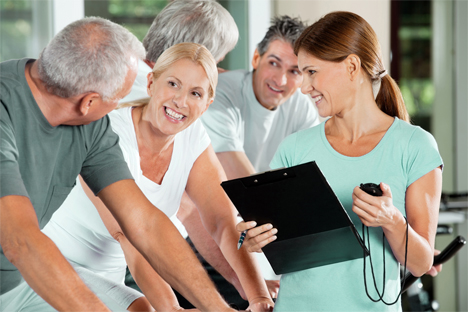
Being active is one of the five recommendations put forward to help improve people's wellbeing / PHOTO: SHUTTERSTOCK.wCOM/pressmaster
In my previous article, I described the professional practice of health coaching: guiding and empowering people to make one or more changes to their health behaviour, in ways likely to bring about improved health. I emphasised the importance of empathic listening, evoking from the other person rather than telling and instructing, working in partnership and sharing ideas in a respectful, person-centred manner. This article builds on the ideas and concepts shared in the first article.
Instead of health, though, we will be talking about wellbeing: the two are related, but not the same. It’s perfectly possible to have good physical health and poor psychological wellbeing, or to have poor physical health but good wellbeing. Some activities will commonly improve both health and wellbeing – becoming more active, for example – but there are some specific activities people can engage in which might be expected to improve their wellbeing over time.
What is wellbeing? There are several definitions of wellbeing. Some emphasise the ‘feeling good/feeling well’ aspects of wellbeing, while others emphasise the ‘doing good/doing well’ aspects. For instance, according to the Government Foresight Report: Mental Capital and Wellbeing: “Mental wellbeing is a dynamic state in which the individual is able to develop their potential, work productively and creatively, build strong and positive relationships with others and contribute to their community. It is enhanced when an individual is able to fulfil their personal and social goals and achieve a sense of purpose in society.”
This definition emphasises that wellbeing is related to optimum human functioning, thriving and flourishing. Other definitions of wellbeing are more akin to the idea of happiness – the pleasant inner emotion characterised by positive feelings like contentment, joy, achievement, feeling accepted and loved.
Of course, these different aspects of wellbeing are related. Generally speaking, doing well in life tends to bring with it a flow of positive emotions and experiences, while people who experience more happiness, optimism and wellbeing tend to do better in life. This two-way relationship between doing well and feeling well has led to people talking about an upward spiral of wellbeing, where one good thing leads to another. Improved psychological wellbeing can also result in improved physical health, even for people with long-term health problems.
Origins of wellbeing Research suggests that a person’s level of wellbeing is determined by three main factors: their biology, their circumstances, and their attitudes and behaviours. This last factor – attitudes and behaviours – is thought to account for up to 35-40 per cent of people’s happiness. So what does the research suggest a person should do if they want to protect and improve their happiness and wellbeing?
When it comes to health promotion, the UK government likes to focus on fives: a recommended intake of five portions of fruit and vegetables a day, or taking part in 5 x 30 minutes of moderate physical activity every week. The government therefore asked Nic Marks and his colleagues at the New Economics Foundation to come up with 'Five Ways to Wellbeing', with the following suggestions put forward: - Connect - Be active - Take notice - Keep learning - Give
Meanwhile, over in the US, Martin Seligman – one of the fathers of the positive psychology movement – suggests that there are five ‘pillars’ of wellbeing: - Positive emotions - Engagement - Relationships - Meaning - Achievement / accomplishment
What is wellbeing coaching? To my mind, wellbeing coaching is helping people apply insights from the science of wellbeing (sometimes called positive psychology) to their own lives, but following the principles outlined in my previous article. For instance, you don’t tell people what to do – you share and explore options with them, their reasons and motivations for change, and help them come up with plans for making changes if that’s what they want to do.
I’ve been teaching people about positive psychology for over 10 years, helping individuals apply it in their own lives and helping organisations apply it with their managers and staff. When I’m undertaking wellbeing coaching with individuals and groups, there are a number of options I explore to help them protect and improve their wellbeing into the future.
Here are 13 activities I encourage people to experiment with: - Clarify values. Learn what’s important to you – the things you consider to be part of the good life. You can do this with a card-sorting exercise, and you can find the cards here: http://casaa.unm.edu/inst/Personal Values Card Sort.pdf - Set goals in line with your values – long-term and short-term, and in more than one area of your life. Powerful goal-setting exercises include watching your own funeral (and writing down what you want people to be thinking and saying about you), writing your own obituary (writing down what you want to be remembered for), and imagining what will be happening in your life in around three to five years’ time if things were going really well for you. - Invest in friendship. Make a list of friends with whom you’ve been out of touch for a while and arrange to meet up. Make more time for friends. - Become a better listener. - Engage in small and large acts of kindness. Do something nice for someone, or several people. - Become more active. - Increase your contact with nature. We didn’t evolve to live in urban environments, so find ways of spending more time close to animals, fields, hills, lakes and woods. - Get into 'flow'. Flow is the positive emotional and performance state identified by the psychologist Mihalyi Csikzentmihalyi. When in flow, you lose track of time and become less self-conscious. You become absorbed, immersed and lost in the task or activity. This might be cooking, gardening, writing, painting, playing music – we all get into flow doing different things. Identify when and where you enter this state, and try to spend more time in it. - Discover, explore and use your strengths. Strengths are the things that are right about you, that you do well, that others appreciate about you, and that you feel drawn towards doing. Once way of doing this is to take an online survey – for instance, here: http://www.viame.org Become more mindful. Learn to pay attention in a non-judgmental way. Mindfulness is proving itself to be an extremely effective way of helping many people improve their wellbeing, and I commonly recommend people buy and listen to the MP3 files in the book Mindfulness. A practical guide to finding peace in a frantic world (Mark Williams and Danny Penman, 2011): http://www.amazon.co.uk/Mindfulness-practical-guide-finding-frantic/dp/074995308X - Forgive people who've hurt or offended you and let go of grudges. You don’t have to tell them you've done this – this is more about you than them. The aim is to reduce your experience of negative emotions such as bitterness, hurt, anger and hatred. - Cultivate gratitude. Once or twice a week, write down a list of things you’re grateful for – things you sometimes take for granted. Reflect on these, and let the feeling of gratefulness arise within you. Also, express gratitude more often to others, whether that’s for small things like serving you coffee or for big things. Express gratitude to people to whom you are grateful, but to whom you have never really expressed that gratitude. Tell them why you’re grateful, what they did, and why it means or meant so much to you. - Notice good things. We’re wired to notice bad things: threat, danger, potential loss, etc. They grab our attention more easily. Good things happen, but we may have to pay more attention to notice them. In this exercise, sometimes called ‘what went well’, I encourage individuals to identify and write down four to seven good things that have happened to them in the previous 24 hours. Some people choose to do this at the end of each day for a seven-day period, and see what happens. - Get help. If your level of wellbeing is really low – if you are very unhappy, anxious, addicted, feeling out of control, etc – then go and see a trained health professional such as your GP, practice nurse or someone from the local NHS counselling services (sometimes called the IAPT service: increasing access to psychological therapies).
Reflection Many people lack wellbeing. They experience boredom, feelings of isolation, sadness, lack of meaning, self-doubt, self-criticism, regrets about the past and worries about the future. Sometimes these thoughts and feelings are so strong and long-lasting that modern medicine calls them ‘psychological conditions’ and recommends treatment for them.
Without wishing to understate the importance of doctors, psychologists and other mental health professionals in helping people with psychological health problems get well, I believe many of us would benefit from evidence-based wellbeing coaching by a professional, and this service is best offered in non-clinical settings such as health clubs and leisure centres.
Tim Anstiss is a medical doctor who has been training health professionals in the use of behaviour change techniques for over 20 years. He helped develop the training materials for the Let’s Get Moving national programme for physical activity, as well as co-authoring a National Obesity Observatory report on weight loss. He is currently training cancer clinicians in health coaching as part of the National Cancer Survivorship Initiative, and developing a health coaching qualification in conjunction with SkillsActive. He is also a former international polevaulter and Gladiators contender.
Being active is one of the five recommendations put forward to help improve people's wellbeing / PHOTO: SHUTTERSTOCK.wCOM/pressmaster
In my previous article, I described the professional practice of health coaching: guiding and empowering people to make one or more changes to their health behaviour, in ways likely to bring about improved health. I emphasised the importance of empathic listening, evoking from the other person rather than telling and instructing, working in partnership and sharing ideas in a respectful, person-centred manner. This article builds on the ideas and concepts shared in the first article.
Instead of health, though, we will be talking about wellbeing: the two are related, but not the same. It’s perfectly possible to have good physical health and poor psychological wellbeing, or to have poor physical health but good wellbeing. Some activities will commonly improve both health and wellbeing – becoming more active, for example – but there are some specific activities people can engage in which might be expected to improve their wellbeing over time.
What is wellbeing? There are several definitions of wellbeing. Some emphasise the ‘feeling good/feeling well’ aspects of wellbeing, while others emphasise the ‘doing good/doing well’ aspects. For instance, according to the Government Foresight Report: Mental Capital and Wellbeing: “Mental wellbeing is a dynamic state in which the individual is able to develop their potential, work productively and creatively, build strong and positive relationships with others and contribute to their community. It is enhanced when an individual is able to fulfil their personal and social goals and achieve a sense of purpose in society.”
This definition emphasises that wellbeing is related to optimum human functioning, thriving and flourishing. Other definitions of wellbeing are more akin to the idea of happiness – the pleasant inner emotion characterised by positive feelings like contentment, joy, achievement, feeling accepted and loved.
Of course, these different aspects of wellbeing are related. Generally speaking, doing well in life tends to bring with it a flow of positive emotions and experiences, while people who experience more happiness, optimism and wellbeing tend to do better in life. This two-way relationship between doing well and feeling well has led to people talking about an upward spiral of wellbeing, where one good thing leads to another. Improved psychological wellbeing can also result in improved physical health, even for people with long-term health problems.
Origins of wellbeing Research suggests that a person’s level of wellbeing is determined by three main factors: their biology, their circumstances, and their attitudes and behaviours. This last factor – attitudes and behaviours – is thought to account for up to 35-40 per cent of people’s happiness. So what does the research suggest a person should do if they want to protect and improve their happiness and wellbeing?
When it comes to health promotion, the UK government likes to focus on fives: a recommended intake of five portions of fruit and vegetables a day, or taking part in 5 x 30 minutes of moderate physical activity every week. The government therefore asked Nic Marks and his colleagues at the New Economics Foundation to come up with 'Five Ways to Wellbeing', with the following suggestions put forward: - Connect - Be active - Take notice - Keep learning - Give
Meanwhile, over in the US, Martin Seligman – one of the fathers of the positive psychology movement – suggests that there are five ‘pillars’ of wellbeing: - Positive emotions - Engagement - Relationships - Meaning - Achievement / accomplishment
What is wellbeing coaching? To my mind, wellbeing coaching is helping people apply insights from the science of wellbeing (sometimes called positive psychology) to their own lives, but following the principles outlined in my previous article. For instance, you don’t tell people what to do – you share and explore options with them, their reasons and motivations for change, and help them come up with plans for making changes if that’s what they want to do.
I’ve been teaching people about positive psychology for over 10 years, helping individuals apply it in their own lives and helping organisations apply it with their managers and staff. When I’m undertaking wellbeing coaching with individuals and groups, there are a number of options I explore to help them protect and improve their wellbeing into the future.
Here are 13 activities I encourage people to experiment with: - Clarify values. Learn what’s important to you – the things you consider to be part of the good life. You can do this with a card-sorting exercise, and you can find the cards here: http://casaa.unm.edu/inst/Personal Values Card Sort.pdf - Set goals in line with your values – long-term and short-term, and in more than one area of your life. Powerful goal-setting exercises include watching your own funeral (and writing down what you want people to be thinking and saying about you), writing your own obituary (writing down what you want to be remembered for), and imagining what will be happening in your life in around three to five years’ time if things were going really well for you. - Invest in friendship. Make a list of friends with whom you’ve been out of touch for a while and arrange to meet up. Make more time for friends. - Become a better listener. - Engage in small and large acts of kindness. Do something nice for someone, or several people. - Become more active. - Increase your contact with nature. We didn’t evolve to live in urban environments, so find ways of spending more time close to animals, fields, hills, lakes and woods. - Get into 'flow'. Flow is the positive emotional and performance state identified by the psychologist Mihalyi Csikzentmihalyi. When in flow, you lose track of time and become less self-conscious. You become absorbed, immersed and lost in the task or activity. This might be cooking, gardening, writing, painting, playing music – we all get into flow doing different things. Identify when and where you enter this state, and try to spend more time in it. - Discover, explore and use your strengths. Strengths are the things that are right about you, that you do well, that others appreciate about you, and that you feel drawn towards doing. Once way of doing this is to take an online survey – for instance, here: http://www.viame.org Become more mindful. Learn to pay attention in a non-judgmental way. Mindfulness is proving itself to be an extremely effective way of helping many people improve their wellbeing, and I commonly recommend people buy and listen to the MP3 files in the book Mindfulness. A practical guide to finding peace in a frantic world (Mark Williams and Danny Penman, 2011): http://www.amazon.co.uk/Mindfulness-practical-guide-finding-frantic/dp/074995308X - Forgive people who've hurt or offended you and let go of grudges. You don’t have to tell them you've done this – this is more about you than them. The aim is to reduce your experience of negative emotions such as bitterness, hurt, anger and hatred. - Cultivate gratitude. Once or twice a week, write down a list of things you’re grateful for – things you sometimes take for granted. Reflect on these, and let the feeling of gratefulness arise within you. Also, express gratitude more often to others, whether that’s for small things like serving you coffee or for big things. Express gratitude to people to whom you are grateful, but to whom you have never really expressed that gratitude. Tell them why you’re grateful, what they did, and why it means or meant so much to you. - Notice good things. We’re wired to notice bad things: threat, danger, potential loss, etc. They grab our attention more easily. Good things happen, but we may have to pay more attention to notice them. In this exercise, sometimes called ‘what went well’, I encourage individuals to identify and write down four to seven good things that have happened to them in the previous 24 hours. Some people choose to do this at the end of each day for a seven-day period, and see what happens. - Get help. If your level of wellbeing is really low – if you are very unhappy, anxious, addicted, feeling out of control, etc – then go and see a trained health professional such as your GP, practice nurse or someone from the local NHS counselling services (sometimes called the IAPT service: increasing access to psychological therapies).
Reflection Many people lack wellbeing. They experience boredom, feelings of isolation, sadness, lack of meaning, self-doubt, self-criticism, regrets about the past and worries about the future. Sometimes these thoughts and feelings are so strong and long-lasting that modern medicine calls them ‘psychological conditions’ and recommends treatment for them.
Without wishing to understate the importance of doctors, psychologists and other mental health professionals in helping people with psychological health problems get well, I believe many of us would benefit from evidence-based wellbeing coaching by a professional, and this service is best offered in non-clinical settings such as health clubs and leisure centres.
Tim Anstiss is a medical doctor who has been training health professionals in the use of behaviour change techniques for over 20 years. He helped develop the training materials for the Let’s Get Moving national programme for physical activity, as well as co-authoring a National Obesity Observatory report on weight loss. He is currently training cancer clinicians in health coaching as part of the National Cancer Survivorship Initiative, and developing a health coaching qualification in conjunction with SkillsActive. He is also a former international polevaulter and Gladiators contender.
Patmos Aktis, a Luxury Collection Resort and Spa, has opened in Greece, with a renovated and
rebranded wellness offering called Ansana Wellness and Spa.
The Mauna Kea Beach Hotel, an Autograph Collection property in Hawaii, US, has opened its
22,000 sq ft indoor-outdoor Spa at Mauna Kea as the final step in the property’s overall
renovation, which has cost more than US$180 million (€166 million, £140 mill
The UK spa review and discovery platform for consumers, the Good Spa Guide, has announced
it will host the Good Spa Guide Awards 2026 during an event on 16 November at Sopwell House
Hotel in St Albans, UK.
Eighty-four per cent of consumers now say wellness is a top priority in their lives, with this
percentage increasing year on year, according to a preview presentation of McKinsey’s Future of
Wellness 2026 research report.
Mass protests have been taking place since Monday 1 June in Albania over the development of
a luxury resort by Donald Trump’s daughter Ivanka Trump and her husband Jared Kushner.
Global Wellness Day (GWD) marked its 15th anniversary on Saturday 13 June 2026, with the
theme: #JoyMagenta – a celebration of the healing qualities of simple gestures and activities
that spark joy.
Global luxury hospitality brand, Six Senses, has partnered with longevity healthcare provider,
HUM2N, to launch a clinic at Six Senses London, at The Whiteley.
As part of its first hotel partnership, Mayrlife – the medical health resort company known for its
site in Altaussee, Austria – has launched a day clinic at the Rosewood Vienna.
Premium London health club, KX Chelsea, will imminently unveil its most significant
redevelopment since its launch in 2002 to create an integrated wellness model combining
training, recovery and relaxation.
Rosewood Le Guanahani St Barth, on the northeast coast of Saint Barthélemy in the French
West Indies, is offering a programme of ocean-inspired yoga classes between 8-14 June to
celebrate Global Wellness Day (GWD).