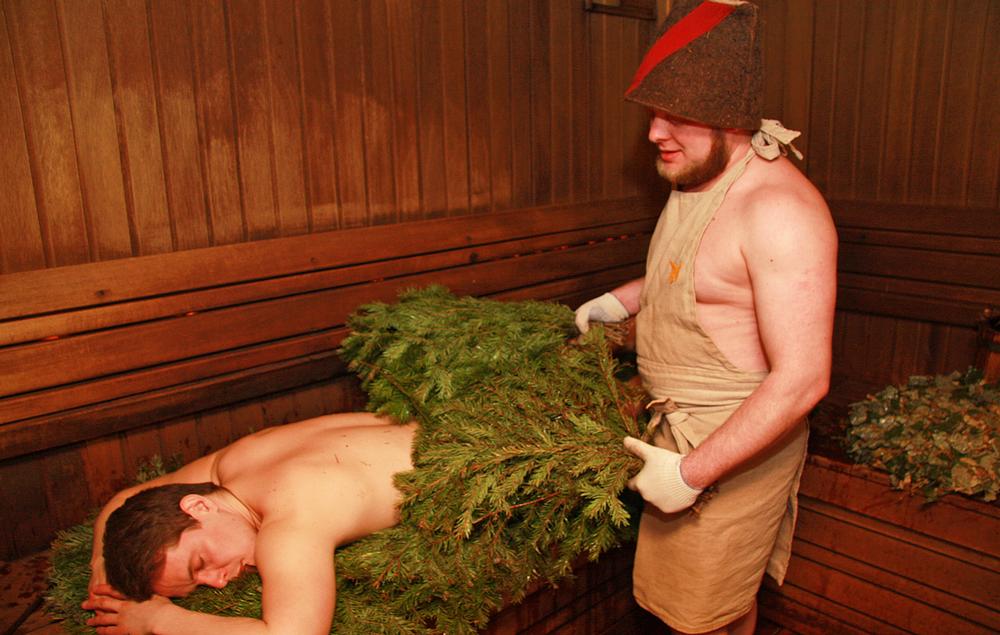
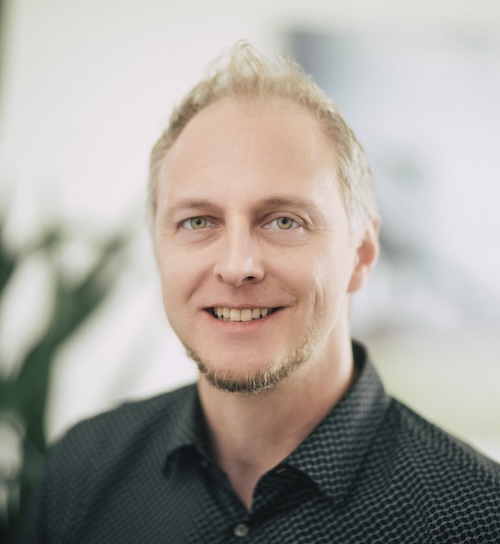
Aleksey’s been a banya specialist for eight years and came second in the 2013 Russian Banya Champaionships
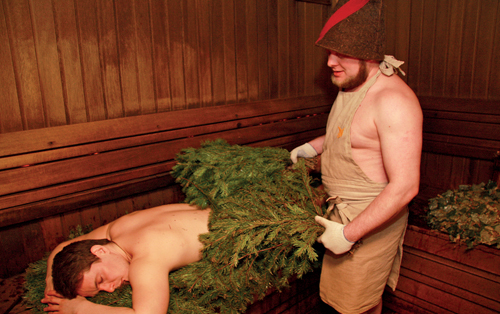
As I lie on a bed of pine leaves, sweating profusely in an 80°C heat sauna while a burly Russian smacks my bare buttocks with a scolding bundle of twigs, I begin to understand that a banya experience is a little more extreme than your typical spa session.
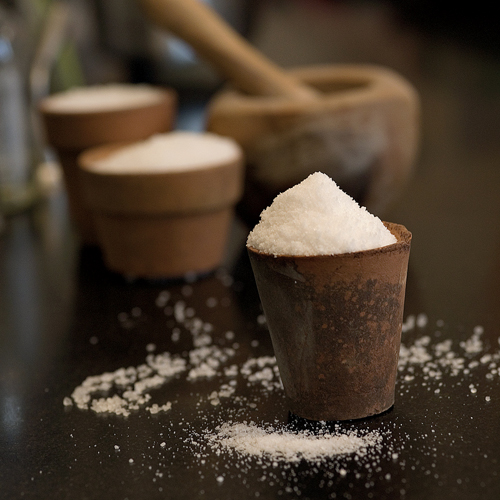
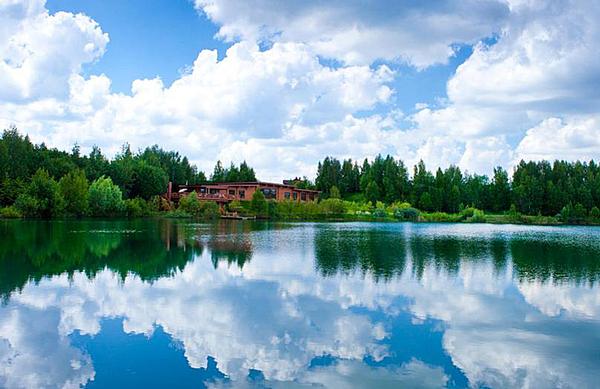
I’m at Fox Lodge, a 2,000sq m (21,527sq ft) lakeside spa 45km north of Moscow, where wealthy Russians – there’s a helipad on-site for anyone with an aversion to traffic – venture for a relaxing weekend away from the city. Treatments range from the standard massage/facial set-up through to a mineral-based salt cave where vaporised salt, with antibacterial properties, is used to tackle infections. The main emphasis is on results over relaxation, a common trait in Russian spas.
Branching out After a brief tour, I’m introduced to banya specialist Aleksey – the man who’s about to guide me through the most painful two hours of my life. We begin with tea and I’m given the choice of rosemary, lemon balm or sage. Opting for the rosemary scent, I’m told this indicates I’m lacking energy and that Aleksey – who’s now changing into his special homemade apron and felt hat to guard against the impending heat – will tailor my session accordingly.
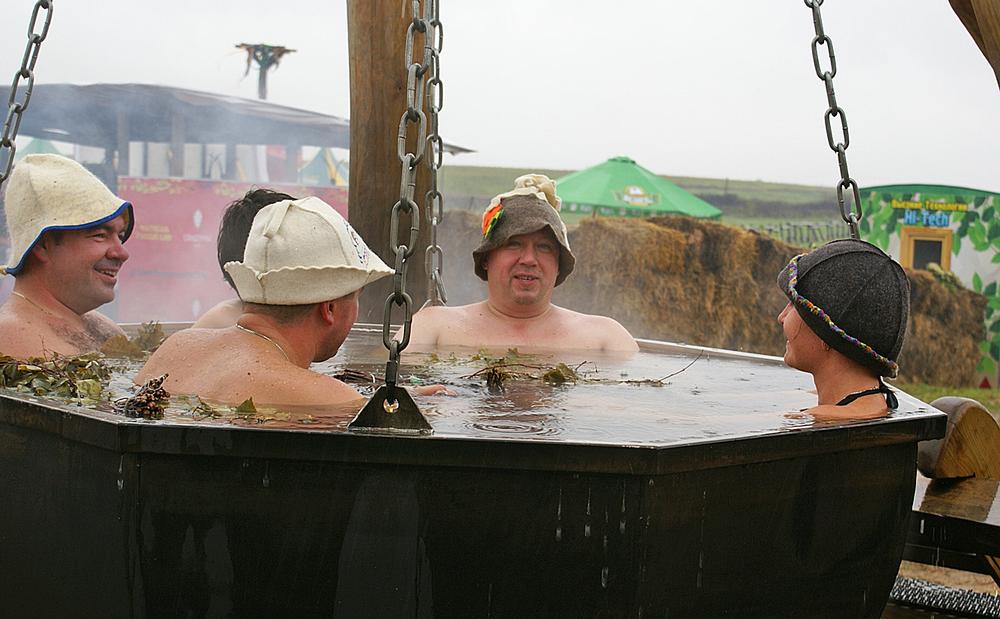
A banya is an age-old Russian spa tradition. The basic premise is to encourage healing and circulatory wellness by alternating between hot and cold temperature. The steam, which is generated from eucalyptus-infused water poured over scorching stones, heats the sauna to between 60-90?C, with its menthol vapour soothing the lungs and respiratory system.
The small sauna is built from cedar and pine – revered in Russian culture for their healing virtues. I’m instructed, through grunting and gesturing, to lie face-down on a bench.
Once prone, pine branches soaked in iced water are placed beneath and on top of my head, while Aleksey scuttles off to fetch his fenik – the bundle of birch twigs he will use to spank me with. I’d like to say it’s a painless, pleasant experience, but I’d be lying.
The fenik is intermittently dipped in piping hot water, before the searing droplets are shaken over my pink skin. The branches are then brushed against my body, lightly at first, but soon noticeably harder, until I can feel the breath rush out of my lungs with each thwack.
I learn later on that birch is a symbol of beauty in Russian folklore, “so to become beautiful, you have to be beaten with it”. Interesting logic.
Banya truly is a case of no pain, no gain. Every inch of my body – front, back and sides – is given a good going over in a bid to stimulate my lymphatic system and excrete the industrial strength vodka and other toxins coursing my veins. The branches do part of the work, but they’re ably assisted by the leaves, which fan the extreme heat of the sauna around my body, intensifying the effect.
Expert training To the casual outsider, it would look like one barely-clothed man is simply whacking another totally-unclothed man with a stick, but this is unfair to Aleksey.
To become a banya specialist, which he has been for eight years, one must attend a special banya steam school – ideally in Moscow or Siberia – for roughly six months. Prior to this, the apprentice must have undergone at least two to three years of medical training (to the level required to become a nurse). Aleksey tells me later that the thorough training is vital because in the intense heat of the sauna, it’s crucial to monitor the body’s responses, blood pressure and breathing patterns to ensure the conditions are safe.
He hones his skills by regularly competing against fellow banya specialists and recently came second at the annual Russian Banya Championships. The event, which is held each year in the small town of Sudzal, judges practitioners on client care, attentiveness and therapy technique – including how they use the branches on the body and to circulate the air.
Freezing plunge Back to the boiling banya, and as a small river of sweat makes its way from my body, Aleksey decides its time for a break.
Given the intense heat, breaks are essential and come in a variety of forms. Sometimes he’ll throw a bucket of chilled water over me and we’ll quite literally crack on, while for others I’m led to the sanctity of the relaxation lounge overlooking the gleaming frozen lake.
On this occasion, my legs are coated in a soothing Thalion vein-toning cream to offset any adverse reactions to the heat. Other times, I’m treated to a vitamin cocktail or coated in a honey and sand body scrub. In Russia, honey is used as a healing agent and also serves as a natural moisturiser, while its antibacterial qualities help protect my skin from the toxins in my sweat.
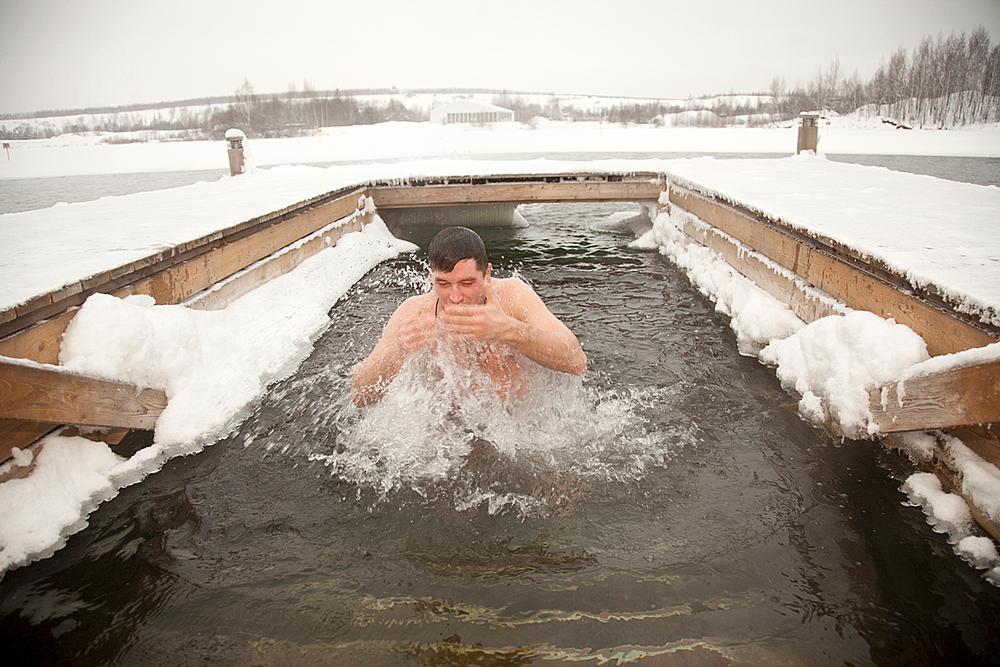
Finally, when I can take no more of the banya and birch-bashing, I’m led outside to a plunge pool next to the lake. I’m dunked repeatedly in the freezing cold water until my lungs near implosion.
Parting gift After a warm shower and incongruously tender head massage from Aleksey, I sit rejuvenated in the lounge and realise that just because a spa treatment doesn’t come with candles and an Enya backing track, that doesn’t make it any less beneficial. While the west favours relaxation and a more gentle approach, Russia favours results and, like a maverick TV cop, it isn’t afraid to get a little rough in the process.
As a parting gift, Aleksey meets me clutching an iPhone and bashes a message into Google Translate: “Without experiencing extremities, we can never truly appreciate the extent of our capabilities.”
Read more from this issue of Spa Business magazine
Letters: Letters
Why don't more spas participate in benchmarking schemes?
Interview: Andrew Gibson
The new VP of spa and wellness at FRHI tells Katie Barnes about his plans for spas in the Fairmont, Raffles and Swissôtel hotel chains
First person: Braving the Banya
Jak Phillips gets whacked with birch branches and endures two hours in an 80?C sauna – all in the name of wellness
Hotel spa: Green house
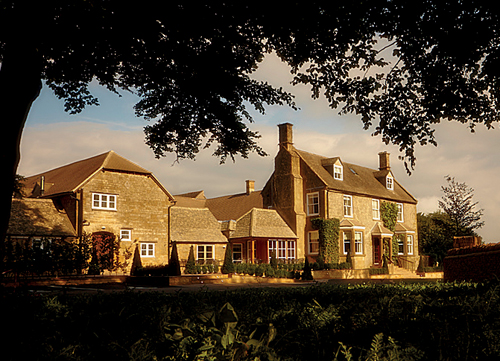
The family behind Ecover cleaning products invests in an idyllic hotel and spa set in the English countryside
Focus on: Gut restoration
The complex nervous system in our stomach is known as the second brain due to the impact it can have on everything from our mood to immunity. Julie Cramer investigates
Celebrity spa: Mane attraction
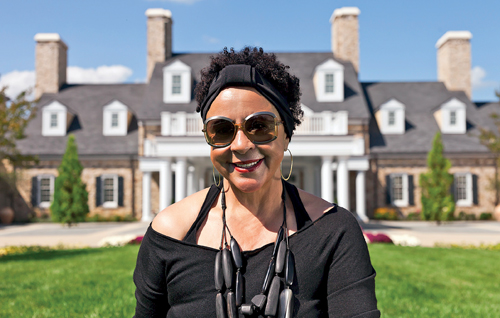
A passion for horses, wellness and business underpin the new US Salamander Resort & Spa that's owned by filmmaker Sheila C Johnson
Spa software: Operator case studies – part 2
Spa managers tell Kate Corney how they're using software to improve the performance of their businesses – from streamlining operations to keeping on top of revenue reports
Product focus: Private label
What companies offer white label skincare and products? And how can own-brand ranges benefit spas? Kate Corney finds out
Aleksey’s been a banya specialist for eight years and came second in the 2013 Russian Banya Champaionships
As I lie on a bed of pine leaves, sweating profusely in an 80°C heat sauna while a burly Russian smacks my bare buttocks with a scolding bundle of twigs, I begin to understand that a banya experience is a little more extreme than your typical spa session.
I’m at Fox Lodge, a 2,000sq m (21,527sq ft) lakeside spa 45km north of Moscow, where wealthy Russians – there’s a helipad on-site for anyone with an aversion to traffic – venture for a relaxing weekend away from the city. Treatments range from the standard massage/facial set-up through to a mineral-based salt cave where vaporised salt, with antibacterial properties, is used to tackle infections. The main emphasis is on results over relaxation, a common trait in Russian spas.
Branching out After a brief tour, I’m introduced to banya specialist Aleksey – the man who’s about to guide me through the most painful two hours of my life. We begin with tea and I’m given the choice of rosemary, lemon balm or sage. Opting for the rosemary scent, I’m told this indicates I’m lacking energy and that Aleksey – who’s now changing into his special homemade apron and felt hat to guard against the impending heat – will tailor my session accordingly.
A banya is an age-old Russian spa tradition. The basic premise is to encourage healing and circulatory wellness by alternating between hot and cold temperature. The steam, which is generated from eucalyptus-infused water poured over scorching stones, heats the sauna to between 60-90?C, with its menthol vapour soothing the lungs and respiratory system.
The small sauna is built from cedar and pine – revered in Russian culture for their healing virtues. I’m instructed, through grunting and gesturing, to lie face-down on a bench.
Once prone, pine branches soaked in iced water are placed beneath and on top of my head, while Aleksey scuttles off to fetch his fenik – the bundle of birch twigs he will use to spank me with. I’d like to say it’s a painless, pleasant experience, but I’d be lying.
The fenik is intermittently dipped in piping hot water, before the searing droplets are shaken over my pink skin. The branches are then brushed against my body, lightly at first, but soon noticeably harder, until I can feel the breath rush out of my lungs with each thwack.
I learn later on that birch is a symbol of beauty in Russian folklore, “so to become beautiful, you have to be beaten with it”. Interesting logic.
Banya truly is a case of no pain, no gain. Every inch of my body – front, back and sides – is given a good going over in a bid to stimulate my lymphatic system and excrete the industrial strength vodka and other toxins coursing my veins. The branches do part of the work, but they’re ably assisted by the leaves, which fan the extreme heat of the sauna around my body, intensifying the effect.
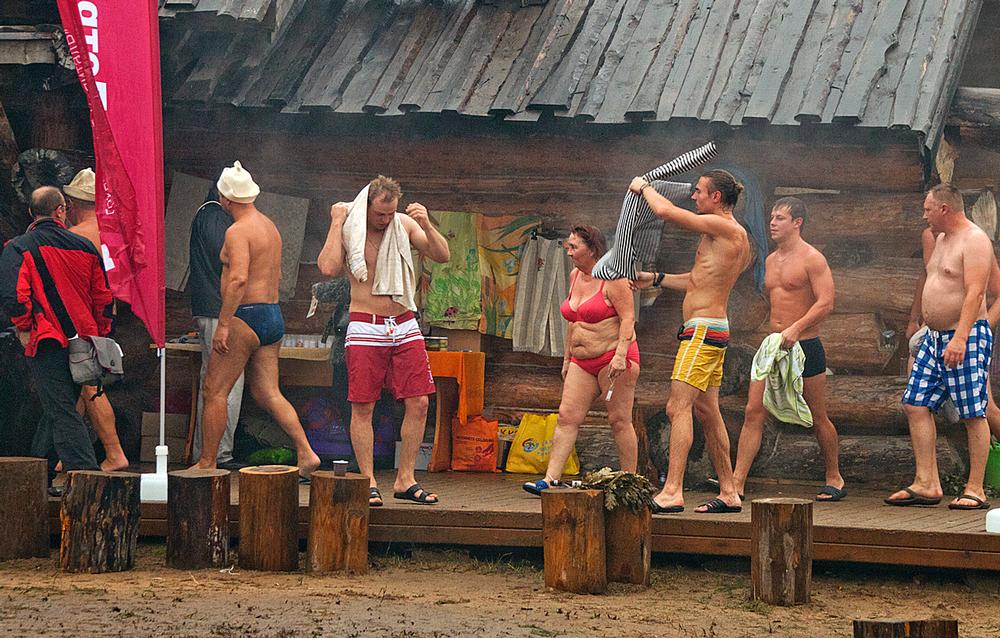
Expert training To the casual outsider, it would look like one barely-clothed man is simply whacking another totally-unclothed man with a stick, but this is unfair to Aleksey.
To become a banya specialist, which he has been for eight years, one must attend a special banya steam school – ideally in Moscow or Siberia – for roughly six months. Prior to this, the apprentice must have undergone at least two to three years of medical training (to the level required to become a nurse). Aleksey tells me later that the thorough training is vital because in the intense heat of the sauna, it’s crucial to monitor the body’s responses, blood pressure and breathing patterns to ensure the conditions are safe.
He hones his skills by regularly competing against fellow banya specialists and recently came second at the annual Russian Banya Championships. The event, which is held each year in the small town of Sudzal, judges practitioners on client care, attentiveness and therapy technique – including how they use the branches on the body and to circulate the air.
Freezing plunge Back to the boiling banya, and as a small river of sweat makes its way from my body, Aleksey decides its time for a break.
Given the intense heat, breaks are essential and come in a variety of forms. Sometimes he’ll throw a bucket of chilled water over me and we’ll quite literally crack on, while for others I’m led to the sanctity of the relaxation lounge overlooking the gleaming frozen lake.
On this occasion, my legs are coated in a soothing Thalion vein-toning cream to offset any adverse reactions to the heat. Other times, I’m treated to a vitamin cocktail or coated in a honey and sand body scrub. In Russia, honey is used as a healing agent and also serves as a natural moisturiser, while its antibacterial qualities help protect my skin from the toxins in my sweat.
Finally, when I can take no more of the banya and birch-bashing, I’m led outside to a plunge pool next to the lake. I’m dunked repeatedly in the freezing cold water until my lungs near implosion.
Parting gift After a warm shower and incongruously tender head massage from Aleksey, I sit rejuvenated in the lounge and realise that just because a spa treatment doesn’t come with candles and an Enya backing track, that doesn’t make it any less beneficial. While the west favours relaxation and a more gentle approach, Russia favours results and, like a maverick TV cop, it isn’t afraid to get a little rough in the process.
As a parting gift, Aleksey meets me clutching an iPhone and bashes a message into Google Translate: “Without experiencing extremities, we can never truly appreciate the extent of our capabilities.”
Read more from this issue of Spa Business magazine
Letters: Letters
Why don't more spas participate in benchmarking schemes?
Interview: Andrew Gibson
The new VP of spa and wellness at FRHI tells Katie Barnes about his plans for spas in the Fairmont, Raffles and Swissôtel hotel chains
First person: Braving the Banya
Jak Phillips gets whacked with birch branches and endures two hours in an 80?C sauna – all in the name of wellness
Hotel spa: Green house
The family behind Ecover cleaning products invests in an idyllic hotel and spa set in the English countryside
Focus on: Gut restoration
The complex nervous system in our stomach is known as the second brain due to the impact it can have on everything from our mood to immunity. Julie Cramer investigates
Celebrity spa: Mane attraction
A passion for horses, wellness and business underpin the new US Salamander Resort & Spa that's owned by filmmaker Sheila C Johnson
Spa software: Operator case studies – part 2
Spa managers tell Kate Corney how they're using software to improve the performance of their businesses – from streamlining operations to keeping on top of revenue reports
Product focus: Private label
What companies offer white label skincare and products? And how can own-brand ranges benefit spas? Kate Corney finds out
Global Wellness Day (GWD) marked its 15th anniversary on Saturday 13 June 2026, with the
theme: #JoyMagenta – a celebration of the healing qualities of simple gestures and activities
that spark joy.
Global luxury hospitality brand, Six Senses, has partnered with longevity healthcare provider,
HUM2N, to launch a clinic at Six Senses London, at The Whiteley.
As part of its first hotel partnership, Mayrlife – the medical health resort company known for its
site in Altaussee, Austria – has launched a day clinic at the Rosewood Vienna.
Premium London health club, KX Chelsea, will imminently unveil its most significant
redevelopment since its launch in 2002 to create an integrated wellness model combining
training, recovery and relaxation.
Rosewood Le Guanahani St Barth, on the northeast coast of Saint Barthélemy in the French
West Indies, is offering a programme of ocean-inspired yoga classes between 8-14 June to
celebrate Global Wellness Day (GWD).
Hotel de France, located on the British Isle of Jersey, has created a wellness retreat package
that includes a hot yoga session that will take place in Jersey Zoo’s butterfly sanctuary.
The Ritz-Carlton, Langkawi, in Malaysia, has revealed a schedule for Global Wellness Day
(GWD) that includes guided rainforest walks, mindful movement and guided coastal meditation
experiences.
Longevitix, a clinical platform for preventive and longevity medicine, has launched its AI-
powered intelligence system to help physicians deliver continuous, personalised longevity-
focused care at scale.
Atmantan Wellness Centre, an integrative wellness destination in Mulshi, near Pune in India, is
expanding its portfolio by adding a new centre in Hyderabad that will launch between 2028 and
2029.