Yes! Send me the FREE digital editions of Spa Business and Spa Business insider magazines and the FREE weekly Spa Business and Spa Business insider ezines and breaking news alerts!
The study was based on 14 practitioners who specialise in a specific meditation technique which is known as Acem Meditation / photo: shutterstock.com/Vinogradov Illya
Brain activity is greater during meditation than during periods of idle rest, refuting the idea that meditation is used to empty the mind – according to a study by neuroscientists from Norway and Australia*.
Scientists from The Norwegian University of Science and Technology, The University of Oslo and The University of Sydney used functional magnetic resonance image scanning to see what goes on in the brain during Acem Meditation – a mindful relaxation technique based on modern psychology and research.
Acem is a non-directive meditation technique which involves the mental repetition of a soothing, yet meaningless sound combining vowels and consonants. At the same time it allows spontaneously-occurring thoughts, images, sensations, memories and emotions to pass freely through the mind.
The method is thought to facilitate mental processing of emotional experiences, thereby contributing to wellness and stress management. Fourteen experienced practitioners of the Acem Meditation technique took part in the study.
The predominant resting system in the brain is called the ‘default mode network’ which is responsible for our wandering mind. Interestingly, the research found that this wandering mind mode is activated on a greater level during meditation than when the mind is resting normally.
The study highlighted that the brain simply activates different networks when it rests, compared to when someone concentrates or attends to an external task.
The default mode network is considerably less active when the spontaneous flow of wandering thoughts is restricted by a more concentrated focus of attention during concentrative meditation – not common to non-directive Acem Meditation. The areas of the brain which are less active during meditation include those which are involved in processing memories and emotions.
The results were published in the journal Frontiers in Human Neuroscience.
* Xu J and Davanger S et al. Nondirective Meditation Activates Default Mode Network and Areas Associated with Memory Retrieval and Emotional Processing. Frontiers in Human Neuroscience, 2014
Read more from this issue of Spa Business magazine
View contents of Spa Business 2014 issue 3
Letters: Letters
Bill Bensley gives his opinion on where spa design is heading in the future
Luxury brands: The high life
We take a look at the spa concepts of luxury brands such as Dior, Guerlain, Armani and Versace
Country focus: The Maldives
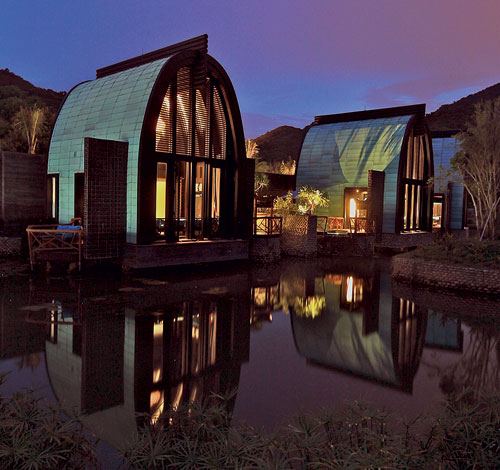
Neena Dhillon takes a look around Cheval Blanc Randheli and Velaa Private Island – two of the hottest new spa destinations in the Maldives
Q&A: Morgan Lefrançois
The spa business development manager at Clarins on working with Velaa Private Island; plus a first-person account of the resort by Liz Terry
Therapy: Well seasoned
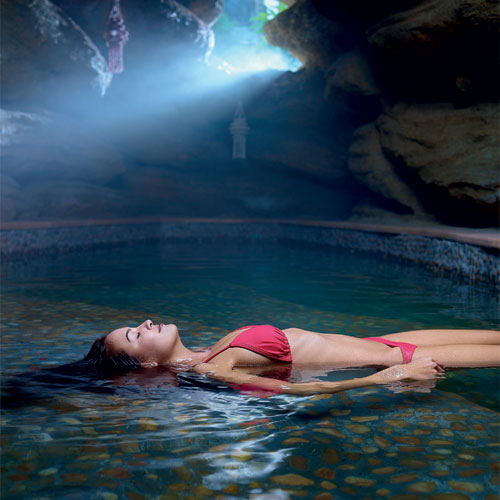
An underground salt mine offering subterraneotherapy and herb spas feature in this report by Sophie Benge
Holiday village spa: Full steam ahead
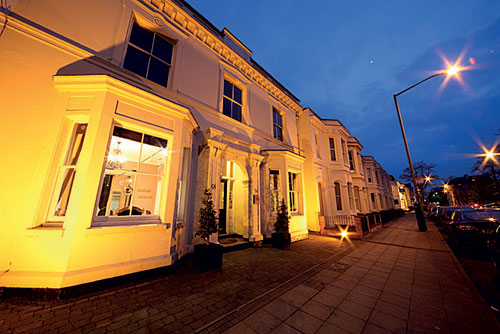
The unique hydrothermal spa concept at Center Parcs UK attracts 300,000 guests a year and brings in £15m in revenue. Katie Barnes visits its latest site
Marketing: Screen star
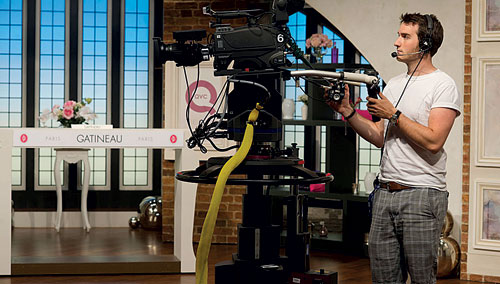
Professional spa brands are using TV shopping channel QVC to increase footfall in spas and can sell up to £4m of products in just one day
Mineral Spa: Mission accomplished
With 168 pools and 90 treatment rooms, Mission Hills Haikou has one of the world’s largest spa and mineral springs. Jennifer Harbottle finds out more
Fitness: Cool customer
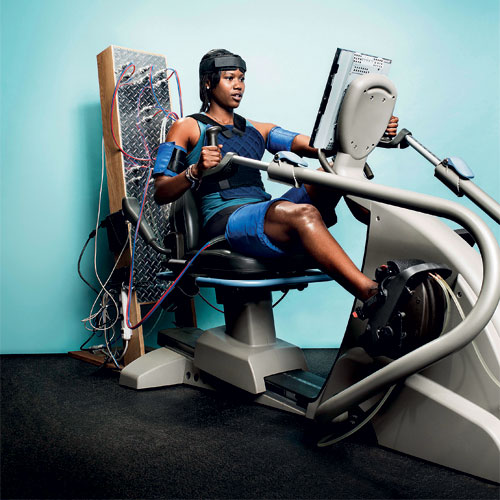
We explain the science behind Vasper, a high-tech fitness system that’s being used by athletes and astronauts
In today’s premium spa environment, every detail shapes the guest experience – right down to
the softness of towels and the freshness of linens. [more...]
The study was based on 14 practitioners who specialise in a specific meditation technique which is known as Acem Meditation / photo: shutterstock.com/Vinogradov Illya
Brain activity is greater during meditation than during periods of idle rest, refuting the idea that meditation is used to empty the mind – according to a study by neuroscientists from Norway and Australia*.
Scientists from The Norwegian University of Science and Technology, The University of Oslo and The University of Sydney used functional magnetic resonance image scanning to see what goes on in the brain during Acem Meditation – a mindful relaxation technique based on modern psychology and research.
Acem is a non-directive meditation technique which involves the mental repetition of a soothing, yet meaningless sound combining vowels and consonants. At the same time it allows spontaneously-occurring thoughts, images, sensations, memories and emotions to pass freely through the mind.
The method is thought to facilitate mental processing of emotional experiences, thereby contributing to wellness and stress management. Fourteen experienced practitioners of the Acem Meditation technique took part in the study.
The predominant resting system in the brain is called the ‘default mode network’ which is responsible for our wandering mind. Interestingly, the research found that this wandering mind mode is activated on a greater level during meditation than when the mind is resting normally.
The study highlighted that the brain simply activates different networks when it rests, compared to when someone concentrates or attends to an external task.
The default mode network is considerably less active when the spontaneous flow of wandering thoughts is restricted by a more concentrated focus of attention during concentrative meditation – not common to non-directive Acem Meditation. The areas of the brain which are less active during meditation include those which are involved in processing memories and emotions.
The results were published in the journal Frontiers in Human Neuroscience.
* Xu J and Davanger S et al. Nondirective Meditation Activates Default Mode Network and Areas Associated with Memory Retrieval and Emotional Processing. Frontiers in Human Neuroscience, 2014
Read more from this issue of Spa Business magazine
View contents of Spa Business 2014 issue 3
Letters: Letters
Bill Bensley gives his opinion on where spa design is heading in the future
Luxury brands: The high life
We take a look at the spa concepts of luxury brands such as Dior, Guerlain, Armani and Versace
Country focus: The Maldives
Neena Dhillon takes a look around Cheval Blanc Randheli and Velaa Private Island – two of the hottest new spa destinations in the Maldives
Q&A: Morgan Lefrançois
The spa business development manager at Clarins on working with Velaa Private Island; plus a first-person account of the resort by Liz Terry
Therapy: Well seasoned
An underground salt mine offering subterraneotherapy and herb spas feature in this report by Sophie Benge
Holiday village spa: Full steam ahead
The unique hydrothermal spa concept at Center Parcs UK attracts 300,000 guests a year and brings in £15m in revenue. Katie Barnes visits its latest site
Marketing: Screen star
Professional spa brands are using TV shopping channel QVC to increase footfall in spas and can sell up to £4m of products in just one day
Mineral Spa: Mission accomplished
With 168 pools and 90 treatment rooms, Mission Hills Haikou has one of the world’s largest spa and mineral springs. Jennifer Harbottle finds out more
Fitness: Cool customer
We explain the science behind Vasper, a high-tech fitness system that’s being used by athletes and astronauts
Global Wellness Day (GWD) will mark its 15th anniversary on Saturday 13 June 2026, with the
theme: #JoyMagenta – a celebration of the healing qualities of simple gestures and activities
that spark joy.
Global luxury hospitality brand, Six Senses, has partnered with longevity healthcare provider,
HUM2N, to launch a clinic at Six Senses London, at The Whiteley.
As part of its first hotel partnership, Mayrlife – the medical health resort company known for its
site in Altaussee, Austria – has launched a day clinic at the Rosewood Vienna.
Premium London health club, KX Chelsea, will imminently unveil its most significant
redevelopment since its launch in 2002 to create an integrated wellness model combining
training, recovery and relaxation.
Rosewood Le Guanahani St Barth, on the northeast coast of Saint Barthélemy in the French
West Indies, is offering a programme of ocean-inspired yoga classes between 8-14 June to
celebrate Global Wellness Day (GWD).
Hotel de France, located on the British Isle of Jersey, has created a wellness retreat package
that includes a hot yoga session that will take place in Jersey Zoo’s butterfly sanctuary.
The Ritz-Carlton, Langkawi, in Malaysia, has revealed a schedule for Global Wellness Day
(GWD) that includes guided rainforest walks, mindful movement and guided coastal meditation
experiences.
Longevitix, a clinical platform for preventive and longevity medicine, has launched its AI-
powered intelligence system to help physicians deliver continuous, personalised longevity-
focused care at scale.
Atmantan Wellness Centre, an integrative wellness destination in Mulshi, near Pune in India, is
expanding its portfolio by adding a new centre in Hyderabad that will launch between 2028 and
2029.
A recent survey by the UK Spa Association (UKSA) into the industry’s approach to cancer care
has revealed that almost half of participating respondents (46 per cent) are unaware that
cancer is a disability and guests with a cancer diagnosis must be given
In today’s premium spa environment, every detail shapes the guest experience – right down to
the softness of towels and the freshness of linens. [more...]