Do you have a strong opinion, or disagree with somebody else’s point of view on topics related to the spa industry? If so, Spa Business would love to hear from you. Email your letters, thoughts and suggestions to [email protected]
Luxury brands: The high life
We take a look at the spa concepts of luxury brands such as Dior, Guerlain, Armani and Versace
Country focus: The Maldives
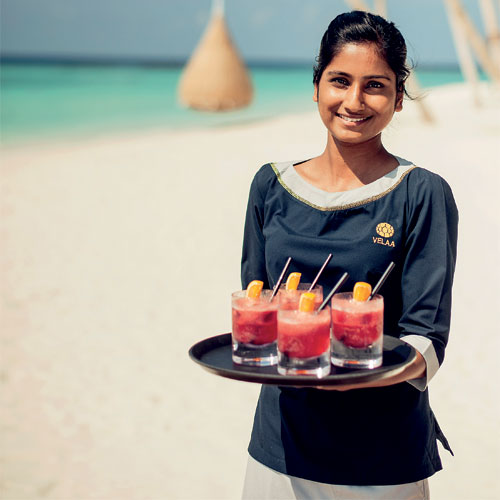
Neena Dhillon takes a look around Cheval Blanc Randheli and Velaa Private Island – two of the hottest new spa destinations in the Maldives
Q&A: Morgan Lefrançois
The spa business development manager at Clarins on working with Velaa Private Island; plus a first-person account of the resort by Liz Terry
Therapy: Well seasoned
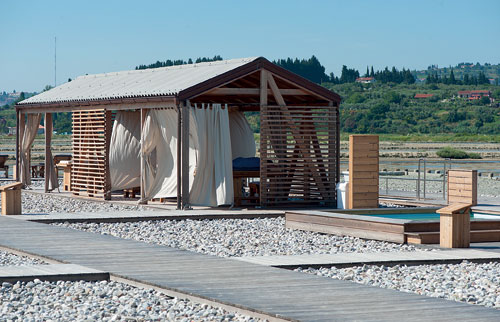
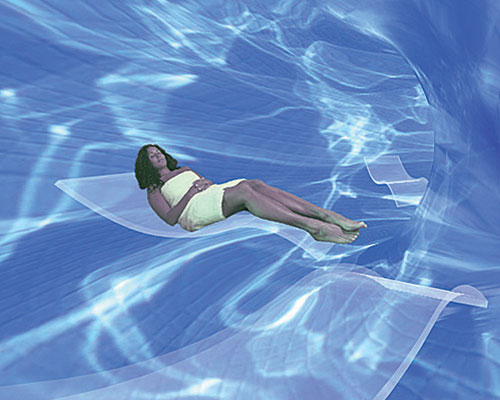
An underground salt mine offering subterraneotherapy and herb spas feature in this report by Sophie Benge
Holiday village spa: Full steam ahead
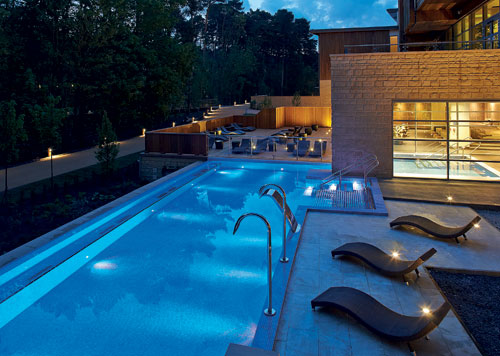
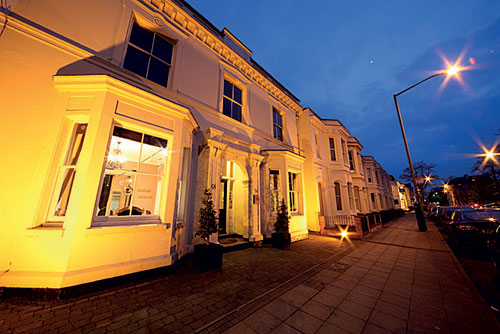
The unique hydrothermal spa concept at Center Parcs UK attracts 300,000 guests a year and brings in £15m in revenue. Katie Barnes visits its latest site
Marketing: Screen star
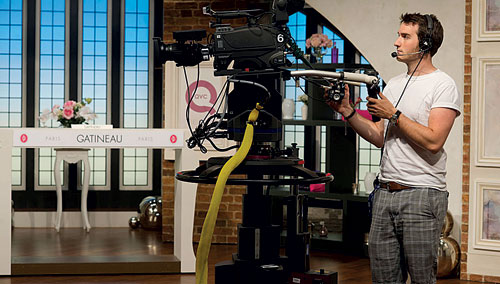
Professional spa brands are using TV shopping channel QVC to increase footfall in spas and can sell up to £4m of products in just one day
Mineral Spa: Mission accomplished
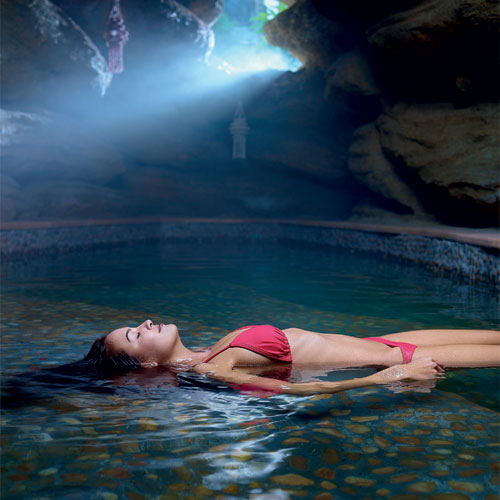
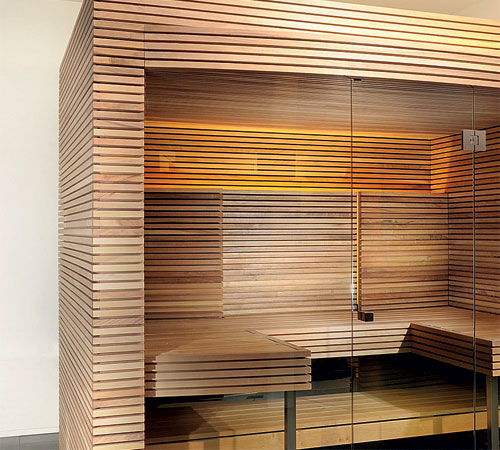
With 168 pools and 90 treatment rooms, Mission Hills Haikou has one of the world’s largest spa and mineral springs. Jennifer Harbottle finds out more
Fitness: Cool customer
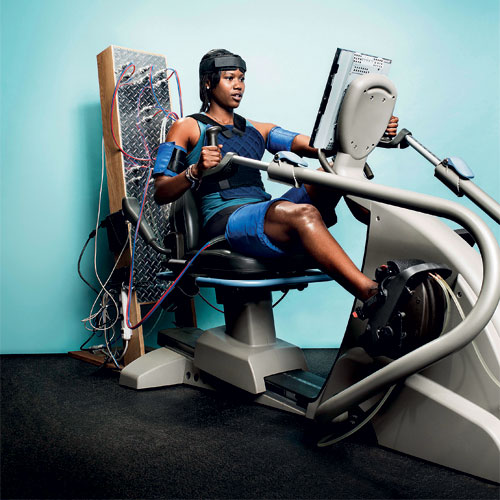
We explain the science behind Vasper, a high-tech fitness system that’s being used by athletes and astronauts
My company has designed more than 180 resorts (all of which have spas) in 30 countries but right now, for us, it’s all about China. The fact that there are two billion affluent Chinese people who are going to travel and see everything new the hotel industry has to offer is exciting. And as more people around the world begin to travel internationally, I think that there will be an increasing need for spa staff to speak many languages.
Half of our work is happening in China – we’re designing hotels and spas for Ritz-Carlton in Lijiang and Hainan, and for Capella in Guangzhou and the Himalayas, to name a few. Most of my projects have very healthy budgets and each of these resorts will have a spa more fabulous than the next.
The challenge for spa design, however, will be avoiding repetition – long gone are the days of scented candles and floating flowers and spas as we know them will fade away. Everyday, when I’m at home in Bangkok, I have a two-hour massage and use that time to think. I’m having a massage as I write this and I’m thinking that spas need to be designed more like home – with lots of collections of books, art and sculptures. The key will be to keep raising the bar and to create newer, more diverse experiences.
Future spa design will be about creating newer, diverse experiences
SPAS NEED TO TAKE BENCHMARKING MORE SERIOUSLY
Mary Darling
Mary DarlingOwnerMary Darling Consulting
I agree with Anne McCall Wilson’s appeal to the global spa community to more fully embrace benchmarking (see SB14/2 p14). Spas cannot manage what they cannot measure and, regardless of their individual performance indicators, operators should commit to measuring key metrics such as revenue per available treatment hour (RevPATH) or the treatment room utilisation rate which are included in the Spa STAR system by Smith Travel Research.
Barriers to enrolling on benchmarking schemes may stem from the fact that spas are seen simply as an amenity without a profit purpose. Spa managers may not be interested in financial performance as long as guests are happy. Or maybe no one is willing to invest in training, so managers are left to learn themselves about what metrics matter most to upper management, owners and investors.
Perhaps hotel groups which take spa revenues seriously could pilot and lead regional spa benchmarking programmes with input from other operators in the area. Although, if they did this, they’d need to consider competitive set information, as what resort operators find valuable may not be helpful for day spas. Or those who already use the Spa STAR scheme could lead multiple training or familiarisation programmes in local markets so that other operators become more aware of spa data collection and the benefits.
Global spa businesses are overdue being taken seriously, so by fully embracing consistent benchmarking our businesses will be seen as more than just an amenity.
Contact Mary Darling Twitter: @maryldarling
ARE SPA CONFERENCES BECOMING OBSOLETE?
Jeff Matthews
Jeff MatthewsPresidentSteiner Spa Consulting
I love spa conferences!
They’re a fantastic way to catch up with colleagues, trade war stories and gather market intel. But with the cost of attending them and the sheer number of events each year, many are becoming outmoded.
Connections and information are at our fingertips thanks to a flatter world and a global industry that’s matured significantly in the last decade. And yes, we have spa conferences to thank for that.
While there’s still a need for exhibitions to connect brands with potential distributors and buyers, this is increasingly only relevant in emerging markets.
The content of conferences is debatable too. A decade ago, we never questioned the experts put in front of us. I pity guest speakers now as they’re bound to be talking to an audience that’s as knowledgeable, if not more informed, than they are.
We’ve become more discerning and demanding about information and connections. We only want to be dealing with the decision makers and more often than not, it’s not a challenge for us to find out who they are and how to get to them. We want fresh insights that have never been heard, published or shared. We want to be entertained, inspired and moved.
The likes of Global Spa & Wellness Summit understand this acutely. That’s why the organisers continually endeavour to introduce out-of-the-box thought leaders/speakers and transferable case studies to its annual summit.
Simply put, for conferences to be viable, they have to be several steps ahead of the industry. Ultimately, they have to not only connect, but challenge and change us.
In the fast-paced world of fitness and wellness, where high-intensity workouts push us to
our limits and the sweat pours, the importance of efficient recovery cannot be overstated. [more...]
Do you have a strong opinion, or disagree with somebody else’s point of view on topics related to the spa industry? If so, Spa Business would love to hear from you. Email your letters, thoughts and suggestions to [email protected]
Luxury brands: The high life
We take a look at the spa concepts of luxury brands such as Dior, Guerlain, Armani and Versace
Country focus: The Maldives
Neena Dhillon takes a look around Cheval Blanc Randheli and Velaa Private Island – two of the hottest new spa destinations in the Maldives
Q&A: Morgan Lefrançois
The spa business development manager at Clarins on working with Velaa Private Island; plus a first-person account of the resort by Liz Terry
Therapy: Well seasoned
An underground salt mine offering subterraneotherapy and herb spas feature in this report by Sophie Benge
Holiday village spa: Full steam ahead
The unique hydrothermal spa concept at Center Parcs UK attracts 300,000 guests a year and brings in £15m in revenue. Katie Barnes visits its latest site
Marketing: Screen star
Professional spa brands are using TV shopping channel QVC to increase footfall in spas and can sell up to £4m of products in just one day
Mineral Spa: Mission accomplished
With 168 pools and 90 treatment rooms, Mission Hills Haikou has one of the world’s largest spa and mineral springs. Jennifer Harbottle finds out more
Fitness: Cool customer
We explain the science behind Vasper, a high-tech fitness system that’s being used by athletes and astronauts
My company has designed more than 180 resorts (all of which have spas) in 30 countries but right now, for us, it’s all about China. The fact that there are two billion affluent Chinese people who are going to travel and see everything new the hotel industry has to offer is exciting. And as more people around the world begin to travel internationally, I think that there will be an increasing need for spa staff to speak many languages.
Half of our work is happening in China – we’re designing hotels and spas for Ritz-Carlton in Lijiang and Hainan, and for Capella in Guangzhou and the Himalayas, to name a few. Most of my projects have very healthy budgets and each of these resorts will have a spa more fabulous than the next.
The challenge for spa design, however, will be avoiding repetition – long gone are the days of scented candles and floating flowers and spas as we know them will fade away. Everyday, when I’m at home in Bangkok, I have a two-hour massage and use that time to think. I’m having a massage as I write this and I’m thinking that spas need to be designed more like home – with lots of collections of books, art and sculptures. The key will be to keep raising the bar and to create newer, more diverse experiences.
Future spa design will be about creating newer, diverse experiences
SPAS NEED TO TAKE BENCHMARKING MORE SERIOUSLY
Mary Darling
Mary DarlingOwnerMary Darling Consulting
I agree with Anne McCall Wilson’s appeal to the global spa community to more fully embrace benchmarking (see SB14/2 p14). Spas cannot manage what they cannot measure and, regardless of their individual performance indicators, operators should commit to measuring key metrics such as revenue per available treatment hour (RevPATH) or the treatment room utilisation rate which are included in the Spa STAR system by Smith Travel Research.
Barriers to enrolling on benchmarking schemes may stem from the fact that spas are seen simply as an amenity without a profit purpose. Spa managers may not be interested in financial performance as long as guests are happy. Or maybe no one is willing to invest in training, so managers are left to learn themselves about what metrics matter most to upper management, owners and investors.
Perhaps hotel groups which take spa revenues seriously could pilot and lead regional spa benchmarking programmes with input from other operators in the area. Although, if they did this, they’d need to consider competitive set information, as what resort operators find valuable may not be helpful for day spas. Or those who already use the Spa STAR scheme could lead multiple training or familiarisation programmes in local markets so that other operators become more aware of spa data collection and the benefits.
Global spa businesses are overdue being taken seriously, so by fully embracing consistent benchmarking our businesses will be seen as more than just an amenity.
Contact Mary Darling Twitter: @maryldarling
ARE SPA CONFERENCES BECOMING OBSOLETE?
Jeff Matthews
Jeff MatthewsPresidentSteiner Spa Consulting
I love spa conferences!
They’re a fantastic way to catch up with colleagues, trade war stories and gather market intel. But with the cost of attending them and the sheer number of events each year, many are becoming outmoded.
Connections and information are at our fingertips thanks to a flatter world and a global industry that’s matured significantly in the last decade. And yes, we have spa conferences to thank for that.
While there’s still a need for exhibitions to connect brands with potential distributors and buyers, this is increasingly only relevant in emerging markets.
The content of conferences is debatable too. A decade ago, we never questioned the experts put in front of us. I pity guest speakers now as they’re bound to be talking to an audience that’s as knowledgeable, if not more informed, than they are.
We’ve become more discerning and demanding about information and connections. We only want to be dealing with the decision makers and more often than not, it’s not a challenge for us to find out who they are and how to get to them. We want fresh insights that have never been heard, published or shared. We want to be entertained, inspired and moved.
The likes of Global Spa & Wellness Summit understand this acutely. That’s why the organisers continually endeavour to introduce out-of-the-box thought leaders/speakers and transferable case studies to its annual summit.
Simply put, for conferences to be viable, they have to be several steps ahead of the industry. Ultimately, they have to not only connect, but challenge and change us.
People taking GLP-1 weight loss medications such as Ozempic, Wegovy, Mounjaro and Zepbound
may be losing weight, but they’re also becoming less physically active, according to new
research presented at the ENDO 2026 annual meeting of the Endocrine Society
Abu Dhabi-based investment firm Mubadala Capital has made a binding, fully financed
€1 billion
offer to acquire Pierre and Vacances SA, the European holiday resort operator behind the
continental European Center Parcs business.
Global retreat trade show, Synergy The Retreat Show, has launched a resource called The
Source, which hosts an open-access online Transformation Series programme.
The Standards Authority for Touch in Cancer Care (SATCC) charity has announced its first five-
day Living with Cancer and Beyond retreat, which will be held at Carden Park Hotel and Spa in
Cheshire, UK, between 1 and 5 September.
Patmos Aktis, a Luxury Collection Resort and Spa, has opened in Greece, with a renovated and
rebranded wellness offering called Ansana Wellness and Spa.
The Mauna Kea Beach Hotel, an Autograph Collection property in Hawaii, US, has opened its
22,000 sq ft indoor-outdoor Spa at Mauna Kea as the final step in the property’s overall
renovation, which has cost more than US$180 million (€166 million, £140 mill
The UK spa review and discovery platform for consumers, the Good Spa Guide, has announced
it will host the Good Spa Guide Awards 2026 during an event on 16 November at Sopwell House
Hotel in St Albans, UK.
Eighty-four per cent of consumers now say wellness is a top priority in their lives, with this
percentage increasing year on year, according to a preview presentation of McKinsey’s Future of
Wellness 2026 research report.
Mass protests have been taking place since Monday 1 June in Albania over the development of
a luxury resort by Donald Trump’s daughter Ivanka Trump and her husband Jared Kushner.
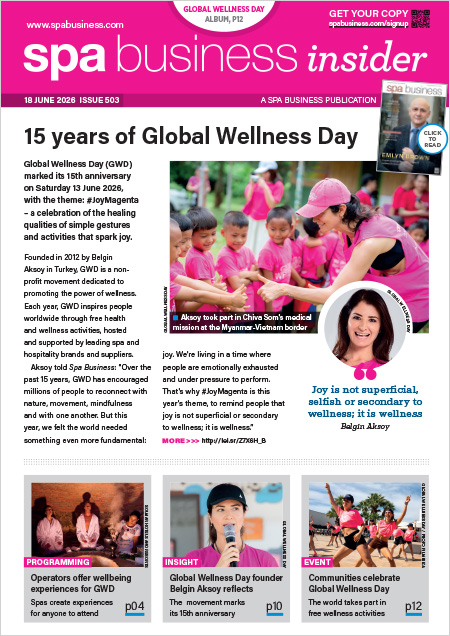
Global Wellness Day (GWD) marked its 15th anniversary on Saturday 13 June 2026, with the
theme: #JoyMagenta – a celebration of the healing qualities of simple gestures and activities
that spark joy.
In the fast-paced world of fitness and wellness, where high-intensity workouts push us to
our limits and the sweat pours, the importance of efficient recovery cannot be overstated. [more...]