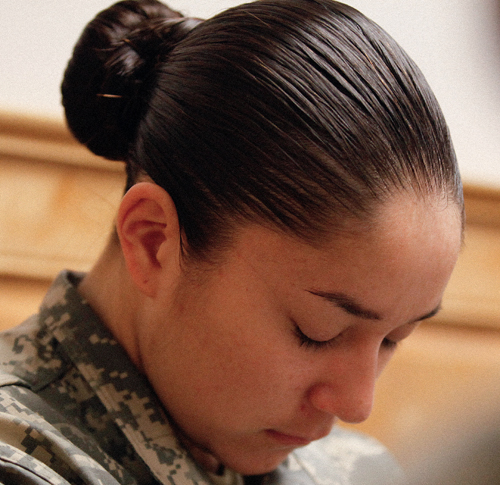
Daily yoga and meditation were part of the wellness intervention plans / photo: shutterstock/bikeriderlondon
Since it was first discovered more than 100 years ago, Alzheimer’s disease has been without an effective treatment. Worldwide, nearly 44 million people are believed to be living with the brain disorder or other forms of dementia. By 2030 this could rise to nearly 76 million according to the US-based BrightFocus Foundation.
But the outlook may not be so bleak if the findings of a small US pilot study are anything to go by. Scientists at the Buck Institute for Research on Aging and the University of California, Los Angeles have discovered that lifestyle and wellness interventions have reversed memory loss in patients with Alzheimer’s disease for the first time. Although the results are anecdotal, the findings are “very encouraging” says study author and neurology professor Dr Dale Bredesen.
Individualised intervention As part of the trial, a group of experts put together a 36-point plan for 10 patients with Alzheimer’s. The plans included taking up yoga and meditation twice a day to reduce stress, exercise and getting an optimal seven to eight hours of sleep. They also comprised strict diet changes, including fasting (see SB14/4 p50).
Each plan was personalised, based on extensive testing to determine what was affecting brain signals in each patient. Although the programmes were difficult to follow – none of the participants were able to fully adhere to them – Bredesen believes a multiple-component approach is key. “The existing Alzheimer’s drug affects a single target, but the disease is more complex,” he says. “Imagine having a roof with 36 holes, and your drug patched one very well... You’d still have 35 other leaks, and so the underlying process may not be affected much.”
Promising results The results were promising, with nine out of the 10 patients seeing advancements in three to six months. The only patient not to benefit had late-stage Alzheimer’s.
Such were the improvements that six participants, who’d been struggling at work or had to stop because of cognitive issues, were able to return to their jobs. Meanwhile, those who stayed in employment showed increased performance. Bredesen adds: “It’s noteworthy that the major side effect of this therapeutic system are improved health and body mass index: a stark contrast to the side effects of many drugs.”
Further research Overall, the results suggest that memory loss may be reversed, and improvements sustained, by following a tailored therapeutic plan. Yet Bredesen cautions that further research is needed. “The current, anecdotal results require a larger trial, not only to confirm or refute the results reported here, but also to address key questions raised, such as the degree of improvement that can be achieved routinely, how late in the course of cognitive decline reversal can be effected... and how long improvement can be sustained,” he says.
Read more from this issue of Spa Business magazine
View contents of Spa Business 2015 issue 1
Letters: Letters
We need sales people in spas says consultant Helen Merchant
Interview -Rich Weissmann: Rich Weissmann
Weissmann, a partner at private equity firm KSL, talks spa investment with Rhianon Howells and reveals its plans for the Miraval brand
Wellness: All in the mind
Twin Peaks director David Lynch has a foundation which uses meditation to help those facing extreme trauma and stress. Julie Cramer talks to the foundation’s co-founder Bob Roth
How could spas adapt their design and services to help people with cognitive impairments? We cover this in our feature focused on age-friendly facilities on page 64
In the fast-paced world of fitness and wellness, where high-intensity workouts push us to
our limits and the sweat pours, the importance of efficient recovery cannot be overstated. [more...]
In a world where imbalance often accumulates quietly, Wildsmith unveils its newest
wellbeing innovation: Silent Loads, an approach designed to meet the needs of modern spa
guests with precision and depth. [more...]
+ More featured suppliers
COMPANY PROFILES
Beautylizer
Beautylizer brings
its deep aesthetic expertise and
strong R&D focus to holistic wellness,
offeri [more...]
Bioline Jatò
Bioline Jatò is a family Italian company
operating in the professional skincare
industry since 197 [more...]
Daily yoga and meditation were part of the wellness intervention plans / photo: shutterstock/bikeriderlondon
Since it was first discovered more than 100 years ago, Alzheimer’s disease has been without an effective treatment. Worldwide, nearly 44 million people are believed to be living with the brain disorder or other forms of dementia. By 2030 this could rise to nearly 76 million according to the US-based BrightFocus Foundation.
But the outlook may not be so bleak if the findings of a small US pilot study are anything to go by. Scientists at the Buck Institute for Research on Aging and the University of California, Los Angeles have discovered that lifestyle and wellness interventions have reversed memory loss in patients with Alzheimer’s disease for the first time. Although the results are anecdotal, the findings are “very encouraging” says study author and neurology professor Dr Dale Bredesen.
Individualised intervention As part of the trial, a group of experts put together a 36-point plan for 10 patients with Alzheimer’s. The plans included taking up yoga and meditation twice a day to reduce stress, exercise and getting an optimal seven to eight hours of sleep. They also comprised strict diet changes, including fasting (see SB14/4 p50).
Each plan was personalised, based on extensive testing to determine what was affecting brain signals in each patient. Although the programmes were difficult to follow – none of the participants were able to fully adhere to them – Bredesen believes a multiple-component approach is key. “The existing Alzheimer’s drug affects a single target, but the disease is more complex,” he says. “Imagine having a roof with 36 holes, and your drug patched one very well... You’d still have 35 other leaks, and so the underlying process may not be affected much.”
Promising results The results were promising, with nine out of the 10 patients seeing advancements in three to six months. The only patient not to benefit had late-stage Alzheimer’s.
Such were the improvements that six participants, who’d been struggling at work or had to stop because of cognitive issues, were able to return to their jobs. Meanwhile, those who stayed in employment showed increased performance. Bredesen adds: “It’s noteworthy that the major side effect of this therapeutic system are improved health and body mass index: a stark contrast to the side effects of many drugs.”
Further research Overall, the results suggest that memory loss may be reversed, and improvements sustained, by following a tailored therapeutic plan. Yet Bredesen cautions that further research is needed. “The current, anecdotal results require a larger trial, not only to confirm or refute the results reported here, but also to address key questions raised, such as the degree of improvement that can be achieved routinely, how late in the course of cognitive decline reversal can be effected... and how long improvement can be sustained,” he says.
Read more from this issue of Spa Business magazine
View contents of Spa Business 2015 issue 1
Letters: Letters
We need sales people in spas says consultant Helen Merchant
Interview -Rich Weissmann: Rich Weissmann
Weissmann, a partner at private equity firm KSL, talks spa investment with Rhianon Howells and reveals its plans for the Miraval brand
Wellness: All in the mind
Twin Peaks director David Lynch has a foundation which uses meditation to help those facing extreme trauma and stress. Julie Cramer talks to the foundation’s co-founder Bob Roth
How could spas adapt their design and services to help people with cognitive impairments? We cover this in our feature focused on age-friendly facilities on page 64
Four Seasons Resort The Nam Hai in Hoi An, Vietnam, has put together a Global Wellness Day
(GWD) agenda with activations rooted in nature and shaped by four pillars of Joy – in
alignment with the day’s theme #JoyMagenta.
The Global Wellness Summit (GWS) will celebrate its 20th anniversary at the 2026 event in
Phuket, Thailand, later this year with the theme: The Science, Art and Soul of Wellness.
Auko, an all-inclusive development, is opening in Phong Nha in Vietnam in Q3 2026, with a
series of 30 tented eco-lodges and wellness hospitality operations by Lumina Wellbeing.
Therme Manchester’s 28-acre development, which will include interconnected glass pavilions
that measure 65,000sq m, will be the largest bathing and wellbeing attraction in the world once
complete, according to prof David Russell, CEO of Therme UK.
Naples Beach Club, a Four Seasons Resort, has opened a 2,800sq m spa called The Sanctuary,
with the design and concept inspired by the Native American people that populated Florida’s
Southwest coast – the Calusa.
Swire Hotels’ luxury hospitality brand Upper House has revealed it will roll out its two-day
House of Healing retreats at its three hotels in Hong Kong, Chengdu and Shanghai.
LVMH-owned beauty house Guerlain will launch up to five spas with partners a year as part of
its plan to expand globally, according to the brand’s international spa and wellness director,
Diane Davody.
A new global study by Kevin Kelly and Peter Yesawich, called WELLSurvey 2.0, has revealed
more than half of consumers in the UK, US and Germany would not choose numerous high-
profile wellness resort brands for a future trip.
Luxury hospitality and wellness pioneer Jeremy McCarthy has launched Leisure Alchemy, a
digital platform that will provide professionals with strategic guidance on how to build
transformational leisure experiences that drive profit.
In the fast-paced world of fitness and wellness, where high-intensity workouts push us to
our limits and the sweat pours, the importance of efficient recovery cannot be overstated. [more...]
In a world where imbalance often accumulates quietly, Wildsmith unveils its newest
wellbeing innovation: Silent Loads, an approach designed to meet the needs of modern spa
guests with precision and depth. [more...]
+ More featured suppliers
COMPANY PROFILES
Beautylizer Beautylizer brings
its deep aesthetic expertise and
strong R&D focus to holistic wellness,
offeri [more...]