Following the opening of the Gainsborough Bath Spa – the only hotel in the UK with direct access to natural thermal waters – Magali Robathan speaks to the key people behind the project
By Magali Robathan | Published in Spa Business 2016 issue 1
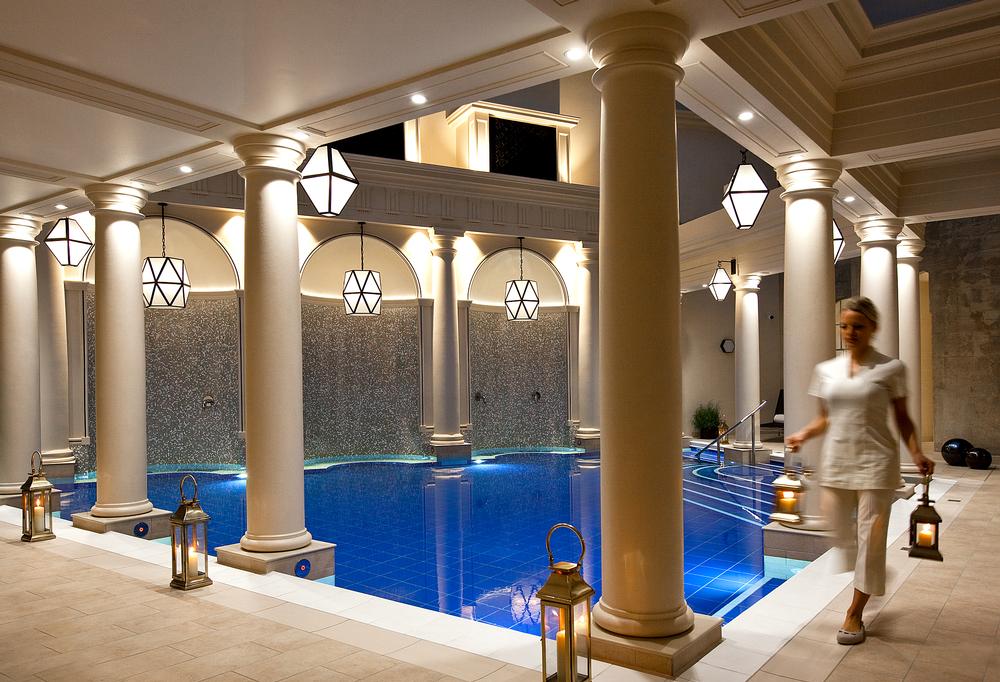
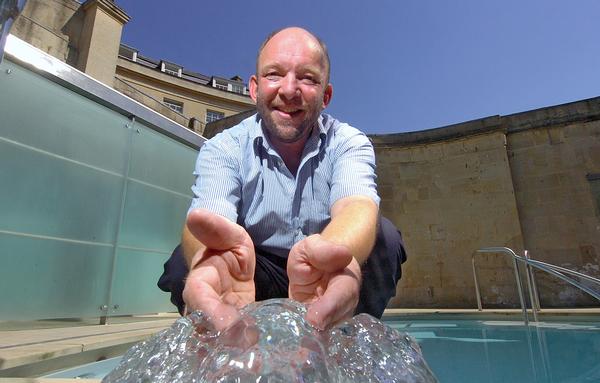
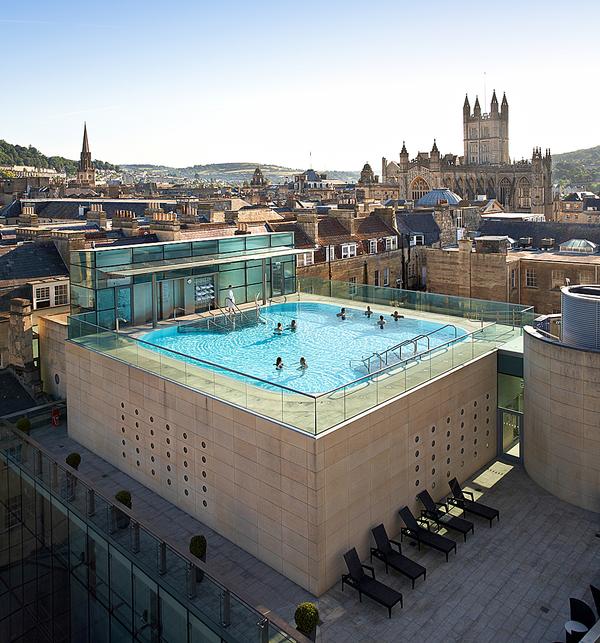
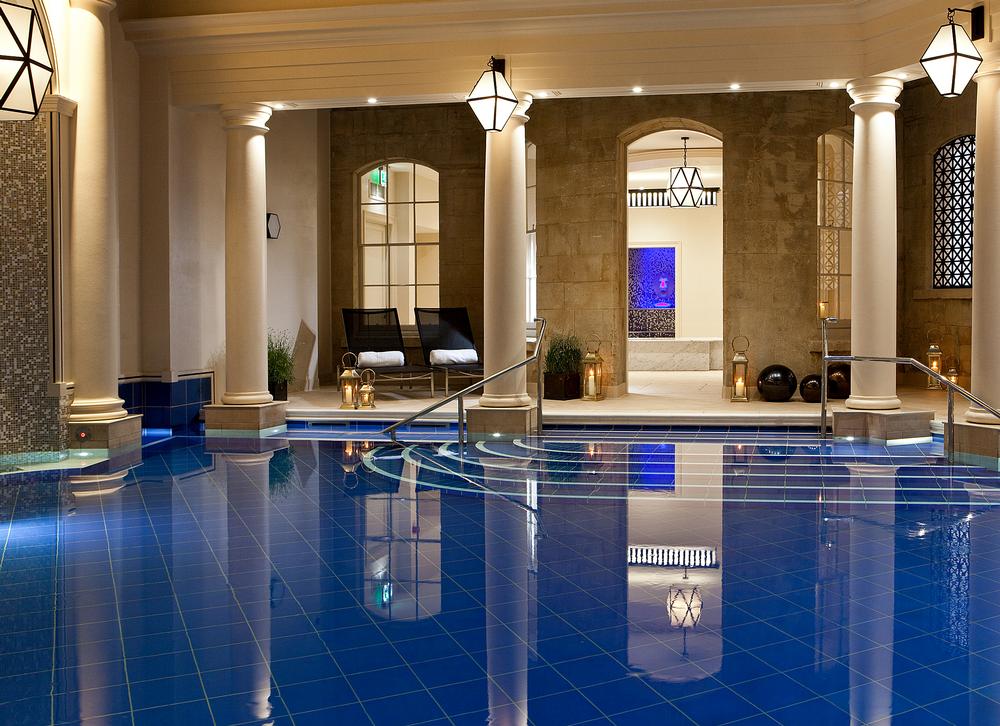
Spa Village Bath: a new borehole pipes thermal water into three spa pools
Thanks to its thermal waters, the City of Bath, UK, has been a wellness destination since Roman times.
However, for almost 40 years, since the closure of its municipal thermal baths in 1978, Bath was a spa town in name only. The opening of the Thermae Bath Spa day spa in 2004 went some way to addressing the lack of access to the city’s famous waters, but unlike most other European spa towns, Bath still had no five-star spa hotel.
Until now that is. The opening of the Gainsborough Bath Spa Hotel in 2015 means the city now has both a day spa and a luxury spa hotel, and tourism chiefs hope it heralds the start of a resurgence for the city of Bath as a global spa destination.
The project has been many years in the making. Plans for a hotel were announced in 2004 but stalled in the recession until Malaysian conglomerate YTL – which also owns both the Thermae Bath Spa and local utilities firm Wessex Water – took it on in 2011.
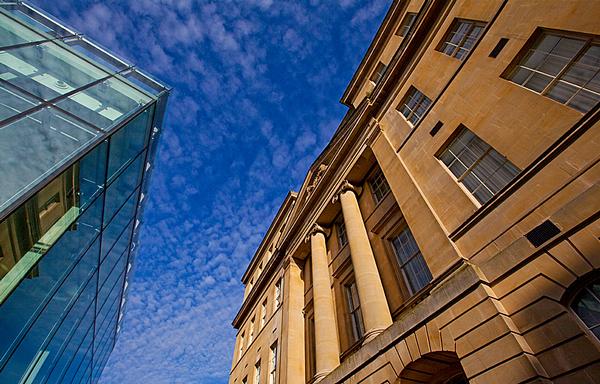
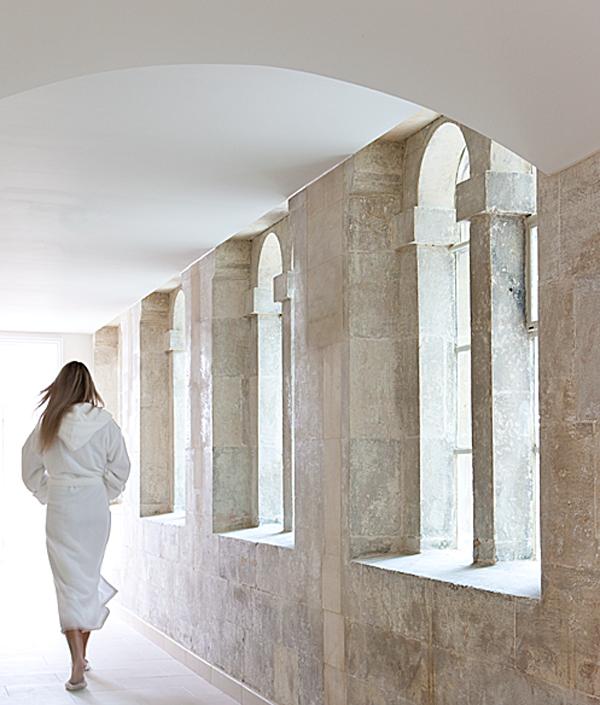
The hotel occupies two Grade II listed buildings above the remains of ancient Roman baths, which made the refurbishment extremely complex. Delays were caused by the discovery of more than 17,000 Roman coins and an original Roman mosaic on site.
Finally, however, Gainsborough Bath Spa hotel is open. It’s operated by Bath Hotel and Spa Ltd, the YTL subsidiary which also manages the nearby Thermae Bath Spa.
New hotel spa The hotel taps into natural thermal waters via a newly created borehole. It has 99 bedrooms, including three above the spa which have direct access to it.
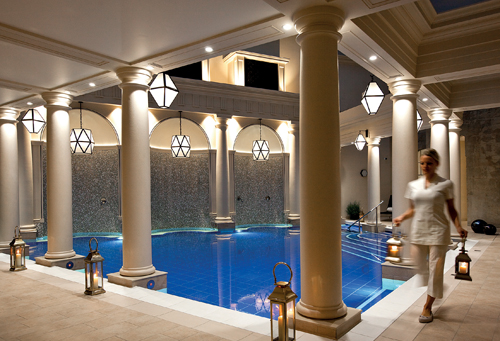
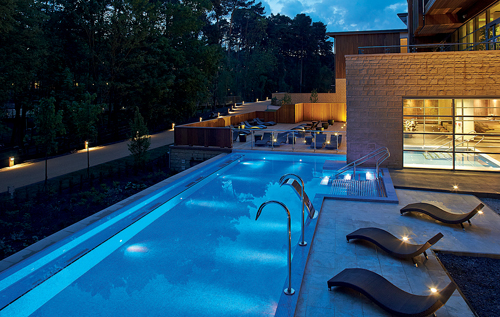
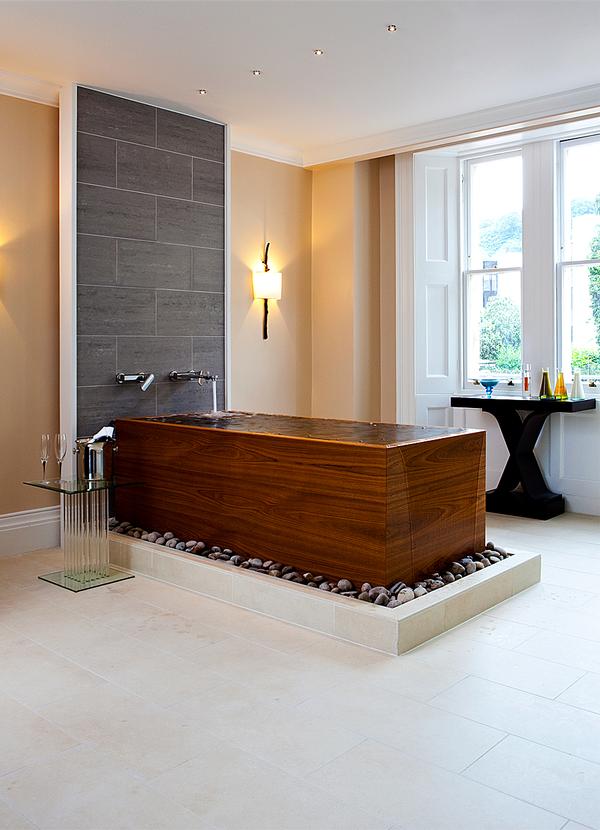
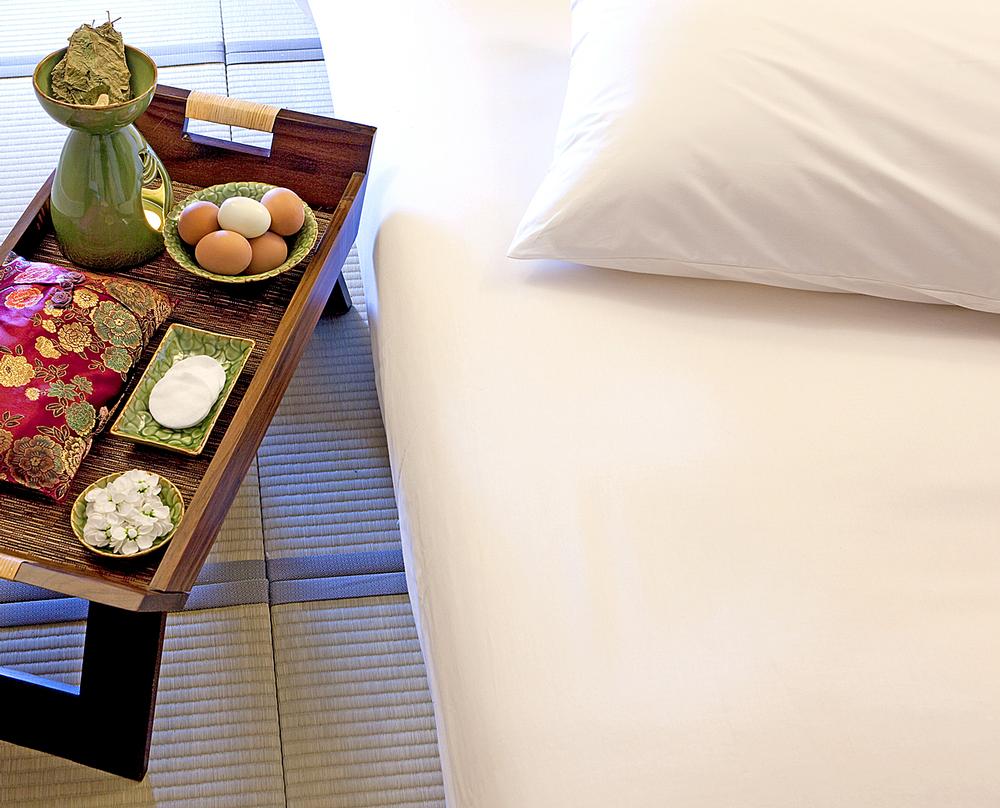
The 1,300sq m (13,993sq ft) Spa Village Bath within the hotel is spread over two levels. Highlights include three pools with thermal water cooled to 40?C, a salt room, ice grotto, infrared sauna and relaxation terrace. The 11 treatment rooms include a VIP suite with a Japanese ofuru thermal bathtub and two tatami rooms.
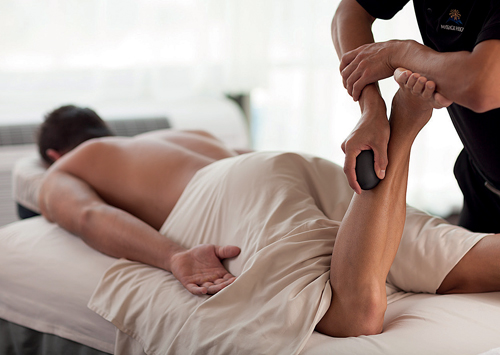
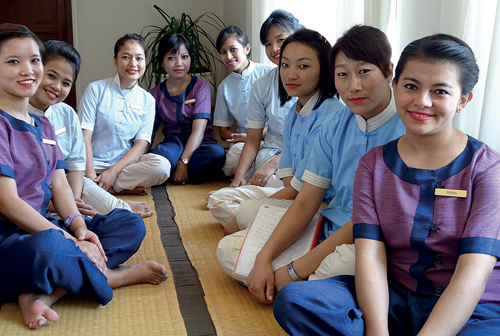
Spa Village Bath was designed by Sylvia Sepielli, who’s known for creating YTL’s original spa village in Pangkor Laut, Malaysia (see SB11/3 p46). As a result, the UK spa has some Asian influences, such as treatments using Malay, Thai, Chinese and Indian massage.
Sepielli created the spa with Melissa Mettler a consultant who’s worked exclusively for YTL for six years. Mettler worked on the concept, seeing it through the design and planning stages, recruiting the team and helping ensure the vision was delivered.
Sepielli worked with DaleSauna on a number of the thermal experiences and with Barr + Wray on the filtration and water treatment system. The hotel’s interior design was by Champalimaud, while EPR were responsible for the architecture.
As Bath emerges on the world stage as a leading wellness destination, we speak to the key people involved in the project.
Read more from this issue of Spa Business magazine
Interview: Kenneth Ryan
Marriott’s global head of spa talks exclusively to Katie Barnes about the new ‘game-changing’ Ritz-Carlton Spa brand and market domination
Promotional feature: Steve Kass Consulting
Steve Kass, founder and former CEO of American Leisure, has launched a new business, Steve Kass Consulting. The global leader explains his goals as an innovative concept and design creator
Research: Work it out
Ophelia Yeung gives a sneak preview of a new study on workplace wellness that debuts later this month
Fitness: Competitive edge
Could a touch of rivalry help spas to engage more people in fitness? Niamh Madigan finds out
Promotional feature: Ojmar
A growing number of spa operators across the UK are working with Ojmar to upgrade their traditional keyed locking systems to electronic solutions
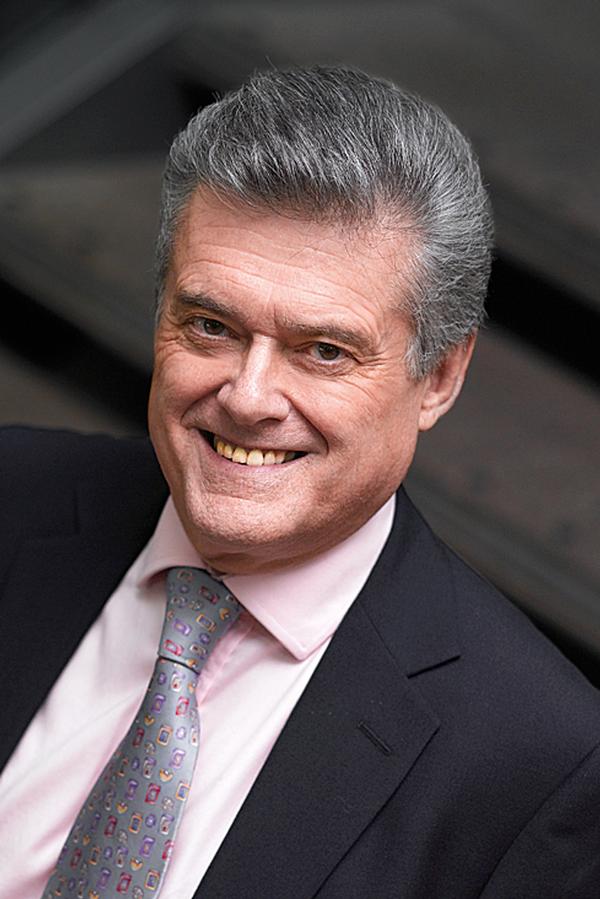
Colin SkellettChair of Bath Hotels & Spa LtdYTL Hotels
Spa access is restricted to avoid overcrowding says Skellett
Why did YTL take on this project? YTL was already a significant investor in the Bath area so it was a natural development for us. Creating a five-star hotel and spa, which is the only one in the UK with direct access to natural, hot waters in a city such as Bath, was an irresistible opportunity. The Gainsborough Bath Spa is a key development for YTL and the start of our growing hotel and spa business in the UK.
Why did YTL take on the Thermae Bath Spa in 2014? YTL had a long association with Henk Verschuur, the former director of Thermae Bath Spa, who sadly passed away in April 2015. Indeed, we sponsored the Three Tenors concert that celebrated its initial opening.
With the development of Gainsborough Bath Spa, acquiring the operational contract for Thermae Bath Spa made enormous sense and Wessex Water’s expertise in treating water means we can ensure that these precious thermal waters are properly managed.
What’s your role? I look after YTL’s interests in the UK and this includes chairing both Thermae Bath Spa and the Gainsborough Hotel.
What’s the aim of the hotel? To create a five-star luxury experience for our guests – bringing back the thermal waters in the way the Romans experienced them.
Why did you decide to restrict hotel guests’ access to the spa to 7-9am and 8-10pm? Because we really want the spa to be an oasis of calm. If you allow unrestricted access it becomes too busy and that would be detrimental to what we’re trying to achieve.
Guests having treatments can use the facilities at any time. The treatments start after 10am and usually finish by 6pm so we try and keep that time very quiet. If you’re paying a lot of money for a massage you don’t want overcrowding in the spa, you want peace and serenity. Our uppermost limit is 30 people at any one time.
"The Gainsborough Bath Spa is a key development for YTL and the start of our growing hotel and spa business in the UK"
Peter RollinsMarketing DirectorGainsborough Bath Spa and Thermae Bath Spa
Royal permission to
use the waters was granted in 1590
What does the opening of the Gainsborough mean for Bath? To have a successful day spa and now a five-star spa hotel puts Bath on a level footing with many of the other great spa destinations in Europe. It has added real credibility. Bath is an incredible tourist destination. The whole city is a UNESCO World Heritage site and it attracts 967,000 staying visitors and 4.8 million day visitors a year.
It doesn’t just benefit Bath either. I’ve worked closely with other spa towns in the UK, including Buxton, Droitwich, Harrogate, Malvern and Royal Leamington Spa, and they’re all really supportive of what we’re doing. If it helps to raise the spa culture in the UK, those other places will benefit too.
What was the vision for this hotel? To create the UK’s only natural thermal spa hotel. From day one, the Spa Village concept was absolutely at the heart of the hotel.
What’s the history of the thermal waters? In 1590, Queen Elizabeth I granted the thermal waters to the people of Bath in a royal charter, under the guardianship of the local corporation. The local corporation is now Bath and North East Somerset council, which looks after the waters on behalf of the people of Bath.
How do you treat the waters? When the waters come out of the springs, they go through a filtration system. We add minute elements of chlorine – not because the waters aren’t pure, but because of the elements that humans introduce. We use the minimum amount permissible by law.
The waters are 45?C when they come out of the ground, but we cool them to 35-40?C [a more comfortable temperature].
You worked for Thermae Bath Spa which faced a many challenges. How did you turn it around? Initially everyone in Bath was really excited about the Thermae Bath Spa, but because it opened three years late and cost a lot of money, there were understandably many detractors.
It wasn’t easy to win back the hearts of people, but I think we’ve done that now. It’s been hugely successful. Thermae Bath Spa attracted around 280,000 visitors in 2015, which is our busiest year to date.
Did that experience affect people’s attitudes towards the Gainsborough project? There were a few throwaway lines, but the majority of local people really welcomed the fact that a significant building was opening up again.
The two projects are very different. Thermae Bath Spa is a public initiative and the Gainsborough has always been planned as a private project. The Gainsborough was only a few months late opening – YTL was determined to get it right.
"To have a successful day spa and now a five-star spa hotel puts Bath on a level footing with many of the other great spa destinations in Europe"
The Thermae Bath Spa attracted 280,000 visitors in 2015
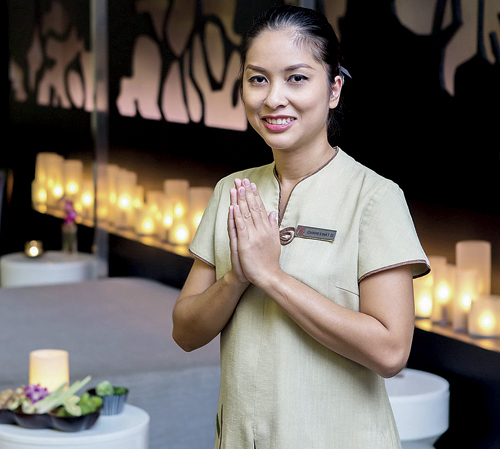
Jessica Grant BrugadaManager, Spa Village BathThe Gainsborough Bath Spa hotel
Jessica Grant Brugada
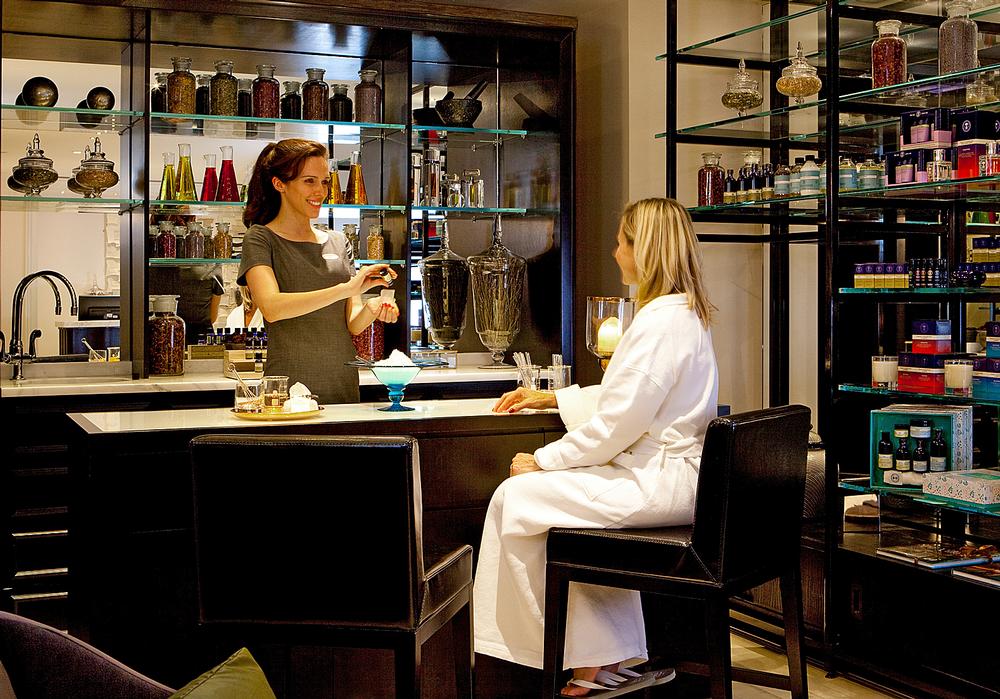
Can you talk us through the spa experience? When guests arrive, they sit down at the Aroma Bar with one of our therapists, who will create a personalised pouch using a blend of Neal’s Yard aromatherapy oils which they can take into the sauna.
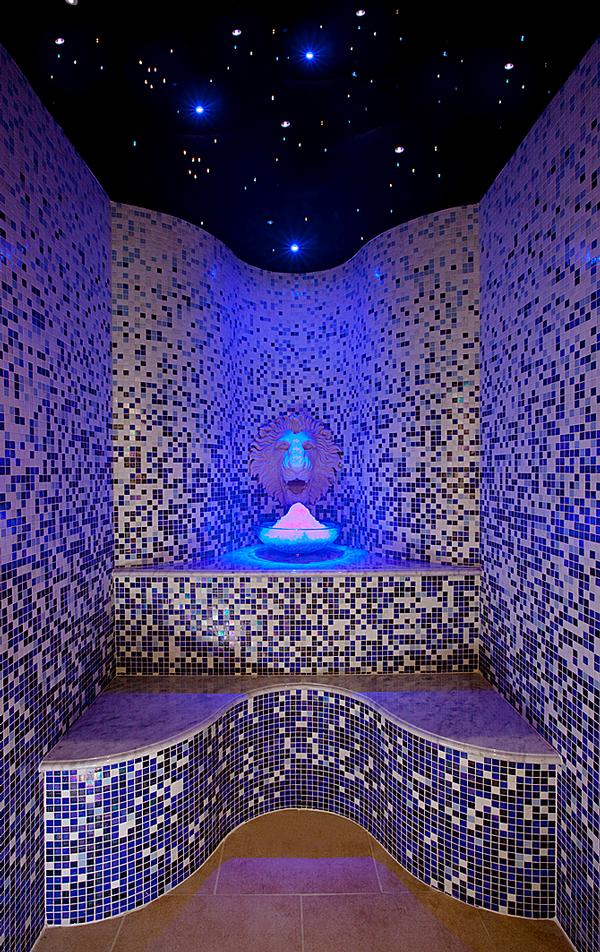
A spa attendant will then talk them through the self-guided bathing ritual. This takes around an hour and is a very important part of the spa experience. It involves taking the waters in the three thermal pools, relaxing in the sauna and steamroom, and cooling down in between with cold showers and in the ice grotto. As part of this ritual, they can relax in the spa suite with a cup of chocolate infused with cardamom and cinnamon, a drink which was inspired by the Georgians who were strong believers in the health-giving properties of chocolate.
What are the benefits of the healing waters? Our water is very rich in magnesium, copper and calcium. Magnesium is particularly good for aches and pains, sore joints and tired muscles.
Many of our hotel guests are leisure guests who come because it’s Bath and we are part of their experience. Eighty per cent of our guests come from the UK; 75 per cent of whom visit as a result of Spa Village Bath.
We have 100 spa members who make up approximately 12 per cent of our customers. Most of them have joined because of the thermal waters and because they want to invest in their health.
"Most spa members have joined because of the thermal waters: they want to invest in their health"
The magnesium-rich waters are good for aches and pains
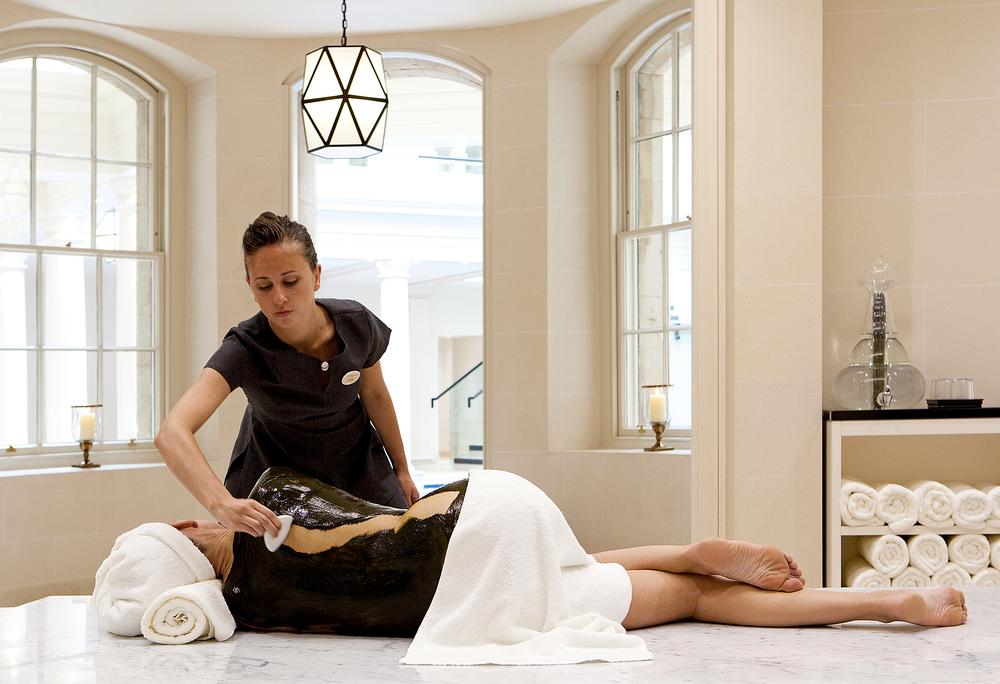
Spa Village Bath, Freedom treatment
First-person experience: Magali Robathan
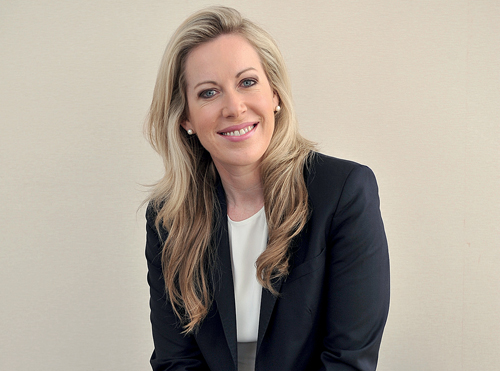
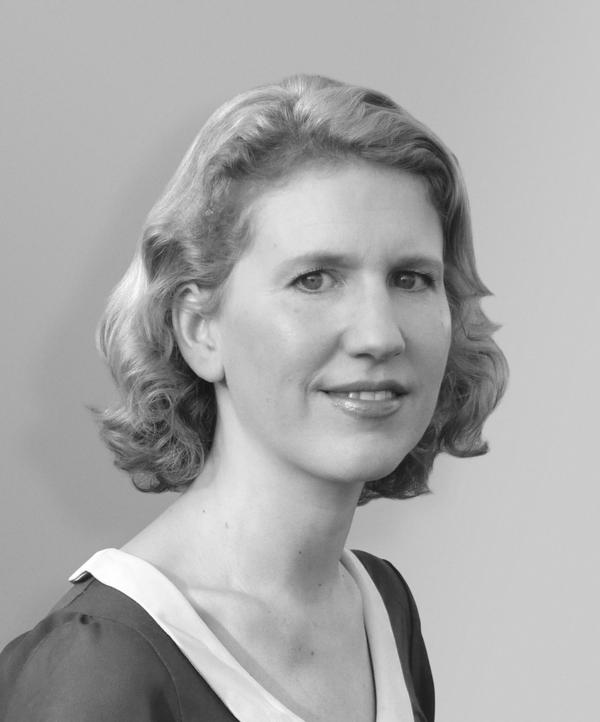
Magali Robathan
Magali RobathanManaging EditorCLADmag
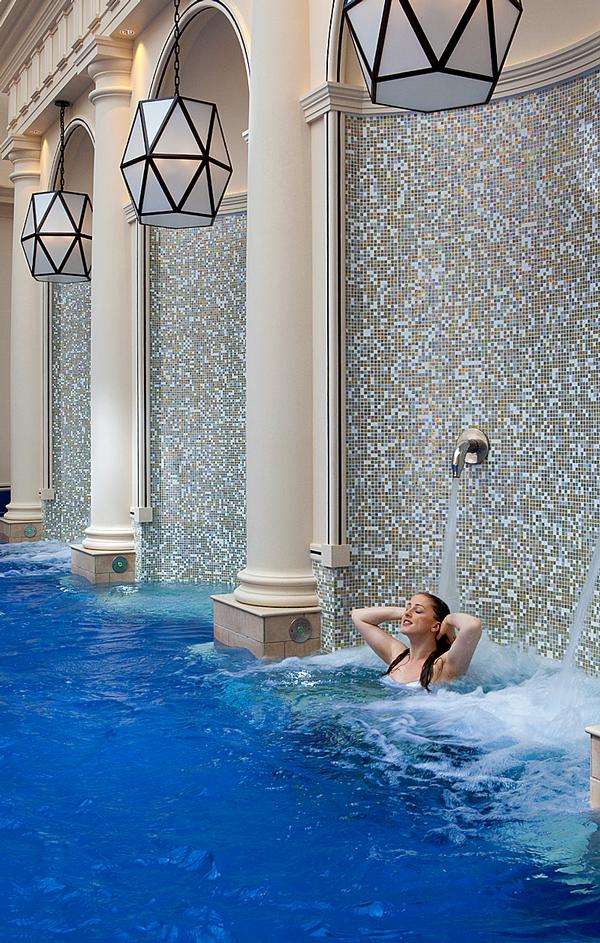
Spa Village Bath is centred around a four-storey, glass-roofed atrium, which houses the main pool – it’s a beautiful, calming light-filled space. My experience started with the self-guided water ritual with the alternating hot and cool experiences, which really helped relax me for my treatment.
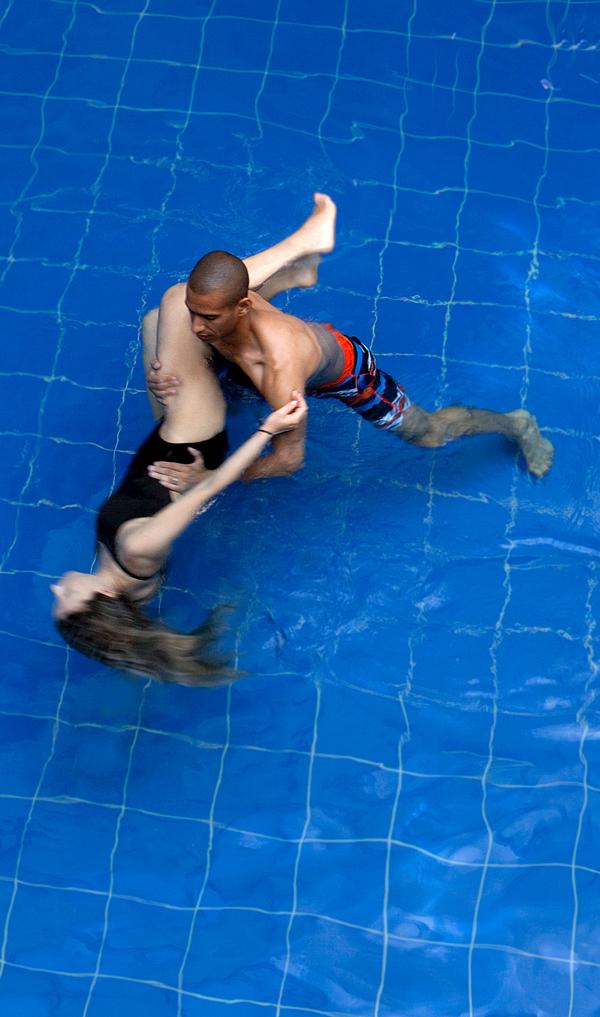
I chose the signature 45-minute Freedom treatment, which was designed specially for the spa by Mexican watsu practitioner Raphael Quiroz. I was slightly apprehensive and unsure of what to expect, but my therapist Sarah put me instantly at ease and the treatment turned out to be one of the most amazing I’ve ever had. I relaxed on my back in the water, with Sarah supporting my head. She then carried out a series of stretches, moving me through the pool.
It’s a dynamic treatment: you’re constantly moving through the water, sometimes quite quickly.
Towards the end, Sarah squeezed my arm to let me know that she was going to take me under water. This was the part I was worried about as, although I love being in water, I’m not good at holding my breath. Sarah was very tuned in to my body and as I put my trust in her we settled into a rhythm where she was anticipating my breathing and taking me under accordingly.
At the end of the treatment I was held upside down in the foetal position for what seemed like a minute or more. But by then I’d entered a meditative state, relaxed at a very fundamental level and felt as though I’d gone deeply into myself, so I was able to cope without any problems.
I found the Freedom treatment an extremely powerful experience, with the real strength being the fact you have to let go completely. As a mother of small children, I spend a great deal of my life looking after others, so it felt amazing to let go and allow someone to look after me for a change.
Afterwards my body felt light and free of tension and I carried a feeling of serenity with me the rest of the day.
"The treatment turned out to be one of the most amazing I’ve ever had"
The Freedom treatment involves guided movement in the water and was created by Mexican watsu practitioner Raphael Quiroz
The Gainsborough is YTL’s first hotel in the UK
The spa was co-created by designer Sylvia Sepielli
The Grade II-listed hotel sits above the remains of ancient Roman baths
Hotel guests have restricted access to the spa to help maintain tranquility
A personal oil is blended at the Aroma Bar
A bathing ritual includes alternating hot and cool experiences
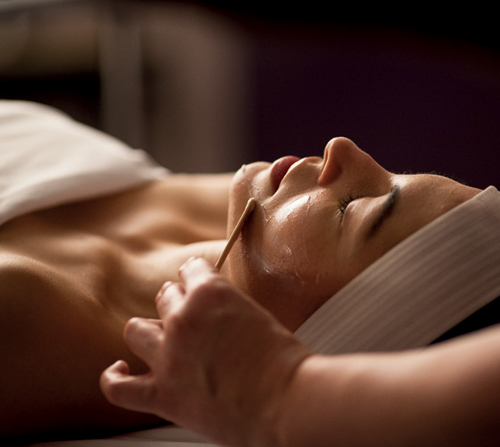
Reflecting YTL’s background, the spa includes Asian touches such as egg rolling for the face and ofuru baths
Reflecting YTL’s background, the spa includes Asian touches such as egg rolling for the face and ofuru baths
Le Atelier by C.O.D.E. doesn't offer a standard bespoke service, it provides a highly
customised approach to designing massage beds and loungers in high-end wellness
environments. [more...]
Following the opening of the Gainsborough Bath Spa – the only hotel in the UK with direct access to natural thermal waters – Magali Robathan speaks to the key people behind the project
By Magali Robathan | Published in Spa Business 2016 issue 1
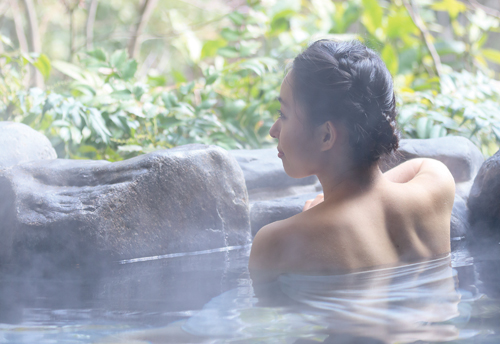
Spa Village Bath: a new borehole pipes thermal water into three spa pools
Thanks to its thermal waters, the City of Bath, UK, has been a wellness destination since Roman times.
However, for almost 40 years, since the closure of its municipal thermal baths in 1978, Bath was a spa town in name only. The opening of the Thermae Bath Spa day spa in 2004 went some way to addressing the lack of access to the city’s famous waters, but unlike most other European spa towns, Bath still had no five-star spa hotel.
Until now that is. The opening of the Gainsborough Bath Spa Hotel in 2015 means the city now has both a day spa and a luxury spa hotel, and tourism chiefs hope it heralds the start of a resurgence for the city of Bath as a global spa destination.
The project has been many years in the making. Plans for a hotel were announced in 2004 but stalled in the recession until Malaysian conglomerate YTL – which also owns both the Thermae Bath Spa and local utilities firm Wessex Water – took it on in 2011.
The hotel occupies two Grade II listed buildings above the remains of ancient Roman baths, which made the refurbishment extremely complex. Delays were caused by the discovery of more than 17,000 Roman coins and an original Roman mosaic on site.
Finally, however, Gainsborough Bath Spa hotel is open. It’s operated by Bath Hotel and Spa Ltd, the YTL subsidiary which also manages the nearby Thermae Bath Spa.
New hotel spa The hotel taps into natural thermal waters via a newly created borehole. It has 99 bedrooms, including three above the spa which have direct access to it.
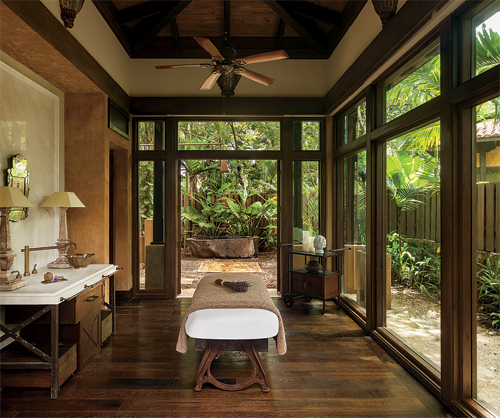
The 1,300sq m (13,993sq ft) Spa Village Bath within the hotel is spread over two levels. Highlights include three pools with thermal water cooled to 40?C, a salt room, ice grotto, infrared sauna and relaxation terrace. The 11 treatment rooms include a VIP suite with a Japanese ofuru thermal bathtub and two tatami rooms.
Spa Village Bath was designed by Sylvia Sepielli, who’s known for creating YTL’s original spa village in Pangkor Laut, Malaysia (see SB11/3 p46). As a result, the UK spa has some Asian influences, such as treatments using Malay, Thai, Chinese and Indian massage.
Sepielli created the spa with Melissa Mettler a consultant who’s worked exclusively for YTL for six years. Mettler worked on the concept, seeing it through the design and planning stages, recruiting the team and helping ensure the vision was delivered.
Sepielli worked with DaleSauna on a number of the thermal experiences and with Barr + Wray on the filtration and water treatment system. The hotel’s interior design was by Champalimaud, while EPR were responsible for the architecture.
As Bath emerges on the world stage as a leading wellness destination, we speak to the key people involved in the project.
Read more from this issue of Spa Business magazine
Interview: Kenneth Ryan
Marriott’s global head of spa talks exclusively to Katie Barnes about the new ‘game-changing’ Ritz-Carlton Spa brand and market domination
Promotional feature: Steve Kass Consulting
Steve Kass, founder and former CEO of American Leisure, has launched a new business, Steve Kass Consulting. The global leader explains his goals as an innovative concept and design creator
Research: Work it out
Ophelia Yeung gives a sneak preview of a new study on workplace wellness that debuts later this month
Fitness: Competitive edge
Could a touch of rivalry help spas to engage more people in fitness? Niamh Madigan finds out
Promotional feature: Ojmar
A growing number of spa operators across the UK are working with Ojmar to upgrade their traditional keyed locking systems to electronic solutions
Colin SkellettChair of Bath Hotels & Spa LtdYTL Hotels
Spa access is restricted to avoid overcrowding says Skellett
Why did YTL take on this project? YTL was already a significant investor in the Bath area so it was a natural development for us. Creating a five-star hotel and spa, which is the only one in the UK with direct access to natural, hot waters in a city such as Bath, was an irresistible opportunity. The Gainsborough Bath Spa is a key development for YTL and the start of our growing hotel and spa business in the UK.
Why did YTL take on the Thermae Bath Spa in 2014? YTL had a long association with Henk Verschuur, the former director of Thermae Bath Spa, who sadly passed away in April 2015. Indeed, we sponsored the Three Tenors concert that celebrated its initial opening.
With the development of Gainsborough Bath Spa, acquiring the operational contract for Thermae Bath Spa made enormous sense and Wessex Water’s expertise in treating water means we can ensure that these precious thermal waters are properly managed.
What’s your role? I look after YTL’s interests in the UK and this includes chairing both Thermae Bath Spa and the Gainsborough Hotel.
What’s the aim of the hotel? To create a five-star luxury experience for our guests – bringing back the thermal waters in the way the Romans experienced them.
Why did you decide to restrict hotel guests’ access to the spa to 7-9am and 8-10pm? Because we really want the spa to be an oasis of calm. If you allow unrestricted access it becomes too busy and that would be detrimental to what we’re trying to achieve.
Guests having treatments can use the facilities at any time. The treatments start after 10am and usually finish by 6pm so we try and keep that time very quiet. If you’re paying a lot of money for a massage you don’t want overcrowding in the spa, you want peace and serenity. Our uppermost limit is 30 people at any one time.
"The Gainsborough Bath Spa is a key development for YTL and the start of our growing hotel and spa business in the UK"
Peter RollinsMarketing DirectorGainsborough Bath Spa and Thermae Bath Spa
Royal permission to
use the waters was granted in 1590
What does the opening of the Gainsborough mean for Bath? To have a successful day spa and now a five-star spa hotel puts Bath on a level footing with many of the other great spa destinations in Europe. It has added real credibility. Bath is an incredible tourist destination. The whole city is a UNESCO World Heritage site and it attracts 967,000 staying visitors and 4.8 million day visitors a year.
It doesn’t just benefit Bath either. I’ve worked closely with other spa towns in the UK, including Buxton, Droitwich, Harrogate, Malvern and Royal Leamington Spa, and they’re all really supportive of what we’re doing. If it helps to raise the spa culture in the UK, those other places will benefit too.
What was the vision for this hotel? To create the UK’s only natural thermal spa hotel. From day one, the Spa Village concept was absolutely at the heart of the hotel.
What’s the history of the thermal waters? In 1590, Queen Elizabeth I granted the thermal waters to the people of Bath in a royal charter, under the guardianship of the local corporation. The local corporation is now Bath and North East Somerset council, which looks after the waters on behalf of the people of Bath.
How do you treat the waters? When the waters come out of the springs, they go through a filtration system. We add minute elements of chlorine – not because the waters aren’t pure, but because of the elements that humans introduce. We use the minimum amount permissible by law.
The waters are 45?C when they come out of the ground, but we cool them to 35-40?C [a more comfortable temperature].
You worked for Thermae Bath Spa which faced a many challenges. How did you turn it around? Initially everyone in Bath was really excited about the Thermae Bath Spa, but because it opened three years late and cost a lot of money, there were understandably many detractors.
It wasn’t easy to win back the hearts of people, but I think we’ve done that now. It’s been hugely successful. Thermae Bath Spa attracted around 280,000 visitors in 2015, which is our busiest year to date.
Did that experience affect people’s attitudes towards the Gainsborough project? There were a few throwaway lines, but the majority of local people really welcomed the fact that a significant building was opening up again.
The two projects are very different. Thermae Bath Spa is a public initiative and the Gainsborough has always been planned as a private project. The Gainsborough was only a few months late opening – YTL was determined to get it right.
"To have a successful day spa and now a five-star spa hotel puts Bath on a level footing with many of the other great spa destinations in Europe"
The Thermae Bath Spa attracted 280,000 visitors in 2015
Jessica Grant BrugadaManager, Spa Village BathThe Gainsborough Bath Spa hotel
Jessica Grant Brugada
Can you talk us through the spa experience? When guests arrive, they sit down at the Aroma Bar with one of our therapists, who will create a personalised pouch using a blend of Neal’s Yard aromatherapy oils which they can take into the sauna.
A spa attendant will then talk them through the self-guided bathing ritual. This takes around an hour and is a very important part of the spa experience. It involves taking the waters in the three thermal pools, relaxing in the sauna and steamroom, and cooling down in between with cold showers and in the ice grotto. As part of this ritual, they can relax in the spa suite with a cup of chocolate infused with cardamom and cinnamon, a drink which was inspired by the Georgians who were strong believers in the health-giving properties of chocolate.
What are the benefits of the healing waters? Our water is very rich in magnesium, copper and calcium. Magnesium is particularly good for aches and pains, sore joints and tired muscles.
Many of our hotel guests are leisure guests who come because it’s Bath and we are part of their experience. Eighty per cent of our guests come from the UK; 75 per cent of whom visit as a result of Spa Village Bath.
We have 100 spa members who make up approximately 12 per cent of our customers. Most of them have joined because of the thermal waters and because they want to invest in their health.
"Most spa members have joined because of the thermal waters: they want to invest in their health"
The magnesium-rich waters are good for aches and pains
Spa Village Bath, Freedom treatment
First-person experience: Magali Robathan
Magali Robathan
Magali RobathanManaging EditorCLADmag
Spa Village Bath is centred around a four-storey, glass-roofed atrium, which houses the main pool – it’s a beautiful, calming light-filled space. My experience started with the self-guided water ritual with the alternating hot and cool experiences, which really helped relax me for my treatment.
I chose the signature 45-minute Freedom treatment, which was designed specially for the spa by Mexican watsu practitioner Raphael Quiroz. I was slightly apprehensive and unsure of what to expect, but my therapist Sarah put me instantly at ease and the treatment turned out to be one of the most amazing I’ve ever had. I relaxed on my back in the water, with Sarah supporting my head. She then carried out a series of stretches, moving me through the pool.
It’s a dynamic treatment: you’re constantly moving through the water, sometimes quite quickly.
Towards the end, Sarah squeezed my arm to let me know that she was going to take me under water. This was the part I was worried about as, although I love being in water, I’m not good at holding my breath. Sarah was very tuned in to my body and as I put my trust in her we settled into a rhythm where she was anticipating my breathing and taking me under accordingly.
At the end of the treatment I was held upside down in the foetal position for what seemed like a minute or more. But by then I’d entered a meditative state, relaxed at a very fundamental level and felt as though I’d gone deeply into myself, so I was able to cope without any problems.
I found the Freedom treatment an extremely powerful experience, with the real strength being the fact you have to let go completely. As a mother of small children, I spend a great deal of my life looking after others, so it felt amazing to let go and allow someone to look after me for a change.
Afterwards my body felt light and free of tension and I carried a feeling of serenity with me the rest of the day.
"The treatment turned out to be one of the most amazing I’ve ever had"
The Freedom treatment involves guided movement in the water and was created by Mexican watsu practitioner Raphael Quiroz
The Gainsborough is YTL’s first hotel in the UK
The spa was co-created by designer Sylvia Sepielli
The Grade II-listed hotel sits above the remains of ancient Roman baths
Hotel guests have restricted access to the spa to help maintain tranquility
A personal oil is blended at the Aroma Bar
A bathing ritual includes alternating hot and cool experiences
Reflecting YTL’s background, the spa includes Asian touches such as egg rolling for the face and ofuru baths
Reflecting YTL’s background, the spa includes Asian touches such as egg rolling for the face and ofuru baths
Four Seasons Resort The Nam Hai in Hoi An, Vietnam, has put together a Global Wellness Day
(GWD) agenda with activations rooted in nature and shaped by four pillars of Joy – in
alignment with the day’s theme #JoyMagenta.
The Global Wellness Summit (GWS) will celebrate its 20th anniversary at the 2026 event in
Phuket, Thailand, later this year with the theme: The Science, Art and Soul of Wellness.
Auko, an all-inclusive development, is opening in Phong Nha in Vietnam in Q3 2026, with a
series of 30 tented eco-lodges and wellness hospitality operations by Lumina Wellbeing.
Therme Manchester’s 28-acre development, which will include interconnected glass pavilions
that measure 65,000sq m, will be the largest bathing and wellbeing attraction in the world once
complete, according to prof David Russell, CEO of Therme UK.
Naples Beach Club, a Four Seasons Resort, has opened a 2,800sq m spa called The Sanctuary,
with the design and concept inspired by the Native American people that populated Florida’s
Southwest coast – the Calusa.
Swire Hotels’ luxury hospitality brand Upper House has revealed it will roll out its two-day
House of Healing retreats at its three hotels in Hong Kong, Chengdu and Shanghai.
LVMH-owned beauty house Guerlain will launch up to five spas with partners a year as part of
its plan to expand globally, according to the brand’s international spa and wellness director,
Diane Davody.
A new global study by Kevin Kelly and Peter Yesawich, called WELLSurvey 2.0, has revealed
more than half of consumers in the UK, US and Germany would not choose numerous high-
profile wellness resort brands for a future trip.
Luxury hospitality and wellness pioneer Jeremy McCarthy has launched Leisure Alchemy, a
digital platform that will provide professionals with strategic guidance on how to build
transformational leisure experiences that drive profit.
Le Atelier by C.O.D.E. doesn't offer a standard bespoke service, it provides a highly
customised approach to designing massage beds and loungers in high-end wellness
environments. [more...]