Latest
issue
GET SPA BUSINESS
magazine
Yes! Send me the FREE digital editions of Spa Business and Spa Business insider magazines and the FREE weekly Spa Business and Spa Business insider ezines and breaking news alerts!
Not right now, thanksclose this window I've already subscribed.
Uniting the world of spa & wellness
Get Spa Business and Spa Business insider digital magazines FREE
Sign up here ▸
News   Features   Products   Company profilesProfiles   Press releasesProfiles   Magazine   Handbook   Advertise    Subscribe  
NEWS
UK Government reduces energy subsidies, says gas prices have fallen and sector is not an ETII
POSTED 11 Jan 2023 . BY Frances Marcellin
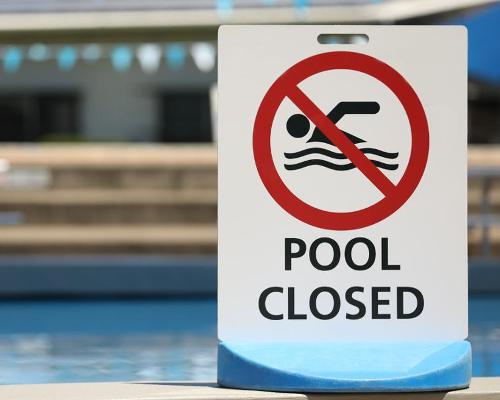
The UK government has classified swimming pools and leisure centres as using less energy than museums Credit: Unsplash/marcus ng

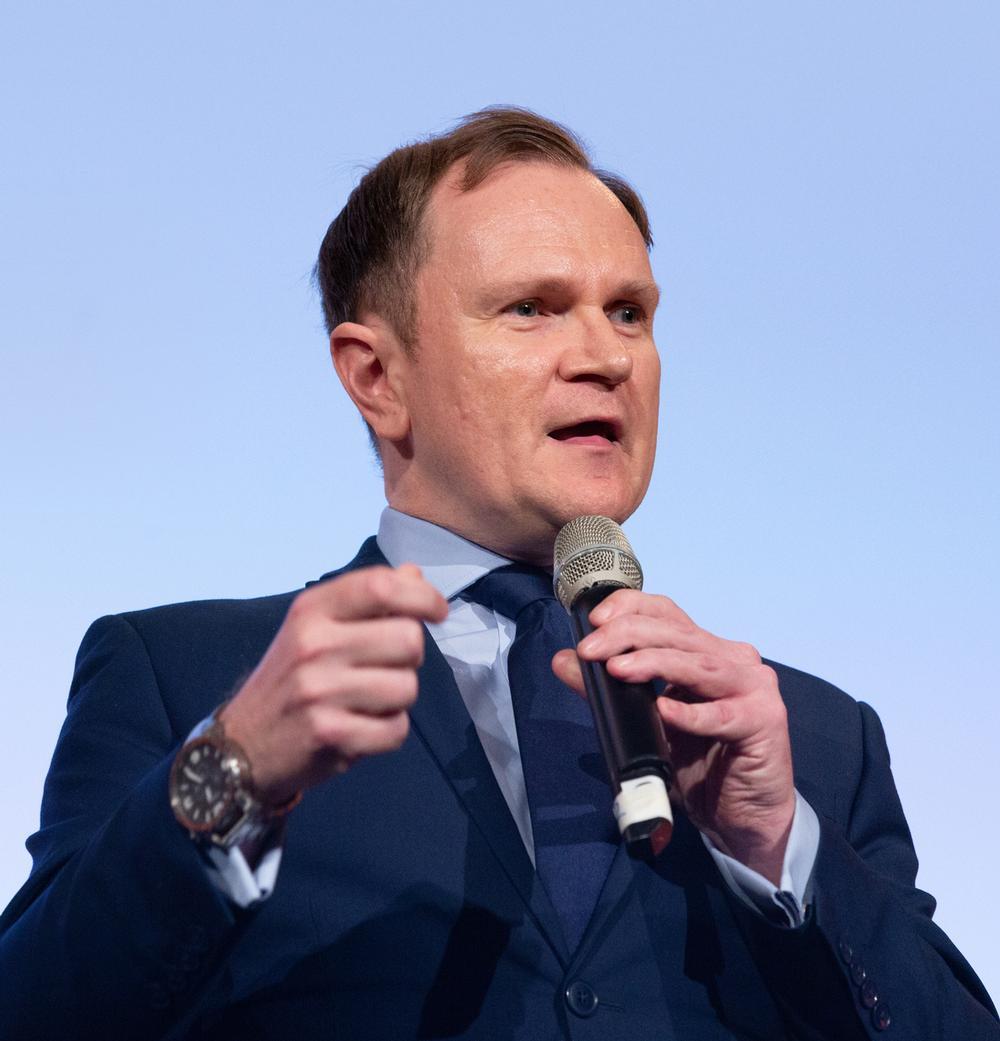
Credit: UK Active
The failure to categorise certain services, especially swimming pools, as ‘intensive’ energy users requiring more bespoke support is a significant oversight given the overwhelming evidence provided to the government on their energy use
– Huw Edwards, CEO, UK Active
UK government is scaling back energy relief for businesses, capping it at £5.5bn from 1 April 2023 – the previous scheme from 1 Oct 2022-31 March 2023 was £16bn
Leisure centres and swimming pools not considered "energy intensive" by government, even though museums and historical sites are eligible for extra support
Government says wholesale gas prices have halved and better weather means less energy will be needed
Huw Edwards, CEO of UK Active, says implications of the new Energy Bill Relief Scheme (EBRS) will be “severe”
The UK government has announced it will be scaling back financial support for businesses as part of the updated Energy Bill Relief Scheme (EBRS).

Treasury support has been capped at £5.5bn for the year from 1 April 2023, more than £10bn less than the scheme designed for the winter from 1 October 2022 to the end of March.

The government said that the EBRS was only intended to be a six-month emergency scheme and that “the latest data shows wholesale gas prices have now fallen to levels just before Putin’s invasion of Ukraine and have almost halved since the current scheme was announced”.

It said that the new scheme “strikes a balance” between “supporting businesses over the next 12 months and limiting taxpayer’s exposure to volatile energy markets”.

UK Active released survey data in November 2022 showing that even under the previous scheme 40 per cent of council areas were at risk of losing their leisure centres – including 100 swimming pools – or seeing reduced services before 31 March 2023. Around three quarters (74 per cent) were predicted to close or reduce services by 31 March 2024.

Freedom Leisure – which manages over 100 leisure centres and 60 pools – started shutting pools last October in Milton Keynes and Rye, after its annual energy bill increased from £8m to £20m. The closures came despite support from the EBRS.

“The pace of closures nationwide matches UK Active’s projections, with swimming pools most exposed due to their significant energy dependency,” said Huw Edwards, CEO of UK Active. “The government’s new Energy Bills Discount Scheme will fail to give thousands of pools, leisure centres, and gyms the support they need to avoid further service restrictions, closures, and job losses.

“Having experienced a rise in energy costs of up to 300 per cent compared to 2019, the new scheme will make little material difference to the greater energy cost pressures these facilities will now face from 1 April.

“The failure to categorise certain services, especially swimming pools, as ‘intensive’ energy users requiring more bespoke support is a significant oversight given the overwhelming evidence provided to the government on their energy use.”

It is unclear why business activities such as museums and historical sites have been classified as “particularly vulnerable to high energy prices” and “energy intensive” – referred to as Energy and Trade Intensive Industries or ETIIs – and therefore entitled to a higher level of financial support, while leisure centres and swimming pools have been excluded.

Liz Terry, editor of HCM said: "The physical activity sector has been placed towards the back of the queue again, which has echoes of the challenging time the sector had getting open after the COVID lockdowns.

"We now know that in addition to lobbying for essential status, we must also start to fight for relevant parts of the sector to be categorised as an Energy and Trade Intensive Industry (ETII) and we call on the sector to commit resources to making this happen as soon as possible.

"There is clearly still a huge lack of understanding within government of the vital role the sector plays in maintaining the economy and the health of the nation – reducing the strain on the NHS – and also the way the sector actually operates.

"It beggars belief that anyone would think a museum is more energy-intensive in terms of operations than a swimming pool.

"However, while this news is devastating for some operators, we must aim to mothball facilities that need to close, so they can be reopened as soon as finances allow.

"With better weather expected as we go into the spring, we also hope operators will seize the opportunity to invest in solar to take advantage of abundant free energy through the summer months, as has already been happening with great success in some locations."

Phil Rumbelow, chair of Community Leisure UK (CLUK), which represents charitable trusts delivering public leisure and culture services, said: “This news is a bitter blow for the community leisure sector, particularly public swimming pools, which puts their continued operation in question. Unless other steps are taken by the government, nationally and locally, this decision spells the end for community leisure as we know it. One thing is clear, inaction has consequences.

“Our members will continue to argue that the cause of publicly accessible leisure is an ideal worth fighting for. As just one example, we simply cannot accept a situation where the only route for a child to learn to swim is through a private pool, with all the costs and limitations to access that involves.

“We are actively seeking a change of mind on the part of the government, as well as direct crisis support for our sector. We will not accept the collapse of public leisure and the major impact on public health that will result.”

Edwards concurs and believes the implications of the new EBRS will be “severe” unless they are reviewed, with communities losing vital services, from swimming lessons for children, to mental health services and programmes for older citizens, ethnically diverse communities and disabled people. Millions of people on long-term health programmes for cancer rehabilitation, musculoskeletal conditions and Type 2 diabetes will also be impacted.

A report from the WHO in October 2022 showed that physical inactivity between 2020 and 2030 will result in almost 500m people developing a preventable, non-communicable disease (NCD), at a cost of US$300bn, if governments do not act urgently.

Speaking to BBC news following the announcement, Edwards said: “As more facilities close, the decision to deny greater support for these facilities will create even more challenges for the NHS, which is already under unimaginable pressure and impact economic productivity by hampering efforts to get people healthy for work. Tragically, the impact of the scheme and more facility closures will further damage our national health, our NHS, and our economic growth.”

Andy Haldane, former chief economist at the Bank of England, says declining health is hindering the UK's economic growth with the UK forecast to be the only developed economy to have a workforce smaller than before the pandemic by Q1 2023.

UK Active wants to work with the government to ensure the leisure sector is categorised as an ETII and to minimise the inevitable restrictions and closures.

“This should include placing these facilities at the heart of addressing the major challenges we face as a nation, including the mental health crisis in young people and adults, operational pressures on the NHS, and the growth of people of working age becoming economically inactive,” said Edwards.

“Following the Public Accounts Committee’s new report on grassroots participation in sport and physical activity, the government said it had ‘made the nation’s health and fitness a priority’ so we now need to see this sentiment matched with action,” he concluded.

RELATED STORIES
  UK fitness industry fights for continuation of government energy support from April 2023


A number of the UK's local authorities and their leisure management partners are in crisis due to rising energy costs, with around 40 per cent saying leisure centres and swimming pools will be closed or services reduced before March 2023 unless they receive immediate confirmation of additional grants from the government.
MORE NEWS
Almost half of spa survey respondents are unaware cancer is a disability and not adapting treatments is discrimination
A recent survey by the UK Spa Association (UKSA) into the industry’s approach to cancer care has revealed that almost half of participating respondents (46 per cent) are unaware that cancer is a disability and guests with a cancer diagnosis must be given
Solmar Hotels and Resorts offers Temazcal ceremony for Global Wellness Day
Mexican operator, Solmar Hotels and Resorts, is hosting a series of events in celebration of Global Wellness Day, including a Temazcal ceremony at its Playa Grande Resort and Spa in Los Cabos.
Mandarin Oriental announces standalone Mansions-branded residences for Abu Dhabi
Mandarin Oriental has announced a standalone residence brand, Mansions, which will debut at Emirates Palace, Mandarin Oriental Mansions, Abu Dhabi, in 2029.
Healing sanctuary Tulah Clinical Wellness opens in Kerala
Tulah Clinical Wellness, a holistic wellness destination, has officially opened in the hills of northern Kerala, India.
+ More news   

FEATURED SUPPLIERS

Aquaform is designing water as an experience
In the world of spa design, reducing water to a functional component misses the point. [more...]

Longevity in spas: a strategic choice, not a default setting
Longevity has become one of the most debated concepts in contemporary wellness. [more...]
+ More featured suppliers  
COMPANY PROFILES
Bellezi

Founded in 2009 as a Dutch family business, Bellezi brings more than 20 years of experience in treat [more...]
Prism Light Pod

Prism Light Pod launched its first whole-body red light bed in 2016. We expanded with the Prism Li [more...]
+ More profiles  
CATALOGUE GALLERY
 

+ More catalogues  

DIRECTORY
+ More directory  
DIARY


09-11 Jun 2026

World Sauna Forum 2026

Savutuvan Apaja, Haapaniemi, Finland
09-12 Jun 2026

W3Spa EMEA

Hotel Cascais Miragem Health & Spa, Portugal
+ More diary  
 
ABOUT LEISURE MEDIA
LEISURE MEDIA MAGAZINES
LEISURE MEDIA HANDBOOKS
LEISURE MEDIA WEBSITES
LEISURE MEDIA PRODUCT SEARCH
 
SPA BUSINESS
SPA OPPORTUNITIES
SPA BUSINESS HANDBOOK
PRINT SUBSCRIPTIONS
FREE DIGITAL SUBSCRIPTIONS
ADVERTISE . CONTACT US

Leisure Media
Tel: +44 (0)1462 431385

©Cybertrek 2026
Uniting the world of spa & wellness
Get Spa Business and Spa Business insider digital magazines FREE
Sign up here ▸
News   Products   Magazine   Subscribe
NEWS
UK Government reduces energy subsidies, says gas prices have fallen and sector is not an ETII
POSTED 11 Jan 2023 . BY Frances Marcellin
The UK government has classified swimming pools and leisure centres as using less energy than museums Credit: Unsplash/marcus ng
Credit: UK Active
The failure to categorise certain services, especially swimming pools, as ‘intensive’ energy users requiring more bespoke support is a significant oversight given the overwhelming evidence provided to the government on their energy use
– Huw Edwards, CEO, UK Active
UK government is scaling back energy relief for businesses, capping it at £5.5bn from 1 April 2023 – the previous scheme from 1 Oct 2022-31 March 2023 was £16bn
Leisure centres and swimming pools not considered "energy intensive" by government, even though museums and historical sites are eligible for extra support
Government says wholesale gas prices have halved and better weather means less energy will be needed
Huw Edwards, CEO of UK Active, says implications of the new Energy Bill Relief Scheme (EBRS) will be “severe”
The UK government has announced it will be scaling back financial support for businesses as part of the updated Energy Bill Relief Scheme (EBRS).

Treasury support has been capped at £5.5bn for the year from 1 April 2023, more than £10bn less than the scheme designed for the winter from 1 October 2022 to the end of March.

The government said that the EBRS was only intended to be a six-month emergency scheme and that “the latest data shows wholesale gas prices have now fallen to levels just before Putin’s invasion of Ukraine and have almost halved since the current scheme was announced”.

It said that the new scheme “strikes a balance” between “supporting businesses over the next 12 months and limiting taxpayer’s exposure to volatile energy markets”.

UK Active released survey data in November 2022 showing that even under the previous scheme 40 per cent of council areas were at risk of losing their leisure centres – including 100 swimming pools – or seeing reduced services before 31 March 2023. Around three quarters (74 per cent) were predicted to close or reduce services by 31 March 2024.

Freedom Leisure – which manages over 100 leisure centres and 60 pools – started shutting pools last October in Milton Keynes and Rye, after its annual energy bill increased from £8m to £20m. The closures came despite support from the EBRS.

“The pace of closures nationwide matches UK Active’s projections, with swimming pools most exposed due to their significant energy dependency,” said Huw Edwards, CEO of UK Active. “The government’s new Energy Bills Discount Scheme will fail to give thousands of pools, leisure centres, and gyms the support they need to avoid further service restrictions, closures, and job losses.

“Having experienced a rise in energy costs of up to 300 per cent compared to 2019, the new scheme will make little material difference to the greater energy cost pressures these facilities will now face from 1 April.

“The failure to categorise certain services, especially swimming pools, as ‘intensive’ energy users requiring more bespoke support is a significant oversight given the overwhelming evidence provided to the government on their energy use.”

It is unclear why business activities such as museums and historical sites have been classified as “particularly vulnerable to high energy prices” and “energy intensive” – referred to as Energy and Trade Intensive Industries or ETIIs – and therefore entitled to a higher level of financial support, while leisure centres and swimming pools have been excluded.

Liz Terry, editor of HCM said: "The physical activity sector has been placed towards the back of the queue again, which has echoes of the challenging time the sector had getting open after the COVID lockdowns.

"We now know that in addition to lobbying for essential status, we must also start to fight for relevant parts of the sector to be categorised as an Energy and Trade Intensive Industry (ETII) and we call on the sector to commit resources to making this happen as soon as possible.

"There is clearly still a huge lack of understanding within government of the vital role the sector plays in maintaining the economy and the health of the nation – reducing the strain on the NHS – and also the way the sector actually operates.

"It beggars belief that anyone would think a museum is more energy-intensive in terms of operations than a swimming pool.

"However, while this news is devastating for some operators, we must aim to mothball facilities that need to close, so they can be reopened as soon as finances allow.

"With better weather expected as we go into the spring, we also hope operators will seize the opportunity to invest in solar to take advantage of abundant free energy through the summer months, as has already been happening with great success in some locations."

Phil Rumbelow, chair of Community Leisure UK (CLUK), which represents charitable trusts delivering public leisure and culture services, said: “This news is a bitter blow for the community leisure sector, particularly public swimming pools, which puts their continued operation in question. Unless other steps are taken by the government, nationally and locally, this decision spells the end for community leisure as we know it. One thing is clear, inaction has consequences.

“Our members will continue to argue that the cause of publicly accessible leisure is an ideal worth fighting for. As just one example, we simply cannot accept a situation where the only route for a child to learn to swim is through a private pool, with all the costs and limitations to access that involves.

“We are actively seeking a change of mind on the part of the government, as well as direct crisis support for our sector. We will not accept the collapse of public leisure and the major impact on public health that will result.”

Edwards concurs and believes the implications of the new EBRS will be “severe” unless they are reviewed, with communities losing vital services, from swimming lessons for children, to mental health services and programmes for older citizens, ethnically diverse communities and disabled people. Millions of people on long-term health programmes for cancer rehabilitation, musculoskeletal conditions and Type 2 diabetes will also be impacted.

A report from the WHO in October 2022 showed that physical inactivity between 2020 and 2030 will result in almost 500m people developing a preventable, non-communicable disease (NCD), at a cost of US$300bn, if governments do not act urgently.

Speaking to BBC news following the announcement, Edwards said: “As more facilities close, the decision to deny greater support for these facilities will create even more challenges for the NHS, which is already under unimaginable pressure and impact economic productivity by hampering efforts to get people healthy for work. Tragically, the impact of the scheme and more facility closures will further damage our national health, our NHS, and our economic growth.”

Andy Haldane, former chief economist at the Bank of England, says declining health is hindering the UK's economic growth with the UK forecast to be the only developed economy to have a workforce smaller than before the pandemic by Q1 2023.

UK Active wants to work with the government to ensure the leisure sector is categorised as an ETII and to minimise the inevitable restrictions and closures.

“This should include placing these facilities at the heart of addressing the major challenges we face as a nation, including the mental health crisis in young people and adults, operational pressures on the NHS, and the growth of people of working age becoming economically inactive,” said Edwards.

“Following the Public Accounts Committee’s new report on grassroots participation in sport and physical activity, the government said it had ‘made the nation’s health and fitness a priority’ so we now need to see this sentiment matched with action,” he concluded.

RELATED STORIES
UK fitness industry fights for continuation of government energy support from April 2023


A number of the UK's local authorities and their leisure management partners are in crisis due to rising energy costs, with around 40 per cent saying leisure centres and swimming pools will be closed or services reduced before March 2023 unless they receive immediate confirmation of additional grants from the government.

MORE NEWS
Almost half of spa survey respondents are unaware cancer is a disability and not adapting treatments is discrimination
A recent survey by the UK Spa Association (UKSA) into the industry’s approach to cancer care has revealed that almost half of participating respondents (46 per cent) are unaware that cancer is a disability and guests with a cancer diagnosis must be given
Solmar Hotels and Resorts offers Temazcal ceremony for Global Wellness Day
Mexican operator, Solmar Hotels and Resorts, is hosting a series of events in celebration of Global Wellness Day, including a Temazcal ceremony at its Playa Grande Resort and Spa in Los Cabos.
Mandarin Oriental announces standalone Mansions-branded residences for Abu Dhabi
Mandarin Oriental has announced a standalone residence brand, Mansions, which will debut at Emirates Palace, Mandarin Oriental Mansions, Abu Dhabi, in 2029.
Healing sanctuary Tulah Clinical Wellness opens in Kerala
Tulah Clinical Wellness, a holistic wellness destination, has officially opened in the hills of northern Kerala, India.
Four Seasons Resort The Nam Hai creates Global Wellness Day programme rooted in nature
Four Seasons Resort The Nam Hai in Hoi An, Vietnam, has put together a Global Wellness Day (GWD) agenda with activations rooted in nature and shaped by four pillars of Joy – in alignment with the day’s theme #JoyMagenta.
Wellness care hospital opens in Vilnius with innovative spa and hospitality concept
Lithuanian care operator Addere Care has launched a new “wellness care hospital” in Vilnius.
+ More news   
 
FEATURED SUPPLIERS

Aquaform is designing water as an experience
In the world of spa design, reducing water to a functional component misses the point. [more...]

Longevity in spas: a strategic choice, not a default setting
Longevity has become one of the most debated concepts in contemporary wellness. [more...]
+ More featured suppliers  
COMPANY PROFILES
Bellezi

Founded in 2009 as a Dutch family business, Bellezi brings more than 20 years of experience in treat [more...]
+ More profiles  
CATALOGUE GALLERY
+ More catalogues  

DIRECTORY
+ More directory  
DIARY


09-11 Jun 2026

World Sauna Forum 2026

Savutuvan Apaja, Haapaniemi, Finland
09-12 Jun 2026

W3Spa EMEA

Hotel Cascais Miragem Health & Spa, Portugal
+ More diary  


ADVERTISE . CONTACT US

Leisure Media
Tel: +44 (0)1462 431385

©Cybertrek 2026

ABOUT LEISURE MEDIA
LEISURE MEDIA MAGAZINES
LEISURE MEDIA HANDBOOKS
LEISURE MEDIA WEBSITES
LEISURE MEDIA PRODUCT SEARCH
PRINT SUBSCRIPTIONS
FREE DIGITAL SUBSCRIPTIONS