Yes! Send me the FREE digital editions of Spa Business and Spa Business insider magazines and the FREE weekly Spa Business and Spa Business insider ezines and breaking news alerts!
Both riding on, and fuelling, the cycling boom, Strava has inspired
people to get out on their bikes, trying to be King or Queen of the Mountain. Marketing manager Gareth Nettleton talks to Kath Hudson
By Kath Hudson | Published in Health Club Management 2015 issue 5
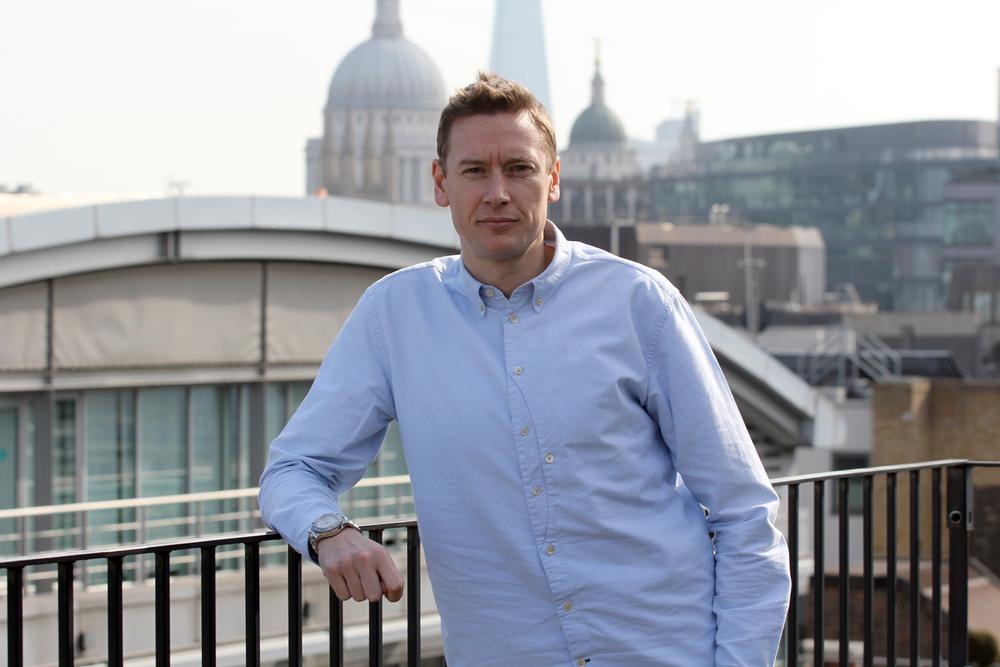
Nettleton: “Strava is much more than a tracking app”
What is Strava? Strava is, at its heart, a global community of athletes. Through our mobile apps and website, we connect, motivate and inspire runners and cyclists throughout their experience, from exploration and adventure to training and competition. Designed by athletes, for athletes, Strava unites millions from around the world every day through the sports they love.
Although we allow people to track their rides and runs, we’re much more than a tracking app. Similarly, even though we connect people, we don’t call ourselves a social network.
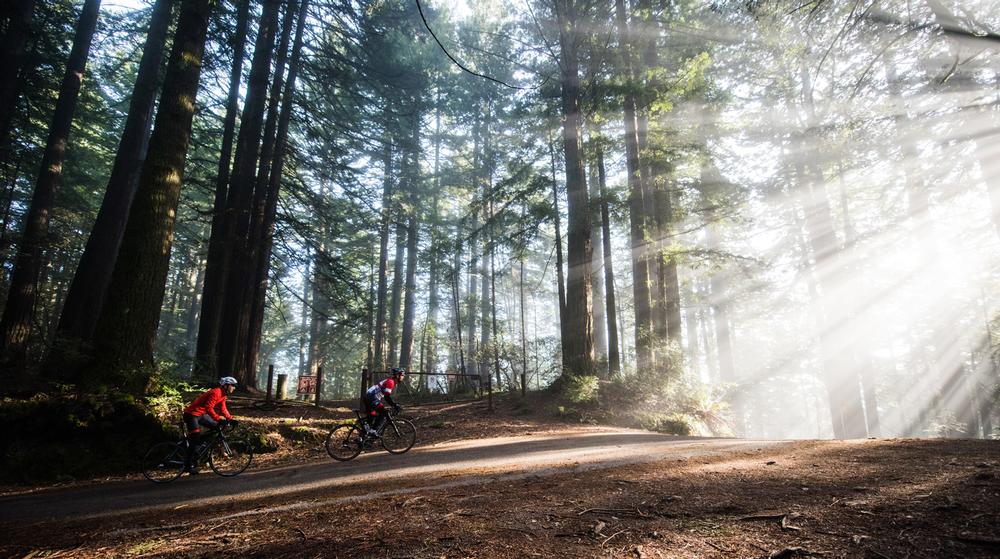
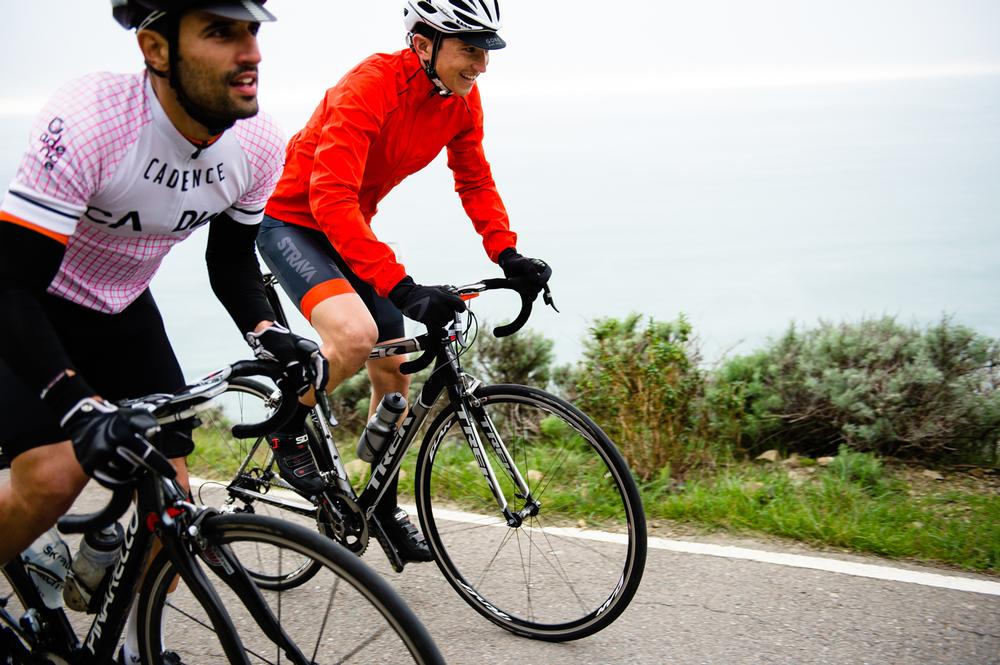
Members can make a ‘segment’, which is a designated stretch of road – usually a hill climb – that they can compete on. People love to blast themselves over the segment. The fastest are named King of the Mountain (KOM) or Queen of the Mountain (QOM) for cycling. Runners are awarded a Course Record (CR). It taps into an innate human desire to compete: there are lots of bragging rights and desires to be that fastest person ever. It’s very competitive.
Equally, the data and stats side is as important as the social and competitive side. Some of our members prefer to use Strava in one-player mode: they simply use the tool to get their own stats and track their progress over time. For them, beating their own time is just as motivating as competing with others. We often see this type of behaviour among our female members. However, I feel that Strava is more fun when you have lots of friends and followers also on Strava.
When and how did Strava come about? The two founders, Michael Horvath and Mark Gainey, met at Harvard in the early 90s. They were in the rowing team together and came up with the vision of creating a virtual locker room: invoking inspiration, motivation and camaraderie. However, the technology wasn’t there at the time, so the idea was put in a bottom drawer and they started another software company instead. Fast forward to the mid-2000s: they had moved from rowing to running and cycling, and wanted another venture. With GPS being so accessible, they figured now could be a good time to dust off their original idea. They started off with one hill and gave GPS devices to some friends to test the concept. The feedback was great and Strava was born.
How many users does Strava have now, and how quickly did it grow? We don’t say a figure, because as soon as we do it’s out of date. However, it’s in the substantial millions and growing by 100,000 each week. On the cycling side, there are more men than women, but the split is fairly even for running.
Initially, in 2009, it was small and reliant on a Garmin, but it still won a small, hardcore following in San Francisco, US. Exponential growth came in 2011, when the mobile apps launch made Strava accessible to anyone with a smartphone.
It grew quickly in English-speaking markets from day one. We didn’t go into a second language until last year, when we launched in France. Now we’re in 15 languages.
It spreads via a network effect: starting with small communities, who tell their family and friends, who tell their family and friends, and so on.
Who’s your target market? Passionate athletes: not necessarily the most able, but definitely the most keen – those who have a real desire to get out there and be active. So we cut across both sexes and all ages: we have teens and septuagenarians using Strava.
We’re not about getting anyone to their first 5k, or getting them off the couch – there are others aiming at that market. We’re more about enhancing the experience for the guys who are really into their cycling and running. That said, although we were adopted by the pro cyclists in the early days, we’ve tried to make the product useful and engaging whatever your ability level. We feel that, if we could make it good enough for the pros, it will engage anyone.
How do you continue to keep your customers engaged? If people aren’t engaged we don’t have a business, so that’s where we put our focus. Our members are very active and also very engaged: 30 per cent of Strava users are active every single day, and it’s through us that they’re living out their athletic lives.
We have a mantra that we have to do three things really, really well: connect, motivate and entertain. So we try to keep it fresh and continue to develop new features.
Strava is a much more fun place when you have lots of friends and followers – the social impact of your friends will help to keep you engaged – so we make it very easy for users to grow their own network.
One thing we definitely know from our data: once you’ve been for three or four rides or runs, you’re hooked. We don’t tend to lose people, which means the product is engaging enough to keep people motivated. It’s a good indicator that, if we can get people into the exercise habit, it keeps them exercising.
What are your current streams of revenue? At the moment we’re not profitable, but we’re confident of getting there in the near future. The core experience is free for users, but we also have a Premium level – which offers more features, perks and benefits – that costs £3.99 a month or £39.99 a year. Our aim is to keep growing our Premium member base, so that these members support everything else and bring us into profitability. We’re actively working on features at the moment that will further enhance the Strava Premium experience. But equally, when we do come up with a great feature, there’s always the temptation to make it available to everyone to help keep our whole user base engaged.
In addition, a small but growing part of the business is letting Strava athletes purchase gear as a reward for completing one of our challenges. This ranges from limited edition cycling jerseys to tech T-shirts for runners. The unique part of our model, though, is that people have to earn that shirt through sweat and hard graft. We think that’s much more compelling than a standard shop model.
Strava Metro is another strand. We realised three years ago that we were collecting amazing data about where people run and ride – data that would be very useful to town planners if they were, for example, doing an analysis of where they should be improving infrastructure and making changes. Hopefully the end result of sharing this data will be that roads will become safer.
We talked to the Oregon Department of Transport in the US first, and then the UK’s Transport for London approached us. They want to know the main cycling arteries into and out of the city, and which junctions are avoided. Previously the only way to measure this was by standing by the roadside with clipboards, but we can supply them with minute-by-minute roll-ups of any stretch of road.
One thing that separates us is that we don’t have ads in our product. We had a founding principle that we wouldn’t litter the app with ads. It means we haven’t made as much money, but it’s huge thing in terms of the user experience.
Does the business face any threats? We’re always conscious and aware, but what we’ve built in the last five years is pretty unique. On the cycling side, we’ve grown very quickly and critical mass is always a competitive advantage. Running is different: there are lots of running trackers and apps out there and most are older than us. That’s why we’re always looking for unique features to help us create separation between a Strava experience and the experience available on other sports and fitness platforms.
Equally, we don’t worry too much. We believe that, if we keep doing good work – adding new features and keeping our users entertained and motivated – people will keep discovering us and good things will happen.
What developments are you planning for the future? We’re excited about all the new wearable technology. We try to be device agnostic and make Strava compatible with all hardware devices: we’re the Switzerland of fitness platforms. We generally view it as a good thing, as it provides more ways to upload to Strava. Going forward, we’re working on the overall experience so we better serve athletes before and during activities. Historically we’ve been very strong post-ride and post-run, so lately we’ve been adding new features to broaden this, such as route planning and training plans, to help people plan their exercise rather than just looking backwards.
Also, we’ll be working on our Premium product and putting our data to good use – for example, producing the best running and cycling routes and also identifying top stops, such as views, cafés and bike shops. Our aim is to become indispensable to runners and cyclists.
How can the health club industry work with technology such as Strava? If someone is active, they’ll use a number of places and methods to train. Pretty much no-one only runs or cycles – they’ll have the appetite to do supporting activity like CrossFit, yoga and strength work, as having a great core is really important for runners and cyclists.
There are huge swathes of the world where people can’t ride their bikes outside in winter, but they don’t want to be unfit by spring. I’m sure Strava helps to fill group cycling classes all around the world.
What gyms could learn from technology is how to keep people engaged and motivated by using a social element. Gyms can be lonely, whereas Strava has opened up individual sports by creating a community.
In a world where imbalance often accumulates quietly, Wildsmith unveils its newest
wellbeing innovation: Silent Loads, an approach designed to meet the needs of modern spa
guests with precision and depth. [more...]
In the fast-paced world of fitness and wellness, where high-intensity workouts push us to
our limits and the sweat pours, the importance of efficient recovery cannot be overstated. [more...]
+ More featured suppliers
COMPANY PROFILES
Capsix
Founded in 2016 by Carole Eyssautier, PhD in AI, François Eyssautier, robotics engineer, and Stéphan [more...]
Myndstream
The Stream, Myndstream's purpose-built streaming service enables you to personalise the music to sui [more...]
Both riding on, and fuelling, the cycling boom, Strava has inspired
people to get out on their bikes, trying to be King or Queen of the Mountain. Marketing manager Gareth Nettleton talks to Kath Hudson
By Kath Hudson | Published in Health Club Management 2015 issue 5
Nettleton: “Strava is much more than a tracking app”
What is Strava? Strava is, at its heart, a global community of athletes. Through our mobile apps and website, we connect, motivate and inspire runners and cyclists throughout their experience, from exploration and adventure to training and competition. Designed by athletes, for athletes, Strava unites millions from around the world every day through the sports they love.
Although we allow people to track their rides and runs, we’re much more than a tracking app. Similarly, even though we connect people, we don’t call ourselves a social network.
Members can make a ‘segment’, which is a designated stretch of road – usually a hill climb – that they can compete on. People love to blast themselves over the segment. The fastest are named King of the Mountain (KOM) or Queen of the Mountain (QOM) for cycling. Runners are awarded a Course Record (CR). It taps into an innate human desire to compete: there are lots of bragging rights and desires to be that fastest person ever. It’s very competitive.
Equally, the data and stats side is as important as the social and competitive side. Some of our members prefer to use Strava in one-player mode: they simply use the tool to get their own stats and track their progress over time. For them, beating their own time is just as motivating as competing with others. We often see this type of behaviour among our female members. However, I feel that Strava is more fun when you have lots of friends and followers also on Strava.
When and how did Strava come about? The two founders, Michael Horvath and Mark Gainey, met at Harvard in the early 90s. They were in the rowing team together and came up with the vision of creating a virtual locker room: invoking inspiration, motivation and camaraderie. However, the technology wasn’t there at the time, so the idea was put in a bottom drawer and they started another software company instead. Fast forward to the mid-2000s: they had moved from rowing to running and cycling, and wanted another venture. With GPS being so accessible, they figured now could be a good time to dust off their original idea. They started off with one hill and gave GPS devices to some friends to test the concept. The feedback was great and Strava was born.
How many users does Strava have now, and how quickly did it grow? We don’t say a figure, because as soon as we do it’s out of date. However, it’s in the substantial millions and growing by 100,000 each week. On the cycling side, there are more men than women, but the split is fairly even for running.
Initially, in 2009, it was small and reliant on a Garmin, but it still won a small, hardcore following in San Francisco, US. Exponential growth came in 2011, when the mobile apps launch made Strava accessible to anyone with a smartphone.
It grew quickly in English-speaking markets from day one. We didn’t go into a second language until last year, when we launched in France. Now we’re in 15 languages.
It spreads via a network effect: starting with small communities, who tell their family and friends, who tell their family and friends, and so on.
Who’s your target market? Passionate athletes: not necessarily the most able, but definitely the most keen – those who have a real desire to get out there and be active. So we cut across both sexes and all ages: we have teens and septuagenarians using Strava.
We’re not about getting anyone to their first 5k, or getting them off the couch – there are others aiming at that market. We’re more about enhancing the experience for the guys who are really into their cycling and running. That said, although we were adopted by the pro cyclists in the early days, we’ve tried to make the product useful and engaging whatever your ability level. We feel that, if we could make it good enough for the pros, it will engage anyone.
How do you continue to keep your customers engaged? If people aren’t engaged we don’t have a business, so that’s where we put our focus. Our members are very active and also very engaged: 30 per cent of Strava users are active every single day, and it’s through us that they’re living out their athletic lives.
We have a mantra that we have to do three things really, really well: connect, motivate and entertain. So we try to keep it fresh and continue to develop new features.
Strava is a much more fun place when you have lots of friends and followers – the social impact of your friends will help to keep you engaged – so we make it very easy for users to grow their own network.
One thing we definitely know from our data: once you’ve been for three or four rides or runs, you’re hooked. We don’t tend to lose people, which means the product is engaging enough to keep people motivated. It’s a good indicator that, if we can get people into the exercise habit, it keeps them exercising.
What are your current streams of revenue? At the moment we’re not profitable, but we’re confident of getting there in the near future. The core experience is free for users, but we also have a Premium level – which offers more features, perks and benefits – that costs £3.99 a month or £39.99 a year. Our aim is to keep growing our Premium member base, so that these members support everything else and bring us into profitability. We’re actively working on features at the moment that will further enhance the Strava Premium experience. But equally, when we do come up with a great feature, there’s always the temptation to make it available to everyone to help keep our whole user base engaged.
In addition, a small but growing part of the business is letting Strava athletes purchase gear as a reward for completing one of our challenges. This ranges from limited edition cycling jerseys to tech T-shirts for runners. The unique part of our model, though, is that people have to earn that shirt through sweat and hard graft. We think that’s much more compelling than a standard shop model.
Strava Metro is another strand. We realised three years ago that we were collecting amazing data about where people run and ride – data that would be very useful to town planners if they were, for example, doing an analysis of where they should be improving infrastructure and making changes. Hopefully the end result of sharing this data will be that roads will become safer.
We talked to the Oregon Department of Transport in the US first, and then the UK’s Transport for London approached us. They want to know the main cycling arteries into and out of the city, and which junctions are avoided. Previously the only way to measure this was by standing by the roadside with clipboards, but we can supply them with minute-by-minute roll-ups of any stretch of road.
One thing that separates us is that we don’t have ads in our product. We had a founding principle that we wouldn’t litter the app with ads. It means we haven’t made as much money, but it’s huge thing in terms of the user experience.
Does the business face any threats? We’re always conscious and aware, but what we’ve built in the last five years is pretty unique. On the cycling side, we’ve grown very quickly and critical mass is always a competitive advantage. Running is different: there are lots of running trackers and apps out there and most are older than us. That’s why we’re always looking for unique features to help us create separation between a Strava experience and the experience available on other sports and fitness platforms.
Equally, we don’t worry too much. We believe that, if we keep doing good work – adding new features and keeping our users entertained and motivated – people will keep discovering us and good things will happen.
What developments are you planning for the future? We’re excited about all the new wearable technology. We try to be device agnostic and make Strava compatible with all hardware devices: we’re the Switzerland of fitness platforms. We generally view it as a good thing, as it provides more ways to upload to Strava. Going forward, we’re working on the overall experience so we better serve athletes before and during activities. Historically we’ve been very strong post-ride and post-run, so lately we’ve been adding new features to broaden this, such as route planning and training plans, to help people plan their exercise rather than just looking backwards.
Also, we’ll be working on our Premium product and putting our data to good use – for example, producing the best running and cycling routes and also identifying top stops, such as views, cafés and bike shops. Our aim is to become indispensable to runners and cyclists.
How can the health club industry work with technology such as Strava? If someone is active, they’ll use a number of places and methods to train. Pretty much no-one only runs or cycles – they’ll have the appetite to do supporting activity like CrossFit, yoga and strength work, as having a great core is really important for runners and cyclists.
There are huge swathes of the world where people can’t ride their bikes outside in winter, but they don’t want to be unfit by spring. I’m sure Strava helps to fill group cycling classes all around the world.
What gyms could learn from technology is how to keep people engaged and motivated by using a social element. Gyms can be lonely, whereas Strava has opened up individual sports by creating a community.
Global Wellness Day (GWD) will mark its 15th anniversary on Saturday 13 June 2026, with the
theme: #JoyMagenta – a celebration of the healing qualities of simple gestures and activities
that spark joy.
Global luxury hospitality brand, Six Senses, has partnered with longevity healthcare provider,
HUM2N, to launch a clinic at Six Senses London, at The Whiteley.
As part of its first hotel partnership, Mayrlife – the medical health resort company known for its
site in Altaussee, Austria – has launched a day clinic at the Rosewood Vienna.
Premium London health club, KX Chelsea, will imminently unveil its most significant
redevelopment since its launch in 2002 to create an integrated wellness model combining
training, recovery and relaxation.
Rosewood Le Guanahani St Barth, on the northeast coast of Saint Barthélemy in the French
West Indies, is offering a programme of ocean-inspired yoga classes between 8-14 June to
celebrate Global Wellness Day (GWD).
Hotel de France, located on the British Isle of Jersey, has created a wellness retreat package
that includes a hot yoga session that will take place in Jersey Zoo’s butterfly sanctuary.
The Ritz-Carlton, Langkawi, in Malaysia, has revealed a schedule for Global Wellness Day
(GWD) that includes guided rainforest walks, mindful movement and guided coastal meditation
experiences.
Longevitix, a clinical platform for preventive and longevity medicine, has launched its AI-
powered intelligence system to help physicians deliver continuous, personalised longevity-
focused care at scale.
Atmantan Wellness Centre, an integrative wellness destination in Mulshi, near Pune in India, is
expanding its portfolio by adding a new centre in Hyderabad that will launch between 2028 and
2029.
A recent survey by the UK Spa Association (UKSA) into the industry’s approach to cancer care
has revealed that almost half of participating respondents (46 per cent) are unaware that
cancer is a disability and guests with a cancer diagnosis must be given
In a world where imbalance often accumulates quietly, Wildsmith unveils its newest
wellbeing innovation: Silent Loads, an approach designed to meet the needs of modern spa
guests with precision and depth. [more...]
In the fast-paced world of fitness and wellness, where high-intensity workouts push us to
our limits and the sweat pours, the importance of efficient recovery cannot be overstated. [more...]
+ More featured suppliers
COMPANY PROFILES
Capsix Founded in 2016 by Carole Eyssautier, PhD in AI, François Eyssautier, robotics engineer, and Stéphan [more...]