Yes! Send me the FREE digital editions of Spa Business and Spa Business insider magazines and the FREE weekly Spa Business and Spa Business insider ezines and breaking news alerts!
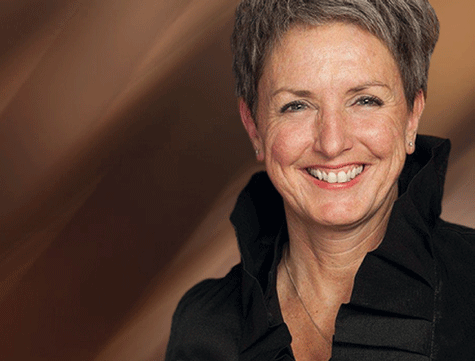
The CEO and president of a newly
formed Québec spa association
on the strength of the industry
in the region and the vital role
the organisation will play
By Katie Barnes | Published in Spa Business 2012 issue 4
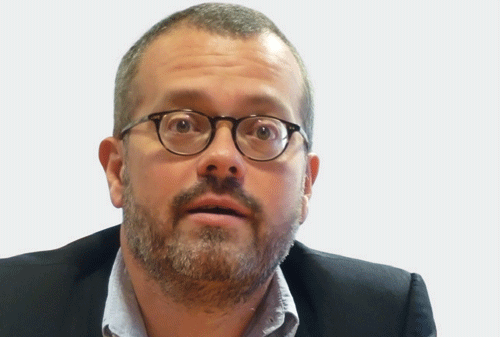
This May a new body for the spa industry in Québec, Association Québécoise des spas (AQS), was formed, with the purpose of helping the already fast-growing sector to develop even more quickly. The move came during the annual general assembly of Alliance Spas Relais santé (SRs), an existing group of top operators in the region, where it was decided that a larger more representative organisation should be created for the whole of the spa industry in Québec.
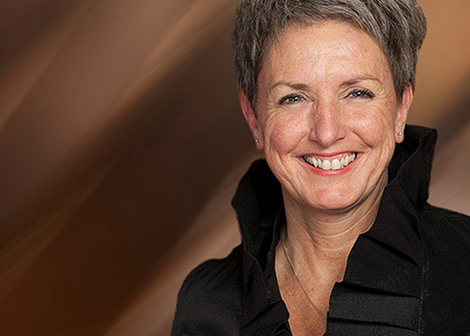
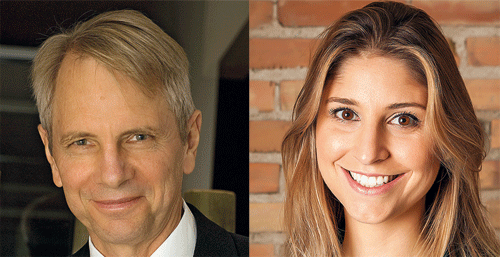
While SRs will continue to focus on the quality certification of spas in Québec following the spa standards it developed with Tourism Québec in 2010, AQS will prioritise issues concerning the whole of the province’s spa industry such as training and skills development, lobbying government and sector promotion. We gain some insight into the region’s spa sector and future plans from Lucie Brosseau, AQS’s CEO and president.
How big is the spa industry in Québec? In 2006, Canadian Tourism Commission’s Spa, Health & Wellness Sector Study (see sb06/4 p42) reported that there were 395 spas in Québec. However, this figure included beauty, hair and tanning salons. The AQS uses SRs’ definition of spas as being ‘an establishment contributing to people’s wellness in an environment conducive to relaxation, offering as the main activity one or more forms of water therapy and one or several types of professional treatments’ and based on this, we estimate that there are 200 spas in Québec. We are planning to conduct a market study in October to get a clearer picture of our industry.
The industry has certainly been booming over the last decade – it’s a strong sector and more robust because it’s different.
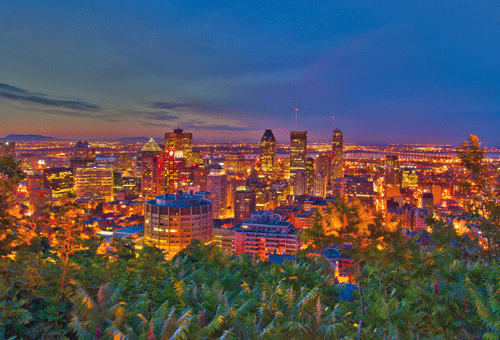
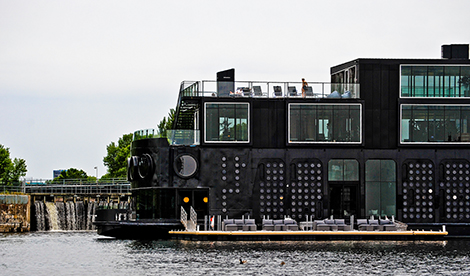
What’s different about spas in Québec? Québecer spa owners travel the world to find inspiration and they’re always looking to offer products that stand out, such as the Bota Bota spa on the stationary ferry boat in Montréal and Spa Bromont with its hydromassage pool circuit and 52 powered water jets. There’s also Spa Eastman, the only destination spa in Québec and the Ovarium day spa which are both over 30 years’ old.
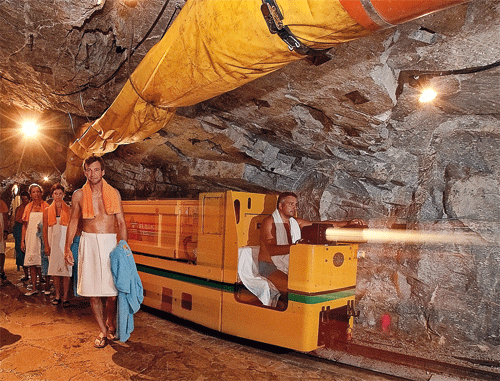
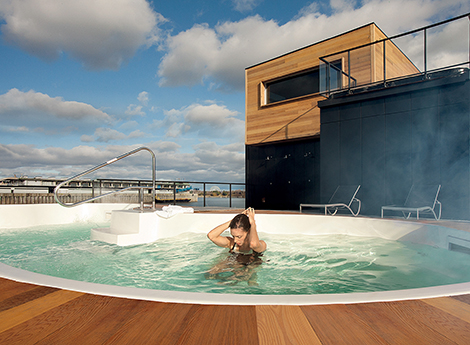
The main difference, however, is our Nordic spas which have become increasingly popular. These are based on thermotherapy cycles traditional to Scandinavia, which alternate between hot, cold and relaxing therapies and experiences to maximise therapeutic benefits. In 2001, there were only three Nordic spas in the region while now there’s around 40 and only two others in the rest of Canada. They’re usually located in a natural setting with a variety of baths, saunas, whirlpools, cascades/waterfalls, relaxing areas, rivers, lakes and ponds, but lately they’re coming to urban spas located on top of buildings and downtown areas.
During school breaks, the Nordic experience is open to families which is initiating children to spas. They’re also becoming a popular social trend for younger X and Y generations (those born between 1960-1979 and 1980-2000) who make up members. Operators tolerate low-voiced discussions in dedicated areas and bachelorette parties are all the rage.
That said, I don’t think all of them will survive, as the market is now saturated and is ripe for consolidation. But there’s still room for more day and destination spas.
How important is the spa industry to tourism in Québec? Québec’s Ministry of Tourism (known as Tourism Québec) identifies 22 tourist sector associations representing regional ‘products’ such as golf, ski, camping, visitor attractions and spa. Tourism Québec has financially supported the SRs for a long time and has pledged to do so for at least the next three years. It has also worked closely with us to develop the spa standard that forms a part of our quality certification programme.
What are the main challenges facing the spa industry in Québec? Access to qualified manpower – from massage therapists and aestheticians to managers – is a daily concern for owners. With more than 19,000 massage therapists in Québec, the training and regulation of the profession is also vital – yet there isn’t even formal recognition of the profession at a regional level by the government at the moment and that’s something the AQS will be addressing.
The craze of collective purchasing via companies such as Groupon, Tuango and Living Social not only depreciates the value of our services, but cannibalises our clientele. Less than a quarter (22 per cent) of coupon buyers a new clients, a third (34 per cent) have been to establishments occasionally, while 44 per cent are regulars.
What impact has the death of a woman in a Québec health centre last year had on the overall spa industry? The responsible parties were charged at the end of July 2012, but it highlights how the word ‘spa’ has been misused to identify everything from a hot tub installation to a beauty salon. That’s why we want a spa classification system like that already used in the hotel industry. SRs already has a spa certification and other countries such as France and Malaysia have compiled guidelines for ratings. I strongly believe that the Global Spa & Wellness Summit (see sb12/3 p54) should play a key role in developing a cohesion between operators worldwide to assure customers a level of quality when it comes to services, products and staff; spa set-up; maintenance, hygiene and safety of equipment and sites; as well as the quality of water; environmental standards; and all relevant licences.
How will the AQS be more representative than SRs? The only requirement is that an AQS spa fits the definition outlined earlier, whereas with SRs spas needed a minimum of five treatment rooms, a full-time receptionist and certified pool operator employees.
Membership will be cheaper too – ca$695 (us$705, €541, £438) compared to ca$8,000-$10,000 (us$8,100-$10,150, €6,250-€7,800, £5,050-£6,300), so will the cost of the certification process and annual evaluations. But on the other hand, members won’t benefit from marketing, commercialisation and advertising as with the SRs.
So far we have 39 spa members and seven partner (supplier) members with nine waiting to be signed. Our overall goal is 150 spa members and 50 partner members in the next three years.
What are the aims of the AQS? To support, represent and defend all players in the spa industry in Québec. We’ll use the funds from Tourism Québec to conduct the industry study and promote Quebec spas outside of the province via trade shows, brochures and advertising in specialised magazines. Our goal is to develop a cohesion between all players in the industry; and devise strategies and tools to assist in challenges they may face as well as compile details of best business practices and training programmes.
We’ll also be lobbying government in key areas such as for a provincial-level regulation to open and operate a spa; for inspectors to test water quality – the law is already written, but there aren’t any inspectors to enforce it; and for formal recognition of the massage therapy profession.
Read more from this issue of Spa Business magazine
Interview: Laurent Houel
Evian's global brand development
director tells Katie Barnes about the
group's new evianSpa licence concept
that's set for a strategic global rollout
Promotional feature: Value Proposition
If you're thinking of investing in a spa development bigger than 300sq m,
a feasibility study – at a cost of only US$10k-US$18k – can reveal the
business model most likely to succeed.
Research: Work it out
Katherine Johnston reveals key
recommendations following a
much-needed study on global spa
management training
Top team: Miraval
The team that created the new spa at
Miraval shared a bold vision as Liz
Terry discovered on her visit
Family matters: The Brepohls
Natural medicine is the focus at
Lapinha: one of Brazil's original
medical spas. Neena Dhillon talks to
the founding family
The making of...: A massage table
Up to 18 million parts are needed for
a year's production of massage tables.
Lisa Starr takes an ‘undercover' look
at just what goes into making this
industry staple
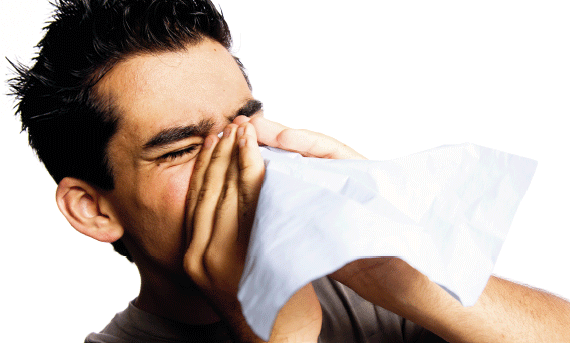
Research: The cold war
Meditation and exercise can
significantly reduce sick days taken
due to colds and flu
The CEO and president of a newly
formed Québec spa association
on the strength of the industry
in the region and the vital role
the organisation will play
By Katie Barnes | Published in Spa Business 2012 issue 4
This May a new body for the spa industry in Québec, Association Québécoise des spas (AQS), was formed, with the purpose of helping the already fast-growing sector to develop even more quickly. The move came during the annual general assembly of Alliance Spas Relais santé (SRs), an existing group of top operators in the region, where it was decided that a larger more representative organisation should be created for the whole of the spa industry in Québec.
While SRs will continue to focus on the quality certification of spas in Québec following the spa standards it developed with Tourism Québec in 2010, AQS will prioritise issues concerning the whole of the province’s spa industry such as training and skills development, lobbying government and sector promotion. We gain some insight into the region’s spa sector and future plans from Lucie Brosseau, AQS’s CEO and president.
How big is the spa industry in Québec? In 2006, Canadian Tourism Commission’s Spa, Health & Wellness Sector Study (see sb06/4 p42) reported that there were 395 spas in Québec. However, this figure included beauty, hair and tanning salons. The AQS uses SRs’ definition of spas as being ‘an establishment contributing to people’s wellness in an environment conducive to relaxation, offering as the main activity one or more forms of water therapy and one or several types of professional treatments’ and based on this, we estimate that there are 200 spas in Québec. We are planning to conduct a market study in October to get a clearer picture of our industry.
The industry has certainly been booming over the last decade – it’s a strong sector and more robust because it’s different.
What’s different about spas in Québec? Québecer spa owners travel the world to find inspiration and they’re always looking to offer products that stand out, such as the Bota Bota spa on the stationary ferry boat in Montréal and Spa Bromont with its hydromassage pool circuit and 52 powered water jets. There’s also Spa Eastman, the only destination spa in Québec and the Ovarium day spa which are both over 30 years’ old.
The main difference, however, is our Nordic spas which have become increasingly popular. These are based on thermotherapy cycles traditional to Scandinavia, which alternate between hot, cold and relaxing therapies and experiences to maximise therapeutic benefits. In 2001, there were only three Nordic spas in the region while now there’s around 40 and only two others in the rest of Canada. They’re usually located in a natural setting with a variety of baths, saunas, whirlpools, cascades/waterfalls, relaxing areas, rivers, lakes and ponds, but lately they’re coming to urban spas located on top of buildings and downtown areas.
During school breaks, the Nordic experience is open to families which is initiating children to spas. They’re also becoming a popular social trend for younger X and Y generations (those born between 1960-1979 and 1980-2000) who make up members. Operators tolerate low-voiced discussions in dedicated areas and bachelorette parties are all the rage.
That said, I don’t think all of them will survive, as the market is now saturated and is ripe for consolidation. But there’s still room for more day and destination spas.
How important is the spa industry to tourism in Québec? Québec’s Ministry of Tourism (known as Tourism Québec) identifies 22 tourist sector associations representing regional ‘products’ such as golf, ski, camping, visitor attractions and spa. Tourism Québec has financially supported the SRs for a long time and has pledged to do so for at least the next three years. It has also worked closely with us to develop the spa standard that forms a part of our quality certification programme.
What are the main challenges facing the spa industry in Québec? Access to qualified manpower – from massage therapists and aestheticians to managers – is a daily concern for owners. With more than 19,000 massage therapists in Québec, the training and regulation of the profession is also vital – yet there isn’t even formal recognition of the profession at a regional level by the government at the moment and that’s something the AQS will be addressing.
The craze of collective purchasing via companies such as Groupon, Tuango and Living Social not only depreciates the value of our services, but cannibalises our clientele. Less than a quarter (22 per cent) of coupon buyers a new clients, a third (34 per cent) have been to establishments occasionally, while 44 per cent are regulars.
What impact has the death of a woman in a Québec health centre last year had on the overall spa industry? The responsible parties were charged at the end of July 2012, but it highlights how the word ‘spa’ has been misused to identify everything from a hot tub installation to a beauty salon. That’s why we want a spa classification system like that already used in the hotel industry. SRs already has a spa certification and other countries such as France and Malaysia have compiled guidelines for ratings. I strongly believe that the Global Spa & Wellness Summit (see sb12/3 p54) should play a key role in developing a cohesion between operators worldwide to assure customers a level of quality when it comes to services, products and staff; spa set-up; maintenance, hygiene and safety of equipment and sites; as well as the quality of water; environmental standards; and all relevant licences.
How will the AQS be more representative than SRs? The only requirement is that an AQS spa fits the definition outlined earlier, whereas with SRs spas needed a minimum of five treatment rooms, a full-time receptionist and certified pool operator employees.
Membership will be cheaper too – ca$695 (us$705, €541, £438) compared to ca$8,000-$10,000 (us$8,100-$10,150, €6,250-€7,800, £5,050-£6,300), so will the cost of the certification process and annual evaluations. But on the other hand, members won’t benefit from marketing, commercialisation and advertising as with the SRs.
So far we have 39 spa members and seven partner (supplier) members with nine waiting to be signed. Our overall goal is 150 spa members and 50 partner members in the next three years.
What are the aims of the AQS? To support, represent and defend all players in the spa industry in Québec. We’ll use the funds from Tourism Québec to conduct the industry study and promote Quebec spas outside of the province via trade shows, brochures and advertising in specialised magazines. Our goal is to develop a cohesion between all players in the industry; and devise strategies and tools to assist in challenges they may face as well as compile details of best business practices and training programmes.
We’ll also be lobbying government in key areas such as for a provincial-level regulation to open and operate a spa; for inspectors to test water quality – the law is already written, but there aren’t any inspectors to enforce it; and for formal recognition of the massage therapy profession.
Read more from this issue of Spa Business magazine
Interview: Laurent Houel
Evian's global brand development
director tells Katie Barnes about the
group's new evianSpa licence concept
that's set for a strategic global rollout
Promotional feature: Value Proposition
If you're thinking of investing in a spa development bigger than 300sq m,
a feasibility study – at a cost of only US$10k-US$18k – can reveal the
business model most likely to succeed.
Research: Work it out
Katherine Johnston reveals key
recommendations following a
much-needed study on global spa
management training
Top team: Miraval
The team that created the new spa at
Miraval shared a bold vision as Liz
Terry discovered on her visit
Family matters: The Brepohls
Natural medicine is the focus at
Lapinha: one of Brazil's original
medical spas. Neena Dhillon talks to
the founding family
The making of...: A massage table
Up to 18 million parts are needed for
a year's production of massage tables.
Lisa Starr takes an ‘undercover' look
at just what goes into making this
industry staple
Research: The cold war
Meditation and exercise can
significantly reduce sick days taken
due to colds and flu
Private hotel owner and developer HVL Hotels will open a new luxury resort and tourism
destination called Laval Hunter Valley in the second half of 2027 in Pokolbin, Australia.
The annual wellness festival dedicated to wellbeing, culture, longevity and human connection,
called Alma, will be hosted by Rocco Forte hotel, Verdura Resort in Sicily, Italy.
Capella Hotel Group has appointed Feisal Jaffer as chief development officer as the company
ramps up its global expansion of both its Capella and Patina brands.
People taking GLP-1 weight loss medications such as Ozempic, Wegovy, Mounjaro and Zepbound
may be losing weight, but they’re also becoming less physically active, according to new
research presented at the ENDO 2026 annual meeting of the Endocrine Society
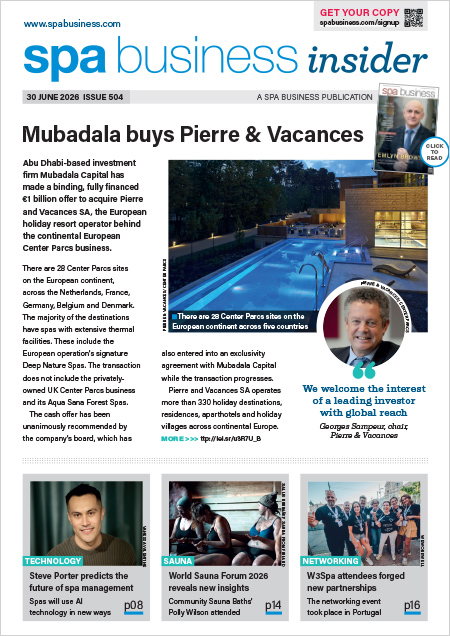
Abu Dhabi-based investment firm Mubadala Capital has made a binding, fully financed
€1 billion
offer to acquire Pierre and Vacances SA, the European holiday resort operator behind the
continental European Center Parcs business.
Global retreat trade show, Synergy The Retreat Show, has launched a resource called The
Source, which hosts an open-access online Transformation Series programme.
The Standards Authority for Touch in Cancer Care (SATCC) charity has announced its first five-
day Living with Cancer and Beyond retreat, which will be held at Carden Park Hotel and Spa in
Cheshire, UK, between 1 and 5 September.
Patmos Aktis, a Luxury Collection Resort and Spa, has opened in Greece, with a renovated and
rebranded wellness offering called Ansana Wellness and Spa.
The Mauna Kea Beach Hotel, an Autograph Collection property in Hawaii, US, has opened its
22,000 sq ft indoor-outdoor Spa at Mauna Kea as the final step in the property’s overall
renovation, which has cost more than US$180 million (€166 million, £140 mill
The UK spa review and discovery platform for consumers, the Good Spa Guide, has announced
it will host the Good Spa Guide Awards 2026 during an event on 16 November at Sopwell House
Hotel in St Albans, UK.