New technology is giving us the power to Place-Shift experiences to create on-demand, immersive attractions in any location. Combining live streaming, haptics, AR and virtual reality with authentic artefacts and storytelling, this thinking will open up huge new markets for growth
By Liz Terry | Published in Attractions Management 2016 issue 3
The Place-Shifting of attractions has a long history, partly through the development of touring exhibitions: if what you have to show is unique, or guests can’t get to you, then you can simply pack up and go to them.
Another Place-Shifter is replication, most famously used by the Lascaux caves in France, one of the first attractions to offer a facsimilie to enable the preservation of the original.
Lascaux II, which opened in 1983, was built 200 metres (656 feet) from the Lascaux caves, so people could still view the prehistoric wall paintings after the impact of previous visitors visibly damaged the original caves, forcing their closure.
But there’s been little radical innovation in Place-Shifting in the past 30 years and I believe we’re about to enter a new era of innovation, as rapid advances in affordable technology open up amazing opportunities to recreate and enhance experiences at great distances and with high levels of immersion for the visitor.
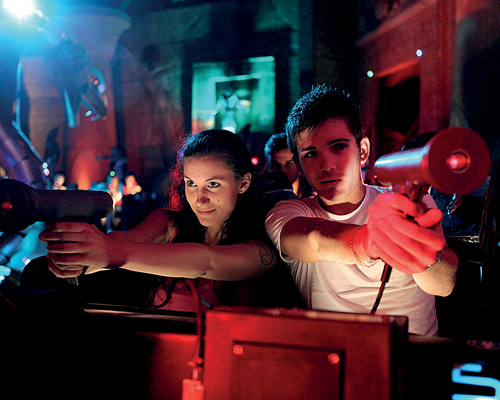
Attractions are already offering visitors glimpses into other worlds via webcams and robots, but it’s possible to take this to a completely different level by harnessing all the available tech – VR, haptics, high definition, real-time streaming, wraparound screens and augmented reality.
Using this technology, we could head down a number of paths -– if an historic location is too far from transport links to work as a visitor attraction, it could be recreated as either a touring or permanent attraction in a suitably sized population centre using technology. If an attraction is unique, it could be replicated, or visitors could be given remote immersive access.
Wraparound screens and VR headsets would take visitors there and enable them to wander around, while real-time streaming would enable them to interact with storytellers at the location to bring things alive. Haptics would enable tactile interactions and accompanying audiovisuals and artefacts would satisfy the urge to touch and feel the authenticity.
A whole new raft of attractions could be developed as technology gives us the power to Place-Shift experiences to create on-demand, immersive attractions in any location.
This would open up new markets, as well as enabling the creation of attractions which can be reprogrammed when demand for their content diminishes.
Being rooted to the spot can be a disadvantage – your visitor base is comprised of people who can make the journey and there are many places which would make great visitor attractions but which are simply too remote, or too fragile. Place-Shifting would nail all these issues and more.
A real-life, UNESCO-backed example is in the news as Dualchas Architects and Reiulf Ramstad Architects reveal their master plan for the St Kilda Visitor Centre in Scotland (page 34). They say the attraction should be built not on St Kilda, but on the more accessible Isle of Lewis, 50 miles (80km) away.
What will we be able to achieve as technology sets us free to create and recreate experiences for our visitors without being tied to a single location? As a creative and innovative industry, the limits are only our imaginations.
Liz Terry, editor. Twitter: @elizterry
Read more from this issue of Spa Business magazine
View contents of Spa Business 2016 issue 3
Editor’s Letter: Place-Shifting
Technology is giving us the
power to Place-Shift experiences
to create on-demand, immersive
attractions in any location
Promotional Feature: EAS - Beautiful Horizons
The attractions industry is set to descend upon one of Europe’s
most inspiring cities – Barcelona. And if it’s inspiration
you’re looking for, the Euro Attractions Show is the place
Theme Parks: Desert Operations
On the brink of an entertainment revolution, Dubai looks forward to three major theme park openings. Attractions Management caught up with key decision- makers from the upcoming attractions
Mystery Shopper: Disney Delights
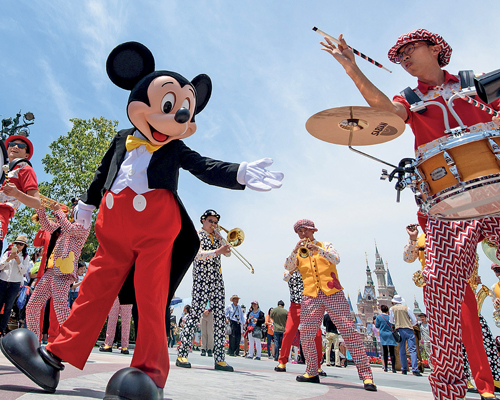
Disneyland Shanghai is the company’s first new theme park resort since 2005 and its biggest investment to date. TEA president-elect David Willrich went undercover to find out what Disney’s doing differently
Analysis: Part 3 - Benchmarking
Consultant David Camp asks how we measure success as he focuses on benchmarking and market penetration rates in part three of the series
Opinion: Media Frenzy
Is it time for media-based rides to raise their game? Gavin and Jason Fox, creative directors from Oscar-winning special effects studio Framestore, believe Hollywood-standard content is the next step for the industry
In today’s premium spa environment, every detail shapes the guest experience – right down to
the softness of towels and the freshness of linens. [more...]
+ More featured suppliers
COMPANY PROFILES
Bellezi
Founded in 2009 as a Dutch family business, Bellezi brings more than 20 years of experience in treat [more...]
Cariitti Oy
Cariitti is a Finnish family business founded by Kari Ruokonen in 1998 that offers versatile lightin [more...]
New technology is giving us the power to Place-Shift experiences to create on-demand, immersive attractions in any location. Combining live streaming, haptics, AR and virtual reality with authentic artefacts and storytelling, this thinking will open up huge new markets for growth
By Liz Terry | Published in Attractions Management 2016 issue 3
The Place-Shifting of attractions has a long history, partly through the development of touring exhibitions: if what you have to show is unique, or guests can’t get to you, then you can simply pack up and go to them.
Another Place-Shifter is replication, most famously used by the Lascaux caves in France, one of the first attractions to offer a facsimilie to enable the preservation of the original.
Lascaux II, which opened in 1983, was built 200 metres (656 feet) from the Lascaux caves, so people could still view the prehistoric wall paintings after the impact of previous visitors visibly damaged the original caves, forcing their closure.
But there’s been little radical innovation in Place-Shifting in the past 30 years and I believe we’re about to enter a new era of innovation, as rapid advances in affordable technology open up amazing opportunities to recreate and enhance experiences at great distances and with high levels of immersion for the visitor.
Attractions are already offering visitors glimpses into other worlds via webcams and robots, but it’s possible to take this to a completely different level by harnessing all the available tech – VR, haptics, high definition, real-time streaming, wraparound screens and augmented reality.
Using this technology, we could head down a number of paths -– if an historic location is too far from transport links to work as a visitor attraction, it could be recreated as either a touring or permanent attraction in a suitably sized population centre using technology. If an attraction is unique, it could be replicated, or visitors could be given remote immersive access.
Wraparound screens and VR headsets would take visitors there and enable them to wander around, while real-time streaming would enable them to interact with storytellers at the location to bring things alive. Haptics would enable tactile interactions and accompanying audiovisuals and artefacts would satisfy the urge to touch and feel the authenticity.
A whole new raft of attractions could be developed as technology gives us the power to Place-Shift experiences to create on-demand, immersive attractions in any location.
This would open up new markets, as well as enabling the creation of attractions which can be reprogrammed when demand for their content diminishes.
Being rooted to the spot can be a disadvantage – your visitor base is comprised of people who can make the journey and there are many places which would make great visitor attractions but which are simply too remote, or too fragile. Place-Shifting would nail all these issues and more.
A real-life, UNESCO-backed example is in the news as Dualchas Architects and Reiulf Ramstad Architects reveal their master plan for the St Kilda Visitor Centre in Scotland (page 34). They say the attraction should be built not on St Kilda, but on the more accessible Isle of Lewis, 50 miles (80km) away.
What will we be able to achieve as technology sets us free to create and recreate experiences for our visitors without being tied to a single location? As a creative and innovative industry, the limits are only our imaginations.
Liz Terry, editor. Twitter: @elizterry
Read more from this issue of Spa Business magazine
View contents of Spa Business 2016 issue 3
Editor’s Letter: Place-Shifting
Technology is giving us the
power to Place-Shift experiences
to create on-demand, immersive
attractions in any location
Promotional Feature: EAS - Beautiful Horizons
The attractions industry is set to descend upon one of Europe’s
most inspiring cities – Barcelona. And if it’s inspiration
you’re looking for, the Euro Attractions Show is the place
Theme Parks: Desert Operations
On the brink of an entertainment revolution, Dubai looks forward to three major theme park openings. Attractions Management caught up with key decision- makers from the upcoming attractions
Mystery Shopper: Disney Delights
Disneyland Shanghai is the company’s first new theme park resort since 2005 and its biggest investment to date. TEA president-elect David Willrich went undercover to find out what Disney’s doing differently
Analysis: Part 3 - Benchmarking
Consultant David Camp asks how we measure success as he focuses on benchmarking and market penetration rates in part three of the series
Opinion: Media Frenzy
Is it time for media-based rides to raise their game? Gavin and Jason Fox, creative directors from Oscar-winning special effects studio Framestore, believe Hollywood-standard content is the next step for the industry
Rosewood Le Guanahani St Barth, on the northeast coast of Saint Barthélemy in the French
West Indies, is offering a programme of ocean-inspired yoga classes between 8-14 June to
celebrate Global Wellness Day (GWD).
Hotel de France, located on the British Isle of Jersey, has created a wellness retreat package
that includes a hot yoga session that will take place in Jersey Zoo’s butterfly sanctuary.
The Ritz-Carlton, Langkawi, in Malaysia, has revealed a schedule for Global Wellness Day
(GWD) that includes guided rainforest walks, mindful movement and guided coastal meditation
experiences.
Longevitix, a clinical platform for preventive and longevity medicine, has launched its AI-
powered intelligence system to help physicians deliver continuous, personalised longevity-
focused care at scale.
Atmantan Wellness Centre, an integrative wellness destination in Mulshi, near Pune in India, is
expanding its portfolio by adding a new centre in Hyderabad that will launch between 2028 and
2029.
A recent survey by the UK Spa Association (UKSA) into the industry’s approach to cancer care
has revealed that almost half of participating respondents (46 per cent) are unaware that
cancer is a disability and guests with a cancer diagnosis must be given
Mexican operator, Solmar Hotels and Resorts, is hosting a series of events in celebration of
Global Wellness Day, including a Temazcal ceremony at its Playa Grande Resort and Spa in Los
Cabos.
Mandarin Oriental has announced a standalone residence brand, Mansions, which will debut at
Emirates Palace, Mandarin Oriental Mansions, Abu Dhabi, in 2029.
Four Seasons Resort The Nam Hai in Hoi An, Vietnam, has put together a Global Wellness Day
(GWD) agenda with activations rooted in nature and shaped by four pillars of Joy – in
alignment with the day’s theme #JoyMagenta.
In today’s premium spa environment, every detail shapes the guest experience – right down to
the softness of towels and the freshness of linens. [more...]
+ More featured suppliers
COMPANY PROFILES
Bellezi Founded in 2009 as a Dutch family business, Bellezi brings more than 20 years of experience in treat [more...]