Yes! Send me the FREE digital editions of Spa Business and Spa Business insider magazines and the FREE weekly Spa Business and Spa Business insider ezines and breaking news alerts!
SeaWorld is undergoing
a major restructuring to
restore its reputation and
change visitor perceptions
of the brand. Tom Anstey
speaks exclusively to
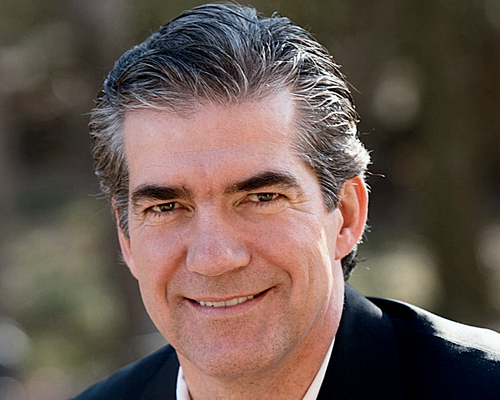
SeaWorld CEO Joel Manby
about orcas, marine wildlife
rescue – and a rescue
operation for the company
By Tom Anstey | Published in Attractions Management 2016 issue 3
It’s been a tough few years for SeaWorld. Since the release of Blackfish in 2013, a documentary film (or, as SeaWorld argues, a propaganda film) about the killer whale Tilikum and the death of trainer Dawn Brancheau in 2010, visitor numbers and profits have plummeted.
The company took longer to react to the film than it should have and on 13 August 2014, SeaWorld Entertainment shed 33 per cent of its value overnight. Partner companies, such as STA Travel, Southwest Airlines, Alaska Air and Virgin America, began distancing themselves from the marine park brand. The state of California began looking into legislation that would end performance-led orca shows and captive breeding of the mammals.
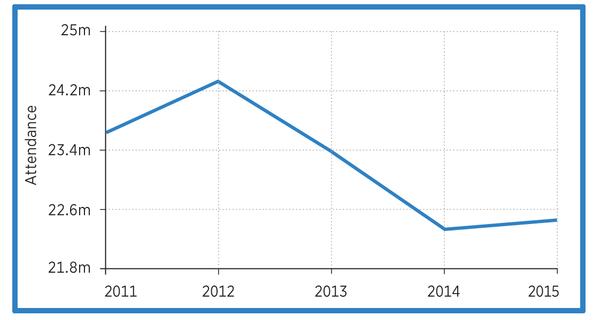
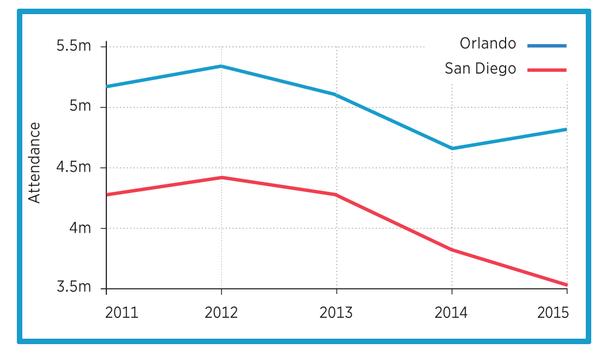
SeaWorld then took action, announcing the Blue World Project, a $300m (£227m, €266m) investment in expanding orca habitats at three of its parks. But it wasn’t enough to halt the declining fortunes. Between 2012 and 2015, attendance at SeaWorld fell by 7.5 per cent, a drop of 1.84 million visitors. At SeaWorld Orlando attendance fell 10.8 per cent during this time, and at SeaWorld San Diego, by 20.6 per cent (see Tables 1 and 2 on page 42).
However, many of the problems that have plagued the SeaWorld brand are finally being addressed under the leadership of new CEO Joel Manby.
Manby has an exceptional reputation among industry peers for his work at Herschend Family Entertainment and gained public popularity during his time there due to his appearance on hit TV show Undercover Boss. The overwhelming response to the show led him to write the best-selling book Love Works: Seven Timeless Principles for Effective Leaders, challenging employers to allow integrity and faith to guide their decisions.
Moving forward When Manby took the reins from former boss Jim Atchison in April 2015, SeaWorld was boxed into a corner and the pressure was coming from all sides. Animal activists, public opinion and government legislators were causing company value to tumble, but Manby’s appointment proved a turning point. He was decisive and proactive and ready to face up to the challenges, and under his guidance a battered and bloodied SeaWorld has so far come out swinging.
“As part of the interview process for the SeaWorld job, I had to share a thesis with the board about what I would want to focus on,” says Manby. “First, I really wanted to understand the depth of the issue with the orcas. We’d certainly taken hits in the press and our sales results had suffered. I wanted to deal with that and then develop a strategy to move forward from that issue.”
“Then, I wanted to make sure the truth about SeaWorld was getting out. I felt like it was a great company, but people really didn’t know that. A lot of good work was being done, but it was drowned out by the whale issue. It was blocking people from being able to see the truth about us.”
“Finally, I wanted to develop strategies for growth once we had dealt with the whale issue, whether those strategies be new parks and resorts or the expansion of our other brands. Those were the broad areas that I was very focused on.”
‘Ultimate paradox’ SeaWorld’s strongest asset was also its greatest liability. Orcas were attracting some visitors, while driving others away.
In the 18 months since Manby took over, the company has undergone a dramatic restructuring, with new senior appointments and a fundamental change to its ethos. As well as announcing its critical decision to phase out orcas, SeaWorld started to rebuild by promoting itself as a company that creates “real” experiences and being a park that “cares”.
“The biggest thing we’re trying to change is not so much the in-park experience as people’s perception of us,” Manby says. “The parks are incredible, high-quality operations, but because of a variety of issues, including legislative efforts, public sentiment and documentaries, our reputation was declining. We had to try to change the public’s outlook and help people see us as the great company that we are.”
“It’s the ultimate paradox because the very thing that SeaWorld has built its brand around all these years – the orcas, rightly or wrongly – had become a significant problem. It was the reason some people were still visiting and at the same time the reason other people were no longer visiting,” Manby says.
Millennial voice When SeaWorld first opened its doors 52 years ago, it was without killer whales. Those arrived later in 1965, but became, for many people, the stars of the show.
Manby was faced with a difficult choice – bring an end to SeaWorld’s signature experience or risk alienating a growing number of people. As a result, the company ended its orca breeding programme in March this year, with its current generation of killer whales the last it will house. The traditional theatrical show would also be phased out, replaced with something “more natural”.
“I did not think this was something we were going to have to do,” Manby says. “I thought as long as we got the truth out about the company, it would prevail. However, the research and the data showed sentiment against the orca programme was quite pervasive – and the millennial generation showed even worse sentiment. Those are our future customers.”
“Making this kind of decision would show people that we were trying to change, that we get it,” Manby says. “We knew having animals this magnificent and this large in a captive environment was going to be a tough sell for us over the long term. No, I didn’t think we’d have to do it, but we listened to the public and the research. It was an incredibly difficult decision, I think the most difficult decision I’ve ever been involved with in business.”
SeaWorld still has a long road ahead in terms of public perception. At the IAAPA Expo in Orlando, Florida, in November last year, Manby said that Blackfish had “put a lot of misinformation out there” and that he would be tackling it head on. As well as publishing a list of 69 examples of “misleading or inaccurate” content in the film, SeaWorld launched a series of new advertising campaigns, formed a partnership with the Humane Society and placed fresh emphasis on creating meaningful experiences for visitors. So, a year on, is SeaWorld over the worst?
“Public perception isn’t perfect, but it’s improving,” says Manby. “It’s going to be a constant effort for a while. We always will have detractors out there because, frankly, that’s how organisations like Peta raise money. But statistics are showing that when people take time to understand who we are they’re very impressed. Anecdotes are also very important to us. When we change someone’s perception and then they tell their story, that’s key for us and our future success.”
Educational approach One of the main contributors to the negative public perception of SeaWorld has been the controversial orca performances. As part of the company’s restructuring, the traditional show is being transformed into something designed to educate rather than dazzle.
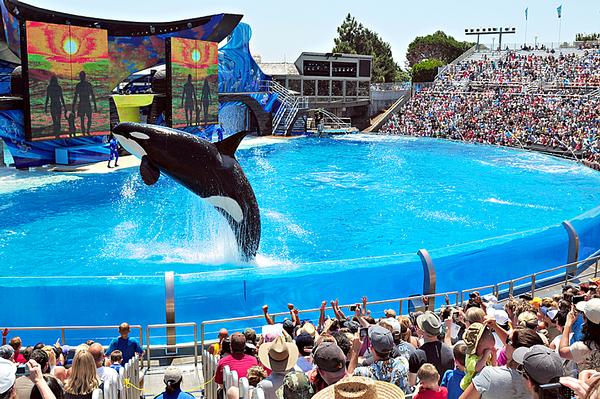
“Today the shows are more in the style of Cirque du Soleil,” Manby says. “The orcas are jumping in unison five at a time and they’re trained to do things that some consumers see as unnatural. Our new orca encounter is more Discovery Channel, more educational. It shares the plight of whales in the wild, but it’s still engaging.”
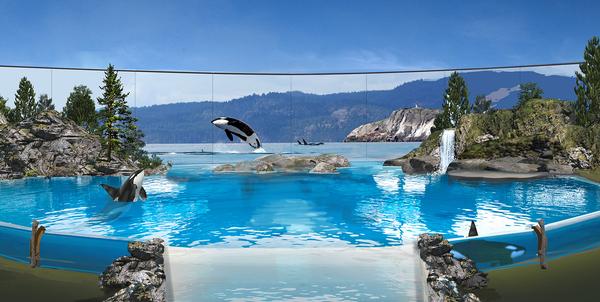
The new orca show – launching initially at SeaWorld San Diego in 2017 – will make use of film productions behind the pool with a very large screen and nature-inspired setting. The killer whales will do demonstrations with their trainers showing what they do naturally in the wild, with the trainer explaining why they do it.
“We ran a pilot show and the audience scored it just 1 percentage point lower than the current show on entertainment value and rated it double the educational value. This is an evolution for us,” he says.
“The millennial generation wants something that’s fun and meaningful. Brands like Starbucks or Whole Foods are making the world better while also having a very attractive enterprise. I think it’s the wave of the future and that’s what SeaWorld is trying to accomplish.”
Expanding and evolving SeaWorld’s millennial-friendly experience looks beyond orca and animal shows to add an expanded mix of attractions with new educational initiatives – the newly opened Bolliger & Mabillard rollercoaster in Orlando being a prime example.
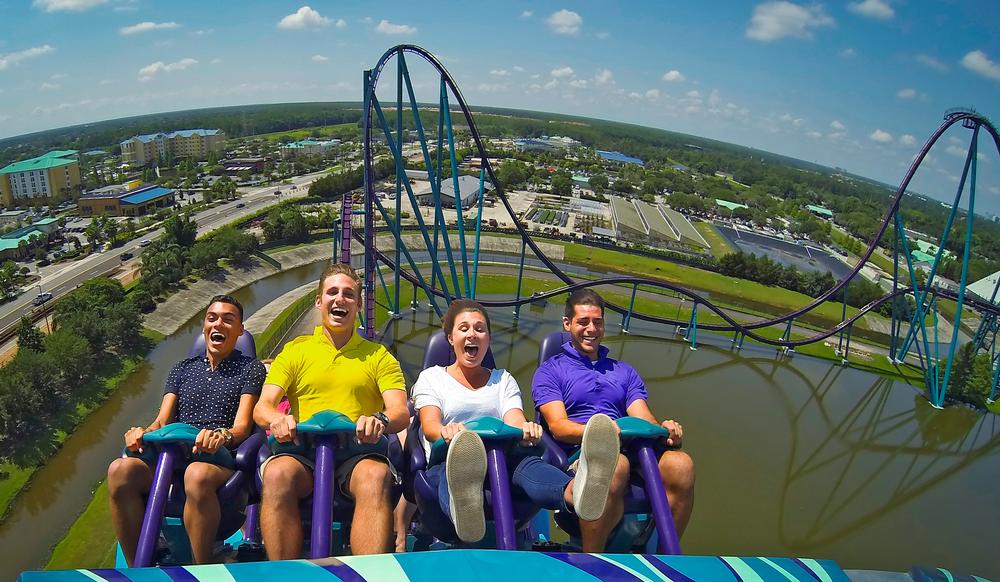
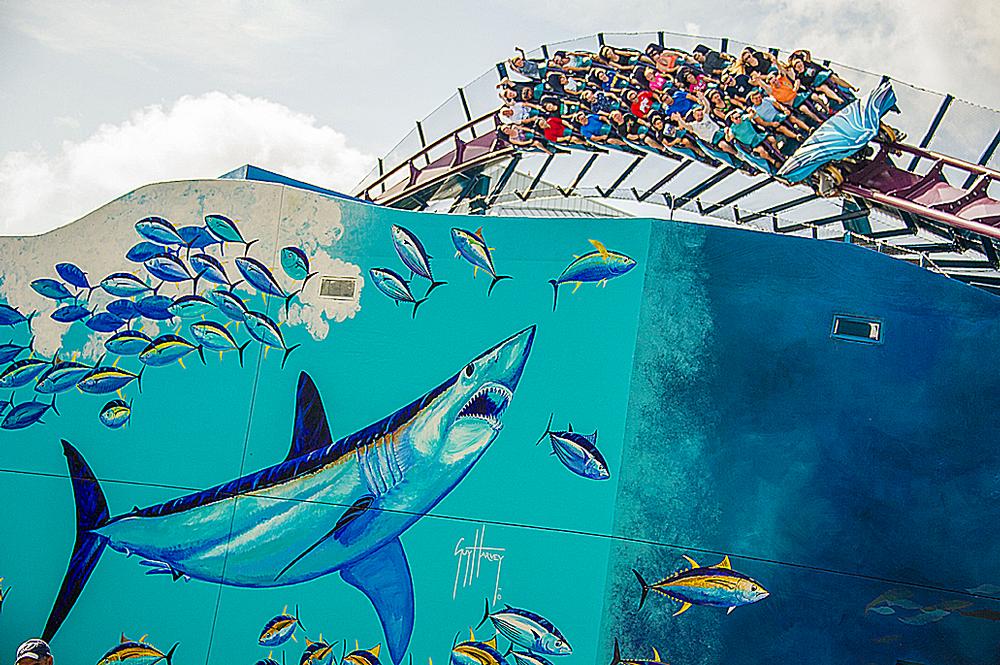
“Mako is the highest-ranking ride in Florida with a 93 per cent positive rating, which is unbelievable,” says Manby of the shark-themed hypercoaster, which reaches speeds of up to 73mph (118kph).
The ride emulates the speed, agility and feel of the shortfin mako shark, with a conservation aspect included in the queue line where AV elements explain the plight of sharks and the practice and repercussions of shark finning. Guests can buy merchandise, with SeaWorld donating a portion of the proceeds to the Guy Harvey Ocean Foundation.
“It’s the perfect example of our new strategy,” says the CEO. “It’s also the tallest, longest and fastest coaster in Orlando – and that’s a tough challenge in this competitive market.”
“Marine wildlife artist and conservationist Guy Harvey helped theme the coaster and painted a huge mural. People have a great time on the ride, but at the same time they learn about the problem and can play a role in helping to solve it. We want to motivate people to engage and stop things that harm animals in their habitats,” he says.
Education will feature widely in upcoming ventures, where new approaches and ideas will shape a contemporary version of SeaWorld. Its first park in the Middle East will also be the first without orcas.
“We have moved to a definitive agreement stage, money has changed hands,” says Manby, referring to the deal that’s rumoured to be planned for either Dubai or Saudi Arabia. “Things are progressing and it will be the first SeaWorld attraction to not have a killer whale facility. We’re looking at really big ideas that will take the place of that.
“We’re introducing a broader mix of entertainment across all of our parks. Instead of being built around large animal stadiums – dolphins, whales, sea lions – we’re adding rides like Mako with an animal focus. We’re looking into VR to create new experiences or go behind the scenes.”
Rescue operations Manby is keen to raise public awareness of SeaWorld’s vast rescue operations.
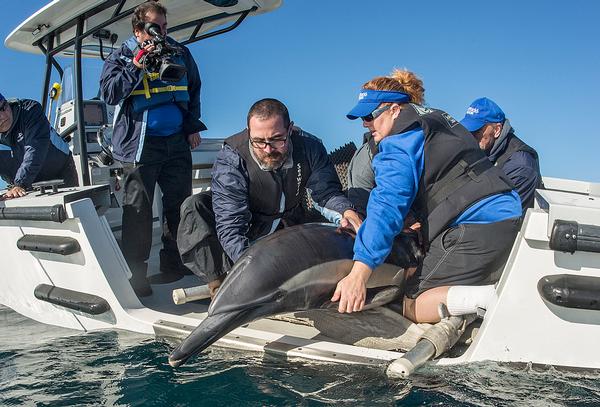
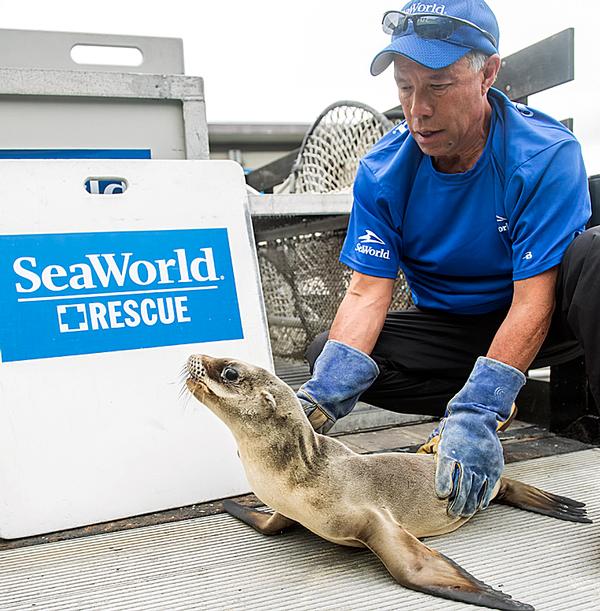
“We’re the largest rescue organisation in the US. Without our facilities, hundreds of dolphins and thousands of sea lions, manatees and birds would die every year.”
When an animal is in need of help, the government contacts one of the organisations in the rescue network to bring it in. Once the animal has been rehabilitated, the state, local or federal agency decides whether it can be released – which, Manby says, is always the goal.
“If, though, an animal can’t be released, the government tells us where it should go. We may not keep them. The government might say it has to go to the Monterrey Aquarium, for example. That’s what a lot of people don’t understand.”
Without SeaWorld’s theme parks, Manby says the rescue work would not be feasible as, although it’s a government-run operation, “we do this on our own dime”.
Educating about captivity Manby is also keen to debunk the myths and the negative public opinion that surrounds the issue of animals in captivity, and calls on the attractions industry as a whole to work on its message.
“We all have to do a better job, SeaWorld included,” he says. “There’s a false notion out there – and I think it’s a very dangerous one – that animals being under human care is always a bad thing. That’s just not true. Rescue alone is a reason for our facilities and our unbelievable zoological community to exist, not to mention crucial species preservation for the future. Society needs to be educated to understand that better and then this notion that ‘captivity is a bad thing’ will pop its head up less and less.”
“In San Diego, we rescued almost 1,000 sea lions last year, while some manatees would be close to extinct in Florida if we weren’t engaged with the local state and federal governments. That’s the part that’s maddening to me as an executive. I look at the good our people do and they aren’t getting the credit they deserve.”
The right call? Florida as a whole is certainly facing some challenges – the arrival of the Zika virus; the Brexit referendum and the Brazilian recession slowing two key inbound markets; the arrival of Orlando 2.0 in the Middle East (see page 58) and the recent terrorist shooting that took place downtown – SeaWorld could be affected by these events.
However, recommendations from financial analysts say investors should be buying SeaWorld stock right now.
Although current data predicts a drop in earnings of 14.86 per cent for 2016, analysis from US-based stock analyst Zacks Investment Research forecasts an earnings increase of 12.47 per cent in 2017 over the previous year, with estimates further increasing to 34.78 per cent in 2018 and 44.50 per cent in 2019.
Asked if he felt he made the right choice bringing an end to SeaWorld’s orca programme, Manby is certain.
“The data shows that we’ve made the right call,” he says. “There’s no decision like this where you’re going to please everybody, but I think that as SeaWorld continues to evolve as a company, 50 years from now you’re going to look back – hopefully a lot sooner than that – and say it was definitely the right choice.”
Read more from this issue of Spa Business magazine
View contents of Spa Business 2016 issue 3
Editor’s Letter: Place-Shifting
Technology is giving us the
power to Place-Shift experiences
to create on-demand, immersive
attractions in any location
Promotional Feature: EAS - Beautiful Horizons
The attractions industry is set to descend upon one of Europe’s
most inspiring cities – Barcelona. And if it’s inspiration
you’re looking for, the Euro Attractions Show is the place
Theme Parks: Desert Operations
On the brink of an entertainment revolution, Dubai looks forward to three major theme park openings. Attractions Management caught up with key decision- makers from the upcoming attractions
Mystery Shopper: Disney Delights
Disneyland Shanghai is the company’s first new theme park resort since 2005 and its biggest investment to date. TEA president-elect David Willrich went undercover to find out what Disney’s doing differently
Analysis: Part 3 - Benchmarking
Consultant David Camp asks how we measure success as he focuses on benchmarking and market penetration rates in part three of the series
Opinion: Media Frenzy
Is it time for media-based rides to raise their game? Gavin and Jason Fox, creative directors from Oscar-winning special effects studio Framestore, believe Hollywood-standard content is the next step for the industry
SeaWorld Cares Under the SeaWorld Cares charter, several major points are addressed. • Last generation of killer whales: The company announced the orcas in its care will be the last generation of captive orca at SeaWorld as the breeding programme is terminated.
• Natural encounters: Theatrical shows are being replaced by demonstrations that focus on the orcas’ natural behaviour and research, education and care.
• Partnership with HSUS: SeaWorld’s partnership with the US Humane Society aims to protect oceans and marine mammals based on the two organisations’ joint interest in wild animal and habitat conservation.
SeaWorld Cares
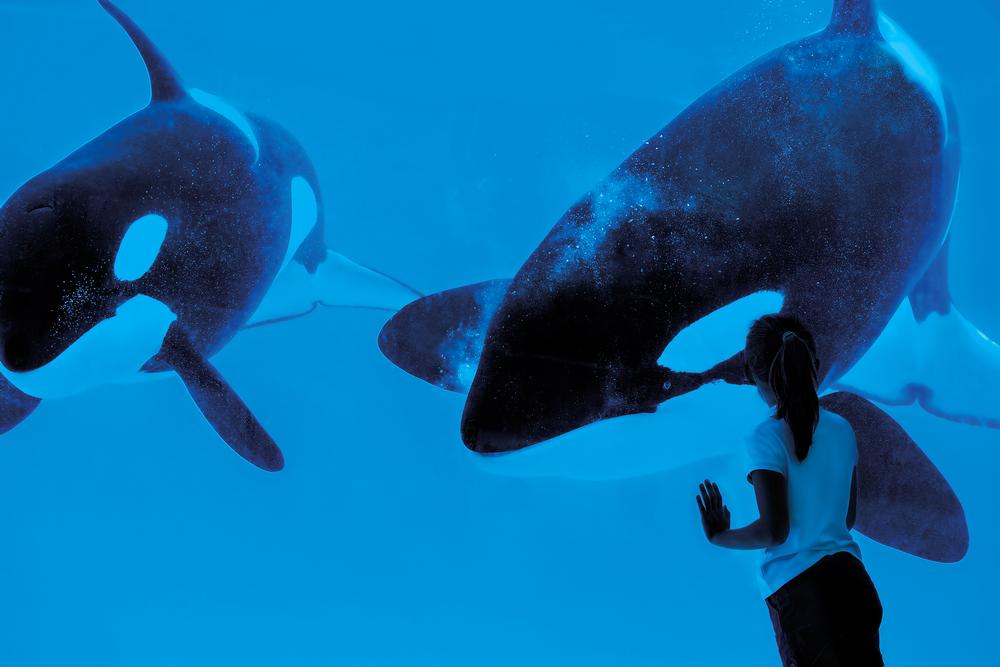
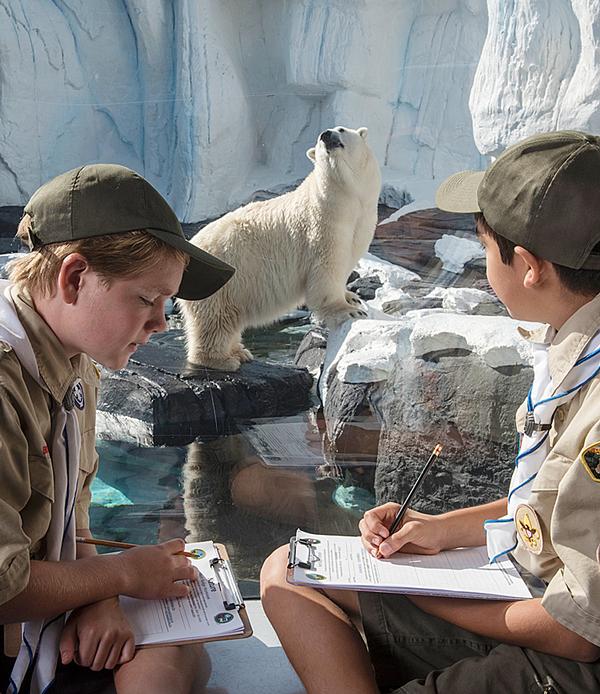
Educate, not dazzle: Manby says SeaWorld’s “Cirque du Soleil-style” shows will be replaced with shows based on animals’ natural behaviours
Table 1: Attendance at SeaWorld Entertainment parks SOURCE: TEA/AECOM Theme Index Attendance Reports
Table 1
Table 2: Attendance at Orlando and San Diego SOURCE: TEA/AECOM Theme Index Attendance Reports
Table 2
RESCUE AND RETURN PROGRAMMES • SeaWorld has rescued over 28,000 animals over the past 50 years. SeaWorld San Diego has rescued 16,000 of those
• SeaWorld & Busch Gardens Conservation Fund (SWBGCF) has given over $13m to 1,000 projects worldwide
• SeaWorld has pledged $10m to fund research and conservation for wild orcas, and a further $50m over the next five years to marine animal rescue
• The non-profit Hubbs-SeaWorld Research Institute was founded in 1963, with a commitment “to return to the sea some measure of the benefits derived from it”
• In 2000, SeaWorld helped save 20,000 penguins and 700 orphaned penguin chicks affected by the Treasure oil spill in South Africa
• SeaWorld rescued 15 sea lions displaced by Hurricane Katrina in 2005
• More than 300 endangered sea turtles were rehabilitated after suffering the effects of record-breaking cold in 2010
• After a mass stranding in Florida in 2012, SeaWorld Orlando rehabilitated 4 young pilot whales
• SeaWorld experts have contributed to 1,000 published scientific studies
Rescue and return programmes
SeaWorld’s new CEO Joel Manby has made radical changes to reverse the company’s declining reputation, including ending its orca programme
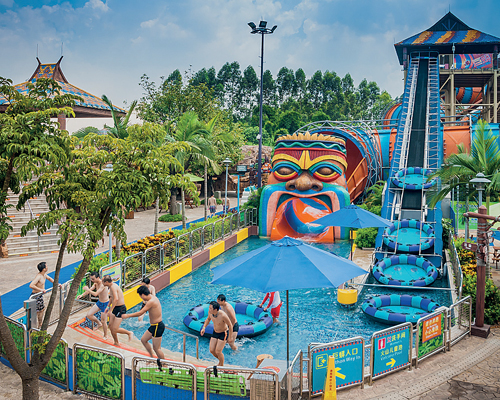
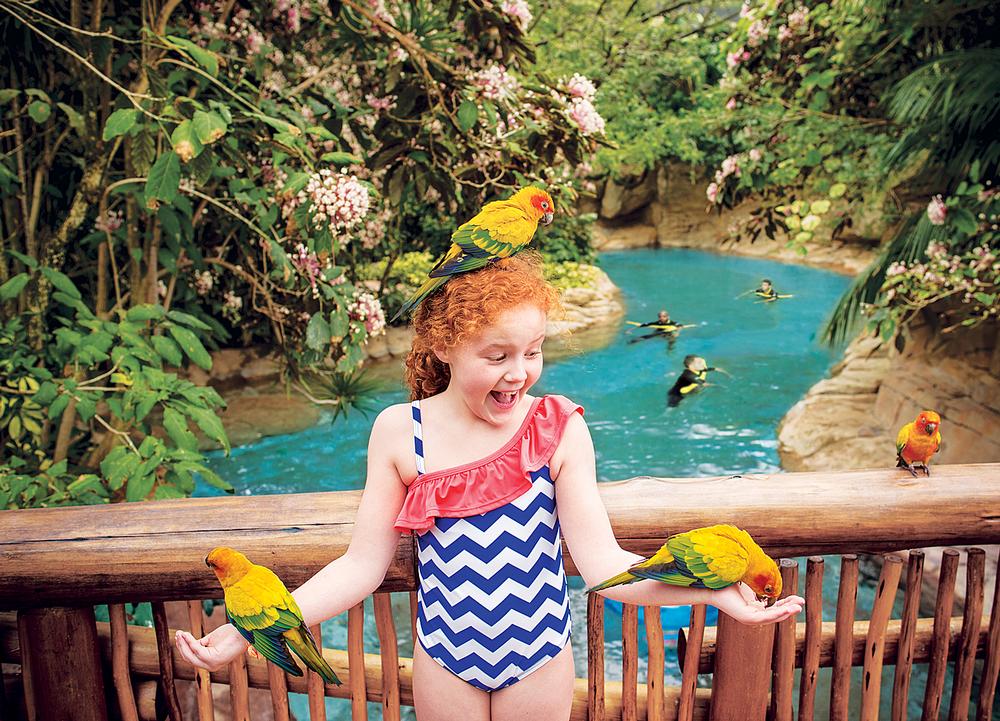
There’s a focus on providing visitors meaningful and “real” experiences throughout the SeaWorld, Aquatica and Discovery Cove attractions brands
There’s a focus on providing visitors meaningful and “real” experiences throughout the SeaWorld, Aquatica
and Discovery Cove attractions brands
There’s a focus on providing visitors meaningful and “real” experiences throughout the SeaWorld, Aquatica
and Discovery Cove attractions brands
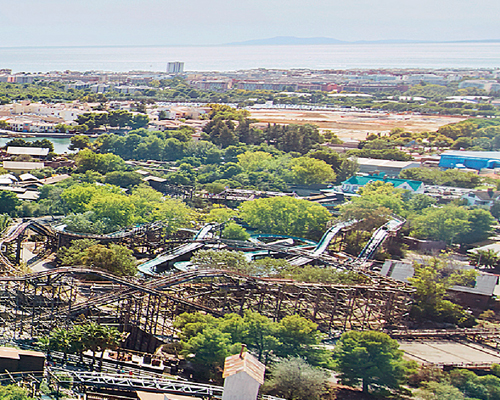
The new Mako, with theming by marine wildlife artist Guy Harvey, is the fastest coaster in Orlando
The new Mako, with theming by marine wildlife artist Guy Harvey, is the fastest coaster in Orlando
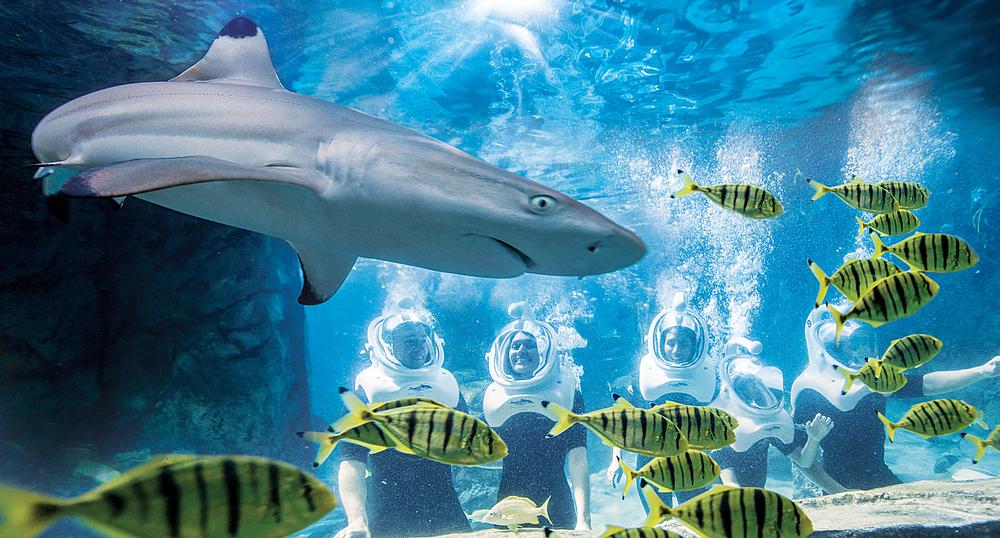
SeaWorld has been rescuing orphaned and ill sea lions, dolphins, turtles, birds and manatees for more than 50 years
The Spa Life UK Convention returns from 21–23 June 2026 at Whittlebury Park Hotel, Spa &
Golf Resort, bringing together spa managers, directors and owners for two days of focused
education, meaningful connection and commercial insight. [more...]
+ More featured suppliers
COMPANY PROFILES
Esse
Esse is a professional microbiome skincare brand founded in South Africa in 2002 by organic chemist, [more...]
Sommerhuber GmbH
Sommerhuber specialises in the manufacturing of heat-storing ceramics for spas. [more...]
SeaWorld is undergoing
a major restructuring to
restore its reputation and
change visitor perceptions
of the brand. Tom Anstey
speaks exclusively to
SeaWorld CEO Joel Manby
about orcas, marine wildlife
rescue – and a rescue
operation for the company
By Tom Anstey | Published in Attractions Management 2016 issue 3
It’s been a tough few years for SeaWorld. Since the release of Blackfish in 2013, a documentary film (or, as SeaWorld argues, a propaganda film) about the killer whale Tilikum and the death of trainer Dawn Brancheau in 2010, visitor numbers and profits have plummeted.
The company took longer to react to the film than it should have and on 13 August 2014, SeaWorld Entertainment shed 33 per cent of its value overnight. Partner companies, such as STA Travel, Southwest Airlines, Alaska Air and Virgin America, began distancing themselves from the marine park brand. The state of California began looking into legislation that would end performance-led orca shows and captive breeding of the mammals.
SeaWorld then took action, announcing the Blue World Project, a $300m (£227m, €266m) investment in expanding orca habitats at three of its parks. But it wasn’t enough to halt the declining fortunes. Between 2012 and 2015, attendance at SeaWorld fell by 7.5 per cent, a drop of 1.84 million visitors. At SeaWorld Orlando attendance fell 10.8 per cent during this time, and at SeaWorld San Diego, by 20.6 per cent (see Tables 1 and 2 on page 42).
However, many of the problems that have plagued the SeaWorld brand are finally being addressed under the leadership of new CEO Joel Manby.
Manby has an exceptional reputation among industry peers for his work at Herschend Family Entertainment and gained public popularity during his time there due to his appearance on hit TV show Undercover Boss. The overwhelming response to the show led him to write the best-selling book Love Works: Seven Timeless Principles for Effective Leaders, challenging employers to allow integrity and faith to guide their decisions.
Moving forward When Manby took the reins from former boss Jim Atchison in April 2015, SeaWorld was boxed into a corner and the pressure was coming from all sides. Animal activists, public opinion and government legislators were causing company value to tumble, but Manby’s appointment proved a turning point. He was decisive and proactive and ready to face up to the challenges, and under his guidance a battered and bloodied SeaWorld has so far come out swinging.
“As part of the interview process for the SeaWorld job, I had to share a thesis with the board about what I would want to focus on,” says Manby. “First, I really wanted to understand the depth of the issue with the orcas. We’d certainly taken hits in the press and our sales results had suffered. I wanted to deal with that and then develop a strategy to move forward from that issue.”
“Then, I wanted to make sure the truth about SeaWorld was getting out. I felt like it was a great company, but people really didn’t know that. A lot of good work was being done, but it was drowned out by the whale issue. It was blocking people from being able to see the truth about us.”
“Finally, I wanted to develop strategies for growth once we had dealt with the whale issue, whether those strategies be new parks and resorts or the expansion of our other brands. Those were the broad areas that I was very focused on.”
‘Ultimate paradox’ SeaWorld’s strongest asset was also its greatest liability. Orcas were attracting some visitors, while driving others away.
In the 18 months since Manby took over, the company has undergone a dramatic restructuring, with new senior appointments and a fundamental change to its ethos. As well as announcing its critical decision to phase out orcas, SeaWorld started to rebuild by promoting itself as a company that creates “real” experiences and being a park that “cares”.
“The biggest thing we’re trying to change is not so much the in-park experience as people’s perception of us,” Manby says. “The parks are incredible, high-quality operations, but because of a variety of issues, including legislative efforts, public sentiment and documentaries, our reputation was declining. We had to try to change the public’s outlook and help people see us as the great company that we are.”
“It’s the ultimate paradox because the very thing that SeaWorld has built its brand around all these years – the orcas, rightly or wrongly – had become a significant problem. It was the reason some people were still visiting and at the same time the reason other people were no longer visiting,” Manby says.
Millennial voice When SeaWorld first opened its doors 52 years ago, it was without killer whales. Those arrived later in 1965, but became, for many people, the stars of the show.
Manby was faced with a difficult choice – bring an end to SeaWorld’s signature experience or risk alienating a growing number of people. As a result, the company ended its orca breeding programme in March this year, with its current generation of killer whales the last it will house. The traditional theatrical show would also be phased out, replaced with something “more natural”.
“I did not think this was something we were going to have to do,” Manby says. “I thought as long as we got the truth out about the company, it would prevail. However, the research and the data showed sentiment against the orca programme was quite pervasive – and the millennial generation showed even worse sentiment. Those are our future customers.”
“Making this kind of decision would show people that we were trying to change, that we get it,” Manby says. “We knew having animals this magnificent and this large in a captive environment was going to be a tough sell for us over the long term. No, I didn’t think we’d have to do it, but we listened to the public and the research. It was an incredibly difficult decision, I think the most difficult decision I’ve ever been involved with in business.”
SeaWorld still has a long road ahead in terms of public perception. At the IAAPA Expo in Orlando, Florida, in November last year, Manby said that Blackfish had “put a lot of misinformation out there” and that he would be tackling it head on. As well as publishing a list of 69 examples of “misleading or inaccurate” content in the film, SeaWorld launched a series of new advertising campaigns, formed a partnership with the Humane Society and placed fresh emphasis on creating meaningful experiences for visitors. So, a year on, is SeaWorld over the worst?
“Public perception isn’t perfect, but it’s improving,” says Manby. “It’s going to be a constant effort for a while. We always will have detractors out there because, frankly, that’s how organisations like Peta raise money. But statistics are showing that when people take time to understand who we are they’re very impressed. Anecdotes are also very important to us. When we change someone’s perception and then they tell their story, that’s key for us and our future success.”
Educational approach One of the main contributors to the negative public perception of SeaWorld has been the controversial orca performances. As part of the company’s restructuring, the traditional show is being transformed into something designed to educate rather than dazzle.
“Today the shows are more in the style of Cirque du Soleil,” Manby says. “The orcas are jumping in unison five at a time and they’re trained to do things that some consumers see as unnatural. Our new orca encounter is more Discovery Channel, more educational. It shares the plight of whales in the wild, but it’s still engaging.”
The new orca show – launching initially at SeaWorld San Diego in 2017 – will make use of film productions behind the pool with a very large screen and nature-inspired setting. The killer whales will do demonstrations with their trainers showing what they do naturally in the wild, with the trainer explaining why they do it.
“We ran a pilot show and the audience scored it just 1 percentage point lower than the current show on entertainment value and rated it double the educational value. This is an evolution for us,” he says.
“The millennial generation wants something that’s fun and meaningful. Brands like Starbucks or Whole Foods are making the world better while also having a very attractive enterprise. I think it’s the wave of the future and that’s what SeaWorld is trying to accomplish.”
Expanding and evolving SeaWorld’s millennial-friendly experience looks beyond orca and animal shows to add an expanded mix of attractions with new educational initiatives – the newly opened Bolliger & Mabillard rollercoaster in Orlando being a prime example.
“Mako is the highest-ranking ride in Florida with a 93 per cent positive rating, which is unbelievable,” says Manby of the shark-themed hypercoaster, which reaches speeds of up to 73mph (118kph).
The ride emulates the speed, agility and feel of the shortfin mako shark, with a conservation aspect included in the queue line where AV elements explain the plight of sharks and the practice and repercussions of shark finning. Guests can buy merchandise, with SeaWorld donating a portion of the proceeds to the Guy Harvey Ocean Foundation.
“It’s the perfect example of our new strategy,” says the CEO. “It’s also the tallest, longest and fastest coaster in Orlando – and that’s a tough challenge in this competitive market.”
“Marine wildlife artist and conservationist Guy Harvey helped theme the coaster and painted a huge mural. People have a great time on the ride, but at the same time they learn about the problem and can play a role in helping to solve it. We want to motivate people to engage and stop things that harm animals in their habitats,” he says.
Education will feature widely in upcoming ventures, where new approaches and ideas will shape a contemporary version of SeaWorld. Its first park in the Middle East will also be the first without orcas.
“We have moved to a definitive agreement stage, money has changed hands,” says Manby, referring to the deal that’s rumoured to be planned for either Dubai or Saudi Arabia. “Things are progressing and it will be the first SeaWorld attraction to not have a killer whale facility. We’re looking at really big ideas that will take the place of that.
“We’re introducing a broader mix of entertainment across all of our parks. Instead of being built around large animal stadiums – dolphins, whales, sea lions – we’re adding rides like Mako with an animal focus. We’re looking into VR to create new experiences or go behind the scenes.”
Rescue operations Manby is keen to raise public awareness of SeaWorld’s vast rescue operations.
“We’re the largest rescue organisation in the US. Without our facilities, hundreds of dolphins and thousands of sea lions, manatees and birds would die every year.”
When an animal is in need of help, the government contacts one of the organisations in the rescue network to bring it in. Once the animal has been rehabilitated, the state, local or federal agency decides whether it can be released – which, Manby says, is always the goal.
“If, though, an animal can’t be released, the government tells us where it should go. We may not keep them. The government might say it has to go to the Monterrey Aquarium, for example. That’s what a lot of people don’t understand.”
Without SeaWorld’s theme parks, Manby says the rescue work would not be feasible as, although it’s a government-run operation, “we do this on our own dime”.
Educating about captivity Manby is also keen to debunk the myths and the negative public opinion that surrounds the issue of animals in captivity, and calls on the attractions industry as a whole to work on its message.
“We all have to do a better job, SeaWorld included,” he says. “There’s a false notion out there – and I think it’s a very dangerous one – that animals being under human care is always a bad thing. That’s just not true. Rescue alone is a reason for our facilities and our unbelievable zoological community to exist, not to mention crucial species preservation for the future. Society needs to be educated to understand that better and then this notion that ‘captivity is a bad thing’ will pop its head up less and less.”
“In San Diego, we rescued almost 1,000 sea lions last year, while some manatees would be close to extinct in Florida if we weren’t engaged with the local state and federal governments. That’s the part that’s maddening to me as an executive. I look at the good our people do and they aren’t getting the credit they deserve.”
The right call? Florida as a whole is certainly facing some challenges – the arrival of the Zika virus; the Brexit referendum and the Brazilian recession slowing two key inbound markets; the arrival of Orlando 2.0 in the Middle East (see page 58) and the recent terrorist shooting that took place downtown – SeaWorld could be affected by these events.
However, recommendations from financial analysts say investors should be buying SeaWorld stock right now.
Although current data predicts a drop in earnings of 14.86 per cent for 2016, analysis from US-based stock analyst Zacks Investment Research forecasts an earnings increase of 12.47 per cent in 2017 over the previous year, with estimates further increasing to 34.78 per cent in 2018 and 44.50 per cent in 2019.
Asked if he felt he made the right choice bringing an end to SeaWorld’s orca programme, Manby is certain.
“The data shows that we’ve made the right call,” he says. “There’s no decision like this where you’re going to please everybody, but I think that as SeaWorld continues to evolve as a company, 50 years from now you’re going to look back – hopefully a lot sooner than that – and say it was definitely the right choice.”
Read more from this issue of Spa Business magazine
View contents of Spa Business 2016 issue 3
Editor’s Letter: Place-Shifting
Technology is giving us the
power to Place-Shift experiences
to create on-demand, immersive
attractions in any location
Promotional Feature: EAS - Beautiful Horizons
The attractions industry is set to descend upon one of Europe’s
most inspiring cities – Barcelona. And if it’s inspiration
you’re looking for, the Euro Attractions Show is the place
Theme Parks: Desert Operations
On the brink of an entertainment revolution, Dubai looks forward to three major theme park openings. Attractions Management caught up with key decision- makers from the upcoming attractions
Mystery Shopper: Disney Delights
Disneyland Shanghai is the company’s first new theme park resort since 2005 and its biggest investment to date. TEA president-elect David Willrich went undercover to find out what Disney’s doing differently
Analysis: Part 3 - Benchmarking
Consultant David Camp asks how we measure success as he focuses on benchmarking and market penetration rates in part three of the series
Opinion: Media Frenzy
Is it time for media-based rides to raise their game? Gavin and Jason Fox, creative directors from Oscar-winning special effects studio Framestore, believe Hollywood-standard content is the next step for the industry
SeaWorld Cares Under the SeaWorld Cares charter, several major points are addressed. • Last generation of killer whales: The company announced the orcas in its care will be the last generation of captive orca at SeaWorld as the breeding programme is terminated.
• Natural encounters: Theatrical shows are being replaced by demonstrations that focus on the orcas’ natural behaviour and research, education and care.
• Partnership with HSUS: SeaWorld’s partnership with the US Humane Society aims to protect oceans and marine mammals based on the two organisations’ joint interest in wild animal and habitat conservation.
SeaWorld Cares
Educate, not dazzle: Manby says SeaWorld’s “Cirque du Soleil-style” shows will be replaced with shows based on animals’ natural behaviours
Table 1: Attendance at SeaWorld Entertainment parks SOURCE: TEA/AECOM Theme Index Attendance Reports
Table 1
Table 2: Attendance at Orlando and San Diego SOURCE: TEA/AECOM Theme Index Attendance Reports
Table 2
RESCUE AND RETURN PROGRAMMES • SeaWorld has rescued over 28,000 animals over the past 50 years. SeaWorld San Diego has rescued 16,000 of those
• SeaWorld & Busch Gardens Conservation Fund (SWBGCF) has given over $13m to 1,000 projects worldwide
• SeaWorld has pledged $10m to fund research and conservation for wild orcas, and a further $50m over the next five years to marine animal rescue
• The non-profit Hubbs-SeaWorld Research Institute was founded in 1963, with a commitment “to return to the sea some measure of the benefits derived from it”
• In 2000, SeaWorld helped save 20,000 penguins and 700 orphaned penguin chicks affected by the Treasure oil spill in South Africa
• SeaWorld rescued 15 sea lions displaced by Hurricane Katrina in 2005
• More than 300 endangered sea turtles were rehabilitated after suffering the effects of record-breaking cold in 2010
• After a mass stranding in Florida in 2012, SeaWorld Orlando rehabilitated 4 young pilot whales
• SeaWorld experts have contributed to 1,000 published scientific studies
Rescue and return programmes
SeaWorld’s new CEO Joel Manby has made radical changes to reverse the company’s declining reputation, including ending its orca programme
There’s a focus on providing visitors meaningful and “real” experiences throughout the SeaWorld, Aquatica and Discovery Cove attractions brands
There’s a focus on providing visitors meaningful and “real” experiences throughout the SeaWorld, Aquatica
and Discovery Cove attractions brands
There’s a focus on providing visitors meaningful and “real” experiences throughout the SeaWorld, Aquatica
and Discovery Cove attractions brands
The new Mako, with theming by marine wildlife artist Guy Harvey, is the fastest coaster in Orlando
The new Mako, with theming by marine wildlife artist Guy Harvey, is the fastest coaster in Orlando
SeaWorld has been rescuing orphaned and ill sea lions, dolphins, turtles, birds and manatees for more than 50 years
Premium London health club, KX Chelsea, will imminently unveil its most significant
redevelopment since its launch in 2002 to create an integrated wellness model combining
training, recovery and relaxation.
Rosewood Le Guanahani St Barth, on the northeast coast of Saint Barthélemy in the French
West Indies, is offering a programme of ocean-inspired yoga classes between 8-14 June to
celebrate Global Wellness Day (GWD).
Hotel de France, located on the British Isle of Jersey, has created a wellness retreat package
that includes a hot yoga session that will take place in Jersey Zoo’s butterfly sanctuary.
The Ritz-Carlton, Langkawi, in Malaysia, has revealed a schedule for Global Wellness Day
(GWD) that includes guided rainforest walks, mindful movement and guided coastal meditation
experiences.
Longevitix, a clinical platform for preventive and longevity medicine, has launched its AI-
powered intelligence system to help physicians deliver continuous, personalised longevity-
focused care at scale.
Atmantan Wellness Centre, an integrative wellness destination in Mulshi, near Pune in India, is
expanding its portfolio by adding a new centre in Hyderabad that will launch between 2028 and
2029.
A recent survey by the UK Spa Association (UKSA) into the industry’s approach to cancer care
has revealed that almost half of participating respondents (46 per cent) are unaware that
cancer is a disability and guests with a cancer diagnosis must be given
Mexican operator, Solmar Hotels and Resorts, is hosting a series of events in celebration of
Global Wellness Day, including a Temazcal ceremony at its Playa Grande Resort and Spa in Los
Cabos.
Mandarin Oriental has announced a standalone residence brand, Mansions, which will debut at
Emirates Palace, Mandarin Oriental Mansions, Abu Dhabi, in 2029.
The Spa Life UK Convention returns from 21–23 June 2026 at Whittlebury Park Hotel, Spa &
Golf Resort, bringing together spa managers, directors and owners for two days of focused
education, meaningful connection and commercial insight. [more...]
+ More featured suppliers
COMPANY PROFILES
Esse Esse is a professional microbiome skincare brand founded in South Africa in 2002 by organic chemist, [more...]