The spa industry is growing more quickly than ever before, with roll-outs globally in all sectors. There’s never been a better time both to create wellness environments and to adopt green building methods to improve the health of both customers and the planet
By Liz Terry | Published in Spa Business 2015 issue 2
In January, the company behind Spa Business and Spa Opportunities magazines, and the Spa Business Handbook – Leisure Media – launched a new division called CLAD, the Community of Leisure Architects & Designers. The initiative is already revealing exciting possibilities for the spa and wellness industries.
The purpose of CLAD is to build a community of architects, designers, investors and developers. The scope is global and CLAD will cover all aspects of leisure, from spa and wellness to hospitality, retail, mixed use, health and fitness, sport, entertainment and everything in between.
CLAD will run a raft of magazines, websites and media feeds with the portfolio coming on stream throughout 2015. The website – CLADglobal.com – the social media feeds and the first publication – the glossy quarterly, CLADmag (CLADglobal.com/CLADmag) – hit the market in Q1, with a weekly magazine and an annual handbook to follow.
We see CLAD as bridging the gap between architecture and design and spa and wellness. Excitingly, there are clear indications that active and wellness design is one of the hottest topics for this audience – there’s both an appetite for knowledge and a lack of awareness of the role our sector has been playing in advancing thinking in these areas.
Looking at the bigger picture, with the obesity crisis in developed countries at the top of the political agenda and spa and wellness growing fast, it’s not surprising architects and designers are keen to contribute to the solution.
Added to this is a growing awareness that wellness design is a USP that puts a building ahead in terms of its commercial value to the owner as an investment and the amount consumers are willing to pay to use it. This is evidently an exciting proposition for architects, designers, investors and developers in the CLAD community.
We’re keen to see more powerful connections between active and wellness design, architects and designers and the spa and wellness industries for the benefit of all and it’s important the spa and wellness industry is at the forefront of this best practice and not following along behind.
Some industry specialists are already moving on this. We recently reported that WTS International is putting its designers through WELL Building Standard accreditation – validated by the Green Building Certification Institute – so it can offer clients this option at the design stage, for example.
In addition to upskilling spa specialists, we must also respond to interested mainstream architects and designers and partner with them wherever possible.
The aim must be to ensure all buildings and environments are sustainable and healthy to spend time in for both staff and customers and that they promote healthy behaviours. With spas often sharing real estate with hotels and other developments, the need for this has never been greater.
Liz Terry, editor @elizterry
Read more from this issue of Spa Business magazine
Interview: Kathy Van Ness
The COO at Golden Door tells Katie Barnes how she’s used her background in fashion to reinvent the destination spa
Wellness: In sickness & health
The Urban Zen Integrative Therapy programme by designer Donna Karan helps acutely-ill patients in health and social care settings. Julie Cramer reports
Design: Sense of arrival
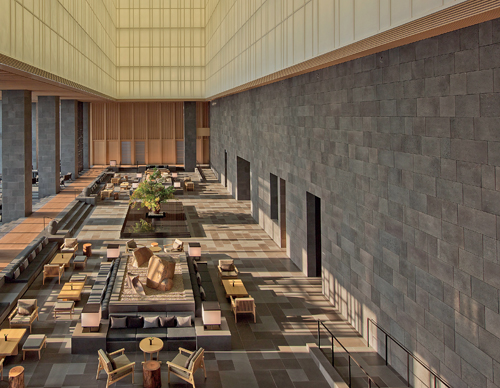
Neena Dhillon talks to the spa designers and operators at the new Aman and Ritz-Carlton properties in Japan
Ask an expert: Neuromarketing
Could this field of market research hold the key to finding out what customers really want? Rhianon Howells investigates
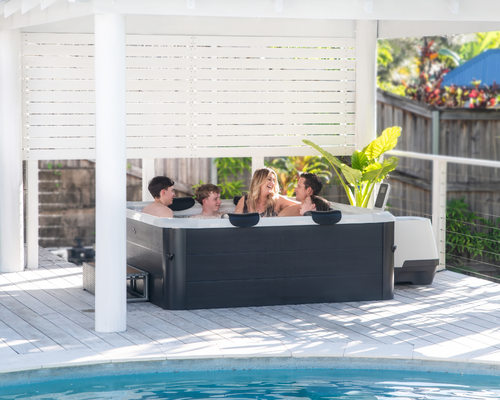
The MSpa Oslo series is a perennial bestseller in global markets. With innovative
engineering and premium performance, this completely portable spa line-up is expertly
designed to meet the needs of customers worldwide. [more...]
The spa industry is growing more quickly than ever before, with roll-outs globally in all sectors. There’s never been a better time both to create wellness environments and to adopt green building methods to improve the health of both customers and the planet
By Liz Terry | Published in Spa Business 2015 issue 2
In January, the company behind Spa Business and Spa Opportunities magazines, and the Spa Business Handbook – Leisure Media – launched a new division called CLAD, the Community of Leisure Architects & Designers. The initiative is already revealing exciting possibilities for the spa and wellness industries.
The purpose of CLAD is to build a community of architects, designers, investors and developers. The scope is global and CLAD will cover all aspects of leisure, from spa and wellness to hospitality, retail, mixed use, health and fitness, sport, entertainment and everything in between.
CLAD will run a raft of magazines, websites and media feeds with the portfolio coming on stream throughout 2015. The website – CLADglobal.com – the social media feeds and the first publication – the glossy quarterly, CLADmag (CLADglobal.com/CLADmag) – hit the market in Q1, with a weekly magazine and an annual handbook to follow.
We see CLAD as bridging the gap between architecture and design and spa and wellness. Excitingly, there are clear indications that active and wellness design is one of the hottest topics for this audience – there’s both an appetite for knowledge and a lack of awareness of the role our sector has been playing in advancing thinking in these areas.
Looking at the bigger picture, with the obesity crisis in developed countries at the top of the political agenda and spa and wellness growing fast, it’s not surprising architects and designers are keen to contribute to the solution.
Added to this is a growing awareness that wellness design is a USP that puts a building ahead in terms of its commercial value to the owner as an investment and the amount consumers are willing to pay to use it. This is evidently an exciting proposition for architects, designers, investors and developers in the CLAD community.
We’re keen to see more powerful connections between active and wellness design, architects and designers and the spa and wellness industries for the benefit of all and it’s important the spa and wellness industry is at the forefront of this best practice and not following along behind.
Some industry specialists are already moving on this. We recently reported that WTS International is putting its designers through WELL Building Standard accreditation – validated by the Green Building Certification Institute – so it can offer clients this option at the design stage, for example.
In addition to upskilling spa specialists, we must also respond to interested mainstream architects and designers and partner with them wherever possible.
The aim must be to ensure all buildings and environments are sustainable and healthy to spend time in for both staff and customers and that they promote healthy behaviours. With spas often sharing real estate with hotels and other developments, the need for this has never been greater.
Liz Terry, editor @elizterry
Read more from this issue of Spa Business magazine
Interview: Kathy Van Ness
The COO at Golden Door tells Katie Barnes how she’s used her background in fashion to reinvent the destination spa
Wellness: In sickness & health
The Urban Zen Integrative Therapy programme by designer Donna Karan helps acutely-ill patients in health and social care settings. Julie Cramer reports
Design: Sense of arrival
Neena Dhillon talks to the spa designers and operators at the new Aman and Ritz-Carlton properties in Japan
Ask an expert: Neuromarketing
Could this field of market research hold the key to finding out what customers really want? Rhianon Howells investigates
Synergy – The Retreat Show, the global trade show for retreats, has launched a global research
initiative that will provide insights into the retreat sector from both consumer and industry
perspectives.
The Wellness Tourism Association (WTA) has published a non-regulatory global industry
framework designed to ensure the retreat market offers responsible experiences.
A new survey of UK and international spa practitioners shows that stress, burnout and
wellbeing concerns have caused one in three respondents to consider leaving the industry.
The UK's four Chief Medical Officers have published a refreshed edition of Physical activity
guidelines: UK Chief Medical Officers' report, updating the evidence that underpins the nation's
physical activity recommendations and placing greater emphasis on strength, balance, reducing
sedentary behaviour and, for the first time, supporting people taking weight loss medications.
Anna Bjurstam has left her role as Wellness Pioneer at Six Senses Hotels and Resorts and
launched a new wellness, longevity and “consciousness consultancy” called Wahayla.
Fairmont Cheshire, The Mere, has opened today (10 July) in the Northwest of England
with a
1,715sq m Fairmont Spa that has been designed using a ‘Wellness without Walls’
concept.
Wellness hotels generating less than US$1 million (€932,700, £785,200) – or 10 per cent of
total revenue from wellness and leisure – recorded the strongest RevPAR and TRevPAR growth
in 2025 across categories when compared with 2024, according to the latest Wellness Real
Estate Report by RLA Global, produced in partnership with P and L benchmarking firm HotStats.
Lefay Resorts, the portfolio of two luxury wellness properties in Italy, has added emotional
dance classes and group cold plunge sessions in response to market demand for social
connection.
The MSpa Oslo series is a perennial bestseller in global markets. With innovative
engineering and premium performance, this completely portable spa line-up is expertly
designed to meet the needs of customers worldwide. [more...]