Yes! Send me the FREE digital editions of Spa Business and Spa Business insider magazines and the FREE weekly Spa Business and Spa Business insider ezines and breaking news alerts!
Exciting new kit is being used to support people with disabilities ranging from blindness to missing limbs. This opens up the possibility of creating attractions where they can enjoy the experience with friends and family in a way not previously possible
By Liz Terry | Published in Attractions Management 2017 issue 1
Imagine being able to create an attraction which is equally accessible and enjoyable for people with physical or sensory disabilities and the able bodied. We could enable families and friendship groups with members who struggle with their vision, mobility or senses to enjoy a day out where everyone can fully participate, with all the joy that brings.
Now that possibility is increasingly within reach, thanks to a raft of new technology emerging in the fields of 3D sound,bvirtual and augmented reality (VR and AR), robotics and brain computer interfaces (BCI). We, as an industry, need to be paying very careful attention to these developments.
Some of this exciting new technology was on show recently at the world’s first Cybathlon, held in Zurich, Switzerland. This event –essentially a bionic Olympic Games – saw severely disabled people competing in a range of different races, challenges and tasks using the latest robotics and innovations in prosthetics. This included powered exoskeleton races, powered prosthetics races and BCI races, where competitors used brain signals both to control avatars in a specially developed computer game and also to control various devices, such as motorised tractor wheelchairs.
Unlike the Paralympics, where athletes are prohibited from using powered aids, Cybathlon puts technology at the centre of the competition, showcasing its potential uses in day to day life for those with severe disabilities.
There are many directly transferable ideas for attractions innovators which could be gleaned from strong collaboration with the research and development teams working on these projects in labs and universities around the world.
Also exciting is the development work being done around VR and AR technology, where some truly groundbreaking discoveries are being made in relation to sensory challenges.
Oculus Touch, part of the Oculus VR system, is enabling people born with missing fingers to experience what it’s like to have a full set – the technology tricks the brain, so that actual sensation can be felt in fingers which have never been there.
This is thought likely because feelings of phantom movement are modulated by the parts of the brain that deal with sight, so the brain is reorganising in response to the experience.
Researchers are also finding powerful ways to connect people with vision impairment to the everyday world around them. These include wearable VR and AR aids which respond to the wearer’s head movement and magnify whatever they’re looking at. These systems have enabled users with limited vision to see more clearly and, in some cases, to read.
Auditory and haptic virtual environments which enable blind people to experience environments and build brain maps of them are also being developed using 3D sound technology.
It’s possible to foresee a day – once all this wonderful emerging technology has been developed and democratised through low-cost applications – when designers have the right tools to create the next generation of inclusive attractions.
Liz Terry, editor. Twitter: @elizterry
Read more from this issue of Spa Business magazine
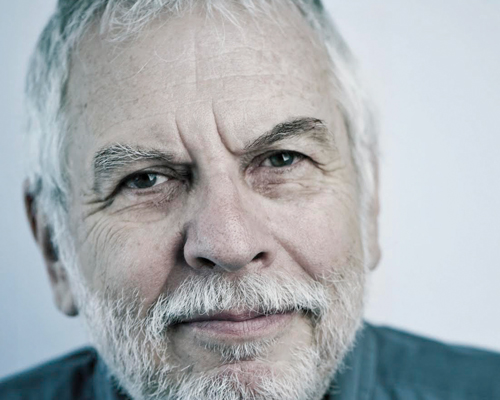
People profile: Nolan Bushnell
Nolan Bushnell, father of the video game industry, on his new VR business and the future of technology
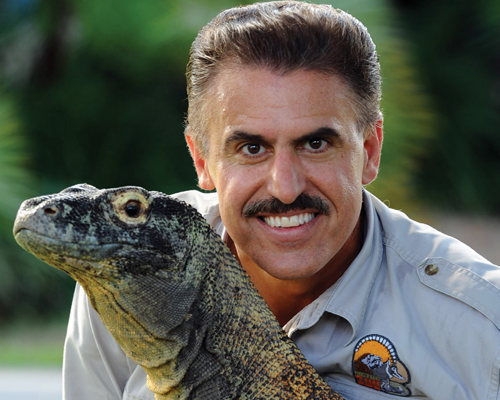
People profile: Ron Magill
Zoo Miami’s Ron Magill gives the lowdown on the attraction’s new Florida: Mission Everglades zone
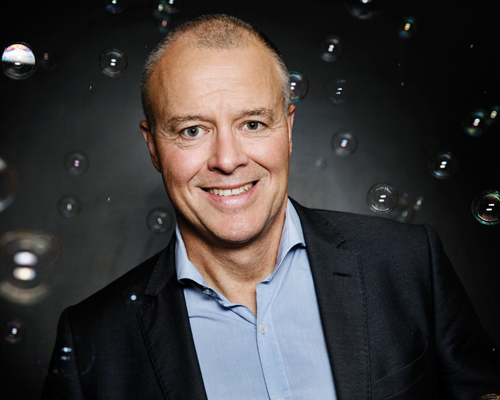
People profile: Kim Gladstone Herlev
Denmark’s Experimentarium has reopened after a major renovation. CEO Kim Gladstone Herlev shares his vision for the future
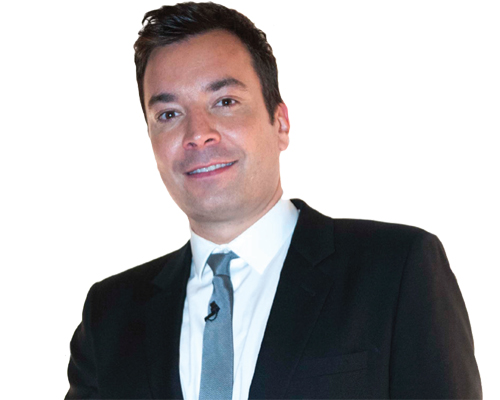
People profile: Jimmy Fallon
Hold on tight! US TV star Jimmy Fallon is the subject of a brand new ride at Universal Orlando
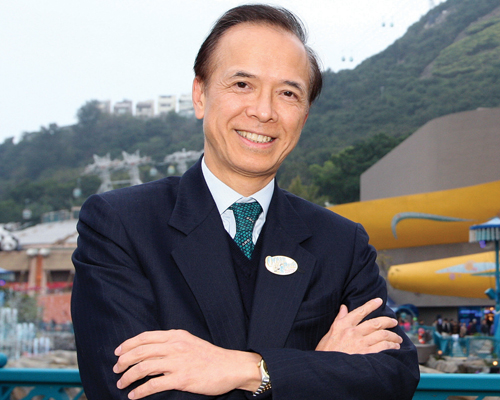
Interview: Matthias Li
Matthias Li, chief executive at Hong Kong’s
Ocean Park, on his response to a changing
visitor profile and rising competition
Pipeline: Opening Doors
There’s an array of attractions set to launch.
We anticipate the hot debuts of the year
Tourism: A Plan for Oman
The Ministry of Tourism’s Maitha Al Mahrouqi
on Oman’s status as a budding destination
The Spa Life UK Convention returns from 21–23 June 2026 at Whittlebury Park Hotel, Spa &
Golf Resort, bringing together spa managers, directors and owners for two days of focused
education, meaningful connection and commercial insight. [more...]
Le Atelier by C.O.D.E. doesn't offer a standard bespoke service, it provides a highly
customised approach to designing massage beds and loungers in high-end wellness
environments. [more...]
+ More featured suppliers
COMPANY PROFILES
ESPA
Founded in 1992 by Susan Harmsworth, ESPA combines the conceptualisation, development and management [more...]
Kemitron GmbH
Our
portfolio is divided into four product areas; Technology, Fragrances, Disinfectant and Cleaners [more...]
Exciting new kit is being used to support people with disabilities ranging from blindness to missing limbs. This opens up the possibility of creating attractions where they can enjoy the experience with friends and family in a way not previously possible
By Liz Terry | Published in Attractions Management 2017 issue 1
Imagine being able to create an attraction which is equally accessible and enjoyable for people with physical or sensory disabilities and the able bodied. We could enable families and friendship groups with members who struggle with their vision, mobility or senses to enjoy a day out where everyone can fully participate, with all the joy that brings.
Now that possibility is increasingly within reach, thanks to a raft of new technology emerging in the fields of 3D sound,bvirtual and augmented reality (VR and AR), robotics and brain computer interfaces (BCI). We, as an industry, need to be paying very careful attention to these developments.
Some of this exciting new technology was on show recently at the world’s first Cybathlon, held in Zurich, Switzerland. This event –essentially a bionic Olympic Games – saw severely disabled people competing in a range of different races, challenges and tasks using the latest robotics and innovations in prosthetics. This included powered exoskeleton races, powered prosthetics races and BCI races, where competitors used brain signals both to control avatars in a specially developed computer game and also to control various devices, such as motorised tractor wheelchairs.
Unlike the Paralympics, where athletes are prohibited from using powered aids, Cybathlon puts technology at the centre of the competition, showcasing its potential uses in day to day life for those with severe disabilities.
There are many directly transferable ideas for attractions innovators which could be gleaned from strong collaboration with the research and development teams working on these projects in labs and universities around the world.
Also exciting is the development work being done around VR and AR technology, where some truly groundbreaking discoveries are being made in relation to sensory challenges.
Oculus Touch, part of the Oculus VR system, is enabling people born with missing fingers to experience what it’s like to have a full set – the technology tricks the brain, so that actual sensation can be felt in fingers which have never been there.
This is thought likely because feelings of phantom movement are modulated by the parts of the brain that deal with sight, so the brain is reorganising in response to the experience.
Researchers are also finding powerful ways to connect people with vision impairment to the everyday world around them. These include wearable VR and AR aids which respond to the wearer’s head movement and magnify whatever they’re looking at. These systems have enabled users with limited vision to see more clearly and, in some cases, to read.
Auditory and haptic virtual environments which enable blind people to experience environments and build brain maps of them are also being developed using 3D sound technology.
It’s possible to foresee a day – once all this wonderful emerging technology has been developed and democratised through low-cost applications – when designers have the right tools to create the next generation of inclusive attractions.
Liz Terry, editor. Twitter: @elizterry
Read more from this issue of Spa Business magazine
People profile: Nolan Bushnell
Nolan Bushnell, father of the video game industry, on his new VR business and the future of technology
People profile: Ron Magill
Zoo Miami’s Ron Magill gives the lowdown on the attraction’s new Florida: Mission Everglades zone
People profile: Kim Gladstone Herlev
Denmark’s Experimentarium has reopened after a major renovation. CEO Kim Gladstone Herlev shares his vision for the future
People profile: Jimmy Fallon
Hold on tight! US TV star Jimmy Fallon is the subject of a brand new ride at Universal Orlando
Interview: Matthias Li
Matthias Li, chief executive at Hong Kong’s
Ocean Park, on his response to a changing
visitor profile and rising competition
Pipeline: Opening Doors
There’s an array of attractions set to launch.
We anticipate the hot debuts of the year
Tourism: A Plan for Oman
The Ministry of Tourism’s Maitha Al Mahrouqi
on Oman’s status as a budding destination
As part of its first hotel partnership, Mayrlife – the medical health resort company known for its
site in Altaussee, Austria – has launched a day clinic at the Rosewood Vienna.
Premium London health club, KX Chelsea, will imminently unveil its most significant
redevelopment since its launch in 2002 to create an integrated wellness model combining
training, recovery and relaxation.
Rosewood Le Guanahani St Barth, on the northeast coast of Saint Barthélemy in the French
West Indies, is offering a programme of ocean-inspired yoga classes between 8-14 June to
celebrate Global Wellness Day (GWD).
Hotel de France, located on the British Isle of Jersey, has created a wellness retreat package
that includes a hot yoga session that will take place in Jersey Zoo’s butterfly sanctuary.
The Ritz-Carlton, Langkawi, in Malaysia, has revealed a schedule for Global Wellness Day
(GWD) that includes guided rainforest walks, mindful movement and guided coastal meditation
experiences.
Longevitix, a clinical platform for preventive and longevity medicine, has launched its AI-
powered intelligence system to help physicians deliver continuous, personalised longevity-
focused care at scale.
Atmantan Wellness Centre, an integrative wellness destination in Mulshi, near Pune in India, is
expanding its portfolio by adding a new centre in Hyderabad that will launch between 2028 and
2029.
A recent survey by the UK Spa Association (UKSA) into the industry’s approach to cancer care
has revealed that almost half of participating respondents (46 per cent) are unaware that
cancer is a disability and guests with a cancer diagnosis must be given
Mexican operator, Solmar Hotels and Resorts, is hosting a series of events in celebration of
Global Wellness Day, including a Temazcal ceremony at its Playa Grande Resort and Spa in Los
Cabos.
Mandarin Oriental has announced a standalone residence brand, Mansions, which will debut at
Emirates Palace, Mandarin Oriental Mansions, Abu Dhabi, in 2029.
The Spa Life UK Convention returns from 21–23 June 2026 at Whittlebury Park Hotel, Spa &
Golf Resort, bringing together spa managers, directors and owners for two days of focused
education, meaningful connection and commercial insight. [more...]
Le Atelier by C.O.D.E. doesn't offer a standard bespoke service, it provides a highly
customised approach to designing massage beds and loungers in high-end wellness
environments. [more...]
+ More featured suppliers
COMPANY PROFILES
ESPA Founded in 1992 by Susan Harmsworth, ESPA combines the conceptualisation, development and management [more...]