Ocean Park Hong Kong is one of the most established and respected parks on the Asian continent, setting the bar for the industry. How are things shaping up under the new CEO?
By Alice Davis | Published in Attractions Management 2017 issue 1
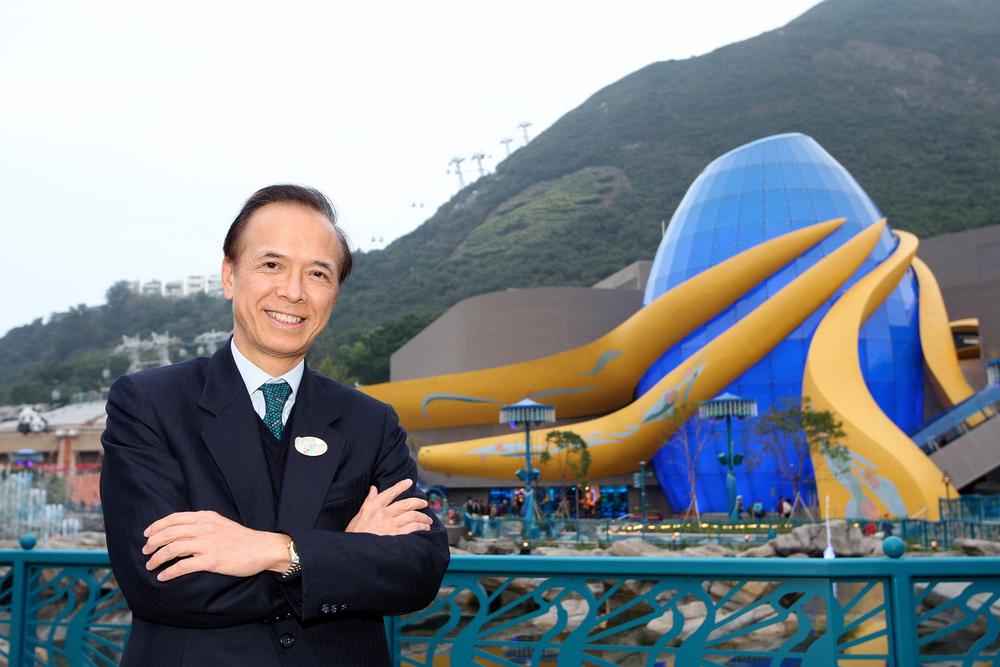
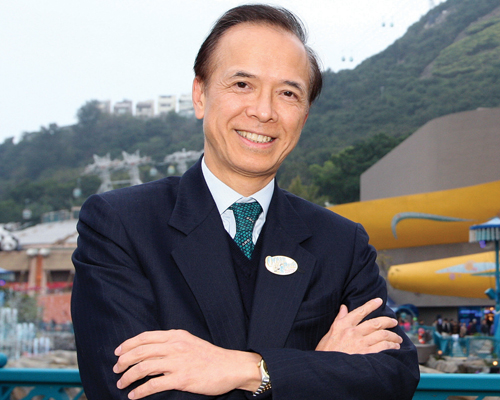
Matthias Li joined Ocean Park Hong Kong theme park in 1994, and took the reins as CEO in 2016
It was a difficult year for Ocean Park Hong Kong. In 2016, the marine theme park reported a near 20 per cent fall in visitors and a HK$241m ($31m, £25m, €29m) deficit – highly unusual – for the fiscal year.
This was caused by a combination of circumstances that created a perfect storm for the Hong Kong tourism industry. There were several contributing factors.
“Hong Kong is currently facing extremely tough business challenges, especially in the tourism sector,” says Ocean Park CEO Matthias Li Sing-chung. “The market is facing some headwinds due to the declining economy, downturning retail environment, depreciation of currencies of other Asian destinations, and change in tourism-related policy. All of this has played a part in eroding Hong Kong’s competitiveness against other regional cities and affected tourist arrivals to the city, as well as to tourist attractions like Ocean Park.”
It’s marked an eventful start for the new CEO, who only took the reins from outgoing boss Tom Mehrmann in July. Li’s no stranger, though, having been part of the Ocean Park family since he joined as finance director in 1994. If anyone can navigate the tempest, it should be Li.
“Over the past 22 years, I’ve developed a deep passion for Ocean Park, not only from working with the entire staff to transform a local recreational facility into an international tourist destination, but also from experiencing up-close the pride locals derive from their park,” Li says. “Now, as CEO, my immediate focus is to face the challenges presented by the changes in Hong Kong’s visitor profile and the intense competition in the region.”
In recent years, tourism to Hong Kong was rising, reaching an all-time high of 60.8 million in 2014. However, in the two years since, those numbers have taken a hit, falling 4.5 per cent from 2015 to 56.7 million last year. In turn, that’s affected Hong Kong’s attractions.
In its year ending 30 June 2015, Ocean Park welcomed 7.4 million guests, its third-highest attendance on record. That made it the 15th-most visited park in the world, according to the annual TEA/AECOM report. This was topped off by its second-highest ever total revenue (HK$1.9bn, $243m, £205m, €238m) and a surplus of HK$45.2m. However, for the financial year ending June 2016, the park received just 6 million guests, a decline of 18.9 per cent.
THE MAINLAND FACTOR Hong Kong Disneyland was also affected, attributed to the fall in the number of tourists from Mainland China – a demographic that once made up almost eight out of 10 visitors to the autonomous territory. A series of anti-tourist protests by Hongkongers unhappy with the huge surge in Mainland visitors is at least partly to blame. Reports show the number of visitors from China fell 50 per cent in the first half of 2015 as a direct result of the protests. Hong Kong’s image as a hospitable place was tarnished, and many Chinese decided to go elsewhere, flying instead to Thailand, South Korea, Japan, Singapore, Malaysia and Vietnam.
With 120 million Chinese travelling abroad each year, it’s a huge piece of the pie to lose out on. Countries like Japan, Malaysia, Indonesia, Thailand and the US lifted visa restrictions on Chinese visitors, making trips easier to arrange than those to Hong Kong, where travel permits and visas are still required. Other factors, too, influenced Mainlanders’ decisions.
“Competition from other regional destinations, the strengthening HK dollar against the renminbi and other currencies, and slowing economic growth in China have affected Mainland visitor flows to the city,” Li says. “The Hong Kong Tourism Association predicts the city will continue to see a 10 per cent drop in the number of group visitors and 20 to 30 per cent drop in the number of FITs [free independent travellers] from Mainland China.”
In past years, 50 per cent of Ocean Park’s visitors were Chinese, with 35 per cent from Hong Kong. This demographic has altered, as now about 40 per cent are Chinese and 40 per cent are local. The next core markets are Taiwan, South Korea, India and the Philippines.
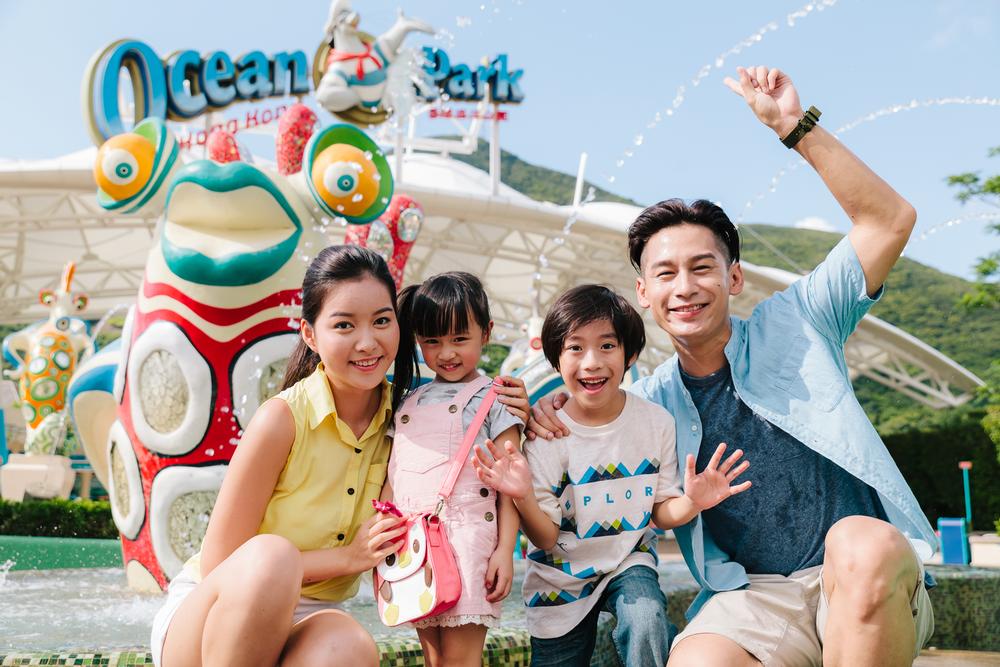
PEOPLE’S PARK So, what is Li to do in the face of these facts and figures? Well, first and foremost, he’s not painting a gloomy picture – anything but. This year marks Ocean Park’s 40th anniversary, and there has been a celebratory mood, especially among the locals. In fact, the attraction’s reputation as the “people’s park” is one of the foundations of its success over the years.
It’s a “homegrown” operation that dates back to 1977, when it was funded by the Hong Kong Jockey Club and built on land donated by the government. In the early 80s, the Jockey Club funded further development and rides, until 1987 when Ocean Park Corporation was formed, a financially-independent, not-for-profit organisation with a government-appointed board. Ocean Park reached a defining moment in 2005 with the launch of a HK$5.5bn ($709m, £573m, €665m) Master Redevelopment Plan (MRP), taking the park from a mid-size attraction to a global destination. The master plan doubled the number of the site’s attractions and rides, included the opening of Old Hong Kong, which recreates the streetscape and ambience of the city 50 years ago.
Last year alone, 2.4 million Hongkongers visited Ocean Park, that’s one-third of the domestic population. More than 450,000 of them benefited from complimentary or cut-price admission, as the park offers free entry to under threes, over 65s, registered disabled and all residents on their birthday.
“Through the ups and downs of the past 40 years, we’ve always believed it’s crucial to uphold our local appeal and remain well connected to the community,” Li says.
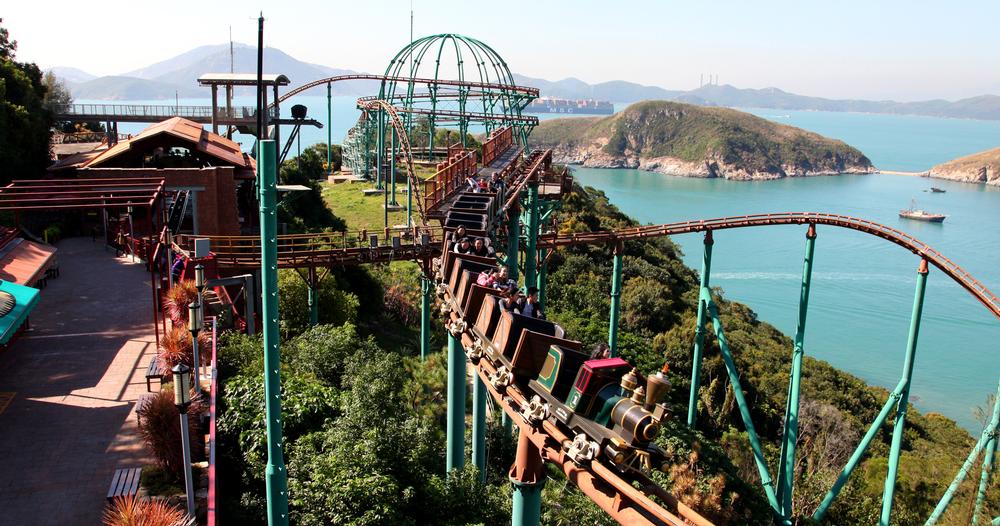
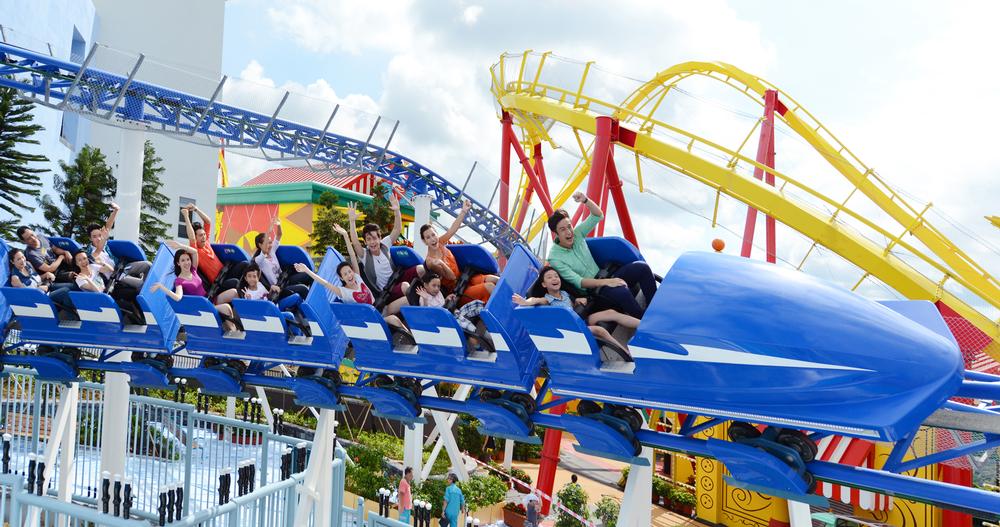
STAYING CREATIVE The 90-hectare (222-acre) Ocean Park is situated on the southern side of Hong Kong Island at a bay called Tai Shue Wan. Overlooking the South China Sea, the resort consists of two areas, the Waterfront and the Summit, connected by cable cars and the Ocean Express funicular. The park has over 80 attractions, with the Summit home to a wide variety of thrill and family rides. There are live shows at the Ocean Theatre dolphinarium, designed to “educate and entertain”, and the chance to visit the Ocean Park Tower, one of the tallest observation towers in Southeast Asia. At the Waterfront, themed areas include Amazing Asian Animals, where some of the continent’s rarest species are on display.
To keep people coming, especially for a destination that’s dependent on repeat visits from locals, Li knows it’s important to keep innovating. “As the years go by, it’s important to stay creative to win guests over,” he says.
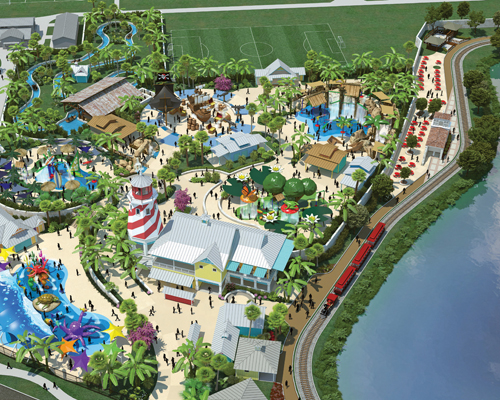
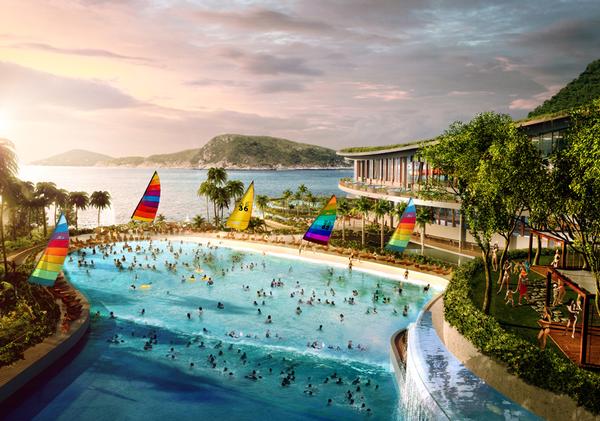
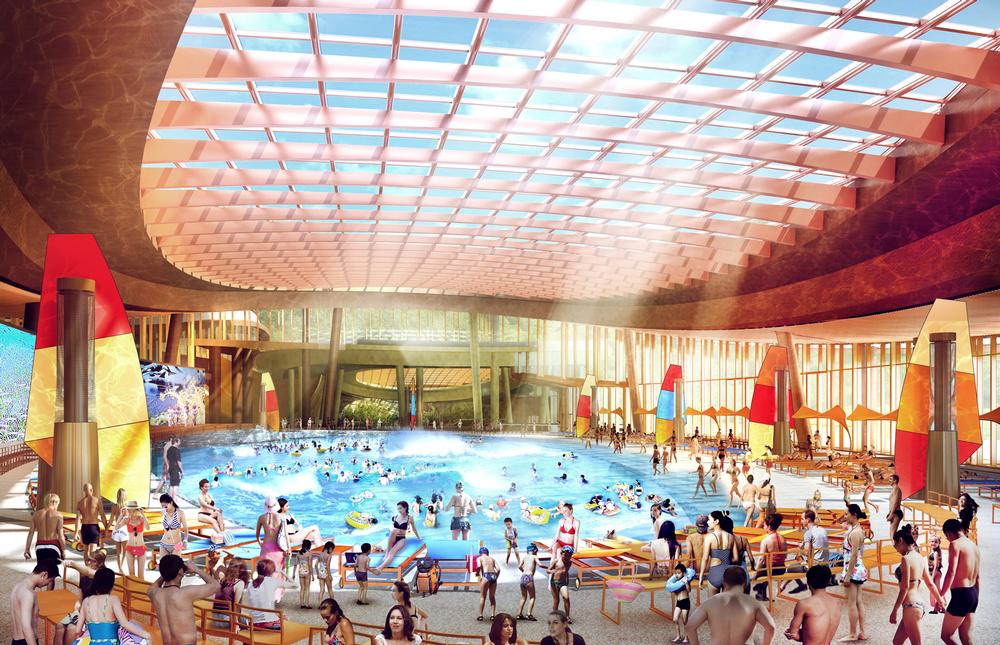
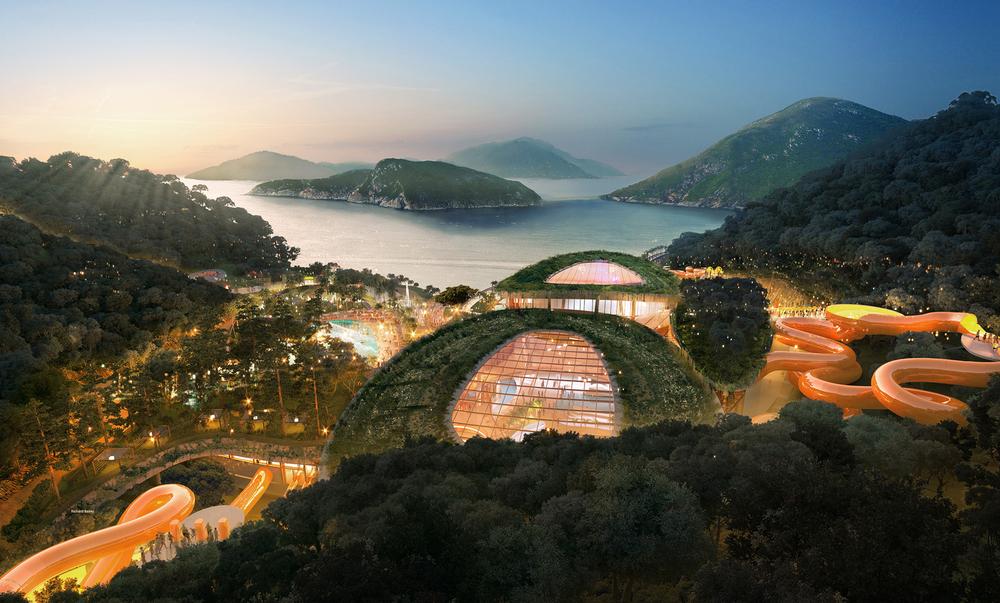
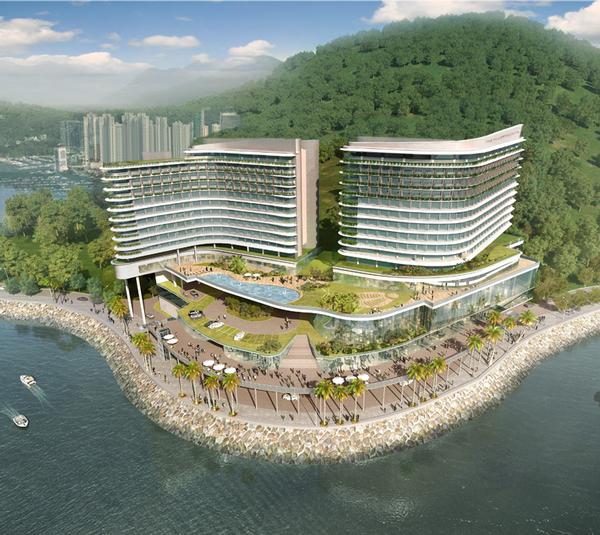
On that note, there are major developments coming down the track. The most exciting must be the brand new year-round waterpark on the site of the old Water World facility, opening in 2018. There are two hotels on the way, the Ocean Park Marriot Hotel and the Fullerton Hotel @ Ocean Park. The children’s play zone Whiskers Harbour is also being modernised. And, in December, a transport link opened, the MTR South Island Line (East), which connects central Admiralty to Ocean Park Station in just four minutes.
NEW INVESTMENTS “The all-weather Water World will stay open late to offer night attractions for the local community and international tourists,” Li says. “The MTR South Island Line significantly enhances our connectivity across the entire area of Hong Kong, making a visit to Ocean Park even more convenient. It will likely facilitate increased guest visitation from both locals and FITs. The opening of the hotels will enable us to extend the visit duration of our guests, elevating the appeal of Ocean Park. They will also provide a new venue for Meetings, Incentives, Conventions and Exhibitions (MICE) event organisers from around the world, which will be easily accessible thanks to the new MTR link.”
There’s work going on behind the scenes, too, as the park strives to constantly improve the visitor’s day out. Free resort-wide Wi-Fi has been rolled out, and a new mobile app. Special promotions are targeted at specific overseas markets with growth potential. Also newly launched, the park’s self-developed proprietary PFlow guest management system – winner of a GSM Association Asia Mobile Award – is enhancing how people experience the park.
“PFlow is a custom-designed integrated mobile platform that enables timely collection, analysis and dissemination of guest flow and guest mix information. The data empowers our management team to make calculated decisions that can enhance guest experiences, such as the proactive management of guest flow, operations and manpower,” says Li.
Furthermore, Ocean Park’s “Big Five” seasonal offerings are updated and enhanced, often featuring new local elements and strategic brand collaborations, to ensure Summer Splash, Halloween Fest, Christmas Sensation, Lunar Lucky Fiesta and Animal Discovery Fest keep people returning year after year.
INTENSIFYING COMPETITION The region’s theme park sector is heating up, particularly with Disney opening in Shanghai last June. For families who want to visit a theme park in the region, the China resort must be at the top of the list.
“Ever-intensifying competition posed by new and existing themed attractions in the region, including Disneyland Shanghai, Chimelong Ocean Kingdom in Zhuhai, and numerous family entertainment facilities in Macau, have channelled away, or even, deterred Mainland tourists from visiting Hong Kong as they can gain easy access to themed entertainment closer to home.”
“However, despite the current downturns in economy and the industry, the demand for leisure activities in the region will continue to grow, given the rising number of middle class within Mainland China, and the rapidly increasing income levels.”
Li believes the growth of the attractions industry in Asia is helping meet demand for leisure and entertainment and in turn promoting both short and long-haul tourism in the region. Big players like Disney raise standards and increase appetite for large-scale destination attractions.
“The entry of international players encourages theme parks in the region to improve their hardware and software to meet the expectations for high quality, fun and value-for-money guest experiences, heightening the industry’s standards.”
MANAGING A CRISIS As Li reflects on a 40-year story, what’s the greatest challenge the park has faced?
“I believe that would be around 2003, the time when SARS hit Hong Kong and the region, impacting Hong Kong’s economy and the sentiments of locals and overseas visitors, not to mention the park’s attendance. That was a big challenge for all members of the park and for me as the finance director at the time.”
Li says that the park’s persistence and strength in the face of such adversity helped the business survive as it looked to the future with the launch of the highly ambitious MRP, which broke ground in late 2006 and was completed in July 2012. That year the park became the first Asian winner of the IAAPA Applause award.
ANIMAL LOVERS Ocean Park’s position as a marine and animal attraction should not be forgotten. The company’s mission to educate guests about wild animals has always been a central tenet. It became the first zoological park outside North America to be accredited by the Association of Zoos and Aquariums (AZA) – and that accreditation is something the park takes very seriously.
“All zoos and aquariums have a responsibility to ensure the highest standard of welfare for all animals in their care. The park subscribes to the animal welfare ordinances in Hong Kong and works closely with the Agriculture, Fisheries and Conservation Department to ensure that all our exhibits, along with the management practices, are designed with the animals’ physical, social and psychological needs in mind.”
This has meant that over the years Ocean Park’s status has grown. The facility invests in education and scientific research, works on conservation in the wild through Ocean Park Conservation Foundation Hong Kong (OPCFHK) and is now recognised as an international conservation centre. The park shares its expertise in sustainable breeding programmes which focus on genetic diversity and recently became the first Asian facility to be certified by the American Humane Association. Meanwhile the OPCFHK supported 51 conservation projects across nine countries last year.
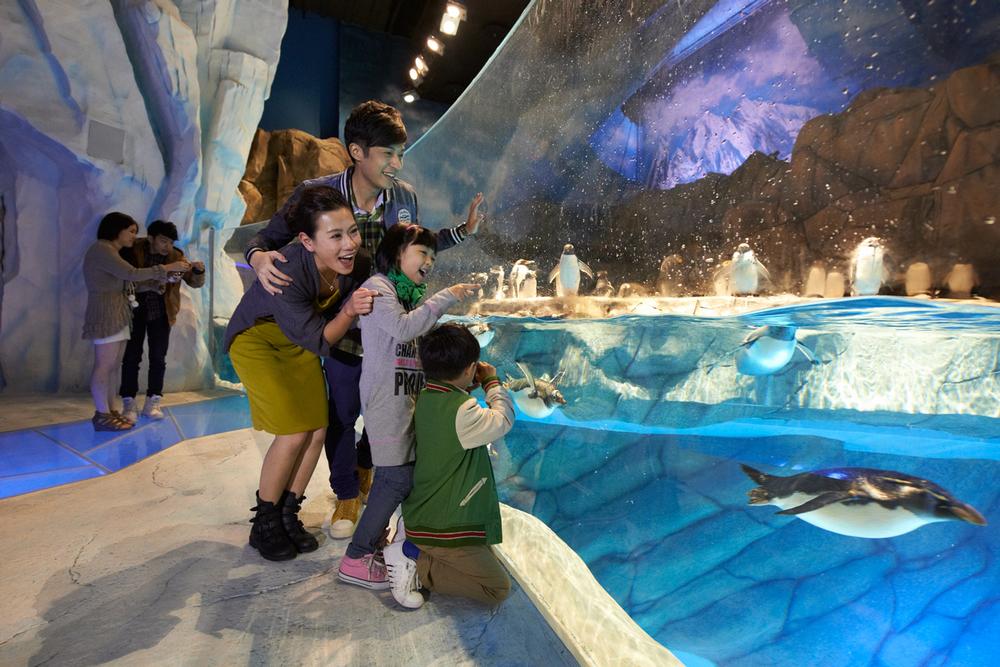
Onsite, Ocean Park has an approach that aims to facilitate learning through intimate experiences with animals, such as dolphin, penguin and seal encounters. But how does Li react to criticisms about attractions that encourage human-to-animal interaction? For example, TripAdvisor recently announced it would stop selling tickets to attractions that offer direct contact with wild animals. Is this something that could affect the park?
“We understand TripAdvisor’s decision would encourage animal facilities to put greater consideration into the responsible designing of educational programmes that involve close encounters with animals in captivity,” Li says. “While we agree there are different ways to raise awareness on animal conservation, we strongly believe that the impact of actually seeing and connecting with animals is much more immediate and far-reaching than alternative methods, thereby irreplaceable in inspiring people to make behavioural changes in their daily lives to contribute to protecting these precious animals.”
CHANGING WORLD Li cites some studies by the Alliance of Marine Mammal Parks and Aquariums (AMMPA) that found nine out of 10 people believe children learn more about marine mammals at an aquarium or zoo than in a school classroom or from TV programmes.
“In our beliefs, it is important for accredited facilities, such as Ocean Park, to provide opportunities for guests to experience animals in a respectful, safe and educational environment. Our guests are touched at their hearts and are taught about the need to conserve the animals. The positive effect of our presentations has been validated time and time again through third-party research and in-park guest surveys,” Li says, though he concedes he will continue to “observe any changes in the situation”.
“Nothing will ever stop us from constantly improving ourselves. We understand that the world is changing quickly and that’s the same for the standards in animal welfare nowadays,” says the CEO. “Therefore, going forward, we shall continue to keep our animal facilities and management practices up to, or even exceeding, industry standards, in order to offer the best possible care to all animal ambassadors in the park while promoting the important messages of conservation to our guests.”
“The key to remaining resilient is we understand our edge and we never cease to amuse our guests. We are determined to keep this up under all circumstances.”
Read more from this issue of Spa Business magazine
People profile: Nolan Bushnell
Nolan Bushnell, father of the video game industry, on his new VR business and the future of technology
People profile: Ron Magill
Zoo Miami’s Ron Magill gives the lowdown on the attraction’s new Florida: Mission Everglades zone
People profile: Kim Gladstone Herlev
Denmark’s Experimentarium has reopened after a major renovation. CEO Kim Gladstone Herlev shares his vision for the future
People profile: Jimmy Fallon
Hold on tight! US TV star Jimmy Fallon is the subject of a brand new ride at Universal Orlando
Interview: Matthias Li
Matthias Li, chief executive at Hong Kong’s
Ocean Park, on his response to a changing
visitor profile and rising competition
Pipeline: Opening Doors
There’s an array of attractions set to launch.
We anticipate the hot debuts of the year
Tourism: A Plan for Oman
The Ministry of Tourism’s Maitha Al Mahrouqi
on Oman’s status as a budding destination
• WhiteWater West is working on the 693,000sq ft project, which is twice the size of the original waterpark
• the first and only waterfront waterpark in Southeast Asia
• designed to seamlessly integrate with its hillside surroundings through a series of terraced platforms and wave pools
• 27 indoor and outdoor attractions, plus dining and retail outlets
• expected to create 2,900 jobs and add HK$842 million to the GDP by 2018
Conservation Work
• working with AZA’s SAFE (Saving Animals From Extinction) to conserve local species, including yellow seahorses, corals and horseshoe crabs
• collaborating with local universities, government and non-government organisations
• running a multi-year advocacy campaign called Blue Matters, highlighting 10 at-risk species in the region, including the Hong Kong newt, acroporidae coral, green turtle, Indo-Pacific humpback dolphin, scalloped hammerhead shark, giant panda and golden snub-nosed monkey
• staff training to empower park employees to be conservation advocates
• outreach programmes educating over 7,200 students from local schools on conservation matters
• on-site breeding programmes
• OPCFHK sponsorship for 34 conservation and scientific projects, helping giant pandas, Chinese white dolphins, Malayan tigers, Yangtze finless porpoises, Eurasian otters and more
• operating the Cetacean Stranding Response Team
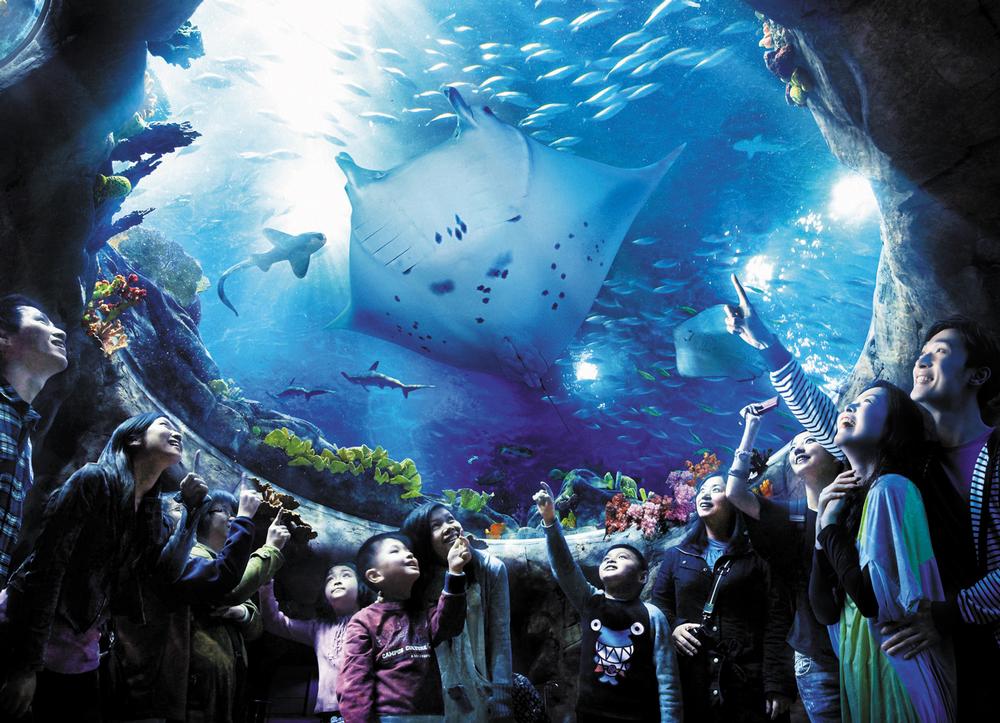
Ocean Park consists of a marine park, zoo, aquarium, waterpark and theme parks
Ocean Park consists of a marine park, zoo, aquarium, waterpark and theme parks
Ocean Park consists of a marine park, zoo, aquarium, waterpark and theme parks
Ocean Park consists of a marine park, zoo, aquarium, waterpark and theme parks
Polar Adventure, which opened in 2012, features Arctic Blast
Polar Adventure, which opened in 2012, features South Pole Specatacular
Demand for leisure activities in the region will continue to grow, given the rising middle class in China and the rapidly increasing income levels
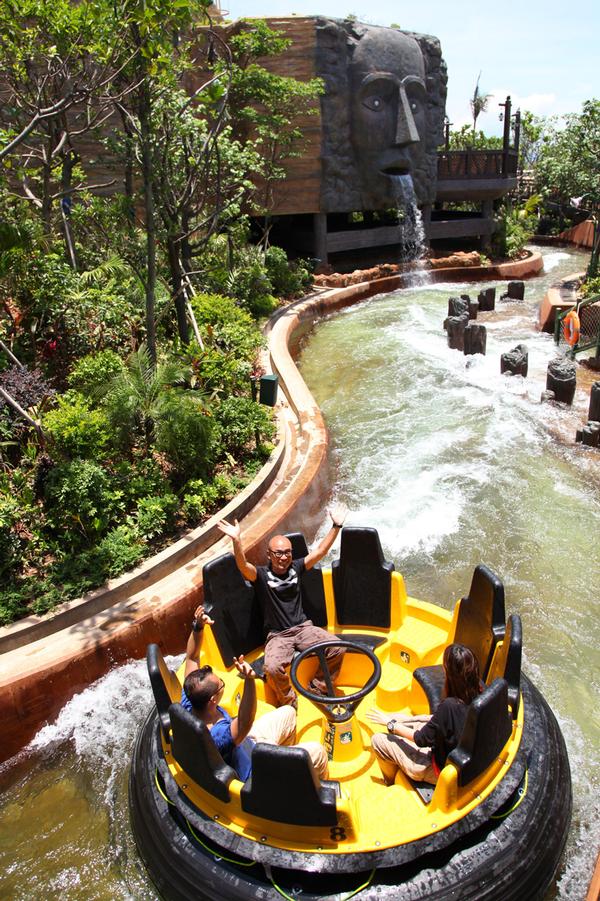
Water World spans indoor and outdoor areas across three storeys. Themes include the reef, the caves and the beach
Water World spans indoor and outdoor areas across three storeys. Themes include the reef, the caves and the beach
Water World spans indoor and outdoor areas across three storeys. Themes include the reef, the caves and the beach
The Fullerton Hotel @ Ocean Park will help increase hotel room supply in Hong Kong
A Seal Encounter session takes place with a trainer. Guests interact with the animals by feeding and touching them
Ocean Park Hong Kong is one of the most established and respected parks on the Asian continent, setting the bar for the industry. How are things shaping up under the new CEO?
By Alice Davis | Published in Attractions Management 2017 issue 1
Matthias Li joined Ocean Park Hong Kong theme park in 1994, and took the reins as CEO in 2016
It was a difficult year for Ocean Park Hong Kong. In 2016, the marine theme park reported a near 20 per cent fall in visitors and a HK$241m ($31m, £25m, €29m) deficit – highly unusual – for the fiscal year.
This was caused by a combination of circumstances that created a perfect storm for the Hong Kong tourism industry. There were several contributing factors.
“Hong Kong is currently facing extremely tough business challenges, especially in the tourism sector,” says Ocean Park CEO Matthias Li Sing-chung. “The market is facing some headwinds due to the declining economy, downturning retail environment, depreciation of currencies of other Asian destinations, and change in tourism-related policy. All of this has played a part in eroding Hong Kong’s competitiveness against other regional cities and affected tourist arrivals to the city, as well as to tourist attractions like Ocean Park.”
It’s marked an eventful start for the new CEO, who only took the reins from outgoing boss Tom Mehrmann in July. Li’s no stranger, though, having been part of the Ocean Park family since he joined as finance director in 1994. If anyone can navigate the tempest, it should be Li.
“Over the past 22 years, I’ve developed a deep passion for Ocean Park, not only from working with the entire staff to transform a local recreational facility into an international tourist destination, but also from experiencing up-close the pride locals derive from their park,” Li says. “Now, as CEO, my immediate focus is to face the challenges presented by the changes in Hong Kong’s visitor profile and the intense competition in the region.”
In recent years, tourism to Hong Kong was rising, reaching an all-time high of 60.8 million in 2014. However, in the two years since, those numbers have taken a hit, falling 4.5 per cent from 2015 to 56.7 million last year. In turn, that’s affected Hong Kong’s attractions.
In its year ending 30 June 2015, Ocean Park welcomed 7.4 million guests, its third-highest attendance on record. That made it the 15th-most visited park in the world, according to the annual TEA/AECOM report. This was topped off by its second-highest ever total revenue (HK$1.9bn, $243m, £205m, €238m) and a surplus of HK$45.2m. However, for the financial year ending June 2016, the park received just 6 million guests, a decline of 18.9 per cent.
THE MAINLAND FACTOR Hong Kong Disneyland was also affected, attributed to the fall in the number of tourists from Mainland China – a demographic that once made up almost eight out of 10 visitors to the autonomous territory. A series of anti-tourist protests by Hongkongers unhappy with the huge surge in Mainland visitors is at least partly to blame. Reports show the number of visitors from China fell 50 per cent in the first half of 2015 as a direct result of the protests. Hong Kong’s image as a hospitable place was tarnished, and many Chinese decided to go elsewhere, flying instead to Thailand, South Korea, Japan, Singapore, Malaysia and Vietnam.
With 120 million Chinese travelling abroad each year, it’s a huge piece of the pie to lose out on. Countries like Japan, Malaysia, Indonesia, Thailand and the US lifted visa restrictions on Chinese visitors, making trips easier to arrange than those to Hong Kong, where travel permits and visas are still required. Other factors, too, influenced Mainlanders’ decisions.
“Competition from other regional destinations, the strengthening HK dollar against the renminbi and other currencies, and slowing economic growth in China have affected Mainland visitor flows to the city,” Li says. “The Hong Kong Tourism Association predicts the city will continue to see a 10 per cent drop in the number of group visitors and 20 to 30 per cent drop in the number of FITs [free independent travellers] from Mainland China.”
In past years, 50 per cent of Ocean Park’s visitors were Chinese, with 35 per cent from Hong Kong. This demographic has altered, as now about 40 per cent are Chinese and 40 per cent are local. The next core markets are Taiwan, South Korea, India and the Philippines.
PEOPLE’S PARK So, what is Li to do in the face of these facts and figures? Well, first and foremost, he’s not painting a gloomy picture – anything but. This year marks Ocean Park’s 40th anniversary, and there has been a celebratory mood, especially among the locals. In fact, the attraction’s reputation as the “people’s park” is one of the foundations of its success over the years.
It’s a “homegrown” operation that dates back to 1977, when it was funded by the Hong Kong Jockey Club and built on land donated by the government. In the early 80s, the Jockey Club funded further development and rides, until 1987 when Ocean Park Corporation was formed, a financially-independent, not-for-profit organisation with a government-appointed board. Ocean Park reached a defining moment in 2005 with the launch of a HK$5.5bn ($709m, £573m, €665m) Master Redevelopment Plan (MRP), taking the park from a mid-size attraction to a global destination. The master plan doubled the number of the site’s attractions and rides, included the opening of Old Hong Kong, which recreates the streetscape and ambience of the city 50 years ago.
Last year alone, 2.4 million Hongkongers visited Ocean Park, that’s one-third of the domestic population. More than 450,000 of them benefited from complimentary or cut-price admission, as the park offers free entry to under threes, over 65s, registered disabled and all residents on their birthday.
“Through the ups and downs of the past 40 years, we’ve always believed it’s crucial to uphold our local appeal and remain well connected to the community,” Li says.
STAYING CREATIVE The 90-hectare (222-acre) Ocean Park is situated on the southern side of Hong Kong Island at a bay called Tai Shue Wan. Overlooking the South China Sea, the resort consists of two areas, the Waterfront and the Summit, connected by cable cars and the Ocean Express funicular. The park has over 80 attractions, with the Summit home to a wide variety of thrill and family rides. There are live shows at the Ocean Theatre dolphinarium, designed to “educate and entertain”, and the chance to visit the Ocean Park Tower, one of the tallest observation towers in Southeast Asia. At the Waterfront, themed areas include Amazing Asian Animals, where some of the continent’s rarest species are on display.
To keep people coming, especially for a destination that’s dependent on repeat visits from locals, Li knows it’s important to keep innovating. “As the years go by, it’s important to stay creative to win guests over,” he says.
On that note, there are major developments coming down the track. The most exciting must be the brand new year-round waterpark on the site of the old Water World facility, opening in 2018. There are two hotels on the way, the Ocean Park Marriot Hotel and the Fullerton Hotel @ Ocean Park. The children’s play zone Whiskers Harbour is also being modernised. And, in December, a transport link opened, the MTR South Island Line (East), which connects central Admiralty to Ocean Park Station in just four minutes.
NEW INVESTMENTS “The all-weather Water World will stay open late to offer night attractions for the local community and international tourists,” Li says. “The MTR South Island Line significantly enhances our connectivity across the entire area of Hong Kong, making a visit to Ocean Park even more convenient. It will likely facilitate increased guest visitation from both locals and FITs. The opening of the hotels will enable us to extend the visit duration of our guests, elevating the appeal of Ocean Park. They will also provide a new venue for Meetings, Incentives, Conventions and Exhibitions (MICE) event organisers from around the world, which will be easily accessible thanks to the new MTR link.”
There’s work going on behind the scenes, too, as the park strives to constantly improve the visitor’s day out. Free resort-wide Wi-Fi has been rolled out, and a new mobile app. Special promotions are targeted at specific overseas markets with growth potential. Also newly launched, the park’s self-developed proprietary PFlow guest management system – winner of a GSM Association Asia Mobile Award – is enhancing how people experience the park.
“PFlow is a custom-designed integrated mobile platform that enables timely collection, analysis and dissemination of guest flow and guest mix information. The data empowers our management team to make calculated decisions that can enhance guest experiences, such as the proactive management of guest flow, operations and manpower,” says Li.
Furthermore, Ocean Park’s “Big Five” seasonal offerings are updated and enhanced, often featuring new local elements and strategic brand collaborations, to ensure Summer Splash, Halloween Fest, Christmas Sensation, Lunar Lucky Fiesta and Animal Discovery Fest keep people returning year after year.
INTENSIFYING COMPETITION The region’s theme park sector is heating up, particularly with Disney opening in Shanghai last June. For families who want to visit a theme park in the region, the China resort must be at the top of the list.
“Ever-intensifying competition posed by new and existing themed attractions in the region, including Disneyland Shanghai, Chimelong Ocean Kingdom in Zhuhai, and numerous family entertainment facilities in Macau, have channelled away, or even, deterred Mainland tourists from visiting Hong Kong as they can gain easy access to themed entertainment closer to home.”
“However, despite the current downturns in economy and the industry, the demand for leisure activities in the region will continue to grow, given the rising number of middle class within Mainland China, and the rapidly increasing income levels.”
Li believes the growth of the attractions industry in Asia is helping meet demand for leisure and entertainment and in turn promoting both short and long-haul tourism in the region. Big players like Disney raise standards and increase appetite for large-scale destination attractions.
“The entry of international players encourages theme parks in the region to improve their hardware and software to meet the expectations for high quality, fun and value-for-money guest experiences, heightening the industry’s standards.”
MANAGING A CRISIS As Li reflects on a 40-year story, what’s the greatest challenge the park has faced?
“I believe that would be around 2003, the time when SARS hit Hong Kong and the region, impacting Hong Kong’s economy and the sentiments of locals and overseas visitors, not to mention the park’s attendance. That was a big challenge for all members of the park and for me as the finance director at the time.”
Li says that the park’s persistence and strength in the face of such adversity helped the business survive as it looked to the future with the launch of the highly ambitious MRP, which broke ground in late 2006 and was completed in July 2012. That year the park became the first Asian winner of the IAAPA Applause award.
ANIMAL LOVERS Ocean Park’s position as a marine and animal attraction should not be forgotten. The company’s mission to educate guests about wild animals has always been a central tenet. It became the first zoological park outside North America to be accredited by the Association of Zoos and Aquariums (AZA) – and that accreditation is something the park takes very seriously.
“All zoos and aquariums have a responsibility to ensure the highest standard of welfare for all animals in their care. The park subscribes to the animal welfare ordinances in Hong Kong and works closely with the Agriculture, Fisheries and Conservation Department to ensure that all our exhibits, along with the management practices, are designed with the animals’ physical, social and psychological needs in mind.”
This has meant that over the years Ocean Park’s status has grown. The facility invests in education and scientific research, works on conservation in the wild through Ocean Park Conservation Foundation Hong Kong (OPCFHK) and is now recognised as an international conservation centre. The park shares its expertise in sustainable breeding programmes which focus on genetic diversity and recently became the first Asian facility to be certified by the American Humane Association. Meanwhile the OPCFHK supported 51 conservation projects across nine countries last year.
Onsite, Ocean Park has an approach that aims to facilitate learning through intimate experiences with animals, such as dolphin, penguin and seal encounters. But how does Li react to criticisms about attractions that encourage human-to-animal interaction? For example, TripAdvisor recently announced it would stop selling tickets to attractions that offer direct contact with wild animals. Is this something that could affect the park?
“We understand TripAdvisor’s decision would encourage animal facilities to put greater consideration into the responsible designing of educational programmes that involve close encounters with animals in captivity,” Li says. “While we agree there are different ways to raise awareness on animal conservation, we strongly believe that the impact of actually seeing and connecting with animals is much more immediate and far-reaching than alternative methods, thereby irreplaceable in inspiring people to make behavioural changes in their daily lives to contribute to protecting these precious animals.”
CHANGING WORLD Li cites some studies by the Alliance of Marine Mammal Parks and Aquariums (AMMPA) that found nine out of 10 people believe children learn more about marine mammals at an aquarium or zoo than in a school classroom or from TV programmes.
“In our beliefs, it is important for accredited facilities, such as Ocean Park, to provide opportunities for guests to experience animals in a respectful, safe and educational environment. Our guests are touched at their hearts and are taught about the need to conserve the animals. The positive effect of our presentations has been validated time and time again through third-party research and in-park guest surveys,” Li says, though he concedes he will continue to “observe any changes in the situation”.
“Nothing will ever stop us from constantly improving ourselves. We understand that the world is changing quickly and that’s the same for the standards in animal welfare nowadays,” says the CEO. “Therefore, going forward, we shall continue to keep our animal facilities and management practices up to, or even exceeding, industry standards, in order to offer the best possible care to all animal ambassadors in the park while promoting the important messages of conservation to our guests.”
“The key to remaining resilient is we understand our edge and we never cease to amuse our guests. We are determined to keep this up under all circumstances.”
Read more from this issue of Spa Business magazine
People profile: Nolan Bushnell
Nolan Bushnell, father of the video game industry, on his new VR business and the future of technology
People profile: Ron Magill
Zoo Miami’s Ron Magill gives the lowdown on the attraction’s new Florida: Mission Everglades zone
People profile: Kim Gladstone Herlev
Denmark’s Experimentarium has reopened after a major renovation. CEO Kim Gladstone Herlev shares his vision for the future
People profile: Jimmy Fallon
Hold on tight! US TV star Jimmy Fallon is the subject of a brand new ride at Universal Orlando
Interview: Matthias Li
Matthias Li, chief executive at Hong Kong’s
Ocean Park, on his response to a changing
visitor profile and rising competition
Pipeline: Opening Doors
There’s an array of attractions set to launch.
We anticipate the hot debuts of the year
Tourism: A Plan for Oman
The Ministry of Tourism’s Maitha Al Mahrouqi
on Oman’s status as a budding destination
• WhiteWater West is working on the 693,000sq ft project, which is twice the size of the original waterpark
• the first and only waterfront waterpark in Southeast Asia
• designed to seamlessly integrate with its hillside surroundings through a series of terraced platforms and wave pools
• 27 indoor and outdoor attractions, plus dining and retail outlets
• expected to create 2,900 jobs and add HK$842 million to the GDP by 2018
Conservation Work
• working with AZA’s SAFE (Saving Animals From Extinction) to conserve local species, including yellow seahorses, corals and horseshoe crabs
• collaborating with local universities, government and non-government organisations
• running a multi-year advocacy campaign called Blue Matters, highlighting 10 at-risk species in the region, including the Hong Kong newt, acroporidae coral, green turtle, Indo-Pacific humpback dolphin, scalloped hammerhead shark, giant panda and golden snub-nosed monkey
• staff training to empower park employees to be conservation advocates
• outreach programmes educating over 7,200 students from local schools on conservation matters
• on-site breeding programmes
• OPCFHK sponsorship for 34 conservation and scientific projects, helping giant pandas, Chinese white dolphins, Malayan tigers, Yangtze finless porpoises, Eurasian otters and more
• operating the Cetacean Stranding Response Team
Ocean Park consists of a marine park, zoo, aquarium, waterpark and theme parks
Ocean Park consists of a marine park, zoo, aquarium, waterpark and theme parks
Ocean Park consists of a marine park, zoo, aquarium, waterpark and theme parks
Ocean Park consists of a marine park, zoo, aquarium, waterpark and theme parks
Polar Adventure, which opened in 2012, features Arctic Blast
Polar Adventure, which opened in 2012, features South Pole Specatacular
Demand for leisure activities in the region will continue to grow, given the rising middle class in China and the rapidly increasing income levels
Water World spans indoor and outdoor areas across three storeys. Themes include the reef, the caves and the beach
Water World spans indoor and outdoor areas across three storeys. Themes include the reef, the caves and the beach
Water World spans indoor and outdoor areas across three storeys. Themes include the reef, the caves and the beach
The Fullerton Hotel @ Ocean Park will help increase hotel room supply in Hong Kong
A Seal Encounter session takes place with a trainer. Guests interact with the animals by feeding and touching them
Global Wellness Day (GWD) will mark its 15th anniversary on Saturday 13 June 2026, with the
theme: #JoyMagenta – a celebration of the healing qualities of simple gestures and activities
that spark joy.
Global luxury hospitality brand, Six Senses, has partnered with longevity healthcare provider,
HUM2N, to launch a clinic at Six Senses London, at The Whiteley.
As part of its first hotel partnership, Mayrlife – the medical health resort company known for its
site in Altaussee, Austria – has launched a day clinic at the Rosewood Vienna.
Premium London health club, KX Chelsea, will imminently unveil its most significant
redevelopment since its launch in 2002 to create an integrated wellness model combining
training, recovery and relaxation.
Rosewood Le Guanahani St Barth, on the northeast coast of Saint Barthélemy in the French
West Indies, is offering a programme of ocean-inspired yoga classes between 8-14 June to
celebrate Global Wellness Day (GWD).
Hotel de France, located on the British Isle of Jersey, has created a wellness retreat package
that includes a hot yoga session that will take place in Jersey Zoo’s butterfly sanctuary.
The Ritz-Carlton, Langkawi, in Malaysia, has revealed a schedule for Global Wellness Day
(GWD) that includes guided rainforest walks, mindful movement and guided coastal meditation
experiences.
Longevitix, a clinical platform for preventive and longevity medicine, has launched its AI-
powered intelligence system to help physicians deliver continuous, personalised longevity-
focused care at scale.
Atmantan Wellness Centre, an integrative wellness destination in Mulshi, near Pune in India, is
expanding its portfolio by adding a new centre in Hyderabad that will launch between 2028 and
2029.
A recent survey by the UK Spa Association (UKSA) into the industry’s approach to cancer care
has revealed that almost half of participating respondents (46 per cent) are unaware that
cancer is a disability and guests with a cancer diagnosis must be given