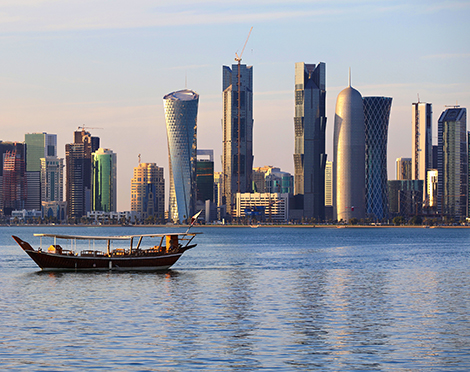
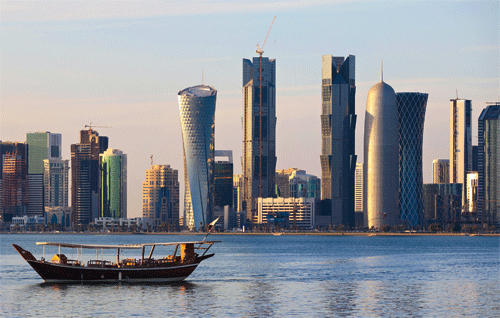
Spas in Doha hotels achieve the highest revenues per treatment sold of the three regions – US$133 in 2011, which was an
11 per cent increase from 2010 / Paul Cowan / shutterstock.com
PricewaterhouseCoopers’ (PwC) benchmarking of Middle Eastern hotel/resort spas now includes a third destination – Beirut in Lebanon – in addition to the Dead Sea region in Jordan and Doha in Qatar (sb10/3 p30). According to Mohammad Dahmash, a PwC partner in the Middle East: “We continue to benchmark hotel spas which have become an established amenity within urban and resort hotels.”
All three studies are the only benchmark reports covering the spa market in each region and their purpose, says PwC, is “to provide spa operators with a benchmark of internal spa operations that can be used as a tool for making operational decisions and driving profitability, as well as giving information on common indicators that can be used by everyone from investors and developers to the Ministry of Tourism.”
A minimum of three international hotels/resorts have been included in each market report which, according to PwC, represents a large proportion of the five-star hotels in each region, and the benchmarks track 11 key performance indicators – all revenue related. Costs and profitability are not covered by the reports because “some operators were not comfortable with providing us with this information,” says PwC’s senior manager in the Middle East Yohaan Freitas. It’s also important to note that all figures for 2011 were recorded from January to October rather than throughout the year.
Doha, Qatar Dahmash describes Doha in Qatar as a “city increasingly known as a corporate capital and as a sporting destination”.
The hotel spas in the benchmark survey in Doha derive the majority of demand from the local market. In 2011, 60 per cent of total revenue was generated by fitness and membership revenue, while in 2010 the figure sat at 64 per cent. Further, around 85 per cent of treatments are booked by non-hotel guests. Retail generates a small proportion of overall revenues at around 3 per cent.
Average daily revenue per available treatment room (RevPATR) was us$234 (€176, £144) in 2010 and us$238 (€179, £147) in 2011, with a similar seasonality pattern. The 2011 Doha figures reported to PwC for RevPATR and RevPOTR – revenue per occupied treatment room – are the same, which is not possible with treatment room utilisation at 17 per cent. A comparison with 2010, where the figures appear to have been correctly reported to PwC, would suggest that the values are for revenues per available, rather than per occupied, treatment room.
The utilisation of treatment room hours at around 17 per cent is relatively low, consequently the revenue per available treatment hour (RevPATH) is also low at us$19 (€14, £12) in 2010 and us$23 (€17, £14) in 2011. Given the infrequent usage by hotel residents, there appears to be no correlation between RevPATH and the proportion of treatments booked by hotel guests.
August is the quietest month of the year, due to Ramadan, with utilisation of treatment room hours at an average of 9 per cent – compared with 20 per cent in both the peak months of May and March. Revenues also plummet in August with RevPATR at us$144 (€109, £89) compared with us$279 (€210, £172) in the peak month of February, and an average throughout the year of around us$238 (€179, £147).
Utilisation of therapist hours is also fairly low at 27 per cent in 2010 and 25 per cent in 2011. This decreases to 14 per cent in August. The daily revenue generated by each therapist averaged us$318 (€287, £235) in 2010 and us$375 (€283, £231) in 2011. In August it dips to us$240 (€181, £148).
Dead Sea region, Jordan Dahmash describes the Dead Sea region in Jordan as a “well recognised wellness destination”. Yet of the three destinations benchmarked by PwC, spas in this area had the lowest revenues and utilisation levels.
Unlike the hotel spas in Doha, they relied almost exclusively on hotel residents. The hotels derive no revenues from fitness and memberships and the majority of treatments are booked by hotel residents – 91 per cent in 2010 and 2011. Retail constitutes a larger proportion of overall turnover at 9 per cent.
The average daily RevPATR was us$122 (€92, £75) in 2010. In 2011, RevPATR stood at us$101 (€76, £62), while RevPATH was us$10 (€8, £6) in 2010 and us$9 (€7, £5) in 2011. Utilisation of treatment room hours averaged 18 per cent in both 2010 and 2011.
August is also the quiet month in the Dead Sea area with utilisation of treatment room hours dropping to 11 per cent and daily RevPATR declining to us$57 (€43, £35). January and April are the peak months with utilisation of treatment room hours at 26 per cent in January and RevPATR of us$147 (€111, £91) in April.
Utilisation of therapist hours was 40 per cent in 2010 and 36 per cent in 2011. This dips to 22 per cent in August. The daily revenue generated by each therapist was us$343 (€259, £211) in 2010 and us$303 (€228, £187) in 2011. In August it dips to us$199 (€150, £123).
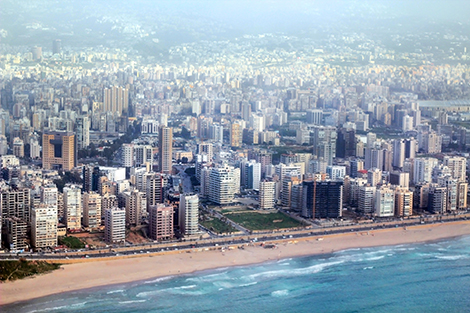
Beirut, Lebanon Beirut is a “chic, high-end leisure destination in the Middle East” says to Dahmash.
Like Doha, the Beirut market derives a high proportion of revenues from the local community. Fitness and membership revenue generates around 45 per cent of total revenues and 60 per cent of treatments on average are booked by non-hotel guests.
Interestingly, although the revenue per available treatment room in Beirut is only 15 per cent higher – at us$118 (€89, £72) – than that achieved by the spas in the Dead Sea (us$101) and half of that achieved by spas in Doha (us$238), the Beirut spas significantly outperform in terms of RevPATH generating us$32 (€24, £20) versus us$19 (€14, £12) in Doha and us$14 (€11, £9) in the Dead Sea region. This suggests that the Beirut spas are possibly open for shorter hours.
January and August are the quietest months in Beirut, with daily treatment revenues per available treatment room averaging us$99 (€75, £61), while the peak month of September generates us$141 (€106, £87).
Similarly, the productivity of therapists is higher in September at us$226 (€170, £139) – for daily treatment revenue per therapist, while the comparable figure in January 2011 was us$152 (€115, £94) and us$161 (€121, £99) in August. These are significantly below the peak productivity levels for Doha at us$437 (€329, £269) in May and the Dead Sea region at us$354 (€267, £218) in January.
Average revenue per treatment sold Across the three markets, the average revenue per treatment sold is relatively stable throughout the year, with the exception of October in Beirut where it drops significantly. Doha achieves the highest revenues per treatment sold of the three regions at an average of us$133 (€100, £82) in 2011, an 11 per cent increase on the comparable figure for 2010 which was us$120 (€90, £74). Despite the October trough, Beirut achieved an average of us$83 (€63, £51) in 2011, while the Dead Sea region shows little seasonality on this key performance indicator with an average for of us$77 (€58, £47) in 2011, a 5.6 per cent increase on the comparable figure for 2010 at us$73 (€55, £45).
Trends This is the first year that PwC has covered Beirut, so no comparable data exists for 2010. However, a comparison of January to October 2010 versus the same period in 2011 of the Doha and Dead Sea markets shows some significant declines in terms of RevPATR and utilisation of therapists’ hours in both the Dead Sea and Doha markets. In addition, the decline in performance has occurred in spite of increases in the average revenue per treatment sold in both of these markets.
Global comparison So, how do these markets compare with others worldwide? The statistics don’t cover a full year – only January to October. If they are annualised (based on the 10 months provided), the revenues per available treatment room are low in contrast to the same year figures in the US for example. Further, although not yet available, the indications are that the 2011 figures for the US are likely to be higher than those of 2010.
The comparison is of course not totally correct because the Middle Eastern figures are extrapolated, but they nevertheless provide some indication of the quantum. Although low, treatment revenues in the Doha and Beirut spas only generate around 35 per cent and 49 per cent of total revenues, respectively, with the rest coming from fitness and memberships and retail revenue. However, the Dead Sea spa market, which has the lowest treatment revenues out of the three areas, also has no fitness and membership revenue whatsoever.
In conclusion, although the studies don’t provide cost and profitability data, the low utilisation and revenues levels suggest these are difficult markets, particularly if spas are considered separate profit centres and without taking into account any benefits they might generate in terms of hotel room occupancy and average achieved room rates.
For full copies of these PwC spa benchmarking surveys in the Middle East region, email [email protected].
Read more from this issue of Spa Business magazine
View contents of Spa Business 2012 issue 2
Ask an expert...: overbuilding
Are large, extravagant spas and treatment rooms really sustainable? Or is it time to wise up about spa design? Katie Barnes reports
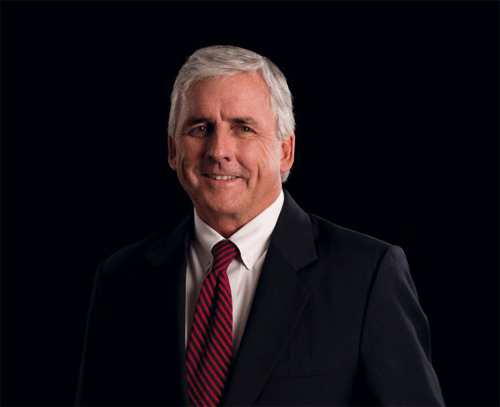
Interview: Darrell Metzger
Destination Resorts is creating world-class tourist developments in Malaysia on behalf of the government. Jennifer Harbottle speaks to the man heading it all up
Spa management training: The learning curve – part one
On the eve of a new GSWS study into the state of spa management training globally, we launch a three-part series to delve into our industry’s educational offering and operational needs. Rhianon Howells gets studying
US Hotel spa research: Closer look
Leonor Stanton analyses the findings from PKF’s latest Trends® in the Hotel Spa Industry study and gets the reaction of top spa professionals
Profile: Susie Ellis
SpaFinder Inc president and the face of the Global Spa & Wellness Summit talks to Rhianon Howells about the art of uncovering up-and-coming industry trends, ethics and the importance of innovation
Resort Spa: Dual purpose
Switzerland’s renown Dolder Grand Spa has an offering to satisfy its onsite, longer-staying guests as well as local day spa customers. Katie Barnes pays a visit to this standout facility
Design: Jean-Michel Gathy
The owner of Asia-based design company Denniston has worked on some of the world’s leading spas and resorts. Jennifer Harbottle finds out about his passion for creativity
Samui spotlight:
The second most popular Thai island has been transformed from a backpackers haven to a luxury lifestyle destination with a number of new five-star spa resorts. Neena Dhillon reports
Middle East benchmarks: Peaks & Troughs
Leonor Stanton reviews hotel spa performance in Lebanon, Jordan and Doha following the 2011 benchmark surveys recently released by PwC in the Middle East
Online wellness gaming: Game Changer
Scoreboards, socialisation, challenges, rewards and feedback – the compelling components of online gaming could be key to getting people to become healthy says Susie Ellis
Kuwait focus: Cue Kuwait
The first in a two-part series on the Kuwaiti spa market by Kate Cracknell focuses on the spa-goers in the capital and the new Six Senses Spa at the Hotel Missoni
Research: Happiness
Older adults who are the most content and have a more positive outlook are likely to live longer according to a new study based on 3,800 participants
Spas in Doha hotels achieve the highest revenues per treatment sold of the three regions – US$133 in 2011, which was an
11 per cent increase from 2010 / Paul Cowan / shutterstock.com
PricewaterhouseCoopers’ (PwC) benchmarking of Middle Eastern hotel/resort spas now includes a third destination – Beirut in Lebanon – in addition to the Dead Sea region in Jordan and Doha in Qatar (sb10/3 p30). According to Mohammad Dahmash, a PwC partner in the Middle East: “We continue to benchmark hotel spas which have become an established amenity within urban and resort hotels.”
All three studies are the only benchmark reports covering the spa market in each region and their purpose, says PwC, is “to provide spa operators with a benchmark of internal spa operations that can be used as a tool for making operational decisions and driving profitability, as well as giving information on common indicators that can be used by everyone from investors and developers to the Ministry of Tourism.”
A minimum of three international hotels/resorts have been included in each market report which, according to PwC, represents a large proportion of the five-star hotels in each region, and the benchmarks track 11 key performance indicators – all revenue related. Costs and profitability are not covered by the reports because “some operators were not comfortable with providing us with this information,” says PwC’s senior manager in the Middle East Yohaan Freitas. It’s also important to note that all figures for 2011 were recorded from January to October rather than throughout the year.
Doha, Qatar Dahmash describes Doha in Qatar as a “city increasingly known as a corporate capital and as a sporting destination”.
The hotel spas in the benchmark survey in Doha derive the majority of demand from the local market. In 2011, 60 per cent of total revenue was generated by fitness and membership revenue, while in 2010 the figure sat at 64 per cent. Further, around 85 per cent of treatments are booked by non-hotel guests. Retail generates a small proportion of overall revenues at around 3 per cent.
Average daily revenue per available treatment room (RevPATR) was us$234 (€176, £144) in 2010 and us$238 (€179, £147) in 2011, with a similar seasonality pattern. The 2011 Doha figures reported to PwC for RevPATR and RevPOTR – revenue per occupied treatment room – are the same, which is not possible with treatment room utilisation at 17 per cent. A comparison with 2010, where the figures appear to have been correctly reported to PwC, would suggest that the values are for revenues per available, rather than per occupied, treatment room.
The utilisation of treatment room hours at around 17 per cent is relatively low, consequently the revenue per available treatment hour (RevPATH) is also low at us$19 (€14, £12) in 2010 and us$23 (€17, £14) in 2011. Given the infrequent usage by hotel residents, there appears to be no correlation between RevPATH and the proportion of treatments booked by hotel guests.
August is the quietest month of the year, due to Ramadan, with utilisation of treatment room hours at an average of 9 per cent – compared with 20 per cent in both the peak months of May and March. Revenues also plummet in August with RevPATR at us$144 (€109, £89) compared with us$279 (€210, £172) in the peak month of February, and an average throughout the year of around us$238 (€179, £147).
Utilisation of therapist hours is also fairly low at 27 per cent in 2010 and 25 per cent in 2011. This decreases to 14 per cent in August. The daily revenue generated by each therapist averaged us$318 (€287, £235) in 2010 and us$375 (€283, £231) in 2011. In August it dips to us$240 (€181, £148).
Dead Sea region, Jordan Dahmash describes the Dead Sea region in Jordan as a “well recognised wellness destination”. Yet of the three destinations benchmarked by PwC, spas in this area had the lowest revenues and utilisation levels.
Unlike the hotel spas in Doha, they relied almost exclusively on hotel residents. The hotels derive no revenues from fitness and memberships and the majority of treatments are booked by hotel residents – 91 per cent in 2010 and 2011. Retail constitutes a larger proportion of overall turnover at 9 per cent.
The average daily RevPATR was us$122 (€92, £75) in 2010. In 2011, RevPATR stood at us$101 (€76, £62), while RevPATH was us$10 (€8, £6) in 2010 and us$9 (€7, £5) in 2011. Utilisation of treatment room hours averaged 18 per cent in both 2010 and 2011.
August is also the quiet month in the Dead Sea area with utilisation of treatment room hours dropping to 11 per cent and daily RevPATR declining to us$57 (€43, £35). January and April are the peak months with utilisation of treatment room hours at 26 per cent in January and RevPATR of us$147 (€111, £91) in April.
Utilisation of therapist hours was 40 per cent in 2010 and 36 per cent in 2011. This dips to 22 per cent in August. The daily revenue generated by each therapist was us$343 (€259, £211) in 2010 and us$303 (€228, £187) in 2011. In August it dips to us$199 (€150, £123).
Beirut, Lebanon Beirut is a “chic, high-end leisure destination in the Middle East” says to Dahmash.
Like Doha, the Beirut market derives a high proportion of revenues from the local community. Fitness and membership revenue generates around 45 per cent of total revenues and 60 per cent of treatments on average are booked by non-hotel guests.
Interestingly, although the revenue per available treatment room in Beirut is only 15 per cent higher – at us$118 (€89, £72) – than that achieved by the spas in the Dead Sea (us$101) and half of that achieved by spas in Doha (us$238), the Beirut spas significantly outperform in terms of RevPATH generating us$32 (€24, £20) versus us$19 (€14, £12) in Doha and us$14 (€11, £9) in the Dead Sea region. This suggests that the Beirut spas are possibly open for shorter hours.
January and August are the quietest months in Beirut, with daily treatment revenues per available treatment room averaging us$99 (€75, £61), while the peak month of September generates us$141 (€106, £87).
Similarly, the productivity of therapists is higher in September at us$226 (€170, £139) – for daily treatment revenue per therapist, while the comparable figure in January 2011 was us$152 (€115, £94) and us$161 (€121, £99) in August. These are significantly below the peak productivity levels for Doha at us$437 (€329, £269) in May and the Dead Sea region at us$354 (€267, £218) in January.
Average revenue per treatment sold Across the three markets, the average revenue per treatment sold is relatively stable throughout the year, with the exception of October in Beirut where it drops significantly. Doha achieves the highest revenues per treatment sold of the three regions at an average of us$133 (€100, £82) in 2011, an 11 per cent increase on the comparable figure for 2010 which was us$120 (€90, £74). Despite the October trough, Beirut achieved an average of us$83 (€63, £51) in 2011, while the Dead Sea region shows little seasonality on this key performance indicator with an average for of us$77 (€58, £47) in 2011, a 5.6 per cent increase on the comparable figure for 2010 at us$73 (€55, £45).
Trends This is the first year that PwC has covered Beirut, so no comparable data exists for 2010. However, a comparison of January to October 2010 versus the same period in 2011 of the Doha and Dead Sea markets shows some significant declines in terms of RevPATR and utilisation of therapists’ hours in both the Dead Sea and Doha markets. In addition, the decline in performance has occurred in spite of increases in the average revenue per treatment sold in both of these markets.
Global comparison So, how do these markets compare with others worldwide? The statistics don’t cover a full year – only January to October. If they are annualised (based on the 10 months provided), the revenues per available treatment room are low in contrast to the same year figures in the US for example. Further, although not yet available, the indications are that the 2011 figures for the US are likely to be higher than those of 2010.
The comparison is of course not totally correct because the Middle Eastern figures are extrapolated, but they nevertheless provide some indication of the quantum. Although low, treatment revenues in the Doha and Beirut spas only generate around 35 per cent and 49 per cent of total revenues, respectively, with the rest coming from fitness and memberships and retail revenue. However, the Dead Sea spa market, which has the lowest treatment revenues out of the three areas, also has no fitness and membership revenue whatsoever.
In conclusion, although the studies don’t provide cost and profitability data, the low utilisation and revenues levels suggest these are difficult markets, particularly if spas are considered separate profit centres and without taking into account any benefits they might generate in terms of hotel room occupancy and average achieved room rates.
For full copies of these PwC spa benchmarking surveys in the Middle East region, email [email protected].
Read more from this issue of Spa Business magazine
View contents of Spa Business 2012 issue 2
Ask an expert...: overbuilding
Are large, extravagant spas and treatment rooms really sustainable? Or is it time to wise up about spa design? Katie Barnes reports
Interview: Darrell Metzger
Destination Resorts is creating world-class tourist developments in Malaysia on behalf of the government. Jennifer Harbottle speaks to the man heading it all up
Spa management training: The learning curve – part one
On the eve of a new GSWS study into the state of spa management training globally, we launch a three-part series to delve into our industry’s educational offering and operational needs. Rhianon Howells gets studying
US Hotel spa research: Closer look
Leonor Stanton analyses the findings from PKF’s latest Trends® in the Hotel Spa Industry study and gets the reaction of top spa professionals
Profile: Susie Ellis
SpaFinder Inc president and the face of the Global Spa & Wellness Summit talks to Rhianon Howells about the art of uncovering up-and-coming industry trends, ethics and the importance of innovation
Resort Spa: Dual purpose
Switzerland’s renown Dolder Grand Spa has an offering to satisfy its onsite, longer-staying guests as well as local day spa customers. Katie Barnes pays a visit to this standout facility
Design: Jean-Michel Gathy
The owner of Asia-based design company Denniston has worked on some of the world’s leading spas and resorts. Jennifer Harbottle finds out about his passion for creativity
Samui spotlight:
The second most popular Thai island has been transformed from a backpackers haven to a luxury lifestyle destination with a number of new five-star spa resorts. Neena Dhillon reports
Middle East benchmarks: Peaks & Troughs
Leonor Stanton reviews hotel spa performance in Lebanon, Jordan and Doha following the 2011 benchmark surveys recently released by PwC in the Middle East
Online wellness gaming: Game Changer
Scoreboards, socialisation, challenges, rewards and feedback – the compelling components of online gaming could be key to getting people to become healthy says Susie Ellis
Kuwait focus: Cue Kuwait
The first in a two-part series on the Kuwaiti spa market by Kate Cracknell focuses on the spa-goers in the capital and the new Six Senses Spa at the Hotel Missoni
Research: Happiness
Older adults who are the most content and have a more positive outlook are likely to live longer according to a new study based on 3,800 participants
People taking GLP-1 weight loss medications such as Ozempic, Wegovy, Mounjaro and Zepbound
may be losing weight, but they’re also becoming less physically active, according to new
research presented at the ENDO 2026 annual meeting of the Endocrine Society
Abu Dhabi-based investment firm Mubadala Capital has made a binding, fully financed
€1 billion
offer to acquire Pierre and Vacances SA, the European holiday resort operator behind the
continental European Center Parcs business.
Global retreat trade show, Synergy The Retreat Show, has launched a resource called The
Source, which hosts an open-access online Transformation Series programme.
The Standards Authority for Touch in Cancer Care (SATCC) charity has announced its first five-
day Living with Cancer and Beyond retreat, which will be held at Carden Park Hotel and Spa in
Cheshire, UK, between 1 and 5 September.
Patmos Aktis, a Luxury Collection Resort and Spa, has opened in Greece, with a renovated and
rebranded wellness offering called Ansana Wellness and Spa.
The Mauna Kea Beach Hotel, an Autograph Collection property in Hawaii, US, has opened its
22,000 sq ft indoor-outdoor Spa at Mauna Kea as the final step in the property’s overall
renovation, which has cost more than US$180 million (€166 million, £140 mill
The UK spa review and discovery platform for consumers, the Good Spa Guide, has announced
it will host the Good Spa Guide Awards 2026 during an event on 16 November at Sopwell House
Hotel in St Albans, UK.
Eighty-four per cent of consumers now say wellness is a top priority in their lives, with this
percentage increasing year on year, according to a preview presentation of McKinsey’s Future of
Wellness 2026 research report.
Mass protests have been taking place since Monday 1 June in Albania over the development of
a luxury resort by Donald Trump’s daughter Ivanka Trump and her husband Jared Kushner.