Yes! Send me the FREE digital editions of Spa Business and Spa Business insider magazines and the FREE weekly Spa Business and Spa Business insider ezines and breaking news alerts!
It’s time gyms and health clubs are
recognised as a cornerstone of our global
recovery from COVID-19 and given the
necessary backing, says Phillip Mills
Gym members are 14 times more active than non-members
A recent IHRSA briefing highlighted the benefits of exercise, offering scientific evidence that shows health clubs pose no higher risk of COVID-19 transmission than other public places, when operating under appropriate guidelines.
It noted that “there has not been any evidence of COVID-19 spreading in any US club to date.”
So now we are starting to gather the evidence to show gyms are safe, how can we hammer home the solutions they bring when it comes to bouncing back from COVID-19?
Proving value A study by consultants, McKinsey, found the economic impact of better health among the world’s population could add US$12 trillion to global GDP by 2040 – an 8 per cent boost.
Investing in this area now could help kickstart our global economic recovery from the devastating effects of the COVID-19 pandemic.
On the health front, a new academic paper by scientist David C Nieman, suggests regular physical activity should be undertaken to reduce our risk of contracting COVID-19. Nieman believes it’s as important as physical distancing, hand washing and the wearing of face coverings. He found aerobic exercise increases immunological fitness by increasing blood flow and mobilising white blood cells.
Regular exercise also guards against obesity, and as Nieman makes clear, “reduces risk for hypertension, type 2 diabetes, and cardiovascular disease – three of the most important underlying conditions for COVID-19”.
Meanwhile, research led by Professor Zhen Yan at the University of Virginia found that regular exercise may reduce the risk of complications in people with COVID-19.
Studying an antioxidant called extracellular superoxide dismutase (EcSOD) that’s released in the body during exercise, Yan’s work “strongly supports” the possibility that higher levels of EcSOD in the body can prevent or at least reduce the severity of acute respiratory distress syndrome (ARDS) – one of the worst outcomes of COVID-19.
Yan urges people to protect themselves by starting to exercise more to boost EcSOD levels.
Demonstrating value Clearly exercise is vital to our planet’s comeback from COVID-19 on a number of important levels, so how do we demonstrate the value of those who provide it?
Lockdown increased the range of options for people to stay active at home, leading some in the media to question whether we still need gyms to service our fitness needs. After all, no one owns the patent to the press up and and there’s no finer treadmill than the great outdoors – but if this is the case, why are gym members on average found to be 14 times more active than non-members?
One reason is that our facilities don’t just serve up fitness, they also give members motivation. We know this remains a key ingredient in regular exercise adherence and is one of the key reasons our industry exists.
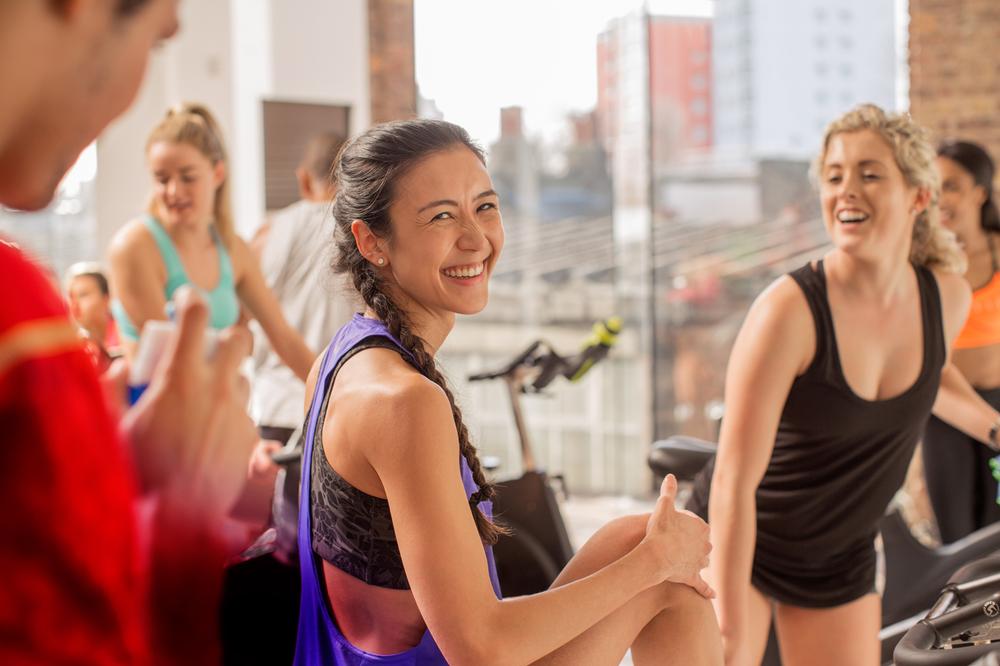
Among the most powerful motivators are the accountability and sense of connection we get from working out with others. Nowhere is this more evident than in a live group workout. Anyone who’s felt the electricity of a great class will attest that it’s one of the most powerful and motivational workout experiences you can get.
Peer support Plenty of research shows this sense of connection and accountability pays dividends. Research indicates that members who work out in groups are far more likely to stick to exercise than those who go it alone. Science shows that we get more enjoyment and satisfaction when we work out in a group. And there’s evidence that when we’re surrounded by the healthy actions of others, it rubs off on us too.
A study published in Obesity Journal indicated that when overweight people spent time with their fit friends they lost more weight, and the more time they spent with these friends, the more weight they lost.
This finding is backed up by another study from the University of Pittsburgh School of Medicine, showing that 95 per cent of those who follow a weight loss program with a friend complete it, but just 76 per cent make it to the end if they go it alone.
There’s also evidence of the Kohler Effect, where we push ourselves harder when working out alongside others. One study compared people planking on their own and with a partner (who had superior ability).
When planking with a more capable partner, people were clearly more motivated, increasing their plank duration by 24 per cent.
A study by Kansas State University found that working out alongside other capable exercisers can increase your workout time and intensity by 200 per cent.
Embracing active habits Motivation is a key component of an enduring exercise habit and that’s why it’s so important for society to get back to health clubs globally – and all the things that make them inspiring – as soon as is safely possible.
As the UK government’s Chief Medical Adviser, Chris Whitty, said at a coronavirus briefing on 15 April, “There is no situation, there is no age and no condition where exercise is not a good thing... exercise is one of the best things you can possibly do.”
Whitty said being physically active is “very important to long-term health” and crucial for keeping people fighting fit during the ongoing pandemic.
The alternative would have catastrophic consequences for our physical and mental health, not to mention that of the economy and environment: in the US alone, chronic diseases that can be prevented by regular exercise are projected to cost US$42 trillion between 2016 and 2030.
We know exercise in pill-form would be hailed as a wonder drug. A huge 2013 comparison study of exercise and drug interventions published in the British Medical Journal found that being fit was as good if not better at combatting a number of chronic illnesses.
It truly is the best medicine, with the power to improve everything from general wellbeing and musculoskeletal disease to cardiovascular problems, cancers, diabetes, multiple sclerosis and mental health challenges, such as anxiety and depression.
As the world adjusts in the wake of this major health pandemic, with lessons learned and safer processes in place, it’s time for governments to recognise the vital role of gyms in society and take meaningful action to support them. Our COVID-19 recovery depends on it.
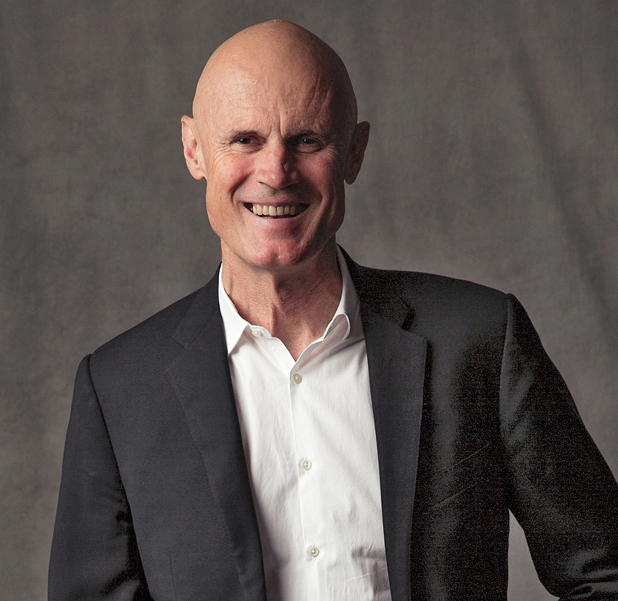
Philip Mills, executive director of Les Mills, says it’s time to recognise the power of gyms – economically and in terms of health
In a world where imbalance often accumulates quietly, Wildsmith unveils its newest
wellbeing innovation: Silent Loads, an approach designed to meet the needs of modern spa
guests with precision and depth. [more...]
It’s time gyms and health clubs are
recognised as a cornerstone of our global
recovery from COVID-19 and given the
necessary backing, says Phillip Mills
Gym members are 14 times more active than non-members
A recent IHRSA briefing highlighted the benefits of exercise, offering scientific evidence that shows health clubs pose no higher risk of COVID-19 transmission than other public places, when operating under appropriate guidelines.
It noted that “there has not been any evidence of COVID-19 spreading in any US club to date.”
So now we are starting to gather the evidence to show gyms are safe, how can we hammer home the solutions they bring when it comes to bouncing back from COVID-19?
Proving value A study by consultants, McKinsey, found the economic impact of better health among the world’s population could add US$12 trillion to global GDP by 2040 – an 8 per cent boost.
Investing in this area now could help kickstart our global economic recovery from the devastating effects of the COVID-19 pandemic.
On the health front, a new academic paper by scientist David C Nieman, suggests regular physical activity should be undertaken to reduce our risk of contracting COVID-19. Nieman believes it’s as important as physical distancing, hand washing and the wearing of face coverings. He found aerobic exercise increases immunological fitness by increasing blood flow and mobilising white blood cells.
Regular exercise also guards against obesity, and as Nieman makes clear, “reduces risk for hypertension, type 2 diabetes, and cardiovascular disease – three of the most important underlying conditions for COVID-19”.
Meanwhile, research led by Professor Zhen Yan at the University of Virginia found that regular exercise may reduce the risk of complications in people with COVID-19.
Studying an antioxidant called extracellular superoxide dismutase (EcSOD) that’s released in the body during exercise, Yan’s work “strongly supports” the possibility that higher levels of EcSOD in the body can prevent or at least reduce the severity of acute respiratory distress syndrome (ARDS) – one of the worst outcomes of COVID-19.
Yan urges people to protect themselves by starting to exercise more to boost EcSOD levels.
Demonstrating value Clearly exercise is vital to our planet’s comeback from COVID-19 on a number of important levels, so how do we demonstrate the value of those who provide it?
Lockdown increased the range of options for people to stay active at home, leading some in the media to question whether we still need gyms to service our fitness needs. After all, no one owns the patent to the press up and and there’s no finer treadmill than the great outdoors – but if this is the case, why are gym members on average found to be 14 times more active than non-members?
One reason is that our facilities don’t just serve up fitness, they also give members motivation. We know this remains a key ingredient in regular exercise adherence and is one of the key reasons our industry exists.
Among the most powerful motivators are the accountability and sense of connection we get from working out with others. Nowhere is this more evident than in a live group workout. Anyone who’s felt the electricity of a great class will attest that it’s one of the most powerful and motivational workout experiences you can get.
Peer support Plenty of research shows this sense of connection and accountability pays dividends. Research indicates that members who work out in groups are far more likely to stick to exercise than those who go it alone. Science shows that we get more enjoyment and satisfaction when we work out in a group. And there’s evidence that when we’re surrounded by the healthy actions of others, it rubs off on us too.
A study published in Obesity Journal indicated that when overweight people spent time with their fit friends they lost more weight, and the more time they spent with these friends, the more weight they lost.
This finding is backed up by another study from the University of Pittsburgh School of Medicine, showing that 95 per cent of those who follow a weight loss program with a friend complete it, but just 76 per cent make it to the end if they go it alone.
There’s also evidence of the Kohler Effect, where we push ourselves harder when working out alongside others. One study compared people planking on their own and with a partner (who had superior ability).
When planking with a more capable partner, people were clearly more motivated, increasing their plank duration by 24 per cent.
A study by Kansas State University found that working out alongside other capable exercisers can increase your workout time and intensity by 200 per cent.
Embracing active habits Motivation is a key component of an enduring exercise habit and that’s why it’s so important for society to get back to health clubs globally – and all the things that make them inspiring – as soon as is safely possible.
As the UK government’s Chief Medical Adviser, Chris Whitty, said at a coronavirus briefing on 15 April, “There is no situation, there is no age and no condition where exercise is not a good thing... exercise is one of the best things you can possibly do.”
Whitty said being physically active is “very important to long-term health” and crucial for keeping people fighting fit during the ongoing pandemic.
The alternative would have catastrophic consequences for our physical and mental health, not to mention that of the economy and environment: in the US alone, chronic diseases that can be prevented by regular exercise are projected to cost US$42 trillion between 2016 and 2030.
We know exercise in pill-form would be hailed as a wonder drug. A huge 2013 comparison study of exercise and drug interventions published in the British Medical Journal found that being fit was as good if not better at combatting a number of chronic illnesses.
It truly is the best medicine, with the power to improve everything from general wellbeing and musculoskeletal disease to cardiovascular problems, cancers, diabetes, multiple sclerosis and mental health challenges, such as anxiety and depression.
As the world adjusts in the wake of this major health pandemic, with lessons learned and safer processes in place, it’s time for governments to recognise the vital role of gyms in society and take meaningful action to support them. Our COVID-19 recovery depends on it.
Philip Mills, executive director of Les Mills, says it’s time to recognise the power of gyms – economically and in terms of health
Premium London health club, KX Chelsea, will imminently unveil its most significant
redevelopment since its launch in 2002 to create an integrated wellness model combining
training, recovery and relaxation.
Rosewood Le Guanahani St Barth, on the northeast coast of Saint Barthélemy in the French
West Indies, is offering a programme of ocean-inspired yoga classes between 8-14 June to
celebrate Global Wellness Day (GWD).
Hotel de France, located on the British Isle of Jersey, has created a wellness retreat package
that includes a hot yoga session that will take place in Jersey Zoo’s butterfly sanctuary.
The Ritz-Carlton, Langkawi, in Malaysia, has revealed a schedule for Global Wellness Day
(GWD) that includes guided rainforest walks, mindful movement and guided coastal meditation
experiences.
Longevitix, a clinical platform for preventive and longevity medicine, has launched its AI-
powered intelligence system to help physicians deliver continuous, personalised longevity-
focused care at scale.
Atmantan Wellness Centre, an integrative wellness destination in Mulshi, near Pune in India, is
expanding its portfolio by adding a new centre in Hyderabad that will launch between 2028 and
2029.
A recent survey by the UK Spa Association (UKSA) into the industry’s approach to cancer care
has revealed that almost half of participating respondents (46 per cent) are unaware that
cancer is a disability and guests with a cancer diagnosis must be given
Mexican operator, Solmar Hotels and Resorts, is hosting a series of events in celebration of
Global Wellness Day, including a Temazcal ceremony at its Playa Grande Resort and Spa in Los
Cabos.
Mandarin Oriental has announced a standalone residence brand, Mansions, which will debut at
Emirates Palace, Mandarin Oriental Mansions, Abu Dhabi, in 2029.
In a world where imbalance often accumulates quietly, Wildsmith unveils its newest
wellbeing innovation: Silent Loads, an approach designed to meet the needs of modern spa
guests with precision and depth. [more...]