Yes! Send me the FREE digital editions of Spa Business and Spa Business insider magazines and the FREE weekly Spa Business and Spa Business insider ezines and breaking news alerts!
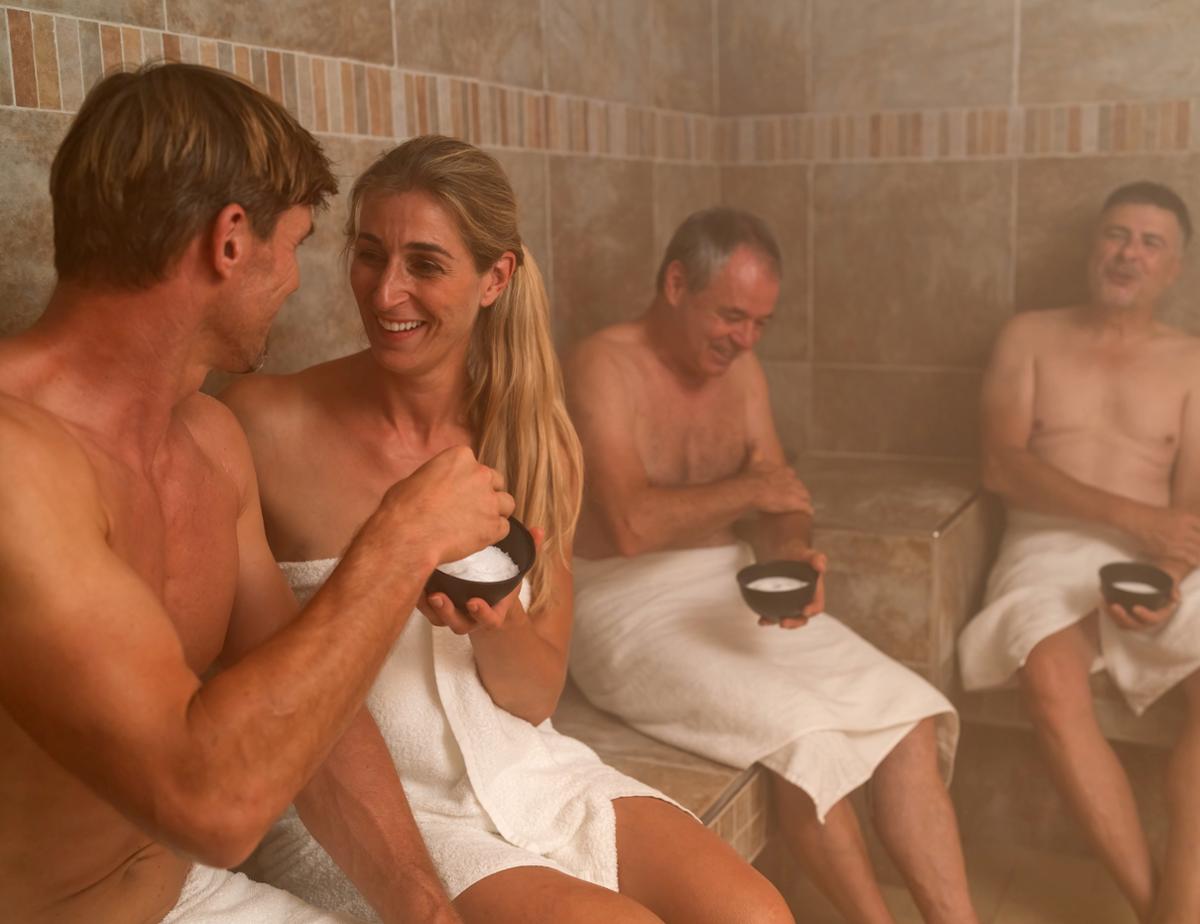
Urban hotel spas offer facilities to appeal to both residents and guests / shutterstock/Ale_Koziura
Spas are an expected amenity for most luxury and ultra luxury hotels, and properties with savvy operators are benefiting greatly from luxury travelers increasingly willing to spend on spa. Spas are also mandatory under the brand standards for certain luxury and ultra-luxury brands, as well as a requirement to comply with Forbes Five Star Standards.
Spa departments can also be found in a variety of hotel property types beyond just luxury resorts, as hotels of all types around the world are enhancing their spa offerings to promote overall wellness and mental health for their guests. Urban hotels offer spas to accommodate demand from residents, while the presence of a spa is often a requirement for large convention hotels to win group business. At small, luxury boutique hotels, spas are often the primary amenity offered, and modest-priced family resorts may offer spas to satisfy the needs of parents while the kids play in the water park.
To assess the impact of hotel spa departments on overall property operations, we analysed the performance of 297 US hotels that operate a spa and participated in CBRE’s Trends® in the Hotel Industry survey in 2023 and 2024. In 2024, these 297 hotels averaged 381 rooms in size, a 65.1 per cent occupancy, and a $375.64 average daily rate (ADR). The sample consisted of 222 properties located in resort markets, and 75 operating in urban areas, and the majority (176) of properties were luxury hotels, while the remainder operated in the upper-upscale, upscale, and upper-midscale class categories. Excluded from this analysis were hotels that leased out their spa operations to third party operators (i.e. an operator outside of the hotel management company).
Revenue In 2024, the hotels in our research sample averaged $6,061 per available guest room (PAR) in spa revenue, which incorporates revenue from all spa services including massages, body treatments, salon services, and retail sales. Spa revenues PAR is greatest at hotels located in resort areas ($6,539) versus urban areas ($4,756), and luxury hotels ($9,847) earn more than upper-upscale ($3,197) and upscale/upper-midscale ($3,487) properties. These relative revenue trends are the same when measuring revenue on a dollar per occupied room basis.
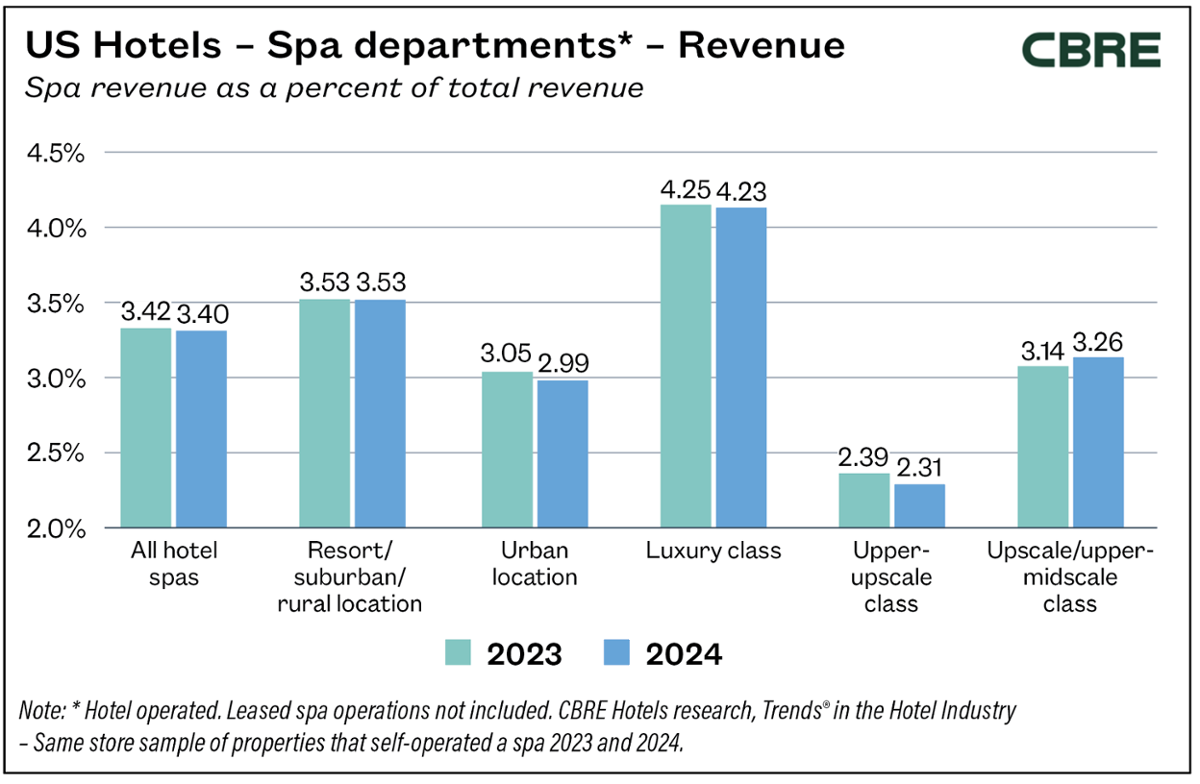
The relative financial impact of spas can be measured by analysing spa revenue as a percentage of total hotel revenue. On average, spa revenue at the hotels in our sample averaged 3.4 per cent of total revenue during 2024. Spas were the greatest contributor of revenue at luxury hotels (4.2 per cent) and properties in resort locations (3.5 per cent).
Among the various treatments and services offered by hotel spas, massages represent upwards of 60 per cent to 75 per cent of the revenue generation and number of treatments; however, it’s other specialty services that are used to increase traffic and elevate the positioning of a property. Resorts and ultra-luxury properties are incorporating specialised offerings from immunity support, nutrition, anti-ageing treatments, mental health and hydrotherapy. Beachside or poolside spa cabanas are an excellent way to increase the visibility of the spa to increase guest capture.
The most popular trend in spa and wellness today is contemporary bathhouses – combining old-world bathhouses concepts and traditional bathing rituals with modern spa services. Bathhouses also bring a communal element to spa usage, which can lead to increased traffic and repeat business.
Adding thoughtful retail features can also increase revenues, yield profit, and keep guests coming back to a spa, as 15 per cent to 30 per cent of spa service revenue are spa retail sales. Another recommendation is to add spa retail products to mini-bar offerings, which is a subtle way to increase spa visibility while increasing retail revenues.
Depending on the hotel’s location and spa facilities, many hotels resort to adding local memberships that offer discounts on services, providing access to the fitness facilities and spa pools. Membership revenue is a steady source of revenue that can also provide an increase in traffic. The focus is to drive additional revenue and traffic through day passes or membership users coming to utilise the spa amenities.
Hair salons are a critical amenity for resorts and must cater to residents and member requests. Hair salons increase revenue by offering an additional service that brings in hotel guests, offer more lucrative spa packages, attract social groups, and allow for upsell of services.
Consistent with the slowdown in the overall performance of US hotels during 2024, the average spa revenue growth rate for the hotels in our sample was limited to just 1.4 per cent. The greatest increases in spa revenue were observed at urban and luxury hotels, which expanded their reach into the local market to offset the slowdown in the general hotel business.
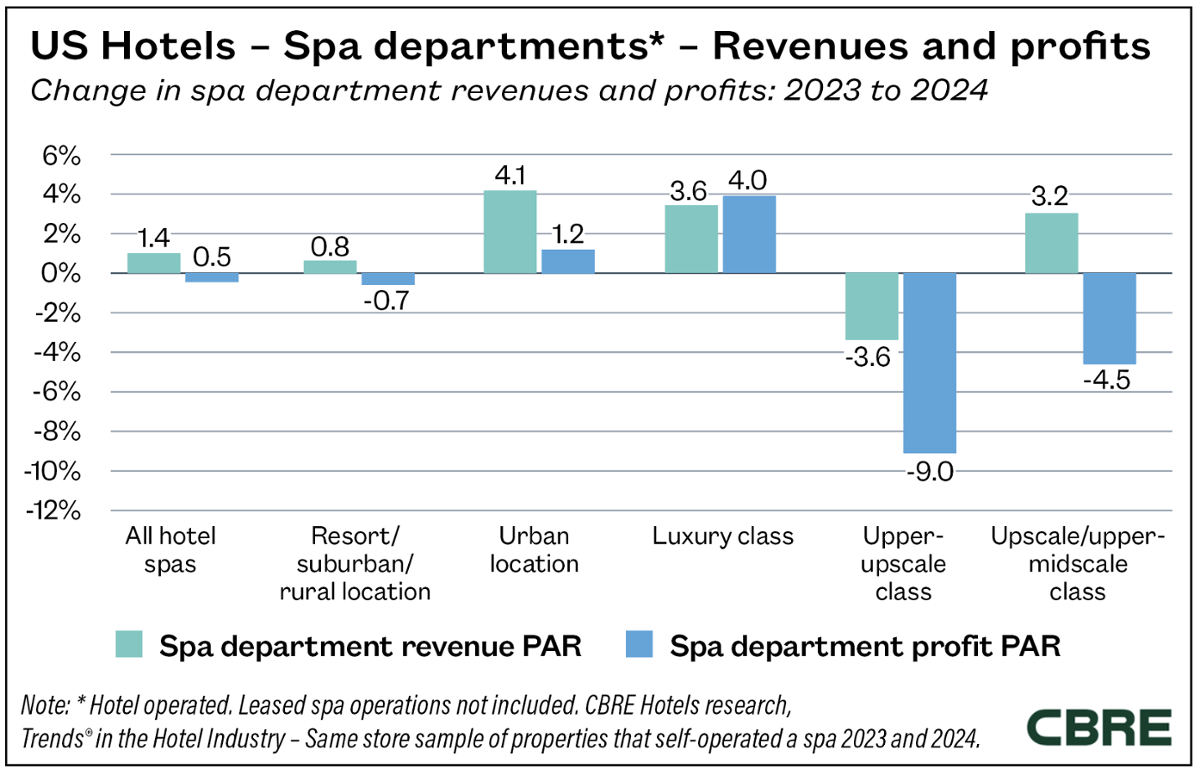
Expenses and Profits While spa department revenues increased by 1.4 per cent from 2023 to 2024, spa department profits declined by 0.5 per cent. Expense growth was greater than revenue growth during this time, which was consistent with overall trends in hotel operations in 2024.
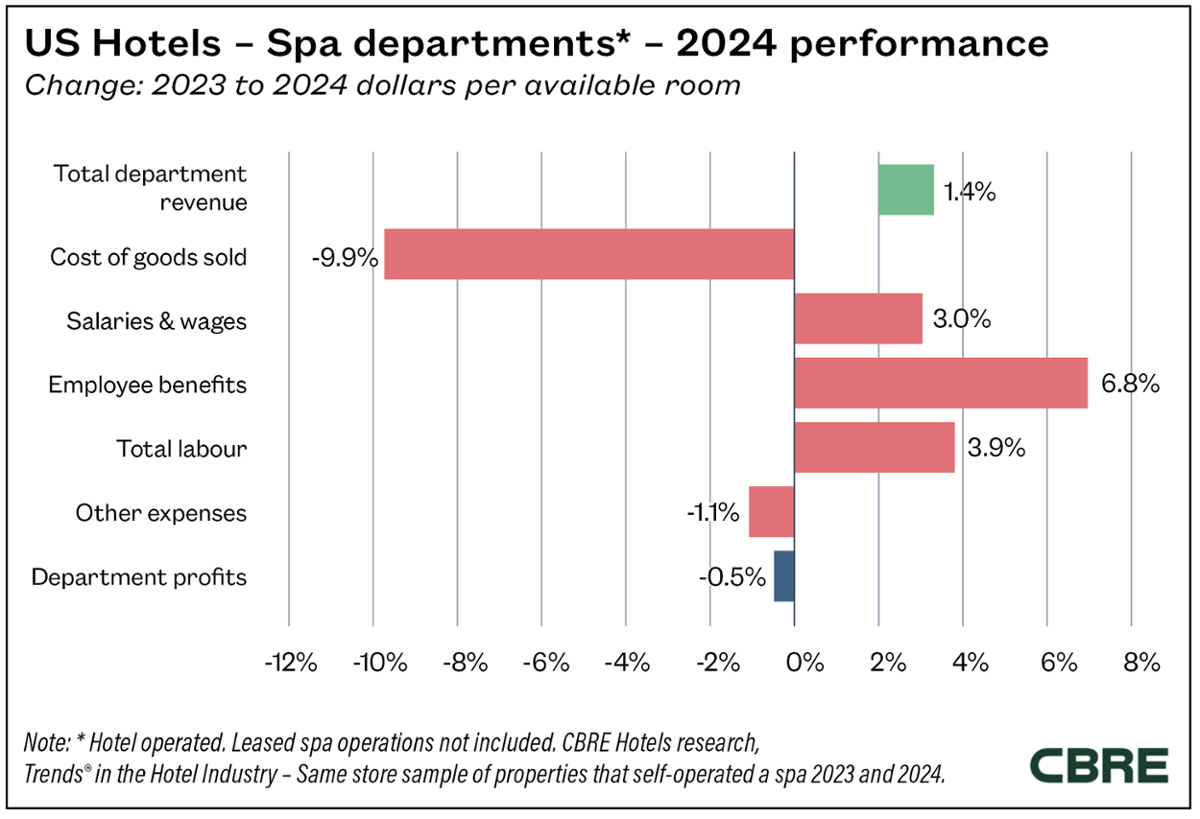
In 2024, total spa department expenses at the hotels in our sample increased by 2.1 per cent, with the primary driver of the increase in department expenses being labour costs, which rose by 3.9 per cent. Facing slow revenue growth, spa department operators were able to cut their costs of goods sold by 9.9 per cent and reduce other non-labour expenses by 1.1 per cent.
Within spa department labour costs, a 6.8 per cent rise in employee benefits outpaced the 3.0 per cent increase in salaries and wages. One tactic spa department managers use to control labour costs is the use of contract employees. In 2024, payments made to contract employees averaged 9.9 per cent of total salary and wages. Due to the greater availability of contract spa technicians in the local community, this ratio is 17.9 per cent at urban hotels.
Today, spas are looking to incorporate services and amenities not requiring a therapist, such as LED light therapy, Himalayan salt treatments, infrared saunas, cryotherapy and hydrotherapy, to bring in incremental revenue with minimal expenses.
The enhanced use of contract employees, combined with the ability to accommodate local residents, enabled urban hotels to achieve a 1.2 per cent increase in spa department profits in 2024. Conversely, the spa departments within resort area hotels declined by 0.7 per cent. From an asset management perspective, it is paramount to ensure the operator and hotel leadership are focusing on selling the spa and spa services and incorporate spa and wellness in their property pitches every day. Important things to focus on include a disciplined focus on treatment room utilisation, breakdown of revenue by service, close monitoring of guest satisfaction, and ensuring the spa revenues per square foot and profitability are maximised.
■ About the authors:
CRBE
RobertMandelbaum ([email protected]) is research director for CBRE Hotels Research.
Andrea Grigg ([email protected]) is senior managing director, global head of hotel asset management for CBRE.
To benchmark your property’s spa operation, please visit contact [email protected].
In today’s premium spa environment, every detail shapes the guest experience – right down to
the softness of towels and the freshness of linens. [more...]
Urban hotel spas offer facilities to appeal to both residents and guests / shutterstock/Ale_Koziura
Spas are an expected amenity for most luxury and ultra luxury hotels, and properties with savvy operators are benefiting greatly from luxury travelers increasingly willing to spend on spa. Spas are also mandatory under the brand standards for certain luxury and ultra-luxury brands, as well as a requirement to comply with Forbes Five Star Standards.
Spa departments can also be found in a variety of hotel property types beyond just luxury resorts, as hotels of all types around the world are enhancing their spa offerings to promote overall wellness and mental health for their guests. Urban hotels offer spas to accommodate demand from residents, while the presence of a spa is often a requirement for large convention hotels to win group business. At small, luxury boutique hotels, spas are often the primary amenity offered, and modest-priced family resorts may offer spas to satisfy the needs of parents while the kids play in the water park.
To assess the impact of hotel spa departments on overall property operations, we analysed the performance of 297 US hotels that operate a spa and participated in CBRE’s Trends® in the Hotel Industry survey in 2023 and 2024. In 2024, these 297 hotels averaged 381 rooms in size, a 65.1 per cent occupancy, and a $375.64 average daily rate (ADR). The sample consisted of 222 properties located in resort markets, and 75 operating in urban areas, and the majority (176) of properties were luxury hotels, while the remainder operated in the upper-upscale, upscale, and upper-midscale class categories. Excluded from this analysis were hotels that leased out their spa operations to third party operators (i.e. an operator outside of the hotel management company).
Revenue In 2024, the hotels in our research sample averaged $6,061 per available guest room (PAR) in spa revenue, which incorporates revenue from all spa services including massages, body treatments, salon services, and retail sales. Spa revenues PAR is greatest at hotels located in resort areas ($6,539) versus urban areas ($4,756), and luxury hotels ($9,847) earn more than upper-upscale ($3,197) and upscale/upper-midscale ($3,487) properties. These relative revenue trends are the same when measuring revenue on a dollar per occupied room basis.
The relative financial impact of spas can be measured by analysing spa revenue as a percentage of total hotel revenue. On average, spa revenue at the hotels in our sample averaged 3.4 per cent of total revenue during 2024. Spas were the greatest contributor of revenue at luxury hotels (4.2 per cent) and properties in resort locations (3.5 per cent).
Among the various treatments and services offered by hotel spas, massages represent upwards of 60 per cent to 75 per cent of the revenue generation and number of treatments; however, it’s other specialty services that are used to increase traffic and elevate the positioning of a property. Resorts and ultra-luxury properties are incorporating specialised offerings from immunity support, nutrition, anti-ageing treatments, mental health and hydrotherapy. Beachside or poolside spa cabanas are an excellent way to increase the visibility of the spa to increase guest capture.
The most popular trend in spa and wellness today is contemporary bathhouses – combining old-world bathhouses concepts and traditional bathing rituals with modern spa services. Bathhouses also bring a communal element to spa usage, which can lead to increased traffic and repeat business.
Adding thoughtful retail features can also increase revenues, yield profit, and keep guests coming back to a spa, as 15 per cent to 30 per cent of spa service revenue are spa retail sales. Another recommendation is to add spa retail products to mini-bar offerings, which is a subtle way to increase spa visibility while increasing retail revenues.
Depending on the hotel’s location and spa facilities, many hotels resort to adding local memberships that offer discounts on services, providing access to the fitness facilities and spa pools. Membership revenue is a steady source of revenue that can also provide an increase in traffic. The focus is to drive additional revenue and traffic through day passes or membership users coming to utilise the spa amenities.
Hair salons are a critical amenity for resorts and must cater to residents and member requests. Hair salons increase revenue by offering an additional service that brings in hotel guests, offer more lucrative spa packages, attract social groups, and allow for upsell of services.
Consistent with the slowdown in the overall performance of US hotels during 2024, the average spa revenue growth rate for the hotels in our sample was limited to just 1.4 per cent. The greatest increases in spa revenue were observed at urban and luxury hotels, which expanded their reach into the local market to offset the slowdown in the general hotel business.
Expenses and Profits While spa department revenues increased by 1.4 per cent from 2023 to 2024, spa department profits declined by 0.5 per cent. Expense growth was greater than revenue growth during this time, which was consistent with overall trends in hotel operations in 2024.
In 2024, total spa department expenses at the hotels in our sample increased by 2.1 per cent, with the primary driver of the increase in department expenses being labour costs, which rose by 3.9 per cent. Facing slow revenue growth, spa department operators were able to cut their costs of goods sold by 9.9 per cent and reduce other non-labour expenses by 1.1 per cent.
Within spa department labour costs, a 6.8 per cent rise in employee benefits outpaced the 3.0 per cent increase in salaries and wages. One tactic spa department managers use to control labour costs is the use of contract employees. In 2024, payments made to contract employees averaged 9.9 per cent of total salary and wages. Due to the greater availability of contract spa technicians in the local community, this ratio is 17.9 per cent at urban hotels.
Today, spas are looking to incorporate services and amenities not requiring a therapist, such as LED light therapy, Himalayan salt treatments, infrared saunas, cryotherapy and hydrotherapy, to bring in incremental revenue with minimal expenses.
The enhanced use of contract employees, combined with the ability to accommodate local residents, enabled urban hotels to achieve a 1.2 per cent increase in spa department profits in 2024. Conversely, the spa departments within resort area hotels declined by 0.7 per cent. From an asset management perspective, it is paramount to ensure the operator and hotel leadership are focusing on selling the spa and spa services and incorporate spa and wellness in their property pitches every day. Important things to focus on include a disciplined focus on treatment room utilisation, breakdown of revenue by service, close monitoring of guest satisfaction, and ensuring the spa revenues per square foot and profitability are maximised.
■ About the authors:
CRBE
RobertMandelbaum ([email protected]) is research director for CBRE Hotels Research.
Andrea Grigg ([email protected]) is senior managing director, global head of hotel asset management for CBRE.
To benchmark your property’s spa operation, please visit contact [email protected].
The UK spa review and discovery platform for consumers, the Good Spa Guide, has announced
it will host the Good Spa Guide Awards 2026 during an event on 16 November at Sopwell House
Hotel in St Albans, UK.
Eighty-four per cent of consumers now say wellness is a top priority in their lives, with this
percentage increasing year on year, according to a preview presentation of McKinsey’s Future of
Wellness 2026 research report.
Mass protests have been taking place since Monday 1 June in Albania over the development of
a luxury resort by Donald Trump’s daughter Ivanka Trump and her husband Jared Kushner.
Global Wellness Day (GWD) marked its 15th anniversary on Saturday 13 June 2026, with the
theme: #JoyMagenta – a celebration of the healing qualities of simple gestures and activities
that spark joy.
Global luxury hospitality brand, Six Senses, has partnered with longevity healthcare provider,
HUM2N, to launch a clinic at Six Senses London, at The Whiteley.
As part of its first hotel partnership, Mayrlife – the medical health resort company known for its
site in Altaussee, Austria – has launched a day clinic at the Rosewood Vienna.
Premium London health club, KX Chelsea, will imminently unveil its most significant
redevelopment since its launch in 2002 to create an integrated wellness model combining
training, recovery and relaxation.
Rosewood Le Guanahani St Barth, on the northeast coast of Saint Barthélemy in the French
West Indies, is offering a programme of ocean-inspired yoga classes between 8-14 June to
celebrate Global Wellness Day (GWD).
Hotel de France, located on the British Isle of Jersey, has created a wellness retreat package
that includes a hot yoga session that will take place in Jersey Zoo’s butterfly sanctuary.
The Ritz-Carlton, Langkawi, in Malaysia, has revealed a schedule for Global Wellness Day
(GWD) that includes guided rainforest walks, mindful movement and guided coastal meditation
experiences.
In today’s premium spa environment, every detail shapes the guest experience – right down to
the softness of towels and the freshness of linens. [more...]