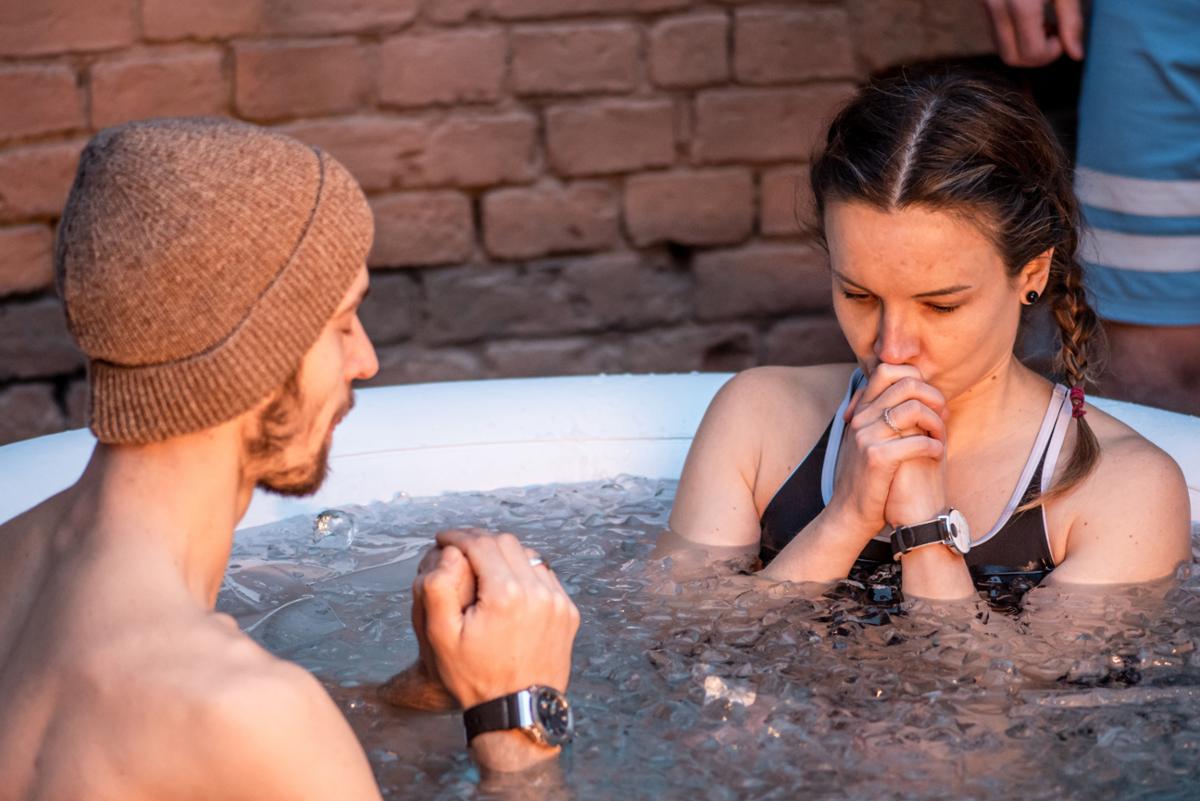
Don't let guests go beyond feeling "comfortably uncomfortable" / photo: Shutterstock / Michele Ursi
Contrast bathing – which involves alternating between hot, cold and thermo-neutral environments – offers multiple health benefits, including improved resilience, recovery and relaxation.
A growing awareness of these benefits has led saunas, hot tubs and ice baths to be used in homes, gyms and bathing facilities without medical supervision. While contrast bathing is both accessible and enjoyable, heat is powerful and too much or too little can harm as well as heal. To avoid adverse effects, it's essential to adhere to these simple safety principles: drink, take care, tune in, be aware and rest.
Drink Proper hydration is essential to regulate body temperature, detoxify the system and flush away contaminants and waste – yet contrast bathing may cause dehydration. This can be due to excessive sweating caused by heat and increased urine production from extra blood flow through the kidneys caused by cold. It’s therefore vital to stay well-hydrated before, during and after contrast bathing. Adding salt, minerals or herbs to guests' drinking water can further enhance absorption and electrolyte balance.
Take care Special care is needed around hot or cold elements, as heat sources such as steam or hot surfaces can cause burns or scalds while sub-zero temperatures risk frostnip or frostbite.
Care is also needed to avoid dizziness, faints or falls caused by sudden changes in posture or slippery surfaces. It’s therefore prudent for guests to be advised to move slowly, sit briefly before standing to stabilise blood pressure and also to ensure floors are dry and free of slip hazards.
Tune in Contrast bathing allows people to experience the joy of cooling down when hot, heating up when cold and the bliss of thermal-neutral comfort. It also evokes “forced mindfulness” – when thermal stress demands complete attention. This provides an opportunity for people to practice staying calm under duress.
To ensure guests stay safe and avoid being overwhelmed, advise them to tune into their feelings, maintain calm breaths and never let themselves be pressured to go beyond their limits. Also ensure they can easily exit, rest and rehydrate whenever needed. This is especially important for those with anxiety or PTSD, as cold exposure can mimic anxiety symptoms.
Be aware Being aware requires people to actively monitor their reactions and stop the session, drink some water and rest if they experience adverse symptoms such as fainting, dizziness, nausea, uncontrolled shivering or excessive discomfort.
It's important for guests to avoid going beyond feeling "comfortably uncomfortable" at any time and also wise for them to avoid contrast bathing while under the influence of drugs or alcohol. Consult a healthcare provider if they have heart issues or other conditions of concern.
Rest Rest is vital after contrast bathing, much like relaxation at the end of a yoga class. Deep relaxation in a comfortable thermo-neutral environment lets the mind and body settle into homeostatic equilibrium and experience the deep stillness that comes with actively doing nothing. Doing nothing is not just a form of relaxation, it’s a profound spiritual practice that fosters a sense of being in balance with nature. Enjoy Contrast bathing allows people to build resilience under stress and experience deep relaxation. To minimise risks, prioritise comfort, progress slowly and consult a healthcare provider if you have any concerns about your guests.
"Contrast bathing is accessible and enjoyable but too much or too little heat can harm" – Dr Marc Cohen, medical doctor, university professor and holistic health practitioner
In the fast-paced world of fitness and wellness, where high-intensity workouts push us to
our limits and the sweat pours, the importance of efficient recovery cannot be overstated. [more...]
Don't let guests go beyond feeling "comfortably uncomfortable" / photo: Shutterstock / Michele Ursi
Contrast bathing – which involves alternating between hot, cold and thermo-neutral environments – offers multiple health benefits, including improved resilience, recovery and relaxation.
A growing awareness of these benefits has led saunas, hot tubs and ice baths to be used in homes, gyms and bathing facilities without medical supervision. While contrast bathing is both accessible and enjoyable, heat is powerful and too much or too little can harm as well as heal. To avoid adverse effects, it's essential to adhere to these simple safety principles: drink, take care, tune in, be aware and rest.
Drink Proper hydration is essential to regulate body temperature, detoxify the system and flush away contaminants and waste – yet contrast bathing may cause dehydration. This can be due to excessive sweating caused by heat and increased urine production from extra blood flow through the kidneys caused by cold. It’s therefore vital to stay well-hydrated before, during and after contrast bathing. Adding salt, minerals or herbs to guests' drinking water can further enhance absorption and electrolyte balance.
Take care Special care is needed around hot or cold elements, as heat sources such as steam or hot surfaces can cause burns or scalds while sub-zero temperatures risk frostnip or frostbite.
Care is also needed to avoid dizziness, faints or falls caused by sudden changes in posture or slippery surfaces. It’s therefore prudent for guests to be advised to move slowly, sit briefly before standing to stabilise blood pressure and also to ensure floors are dry and free of slip hazards.
Tune in Contrast bathing allows people to experience the joy of cooling down when hot, heating up when cold and the bliss of thermal-neutral comfort. It also evokes “forced mindfulness” – when thermal stress demands complete attention. This provides an opportunity for people to practice staying calm under duress.
To ensure guests stay safe and avoid being overwhelmed, advise them to tune into their feelings, maintain calm breaths and never let themselves be pressured to go beyond their limits. Also ensure they can easily exit, rest and rehydrate whenever needed. This is especially important for those with anxiety or PTSD, as cold exposure can mimic anxiety symptoms.
Be aware Being aware requires people to actively monitor their reactions and stop the session, drink some water and rest if they experience adverse symptoms such as fainting, dizziness, nausea, uncontrolled shivering or excessive discomfort.
It's important for guests to avoid going beyond feeling "comfortably uncomfortable" at any time and also wise for them to avoid contrast bathing while under the influence of drugs or alcohol. Consult a healthcare provider if they have heart issues or other conditions of concern.
Rest Rest is vital after contrast bathing, much like relaxation at the end of a yoga class. Deep relaxation in a comfortable thermo-neutral environment lets the mind and body settle into homeostatic equilibrium and experience the deep stillness that comes with actively doing nothing. Doing nothing is not just a form of relaxation, it’s a profound spiritual practice that fosters a sense of being in balance with nature. Enjoy Contrast bathing allows people to build resilience under stress and experience deep relaxation. To minimise risks, prioritise comfort, progress slowly and consult a healthcare provider if you have any concerns about your guests.
"Contrast bathing is accessible and enjoyable but too much or too little heat can harm" – Dr Marc Cohen, medical doctor, university professor and holistic health practitioner
Gran Hotel Taoro in northern Tenerife, Spain, has completed the final phase of its three-year
renovation with the debut of its Sandára Wellness Centre.
Hand and Stone Massage and Facial Spa, the spa business with more than 650 locations across
the US and Canada, has appointed franchise expert Carrie Walsh as CEO as the company plans
to expand.
Synergy – The Retreat Show, the global trade show for retreats, has launched a global research
initiative that will provide insights into the retreat sector from both consumer and industry
perspectives.
The Wellness Tourism Association (WTA) has published a non-regulatory global industry
framework designed to ensure the retreat market offers responsible experiences.
A new survey of UK and international spa practitioners shows that stress, burnout and
wellbeing concerns have caused one in three respondents to consider leaving the industry.
The UK's four Chief Medical Officers have published a refreshed edition of Physical activity
guidelines: UK Chief Medical Officers' report, updating the evidence that underpins the nation's
physical activity recommendations and placing greater emphasis on strength, balance, reducing
sedentary behaviour and, for the first time, supporting people taking weight loss medications.
Anna Bjurstam has left her role as Wellness Pioneer at Six Senses Hotels and Resorts and
launched a new wellness, longevity and “consciousness consultancy” called Wahayla.
Fairmont Cheshire, The Mere, has opened today (10 July) in the Northwest of England
with a
1,715sq m Fairmont Spa that has been designed using a ‘Wellness without Walls’
concept.
In the fast-paced world of fitness and wellness, where high-intensity workouts push us to
our limits and the sweat pours, the importance of efficient recovery cannot be overstated. [more...]