Yes! Send me the FREE digital editions of Spa Business and Spa Business insider magazines and the FREE weekly Spa Business and Spa Business insider ezines and breaking news alerts!
The sex lives of meerkats, rhino births and sick tigers; zoos are a soap opera
with a cast of cute and dangerous characters, so it’s no wonder there’s
a constant appetite for television series about them. Kath Hudson reports
By Kath Hudson | Published in Attractions Handbook 2014 issue 1
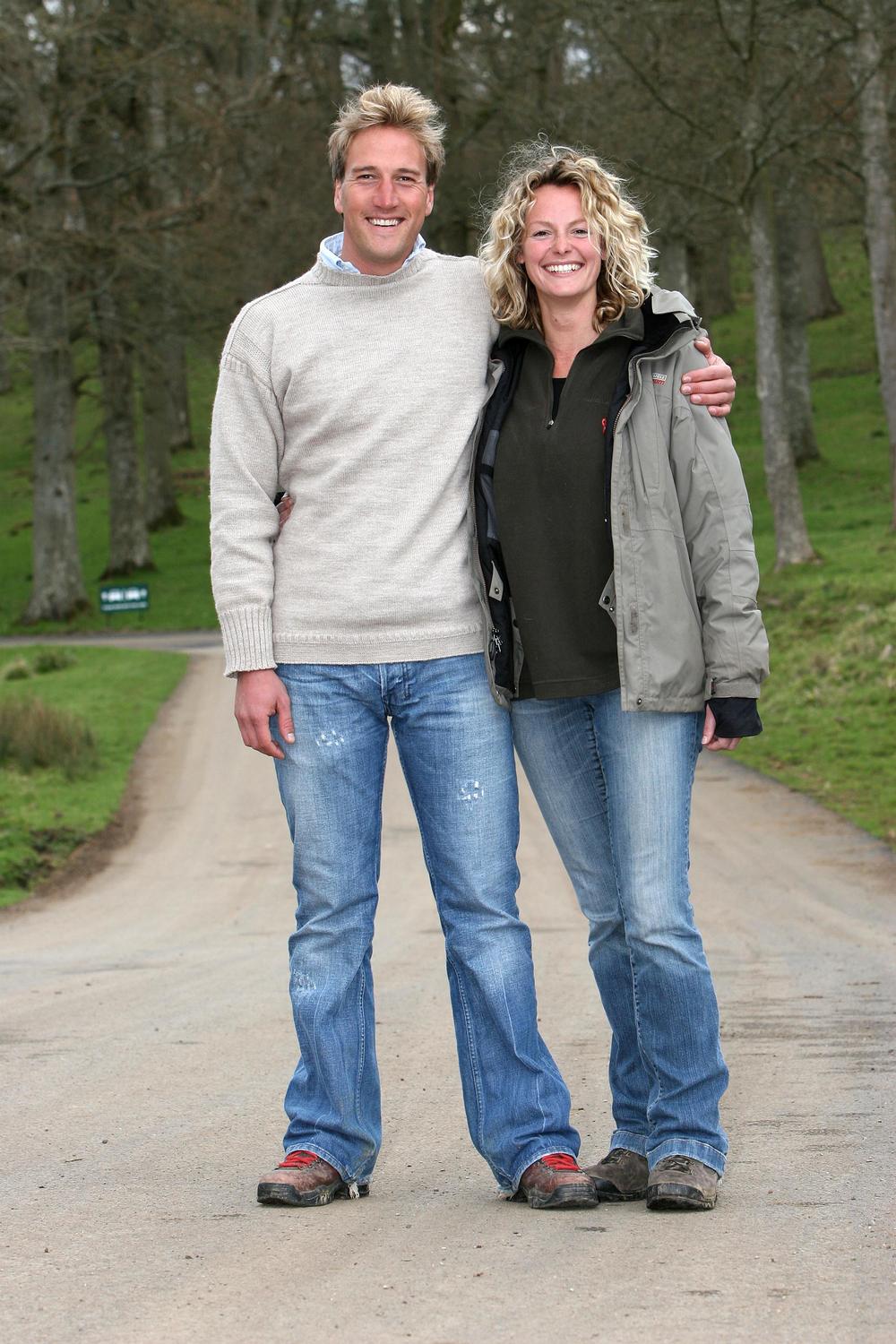
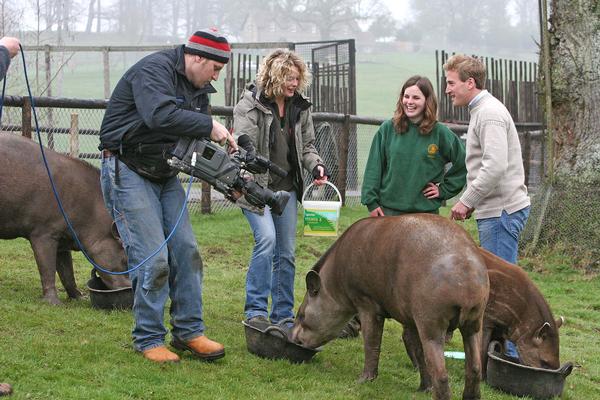
Ben Fogle and Kate Humble presented the Animal Park series from Longleat Safari Park
“Avisit to the zoo is only the tip of the iceberg and the tv series shows all that goes on underneath.” So says Helen Pantenburg, senior media officer at Taronga Zoo in Sydney, Australia.
Providing a look behind the scenes as animals give birth, undergo operations, or even get a bit feisty with keepers, the zoo story never gets old. As one series draws to a close, another springs up elsewhere.
So, if your zoo were to open its doors to a film crew, what would you be letting yourselves in for? Would the disruption be worth the publicity? What shape does the zoo need to be in first? And how does it impact the bottom line?
The usual arrangement is that zoos don’t get paid for hosting tv crews, and generally don’t receive any royalties. The financial gain from the zoo’s point of view is the uplift in visitor figures and increased spend. If the shows run in prime time, the viewing figures can be significant.
As Pantenburg at Taronga Zoo says: “Wild Life at the Zoo reached a national audience of more than half a million each Wednesday and was channel ABC1s third highest rating programme of that night, reaching a total audience of 4,459,932, plus 31,000 more on iView.”
Secondary spend can also increase as a result of the tv series: sales of cuddly toys rocketed as a result of Wild Life at the Zoo. In anticipation of this, Busch Gardens in Florida has created a line of merchandise to accompany its new series, The Wildlife Docs, which started airing on ABC last October.
Longleat Safari Park in the UK hosted Endemol for a decade: from 2000 to 2008 Animal Park aired on the BBC channel at teatime, attracting one million viewers, and then children’s tv programme ROAR aired from 2009–2010.
“We saw it as a great marketing opportunity,” says Steve Mytton, media and PR manager at Longleat. “It gave us exposure on a national and international level, generating fans from all over the world and significantly boosting visitor numbers.”
WHY DO IT? The airtime isn’t the only reason why many zoos have decided to embark on this journey: it also provides the opportunity for good press. Zoos have received some negative treatment in the past, particularly from animal rights campaigners, and tv series provide a vehicle to present the important work they carry out, including breeding programmes, conservation issues and explaining animal behaviour.
“Our primary objective was to educate the audience,” says Pantenberg. “We wanted to give audiences a better understanding of global breeding programmes and the management of animals in our care.”
Similarly, Busch Gardens wanted to document the important work that goes on at its new Animal Care Center. The series follows vets, technicians and trainers as they care for 12,000 exotic animals at Busch Gardens. The tv series is part of a strategy by Busch Gardens’ parent company SeaWorld Parks & Entertainment to use entertainment and media to engage more people with nature and animals.
Other benefits included stimulating interest in traditionally less popular animals. “We found that it generated more interest in the specific animals which were featured, such as the elephants and gorillas,” says Pantenburg. This could be particularly useful if you are on a fundraising campaign to upgrade an animal’s enclosure.
QUALITY CONTENT Editorial content is all-important. Animal Park started out as Lion Country, focusing on the zoo keepers, but they swiftly found that the public’s interest lay in the animals rather than the people, so a name and focus change followed.
“The main challenges were to consistently come up with interesting stories which viewers would find engaging, as well as keep the material fresh,” says Mytton.
Pantenburg agrees: “We look at all the potential stories coming up, such as births and vet procedures and prioritise which would visually stand out, as well as have a powerful message of conservation.”
Television shows can also be the opportunity to market new developments. London Zoo has used documentaries to flag up new attractions, such as its indoor rainforest and tiger enclosure.
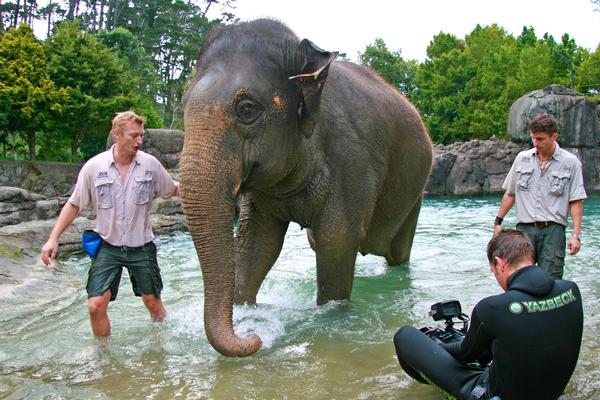
CHALLENGES AND PITFALLS Hosting a camera crew does present logistical problems, which the zoo needs to manage, as ensuring the welfare and routine of the animals is not disrupted and that visitors still have access to all the attractions is very important. Sometimes ingenious methods need to be used to get cameras into travelling crates and nesting boxes! Also filming is time consuming, so staff are required to work longer hours, which is likely to result in higher staff costs and this has to be affordable and set against the marketing and reputational benefits of the increased publicity.
“Animal welfare has to remain the number one priority – making sure that animals are not affected by the filming and it doesn’t necessitate a change in their routines,” says Pantenburg. “We gave the camera crews access to our keepers, vet teams and also our researchers. The staff even had cameras on their hats and we had cameras installed in work areas to give film crews an access-all-areas pass to see and film the teams at work.”
With a film crew on site for such long periods of time, there could be a danger of them digging for scandal to spice up the storyline, but none of the zoos I spoke to had experienced this. Filming was considered a positive experience, with crews and keepers striking up strong friendships and staff enjoying being included. But it could be prudent to take legal advice on this, and cover it in the contract by maintaining a level of editorial control over content.
Finally, it goes without saying that before inviting the cameras in, you need to be confident your zoo will serve as a shining example and that staff are on-message.
Busch Gardens Busch Gardens in Florida is the latest zoo to launch a tv series with The Wildlife Docs on channel ABC, produced with Litton Entertainment. The series kicked off at the beginning of October 2013 with the birth of three tiger cubs and the ensuing emergency when one of them was discovered to have a life-threatening condition.
It premièred along with the third season of Sea Rescue with Sam Champion, filmed at sister attraction, SeaWorld. This tells the stories of marine animal rescue, rehabilitation and release by the SeaWorld rescue team and its partners.
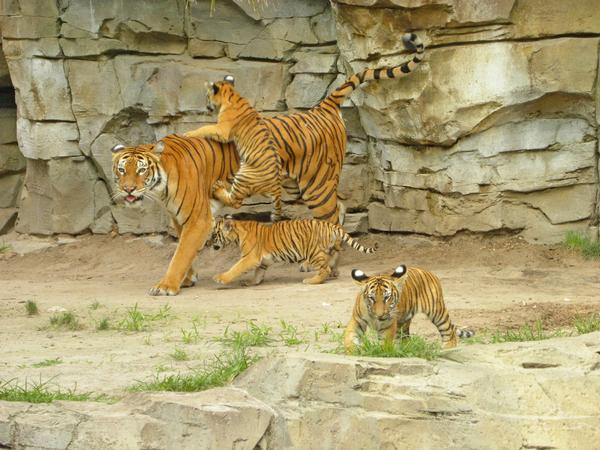
The birth of three tiger cubs captured the public’s immediate interest in The Wildlife Docs
Auckland zoo Broadcast for 12 series, The Zoo first went on air in 1999 in New Zealand and has since been viewed all over the world, in more than 35 countries. When screened in New Zealand and Australia, the top-rating programme regularly pulls in 500,000 viewers. While very successful, changes to its programming saw Television New Zealand decide not to purchase the Greenstone TV-produced show in 2013.
The Zoo has been viewed in more than 35 countries
Longleat Safari Park Presented by Ben Fogle and Kate Humble, Animal Park ran for nine series, from 2000–2008, and attracted one million weekly viewers. Storylines included the impact of foot and mouth disease and the transfer of the Longleat elephants to France, as well as lots of births.
It was followed by two series of ROAR, in 2009-2010, presented by Johny Pitts and Rani Price, which took children behind-the-scenes to meet keepers and animals and highlighted all the enrichment going on at the park. There are no plans for Longleat to resurrect its media career at the moment.
Animal Park attracted one million weekly viewers throughout its nine series on BBC Two
Taronga Zoo Since 2007, Taronga Zoo has had two separate series: The Zoo, on channel 7, which had nine episodes, followed by Wild Life at the Zoo on ABC – an eight-part documentary series.
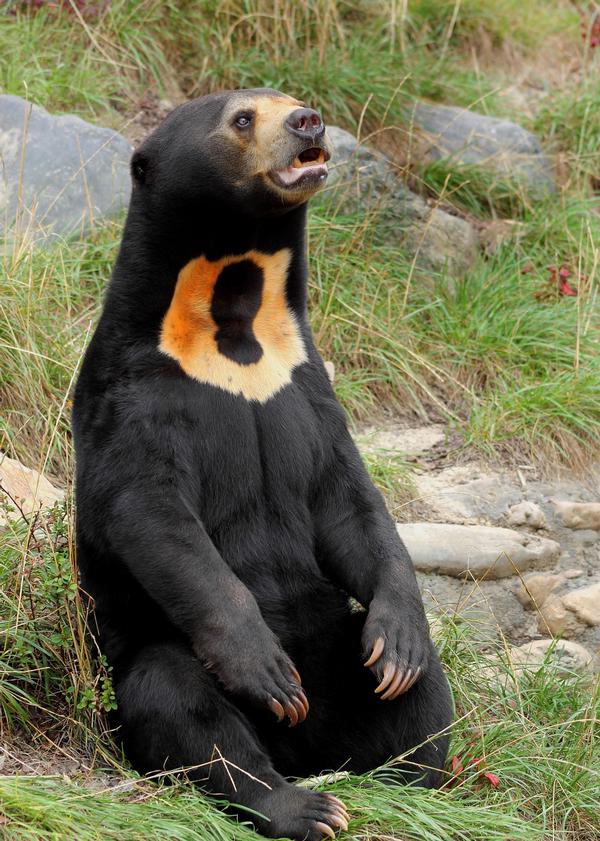
Popular storylines included the birth and development of the zoo’s first baby elephant and the story of Mr Hobbs, the sun bear rescued from the Cambodian restaurant trade before he became bear paw soup. There are no immediate plans for further filming at Taronga Zoo.
In the fast-paced world of fitness and wellness, where high-intensity workouts push us to
our limits and the sweat pours, the importance of efficient recovery cannot be overstated. [more...]
The Spa Life UK Convention returns from 21–23 June 2026 at Whittlebury Park Hotel, Spa &
Golf Resort, bringing together spa managers, directors and owners for two days of focused
education, meaningful connection and commercial insight. [more...]
+ More featured suppliers
COMPANY PROFILES
Borghese Roma
Borghese is an Italian luxury skincare brand founded in 1957 by Princess Marcella Borghese. [more...]
RKF Luxury Linen
RKF Luxury Linen, established in the East of France for several decades, owns an artisanal know-how [more...]
The sex lives of meerkats, rhino births and sick tigers; zoos are a soap opera
with a cast of cute and dangerous characters, so it’s no wonder there’s
a constant appetite for television series about them. Kath Hudson reports
By Kath Hudson | Published in Attractions Handbook 2014 issue 1
Ben Fogle and Kate Humble presented the Animal Park series from Longleat Safari Park
“Avisit to the zoo is only the tip of the iceberg and the tv series shows all that goes on underneath.” So says Helen Pantenburg, senior media officer at Taronga Zoo in Sydney, Australia.
Providing a look behind the scenes as animals give birth, undergo operations, or even get a bit feisty with keepers, the zoo story never gets old. As one series draws to a close, another springs up elsewhere.
So, if your zoo were to open its doors to a film crew, what would you be letting yourselves in for? Would the disruption be worth the publicity? What shape does the zoo need to be in first? And how does it impact the bottom line?
The usual arrangement is that zoos don’t get paid for hosting tv crews, and generally don’t receive any royalties. The financial gain from the zoo’s point of view is the uplift in visitor figures and increased spend. If the shows run in prime time, the viewing figures can be significant.
As Pantenburg at Taronga Zoo says: “Wild Life at the Zoo reached a national audience of more than half a million each Wednesday and was channel ABC1s third highest rating programme of that night, reaching a total audience of 4,459,932, plus 31,000 more on iView.”
Secondary spend can also increase as a result of the tv series: sales of cuddly toys rocketed as a result of Wild Life at the Zoo. In anticipation of this, Busch Gardens in Florida has created a line of merchandise to accompany its new series, The Wildlife Docs, which started airing on ABC last October.
Longleat Safari Park in the UK hosted Endemol for a decade: from 2000 to 2008 Animal Park aired on the BBC channel at teatime, attracting one million viewers, and then children’s tv programme ROAR aired from 2009–2010.
“We saw it as a great marketing opportunity,” says Steve Mytton, media and PR manager at Longleat. “It gave us exposure on a national and international level, generating fans from all over the world and significantly boosting visitor numbers.”
WHY DO IT? The airtime isn’t the only reason why many zoos have decided to embark on this journey: it also provides the opportunity for good press. Zoos have received some negative treatment in the past, particularly from animal rights campaigners, and tv series provide a vehicle to present the important work they carry out, including breeding programmes, conservation issues and explaining animal behaviour.
“Our primary objective was to educate the audience,” says Pantenberg. “We wanted to give audiences a better understanding of global breeding programmes and the management of animals in our care.”
Similarly, Busch Gardens wanted to document the important work that goes on at its new Animal Care Center. The series follows vets, technicians and trainers as they care for 12,000 exotic animals at Busch Gardens. The tv series is part of a strategy by Busch Gardens’ parent company SeaWorld Parks & Entertainment to use entertainment and media to engage more people with nature and animals.
Other benefits included stimulating interest in traditionally less popular animals. “We found that it generated more interest in the specific animals which were featured, such as the elephants and gorillas,” says Pantenburg. This could be particularly useful if you are on a fundraising campaign to upgrade an animal’s enclosure.
QUALITY CONTENT Editorial content is all-important. Animal Park started out as Lion Country, focusing on the zoo keepers, but they swiftly found that the public’s interest lay in the animals rather than the people, so a name and focus change followed.
“The main challenges were to consistently come up with interesting stories which viewers would find engaging, as well as keep the material fresh,” says Mytton.
Pantenburg agrees: “We look at all the potential stories coming up, such as births and vet procedures and prioritise which would visually stand out, as well as have a powerful message of conservation.”
Television shows can also be the opportunity to market new developments. London Zoo has used documentaries to flag up new attractions, such as its indoor rainforest and tiger enclosure.
CHALLENGES AND PITFALLS Hosting a camera crew does present logistical problems, which the zoo needs to manage, as ensuring the welfare and routine of the animals is not disrupted and that visitors still have access to all the attractions is very important. Sometimes ingenious methods need to be used to get cameras into travelling crates and nesting boxes! Also filming is time consuming, so staff are required to work longer hours, which is likely to result in higher staff costs and this has to be affordable and set against the marketing and reputational benefits of the increased publicity.
“Animal welfare has to remain the number one priority – making sure that animals are not affected by the filming and it doesn’t necessitate a change in their routines,” says Pantenburg. “We gave the camera crews access to our keepers, vet teams and also our researchers. The staff even had cameras on their hats and we had cameras installed in work areas to give film crews an access-all-areas pass to see and film the teams at work.”
With a film crew on site for such long periods of time, there could be a danger of them digging for scandal to spice up the storyline, but none of the zoos I spoke to had experienced this. Filming was considered a positive experience, with crews and keepers striking up strong friendships and staff enjoying being included. But it could be prudent to take legal advice on this, and cover it in the contract by maintaining a level of editorial control over content.
Finally, it goes without saying that before inviting the cameras in, you need to be confident your zoo will serve as a shining example and that staff are on-message.
Busch Gardens Busch Gardens in Florida is the latest zoo to launch a tv series with The Wildlife Docs on channel ABC, produced with Litton Entertainment. The series kicked off at the beginning of October 2013 with the birth of three tiger cubs and the ensuing emergency when one of them was discovered to have a life-threatening condition.
It premièred along with the third season of Sea Rescue with Sam Champion, filmed at sister attraction, SeaWorld. This tells the stories of marine animal rescue, rehabilitation and release by the SeaWorld rescue team and its partners.
The birth of three tiger cubs captured the public’s immediate interest in The Wildlife Docs
Auckland zoo Broadcast for 12 series, The Zoo first went on air in 1999 in New Zealand and has since been viewed all over the world, in more than 35 countries. When screened in New Zealand and Australia, the top-rating programme regularly pulls in 500,000 viewers. While very successful, changes to its programming saw Television New Zealand decide not to purchase the Greenstone TV-produced show in 2013.
The Zoo has been viewed in more than 35 countries
Longleat Safari Park Presented by Ben Fogle and Kate Humble, Animal Park ran for nine series, from 2000–2008, and attracted one million weekly viewers. Storylines included the impact of foot and mouth disease and the transfer of the Longleat elephants to France, as well as lots of births.
It was followed by two series of ROAR, in 2009-2010, presented by Johny Pitts and Rani Price, which took children behind-the-scenes to meet keepers and animals and highlighted all the enrichment going on at the park. There are no plans for Longleat to resurrect its media career at the moment.
Animal Park attracted one million weekly viewers throughout its nine series on BBC Two
Taronga Zoo Since 2007, Taronga Zoo has had two separate series: The Zoo, on channel 7, which had nine episodes, followed by Wild Life at the Zoo on ABC – an eight-part documentary series.
Popular storylines included the birth and development of the zoo’s first baby elephant and the story of Mr Hobbs, the sun bear rescued from the Cambodian restaurant trade before he became bear paw soup. There are no immediate plans for further filming at Taronga Zoo.
As part of its first hotel partnership, Mayrlife – the medical health resort company known for its
site in Altaussee, Austria – has launched a day clinic at the Rosewood Vienna.
Premium London health club, KX Chelsea, will imminently unveil its most significant
redevelopment since its launch in 2002 to create an integrated wellness model combining
training, recovery and relaxation.
Rosewood Le Guanahani St Barth, on the northeast coast of Saint Barthélemy in the French
West Indies, is offering a programme of ocean-inspired yoga classes between 8-14 June to
celebrate Global Wellness Day (GWD).
Hotel de France, located on the British Isle of Jersey, has created a wellness retreat package
that includes a hot yoga session that will take place in Jersey Zoo’s butterfly sanctuary.
The Ritz-Carlton, Langkawi, in Malaysia, has revealed a schedule for Global Wellness Day
(GWD) that includes guided rainforest walks, mindful movement and guided coastal meditation
experiences.
Longevitix, a clinical platform for preventive and longevity medicine, has launched its AI-
powered intelligence system to help physicians deliver continuous, personalised longevity-
focused care at scale.
Atmantan Wellness Centre, an integrative wellness destination in Mulshi, near Pune in India, is
expanding its portfolio by adding a new centre in Hyderabad that will launch between 2028 and
2029.
A recent survey by the UK Spa Association (UKSA) into the industry’s approach to cancer care
has revealed that almost half of participating respondents (46 per cent) are unaware that
cancer is a disability and guests with a cancer diagnosis must be given
Mexican operator, Solmar Hotels and Resorts, is hosting a series of events in celebration of
Global Wellness Day, including a Temazcal ceremony at its Playa Grande Resort and Spa in Los
Cabos.
Mandarin Oriental has announced a standalone residence brand, Mansions, which will debut at
Emirates Palace, Mandarin Oriental Mansions, Abu Dhabi, in 2029.
In the fast-paced world of fitness and wellness, where high-intensity workouts push us to
our limits and the sweat pours, the importance of efficient recovery cannot be overstated. [more...]
The Spa Life UK Convention returns from 21–23 June 2026 at Whittlebury Park Hotel, Spa &
Golf Resort, bringing together spa managers, directors and owners for two days of focused
education, meaningful connection and commercial insight. [more...]
+ More featured suppliers
COMPANY PROFILES
Borghese Roma Borghese is an Italian luxury skincare brand founded in 1957 by Princess Marcella Borghese. [more...]