Ticketing systems are becoming ever more advanced in order to improve the guest experience and the operator’s bottom line. We investigate the sector’s current and upcoming trends
By Kath Hudson | Published in Attractions Management 2015 issue 2
Interview: Marty Sklar
Retired Disney Legend Marty Sklar
reveals the secrets of Imagineering,
the legacy of the 1964 World’s Fair
and the lessons he learned as
Walt Disney’s “keeper of the keys”
Talking Point: The $100 Barrier
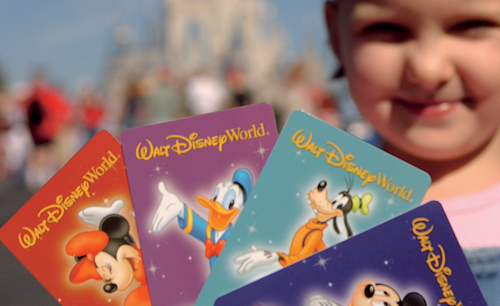
As a Walt Disney World day ticket
enters three-digit territory for
the first time, we ask what this
means for pricing in the sector
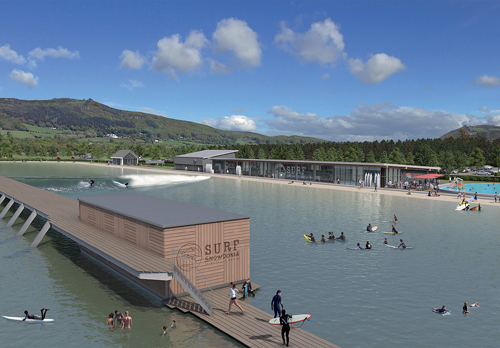
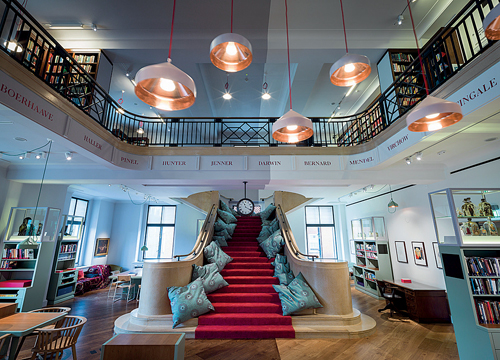
Museums: Biomuseo
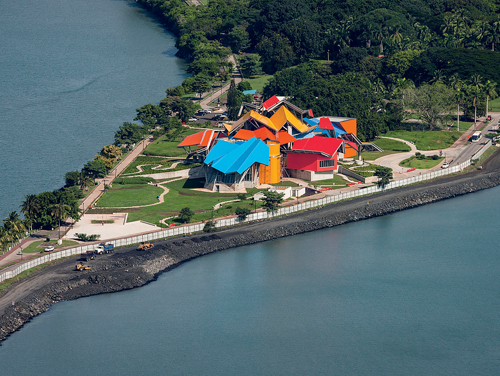
Panama has opened the world’s first
museum of biodiversity, an ambitious
building by architect Frank Gehry. We
meet the team behind the project
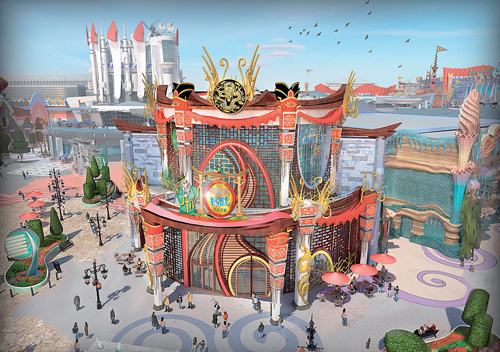
Expos: Food for Thought
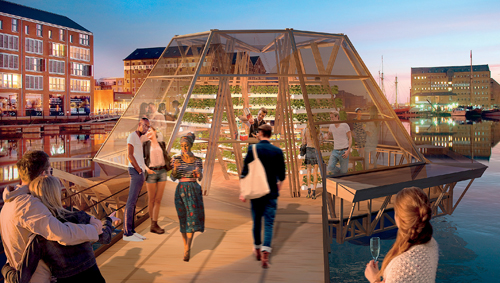
Expo Milano 2015 launches in Italy,
aiming to bring the planet’s most
pressing problems to the fore, not least
how to provide food for everybody
Zoos & Aquariums: On the SAFE Side
AZA chair Dennis Pate explains a new
initiative designed to help endangered
animals, and offers some tips from
his world-class Henry Doorly zoo
Promotional feature: IDEATTACK
IDEATTACK is a creative maverick with a
new perspective, bringing custom-made
one-of-a-kind attractions typologies to
a world that needs something di�fferent
Rides: The Ride Makers
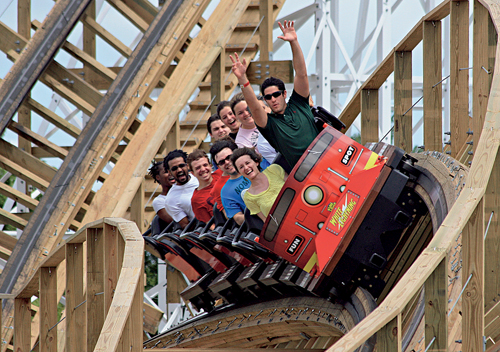
In the third part of our series, we look at
the enduring appeal of wooden coasters
Ticketing: Dream Tickets
Ticketing systems are advancing to
improve the guest’s experience and the
operator’s profit. We investigate the
sector’s current and upcoming trends
This is currently an area of intense focus and where attractions are set to make important gains.
“CRM and big data is hugely important: it’s finding out who’s coming, how often they’re coming and other valuable information that can be used for marketing,” says Edwin Hemkes, chief commercial officer at Syx. “You can’t capture this information so well on the gate, but with more people buying tickets online, it’s the perfect opportunity to find out about them.”
Using data to understand the customer and their behaviour, attractions can create a much more holistic customer experience. The more they entertain and engage the customer, the more the customer is likely to want to come back.
“Information is very powerful when predicting with accuracy what people are likely to do, helping operators to build on their successes,” says Peter Ferguson, head of operations, ticketing and electronic point of sale at the Access Group.
“Something as simple as ensuring you have the right stock, positioned in the right place within the shop can make all the difference to sales. Similarly, with food, it can help to better gauge what to buy and how much to cut down on wastage. Looking at the business in this way helps to cut costs and drive up revenues with repeat visits, and the ability to market and cross-sell to those visitors,” Ferguson says.
"Information is very powerful when predicting with accuracy what people are likely to do, helping operators to build on their successes"
LOYALTY & MEMBERSHIP
Peter Ferguson
Peter FergusonHead of Operations, Ticketing and Electronic Point of Sale Access Group
There’s an increasing focus on turning visitors into repeat business with membership and loyalty programmes.
“This is a fundamental change in the business model, but one which stands to deliver greater value,” says Ferguson. “Firstly, it means it’s easier to forecast income over time rather than taking the approach of seeing who turns up on the day. It also means operators are able to develop better relationships with their customers, making the experiences more targeted and relevant.”
“With a membership scheme, operators create predictable revenue streams. If a company wants to sell an attraction, this makes it a more interesting proposition for investors.”
USING SMARTPHONES
Simon KnivetonDirectorVennersys
Mobile sites need to be as accessible as desktop sites since more and more sales are now being made this way. Hemkes says mobile apps are a growing trend, as it makes it very easy for visitors and offers a great reporting tool for managers.
“Taking this one step further, if the ticket is delivered to the mobile device and stored in the Wallet or Passbook, the user doesn’t even have to upload an email, but can use near field communication (NFC) to fast-track through admission points, which translates to fewer staff and an improved visitor experience,” says Simon Kniveton, director at Vennersys.
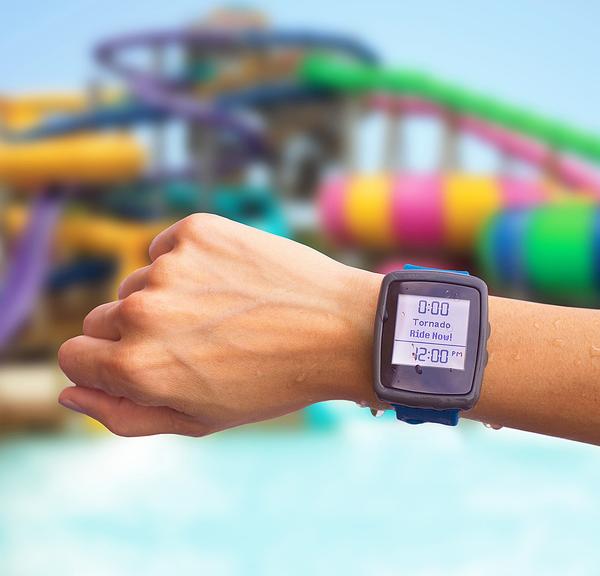
Vennersys launched Apple Pay support in April, as well as support for the Apple Watch. This next generation of ticket handling allows visitors to wave their watch at the admission point.
Syx is working on systems which use GPS and bluetooth technology to recognise when members come back to the attraction and send them welcome messages, offers and promotions.
MAKING PREDICTIONS
Whether looking at the weather forecast to predict visitor numbers, or looking at sales reports to inform stock buying, cloud-based business intelligence tools are helping attractions tighten up their operations.
“It’s possible to better predict everything, including how much revenue your attraction’s going to make in a given month. You can learn much more about what your customers are buying and what’s not selling,” says Ferguson.
Gamification
The Embed Mobile POS (emPOS) solution is being used to reward children at each activity at the Landmark Group’s FunWorks FEC at Yas Mall in Abu Dhabi.
Andrea Bisi, director of international business development for Embed, suggests this could be adapted by other operators, so visitors can gain points for coasters they ride, allowing them to compete against friends, but also working towards a reward. This could work well with a membership or loyalty scheme, Bisi says.
" Gamification means visitors could gain points for coasters they ride, and compete against friends, working towards a reward"
DYNAMIC PRICING
Already popular with airlines and theatres, dynamic pricing has yet to be widely embraced by the attractions sector. However, it’s now starting to gain a foothold.
Particularly relevant for paid-for exhibitions at museums and galleries, those who book early get cheaper tickets and as tickets run low, they rise in price. The price reduces again to fill last-minute slots, allowing museums and galleries to maximise the income of an exhibition.
TJ Christensen, senior vice president business development North America and Europe at Accesso, says this can work for theme parks as well.
“From straight calendar based pricing, to packaging and bundling, many clients are looking for new ways to entice the customer to buy early, as well as shift the price-sensitive buyers off to shoulder or off-peak times,” Christensen says. “When executed correctly, you get a happier guest because they can visit for a price they can afford, and the attraction is happy, because they’ve smoothed out variation in demand.”
VIRTUAL QUEUEING
TJ Christensen
TJ ChristensenSenior Vice President Business Development North America and EuropeAccesso
Not a new concept, but important because not only does a virtual queueing system provide another revenue stream, but spending hours in queues can put visitors off returning. More options are on offer now, such as using smartphones and RFID wristbands.
“By freeing the guests from queue lines, they’re able to enjoy other shows and attractions and spend time in retail and F&B outlets, increasing guest satisfaction and in-park spending,” says Christensen. “It all begins and ends with the guest. We know the simpler the process, the better the guest experience will be, resulting in higher per-cap spending and repeat visits.”
"A potential future use for RFID could be to enhance safety for children, and make sure kids are leaving locations with the proper adult"
RFID
Andrea Bisi
Andrea BisiDirector of International Business Development Embed
Radio-frequency identification (RFID) offers convenience for the guest and can encourage more spending as it enables a cashless visit, which works especially well with membership schemes.
A potential future use for RFID, or disposable wristbands, could be for enhanced safety for children, says Bisi.
With the use of specific “guest check” features, we can make sure kids are leaving the locations with the proper adult, he says.
Accesso’s Qband has RFID capabilities that support cashless payments and locker rentals
Hacking
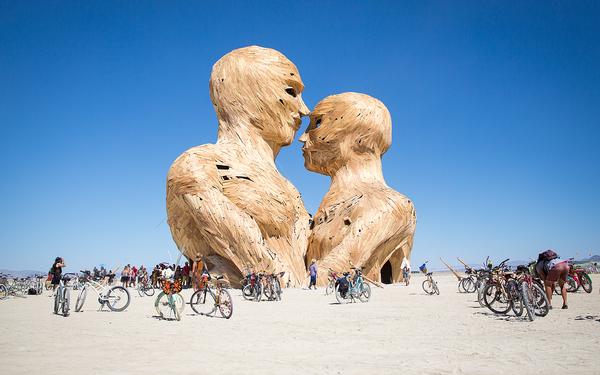
With so much customer information being stored in systems, security has never been more important. The recent story of hackers who managed to jump to the front of the queue for Burning Man tickets emphasises how hackers will be quick to take advantage of any loopholes.
Ferguson says there are a number of basic steps operators can take to guard against attacks, such as keeping website software up-to-date, making sure new patches are applied, acting on third-party vendor mailings regarding security issues, using generic login error messages and ensuring complex passwords are used.
“But above all else, put websites and applications through their paces to test for all possible ways that someone might try to compromise the system,” he says.
photo: FLICKR/ Gwen Schroeder
Recent news reports said software engineers hacked into the Burning Man’s Ticketfly ticketing system to cut to the front of the queue
REAL-TIME MULTI-CHANNEL DISTRIBUTION
Real-Time Multi-Channel distribution is tipped to become more significant as this helps operators to maximise income.
“Managing distribution of tickets through multiple channels at the same time, and clearing/reconciling accounts with partners has always been complicated and time-consuming and reduced the opportunity to sell,” says Bisi. “With a real-time solution, every sales channel is always up-to-date: there’s no double booking, no ticket wasted and immediate calculation of partners’ commission.”
SOCIAL MEDIA
David Hancock
David HancockDirector Langdale Attractions Solutions
Social media creates immense potential to gain better insight into audiences, according to David Hancock, director at Langdale Attractions Solutions.
“Social media offers us the ability to identify key trends and similarities from each guest,” he says. “This allows the attraction to target a like-minded demographic based on interests, age groups, locations and relationships. Tapping into this information for the attractions market is still in its infancy, but this will play a vital role going forward.”
Le Atelier by C.O.D.E. doesn't offer a standard bespoke service, it provides a highly
customised approach to designing massage beds and loungers in high-end wellness
environments. [more...]
Ticketing systems are becoming ever more advanced in order to improve the guest experience and the operator’s bottom line. We investigate the sector’s current and upcoming trends
By Kath Hudson | Published in Attractions Management 2015 issue 2
Interview: Marty Sklar
Retired Disney Legend Marty Sklar
reveals the secrets of Imagineering,
the legacy of the 1964 World’s Fair
and the lessons he learned as
Walt Disney’s “keeper of the keys”
Talking Point: The $100 Barrier
As a Walt Disney World day ticket
enters three-digit territory for
the first time, we ask what this
means for pricing in the sector
Museums: Biomuseo
Panama has opened the world’s first
museum of biodiversity, an ambitious
building by architect Frank Gehry. We
meet the team behind the project
Expos: Food for Thought
Expo Milano 2015 launches in Italy,
aiming to bring the planet’s most
pressing problems to the fore, not least
how to provide food for everybody
Zoos & Aquariums: On the SAFE Side
AZA chair Dennis Pate explains a new
initiative designed to help endangered
animals, and offers some tips from
his world-class Henry Doorly zoo
Promotional feature: IDEATTACK
IDEATTACK is a creative maverick with a
new perspective, bringing custom-made
one-of-a-kind attractions typologies to
a world that needs something di�fferent
Rides: The Ride Makers
In the third part of our series, we look at
the enduring appeal of wooden coasters
Ticketing: Dream Tickets
Ticketing systems are advancing to
improve the guest’s experience and the
operator’s profit. We investigate the
sector’s current and upcoming trends
This is currently an area of intense focus and where attractions are set to make important gains.
“CRM and big data is hugely important: it’s finding out who’s coming, how often they’re coming and other valuable information that can be used for marketing,” says Edwin Hemkes, chief commercial officer at Syx. “You can’t capture this information so well on the gate, but with more people buying tickets online, it’s the perfect opportunity to find out about them.”
Using data to understand the customer and their behaviour, attractions can create a much more holistic customer experience. The more they entertain and engage the customer, the more the customer is likely to want to come back.
“Information is very powerful when predicting with accuracy what people are likely to do, helping operators to build on their successes,” says Peter Ferguson, head of operations, ticketing and electronic point of sale at the Access Group.
“Something as simple as ensuring you have the right stock, positioned in the right place within the shop can make all the difference to sales. Similarly, with food, it can help to better gauge what to buy and how much to cut down on wastage. Looking at the business in this way helps to cut costs and drive up revenues with repeat visits, and the ability to market and cross-sell to those visitors,” Ferguson says.
"Information is very powerful when predicting with accuracy what people are likely to do, helping operators to build on their successes"
LOYALTY & MEMBERSHIP
Peter Ferguson
Peter FergusonHead of Operations, Ticketing and Electronic Point of Sale Access Group
There’s an increasing focus on turning visitors into repeat business with membership and loyalty programmes.
“This is a fundamental change in the business model, but one which stands to deliver greater value,” says Ferguson. “Firstly, it means it’s easier to forecast income over time rather than taking the approach of seeing who turns up on the day. It also means operators are able to develop better relationships with their customers, making the experiences more targeted and relevant.”
“With a membership scheme, operators create predictable revenue streams. If a company wants to sell an attraction, this makes it a more interesting proposition for investors.”
USING SMARTPHONES
Simon KnivetonDirectorVennersys
Mobile sites need to be as accessible as desktop sites since more and more sales are now being made this way. Hemkes says mobile apps are a growing trend, as it makes it very easy for visitors and offers a great reporting tool for managers.
“Taking this one step further, if the ticket is delivered to the mobile device and stored in the Wallet or Passbook, the user doesn’t even have to upload an email, but can use near field communication (NFC) to fast-track through admission points, which translates to fewer staff and an improved visitor experience,” says Simon Kniveton, director at Vennersys.
Vennersys launched Apple Pay support in April, as well as support for the Apple Watch. This next generation of ticket handling allows visitors to wave their watch at the admission point.
Syx is working on systems which use GPS and bluetooth technology to recognise when members come back to the attraction and send them welcome messages, offers and promotions.
MAKING PREDICTIONS
Whether looking at the weather forecast to predict visitor numbers, or looking at sales reports to inform stock buying, cloud-based business intelligence tools are helping attractions tighten up their operations.
“It’s possible to better predict everything, including how much revenue your attraction’s going to make in a given month. You can learn much more about what your customers are buying and what’s not selling,” says Ferguson.
Gamification
The Embed Mobile POS (emPOS) solution is being used to reward children at each activity at the Landmark Group’s FunWorks FEC at Yas Mall in Abu Dhabi.
Andrea Bisi, director of international business development for Embed, suggests this could be adapted by other operators, so visitors can gain points for coasters they ride, allowing them to compete against friends, but also working towards a reward. This could work well with a membership or loyalty scheme, Bisi says.
" Gamification means visitors could gain points for coasters they ride, and compete against friends, working towards a reward"
DYNAMIC PRICING
Already popular with airlines and theatres, dynamic pricing has yet to be widely embraced by the attractions sector. However, it’s now starting to gain a foothold.
Particularly relevant for paid-for exhibitions at museums and galleries, those who book early get cheaper tickets and as tickets run low, they rise in price. The price reduces again to fill last-minute slots, allowing museums and galleries to maximise the income of an exhibition.
TJ Christensen, senior vice president business development North America and Europe at Accesso, says this can work for theme parks as well.
“From straight calendar based pricing, to packaging and bundling, many clients are looking for new ways to entice the customer to buy early, as well as shift the price-sensitive buyers off to shoulder or off-peak times,” Christensen says. “When executed correctly, you get a happier guest because they can visit for a price they can afford, and the attraction is happy, because they’ve smoothed out variation in demand.”
VIRTUAL QUEUEING
TJ Christensen
TJ ChristensenSenior Vice President Business Development North America and EuropeAccesso
Not a new concept, but important because not only does a virtual queueing system provide another revenue stream, but spending hours in queues can put visitors off returning. More options are on offer now, such as using smartphones and RFID wristbands.
“By freeing the guests from queue lines, they’re able to enjoy other shows and attractions and spend time in retail and F&B outlets, increasing guest satisfaction and in-park spending,” says Christensen. “It all begins and ends with the guest. We know the simpler the process, the better the guest experience will be, resulting in higher per-cap spending and repeat visits.”
"A potential future use for RFID could be to enhance safety for children, and make sure kids are leaving locations with the proper adult"
RFID
Andrea Bisi
Andrea BisiDirector of International Business Development Embed
Radio-frequency identification (RFID) offers convenience for the guest and can encourage more spending as it enables a cashless visit, which works especially well with membership schemes.
A potential future use for RFID, or disposable wristbands, could be for enhanced safety for children, says Bisi.
With the use of specific “guest check” features, we can make sure kids are leaving the locations with the proper adult, he says.
Accesso’s Qband has RFID capabilities that support cashless payments and locker rentals
Hacking
With so much customer information being stored in systems, security has never been more important. The recent story of hackers who managed to jump to the front of the queue for Burning Man tickets emphasises how hackers will be quick to take advantage of any loopholes.
Ferguson says there are a number of basic steps operators can take to guard against attacks, such as keeping website software up-to-date, making sure new patches are applied, acting on third-party vendor mailings regarding security issues, using generic login error messages and ensuring complex passwords are used.
“But above all else, put websites and applications through their paces to test for all possible ways that someone might try to compromise the system,” he says.
photo: FLICKR/ Gwen Schroeder
Recent news reports said software engineers hacked into the Burning Man’s Ticketfly ticketing system to cut to the front of the queue
REAL-TIME MULTI-CHANNEL DISTRIBUTION
Real-Time Multi-Channel distribution is tipped to become more significant as this helps operators to maximise income.
“Managing distribution of tickets through multiple channels at the same time, and clearing/reconciling accounts with partners has always been complicated and time-consuming and reduced the opportunity to sell,” says Bisi. “With a real-time solution, every sales channel is always up-to-date: there’s no double booking, no ticket wasted and immediate calculation of partners’ commission.”
SOCIAL MEDIA
David Hancock
David HancockDirector Langdale Attractions Solutions
Social media creates immense potential to gain better insight into audiences, according to David Hancock, director at Langdale Attractions Solutions.
“Social media offers us the ability to identify key trends and similarities from each guest,” he says. “This allows the attraction to target a like-minded demographic based on interests, age groups, locations and relationships. Tapping into this information for the attractions market is still in its infancy, but this will play a vital role going forward.”
Global Wellness Day (GWD) will mark its 15th anniversary on Saturday 13 June 2026, with the
theme: #JoyMagenta – a celebration of the healing qualities of simple gestures and activities
that spark joy.
Global luxury hospitality brand, Six Senses, has partnered with longevity healthcare provider,
HUM2N, to launch a clinic at Six Senses London, at The Whiteley.
As part of its first hotel partnership, Mayrlife – the medical health resort company known for its
site in Altaussee, Austria – has launched a day clinic at the Rosewood Vienna.
Premium London health club, KX Chelsea, will imminently unveil its most significant
redevelopment since its launch in 2002 to create an integrated wellness model combining
training, recovery and relaxation.
Rosewood Le Guanahani St Barth, on the northeast coast of Saint Barthélemy in the French
West Indies, is offering a programme of ocean-inspired yoga classes between 8-14 June to
celebrate Global Wellness Day (GWD).
Hotel de France, located on the British Isle of Jersey, has created a wellness retreat package
that includes a hot yoga session that will take place in Jersey Zoo’s butterfly sanctuary.
The Ritz-Carlton, Langkawi, in Malaysia, has revealed a schedule for Global Wellness Day
(GWD) that includes guided rainforest walks, mindful movement and guided coastal meditation
experiences.
Longevitix, a clinical platform for preventive and longevity medicine, has launched its AI-
powered intelligence system to help physicians deliver continuous, personalised longevity-
focused care at scale.
Atmantan Wellness Centre, an integrative wellness destination in Mulshi, near Pune in India, is
expanding its portfolio by adding a new centre in Hyderabad that will launch between 2028 and
2029.
A recent survey by the UK Spa Association (UKSA) into the industry’s approach to cancer care
has revealed that almost half of participating respondents (46 per cent) are unaware that
cancer is a disability and guests with a cancer diagnosis must be given
Le Atelier by C.O.D.E. doesn't offer a standard bespoke service, it provides a highly
customised approach to designing massage beds and loungers in high-end wellness
environments. [more...]