Latest
issue
Uniting the world of spa & wellness
Get Spa Business and Spa Business insider digital magazines FREE
Sign up here ▸
News   Features   Products   Company profilesProfiles   Press releasesProfiles   Magazine   Handbook   Advertise    Subscribe  
NEWS
HCM campaigns for fitness sector to assist with stroke rehab
POSTED 09 Jan 2024 . BY Kath Hudson
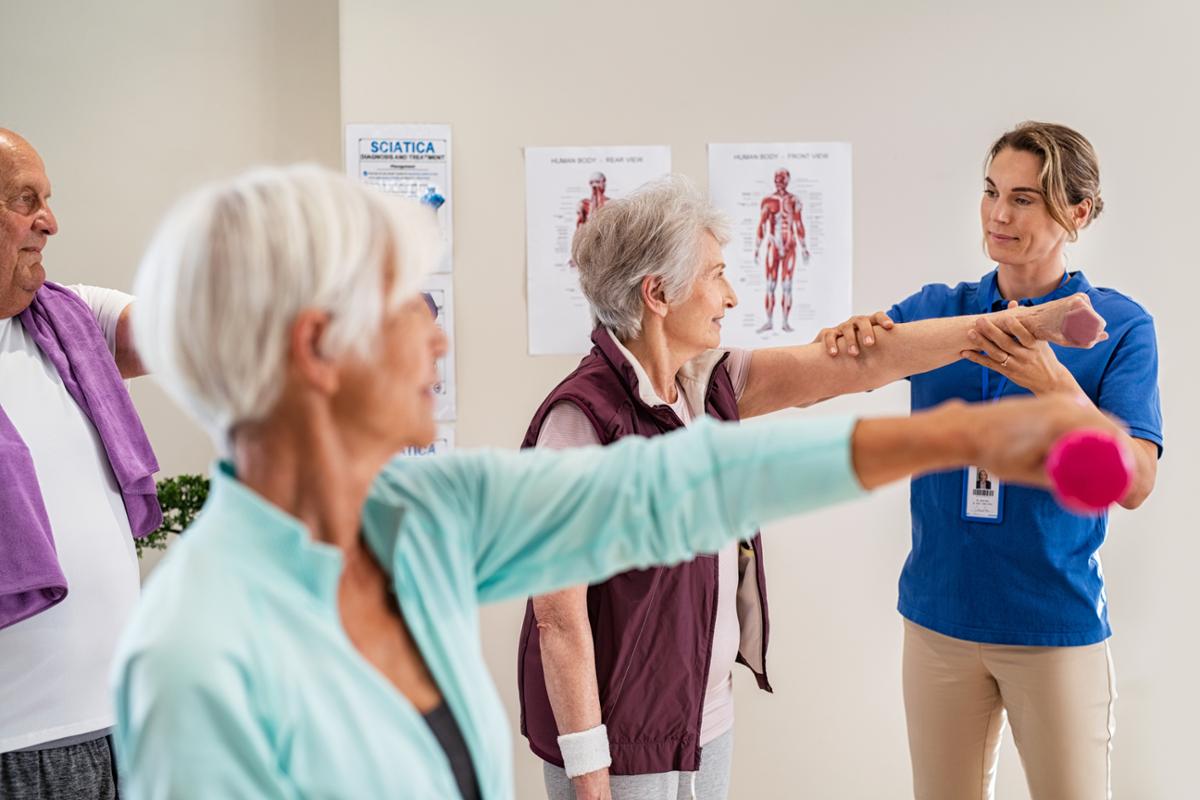
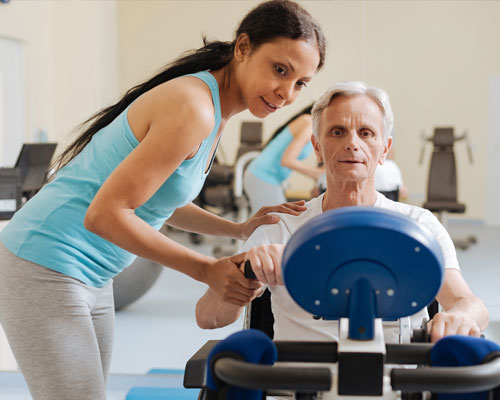
Gyms could provide rehab for stroke survivors Credit: Rido/shutterstock
In the next year 15 million will have strokes which will kill 5 million and leave another 5 million with a disability
Guidelines released recently recommend three to six hours of exercise daily to help reverse brain damage
The fitness industry is well-equipped to provide rehabilitation to stroke survivors with some assigned space, adapted equipment and trained staff
Experts working in this area say the moves need to come from our side, as the understaffed NHS doesn't have the time or headspace to take this action
HCM editor, Liz Terry, has called on the sector to step up to assist the NHS with stroke rehabilitation to avoid millions being left with life-changing disabilities.

Writing in the latest edition of HCM, Terry, says: “Globally, around 15 million will have a stroke in the next 12 months. Five million will die, five million will recover and five million will be left permanently impacted with life-changing brain injuries.”

Both swift medical treatment and rehabilitation, delivered in a timely way, can help the brain to heal and enable people to avoid long-term disability. But the window of opportunity is small, so action in the first three to six months is critical. Due to an overstretched NHS this often doesn’t happen, leaving people condemned to live with avoidable brain injuries.

With exercise being one of the most powerful interventions, this is a perfect opportunity for the health and fitness industry to provide its expertise. According to The National Clinical Guidance for Strokes, published in March 2023, six hours of activity each day, including exercise, is needed. While new guidelines from National Institute of Clinical Excellence (NICE), recommend three hours a day of exercise.

These targets are nowhere near being hit: evidence shows that hospital patients in the UK, for example, only receive around 14 minutes of physiotherapy a day, due to a lack of capacity within the health service, with some other nations faring worse.

Speaking in HCM’s stroke rehab feature, Dr Andy Kerr, from the University of Strathclyde, says: “On a typical hospital ward there may be two therapists for 40 or more stroke patients and when patients are discharged their homes are often not suitable for rehab work, so therapists are limited with the exercises they can prescribe.”

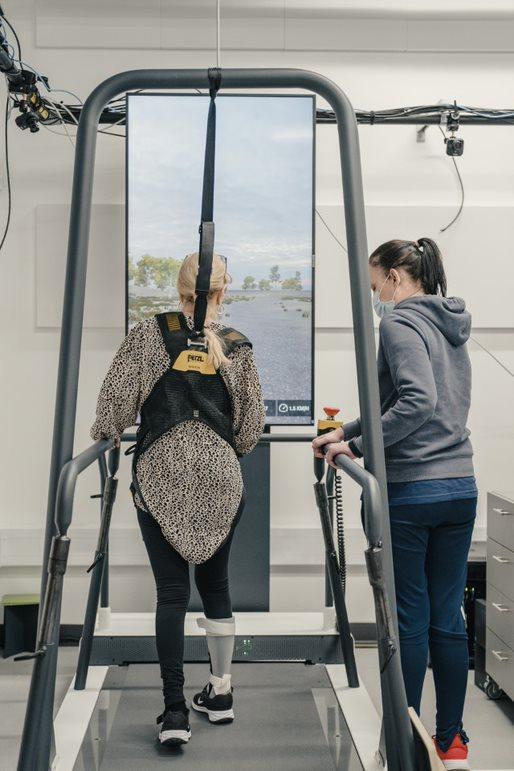
In response to the problem, The University of Strathclyde has been pioneering technology-enriched rehabilitation to address motor, cognitive and communication impairments caused by strokes and has launched a rehabilitation hub at the stroke unit of University Hospital Wishaw. Instead of sitting in bed, patients are able to use VR treadmills, power-assisted equipment, balance trainers, VR puzzles and problem-solving activities. Crucially, there is also a social aspect.

Kerr would like to set up more similar hubs around the country and calls on operators to connect with people post-stroke to help them mobilise and undertake balance work. He says our sector has the space, the expertise and many staff are already trained to understand stroke rehab, but stresses the move needs to come from the sector to invite stroke survivors and health care providers in to facilities: “It takes a very confidence person post-stroke to walk into a gym with their frame and get on an exercise bike.”

Lincs Inspire runs Active Forever, a referral scheme which offers a flexible, tailored programme at the Wellness Hub at Grimsby Health and Wellbeing Centre. Health improvement coordinator, Ian Shorley-Harlow, says when working with health professionals, you have to offer something to get something back. The Wellness Hub offers free studio space to specialist neurological nurses to run a rehab programme, which feeds clients back to the hub.

Shorley-Harlow points out the importance of staff training: “We continually upskill our staff to give them the confidence to engage with people with a range of health conditions, including stroke survivors. Our health partners often deliver the training, which gives them the confidence we can deliver the specialist services and support their work.”

Neurological physiotherapist and associate lecturer at Sheffield Hallam University, Rachel Young, says the stroke community doesn’t have the workforce to meet the new recommendations and that health and fitness operators could help bridge the gap by creating exercise spaces – the size of a squash court – featuring accessible and adaptive kit, such as Innerva’s power-assisted exercise equipment. Although a qualified physiotherapist would need to lead the initial session, they could then hand over to level 2/3 trained fitness professionals with experience of special populations who are trained in moving and handling.

“I believe this could be a significant opportunity for health and fitness operators,” says Young. “To succeed, they need to start engaging with their local stroke service providers, find space in their venues where they can accommodate people with stroke and other conditions and seek out those members of their team who want to lead and champion this work.”

Director at Miova, Andy King, says for collaboration with the health sector to be effective there needs to be a shift in attitude: “Rather than entering discussions with health bodies seeking financial support, we should adopt a collaborative and co-design approach. We need to understand the specific needs and constraints of healthcare partners so we can co-create solutions with them. If we concentrate on purpose, financial support is likely to follow.”

He points out the NHS is too understaffed to think outside of the box and the fitness sector needs to take the lead. “Healthcare professionals often don’t have the time or headspace to do anything different, so we’ve got to do a lot of this thinking for them,” he says. “We need to make it clear that we want to help and collaborate, and we’re not just in it for what we can get out of it.”

MP for Batley and Spen and chair of the All-Party Parliamentary Group for Sport, Kim Leadbeater, says the new NICE guidelines provide an opportunity for the two sectors to work together.

She is calling for a holistic, cross-departmental strategy for physical, mental and social wellbeing to embed health and wellbeing into all aspects of government policy. Leadbetter says there needs to be greater cross-sector working across the voluntary, public and private sectors, with local sports clubs working with GPs and social prescribers.

“There must be more focus on prevention and early intervention,” she says. “We can’t wait for people to get sick; we have to work harder to keep them out of NHS services, if we can get these things right, everything else will follow.”

A personal note from HCM head of news, Kath Hudson
At 89 my Dad was living independently, riding his vintage motorbikes, climbing ladders to maintain his house and strimming his extensive garden until a small stroke impacted his ability to move his left foot almost two years ago.

He didn’t get any help and a month later had a second stroke, which was a bit worse, and led to him being admitted to hospital for a short spell to get his physiotherapy underway. What was meant to be a couple of days, turned into eight weeks of being bed-bound, with barely any rehabilitation and loneliness, as visits were limited due to COVID. He also contracted COVID for the first time while he was hospitalised, which knocked him back further.

The treatment he had when he was discharged was minimal which led to him moving less, leading to muscle wastage, loss of confidence, then falls and then having to move out of his home into a care home, where his life revolves around his bed and an armchair. A far cry from whizzing around town on a motorbike. His first stroke was small and I believe his outcome could have been very different if he’d had access to support to keep him moving.

It fills me with hope that such advances are being made and future stroke survivors could potentially get better treatment. I wish my Dad hadn’t slipped through net and I would love HCM's campaign to mobilise support within the industry to start doing some lifechanging work.

As Liz Terry says: “There is already expertise in the sector, we just need more of it. Please make this one of your new year resolutions and let us know how your plans progress so we can share them.”

For tips on how to set up a stroke hub email University of Strathclyde on [email protected]

If you're doing any work in this area, please email [email protected] so we can give you a shout out.

The stroke rehab lab deploys VR treadmills Credit: University of Strathclyde
RELATED STORIES
  FEATURE: Editor's letter: Stroke rehabilitation


New guidelines for stroke rehabilitation have created an opportunity for the sector to change lives, says Liz Terry
  FEATURE: Talking point: Stroke rehab


With new stroke rehabilitation guideliness published in the US and the UK calling for more exercise interventions, Vicky Kiernander asks the experts how the health and fitness sector can intervene, to the benefit of patients, the sector and the medical profession
  FEATURE: Industry insights: Golden opportunity


As a result of the pandemic, the fitness sector is presented with a massive opportunity to make friends with the healthcare sector to improve the health of the nation and drive up penetration. Kath Hudson reports on what is happening and where the opportunities lie
  FEATURE: Everyone's talking about: NHS partnerships


Can exercise professionals gain the wider trust of the medical community, and play a pivotal role in the wellbeing agenda?
MORE NEWS
HCM News: Taking GLP-1s is linked to a decline in physical activity
People taking GLP-1 weight loss medications such as Ozempic, Wegovy, Mounjaro and Zepbound may be losing weight, but they’re also becoming less physically active, according to new research presented at the ENDO 2026 annual meeting of the Endocrine Society
Mubadala makes €1 billion bid for Pierre and Vacances
Abu Dhabi-based investment firm Mubadala Capital has made a binding, fully financed €1 billion offer to acquire Pierre and Vacances SA, the European holiday resort operator behind the continental European Center Parcs business.
Synergy The Retreat Show launches resource for retreat business leaders to showcase specialisms
Global retreat trade show, Synergy The Retreat Show, has launched a resource called The Source, which hosts an open-access online Transformation Series programme.
The SATCC announces first five-day Living with Cancer and Beyond retreat
The Standards Authority for Touch in Cancer Care (SATCC) charity has announced its first five- day Living with Cancer and Beyond retreat, which will be held at Carden Park Hotel and Spa in Cheshire, UK, between 1 and 5 September.
+ More news   

FEATURED SUPPLIERS

Longevity in spas: a strategic choice, not a default setting
Longevity has become one of the most debated concepts in contemporary wellness. [more...]

Why future-ready in-house laundry is the new luxury spa essential
In today’s premium spa environment, every detail shapes the guest experience – right down to the softness of towels and the freshness of linens. [more...]
+ More featured suppliers  
COMPANY PROFILES
Elemental Herbology

Founded in 2008 by a Traditional Chinese Medicine Practitioner, Elemental Herbology is a spa, retail [more...]
Robosculptor

Since its inception in 2019, roboSculptor has grown into an advanced, AI-powered platform that de [more...]
+ More profiles  
CATALOGUE GALLERY
 

+ More catalogues  

DIRECTORY
+ More directory  
DIARY


03-05 Jul 2026

World Championship in Massage

Copenhagen, Copenhagen, Denmark
23-26 Aug 2026

Elevate Spa Riviera Maya Edition

The Riviera Maya Edition Kanai, Playa del Carmen, Mexico
+ More diary  
 
ABOUT LEISURE MEDIA
LEISURE MEDIA MAGAZINES
LEISURE MEDIA HANDBOOKS
LEISURE MEDIA WEBSITES
LEISURE MEDIA PRODUCT SEARCH
 
SPA BUSINESS
SPA OPPORTUNITIES
SPA BUSINESS HANDBOOK
PRINT SUBSCRIPTIONS
FREE DIGITAL SUBSCRIPTIONS
ADVERTISE . CONTACT US

Leisure Media
Tel: +44 (0)1462 431385

©Cybertrek 2026
Uniting the world of spa & wellness
Get Spa Business and Spa Business insider digital magazines FREE
Sign up here ▸
News   Products   Magazine   Subscribe
NEWS
HCM campaigns for fitness sector to assist with stroke rehab
POSTED 09 Jan 2024 . BY Kath Hudson
Gyms could provide rehab for stroke survivors Credit: Rido/shutterstock
In the next year 15 million will have strokes which will kill 5 million and leave another 5 million with a disability
Guidelines released recently recommend three to six hours of exercise daily to help reverse brain damage
The fitness industry is well-equipped to provide rehabilitation to stroke survivors with some assigned space, adapted equipment and trained staff
Experts working in this area say the moves need to come from our side, as the understaffed NHS doesn't have the time or headspace to take this action
HCM editor, Liz Terry, has called on the sector to step up to assist the NHS with stroke rehabilitation to avoid millions being left with life-changing disabilities.

Writing in the latest edition of HCM, Terry, says: “Globally, around 15 million will have a stroke in the next 12 months. Five million will die, five million will recover and five million will be left permanently impacted with life-changing brain injuries.”

Both swift medical treatment and rehabilitation, delivered in a timely way, can help the brain to heal and enable people to avoid long-term disability. But the window of opportunity is small, so action in the first three to six months is critical. Due to an overstretched NHS this often doesn’t happen, leaving people condemned to live with avoidable brain injuries.

With exercise being one of the most powerful interventions, this is a perfect opportunity for the health and fitness industry to provide its expertise. According to The National Clinical Guidance for Strokes, published in March 2023, six hours of activity each day, including exercise, is needed. While new guidelines from National Institute of Clinical Excellence (NICE), recommend three hours a day of exercise.

These targets are nowhere near being hit: evidence shows that hospital patients in the UK, for example, only receive around 14 minutes of physiotherapy a day, due to a lack of capacity within the health service, with some other nations faring worse.

Speaking in HCM’s stroke rehab feature, Dr Andy Kerr, from the University of Strathclyde, says: “On a typical hospital ward there may be two therapists for 40 or more stroke patients and when patients are discharged their homes are often not suitable for rehab work, so therapists are limited with the exercises they can prescribe.”

In response to the problem, The University of Strathclyde has been pioneering technology-enriched rehabilitation to address motor, cognitive and communication impairments caused by strokes and has launched a rehabilitation hub at the stroke unit of University Hospital Wishaw. Instead of sitting in bed, patients are able to use VR treadmills, power-assisted equipment, balance trainers, VR puzzles and problem-solving activities. Crucially, there is also a social aspect.

Kerr would like to set up more similar hubs around the country and calls on operators to connect with people post-stroke to help them mobilise and undertake balance work. He says our sector has the space, the expertise and many staff are already trained to understand stroke rehab, but stresses the move needs to come from the sector to invite stroke survivors and health care providers in to facilities: “It takes a very confidence person post-stroke to walk into a gym with their frame and get on an exercise bike.”

Lincs Inspire runs Active Forever, a referral scheme which offers a flexible, tailored programme at the Wellness Hub at Grimsby Health and Wellbeing Centre. Health improvement coordinator, Ian Shorley-Harlow, says when working with health professionals, you have to offer something to get something back. The Wellness Hub offers free studio space to specialist neurological nurses to run a rehab programme, which feeds clients back to the hub.

Shorley-Harlow points out the importance of staff training: “We continually upskill our staff to give them the confidence to engage with people with a range of health conditions, including stroke survivors. Our health partners often deliver the training, which gives them the confidence we can deliver the specialist services and support their work.”

Neurological physiotherapist and associate lecturer at Sheffield Hallam University, Rachel Young, says the stroke community doesn’t have the workforce to meet the new recommendations and that health and fitness operators could help bridge the gap by creating exercise spaces – the size of a squash court – featuring accessible and adaptive kit, such as Innerva’s power-assisted exercise equipment. Although a qualified physiotherapist would need to lead the initial session, they could then hand over to level 2/3 trained fitness professionals with experience of special populations who are trained in moving and handling.

“I believe this could be a significant opportunity for health and fitness operators,” says Young. “To succeed, they need to start engaging with their local stroke service providers, find space in their venues where they can accommodate people with stroke and other conditions and seek out those members of their team who want to lead and champion this work.”

Director at Miova, Andy King, says for collaboration with the health sector to be effective there needs to be a shift in attitude: “Rather than entering discussions with health bodies seeking financial support, we should adopt a collaborative and co-design approach. We need to understand the specific needs and constraints of healthcare partners so we can co-create solutions with them. If we concentrate on purpose, financial support is likely to follow.”

He points out the NHS is too understaffed to think outside of the box and the fitness sector needs to take the lead. “Healthcare professionals often don’t have the time or headspace to do anything different, so we’ve got to do a lot of this thinking for them,” he says. “We need to make it clear that we want to help and collaborate, and we’re not just in it for what we can get out of it.”

MP for Batley and Spen and chair of the All-Party Parliamentary Group for Sport, Kim Leadbeater, says the new NICE guidelines provide an opportunity for the two sectors to work together.

She is calling for a holistic, cross-departmental strategy for physical, mental and social wellbeing to embed health and wellbeing into all aspects of government policy. Leadbetter says there needs to be greater cross-sector working across the voluntary, public and private sectors, with local sports clubs working with GPs and social prescribers.

“There must be more focus on prevention and early intervention,” she says. “We can’t wait for people to get sick; we have to work harder to keep them out of NHS services, if we can get these things right, everything else will follow.”

A personal note from HCM head of news, Kath Hudson
At 89 my Dad was living independently, riding his vintage motorbikes, climbing ladders to maintain his house and strimming his extensive garden until a small stroke impacted his ability to move his left foot almost two years ago.

He didn’t get any help and a month later had a second stroke, which was a bit worse, and led to him being admitted to hospital for a short spell to get his physiotherapy underway. What was meant to be a couple of days, turned into eight weeks of being bed-bound, with barely any rehabilitation and loneliness, as visits were limited due to COVID. He also contracted COVID for the first time while he was hospitalised, which knocked him back further.

The treatment he had when he was discharged was minimal which led to him moving less, leading to muscle wastage, loss of confidence, then falls and then having to move out of his home into a care home, where his life revolves around his bed and an armchair. A far cry from whizzing around town on a motorbike. His first stroke was small and I believe his outcome could have been very different if he’d had access to support to keep him moving.

It fills me with hope that such advances are being made and future stroke survivors could potentially get better treatment. I wish my Dad hadn’t slipped through net and I would love HCM's campaign to mobilise support within the industry to start doing some lifechanging work.

As Liz Terry says: “There is already expertise in the sector, we just need more of it. Please make this one of your new year resolutions and let us know how your plans progress so we can share them.”

For tips on how to set up a stroke hub email University of Strathclyde on [email protected]

If you're doing any work in this area, please email [email protected] so we can give you a shout out.
The stroke rehab lab deploys VR treadmills Credit: University of Strathclyde
RELATED STORIES
FEATURE: Editor's letter: Stroke rehabilitation


New guidelines for stroke rehabilitation have created an opportunity for the sector to change lives, says Liz Terry
FEATURE: Talking point: Stroke rehab


With new stroke rehabilitation guideliness published in the US and the UK calling for more exercise interventions, Vicky Kiernander asks the experts how the health and fitness sector can intervene, to the benefit of patients, the sector and the medical profession
FEATURE: Industry insights: Golden opportunity


As a result of the pandemic, the fitness sector is presented with a massive opportunity to make friends with the healthcare sector to improve the health of the nation and drive up penetration. Kath Hudson reports on what is happening and where the opportunities lie

FEATURE: Everyone's talking about: NHS partnerships


Can exercise professionals gain the wider trust of the medical community, and play a pivotal role in the wellbeing agenda?
MORE NEWS
HCM News: Taking GLP-1s is linked to a decline in physical activity
People taking GLP-1 weight loss medications such as Ozempic, Wegovy, Mounjaro and Zepbound may be losing weight, but they’re also becoming less physically active, according to new research presented at the ENDO 2026 annual meeting of the Endocrine Society
Mubadala makes €1 billion bid for Pierre and Vacances
Abu Dhabi-based investment firm Mubadala Capital has made a binding, fully financed €1 billion offer to acquire Pierre and Vacances SA, the European holiday resort operator behind the continental European Center Parcs business.
Synergy The Retreat Show launches resource for retreat business leaders to showcase specialisms
Global retreat trade show, Synergy The Retreat Show, has launched a resource called The Source, which hosts an open-access online Transformation Series programme.
The SATCC announces first five-day Living with Cancer and Beyond retreat
The Standards Authority for Touch in Cancer Care (SATCC) charity has announced its first five- day Living with Cancer and Beyond retreat, which will be held at Carden Park Hotel and Spa in Cheshire, UK, between 1 and 5 September.
Palazzo di Varignana launches family wellbeing and longevity retreat in Emilia Romagna
Palazzo di Varignana, in the Emilia Romagna region of Italy, has created a new tailored health programme designed specifically for families.
Ansana Wellness and Spa debuts at Patmos Aktis as it joins Marriott
Patmos Aktis, a Luxury Collection Resort and Spa, has opened in Greece, with a renovated and rebranded wellness offering called Ansana Wellness and Spa.
+ More news   
 
FEATURED SUPPLIERS

Longevity in spas: a strategic choice, not a default setting
Longevity has become one of the most debated concepts in contemporary wellness. [more...]

Why future-ready in-house laundry is the new luxury spa essential
In today’s premium spa environment, every detail shapes the guest experience – right down to the softness of towels and the freshness of linens. [more...]
+ More featured suppliers  
COMPANY PROFILES
Elemental Herbology

Founded in 2008 by a Traditional Chinese Medicine Practitioner, Elemental Herbology is a spa, retail [more...]
+ More profiles  
CATALOGUE GALLERY
+ More catalogues  

DIRECTORY
+ More directory  
DIARY


03-05 Jul 2026

World Championship in Massage

Copenhagen, Copenhagen, Denmark
23-26 Aug 2026

Elevate Spa Riviera Maya Edition

The Riviera Maya Edition Kanai, Playa del Carmen, Mexico
+ More diary  


ADVERTISE . CONTACT US

Leisure Media
Tel: +44 (0)1462 431385

©Cybertrek 2026

ABOUT LEISURE MEDIA
LEISURE MEDIA MAGAZINES
LEISURE MEDIA HANDBOOKS
LEISURE MEDIA WEBSITES
LEISURE MEDIA PRODUCT SEARCH
PRINT SUBSCRIPTIONS
FREE DIGITAL SUBSCRIPTIONS