Latest
issue
GET SPA BUSINESS
magazine
Yes! Send me the FREE digital editions of Spa Business and Spa Business insider magazines and the FREE weekly Spa Business and Spa Business insider ezines and breaking news alerts!
Not right now, thanksclose this window I've already subscribed.
Uniting the world of spa & wellness
Get Spa Business and Spa Business insider digital magazines FREE
Sign up here ▸
News   Features   Products   Company profilesProfiles   Press releasesProfiles   Magazine   Handbook   Advertise    Subscribe  
NEWS
Increasing exercise levels at older age reduces risk of heart disease and stroke
POSTED 20 Nov 2019 . BY Tom Walker
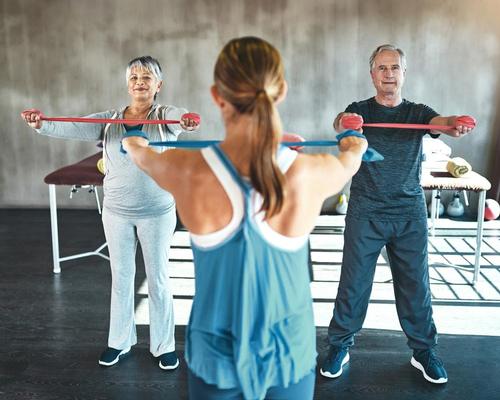
Those who increased their levels of activity had a reduced risk of cardiovascular disease of up to 11 per cent Credit: Shutterstock
People over the age of 60 should increase their exercise levels in order to prevent heart disease and stroke.

Findings from a study of more than 1.1 million people aged 60+ found that those who did less moderate or vigorous physical activity as they got older had as much as a 27 per cent increased risk of heart and blood vessel problems.

In contrast, those who increased their levels of activity had a reduced risk of cardiovascular disease of up to 11 per cent.

The study, published in the European Heart Journal, shows that he link between levels of physical activity and risk of cardiovascular disease in older people held true even for those with disabilities and chronic conditions such as high blood pressure, high cholesterol levels and type 2 diabetes.

The research was carried out by the Seoul National University Graduate School Department of Biomedical Sciences in South Korea.

“The most important message from this research is that older adults should increase or maintain their exercise frequency to prevent cardiovascular disease," said Kyuwoong Kim, lead author of the study.

"Globally, this finding is of public health importance because the world’s population aged 60 years and older is expected to total two billion by 2050, which is an increase from 900 million in 2015 according to the World Health Organization.

"While older adults find it difficult to engage in regular physical activity as they age, our research suggests that it is necessary to be more physically active for cardiovascular health, and this is also true for people with disabilities and chronic health conditions.

“We believe that community-based programmes to encourage physical activity among older adults should be promoted by governments. Also, from a clinical perspective, physicians should ‘prescribe’ physical activity along with other recommended medical treatments for people with a high risk of cardiovascular disease.”

The research studied 1,119,925 men and women aged 60 years or older and who underwent two consecutive health checks provided by the Korean National Health Insurance Service (NIHS) from 2009 to 2010 and 2011 to 2012.

The participants were followed up until December 2016.

At each health check the participants answered questions about their physical activity and lifestyle. The researchers calculated the amount of moderate exercise (30 minutes or more a day of brisk walking, dancing, gardening) and vigorous exercise (20 minutes or more a day of running, fast cycling, aerobic exercise) per week at each screening, and how it had changed during the two years between the screenings.

The researchers found that people who moved from being continuously inactive at the 2009-2010 health check to being moderately or vigorously active three to four times a week at the 2011-2012 health check had an 11 per cent reduced risk of cardiovascular problems.

Those who were moderately or vigorously active one or two times a week at the first check had a 10 per cent reduced risk if they increased their activity to five or more times a week.

In contrast, those who were moderately or vigorously active more than five times a week at the first check and then became continuously inactive at the second check had a 27 per cent increased risk of cardiovascular problems.

When the researchers looked specifically at people with disabilities and chronic conditions, they found that those who changed from being inactive to being moderately or vigorously active three to four times a week also reduced their risk of cardiovascular problems. People with a disability had a reduced risk of 16 per cent, and those with diabetes, raised blood pressure or cholesterol levels had a reduced risk of between 4-7 per cent.

• To read the full research, click here

RELATED STORIES
  University study: never too late to get into fitness


Older people who have never taken part in sustained exercise programmes have the same ability to build muscle mass as highly trained master athletes of a similar age.
  'Silver pound' a significant growth driver for public leisure


Creating opportunities for older people to get physically active represents a major driver for growth in public leisure, according to new research.
  Not exercising 'worse for health than smoking, diabetes and heart disease'


A hard-hitting new study claims that living a sedentary lifestyle is more detrimental to health than smoking, diabetes and heart disease.
MORE NEWS
UK updates physical activity guidelines with focus on daily movement
The UK's four Chief Medical Officers have published a refreshed edition of Physical activity guidelines: UK Chief Medical Officers' report, updating the evidence that underpins the nation's physical activity recommendations and placing greater emphasis on strength, balance, reducing sedentary behaviour and, for the first time, supporting people taking weight loss medications.
Sauna advocate Becky Pelkonen drafts global public sauna-bathing charter
Becky Pelkonen, the sauna advocate and researcher, has unveiled the draft of a global public sauna-bathing charter.
Marriott International partners with Fitwel for wellness solutions across its residential portfolio
Marriott International has partnered with Fitwel, a healthy building certification system that aims to optimise occupant health.
Anna Bjurstam steps down from Six Senses to build new company Wahayla
Anna Bjurstam has left her role as Wellness Pioneer at Six Senses Hotels and Resorts and launched a new wellness, longevity and “consciousness consultancy” called Wahayla.
+ More news   

FEATURED SUPPLIERS

Embrace the chill: TechnoAlpin's Snowsky revolutionises post-fitness recovery with falling snow
In the fast-paced world of fitness and wellness, where high-intensity workouts push us to our limits and the sweat pours, the importance of efficient recovery cannot be overstated. [more...]

Zerobody Cryo: Starpool's contrast therapy solution
Contrast therapy, based on the alternation of hot and cold rituals, has become one of the most valued practices in the fields of wellness and recovery. [more...]
+ More featured suppliers  
COMPANY PROFILES
Prism Light Pod

Prism Light Pod launched its first whole-body red light bed in 2016. We expanded with the Prism Li [more...]
marocMaroc

Since its creation in 2007, MarocMaroc has invited the world to explore Moroccan beauty through a u [more...]
+ More profiles  
CATALOGUE GALLERY
 

+ More catalogues  

DIRECTORY
+ More directory  
DIARY


23-26 Aug 2026

Elevate Spa Riviera Maya Edition

The Riviera Maya Edition Kanai, Playa del Carmen, Mexico
10-12 Sep 2026

ASEAN Patio Pool Spa Expo 2026

MITEC Kuala Lumpur,Malaysia, Malaysia
+ More diary  
 
ABOUT LEISURE MEDIA
LEISURE MEDIA MAGAZINES
LEISURE MEDIA HANDBOOKS
LEISURE MEDIA WEBSITES
LEISURE MEDIA PRODUCT SEARCH
 
SPA BUSINESS
SPA OPPORTUNITIES
SPA BUSINESS HANDBOOK
PRINT SUBSCRIPTIONS
FREE DIGITAL SUBSCRIPTIONS
ADVERTISE . CONTACT US

Leisure Media
Tel: +44 (0)1462 431385

©Cybertrek 2026
Uniting the world of spa & wellness
Get Spa Business and Spa Business insider digital magazines FREE
Sign up here ▸
News   Products   Magazine   Subscribe
NEWS
Increasing exercise levels at older age reduces risk of heart disease and stroke
POSTED 20 Nov 2019 . BY Tom Walker
Those who increased their levels of activity had a reduced risk of cardiovascular disease of up to 11 per cent Credit: Shutterstock
People over the age of 60 should increase their exercise levels in order to prevent heart disease and stroke.

Findings from a study of more than 1.1 million people aged 60+ found that those who did less moderate or vigorous physical activity as they got older had as much as a 27 per cent increased risk of heart and blood vessel problems.

In contrast, those who increased their levels of activity had a reduced risk of cardiovascular disease of up to 11 per cent.

The study, published in the European Heart Journal, shows that he link between levels of physical activity and risk of cardiovascular disease in older people held true even for those with disabilities and chronic conditions such as high blood pressure, high cholesterol levels and type 2 diabetes.

The research was carried out by the Seoul National University Graduate School Department of Biomedical Sciences in South Korea.

“The most important message from this research is that older adults should increase or maintain their exercise frequency to prevent cardiovascular disease," said Kyuwoong Kim, lead author of the study.

"Globally, this finding is of public health importance because the world’s population aged 60 years and older is expected to total two billion by 2050, which is an increase from 900 million in 2015 according to the World Health Organization.

"While older adults find it difficult to engage in regular physical activity as they age, our research suggests that it is necessary to be more physically active for cardiovascular health, and this is also true for people with disabilities and chronic health conditions.

“We believe that community-based programmes to encourage physical activity among older adults should be promoted by governments. Also, from a clinical perspective, physicians should ‘prescribe’ physical activity along with other recommended medical treatments for people with a high risk of cardiovascular disease.”

The research studied 1,119,925 men and women aged 60 years or older and who underwent two consecutive health checks provided by the Korean National Health Insurance Service (NIHS) from 2009 to 2010 and 2011 to 2012.

The participants were followed up until December 2016.

At each health check the participants answered questions about their physical activity and lifestyle. The researchers calculated the amount of moderate exercise (30 minutes or more a day of brisk walking, dancing, gardening) and vigorous exercise (20 minutes or more a day of running, fast cycling, aerobic exercise) per week at each screening, and how it had changed during the two years between the screenings.

The researchers found that people who moved from being continuously inactive at the 2009-2010 health check to being moderately or vigorously active three to four times a week at the 2011-2012 health check had an 11 per cent reduced risk of cardiovascular problems.

Those who were moderately or vigorously active one or two times a week at the first check had a 10 per cent reduced risk if they increased their activity to five or more times a week.

In contrast, those who were moderately or vigorously active more than five times a week at the first check and then became continuously inactive at the second check had a 27 per cent increased risk of cardiovascular problems.

When the researchers looked specifically at people with disabilities and chronic conditions, they found that those who changed from being inactive to being moderately or vigorously active three to four times a week also reduced their risk of cardiovascular problems. People with a disability had a reduced risk of 16 per cent, and those with diabetes, raised blood pressure or cholesterol levels had a reduced risk of between 4-7 per cent.

• To read the full research, click here

RELATED STORIES
University study: never too late to get into fitness


Older people who have never taken part in sustained exercise programmes have the same ability to build muscle mass as highly trained master athletes of a similar age.
'Silver pound' a significant growth driver for public leisure


Creating opportunities for older people to get physically active represents a major driver for growth in public leisure, according to new research.
Not exercising 'worse for health than smoking, diabetes and heart disease'


A hard-hitting new study claims that living a sedentary lifestyle is more detrimental to health than smoking, diabetes and heart disease.
MORE NEWS
UK updates physical activity guidelines with focus on daily movement
The UK's four Chief Medical Officers have published a refreshed edition of Physical activity guidelines: UK Chief Medical Officers' report, updating the evidence that underpins the nation's physical activity recommendations and placing greater emphasis on strength, balance, reducing sedentary behaviour and, for the first time, supporting people taking weight loss medications.
Sauna advocate Becky Pelkonen drafts global public sauna-bathing charter
Becky Pelkonen, the sauna advocate and researcher, has unveiled the draft of a global public sauna-bathing charter.
Marriott International partners with Fitwel for wellness solutions across its residential portfolio
Marriott International has partnered with Fitwel, a healthy building certification system that aims to optimise occupant health.
Anna Bjurstam steps down from Six Senses to build new company Wahayla
Anna Bjurstam has left her role as Wellness Pioneer at Six Senses Hotels and Resorts and launched a new wellness, longevity and “consciousness consultancy” called Wahayla.
Fairmont Cheshire, The Mere, opens with spa philosophy of ‘Wellness without Walls’
Fairmont Cheshire, The Mere, has opened today (10 July) in the Northwest of England with a 1,715sq m Fairmont Spa that has been designed using a ‘Wellness without Walls’ concept.
'Minor wellness hotels' recorded the strongest growth across top KPIs in 2025, finds RLA Global
Wellness hotels generating less than US$1 million (€932,700, £785,200) – or 10 per cent of total revenue from wellness and leisure – recorded the strongest RevPAR and TRevPAR growth in 2025 across categories when compared with 2024, according to the latest Wellness Real Estate Report by RLA Global, produced in partnership with P and L benchmarking firm HotStats.
+ More news   
 
FEATURED SUPPLIERS

Embrace the chill: TechnoAlpin's Snowsky revolutionises post-fitness recovery with falling snow
In the fast-paced world of fitness and wellness, where high-intensity workouts push us to our limits and the sweat pours, the importance of efficient recovery cannot be overstated. [more...]

Zerobody Cryo: Starpool's contrast therapy solution
Contrast therapy, based on the alternation of hot and cold rituals, has become one of the most valued practices in the fields of wellness and recovery. [more...]
+ More featured suppliers  

COMPANY PROFILES
Prism Light Pod

Prism Light Pod launched its first whole-body red light bed in 2016. We expanded with the Prism Li [more...]

+ More profiles  
CATALOGUE GALLERY
+ More catalogues  

DIRECTORY
+ More directory  
DIARY


23-26 Aug 2026

Elevate Spa Riviera Maya Edition

The Riviera Maya Edition Kanai, Playa del Carmen, Mexico
10-12 Sep 2026

ASEAN Patio Pool Spa Expo 2026

MITEC Kuala Lumpur,Malaysia, Malaysia
+ More diary  


ADVERTISE . CONTACT US

Leisure Media
Tel: +44 (0)1462 431385

©Cybertrek 2026

ABOUT LEISURE MEDIA
LEISURE MEDIA MAGAZINES
LEISURE MEDIA HANDBOOKS
LEISURE MEDIA WEBSITES
LEISURE MEDIA PRODUCT SEARCH
PRINT SUBSCRIPTIONS
FREE DIGITAL SUBSCRIPTIONS