Latest
issue
GET SPA BUSINESS
magazine
Yes! Send me the FREE digital editions of Spa Business and Spa Business insider magazines and the FREE weekly Spa Business and Spa Business insider ezines and breaking news alerts!
Not right now, thanksclose this window I've already subscribed.
Uniting the world of spa & wellness
Get Spa Business and Spa Business insider digital magazines FREE
Sign up here ▸
News   Features   Products   Company profilesProfiles   Press releasesProfiles   Magazine   Handbook   Advertise    Subscribe  
NEWS
Life gets in the way of exercise, women tell Vitality researchers
POSTED 08 Jan 2025 . BY Kath Hudson
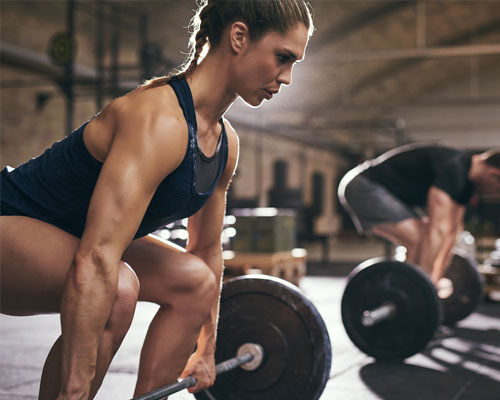
Vitality calls on the industry to do more to accommodate the needs of women Credit: shutterstock/Oksana Kuzmina
Only 23 per cent of UK women are meeting activity guidelines, says research from Vitality
Barriers include fear of judgement, work and caring responsibilities
Gym-based classes are the second most popular form of exercise
Report says this is not solely the responsibility of women to fix
Insurance company, Vitality, has published a report into the exercise habits of British women, and explores the critical barriers preventing many from meeting physical activity guidelines.

Active Women, Healthy Lives: Understanding Barriers to Women’s Participation in Physical Activity, is based on input from 6,000 women from across the UK, who were questioned by FGS Global in June 2024. Additionally, focus groups were held with physical activity professionals including The Well HQ, Women in Sport, Parkrun, Dame Jessica Ennis-Hill, Gabby Logan, This Woman Runs and England Netball. Twenty six in-depth stakeholder interviews were conducted with academics, politicians, policymakers, athletes and influencers.

The findings suggest there is a long way to go in order to get all women to reach the WHO guidelines of 150 minutes of moderate intensity each week. The report found that only 23 per cent of women engage in 30 minutes of exercise a week, or achieve 7,000 steps a day five or more times a week.

Eighty per cent of women cite time constraints as a barrier to exercise, whereas only 35 per cent of men give this as a reason for not exercising. Furthermore, 36 per cent of women say they feel guilty taking time for themselves. While work, caregiving responsibilities and household chores are seen as non-negotiable, exercise is seen as “a nice to have.”

The three main barriers to participation are a lack of motivation (82 per cent); a lack of enjoyment (65 per cent) and a fear of judgment about either physical ability or body image (62 per cent.)

Although physical activity is as effective as medication in improving mild to moderate depression, 49 per cent of women said their mental health issues negatively impact their activity levels.

The report says the narrative around exercise must change so women understand the important reasons to exercise in terms of looking after their health, but also shift the commonly held perception that exercising is predominantly a weight management tool.

The issues
Participation drops off when hormones kick in as teenagers. One million teenage girls who once considered themselves sporty disengage with physical activity following primary school. Reasons given were feeling judged, lack of confidence, pressures of schoolwork and not feeling safe outside.

Busy working lives are cited as a problem among many young women starting out in their careers.

Seventy four per cent said that motherhood changed their relationship with exercise: 40 per cent said that having a baby stopped them being active, rising to 53 per cent for those with children up to the age of four.

As well as time constraints which come with motherhood, physical changes also pose an issue. For example, 37 per cent of respondents said their pelvic floor health stops them from exercising. Other barriers include fatigue, fear of injury and guilt about time away from their newborn.

When women have been inactive for a long time it is even harder to get back into the habit. While 41 per cent expressed the desire to move more, two-thirds reported that their weight, lack of strength and low fitness levels negatively impacts their ability to exercise.

Favourite exercises
Walking is the most popular form of exercise, with 64 per cent of women saying this is their movement of choice. The report states that while walking has significant health benefits, it is foundational rather than the end goal.

Gym-based classes are the second most popular form of exercise, although much lower, at 27 per cent.

Jogging and running is also popular among younger women, with 20.5 per cent of 20 to 39-year-olds using it as a way of keeping active.

While team sports have great benefits in terms of social skills and confidence – an EY report showed that 94 per cent of C-suite women played sport – only 4 per cent of women play team sports. Stakeholders say this could be due to intimidation, but also because there are not enough team sport options to fit around the busy schedules of women.

The recommendations
Vitality emphasises this is not solely the responsibility of women to fix and worked with The Well HQ and Women in Sport to produce a number of recommendations for employers, government, society as a whole – for example men stepping up with the caregiving and household chores – and also for the fitness industry.

With so many women reporting a fear of judgement as a barrier to exercise, stakeholders suggest the need for more inclusive, women-only spaces, particularly for younger women who are most susceptible to these pressures.

The demand for personalisation was strong: 65 per cent of women said free fitness plans, or personalised workout programmes, would encourage them to exercise more.

Better information is also needed. Many women turn to the overloaded NHS for advice; social media is another source, but is not regulated and often inaccurate, so the most popular source of advice currently is from friends and family. The fitness industry could step into this gap.

Benefits apart from weight management need to be presented – discouraging women from looking at calories burned and instead using other metrics for motivation, such as weights lifted, distance covered, power output or improved sleep and stress resilience.

It’s also important that women are not grouped together as one cohort – the needs of someone exercising again after having a baby are vastly different to an older woman exercising for the first time in a decade. Vitality recommends embedding women-specific training within existing personal training and sports qualifications as a mandatory requirement.

Women then need to be segmented into different groups according to their age and life stage and offered tailored activity options. Health checks should be offered and more inclusive facilities to accommodate their lives and needs was also suggested, for example childcare provision.

Fun and social solutions are needed to change the perception of exercise being unenjoyable. To build the exercise habit, the creation of more snackable workouts is suggested, along with showcasing a greater variety of group sports and activities at times which can fit with the busy schedule of women and creating more opportunities for social activity alongside physical activity.

RELATED STORIES
  The Well HQ partners with The Fitness Group to deliver female-focused training


Female health expert, The Well HQ has teamed up with training provider, The Fitness Group, to launch education courses aimed at upskilling PTs in female health.
  FEATURE: Industry insights: The enjoyment gap


Recent research by Nuffield Health and Sport England shows women are less active than men. Kath Hudson looks at some of the work underway to close the enjoyment gap
MORE NEWS
Luxury resort coming to Hunter Valley will have longevity spa
Private hotel owner and developer HVL Hotels will open a new luxury resort and tourism destination called Laval Hunter Valley in the second half of 2027 in Pokolbin, Australia.
Rocco Forte’s Verdura Resort to host wellness festival Alma near emerging Blue Zone in Sicily
The annual wellness festival dedicated to wellbeing, culture, longevity and human connection, called Alma, will be hosted by Rocco Forte hotel, Verdura Resort in Sicily, Italy.
Feisal Jaffer becomes chief development officer for Capella Hotel Group
Capella Hotel Group has appointed Feisal Jaffer as chief development officer as the company ramps up its global expansion of both its Capella and Patina brands.
Industry mourns the loss of Les Mills, a founding father of fitness
Les Mills, whose name became synonymous with one of the world's leading fitness brands, has passed away peacefully at the age of 91.
+ More news   

FEATURED SUPPLIERS

Longevity in spas: a strategic choice, not a default setting
Longevity has become one of the most debated concepts in contemporary wellness. [more...]

Introducing Glass Act by Templespa
Introducing Glass Act, your new go-to eye serum for brighter, smoother, beautifully awakened eyes. [more...]
+ More featured suppliers  
COMPANY PROFILES
Elemis

Elemis was founded in London in 1989 by Linda Steiner whose vision was to create a skincare range as [more...]
Klafs GmbH

Founded in 1928, Klafs is known as an award winning, world-leading trendsetter in wellness and spa. [more...]
+ More profiles  
CATALOGUE GALLERY
 

+ More catalogues  

DIRECTORY
+ More directory  
DIARY


03-05 Jul 2026

World Championship in Massage

Copenhagen, Copenhagen, Denmark
23-26 Aug 2026

Elevate Spa Riviera Maya Edition

The Riviera Maya Edition Kanai, Playa del Carmen, Mexico
+ More diary  
 
ABOUT LEISURE MEDIA
LEISURE MEDIA MAGAZINES
LEISURE MEDIA HANDBOOKS
LEISURE MEDIA WEBSITES
LEISURE MEDIA PRODUCT SEARCH
 
SPA BUSINESS
SPA OPPORTUNITIES
SPA BUSINESS HANDBOOK
PRINT SUBSCRIPTIONS
FREE DIGITAL SUBSCRIPTIONS
ADVERTISE . CONTACT US

Leisure Media
Tel: +44 (0)1462 431385

©Cybertrek 2026
Uniting the world of spa & wellness
Get Spa Business and Spa Business insider digital magazines FREE
Sign up here ▸
News   Products   Magazine   Subscribe
NEWS
Life gets in the way of exercise, women tell Vitality researchers
POSTED 08 Jan 2025 . BY Kath Hudson
Vitality calls on the industry to do more to accommodate the needs of women Credit: shutterstock/Oksana Kuzmina
Only 23 per cent of UK women are meeting activity guidelines, says research from Vitality
Barriers include fear of judgement, work and caring responsibilities
Gym-based classes are the second most popular form of exercise
Report says this is not solely the responsibility of women to fix
Insurance company, Vitality, has published a report into the exercise habits of British women, and explores the critical barriers preventing many from meeting physical activity guidelines.

Active Women, Healthy Lives: Understanding Barriers to Women’s Participation in Physical Activity, is based on input from 6,000 women from across the UK, who were questioned by FGS Global in June 2024. Additionally, focus groups were held with physical activity professionals including The Well HQ, Women in Sport, Parkrun, Dame Jessica Ennis-Hill, Gabby Logan, This Woman Runs and England Netball. Twenty six in-depth stakeholder interviews were conducted with academics, politicians, policymakers, athletes and influencers.

The findings suggest there is a long way to go in order to get all women to reach the WHO guidelines of 150 minutes of moderate intensity each week. The report found that only 23 per cent of women engage in 30 minutes of exercise a week, or achieve 7,000 steps a day five or more times a week.

Eighty per cent of women cite time constraints as a barrier to exercise, whereas only 35 per cent of men give this as a reason for not exercising. Furthermore, 36 per cent of women say they feel guilty taking time for themselves. While work, caregiving responsibilities and household chores are seen as non-negotiable, exercise is seen as “a nice to have.”

The three main barriers to participation are a lack of motivation (82 per cent); a lack of enjoyment (65 per cent) and a fear of judgment about either physical ability or body image (62 per cent.)

Although physical activity is as effective as medication in improving mild to moderate depression, 49 per cent of women said their mental health issues negatively impact their activity levels.

The report says the narrative around exercise must change so women understand the important reasons to exercise in terms of looking after their health, but also shift the commonly held perception that exercising is predominantly a weight management tool.

The issues
Participation drops off when hormones kick in as teenagers. One million teenage girls who once considered themselves sporty disengage with physical activity following primary school. Reasons given were feeling judged, lack of confidence, pressures of schoolwork and not feeling safe outside.

Busy working lives are cited as a problem among many young women starting out in their careers.

Seventy four per cent said that motherhood changed their relationship with exercise: 40 per cent said that having a baby stopped them being active, rising to 53 per cent for those with children up to the age of four.

As well as time constraints which come with motherhood, physical changes also pose an issue. For example, 37 per cent of respondents said their pelvic floor health stops them from exercising. Other barriers include fatigue, fear of injury and guilt about time away from their newborn.

When women have been inactive for a long time it is even harder to get back into the habit. While 41 per cent expressed the desire to move more, two-thirds reported that their weight, lack of strength and low fitness levels negatively impacts their ability to exercise.

Favourite exercises
Walking is the most popular form of exercise, with 64 per cent of women saying this is their movement of choice. The report states that while walking has significant health benefits, it is foundational rather than the end goal.

Gym-based classes are the second most popular form of exercise, although much lower, at 27 per cent.

Jogging and running is also popular among younger women, with 20.5 per cent of 20 to 39-year-olds using it as a way of keeping active.

While team sports have great benefits in terms of social skills and confidence – an EY report showed that 94 per cent of C-suite women played sport – only 4 per cent of women play team sports. Stakeholders say this could be due to intimidation, but also because there are not enough team sport options to fit around the busy schedules of women.

The recommendations
Vitality emphasises this is not solely the responsibility of women to fix and worked with The Well HQ and Women in Sport to produce a number of recommendations for employers, government, society as a whole – for example men stepping up with the caregiving and household chores – and also for the fitness industry.

With so many women reporting a fear of judgement as a barrier to exercise, stakeholders suggest the need for more inclusive, women-only spaces, particularly for younger women who are most susceptible to these pressures.

The demand for personalisation was strong: 65 per cent of women said free fitness plans, or personalised workout programmes, would encourage them to exercise more.

Better information is also needed. Many women turn to the overloaded NHS for advice; social media is another source, but is not regulated and often inaccurate, so the most popular source of advice currently is from friends and family. The fitness industry could step into this gap.

Benefits apart from weight management need to be presented – discouraging women from looking at calories burned and instead using other metrics for motivation, such as weights lifted, distance covered, power output or improved sleep and stress resilience.

It’s also important that women are not grouped together as one cohort – the needs of someone exercising again after having a baby are vastly different to an older woman exercising for the first time in a decade. Vitality recommends embedding women-specific training within existing personal training and sports qualifications as a mandatory requirement.

Women then need to be segmented into different groups according to their age and life stage and offered tailored activity options. Health checks should be offered and more inclusive facilities to accommodate their lives and needs was also suggested, for example childcare provision.

Fun and social solutions are needed to change the perception of exercise being unenjoyable. To build the exercise habit, the creation of more snackable workouts is suggested, along with showcasing a greater variety of group sports and activities at times which can fit with the busy schedule of women and creating more opportunities for social activity alongside physical activity.
RELATED STORIES
The Well HQ partners with The Fitness Group to deliver female-focused training


Female health expert, The Well HQ has teamed up with training provider, The Fitness Group, to launch education courses aimed at upskilling PTs in female health.
FEATURE: Industry insights: The enjoyment gap


Recent research by Nuffield Health and Sport England shows women are less active than men. Kath Hudson looks at some of the work underway to close the enjoyment gap
MORE NEWS
Luxury resort coming to Hunter Valley will have longevity spa
Private hotel owner and developer HVL Hotels will open a new luxury resort and tourism destination called Laval Hunter Valley in the second half of 2027 in Pokolbin, Australia.
Rocco Forte’s Verdura Resort to host wellness festival Alma near emerging Blue Zone in Sicily
The annual wellness festival dedicated to wellbeing, culture, longevity and human connection, called Alma, will be hosted by Rocco Forte hotel, Verdura Resort in Sicily, Italy.
Feisal Jaffer becomes chief development officer for Capella Hotel Group
Capella Hotel Group has appointed Feisal Jaffer as chief development officer as the company ramps up its global expansion of both its Capella and Patina brands.
Industry mourns the loss of Les Mills, a founding father of fitness
Les Mills, whose name became synonymous with one of the world's leading fitness brands, has passed away peacefully at the age of 91.
HCM News: Taking GLP-1s is linked to a decline in physical activity
People taking GLP-1 weight loss medications such as Ozempic, Wegovy, Mounjaro and Zepbound may be losing weight, but they’re also becoming less physically active, according to new research presented at the ENDO 2026 annual meeting of the Endocrine Society
Mubadala makes €1 billion bid for Pierre and Vacances
Abu Dhabi-based investment firm Mubadala Capital has made a binding, fully financed €1 billion offer to acquire Pierre and Vacances SA, the European holiday resort operator behind the continental European Center Parcs business.
+ More news   
 
FEATURED SUPPLIERS

Longevity in spas: a strategic choice, not a default setting
Longevity has become one of the most debated concepts in contemporary wellness. [more...]

Introducing Glass Act by Templespa
Introducing Glass Act, your new go-to eye serum for brighter, smoother, beautifully awakened eyes. [more...]
+ More featured suppliers  
COMPANY PROFILES
Elemis

Elemis was founded in London in 1989 by Linda Steiner whose vision was to create a skincare range as [more...]
+ More profiles  
CATALOGUE GALLERY
+ More catalogues  

DIRECTORY
+ More directory  
DIARY


03-05 Jul 2026

World Championship in Massage

Copenhagen, Copenhagen, Denmark
23-26 Aug 2026

Elevate Spa Riviera Maya Edition

The Riviera Maya Edition Kanai, Playa del Carmen, Mexico
+ More diary  


ADVERTISE . CONTACT US

Leisure Media
Tel: +44 (0)1462 431385

©Cybertrek 2026

ABOUT LEISURE MEDIA
LEISURE MEDIA MAGAZINES
LEISURE MEDIA HANDBOOKS
LEISURE MEDIA WEBSITES
LEISURE MEDIA PRODUCT SEARCH
PRINT SUBSCRIPTIONS
FREE DIGITAL SUBSCRIPTIONS